By Dr. Ara J. Deukmedjian, MD
Board Certified Neurosurgeon Institute
Published: October 8, 2026
Disclaimer: The information presented is meant for educational purposes only and should not be used for medical advice. Consult a healthcare professional before making any decisions about your treatment.
Key Points
✓ Most chronic back and neck pain comes from a torn, inflamed disc, not from the bone or the segment.¹
✓ Spinal fusion removes the entire disc, implants hardware, and permanently eliminates motion.
✓ Only about 50% of lumbar fusion patients achieve meaningful back pain relief at two years.²
✓ Deuk Laser Disc Repair® (DLDR) uses a laser to remove only the inflamed annular tear.
✓ DLDR uses a 7 mm incision, no hardware, no bone removal, and no narcotics.
✓ DLDR takes about 20 minutes per disc. Patients go home the same day.
✓ Traditional two-level fusion averages 2.5 hours of surgery plus with weeks to months of rehab.³
✓ DLDR has a 95% published success rate and zero infections since 2006.
✓ DLDR is FDA-approved, peer-reviewed, and performed exclusively at the Deuk Spine Institute.
In case a spinal surgeon has informed you that you have no choice but a laminectomy, a discectomy, or a spinal fusion as your alternatives to solve back or neck pain, you need to be aware of the true cause of your pain as well as learn how traditional surgery handles it and fails at the same time to understand the modern day solution called Deuk Laser Disc Repair®. The three tutorial videos described here cover the causes of pain due to disc herniation, the side by side comparison between lumbar DLDR and a regular spinal fusion surgery, and finally the side by side description of DLDR procedure compared with an open ACDF surgery for neck pain.
Video #1: Understanding Discogenic Back Pain and Why the Disc Is the Pain Generator
Video Transcript
Dr. Ara Deukmedjian: Hi, I’m Dr. Deukmedjian. We’ve just completed our free MRI review at Deuk Spine Institute and I’ve diagnosed you with discogenic back pain. The spine is made up of many bones and joints. It’s the joints that are actually the source of back pain. The disc is by far the most common source of back pain, as is in your case. It is the cause of your back pain, the primary cause. In your case, the primary cause of your back pain is an injury to a disc in your lower back that’s causing inflammation and hence back pain from the inflammation.
Inflammation is the source of all pain in the body, whether it’s a broken bone, whether it’s an injured joint or an arthritic knee. Pain comes from inflammation. Inflammation is a process where your body is trying to repair a damaged joint and it creates swelling, tenderness, heat, and pain. The pain you’re experiencing in your lower back is primarily coming from a small tear located within the back of the wall of a disc.
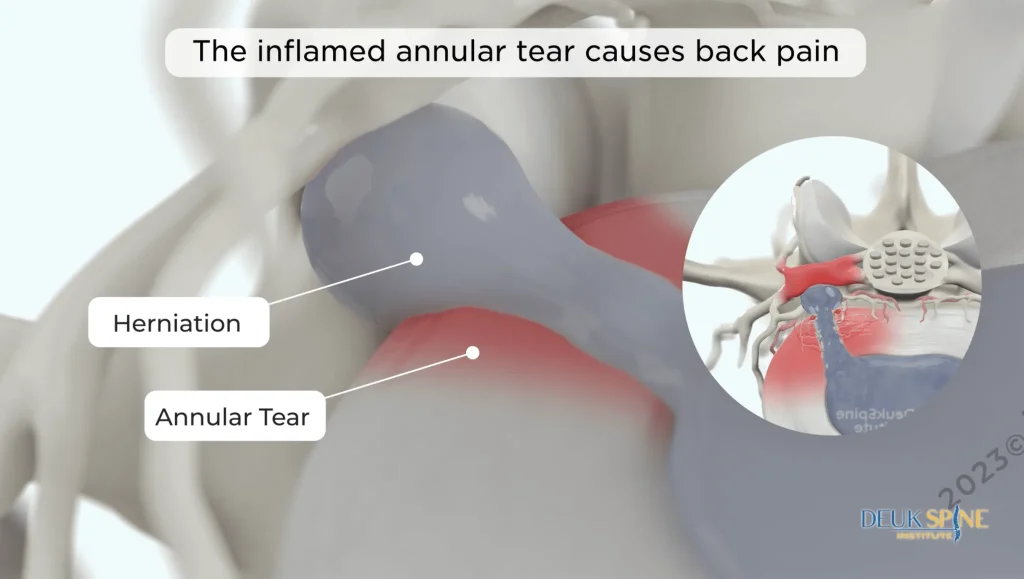
Now, I may have diagnosed you with more than one disc as the source of your pain. And each of those discs cause pain through the same mechanism. As you see in our video, trauma causes a tear in the back wall of the disc called the posterior annular tear. At the same time, it fragments the nuclear material just inside the wall. And over time after the injury, you, through activities, push out small fragments of disc herniation into the tear, which then causes cycles of inflammation and pain, and that’s why you’re experiencing your lower back pain.
At some point your back pain could become permanent and not just reside in your back and not ever leave. But typically people go through a phase where the back pain is cyclical, where it comes and goes, and activities are generally the cause of the back pain flare-ups.
In your case, we can fix your back pain by performing a state-of-the-art procedure only available here at Deuk Spine Institute. This is a minimally invasive arthroscopic procedure performed with a laser. This procedure is called the Deuk Laser Disc Repair. We’ve been performing the laser spine since 2006 here at the Deuk Spine Institute. To date, we’ve had zero complications. The Deuk Laser Disc Repair is the safest, most effective treatment for back pain coming from an injured disc like yours. We’re recommending you consider the our minimally invasive laser spine surgery as your primary and main treatment option to get rid of your back pain quickly and permanently with minimal impact on your life.
Recovery from our minimally invasive procedure is just 1 hour. You’re going to go back to your hotel after the surgery. You’ll spend the night in your hotel recovering and then in the morning you’ll come in for a quick checkup. The checkup usually takes about 30 minutes and then you can go back home after the checkup.
Alternative treatments to the Deuk Laser Disc Repair are far more invasive and the outcome of those treatments is far more uncertain. There are many surgeons offering treatments such as laminectomy, discectomy, spinal fusion, disc replacement. Other treatments include injecting materials into your spine such as epidural steroid injection or injecting material into the disc itself that will supposedly repair the disc. I can tell you we used to perform these treatments and they don’t work. They either don’t work or they don’t last. And if they do work, they work temporarily and they’re associated with a high complication rate.
For example, laminectomy is highly invasive. There’s destruction of muscle and bone and ligament in your spine. When the surgeon removes the bones and ligaments out of your spine, it creates tremendous amount of scar tissue and instability of the spine. Patients frequently come back needing spinal fusion. Patients with laminectomy are often in chronic back pain for the rest of their life, going in and out of pain management, on and off of pain pills, and in and out of physical therapy. They frequently require multiple surgeries in order to feel some type of pain relief.
An alternative treatment is called a microdiscectomy. Microdiscectomy is another invasive procedure where the surgeon is removing bones and ligaments to get down to a herniated disc that’s pinching a nerve root. Microdiscectomy is not a treatment for back pain. It is only recommended for leg weakness, leg numbness, and leg pain. Microdiscectomy does not fix back pain and should be avoided if you have back pain. Laminectomy does not fix back pain and should be avoided if you have back pain.
Spinal fusion is a treatment for back pain. The surgeon must either remove or fuse the disc using hardware such as screws, rods, and bone graft, including cadaver bone graft. You’re receiving biological bone graft from a dead person. That’s what’s allowing your bones to fuse together. Now, these spinal fusions can be quite effective at eliminating discogenic back pain, which is the type of back pain that you have. However, they carry a very high risk of complications, complications such as blood clots in your legs which could migrate to your lung and kill you in a process called pulmonary embolism. They also have a high risk of infection.
Every patient that does a fusion requires post-operative narcotic opioid pain medication. Opioids are known to be dangerous, addictive, and have a high potential for abuse. You don’t want to start opioid painkillers if you can avoid it. With endoscopic spine surgery that we have recommended for you, there is no need for post-operative opioids. Our patients are treated with a small 7mm incision. That incision has minimal to no bleeding and it heals within a few days. There is no need for narcotic painkillers. If you have the Deuk Laser Disc Repair, we can fix the back pain within 3 days coming from your damaged discs.
We recommend you talk to our schedulers. They’ll answer any additional questions you have. We’d love to see you here at Deuk Spine Institute and provide you with the highest quality, most advanced treatment in the world that gives you the safest, most effective outcome in the world that lasts a lifetime. Thank you for listening.
The first video in this series is the conversation that follows the free MRI review, when Dr. Ara Deukmedjian explains to the patient what is actually causing their pain and why. The explanation is deceptively simple, but it is the piece most patients are never given in a conventional spine surgery consultation.
The spine is a collection of joints, and the disc is the joint that most often hurts
The human spine comprises many bones and joints, and the painful joint is the real cause of back pains, and not the bones. Out of all the spinal joints, the intervertebral disc is one of the most common causes of back pain in the lumbar region of the spine. Intervertebral discs lie between two vertebrae and act as the joint that helps in absorbing shocks. However, when it gets damaged, it is more than just mechanically painful; it turns into a biological inflamer of the joint.
The real mechanism: a posterior annular tear and cyclical inflammation
Pain is caused by inflammation, regardless of the cause of pain. Be it a fracture, an arthritic knee, or a spinal disc injury. 6 Inflammation is the body’s way of repairing damage to the joint, and it causes the four classic symptoms of swelling, pain, warmth, and tenderness. In an injured disc, inflammation starts from a tiny tear in the back part of the disc, which is referred to as posterior annular tear. 1 The injury that causes the tear also causes fragmentation of the nuclear matter next to the tear. As time passes, daily activities cause small pieces of the fragmented disc material to come out of the tear. Resulting in inflammation and causing pain in the back. That is why back pain is always described as cyclical pain. It comes and goes, and flare-ups are triggered by activity.
Why the “treat the disc, not the segment” approach matters
Once you realize that the pain generator is really a tear in the annulus and its inflamed tissue that continually gets re-exposed to it, the therapeutic approach is much different than the one that the most spine surgeons typically ask. The old way to look at the problem is: How do we stabilize the segment? The new approach is: How do we just take out the inflamed tissue in the annular tear?
The Deuk Laser Disc Repair® procedure has been performed at the Deuk Spine Institute since 2006, with zero complications documented to date. Recovery is approximately one hour. Patients return to their hotel for an overnight stay, come back for a brief 30 minute check-up the following morning, and then fly home. The incision is 7 mm, there is minimal to no bleeding, it heals within a few days, and no post-operative narcotic opioids are prescribed because none are needed.
Why alternative treatments fall short of this standard
In the video, Dr. Deuk is specific about why the other commonly recommended treatments do not reliably work for discogenic back pain. 7
- Laminectomy: A highly invasive operation involving destruction of muscle, bone, and ligament. The removal of posterior stabilizing structures creates significant scar tissue and segmental instability, and patients frequently return later needing a fusion. Many go on to live with chronic back pain, cycling in and out of pain management, opioid prescriptions, and physical therapy.
- Microdiscectomy: An invasive procedure that removes bone and ligament to access a herniated disc compressing a nerve root. It is a treatment for leg pain, leg weakness, and leg numbness. It is not a treatment for axial back pain and should not be offered for it.
- Spinal fusion: Can be effective at eliminating discogenic back pain in a subset of patients, but carries a significant risk of serious complications including deep venous thrombosis, pulmonary embolism, surgical site infection, and the requirement for post-operative opioid narcotic painkillers. 8
- Epidural steroid injections and intradiscal injections: These were historically performed at the Deuk Spine Institute and have been abandoned for discogenic pain. They either do not work, do not last, or work only transiently while carrying a meaningful complication rate.
The clinical takeaway from the first video is straightforward: if the problem is a torn, inflamed disc, the solution should treat the torn, inflamed disc. Nothing more. Nothing less.
Video #2: Deuk Laser Disc Repair® vs. Traditional Lumbar Spinal Fusion. A Procedure by Procedure Comparison
Video Transcript
Dr. Ara Deukmedjian: Deuk Laser Disc Repair — a comparison with traditional spinal fusion surgery.
A patient with chronic back or neck pain originating from a symptomatic disc injury could undergo either traditional spinal fusion or less invasive Deuk Laser Disc Repair. This MRI represents a typical case with L4-5 and L5-S1 symptomatic discs.
A symptomatic disc causing neck or back pain can include bulging discs, herniated discs, ruptured discs, degenerative discs, protruding discs, spinal stenosis, radiculopathy, and sciatica. This patient can choose traditional fusion surgery or the Deuk Laser Disc Repair to help alleviate the pain caused by and within the symptomatic discs.
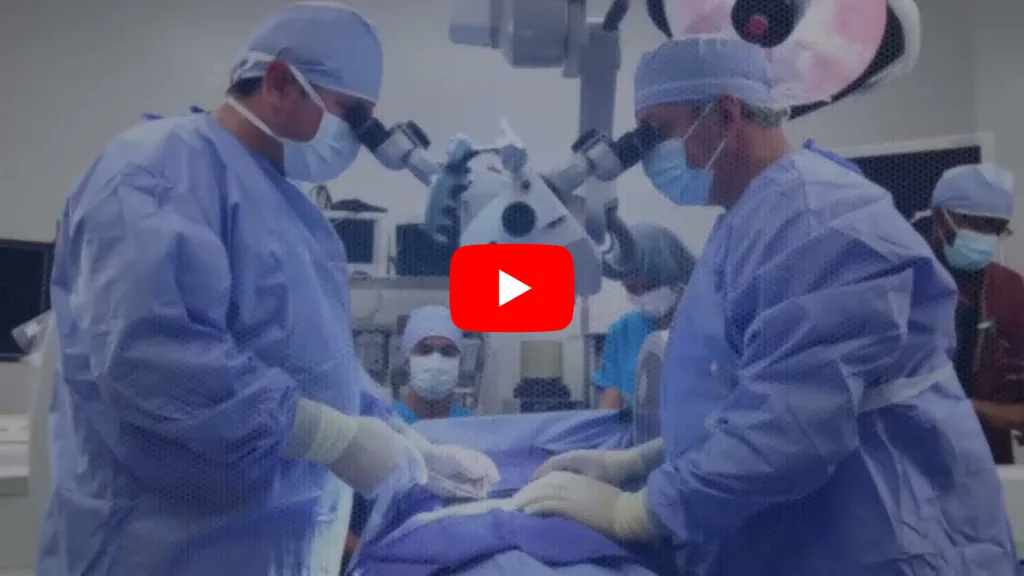
Here, two patients with comparable disc injuries are treated — on the left, the highly invasive spinal fusion, and on the right, the least invasive Deuk Laser Disc Repair.
The spinal fusion requires a very large incision, usually leaving a large scar. The Deuk Laser Disc Repair requires only a very small incision, usually less than a half an inch long. In this small opening, a cylindrical rod called a dilator is inserted to gently spread the muscle to create a small passage and guide through which the surgery is performed endoscopically.
The incision for the fusion continues, including penetrating the skin, fat, tissue, and multiple layers of muscle through to the bone. With the Deuk Laser Disc Repair, a mallet is used to advance the tip of the dilator into the symptomatic disc. A tube called the tubular retractor slides over the dilator and is carefully positioned into the disc, again using the mallet. The rest of the entire Deuk Laser Disc Repair surgery will occur inside this narrow tube.
To access the spine, the spinal fusion requires the muscle to be separated from the vertebrae. This very invasive action causes trauma and permanent damage to the muscles, whereas in the endoscopic Deuk Laser Disc Repair, the muscle is not damaged. The endoscope camera is inserted into the tubular retractor to allow the surgeon to guide the laser inside each symptomatic disc.
To accommodate the fusion hardware, a large bone grabber is used to perform a laminectomy by removing bone from the spine. The fiber optic laser used in the Deuk Laser Disc Repair is manipulated with great accuracy to remove only painful inflammatory tissue from the disc. In this highly magnified view, the laser is used to precisely remove damaged disc material that is causing the pain. The laser is debriding, or essentially vaporizing, damaged tissue in the disc’s outer layer or annulus — specifically at the annular tear, the source of the rupture or herniation and pain.
After the fusion patient’s damaged discs are removed, a metal or plastic cage housing bone grafting material is inserted in place of the removed discs. Once the laser has removed the painful part of the annular tear, the endoscope and tubular retractor are removed, leaving less than one-half inch incision in the skin, which is closed with a single stitch, steri-strips, and a band-aid. Total time for the Deuk Laser Disc Repair surgery: approximately one hour.
The fusion, however, is still underway. Holes in the spine must be tapped in preparation for the large pedicle screws that anchor the fusion hardware. The Deuk Laser Disc Repair patient is in recovery, usually 45 to 60 minutes before release to go home.
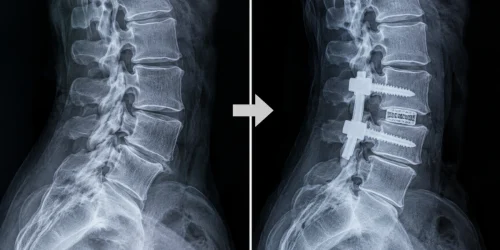
The fusion screws are inserted into the bone as shown in the x-ray. After all screws are in place, rods are used to connect the screws together to prevent movement of the secured vertebrae. Crosslinks are added to bridge the rods together for additional stability. Fusion hardware by design is to fuse joints that normally move, preventing natural movement in the damaged portion of the spine, whereas with the Deuk Laser Disc Repair there is no loss of movement — normal movement and flexibility of the disc and joints is preserved.
The Deuk Laser Disc Repair patient is soon back home enjoying life with a very fast recovery, allowing normal activities without pain. Meanwhile, bone graft material is placed throughout the fusion surgery site. These morselized pieces of bone will eventually grow together to help promote the fusion process. Prior to closing the wound, a temporary drain is installed to allow excess fluid to drain. Average surgery time of a traditional two-level fusion is two and a half hours, with an additional three to four hours in the recovery room.
As we’ve seen in comparison, a spinal fusion requires a much larger incision and results in a significant amount of scar tissue. The Deuk Laser Disc Repair’s half-inch incision leaves no scar tissue around the spine or nerves. A large amount of bone is removed with a spinal fusion; with the Deuk Laser Disc Repair, no bone is removed — each disc is accessed through a natural opening in the spine. The entire disc is completely removed in a spinal fusion even though only five percent may be damaged; the Deuk Laser Disc Repair leaves the normal parts of the disc in place and removes only the painful annular tear on the damaged disc. Fusion requires hardware including screws, rods, plates, etc. The Deuk Laser Disc Repair does not require any hardware — the patient is totally hardware free.
Fusion surgery is very invasive. Cutting and moving the muscle structures and tissues for a spinal fusion causes trauma, resulting in permanent damage to the muscles, whereas with the Deuk Laser Disc Repair there is no damage to the muscles. The Deuk Laser Disc Repair is the least invasive surgery available to repair a damaged disc.
With spinal fusions, patients are required to take highly addictive narcotic painkillers which can cause constipation, bowel, and bladder complications. Due to the minimal pain, narcotics are not needed with the Deuk Laser Disc Repair. Spinal fusions have a high risk for infection; the Deuk Laser Disc Repair has a very low risk for infection. In the seven years the Deuk Laser Disc Repair has been performed, there have been no infections.
Spinal fusion surgery has a very long recovery and requires a great deal of physical therapy and time to heal from the trauma in the muscles and the spine itself, whereas the recovery from Deuk Laser Disc Repair is in a matter of hours or days rather than weeks or months. With fusion, the spine is being fused together, losing movement, whereas there is no fusion with the Deuk Laser Disc Repair — normal movement of the joint in the spine is preserved. Spinal fusion results in loss of mobility; there is no mobility loss with the Deuk Laser Disc Repair. In fact, most Deuk Laser Disc Repair patients experience improved mobility after the surgery.
The Deuk Laser Disc Repair is FDA approved. All the instruments and equipment used are FDA approved. This proprietary surgery itself has been peer reviewed and published and is performed exclusively at the Deuk Spine Institute, with the highest published success rate of 95 percent. The Deuk Laser Disc Repair is proven to be the most successful and least damaging spinal surgery in the world for the treatment of symptomatic damaged discs causing back pain, neck pain, sciatica, and radiculopathy due to herniated, degenerated, or bulging discs.
The second video places the two procedures side by side using a representative patient case: a lumbar MRI showing symptomatic L4-5 and L5-S1 discs. Both patients in the comparison have identical pathology: bulging, herniated, ruptured, degenerative, or protruding discs with associated spinal stenosis, radiculopathy, or sciatica. One receives traditional spinal fusion. The other receives DLDR. The structural differences between what is done to each patient’s body are the single most important thing a surgical candidate can understand before signing a consent form.
Incision and access
The conventional procedure for spinal fusion involves making an incision of an exceptionally large size in the middle line and creating a scar. In addition, the surgeon has to go through the skin, the subcutaneous fat, and several layers of paraspinal muscles to access the bone.
In the endoscopic laser spine surgery procedure, an incision of less than half an inch is made. 9 Through this incision, a cylindrical rod referred to as the dilator is inserted to spread the muscle fibers of the paraspinal muscles, thus creating a channel. A tubular retractor is then introduced over the dilator and tapped into the problematic disc using a mallet.
What is done to the muscle, bone, and disc
In a standard fusion procedure, the paraspinal muscles need to be stripped off the vertebrae to get to the spine. This results in permanent muscle devascularization and muscle atrophy, which has been established as one of the causes of back pain after fusion surgery.¹⁰ A laminectomy is done with a large bone grabber, and the lamina is then removed to provide space for the hardware used in the fusion. The whole disc is removed, but only 5% percent of the disc is diseased.
In a DLDR procedure, the paraspinal muscles are not incised. Bone is not removed. Each disc is accessed through its own natural opening in the spinal canal. An optical laser is precisely controlled within the disc to debride the diseased part of the annulus only, which is the tear in the outer part of the annulus causing the pain. The healthy part of the disc remains intact.
Hardware, closure, and operative time
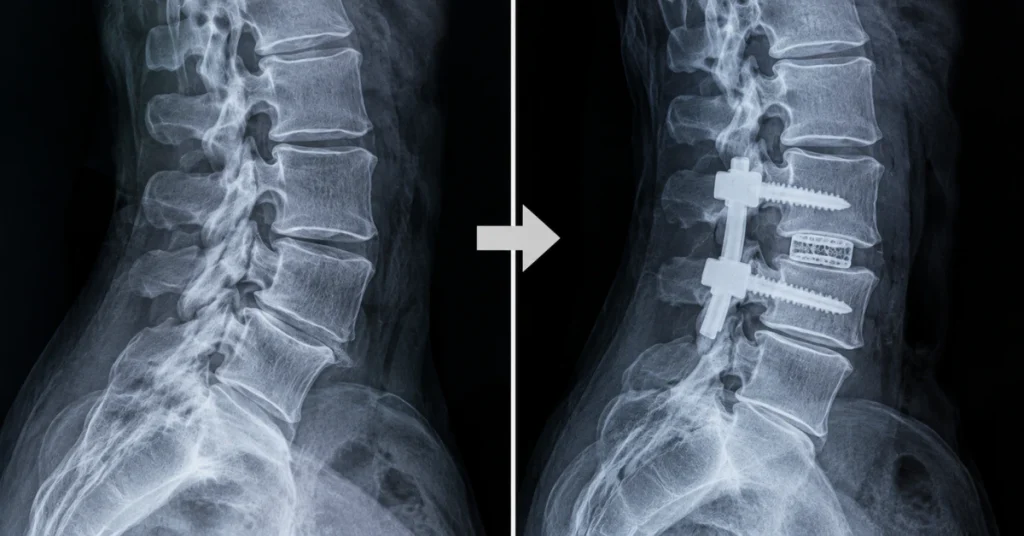
A traditional two-level fusion requires large pedicle screws, which are drilled and tapped into the vertebral bodies, connected with rods, and often reinforced with crosslinks for additional stability. A metal or plastic interbody cage filled with bone graft material is inserted in place of the removed disc, and morselized bone graft is packed throughout the surgical site. A temporary drain is placed before closure. The average two-level fusion takes approximately 2.5 hours of operating time, plus an additional 3 to 4 hours in the recovery room.
By comparison, when the laser has finished vaporizing the damaged annular tissue in DLDR, the endoscope and tubular retractor are withdrawn. The incision is closed with a single stitch, steri-strips, and a Band-Aid. The total operative time is approximately one hour, and the patient is in recovery for 45 to 60 minutes before being released to go home. No hardware is implanted. The patient leaves the operating room completely hardware-free.
Recovery, mobility, and complications
The downstream differences between the two procedures are at least as consequential as the operative differences.
- Narcotics. Fusion patients are nearly always sent home on highly addictive opioid narcotic painkillers, which carry well known risks of constipation, bowel and bladder complications, dependence, and abuse. DLDR patients are not prescribed narcotics because the post-operative pain is minimal.
- Infection. Spinal fusion carries a high infection risk. DLDR has had zero infections in the years since its introduction. 11
- Recovery timeline. Fusion recovery is measured in weeks to months, with extensive physical therapy required to rehabilitate the trauma to the paraspinal muscles and spine. DLDR recovery is measured in hours to days.
- Mobility. Fusion, by biomechanical design, eliminates motion at the operated segment and transfers that mechanical load to the discs and facet joints above and below, which is the root cause of adjacent segment disease. DLDR preserves normal joint motion entirely; in fact, most DLDR patients report improved mobility after surgery because the inflamed, painful tissue restricting their motion has been removed.
- Scar tissue. The large fusion incision and open dissection generates substantial scar tissue around the spine and nerve roots. The half-inch DLDR incision leaves no scar tissue around the spine or nerves.
The regulatory and evidence profile
Deuk Laser Disc Repair® is FDA-approved. All instruments and equipment used in the procedure are FDA-approved. The proprietary technique itself has been peer-reviewed and published, and it is performed exclusively at the Deuk Spine Institute, with a published success rate of 95%. For patients with symptomatic damaged discs causing back pain, neck pain, sciatica, or radiculopathy from herniated, degenerated, or bulging discs, this makes DLDR the most studied, least invasive, and most reproducibly successful alternative to open fusion currently available.
Video #3: Why DLDR® Is the Least Invasive Spinal Surgery for Both Back and Neck Pain. A Side by Side Summary
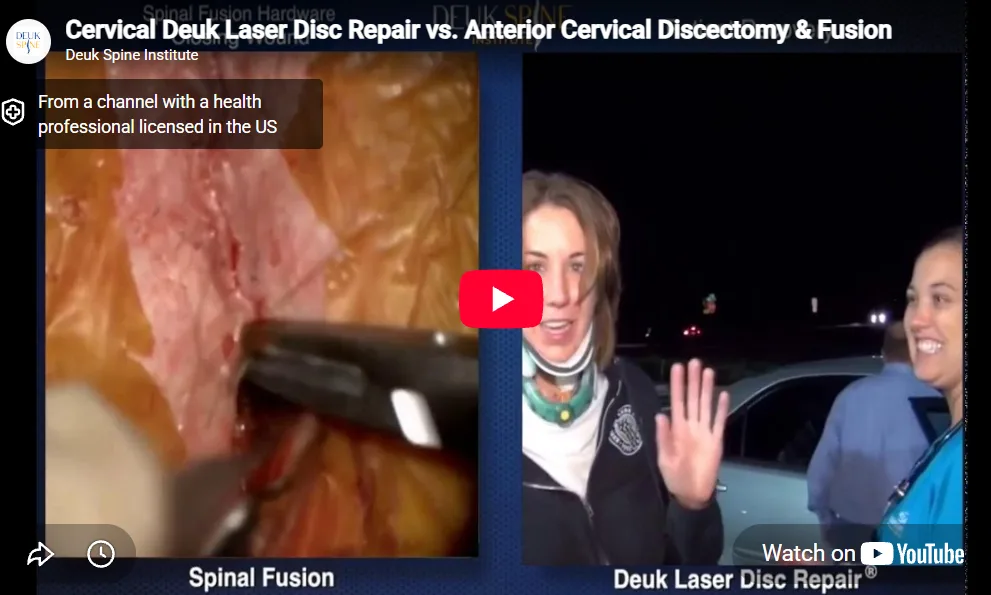
Video Transcript
Dr. Ara Deukmedjian: A symptomatic disc causing neck or back pain can include bulging discs, herniated discs, ruptured discs, degenerative discs, protruding discs, spinal stenosis, radiculopathy, and sciatica. This patient can choose traditional fusion surgery or the Deuk Laser Disc Repair to help alleviate the pain caused by and within the symptomatic discs.
Here, two patients with comparable disc injuries are treated. On the left, the highly invasive spinal fusion, and on the right, the least invasive Deuk Laser Disc Repair.
The spinal fusion requires a very large incision, usually leaving a large scar. The Deuk Laser Disc Repair requires only a very small incision, usually less than a half an inch long.
In this small opening, a cylindrical rod called a dilator is inserted to gently spread the muscle to create a small passage and guide through which the surgery is performed endoscopically.
The incision for the fusion continues, including penetrating the skin, fat, tissue, and multiple layers of muscle through to the bone.
With the Deuk Laser Disc Repair, a mallet is used to advance the tip of the dilator into the symptomatic disc. A tube called the tubular retractor slides over the dilator and is carefully positioned into the disc, again using the mallet. The rest of the entire Deuk Laser Disc Repair surgery will occur inside this narrow tube.
To access the spine, the spinal fusion requires the muscle to be separated from the vertebrae. This very invasive action causes trauma and permanent damage to the muscles, whereas in the endoscopic Deuk Laser Disc Repair, the muscle is not damaged. The endoscope camera is inserted into the tubular retractor to allow the surgeon to guide the laser inside each symptomatic disc.
The fiber optic laser used in the Deuk Laser Disc Repair is manipulated with great accuracy to remove only painful inflammatory tissue from the disc.
In this highly magnified view, the laser is used to precisely remove damaged disc material that is causing the pain. The laser is debriding, or essentially vaporizing, damaged tissue in the disc’s outer layer, or annulus, specifically at the annular tear, the source of the rupture or herniation and pain.
After the fusion patient’s damaged discs are removed, a metal or plastic cage housing bone grafting material is inserted in place of the removed discs. Fusion hardware by design is to fuse joints that normally move, preventing natural movement in the damaged portion of the spine, whereas with the Deuk Laser Disc Repair there is no loss of movement. Normal movement and flexibility of the disc and joints is preserved.
Once the laser has removed the painful part of the annular tear, the endoscope and tubular retractor are removed, leaving less than one-half inch incision in the skin, which is closed with a single stitch, steri-strips, and a Band-Aid. Total time for the Deuk Laser Disc Repair surgery: approximately one hour.
The fusion, however, is still underway. Holes in the spine must be tapped in preparation for the large screws that anchor the fusion hardware. The Deuk Laser Disc Repair patient is in recovery, usually 45 to 60 minutes before release to go home.
Meanwhile, bone graft material is placed throughout the fusion surgery site. These morselized pieces of bone will eventually grow together to help promote the fusion process. The Deuk Laser Disc Repair patient is soon back home enjoying life with a very fast recovery, allowing normal activities without pain.
Average surgery time of a traditional two-level fusion is two and a half hours, with an additional three to four hours in the recovery room.
As we’ve seen in comparison, a spinal fusion requires a much larger incision and results in a significant amount of scar tissue. The Deuk Laser Disc Repair® half-inch incision leaves no scar tissue around the spine or nerves. A large amount of bone is removed with a spinal fusion. With the Deuk Laser Disc Repair, no bone is removed. Each disc is accessed through a natural opening in the spine.
The entire disc is completely removed in a spinal fusion, even though only five percent may be damaged. The Deuk Laser Disc Repair® leaves the normal parts of the disc in place and removes only the painful annular tear on the damaged disc.
Fusion requires hardware including screws, rods, plates, etc. The Deuk Laser Disc Repair® does not require any hardware. The patient is totally hardware free.
Fusion surgery is very invasive. Cutting and moving the muscle structures and tissues for a spinal fusion causes trauma, resulting in permanent damage to the muscles, whereas with the Deuk Laser Disc Repair® there is no damage to the muscles. The Deuk Laser Disc Repair® is the least invasive surgery available to repair a damaged disc.
With spinal fusions, patients are required to take highly addictive narcotic painkillers which can cause constipation, bowel, and bladder complications. Due to the minimal pain, narcotics are not needed with the Deuk Laser Disc Repair®.
Spinal fusions have a high risk for infection. The Deuk Laser Disc Repair® has a very low risk for infection. In the seven years the Deuk Laser Disc Repair® has been performed, there have been no infections.
Spinal fusion surgery has a very long recovery and requires a great deal of physical therapy and time to heal from the trauma in the muscles and the spine itself, whereas the recovery from Deuk Laser Disc Repair® is in a matter of hours or days rather than weeks or months.
With fusion, the spine is being fused together, losing movement, whereas there is no fusion with the Deuk Laser Disc Repair®. Normal movements of the joint in the spine is preserved. Spinal fusion results in loss of mobility. There is no mobility loss with the Deuk Laser Disc Repair®. In fact, most Deuk Laser Disc Repair® patients experience improved mobility after the surgery.
The Deuk Laser Disc Repair is FDA approved. All the instruments and equipment used are FDA approved. This proprietary surgery itself has been peer-reviewed and published and is performed exclusively at the Deuk Spine Institute. With the highest published success rate of 95 percent, the Deuk Laser Disc Repair is proven to be the most successful and least damaging spinal surgery in the world for the treatment of symptomatic damaged discs causing back pain, neck pain, sciatica, and radiculopathy due to herniated, degenerated, or bulging discs.
Video three is the summary of all the key points that should be considered when making the decision on the treatment method for the disc disease in patients. It summarizes the structure of the approach to treating disc disease and extends the framework to include both the back and the neck pain regardless of the type of the symptomatic disc. The same symptomatic disc problem can be managed using either spinal fusion or Deuk Laser Disc Repair®. The structures differ no matter whether the level is lumbar or cervical.
The ten structural differences that matter most
The third video walks through the ten head tohead differences a patient should weigh before signing a surgical consent form:
- Incision size. Fusion requires a large midline incision that typically leaves a prominent scar. DLDR uses an incision of less than half an inch.
- Access to the spine. Fusion requires separating the paraspinal muscles from the vertebrae, which causes permanent muscle trauma. DLDR advances a dilator and then a tubular retractor through the muscle fibers without cutting them, and the entire procedure is performed inside that narrow tube under endoscopic visualization.
- How the disc is treated. Fusion removes the entire disc even though only approximately 5% of the disc is typically diseased. DLDR uses a fiber-optic laser to vaporize only the painful, inflamed tissue at the annular tear, leaving the normal parts of the disc in place.
- Hardware. Fusion requires screws, rods, plates, and typically an interbody cage containing bone graft. DLDR implants no hardware. The patient leaves the operating room completely hardware free.
- Bone removal. Fusion removes a significant amount of bone to accommodate the hardware. DLDR removes no bone. The disc is reached through its own natural opening in the spine.
- Operative and recovery time. The average traditional two-level fusion takes approximately 2.5 hours of operating time plus 3 to 4 hours in the recovery room. DLDR takes approximately one hour, and the patient is typically released from recovery within 45 to 60 minutes.
- Narcotic requirement. Fusion patients are nearly always sent home on highly addictive opioid narcotic painkillers, which can cause constipation and bowel and bladder complications. DLDR produces so little post-operative pain that narcotics are not needed.
- Infection risk. Fusion carries a high infection risk. DLDR has a very low infection risk, and in the years since DLDR has been performed at the Deuk Spine Institute, there have been no infections.
- Recovery timeline. Fusion recovery is measured in weeks to months with required physical therapy. DLDR recovery is measured in hours to days.
- Mobility. Fusion, by design, eliminates motion at the operated segment. DLDR preserves native joint motion. In fact, most DLDR patients experience improved mobility after surgery because the inflamed, painful tissue that was restricting them has been removed.
The regulatory and clinical track record
Deuk Laser Disc Repair® is FDA-approved. All instruments and equipment used in the procedure are FDA-approved. The proprietary technique itself has been peer-reviewed and published, and it is performed exclusively at the Deuk Spine Institute, with a published success rate of 95%. The procedure is proven to be the most successful and least damaging spinal surgery in the world for the treatment of symptomatic damaged discs causing back pain, neck pain, sciatica, and radiculopathy due to herniated, degenerated, or bulging discs. 12
Why this universal framework matters
The reason this analogy can be applied equally to the lumbar and cervical spine is because the pain generator (a torn, inflamed annulus with herniated pieces) is the same in both areas. The fusion approach (cut out the whole disc, put in hardware, fuse the level, live with the loss of motion and the consequences of adjacent segment disease) is the same as well. And the DLDR approach (destroy the inflamed annular tissue with a laser via a sub-half-inch incision, put in no hardware, keep motion intact) is the same. The question for the patient is not whether my pain is in the lumbar or cervical spine? The question is which surgery would you prefer. The one that fuses your joint and puts in hardware or the one that fixes the problem and leaves everything else alone?
Conclusion: What These Three Videos Add Up To
In their entirety, all three videos create one cohesive clinical argument.
The first video proves that the diagnoses rarely made in a typical consultation for people suffering from back pain are: that the majority of the back pain experienced by individuals is discogenic; that the cause is an inflammatory response from a posterior annular tear; and that the appropriate treatment involves the removal of the inflammatory tissues from within the tear without affecting the remaining discs, the bone, the ligaments, the muscles, and the joint mobility. The video also provides the explanation as to why laminectomy, microdiscectomy, fusion surgery, epidural steroid injections, and intradiscal injections were ineffective in alleviating the pain caused by that pain generator.
The second video illustrates that diagnostic concept by directly comparing the two procedures side by side. Lumbar fusion is a 2.5 hour surgery that involves a high degree of invasive manipulation such as stripping muscles, removing bones, cutting out the entire disc despite its 5% involvement and putting screws and rods along with an interbody bone graft cage in place. The procedure also uses postoperative opioid narcotics and stops joint motion in the affected area forever. In Deuk Laser Disc Repair® the operation lasts for just an hour, involves 7 millimeters incisions through an endoscopic method, only targets to remove the inflammation in the annular tissue, puts nothing but no hardware in the disc and doesn’t require any medications.
The third video extends this comparison paradigm to cover back and neck pain from any diseased disc, condensing the DLDR vs. fusion comparison down to ten structural differences: incision size, approach, treatment of the disc, hardware used, bone removal, duration of surgery and recovery, narcotic use, infection risk, recovery time, and preservation versus destruction of mobility. In all ten of these factors, DLDR is the least invasive and destructive procedure. DLDR is FDA approved, peer-reviewed and published, performed only at the Deuk Spine Institute, and has a 95% success rate.
The common denominator in the three videos is the same regardless of whether the symptomatic disc is in the lower spine or the cervical spine region. 5 Spinal fusion helps to stabilize a particular segment but does not provide a treatment for the disc itself. 4 This is where the patented laser Deuk Laser Disc Repair® comes into action because it treats the disc itself directly without any hardware or bone and muscle manipulation.
Take the Next Step
Having been referred to receive laminectomy, discectomy, lumbar fusion, or ACDF surgery due to pain from a symptomatic disc, you can do more than what most spine specialists would offer. Send us your latest MRI images for a free analysis by Dr. Ara Deukmedjian and his expert team at the Deuk Spine Institute. We will analyze your MRI scans, establish that indeed you have a disc related problem, and discuss all the different procedures including DLDR® for the neck or lower back.
Only 5% of the disc is diseased. Fusion removes 100% of it
Fusion replaces your disc with metal.
DLDR repairs it.
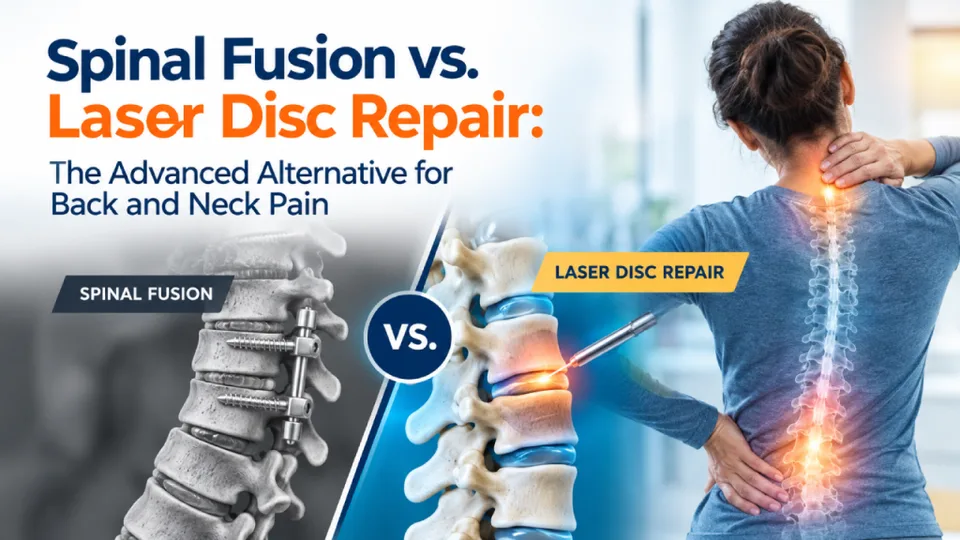
Spinal fusion permanently eliminates motion, requires hardware, and carries a 50% chance of meaningful pain relief. DLDR targets the 5% of damaged tissue, preserves the disc, and sends you home the same day—with a 95% published success rate and zero infections since 2006.
meaningful relief
vs ~1 hr for DLDR
fusion removes it all
- Removes entire disc
- Metal rods, screws & cages
- Eliminates spinal motion
- 2–3 inch incision
- General anesthesia, 2.5-hour surgery
- Hospital stay required
- 6–12 month recovery
- Opioid pain management
- ~50% meaningful relief
- Adjacent segment disease risk
- Repairs only the damaged 5%
- No hardware, no implants
- Preserves full spinal motion
- 7 mm incision
- Conscious sedation, ~1-hour procedure
- Same-day outpatient
- Days-to-weeks recovery
- No narcotics prescribed
- 95% published success rate
- 0 infections since 2006
Board-certified neurosurgeon review · No insurance approval required · 100,000+ procedures performed
FAQ’s
What exactly is “discogenic” back or neck pain, and how do I know if I have it?
Answer
Discogenic pain is pain whose primary generator is the intervertebral disc itself, usually a posterior annular tear with associated inflammation and small herniated fragments. Classic features include a cyclical pattern (the pain flares, calms, and flares again), activity-driven exacerbations, and axial (midline) back or neck pain that may or may not radiate. The definitive answer comes from an MRI reviewed by a surgeon trained to localize annular tears and inflammatory changes. The Deuk Spine Institute offers this review free of charge.
How is Deuk Laser Disc Repair® different from the “laser spine surgery” I see advertised by other clinics?
Answer
Most procedures marketed as “laser spine surgery” still involve drilling through bone, cutting muscle, or performing a conventional discectomy, with the laser serving as an accessory tool rather than the primary mechanism of tissue removal. DLDR® is different in three ways. First, no bone is removed. The disc is accessed through its own natural opening in the spine. Second, the paraspinal muscle is spread with a dilator rather than cut. Third, the fiber-optic laser is the primary instrument used to vaporize only the inflamed tissue inside the annular tear, leaving the rest of the disc intact. The procedure is FDA-approved, peer-reviewed, and performed exclusively at the Deuk Spine Institute.
Why not just have the spinal fusion my surgeon is recommending?
Answer
Fusion can relieve pain in some discogenic cases, but at a very high structural cost. A fusion removes the entire disc even when only a small portion is diseased, implants permanent hardware (screws, rods, and often an interbody cage), permanently eliminates motion at the operated segment, requires post-operative opioid narcotics, carries meaningful risks of infection, blood clots, pulmonary embolism, hardware failure, pseudarthrosis, and adjacent segment disease, and has a recovery measured in weeks to months. DLDR® treats the actual pain generator (the annular tear) without any of those trade-offs. For most patients with a confirmed discogenic pain source, it is both the less invasive and the more targeted operation.
Does Deuk Laser Disc Repair® require narcotic pain medication afterward?
Answer
No. The 7 mm incision, the lack of bone removal, the preservation of the paraspinal muscles, and the absence of implanted hardware mean that post-operative pain is minimal. DLDR patients are not sent home on opioid narcotics. This is a meaningful difference for patients concerned about dependence, withdrawal, bowel and bladder effects, or the broader risks of opioid use.
How long will I be out of work after Deuk Laser Disc Repair®?
Answer
Most patients return to normal daily activities within a few days. Recovery from the procedure itself is approximately one hour. Patients return to their hotel after surgery, spend one night there, come in for a brief morning check-up, and then fly home. This compares to a typical fusion recovery measured in weeks to months with required physical therapy.
Can Deuk Laser Disc Repair® treat neck pain and radiculopathy as well as lower back pain?
Answer
Yes. The same procedure, the same mechanism, and the same outcome profile apply to both the cervical (neck) and lumbar (lower back) spine, because the underlying pain generator is the same: a torn, inflamed disc annulus with herniated fragments. Cervical DLDR treats a symptomatic cervical disc through a sub-half-inch incision, removes only the inflamed annular tear and the herniated fragment generating the pain, preserves native neck motion, and avoids the hardware, bone graft, and permanent fusion of a traditional ACDF or posterior cervical fusion. Candidacy is determined by a review of your current MRI, your symptoms, and a clinical examination. Submit your MRI for a free review to find out whether DLDR is appropriate for your anatomy.
Is Deuk Laser Disc Repair® FDA-approved?
Answer
Yes. All instruments and equipment used in the DLDR procedure are FDA-approved, and the proprietary technique itself has been peer-reviewed and published. The published success rate is 95%, and the procedure is performed exclusively at the Deuk Spine Institute
Sources
View Sources
1: Discogenic Pain: Mechanisms and Management — PMC
2: How Many Instrumented Spinal Fusions Are Performed Each Year in the United States — iData Research
3: Minimal Clinically Important Difference in Lumbar Fusion Outcomes — PubMed
4: Spinal Fusion Overview — Mayo Clinic
5: Spine Structure and Function — Cleveland Clinic
6: Inflammation and Pain — National Library of Medicine
7: Recurrent Pain After Spine Surgery: Review — PMC
8: Spinal Fusion Complications — Cleveland Clinic
9: Endoscopic Spine Surgery Overview — PMC
10: Paraspinal Muscle Devascularization After Posterior Spine Surgery — ScienceDirect
11: Surgical Site Infection After Spine Surgery — PMC
12: Adjacent Segment Disease After Spinal Fusion — PMC
Video Sources