By Dr. Ara Deukmedjian, MD
Board-Certified Neurosurgeon
Medically reviewed on Aug 6, 2026
Medical Disclaimer: This content is for educational purposes only and does not constitute medical advice. Individual results may vary. Always consult with your healthcare provider about your specific condition and treatment options.
Key Points
✓ Cervical spinal stenosis (CSS) narrows the spinal canal in the neck, compressing the cord and nerve roots. ¹ ²
✓ Its most serious consequence, degenerative cervical myelopathy (DCM), is the leading cause of non-traumatic spinal cord dysfunction worldwide; estimated prevalence: ~2.3%. ³ ⁴ ⁵
✓ DCM diagnosis is typically delayed 1.5–2+ years; 20–62% of conservatively managed patients deteriorate within 3–6 years. ⁶ ⁷
✓ Symptoms range from arm numbness and hand clumsiness to gait instability and bowel/bladder dysfunction. ¹ ³ ⁸
✓ MRI is the gold standard, but cord compression appears in up to 59% of asymptomatic adults. Imaging must match the clinical picture. ⁹ ¹⁰
✓ Conservative care manages pain but cannot reverse structural narrowing. ⁶ ¹¹
✓ ACDF carries a 6.57% reoperation rate for adjacent segment disease (ASD), peaking at 8.12% in patients aged 30–39. ¹² ¹³
✓ A meta-analysis of 83 studies: 28.28% imaging ASD, 13.34% symptomatic ASD, 5.78% reoperation after ACDF. ¹⁴
✓ Deuk Laser Disc Repair®: treats disc-related cervical stenosis without fusion, hardware, or motion loss.
What Is Cervical Spinal Stenosis?
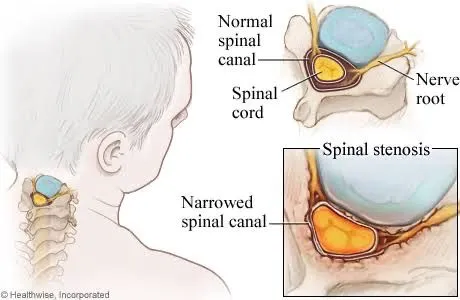
Spinal canal stenosis in the cervical vertebrae (CSS) refers to the condition where the spinal canal in the cervical spine gets constricted. ¹ The spinal canal is a protective bone structure made up of several vertebral columns, through which the spinal cord and the nerves coming from the brain and supplying the different parts of the body pass. With constriction of the spinal canal either due to aging or an injury, compression of the spinal cord and the nerves results, leading to neurologic manifestations.
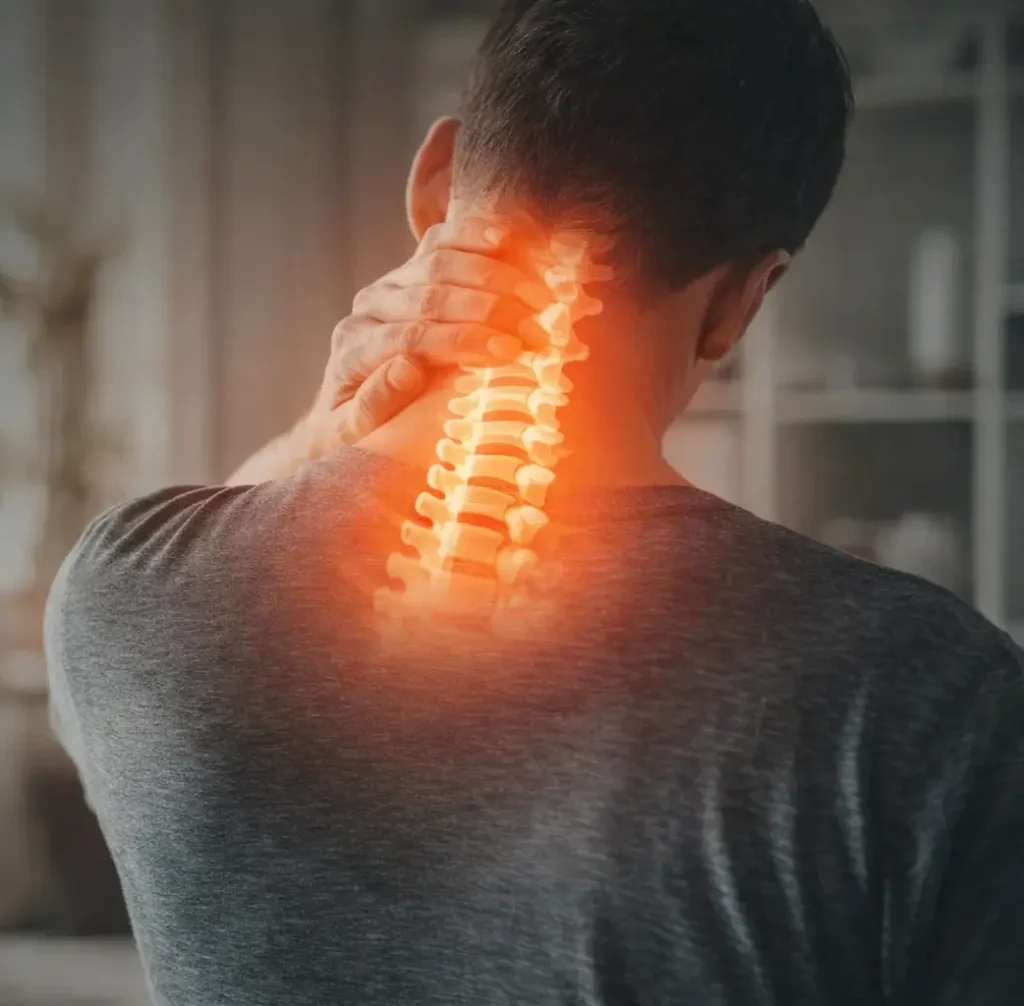
The effect of CSS may be on the spinal cord itself, known as cervical myelopathy, or the individual nerve roots exiting through the spinal canal, referred to as cervical radiculopathy, or both at once. ² Categorically, it is important to note that myelopathy denotes a more severe type of the disease. The latest information obtained from StatPearls confirms that the cervical and lumbar spine are the most common locations for spinal stenosis in all age groups, and it is significantly correlated with the physiological aging process. ¹
The typical diameter of the mid-cervical canal in the sagittal plane is 17-18 mm. The criteria for absolute stenosis is considered to be less than 10 mm, whereas the criterion of relative stenosis is less than 13 mm. ⁸ The numbers stated above are of practical significance as patients with naturally narrow canals need less degenerative changes to get symptomatic.
How common is cervical spinal stenosis?
Degenerative cervical myelopathy (DCM), which represents the most clinically relevant presentation of CSS, is the leading cause of non-traumatic spinal cord disease in adults globally. ³ ⁴ ⁵ The estimated population prevalence of DCM was reported to be around 2.3% by a meta-analysis, although this value has been regarded as an underestimation owing to underdiagnoses of the disease, especially in the elderly. ⁵ ⁷
The incidence of hospitalized cases of cervical spinal canal stenosis in Germany showed an increase from 12,818 in 2014 to 16,590 in 2023, representing a statistically significant increase (p = 0.003). ¹⁵ This increase occurred especially in elderly patients after 2020, probably due to the susceptibility of this age group to less physical activity during the pandemic period. ¹⁵
The presence of spinal cord compression without myelopathy, which is anatomically preceding myelopathy, is very frequent. A study showed the existence of asymptomatic cervical cord compression in 24.2% of the normal population and 35.3% of the subjects aged above 60 years old. ⁹ Also, the rate of incidental cervical cord compression, identified by MRI, in randomly selected volunteers of age groups between 40 to 80 years was 59%, ranging from 31.6% in the fifth decade to 66.8% in the eighth decade. ⁹
Causes of Cervical Spinal Stenosis
CSS is primarily a degenerative condition, meaning it develops over time as the structures of the cervical spine gradually wear down. In most patients, multiple contributing factors are present simultaneously.
1. Age-Related Degeneration
Decay of the spine’s components in a slow process is the most common reason for CSS. With aging, the height of the intervertebral discs decreases, joints become arthritic, and ligaments calcify. In total, all these factors decrease the space in the spinal canal. ¹ ³ The prevalence significantly grows at an age over 50 years, and with an aging population of our planet, the amount of affected individuals is growing constantly. ¹⁵
2. Bone Spurs (Osteophytes)
With age and subsequent wear and tear of the cervical spine’s joints and disc spaces, there is a formation of new bone on the outer edges of the vertebrae. These new formations, also known as osteophytes or bone spurs, may actually interfere in the spinal canal and the neural foramen to compress the nerves and the spinal cord.
3. Bulging and Herniated Discs
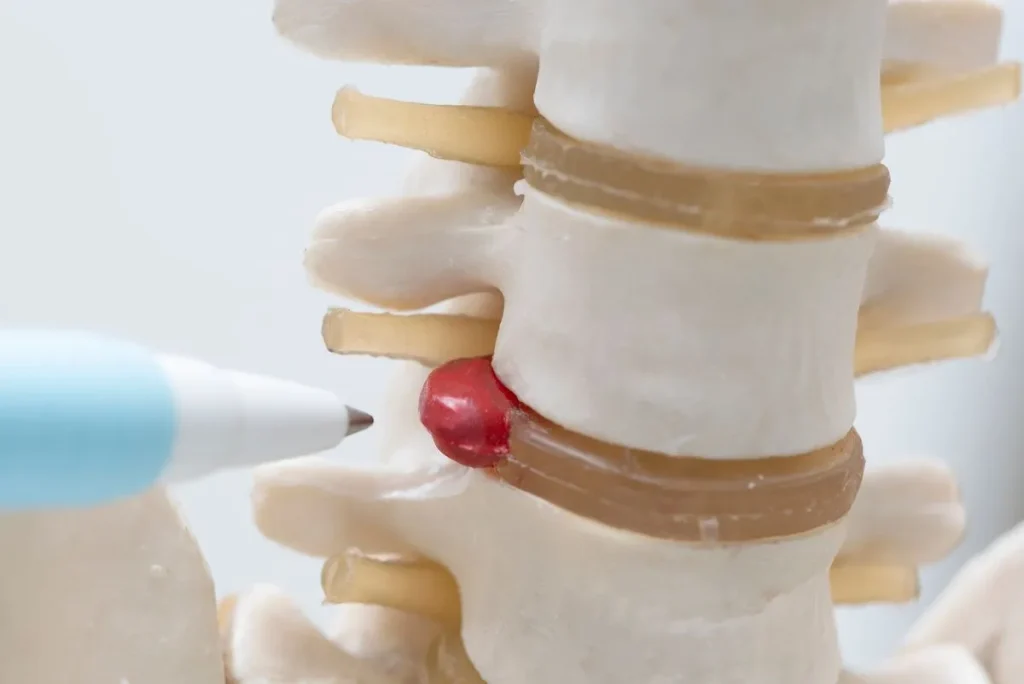
The soft discs located between each vertebrae of the cervical spine can protrude or herniate due to damage to their protective outer layer (the annulus fibrosus). Protrusion of these discs limits the available space within the canal and results in compression of either the nerves or the spinal cord. Compression caused by discs is especially significant for young CSS patients. ¹ ²
4. Thickened Ligaments (Ligamentum Flavum Hypertrophy)
The ligamentum flavum that runs behind the spinal canal may enlarge and fold into the canal due to aging. It is one of the most common causes of posterior compression of the spinal cord in degenerative CSS. ³ Ossification of the posterior longitudinal ligament (OPLL) may result in anterior compression of the spinal cord and is relatively more common in some populations. ¹⁶
5. Facet Joint Arthritis
Osteoarthritis of the facet joints, the small paired joints at the back of each vertebra, causes bony enlargement and inflammation that can narrow the neural foramen and the central canal. ¹ ²
6. Congenital Narrowing
Some individuals are born with a naturally narrower cervical spinal canal than average. A congenitally narrow canal lowers the threshold at which even minor degenerative changes or trivial trauma can cause myelopathy. ⁸ ⁹ A 2025 study found that the prevalence of congenital cervical stenosis differs significantly by race, with Black and Asian patients demonstrating the highest rates, smallest sagittal canal diameters, and largest lamina-to-disc angles, potentially predisposing these populations to earlier development of cervical myelopathy. ¹⁷
Symptoms of Cervical Spinal Stenosis
The symptoms of CSS depend on whether the nerve roots, the spinal cord, or both are being compressed. Many patients present with a combination of findings, and the clinical picture can be more complex than a straightforward neck strain.
1. Cervical Radiculopathy: Nerve Root Compression
Cervical radiculopathy occurs when individual nerve roots are compressed as they emerge from the spinal canal. ² Symptoms vary depending upon which nerve root is involved:
- Sharp pain radiating from the neck to the shoulder, arm, and hand in a dermatomal pattern
- Pins and needles sensations or numbness in the arm or finger tips
- Numbness in the arm, hand, or fingers in a dermatomal distribution as defined by the particular nerve root
- Weakness in the muscles supplied by that particular nerve root; e.g., C5 radiculopathy gives rise to weakness in the deltoid muscles, C6 in biceps and extensor muscles, and C7 in triceps
- Aggravation of symptoms with neck extension and rotation towards the affected side (positive Spurling’s test)
2. Cervical Myelopathy: Spinal Cord Compression
- However, when there is compression of the spinal cord itself, this leads to cervical myelopathy, which is much more serious and even dangerous for health. ³ ⁴ According to scientific studies, symptoms of loss of motor and sensory functions in the hands, as well as changes in walking, are one of the most frequent clinical manifestations of myelopathy. ⁶ Symptoms of myelopathy include:
- Impaired fine motor skills in the form of problems fastening a button on a shirt, writing, picking up small things, using utensils. This symptom appears to be one of the first to appear and often gets referred to as aging by patients. ³ ⁴
- Gait disorders are associated with difficulties with balance, unstable gait, feeling of clumsiness or imbalance (ataxia). ³ ⁶
- Numbness and tingling of hands, arms, or legs, which are not limited to just one nerve distribution.
- Weakness of the hands and legs, which affects both arms and is not limited to one nerve root.
- Lhermitte sign (sensation of electric shocks through the spine or limbs when bending the neck).
- Bowel or bladder dysfunction including urinary urgency, frequency, or retention. While less common than motor symptoms, bladder dysfunction is the most common autonomic complaint in DCM ⁶
- Upper motor neuron signs including hyperreflexia, clonus, Hoffmann sign, and Babinski sign. Among clinical examination findings, the Tromner sign has demonstrated the highest diagnostic accuracy (sensitivity 93–97%) for myelopathy ⁶ ¹⁸
3. Combined Myeloradiculopathy
Many patients with CSS experience both myelopathy and radiculopathy simultaneously, producing a complex clinical picture in which cord-level dysfunction (balance problems, hand clumsiness, upper motor neuron signs) coexists with specific nerve root symptoms (radiating arm pain in a dermatomal pattern). ² ³ This combination is particularly common in multi-level stenosis.
4. “Silent” Progression
One of the most clinically important features of CSS is that chronic neck pain or stiffness may be relatively mild even when cord compression is significant. ³ ⁴ Many patients and clinicians attribute the gradual onset of hand clumsiness, balance changes, and reduced walking tolerance to normal aging, leading to substantial diagnostic delays. Research shows DCM diagnosis is often delayed by 1.5 to over 2 years from symptom onset. ⁶
Myelopathy symptoms in particular should prompt urgent evaluation. Research consistently demonstrates that patients who receive timely surgical treatment before significant neurological deterioration recover more fully than those who delay, and that neurological deterioration from untreated myelopathy can become permanent. ⁶ ⁷ ¹¹
Why Cervical Spinal Stenosis Is Often Misdiagnosed
Delayed and incorrect diagnosis is a well-documented problem with CSS, particularly when myelopathy is present. The literature consistently reports that DCM remains underdiagnosed, with most cases identified only after years of worsening symptoms. ⁶ ⁷ The reasons include:
1. Symptoms are attributed to normal aging
The gradual loss of hand dexterity, increasing clumsiness, and mild balance changes that characterize early myelopathy are frequently dismissed by patients and clinicians as age-related decline rather than recognized as signs of spinal cord compression. ⁴ ⁶
2. Neck pain may be minimal or absent
Unlike what many patients expect, cervical myelopathy can cause significant cord compression with relatively little neck pain. ³ The absence of severe neck pain may lead clinicians away from cervical spine imaging.
3. The condition mimics multiple other diagnoses
The CSS presents similar symptoms to carpal tunnel syndrome, peripheral neuropathy, multiple sclerosis, normal pressure hydrocephalus, Parkinson disease, among others, which make diagnosis difficult since the patient undergoes referral to various specializations before the spinal disease is actually diagnosed.
4. Incomplete imaging protocols
When MRI is ordered based on specific radicular complaints, imaging protocols may emphasize certain levels while underreporting pathology at others. Whole cervical spine MRI is necessary for comprehensive evaluation.
5. Low clinical suspicion in younger patients
While CSS is primarily a condition of patients over age 50, individuals with congenital cervical stenosis can develop symptomatic myelopathy at much younger ages. ⁸ ¹⁷ Clinicians may not consider CSS in younger patients presenting with hand clumsiness or balance changes.
Differential Diagnosis for Cervical Spinal Stenosis Symptoms
Neck pain, arm numbness, hand clumsiness, and gait instability can arise from several conditions beyond cervical spinal stenosis. Here is how each condition distinguishes itself.
The combination of bilateral hand clumsiness, gait changes, and upper motor neuron signs on examination should always prompt cervical spine MRI to evaluate for cord compression. ³ ⁶ ⁸
What Happens If Cervical Spinal Stenosis Is Left Untreated?
Because CSS is a progressive condition, the risks of delaying evaluation and treatment are significant. In terms of the natural history of DCM, 20–62% of patients with symptomatic myelopathy who undergo conservative treatment suffer from neurological impairment within 3–6 years. ⁹ With progression of the condition:
- Neurological deficits increase. Weakness, numbness, and tingling in the arms and hands become more severe and more difficult to reverse even with surgical intervention. ³ ⁷
- Myelopathy progresses. Spinal cord dysfunction leads to worsening balance problems, gait instability, falls, and difficulty with activities of daily living. ⁴ ⁶
- Permanent nerve damage accumulates. Prolonged compression of the spinal cord causes histological changes including demyelination and neuronal loss that do not fully recover even with delayed decompression. ⁴ ⁹
- Bladder and/or bowel dysfunction may occur. In severe cases, spinal cord compression impairs autonomic functions leading to urinary retention or incontinence and bowel dysfunction. ³ ⁶
- Increased risk of spinal cord injury due to trauma. The risk of traumatic spinal cord injury in individuals with cervical stenosis increases due to preexisting pathology in these individuals, even due to trivial trauma like a fall or minor road traffic accident. ⁹
A systematic review conducted in 2025 published in EFORT Open Reviews regarding timing of surgery for degenerative cervical myelopathy has proven that early surgery leads to better results, especially in those patients who have not reached the state of severe disability yet. Another systematic review carried out in 2024 published in the Journal of Spine Surgery about the DCM has proven that DCM is a progressive disease with increasing incidence rate due to aging population and that early surgery produces superior results than conservative treatment. ¹⁹
Diagnosing Cervical Spinal Stenosis
Diagnosis is the starting point for successful treatment. There will be no two patients of CSS presenting the same way, and their treatment plan depends only on the particular location, cause, and extent of the compression discovered.
The diagnostic sequence
- History and neurologic examination in detail. The doctor evaluates reflexes, sensation, muscle power, fine finger movements, balance, coordination, and gait to determine the pattern and severity of any neurological deficit. Particular provocative tests, such as Spurling’s test (extension and lateral flexion of the neck toward the affected side), can aid in the diagnosis of nerve root compression. Upper motor neuron signs like Hoffman’s sign, Tromner’s sign, hyperreflexia, clonus, and Babinski’s sign need to be systematically evaluated. The Tromner sign has demonstrated the highest diagnostic accuracy for myelopathy, with sensitivity of 93–97%. ⁶ ¹⁸
- MRI of the cervical spine: the gold standard. MRI provides high-resolution images of soft tissue structures, allowing clear visualization of disc herniations, thickened ligaments, the degree of cord compression, and whether intramedullary cord signal changes (T2 hyperintensity, an indicator of myelopathy severity) are present. ¹⁰ For most patients, MRI is both necessary and sufficient to confirm the diagnosis and guide treatment. Get a free virtual consultation with Dr. Deuk. Submit your MRI to pinpoint the cause of your neck pain and explore minimally invasive treatment options.
- CT scan. CT scanning is particularly useful for visualizing bony structures, making it the preferred tool for identifying bone spurs and ossification of the posterior longitudinal ligament (OPLL). ¹⁶ CT is often used when MRI is contraindicated (patients with certain metallic implants or pacemakers) and is frequently combined with myelography (contrast injection into the spinal fluid) in complex diagnostic situations.
- Electrodiagnostic studies. EMG and NCS are useful in distinguishing between cervical radiculopathy and peripheral nerve entrapment disorders like carpal tunnel syndrome, and for measuring the extent of nerve damage. These tests are especially useful when there is diagnostic confusion or where there are several possible causes.
- Dynamic imaging when appropriate. Flexion-extension X-rays may be obtained to evaluate for cervical instability, particularly in patients with spondylolisthesis or suspected ligamentous laxity.
What the MRI doesn’t tell you
The prevalence of cervical cord compression is quite common even in asymptomatic cases. As per an MRI study done in randomly selected healthy individuals from the age group of 40 to 80 years, 59% were found to have cervical cord compression, and the incidence rose from 31.6% during the fifth decade to 66.8% in the eighth decade. ⁹ Non-myelopathic spinal cord compression was found in 24.2% of healthy people and 35.3% of people above 60 years of age. ⁹
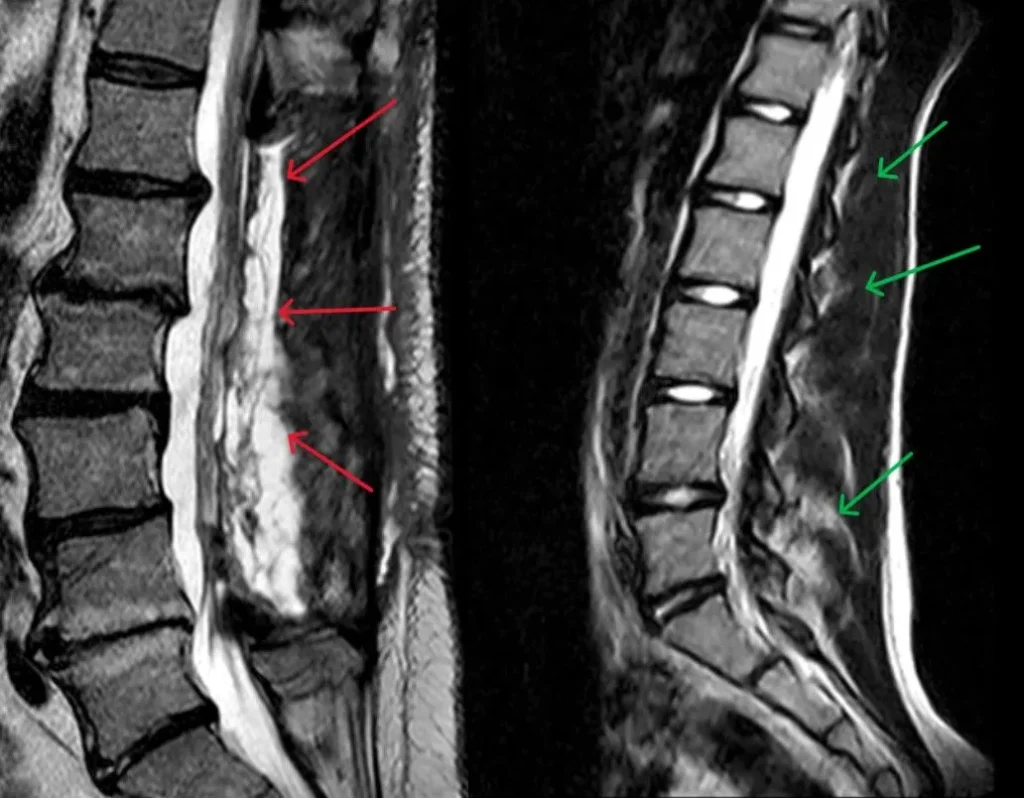
This illustrates an important point that imaging findings should be correlated with the clinical picture before thinking about management. An MRI finding of cervical stenosis in a case where the symptomatology is somewhere else or even there are no neurologic symptoms at all doesn’t necessitate a management plan for the cervical spine.
Non-Surgical Treatment of Cervical Spinal Stenosis
Conservative care is usually the proper approach for those patients who suffer from mild or moderate symptoms but lack neurological deficit and deterioration. Nevertheless, patients need to realize that there is a limitation to the treatment options: while conservative measures help to manage pain and slow down progression of the disease’s functional consequences, they do not restore anatomical patency of the canal. ⁶ ¹¹
Physical therapy
Cervical-specific physical therapy is used to correct posture, increase the muscle strength of the neck area, increase mobility, and decrease mechanical loads on irritated nerves. ¹¹ It is important to note that general exercises for the neck are not enough for this purpose; patients require cervical-specific exercises such as deep cervical flexor strengthening, shoulder stabilization, and postural correction.
Medications
- Non-steroidal anti-inflammatory drugs (NSAIDs). Ibuprofen, naproxen, or celecoxib are first-line agents for inflammation and pain control.
- Neuropathic pain medications. Gabapentin or pregabalin may help manage radiating neuropathic pain, though side effects including drowsiness and cognitive slowing should be discussed.
- Muscle relaxants. Cyclobenzaprine or tizanidine may help with associated cervical muscle spasm on a short-term basis.
- Oral corticosteroids. A brief course (methylprednisolone dose pack) may be used for severe inflammatory flares.
Epidural steroid injections
Epidural steroid injections (ESIs) deliver corticosteroids directly to the epidural space near the compressed nerve root. They can provide temporary but significant reduction in inflammation and pain. ESIs are useful for short-term symptom management and for allowing patients to engage more effectively in physical therapy. Their effects are temporary and do not address the underlying structural narrowing. Importantly, cervical ESIs carry a small but real risk of serious complications including spinal cord injury, and should only be performed by experienced interventionalists under fluoroscopic guidance.
Activity modification
Avoiding activities and positions that worsen symptoms, particularly sustained neck extension, can reduce symptom intensity during flares. Ergonomic adjustments to workstations, monitor height, and sleep positioning are often helpful.
When conservative care is not enough
Non-surgical management should be reconsidered when:
- Symptoms persist or worsen after 6–12 weeks of appropriate conservative treatment
- Motor weakness is progressive (worsening grip strength, increasing hand clumsiness, or lower extremity weakness)
- Signs of myelopathy are present or progressing (gait instability, upper motor neuron signs, balance deterioration)
- Bowel or bladder dysfunction develops
- Pain is intractable despite multimodal conservative management
- MRI shows significant cord compression with intramedullary signal changes
Low-quality evidence exists that for patients with mild myelopathy (mJOA score ≥14), conservative and surgical treatment may have similar short-term outcomes. ¹¹ However, for moderate to severe myelopathy, surgical intervention yields superior outcomes, and delayed treatment consistently produces worse neurological recovery. ⁶ ⁷ ¹¹ ¹⁹
Surgical Treatment for Cervical Spinal Stenosis
Surgical treatment in CSS aims at decompression by making adequate room for the compressed spinal cord and nerves in order to relieve them from any pressure, halt their degeneration and help them heal. ²⁰ The type of procedure and the technique used will be based on the site and causes of the compression, number of levels, and general condition of the patient.
Traditional Anterior Cervical Discectomy and Fusion (ACDF)
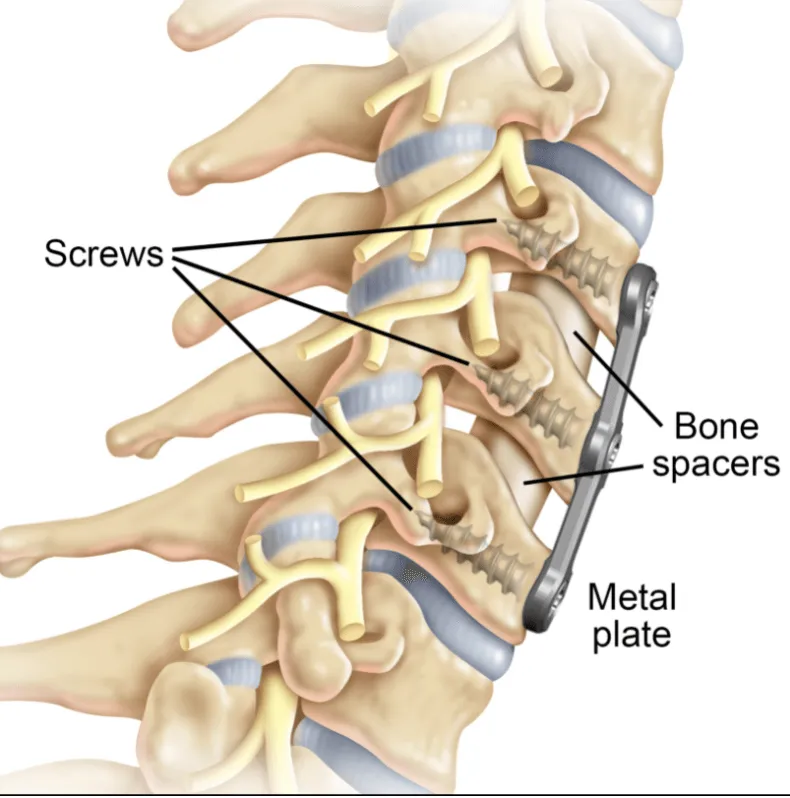
Anterior Cervical Discectomy and Fusion is the most frequent cervical spine surgery performed in the US, with over 130,000 operations done each year. The procedure is carried out through the front of the neck; the herniated disc or bone spurs causing compression are removed and adjacent vertebrae are fused using bone graft and a metal plate.
ACDF can effectively relieve arm pain and neurological symptoms for appropriately selected patients. However, it permanently eliminates motion at the fused level, and this loss of motion transfers increased mechanical stress to the adjacent spinal segments. ¹² ¹³ ¹⁴
The long-term consequences of this stress transfer are well-documented:
- A 2025 review in Molecular Medicine Reports confirmed that cervical fusion consistently alters spinal biomechanics, increasing intradiscal pressure and range of motion at adjacent levels and accelerating degeneration. ¹³
- The overall reoperation rate for symptomatic ASD following cervical fusion is 6.57%, peaking at 8.12% in individuals aged 30–39 and decreasing with age. ¹²
- A meta-analysis of 83 studies found that the prevalence of imaging-detected ASD after ACDF was 28.28%, the prevalence of symptomatic ASD was 13.34%, and the reoperation rate for ASD was 5.78%. ¹⁴
- Those under age 50 have a higher likelihood of requiring ASD reoperation, making this risk particularly meaningful for younger patients. ¹² ¹³
- Rates of ASD requiring surgical treatment have been reported as approximately 2% per year, with projections that 22% of patients would need reoperation for ASD within 10 years. ²¹
Laminectomy and Laminoplasty
Laminectomy involves removal of the lamina (bony cover on the rear side of the vertebral body) from one or more cervical vertebrae to relieve pressure on the spinal cord from its posterior side. While laminoplasty involves widening of the spinal canal by forming a hinge joint from the lamina instead of removal. ²⁰ Both procedures are usually employed when multiple levels of spinal cord are compressed. Because posterior bone removal can create instability, laminectomy is frequently combined with instrumented fusion, which carries the same adjacent segment concerns as ACDF.
Deuk Laser Disc Repair®
In cases where cervical stenosis is the result of compression from discs such as herniation, disc bulge, bone spurs formed at the level of the disc, or annular tear, the DLDR® provides an alternative to fusion. ²²
What it is: Deuk Laser Disc Repair® is a minimally invasive and motion preserving technique done via a small incision, about the size of a pencil eraser (4 to 7mm), using high-definition endoscopic cameras and an FDA approved Holmium:YAG laser to remove the exact tissues responsible for the canal narrowing without fusing bones, major muscles cuts, or implantation of any devices. ²²
How it works: Using live fluoroscopic imaging, a small tube is guided into the symptomatic disc. The endoscopic camera is inserted to visualize the area precisely. The laser then removes only the 5 to 10% of damaged disc tissue causing herniation and inflammation, and treats the annular tear that is the source of discogenic pain, leaving healthy disc structure completely intact. ²²
Key advantages over ACDF:
- No fusion. The cervical spine retains its full natural range of motion permanently. There is no adjacent segment disease risk because no fusion is performed. ²²
- No hardware. No screws, plates, or cages means no hardware complications, no hardware failure, and no need for future hardware removal surgery.
- No muscle cutting. The approach does not disrupt the major muscle groups of the neck, resulting in dramatically less postoperative pain and faster recovery.
- Outpatient procedure. No hospital stay is required. Most patients walk out of the surgical center within one hour.
- Rapid recovery. Most patients return to daily activities within two to three days and to desk work within a week. This contrasts sharply with the three to six month recovery typical of ACDF.
- No opioids required. Patients do not need narcotic pain medication after DLDR, unlike most traditional cervical spine procedures.
- Proven results. Over 20 years and more than 2,000 cervical procedures, DLDR has achieved a 99% pain relief for treated pain sources with a 0.01% complication rate on record. ²²
What DLDR treats:
- Disc-related cervical spinal stenosis
- Herniated and bulging cervical discs
- Annular tears
- Bone spur-related nerve compression at the disc level
- Cervical radiculopathy (pinched nerves in the neck)
- Degenerative disc disease
- Chronic neck and arm pain of discogenic origin
The appropriate surgical approach, whether DLDR or another technique, is always determined after a thorough review of diagnostic imaging, clinical examination, and an honest assessment of all available options. At Deuk Spine Institute, patients receive a free MRI review so that Dr. Deukmedjian can assess candidacy and provide a genuine, evidence-based recommendation.
Why a Second Opinion Can Change Your Outcome

The first and most critical step that a patient suffering from cervical spinal stenosis can take in order to avoid having surgery is getting a second opinion from a neurosurgeon skilled in traditional fusion surgery as well as minimally invasive motion preservation options.
ACDF surgery is the surgery of choice that many people suffering from cervical spinal stenosis due to disc issues get, only because it is the one their doctor does the most often.
As documented in the research on adjacent segment disease, fusion carries meaningful long-term risks that compound over time, especially for younger patients. ¹² ¹³ ¹⁴ A surgeon whose practice includes advanced endoscopic and laser techniques can evaluate whether a motion-preserving approach addresses your specific compression pattern.
At Deuk Spine Institute, we offer a free virtual consultation and MRI review. Dr. Deukmedjian will personally review your imaging and provide an honest, independent assessment of whether Deuk Laser Disc Repair or another approach best fits your condition.
Decompress the cervical canal without ACDF or fusion.
Cervical stenosis doesn’t resolve on its own — up to 62% of conservatively managed patients deteriorate within a few years. But ACDF carries a 6.57% reoperation rate for adjacent segment disease, and that number climbs with younger patients. If your stenosis is driven by a disc herniation or bulge compressing the canal, send your MRI for a free review by Dr. Deukmedjian and learn whether Deuk Laser Disc Repair® can decompress the cord or nerve root through a 7 mm incision — no fusion, no hardware, no motion lost.
- 99%
- Pain relief
- 0.01%
- Complication rate
- 7mm
- Incision, outpatient
FAQs
What is the difference between cervical spinal stenosis and a cervical herniated disc?
Both conditions can produce similar symptoms including neck pain, radiating arm pain, numbness, and weakness, but they are distinct diagnoses. Cervical spinal stenosis is the narrowing of the spinal canal itself, typically caused by age-related changes including bone spurs, thickened ligaments, and degenerative disc changes. ¹ It often affects multiple levels and can compress the spinal cord (myelopathy) in addition to individual nerve roots. A cervical herniated disc is a single event in which the inner material of one disc pushes through a tear in the outer wall and directly compresses a nerve root or the cord. ² In practice, these conditions frequently occur together, as disc herniations are one of the most common causes of canal narrowing in cervical stenosis.
Can cervical spinal stenosis be treated without surgery?
Certainly, patients with mild cases without any significant or progressive neurologic deficit are usually started with conservative management consisting of physical therapy, anti-inflammatory drugs, and epidural steroid injections. ¹¹ However, this is not a definitive treatment for structural canal stenosis. Patients with mild myelopathy (mJOA ≥14) have been found to have similar outcomes when compared to those who were subjected to surgery. ¹¹ The outcome is definitely superior in patients with moderate-to-severe myelopathy with around 20%–62% of patients developing progressive neurologic deficit during the period of 3 to 6 years. ⁹ The 2025 review showed that early surgery was better for neurological outcomes. ¹¹
Is traditional cervical fusion (ACDF) the only surgical option for cervical spinal stenosis?
False. Although ACDF surgery is the most frequently performed type of cervical spine surgery in the U.S., there is more than one way of treating this condition. ¹² In cases where cervical stenosis is caused by disc degeneration, another type of surgery, called Deuk Laser Disc Repair, can be considered. ²² ACDF permanently removes the motion of the vertebrae at the fusion level and puts additional strain on the other vertebrae, which results in a reported overall revision rate for symptomatic ASD of 6.57%. ¹² Meta-analysis of 83 different studies revealed that the imaging prevalence rate of ASD after ACDF was 28.28%, while that of symptomatic ASD was 13.34%. ¹⁴ There are no risks involved in DLDR, as there is no fusion and implantation done.
What happens if cervical spinal stenosis is left untreated?
Because CSS is progressive, leaving it untreated carries significant risk. Research on the natural history of degenerative cervical myelopathy shows that 20–62% of conservatively managed patients deteriorate within 3–6 years. ⁹ Consequences include worsening weakness and numbness, progressive gait instability and falls, loss of hand dexterity, and in severe cases bowel or bladder dysfunction. ³ ⁶ Prolonged spinal cord compression causes histological changes that may not fully recover even with delayed surgery. ⁴ Additionally, patients with cervical stenosis are at heightened risk of acute spinal cord injury from even minor trauma. ⁹ For these reasons, timely evaluation and treatment are strongly recommended.
How is cervical spinal stenosis different from lumbar spinal stenosis?
Cervical stenosis affects the neck and can compress the spinal cord itself, potentially causing myelopathy with upper motor neuron signs, hand clumsiness, gait instability, and even bowel/bladder dysfunction. ³ Lumbar stenosis affects the lower back, where the spinal cord has typically already ended (around L1), so it compresses the cauda equina (nerve roots), causing neurogenic claudication, leg pain with walking, and lower extremity weakness. ¹ The key clinical difference is that cervical stenosis carries the risk of spinal cord injury and myelopathy, which makes it potentially more dangerous and more urgent to treat.
Can cervical spinal stenosis cause dizziness or headaches?
While CSS primarily causes arm and hand symptoms along with gait changes, some patients report dizziness, vertigo, and cervicogenic headaches, particularly when cervical stenosis is associated with significant spondylotic changes that affect vertebral artery flow or upper cervical nerve roots. These symptoms should be evaluated carefully to exclude other causes before attributing them to cervical stenosis.
What physical examination test is most accurate for detecting cervical myelopathy?
A systematic review of clinical signs found that the Tromner sign demonstrated the highest diagnostic accuracy for detecting myelopathy, with sensitivity of 93–97%. ⁶ ¹⁸ Other useful tests include the Hoffmann sign, the inverted radial reflex, tandem gait assessment, grip-and-release test (evaluating hand dexterity), and checking for hyperreflexia and clonus. No single test is definitive; a comprehensive neurological examination combining multiple tests provides the most reliable clinical assessment.
When should I get a second opinion?
If you have been told you need cervical fusion (ACDF), it is worth consulting a surgeon who also performs minimally invasive, motion-preserving procedures to determine whether your specific compression pattern could be treated without fusion. This is especially important if you are under 50, as younger patients face decades of elevated adjacent segment stress following fusion, with reoperation rates peaking at 8.12% in those aged 30–39. ¹² Similarly, if you have been managing symptoms conservatively but are noticing progressive hand clumsiness, worsening balance, or increasing difficulty walking, prompt specialist evaluation is warranted.
Sources
View Sources
- StatPearls. Spinal stenosis. National Library of Medicine. Updated 2024.
- Cleveland Clinic. Radiculopathy overview. my.clevelandclinic.org. 2024.
- Fehlings MG, et al. Degenerative cervical myelopathy — update and future directions. Nat Rev Neurol. 2020;16(2):108–124.
- Badhiwala JH, et al. Degenerative cervical myelopathy: clinical presentation, assessment, and natural history. J Clin Med. 2020;9(8):2617.
- Davies BM, et al. Most degenerative cervical myelopathy remains undiagnosed, particularly amongst the elderly. J Clin Med. 2022;12(1):227.
- Badhiwala JH, et al. Clinical signs and symptoms for degenerative cervical myelopathy: a scoping review. J Clin Neurosci. 2025.
- Nouri A, et al. Degenerative cervical myelopathy: development and natural history (AO Spine RECODE-DCM). Global Spine J. 2022;12(1 Suppl):39S–54S.
- PM&R KnowledgeNow. Cervical stenosis. American Academy of PM&R. Updated Nov 2024.
- Nouri A, et al. Degenerative cervical myelopathy: development and natural history. Global Spine J. 2022;12(1 Suppl):39S–54S.
- Mayo Clinic. MRI: overview. mayoclinic.org. 2024.
- Solino ML, et al. Degenerative cervical myelopathy: timing of surgery. EFORT Open Rev. 2025;10(6).
- Shahzad H, et al. Exploring the incidence and risk factors of reoperation for symptomatic ASD following cervical decompression and fusion. N Am Spine Soc J (NASSJ). 2024;17:100305.
- Huang X, et al. Risk factors and treatment strategies for adjacent segment disease following spinal fusion (Review). Mol Med Rep. 2025;31:33.
- Mesregah MK, et al. Radiographic risk factors for ASD following ACDF: a systematic review and meta-analysis. Global Spine J. 2024;14(3):1024–1036.
- Wesemann T, et al. Epidemiology and treatment trends in lumbar and cervical spinal canal stenosis beyond the COVID-19 pandemic: a nationwide analysis. medRxiv. 2025.
- Mayo Clinic. CT scan: overview. mayoclinic.org. 2024.
- Frost JD, et al. The prevalence of congenital cervical stenosis differs based on race. Spine J. 2025.
- Badhiwala JH, et al. Clinical signs for degenerative cervical myelopathy: sensitivity and specificity. J Clin Neurosci. 2025.
- Thompson K, et al. Updates in current concepts in degenerative cervical myelopathy: a systematic review. J Spine Surg. 2024;10(2):313–326.
- Cleveland Clinic. Spinal decompression therapy. my.clevelandclinic.org. 2024.
- Lee JC, et al. Symptomatic ASD after single-level ACDF: incidence and risk factors. Medicine. 2017;96(47):e8678.
- Deuk Spine Institute. Cervical Deuk Laser Disc Repair® benefits. deukspine.com.