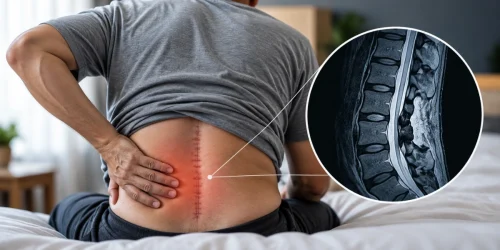


By Dr. Ara J. Deukmedjian, MD
Board Certified Neurosurgeon
updated: Sep 24, 2026
Medical disclaimer: This article is intended for educational purposes only and is not a substitute for professional medical advice, diagnosis, or treatment. Outcomes vary from patient to patient. Always consult a qualified healthcare provider about your specific spine condition before making treatment decisions.
Key Takeaways
- A laminectomy is a decompression surgery designed primarily for nerve-related symptoms (leg pain, numbness, walking difficulty), not for axial low back pain.
- A 2024 study found nearly half of veterans undergoing decompressive laminectomy failed to achieve functional improvement at 12 months. 2
- Post-laminectomy syndrome (failed back surgery syndrome) affects roughly 10%–40% of patients. 6
- Approximately 14% of laminectomy patients require reoperation within 5–10 years, most commonly for persistent back pain. 3,4
- Deuk Laser Disc Repair® offers a minimally invasive, outpatient alternative that targets the actual pain generator without removing bone, cutting muscle, or implanting hardware. With a reported 99% pain relief rate for treated sources and a 0.01% complication rate across more than 2,800 procedures.
In case your surgeon has advised you to have a lumbar laminectomy for your spinal stenosis or herniated disc. It would be wise to know one particular fact about this surgical procedure. Though a laminectomy can significantly alleviate leg pain and neurogenic claudication in selected cases. An increasing amount of published research proves that a laminectomy has significant limitations in relation to axial pain, which is defined as the pain arising from the lumbar spine. 1
What a Lumbar Laminectomy Actually Treats
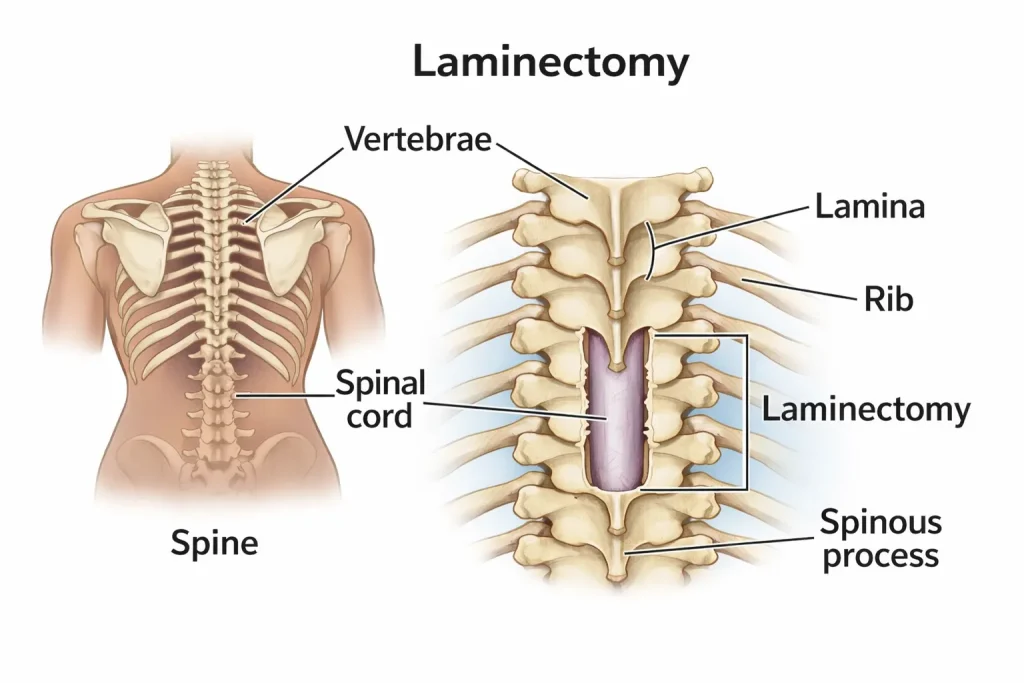
In lumbar laminectomy surgery, there is removal of the lamina, which is the bony arch that lies at the back of the vertebrae to increase the size of the spinal canal hence reducing pressure on the compressed nerves. The lumbar laminectomy was meant to correct the neurologic symptoms associated with spinal stenosis, including pain, numbness, weakness, and difficulty walking long distances.
The challenge with this surgical procedure is that it was not meant to address the mechanical problems causing low back pain. In this procedure, dissection of the paraspinal muscles, removal of bone, and soft tissue manipulation take place, and this could affect the biomechanics of the spine in some patients.
Lower Success Rate Than Patients Believe Is Possible
According to a study in the journal Frontiers in Musculoskeletal Disorders in 2024, close to half of the veterans that were treated using a decompressive laminectomy did not get any improvement after 12 months. 2 This is an alarming statistic that poses tough questions regarding patient selection for the surgery.
A larger 2015 review of 500 laminectomy patients found that 14.4% required a second operation within an average of 3.4 years. 3 Patients who continued to have back pain after surgery carried a relative risk of reoperation 6.14 times higher than patients whose back pain resolved. Among those who ultimately went back to the operating room, back pain was the leading symptom reported by 54.17% of them.
The Evidence Base Is Thinner Than It Should Be
A systematic review of long-term laminectomy outcomes. Covering 12 studies and 83,492 patients with at least five years of follow-up. Concluded there is only low-quality evidence that patients experience durable improvement after the procedure. 4 The reoperation rate over 5–10 years was 14%. The reviewers pointed out that despite how common spinal stenosis is, high-quality long-term data supporting laminectomy remain surprisingly scarce.
Axial Back Pain: The Weak Point of Decompression Surgery
The most important limitation is this: laminectomy does not reliably treat axial back pain. Research on advanced pain management even notes that axial pain is “not as reliably treated” by decompression-based approaches. 5 That is because removing bone to make room for nerves does nothing about the degenerative disc, the arthritic facet joint, or the inflammatory cascade that is usually generating the actual back pain.
Post-Laminectomy Syndrome: A Common and Underdiscussed Reality
Failed back surgery syndrome sometimes called post-laminectomy syndrome. Refers to persistent or new pain after decompression surgery. National data suggest it affects between 10% and more than 40% of laminectomy patients, and up to 30–46% of those undergoing more complex multi-level procedures. 6
Why Laminectomy Fails
- The wrong pain generator was treated. The most common reason a laminectomy fails is that the anatomic lesion targeted by surgery wasn’t actually the source of the patient’s pain in the first place.
- Epidural fibrosis. Scar tissue is a normal part of healing, but excessive scarring around nerve roots can create fresh compression and new pain. 6 This deeper scarring is separate from the incision on your skin, and the difference between visible spine surgery scars and internal scar tissue is easy to miss when weighing an open procedure. 6
- Iatrogenic spinal instability. Removing bone (especially without fusion) can destabilize a spinal segment, producing ongoing mechanical pain and speeding degeneration of neighboring levels.
- Incomplete or recurrent disc herniation. Recurrent herniation affects 5–10% of patients, most often in the first three months after surgery.
- Adjacent segment disease (ASD). The stress and biomechanics that previously acted on the operative level are transferred to adjacent segments that may degenerate more quickly and need additional surgery.
Each of these mechanisms circles back to the same root issue: for most patients whose primary complaint is back pain, laminectomy is operating on the wrong anatomy. The structural reasons bone removal misses the true pain source run deeper than the headline failure rates suggest.
The Radicular vs. Axial Distinction Matters
In many cases, patients and even some surgeons do not seem to understand the difference between radiculopathy (leg pain because of compression of a nerve) and axial back pain (pain originating in the spine). Laminectomy was designed for the former and not the latter, which also explains why pain after a laminectomy feels so different from the leg pain that led to surgery.
“Recently published meta-analyses suggest no statistically significant increase in spinal instability following laminectomy procedures; especially in patients without predominance of mechanical back pain symptoms.” 7 The obvious, but unspoken, implication is that laminectomy is the wrong surgery for mechanical back pain.
Complications You Should Know About

Apart from its efficacy, laminectomy presents clear surgical risks:
- Durotomy (tearing of the membrane around the spinal cord) happens in about 10% of cases.
- CSF leakage is observed in 1.6% of cases after the surgery.
- Infection, bleeding, and thrombosis persist as postoperative complications.
- Nerve injury may happen during decompression.
- Paraspinal muscle atrophy resulting from surgical injury leads to postoperative instability and pain.
Paraspinal muscle atrophy demands independent consideration. Open laminectomy surgery requires surgical separation and retraction of muscles, responsible for stability of your lumbar spine. This injury causes muscle atrophy and weakness. Moreover, it can cause chronic inflammation leading to pain even in cases when decompression itself was performed perfectly. Specific exercises can restore some functions, but the initial damage is done. 5
What Newer Research Suggests About Better Alternatives
A 2024 network meta-analysis in BMC Medicine compared surgical interventions for lumbar spinal stenosis and found that minimally invasive techniques (such as full-endoscopic laminotomy) reduce muscle damage and speed recovery. 8 But the analysis also highlighted a stubborn truth: most of these procedures still don’t directly address the discogenic and inflammatory drivers of back pain.
The pattern across the literature is consistent. The classic procedure of laminectomy often ends up exchanging one difficulty for another since it only provides symptomatic relief of the compressed nerves while failing to address the degenerative process itself, sometimes even speeding it up. This is precisely the area that new laser techniques have addressed.
Managing Expectations in the Age of AI
The problem of finding information about spine surgeries has become more complicated, rather than easier, with the advent of generative AI. The surgeons themselves always provide recommendations within the scope of their expertise. Asking a large language model for an answer leads to bias according to the way the question was phrased, the version of the model used, its training cut-off date, and its weighting of the web-based material.
The consequence of this is a misunderstanding of patient expectations when it comes to spine surgery and its results. People expect to feel decades younger after a laminectomy, something that is not even medically possible. If you have pain because of some secondary pathology, which is not addressed by the surgery, you might have a perfectly done procedure, yet still suffer.
What Revision-Surgery Data Reveal
Revision statistics are perhaps the most revealing indicator of laminectomy’s limits. In the 2015 series of 500 patients, 44.44% of those needing reoperation required decompression plus fusion, while 55.56% needed decompression alone. 3 The lifetime risk of eventually undergoing fusion after an index laminectomy was 8.0%. Meaning a meaningful minority of patients graduate to more invasive, higher-risk operations down the line.
A 2022 study looking at failed back surgery syndrome across procedure types found the highest rates in elderly patients (ages 70–74), those treated in inpatient settings, and those undergoing multi-level surgery. A profile that overlaps heavily with the typical open-laminectomy candidate. 9
Questions to Ask Before Agreeing to Surgery
A thorough workup should answer the following before you consent to a laminectomy:
- Is your dominant complaint back pain or leg pain?
- Are facet joint arthritis or degenerated discs contributing to your symptoms?
- Is there imaging evidence of spinal instability that bone removal might worsen?
- Have you truly exhausted conservative options: physical therapy, targeted injections, anti-inflammatories?
- Do you have realistic expectations about what surgery can and cannot achieve?
Proper patient selection is the single most powerful predictor of avoiding failed back surgery syndrome. Yet rising procedure volumes combined with financial incentives that reward more invasive surgery. Meaning laminectomies are still being performed on patients unlikely to benefit.
Why Traditional Laminectomy Persists Despite the Data
Open laminectomy remains one of the most commonly performed spine operations in the United States, and the reasons are as much economic as clinical. As detailed in analyses of the true cost of spinal fusion surgery, the spine industry has powerful financial incentives that favor invasive procedures: longer operative times, more implants, higher reimbursement. Even when less invasive alternatives may serve the patient better. 10
A Safer, More Minimally Invasive Alternative: Deuk Laser Disc Repair®
The fundamental problem with laminectomy is that it removes healthy bone and muscle to make more room for a nerve without ever touching the disc, annular tear, or inflammatory tissue that is actually generating your pain. Then the logical alternative is a procedure that does the opposite: leave the stabilizing anatomy intact and treat the pain generator directly.
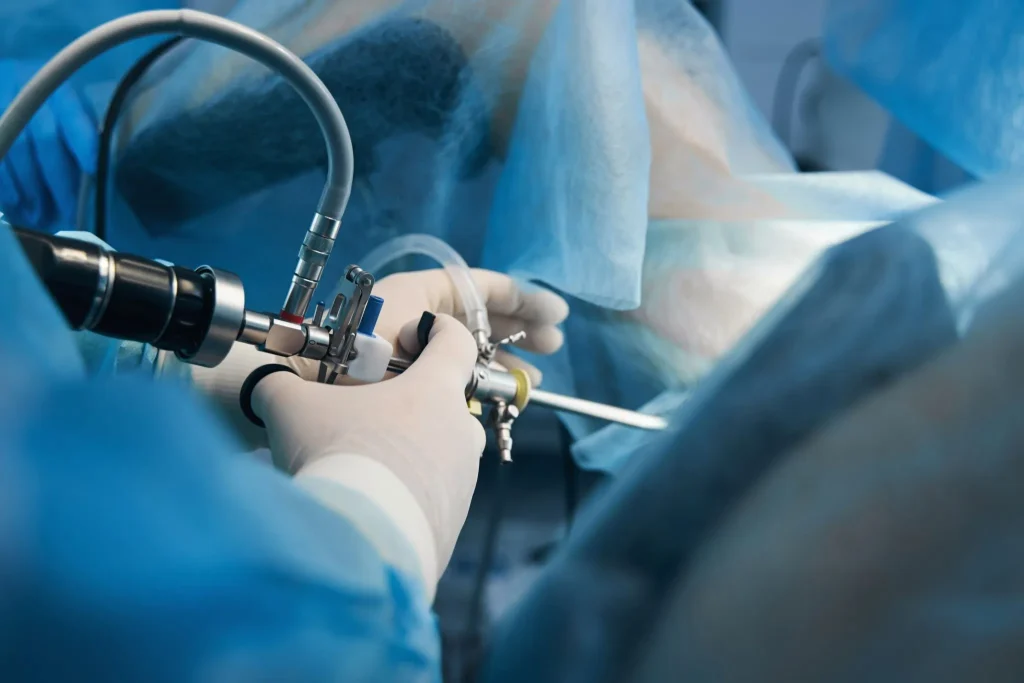
That is precisely what Deuk Laser Disc Repair® (DLDR) was designed to do. Developed by Board-Certified neurosurgeon Dr. Ara Deukmedjian and refined over more than 20 years, DLDR is an endoscopic, laser-based procedure that targets herniated and degenerated disc tissue through an incision smaller than a dime: no lamina removed, no muscles cut, no hardware implanted, no fusion required.
How DLDR Directly Addresses What Laminectomy Cannot
Rather than increasing the space in the spinal canal and hoping the problem will resolve, DLDR involves a series of four precise steps:
- Precision access through an incision no larger than 4 to 7 mm, less than the diameter of a dime. With use of a cylindrical dilator that slowly pulls apart muscles rather than cutting them.
- Endoscopic viewing that allows the doctor to see the location of the annular tear and the extruded material of the disc millimeter by millimeter.
- Treatment with the Holmium YAG laser that destroys only the diseased and painful tissue, the annulus and the herniated nucleus pulposus. Leaving the adjacent bone undisturbed.
- The natural process of recovery over the next 9 to 12 months as the body heals itself.
This is all accomplished in just 20 minutes for each disc under light sedation at an outpatient facility. Blood loss averages 2 mL. Patients can walk within an hour, go home the same day, and resume normal activity within three days without opioids or narcotics.
DLDR® vs. Lumbar Laminectomy: Side by Side
One procedure treats the disc — the actual pain generator. The other removes bone to indirectly decompress the nerve. The differences compound across every metric that shapes recovery, risk, and long-term outcomes.
Why This Matters Clinically
Every mechanism that drives post-laminectomy syndrome. Missed pain generator, epidural fibrosis from open dissection, iatrogenic instability from bone removal, adjacent segment disease from redistributed biomechanical load. Is either avoided or minimized by an approach that leaves the lamina, muscles, and ligaments intact and treats the disc pathology directly.
DLDR is not the right answer for every patient. It is specifically indicated for chronic discogenic pain stemming from herniated discs, bulging discs, degenerative disc disease, spinal stenosis, sciatica, and radiculopathy. Which is why an accurate diagnosis, based on a careful MRI review, is the essential first step.
Get a Second Opinion Before You Commit to Bone Removal
At Deuk Spine Institute, we believe patients deserve better than a default surgical pathway that fails a substantial share of the people it’s offered to. That starts with an accurate diagnosis of where your pain is actually coming from. Before anyone talks about removing bone.
Dr. Deukmedjian personally reviews every MRI to identify your specific pain generators and determine whether you are a candidate for Deuk Laser Disc Repair® or another minimally invasive option. There is no cost and no obligation.
Don’t let an outdated procedure and a rushed evaluation lead you down a path that research suggests fails nearly half the time.
Laminectomy removes bone. Your disc—the actual pain source—stays untouched
Leave the bone. Treat the disc.
Walk out the same day.
Laminectomy was designed for leg pain from nerve compression, not for axial back pain. When the real problem is a damaged disc, removing bone can’t fix it—and may destabilize the spine. DLDR targets the pain generator directly through a 4–7 mm incision with no bone removal, no muscle cutting, and no hardware.
at 12 months
laminectomy syndrome
within 5–10 years
- Removes lamina bone to decompress nerve
- Paraspinal muscles cut and retracted
- ~10% durotomy rate; CSF leak risk
- General anesthesia, often inpatient
- Disc pathology left untreated
- Laser treats the inflamed disc tissue directly
- Muscle gently separated, never cut
- 0.01% complication rate, 2,700+ cases
- Light sedation, outpatient, same-day discharge
- No bone removed, full stability preserved
Deuk Spine Institute · Board-certified neurosurgeon · No bone removal, no fusion, no narcotics
FAQ
Does a lumbar laminectomy relieve back pain or only leg pain?
Answer
Laminectomy is primarily designed to relieve leg pain, numbness, and walking difficulty caused by nerve compression. not axial back pain arising from the spinal structures themselves. Research shows axial back pain is “not as reliably treated” by laminectomy because the surgery doesn’t address degenerative disc disease, facet joint arthritis, or inflammation. In fact, roughly half of patients fail to achieve functional improvement after the procedure, with persistent back pain being the most common reason for reoperation.
What is post-laminectomy syndrome and how common is it?
Answer
Post-laminectomy syndrome is also called failed back surgery syndrome (FBSS). Is the persistence of old pain or the appearance of new pain after decompression surgery. National data suggest it affects 10% to more than 40% of laminectomy patients. Contributing factors include an incorrect initial diagnosis, epidural fibrosis (scar tissue), iatrogenic spinal instability, incomplete decompression, and adjacent segment disease. Patients with post-laminectomy back pain have a 6.14× higher relative risk of eventually needing another spine surgery.
How is Deuk Laser Disc Repair® safer and less invasive than a laminectomy?
Answer
Deuk Laser Disc Repair® uses a 4–7 mm incision, an endoscopic camera, and a Holmium YAG laser to remove only the inflamed, herniated disc tissue that is generating pain. Unlike a laminectomy, no lamina is removed, no muscles are cut, and no hardware is implanted, so the spine’s natural stability is preserved. The procedure takes about 20 minutes per disc, is performed outpatient under light sedation, and averages just 2 mL of blood loss. Across more than 2,700 procedures performed since 2004, DLDR has a reported 0.01% complication rate and 99% pain relief for treated pain sources. With most patients walking within an hour and returning to normal activities within a few days.
What are the alternatives to a lumbar laminectomy for back pain?
Answer
Before considering surgery, patients should exhaust conservative measures: physical therapy, anti-inflammatories, and targeted injections. For those who do need a procedure, advanced minimally invasive endoscopic techniques such as Deuk Laser Disc Repair® can decompress nerves and treat the disc pathology directly while preserving bone, muscle, and ligament. The most important step is a comprehensive evaluation to determine whether your pain is truly from nerve compression alone or from disc, annular, or facet pathology that a bone-removal procedure cannot fix.
Sources
View Sources
- Laminectomy: Invasive Spine Surgery for Stenosis — Deuk Spine Institute
- Frontiers in Musculoskeletal Disorders (2024)
- PMC — 500-patient laminectomy reoperation study (2015)
- PMC — Systematic review of long-term laminectomy outcomes
- AAPM&R — Post-Laminectomy Pain
- NCBI Bookshelf — Failed Back Surgery Syndrome
- NCBI Bookshelf — Degenerative Lumbar Spondylolisthesis (StatPearls)
- BMC Medicine — Network meta-analysis of surgical interventions for lumbar stenosis (2024)
- PubMed — Incidence of failed back surgery syndrome (2022)
- The True Cost of Spinal Fusion Surgery — Deuk Spine Institute
- Deuk Laser Disc Repair® — Deuk Spine Institute