
Key Points
✓ Neck arthritis (cervical spondylosis) is one of the most common causes of chronic neck pain, with population studies placing prevalence around 13–17% of adults and lifetime prevalence as high as 48%. ¹ ²
✓ The cervical facet joints are the dominant pain generator in roughly 55% of chronic neck pain patients, more than discs or muscles. ³ ⁴
✓ Most neck arthritis is not a surgical problem. Conservative care — therapy, posture correction, NSAIDs, and targeted injections — controls symptoms for the majority of patients. ⁵
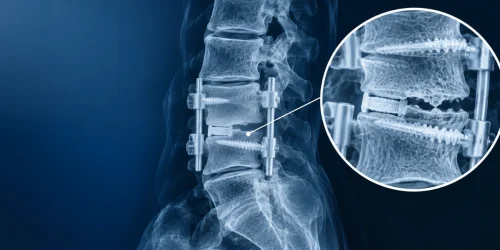
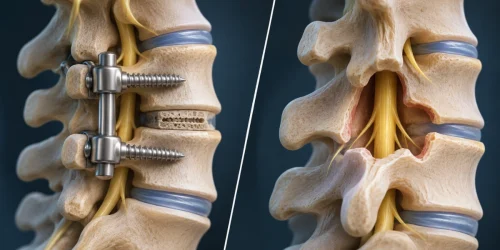
✓ Cervical fusion is still the default surgical recommendation for many patients, but it drives adjacent segment disease in ~25% of patients within 10 years and is rarely the right first answer for arthritic facet pain. ⁶
✓ Deuk Plasma Rhizotomy® treats arthritic cervical facet pain at the source through a ~4 mm incision, without fusion, hardware, or opioids.
✓ If your only offer has been fusion, you almost certainly have not been told all of your options. Always get a second opinion before consenting to any permanent procedure. ⁷
Don’t have an MRI yet? Start your spine care journey →
Chronic neck pain is one of the most common complaints among people in the US. Reports estimate that roughly up to 70% of adults experience some sort of neck pain that hinders their daily living activities during their lifetime. One of the most common causes of neck pain is arthritis.
You may be thinking to yourself that arthritis is usually found in knees, hips, and shoulders, but the cervical spine has tiny joints that can become arthritic and cause chronic neck pain, too.
Why Neck Arthritis Is So Often Misunderstood
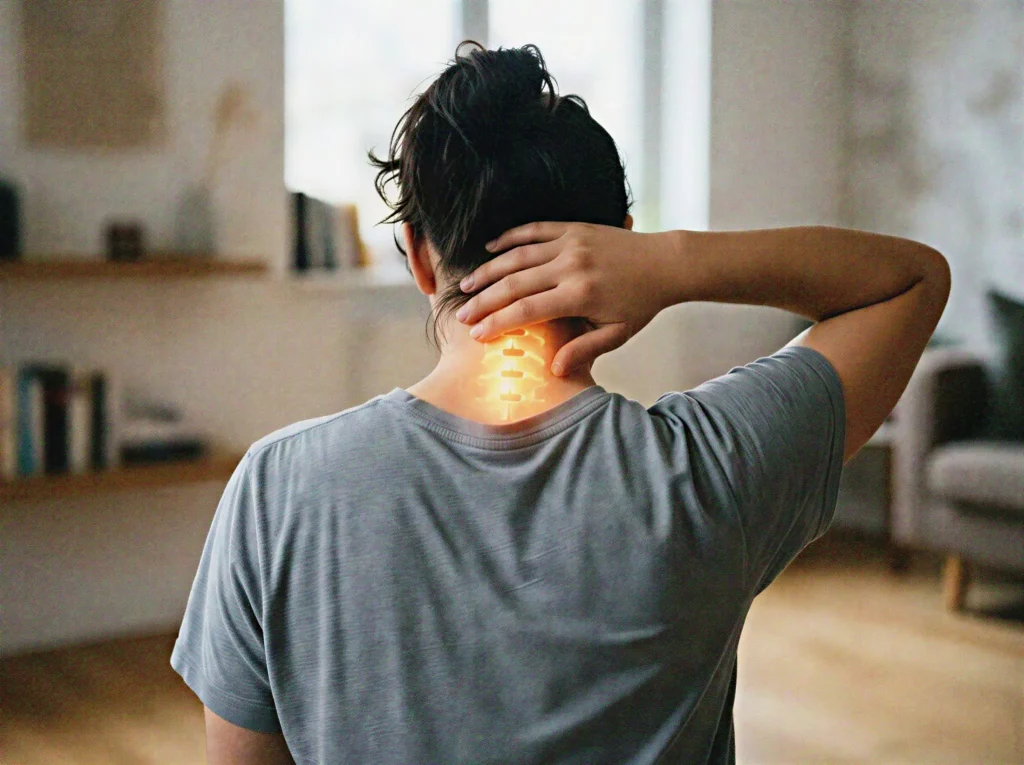
Chronic neck pain is one of the most common musculoskeletal complaints in the United States, with lifetime prevalence estimates running as high as 48–70% of adults. ² Yet the source of that pain is misdiagnosed routinely. Patients are told they have a “bulging disc” or “pinched nerve” when the actual pain generator is an arthritic facet joint a few millimeters away. The fix for one is not the fix for the other, and the wrong fix is how patients end up with fusions they did not need.
Arthritis of the cervical spine. Clinically called cervical spondylosis is the wear, swelling, and degeneration of the small joints in the neck. ¹ It is extraordinarily common: a community-based study of nearly 3,900 adults found symptomatic cervical spondylosis in 13.76% of the population, with the highest rates in the 45–60 age group. ¹ Newer Chinese epidemiological data put the figure closer to 17.6%, with even higher rates in office workers. ²
Knowing whether your pain is coming from a disc, a facet joint, a nerve root, or a muscle is the entire game. The treatment changes completely based on that answer.
What Is Arthritis in the Neck, Exactly?
The cervical spine has paired facet joints at the back of each vertebral level. These are tiny synovial joints the same kind of joint you have in your knees and fingers and they allow your neck to bend, extend, and rotate. Each one is lined with cartilage and sealed by a capsule that contains a dense network of pain-sensing nerve fibers.
Over time, that cartilage thins. The joint capsule becomes inflamed. ³ Bone spurs (osteophytes) form along the joint margins. The result is exactly what arthritis looks like in any other joint in the body: stiffness, swelling, pain with motion, and eventually grinding bone-on-bone contact.
Because cervical facet joints are so densely innervated, they are a leading source of chronic neck pain. Studies using controlled diagnostic blocks have repeatedly identified the facet joints as the primary pain generator in roughly 55% of patients with chronic neck pain, and some series put the figure as high as 67%. ³ ⁴ That makes facet arthritis a more common cause of persistent neck pain than disc disease in this population.
While age-related degeneration is the most common driver, posture, prior whiplash injury, repetitive overhead work, genetics, and inflammatory conditions all accelerate it.
Common Symptoms of Neck Arthritis
Recognizing the pattern early is what gets patients ahead of the disease before bone spurs start compressing nerves. The signs include:
- Neck pain and stiffness, worse after rest. Classic arthritic pain is stiff and dull in the morning, loosens up with light activity, and aches again after periods of sitting. A sharp catch when you turn your head is also typical.
- Reduced range of motion. Difficulty checking blind spots while driving or tilting your head to your shoulder is a tell-tale facet sign.
- Grinding or popping (crepitus). As cartilage thins, the rough joint surfaces grind together when you move.
- Protective muscle spasm. The trapezius and paraspinal muscles tighten around an inflamed joint to splint it. Patients often think the muscle is the problem; in reality it is reacting to the joint underneath.
- Cervicogenic headaches. Arthritis at the upper cervical levels (C2–C3) classically refers pain into the base of the skull and up over the head.
- Radiculopathy. When bone spurs project into the foramen where nerve roots exit, they compress the nerve and cause numbness, tingling, electric pain, or weakness radiating down the arm.
A common pitfall: arm symptoms get all the attention, while the underlying facet arthritis driving the headaches and neck stiffness gets ignored. Both need to be addressed.
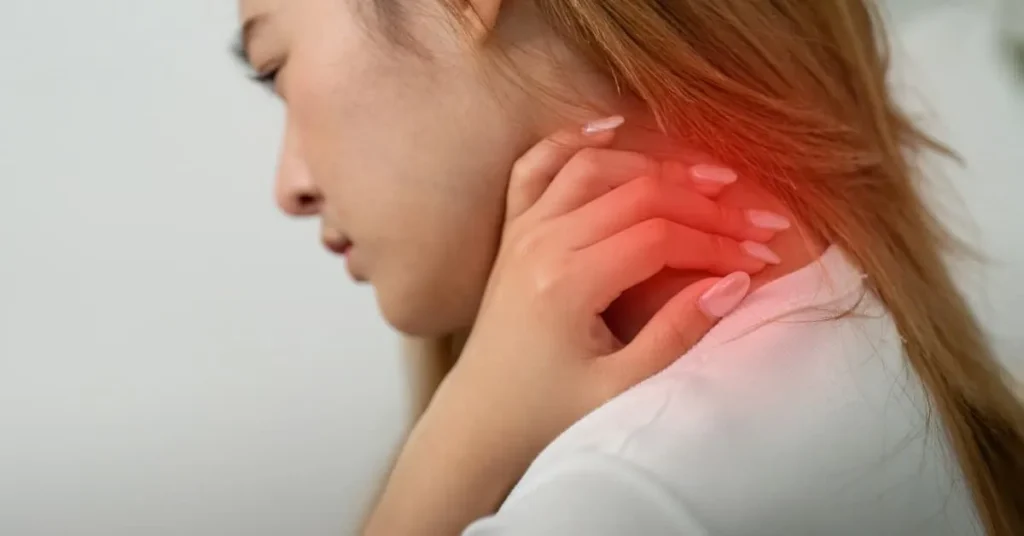
How Neck Arthritis Is Treated. From Least to Most Invasive
Physical therapy is the foundation of conservative care. A skilled therapist will build neck and shoulder strength to offload the arthritic joints, restore range of motion, and correct the forward-head posture that overloads the lower cervical facets in particular. It is not a cure, but for many patients it is enough to keep symptoms below the threshold that disrupts daily life.
2. Medications
Pharmacologic options are chosen based on which symptom is dominant:
- NSAIDs: reduce facet joint inflammation directly.
- Muscle relaxants: break the protective spasm cycle.
- Nerve pain medications: for radiculopathy from bone-spur nerve compression.
Every one of these carries side effects with long-term use, which is why they are best used as a bridge — not a destination.
3. Lifestyle and Ergonomic Changes
The cheapest and most underused intervention. Lifestyle adjustments — supportive pillows, raising monitor height to eye level, breaking up long stretches of phone or laptop use, smoking cessation, and hydration — meaningfully reduce facet load. Consistency matters more than perfection.
4. Pain Management Injections
Cervical facet joint injections and medial branch blocks deliver steroid and anesthetic directly to the inflamed joint or to the small nerves that carry pain from it. They serve two purposes: they relieve pain for weeks to months, and they diagnostically confirm whether the facet joint is actually the pain source. Which matters enormously if a procedure is being considered next.
5. Surgery and the Question You Have to Ask
Cervical fusion is still the default surgical answer in much of the country for patients with arthritic neck pain who have failed conservative care. The problem is that fusion permanently locks the operated level, transferring mechanical load onto the discs and joints above and below. Adjacent segment disease becomes symptomatic in approximately 25% of cervical fusion patients within 10 years, often requiring further surgery on a larger area than the original. ⁶
Before consenting to fusion for facet arthritis, the question every patient should ask is: Is there a motion-preserving option that treats the actual pain generator without fusing anything? For pure facet-driven pain, the answer is almost always yes — but only if the surgeon you are talking to is trained to offer it. This is why a second opinion is so critical before saying yes to any permanent neck procedure. ⁷Get a professional evaluation of your MRI to understand your options.
Daily Habits That Actually Help
If you are struggling with chronic neck pain, incorporating these habits into your routine can help manage discomfort:
- Start the day with gentle range-of-motion. Slow neck rotations and “chin tucks” before getting out of bed warm up stiff joints before you load them.
- Move deliberately. Sudden jerks aggravate inflamed facets. Scan with your eyes before turning your head.
- Hold a neutral spine. Ears stacked over shoulders, monitor at eye level. Most office-related arthritis flares come from forward-head posture, not from “doing too much.”
- Stay hydrated. Discs and joint cartilage rely on water content for shock absorption.
- Manage stress. Sustained low-grade shoulder shrugging is a real, measurable contributor to neck pain. Breathing work helps.
The Deuk Spine Institute Approach: Treating Facet Pain Without Fusion
When facet joints become arthritic, the small medial branch nerves that wrap around them transmit a constant pain signal. The most effective long-term solution is not to fuse the joint — it is to interrupt that pain signal at the nerve, leaving the joint and the motion intact.
That is what Deuk Plasma Rhizotomy® (DPR) does. Unlike traditional radiofrequency ablation, which uses heat that can spread and damage surrounding tissue, DPR uses precise, cold-plasma energy delivered through a ~4 millimeter incision. Under direct visualization, the sensitized medial branch nerves are ablated exactly where they transmit pain from the arthritic facet. No bone is removed. No joint is fused. No hardware is implanted.
What That Means for Patients:
- Outpatient. You go home the same day.
- Opioid-free recovery. The procedure is precise enough that post-operative narcotics are not required.
- Motion preserved. None of the long-term adjacent segment disease cascade that follows fusion. ⁶
- Permanent at the level treated. DPR addresses the source of the pain signal, not just the symptom.
For patients whose imaging and diagnostic injections confirm facet-driven cervical arthritis, DPR is, in most cases, a directly superior alternative to fusion: same pain relief, none of the biomechanical penalty.
Patient Story
Learn how this patient’s neck and facet pain were cured at the Deuk Spine Institute.
Make Your First Pain-Free Move
If you are seeking relief from neck pain, we can help improve your quality of life and enable you to live pain-free.
Upload your latest MRI for a free review and a personal consultation with myself, Ara Deukmedjian, M.D., founder of Deuk Spine Institute and creator of the Deuk Laser Disc Repair® procedure.
Watch Deuk Laser Disc Repair® in Action
Our goal is to be completely transparent about our process and procedures for treating neck issues. We livestream surgeries with our patients’ written consent, allowing you to observe our technique.
See How it Works
Watch a recent Deuk Plasma Rhizotomy.
Find out if you can treat your neck arthritis without a fusion.
Send your MRI for a free review by Dr. Deukmedjian and find out whether a motion-preserving procedure like Deuk Plasma Rhizotomy® can treat the source of your facet pain — no fusion, no hardware, no opioids.
- 99%
- Average pain relief
- 0.01%
- Complication rate
- 2750+
- Procedures performed
Frequently Asked Questions
Can arthritis in the neck be cured?
The underlying degeneration cannot be reversed, but the pain it causes can often be permanently eliminated. Conservative care manages symptoms for most patients. For facet-driven pain that fails conservative measures, a targeted procedure such as Deuk Plasma Rhizotomy® can interrupt the pain signal at the source without fusing the joint. ⁶
Can neck arthritis cause arm pain and numbness?
Yes. When bone spurs form on arthritic joints and project into the foramen where nerve roots exit the cervical spine, they compress those nerves and cause radiating pain, tingling, numbness, or weakness in the shoulder, arm, or hand. This is called cervical radiculopathy and should be evaluated promptly. ¹
Is my neck pain coming from a disc or from arthritis?
Both are common, and they can coexist. Disc-driven pain is usually deeper and aggravated by flexion and prolonged sitting; facet-driven arthritic pain is typically worse with extension, rotation, and after rest. The most reliable way to confirm the source is a clinical exam combined with imaging and, in equivocal cases, a diagnostic facet block. ³ ⁴
How long does it take for neck arthritis to heal?
Most flares respond to a few weeks of activity modification, NSAIDs, and therapy, with meaningful improvement typically within 6–12 weeks. ⁵ Because arthritis is chronic and progressive, ongoing maintenance: posture, strength, and ergonomics is what controls it long-term.
Do I need fusion surgery for neck arthritis?
Almost never as a first answer. Fusion permanently removes motion at the level operated on, and approximately 1 in 4 cervical fusion patients develops symptomatic adjacent segment disease within 10 years. ⁶ For most patients with arthritic facet pain, a motion-preserving procedure addresses the source of pain without that long-term penalty. Always ask whether a non-fusion option could treat your specific condition. ⁷
Sources
- Lv Y, Tian W, Chen D, Liu Y, Wang L, Duan F. The prevalence and associated factors of symptomatic cervical spondylosis in Chinese adults: a community-based cross-sectional study. BMC Musculoskelet Disord. 2018;19:325.
- Physiopedia. Epidemiology of Neck Pain.
- Manchikanti L, Boswell MV, Singh V, Pampati V, Damron KS, Beyer CD. Prevalence of facet joint pain in chronic spinal pain of cervical, thoracic, and lumbar regions. BMC Musculoskelet Disord. 2004;5:15.
- Manchikanti L, Singh V, Rivera J, Pampati V. Prevalence of cervical facet joint pain in chronic neck pain. Pain Physician. 2002;5(3):243–249.
- Mayo Clinic. Cervical spondylosis: Diagnosis and treatment.
- Hilibrand AS, Carlson GD, Palumbo MA, Jones PK, Bohlman HH. Radiculopathy and myelopathy at segments adjacent to the site of a previous anterior cervical arthrodesis. J Bone Joint Surg Am. 1999;81(4):519–528.
- Gattas S, Fote GM, Brown NJ, et al. Second opinion in spine surgery: a scoping review. Surg Neurol Int. 2021;12:436.