
By Dr. Ara Deukmedjian, MD
Board Certified Neurosurgeon
Medically reviewed on: September 17, 2026
Medical Disclaimer: This article is for general educational purposes only and does not constitute medical advice. Consult a qualified physician for guidance specific to your condition.
Key Points
✓ Back surgery success rates range from 70% to 90% for properly selected patients. ²
✓ Failed Back Surgery Syndrome affects 10–40% of lumbar surgery patients. ³
✓ Second back surgeries succeed only about 30% of the time. ⁷
✓ Spinal fusion requires 6–12 months of recovery; minimally invasive procedures take 4–6 weeks. ²
✓ Deuk Laser Disc Repair® treats disc pain through a 4–7 mm incision: no fusion, no hardware, same-day discharge. ¹⁰
What Is Back Pain Surgery?
Back surgery for back pain includes any type of operation that is done on the spinal column in order to alleviate back pain, to release the pinched nerve roots, to stabilize the spine, or to correct a spinal deformity. Such surgeries can vary from simple surgeries that take up to an hour to perform to complicated operations lasting several days.
One of the basic objectives of back surgery is either decompression (releasing pressure on the spinal cord or nerve roots) or fusion (stabilization of the spine segment). 1 In some cases, the surgeon performs both at once.
But what surgery cannot do is also very important to know. Back surgery alleviates the leg pain much more effectively compared to back pain since in most cases patients experience some kind of back pain even after the back surgery. That is why it is extremely important to identify the cause of the back pain prior to the operation. 1
When Is Back Pain Surgery Necessary?
Surgery is not the immediate solution in the treatment of back pain. From Mayo Clinic, most back pains resolve on their own after three months, with conservative methods being attempted first such as physical therapy, medicines, and steroid injections. 1
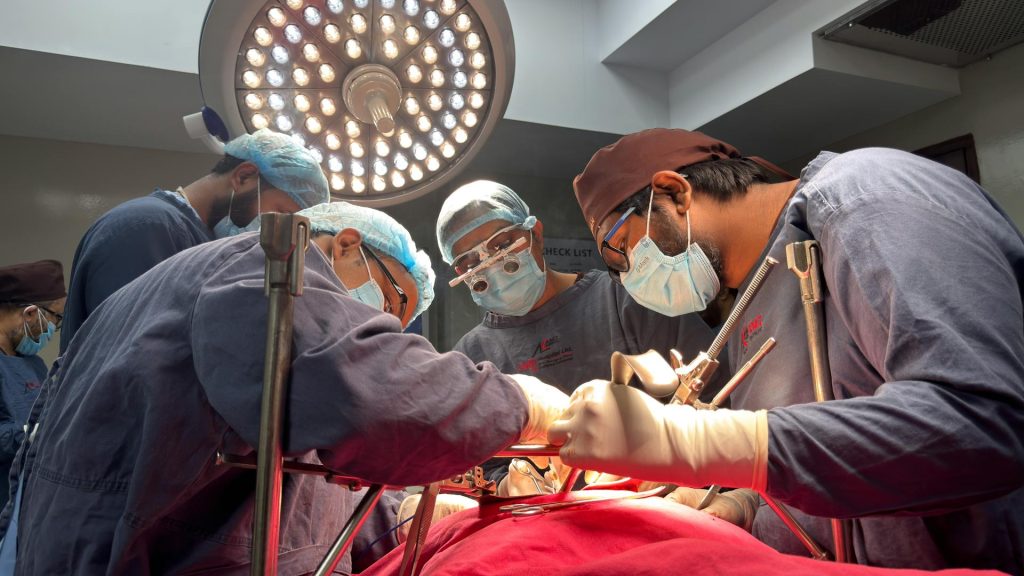
Back surgery becomes an acceptable option when certain criteria are fulfilled. It involves the patient having tried conservative management options for six to twelve weeks without success. There is diagnostic proof through imaging (mostly MRI) of structural abnormality matching the patient’s symptoms. The pain is severe to the extent that it impacts one’s daily activities, work, or sleeping abilities. 1
There are instances where there should be no delay in performing back surgery. They include when there is an emerging neurological deficit such as foot drop, weakening muscles, and cauda equina syndrome. Emergent cases involve loss of bowel or bladder control. There are patients with spinal instability, spinal metastasis, and spinal infections requiring immediate back surgery. 4
Indications for emergency assessment: When one has abrupt incontinence of urine or stool, rapidly progressing leg weakness, or numbness around the groin region along with back pain, then immediate medical help should be sought as these signs can be indicative of cauda equina syndrome.
Types of Back Pain Surgery
There exist several types of surgeries used in treating back pain, each of which is specifically used to solve a particular problem. The kind of surgery you are recommended to have is determined by the structural problem, the number of vertebrae affected, and your general health status.
Discectomy and Microdiscectomy
A discectomy removes the portion of a herniated disc that is pressing on a spinal nerve. The microdiscectomy variant uses a smaller incision and a surgical microscope or endoscopic camera, allowing the surgeon to perform the same procedure with less tissue disruption. Microdiscectomy is one of the most commonly performed and well-studied spine operations, and it is typically done as an outpatient procedure. 2
Laminectomy (Decompression)
Laminectomy is a surgical process where a part of the vertebra known as lamina is removed in order to provide additional space for the nerves and spinal cord. It is a common procedure for spinal stenosis. This is a condition where there is narrowing in the spine leading to pain and weakness in the legs. 4
Spinal Fusion
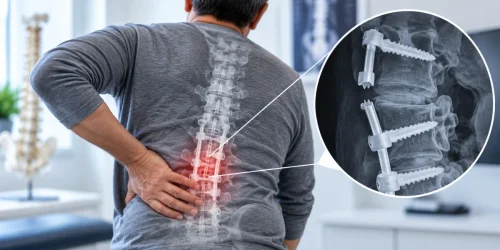
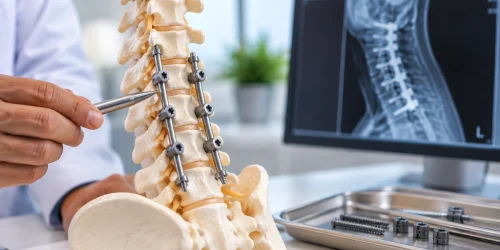
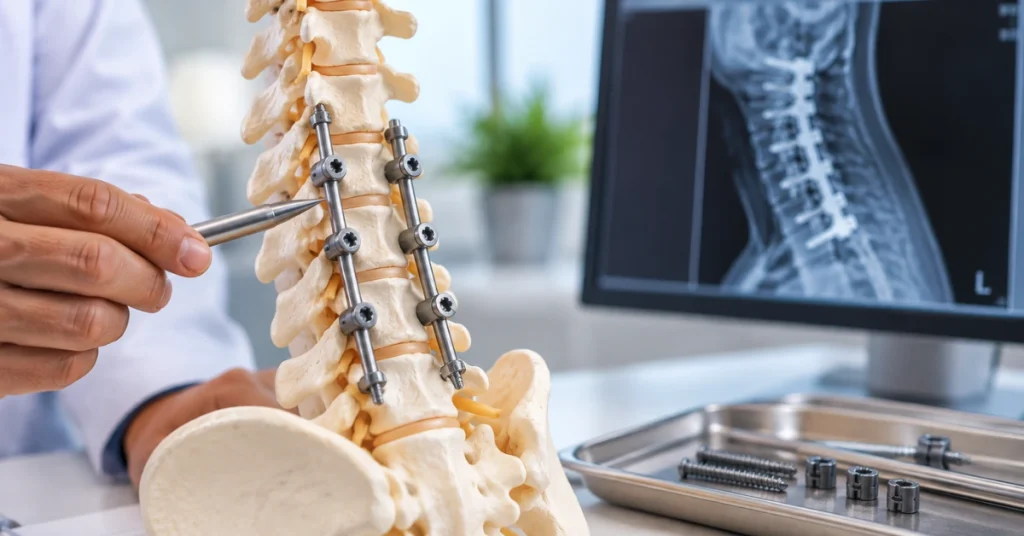
Spinal fusion permanently joins two or more vertebrae together using bone grafts and, in most cases, metal hardware such as rods, screws, and cages. The fused segment no longer moves independently. Fusion is used for conditions including degenerative disc disease, spondylolisthesis (where one vertebra slips forward over another), scoliosis, fractures, and spinal instability. Recovery from spinal fusion is longer than decompression alone, often requiring six to twelve months for the bone to fully heal. 2
Artificial Disc Replacement
Instead of fusing vertebrae, artificial disc replacement removes the damaged disc and inserts a prosthetic device that preserves motion at the treated level. This procedure may reduce the risk of adjacent segment disease. A condition in which the spinal levels above and below a fusion deteriorate more quickly due to altered biomechanics. Disc replacement is generally limited to patients with single-level disc disease who meet specific anatomical criteria. 2
Minimally Invasive Spine Surgery (MISS)
MISS employs small incisions, retraction tubes, an endoscope for visualization and special instruments to perform all of the surgeries listed above. This is achieved by accessing small pathways and not by opening up the surgical field, thus causing less damage to the muscle and soft tissue. In comparison to open surgery, patients undergoing MIS suffer from less pain and recover more quickly. 5 One of the more advanced forms of MIS is the Deuk Laser Disc Repair® technique that makes use of a Holmium YAG laser to repair discogenic pain directly through a 4 mm incision. 10
Success Rates by Procedure
Success rates for back surgery vary considerably depending on the procedure, the specific condition being treated, and how “success” is measured. In the clinical literature, success is typically defined as a meaningful reduction in pain combined with patient satisfaction at follow-up.
A prospective cohort study that tracked 486 patients after lumbar spine surgery found that 80.7% reported satisfaction with their outcome at twelve-month follow-up, and 59.6% met the study’s full definition of surgical success. Meaning they were both satisfied and had pain and disability scores below established thresholds. 6
The exact technique is important. Discectomy for a herniated disc that presses against a nerve enjoys some of the highest rates of success, with one big study of more than 39,000 people showing a success rate of 78.9% for lumbar herniation and 94% for cervical disc surgery. 7 Spinal fusion for degeneration succeeds about 70% to 90% of the time; however, outcomes are very dependent upon patient selection. Disc replacement surgery demonstrates very high success rates of 85% to 95%. 2
These numbers reflect outcomes among patients who were carefully selected for surgery based on clear imaging findings that matched their symptoms. Patients whose symptoms visibly have structural issues. Such as a herniated disc compressing a specific nerve root can experience the most significant improvement. 2
Risks and Complications
There is always some level of risk involved with all surgical operations, and this includes back surgeries too. The most common risks associated with such surgeries include infection at the point of incision, clotting of blood, damage to nerves, excess bleeding, and side effects of anesthesia. The total percentage of risks involved in such procedures varies depending on the type of surgery. 2
Procedure-Specific Risks
There are specific risks involved in spinal fusion apart from those seen with decompression surgery. This is because spinal fusion involves changes in the mechanics of the spine; hence, adjacent vertebral segments undergo premature degeneration. This is called adjacent segment disease. Pseudarthrosis, or the failure of bone to integrate completely, occurs in some individuals, resulting in continued instability and pain. Complications with hardware include screw loosening, rod fracture, or migration of cages. 2
The results of a 2024 prospective cohort study involving 512 patients who had posterior open lumbar spine surgery revealed that the incidence rate of FBSS was 32.5% within one year of follow-up. It was determined that the surgical procedure was the best predictor of FBSS with pedicle screw fixation and posterior lumbar interbody fusion (PLIF) having higher incidences. 8
Factors That Increase Surgical Risk
There are several variables that either can be changed or not and affect the probability of post-surgical complications. For example, obesity, active smoking, poorly managed diabetes, and lack of treatment for depression or anxiety have all been associated with higher probability of complications after surgery. 3 When one is contemplating undergoing surgery of the spine, it is advisable to consult his or her surgeon about these variables.
Failed Back Surgery Syndrome
Failed Back Surgery Syndrome, now formally redesignated as Persistent Spinal Pain Syndrome Type 2 (PSPS-T2), describes a condition in which patients continue to experience chronic pain after lumbar spine surgery. The term does not necessarily imply that the surgery itself was performed incorrectly. It can result from a range of causes including incomplete decompression, misdiagnosis of the original pain source, development of scar tissue around nerve roots, recurrent disc herniation, or progression of degenerative disease. 3
The prevalence of FBSS is significant. A 2025 multicentric retrospective review published in the Asian Journal of Neurosurgery placed estimates between 10% and 40% of all spine surgeries. 3 A separate 2024 multicenter study found that 15–20% of patients who underwent lumbar surgery experienced persistent or recurrent pain. 9
One of the most consequential findings in the FBSS literature is that repeat surgeries have progressively lower success rates. While the first back surgery may succeed in roughly 60–80% of carefully selected patients, a second operation on the same area succeeds only about 30% of the time, a third roughly 15%, and a fourth as low as 5%. 7 This steep decline underscores why the initial surgical decision and the diagnostic precision behind it is so important.
Recovery Timelines
Rehabilitation following surgery for the back involves factors like the kind of surgery that has been performed, the general well-being of the patient and his or her age and the method of treatment employed by the surgeon; open or minimally invasive.
Minimally invasive spine surgeries such as micro discectomy result in most patients being discharged from hospital the very same day and able to take part in light physical activity after two to four weeks, whereas full recovery may be attained after four to six weeks. 5
The healing process following open lumbar laminectomy surgery takes between six and twelve weeks but full recovery from this process usually takes up to three months, with minimal invasive procedures usually taking less time. The recovery period for spinal fusion surgery takes the longest amount of time. This process involves the first six to eight weeks of recovery where the patient wears a back brace and avoids bending and twisting. It also involves a minimum of six to twelve months to heal from the bone graft. 2
Role of Physical Therapy in Recovery from Back Surgery
The recovery process following back surgery needs physical therapy for the success of the operation. The program will help in increasing the strength, flexibility, and stability of the back. 1
Conservative Alternatives to Consider First
As back surgery entails certain risks and may not be successful in all cases, most clinical guidelines recommend exhausting conservative options before undergoing surgery. The only exceptions to this guideline are emergency situations like cauda equina syndrome and progressive neurological deficits.
Clinical evidence supports several conservative approaches to treating chronic back pain, including physical therapy that involves strengthening and stretching exercises, non-steroidal anti-inflammatory drugs (NSAIDs), epidural steroid injections for nerve root inflammation, cognitive behavior therapy to address chronic pain psychologically, and lifestyle changes, such as weight reduction and cessation of smoking. 1
These approaches work well for the majority of patients. When they do not, and imaging confirms a structural problem that correlates with the symptoms, surgery becomes a reasonable next step rather than a first resort.
Deuk Laser Disc Repair®: A Minimally Invasive Alternative to Fusion
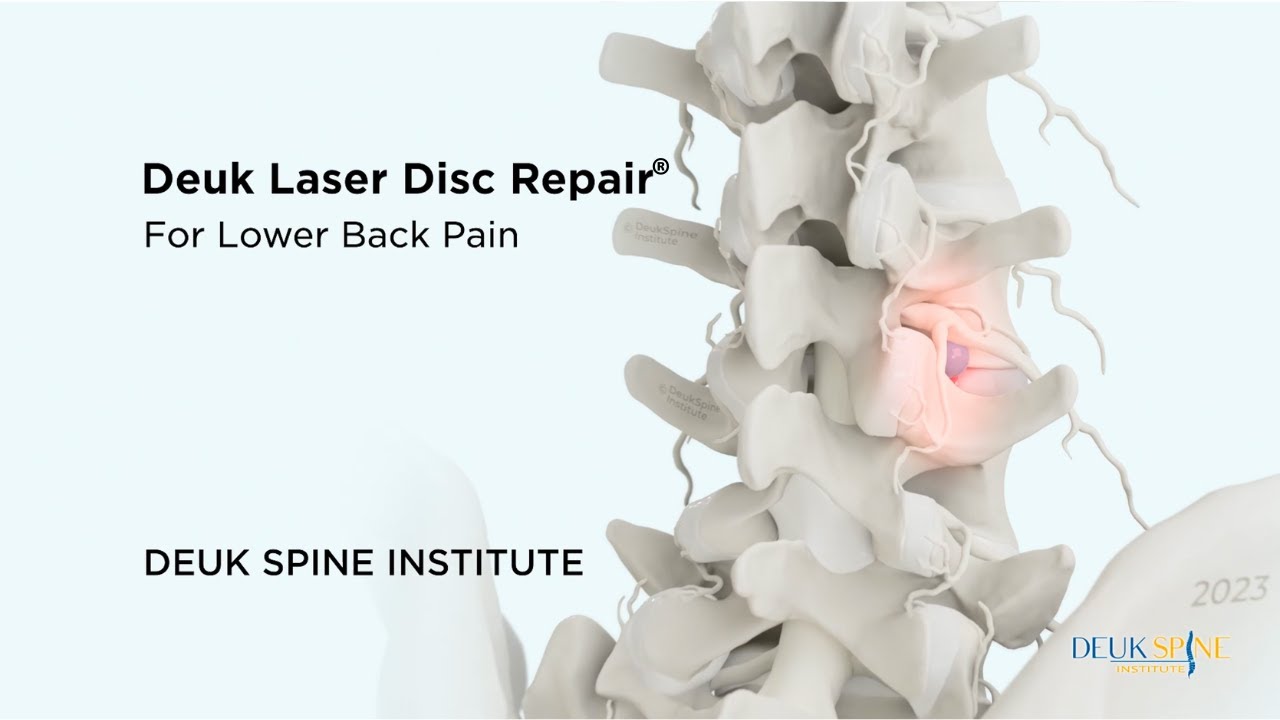
In cases where patients have persistent back pain or neck pain because of disc injury: disc bulge, disc herniation, degenerative disc disease, disc tear, spinal stenosis, sciatica, or radiculopathy .Deuk Laser Disc Repair® (DLDR) is essentially a very different procedure from that of traditional spine surgery. Instead of fusing the bones together or putting an artificial substitute in place of the disc, DLDR utilizes a Holmium YAG laser to excise the diseased portion of the disc that is causing the pain. 10
Developed by board-certified, fellowship-trained neurosurgeon Dr. Ara Deukmedjian and performed at Deuk Spine Institute in Melbourne, Florida, the procedure has been refined over more than 30 years and 2,800+ cases. 10
How the Procedure Works
The DLDR is a four-part outpatient surgery done under mild sedation. The whole procedure takes about 20 minutes per disc. 10
The first step involves making a very small 4-7 mm incision. The surgeon uses a cylindrical dilator to separate muscle tissues to form a channel to the damaged disc without having to cut the muscles or bone tissues. A tubular retractor is then placed over the dilator. 10
The next part is when an endoscopic camera is placed inside the retractor giving the doctor high resolution visualization of the disc’s internal environment. Using this visual information, the Holmium YAG laser will remove the painful, inflamed tissues of the disc. Specifically the torn annular fibers and the herniated nucleus pulposus. After removal of the inflamed tissues, the tools will be removed and the incision will be sewed up using a single suture. 10
Clinical Results
Dr. Deukmedjian has reported an average of 99% pain relief for treated pain sources across more than 2,800 procedures, with a complication rate of 0.01% and a 0% infection rate. Average blood loss during the procedure is less than 2 ml. 10
How DLDR Compares to Traditional Back Surgery
The differences between Deuk Laser Disc Repair® and conventional procedures such as spinal fusion or traditional discectomy are significant across several dimensions that matter to patients. 10
Deuk Laser Disc Repair® vs. Fusion vs. Traditional Discectomy
Three procedures that treat disc problems in fundamentally different ways. One preserves the disc and sends patients home the same day. The others involve varying degrees of tissue disruption and recovery.
Who Is a Candidate for DLDR?
DLDR is designed for patients with chronic discogenic pain. Pain that originates from a damaged or deteriorating spinal disc. The procedure treats herniated discs, bulging discs, degenerative disc disease, spinal stenosis, sciatica, and radiculopathy in the lumbar (lower back), cervical (neck), and thoracic (mid-back) regions of the spine. 10
Candidacy begins with an accurate diagnosis. Dr. Deukmedjian personally evaluates each patient’s MRI to identify the specific “pain generators”. The exact discs and nerves responsible for the patient’s symptoms. This diagnostic precision is what enables DLDR to achieve its high success rate; the procedure works because the structural source of pain has been correctly identified and directly treated. Deuk Spine Institute offers a free MRI review to help patients determine whether they are candidates. 10
How to Choose a Spine Surgeon
The surgeon’s experience, training, and approach to diagnosis are among the most important variables in surgical outcome. When evaluating a spine surgeon, consider their board certification in orthopedic surgery or neurosurgery, their volume of procedures specific to your condition, and whether they take the time to explain both surgical and nonsurgical options before recommending an operation. 2
A second opinion is always reasonable and often valuable when surgery is being recommended. A quality spine surgeon will support rather than discourage this step, because accurate patient selection is in everyone’s best interest.
The first surgery matters most. A second succeeds only 30% of the time
Diagnose it precisely. Treat the disc.
Skip the fusion.
Failed Back Surgery Syndrome affects 10–40% of lumbar surgery patients—and repeat operations have diminishing returns. Deuk Laser Disc Repair® treats discogenic pain at its source through a 4–7 mm incision in about 20 minutes per disc, preserving spinal motion with no hardware implanted.
result in FBSS
a second back surgery
99% pain relief
- Fuses vertebrae with screws, rods, and cages
- Eliminates motion at the treated segment
- 6–12 month recovery; hospital stay required
- Risk of adjacent segment disease
- 32.5% FBSS incidence with pedicle screw fixation
- 4–7 mm incision, Holmium YAG laser
- Full spinal motion preserved
- ~20 min per disc, same-day discharge
- No hardware, no bone removal
- 0.01% complication rate, 0% infection rate
Deuk Spine Institute · Board-certified neurosurgeon · 30+ years · No fusion, no hardware, no narcotics
FAQ
What is the success rate of back pain surgery?
Answer
Success rates depend on the procedure and the condition being treated. For appropriate surgical candidates, lumbar spine surgery success rates typically range from 70% to 90%. 2 Microdiscectomy for a herniated disc compressing a nerve achieves success rates between 79% and 94%, while artificial disc replacement reports outcomes between 85% and 95%. 2 7 The most important factor influencing success is whether a clear structural source of pain has been identified before the operation.
What helps nerve pain in legs after back surgery?
Answer
Nerve pain in the legs after back surgery (radiculopathy) can stem from residual nerve inflammation, scar tissue formation around nerve roots, recurrent disc herniation, or incomplete decompression. Treatment options include physical therapy focused on nerve mobilization, neuropathic pain medications such as gabapentin or pregabalin, epidural steroid injections, and in some cases revision surgery. Your spine surgeon should evaluate whether the nerve compression was fully addressed during the initial operation, typically through follow-up imaging. 9
How do I know if I need back surgery or physical therapy?
Answer
Physical therapy should almost always be tried first. Surgery is generally considered after six to twelve weeks of conservative treatment has failed to provide meaningful relief and imaging confirms a structural problem that explains the symptoms. 1 Exceptions include neurological emergencies such as cauda equina syndrome, progressive muscle weakness, or foot drop, which may require earlier surgical intervention. 4
What is the most common type of back surgery?
Answer
Lumbar discectomy (or microdiscectomy) and laminectomy are among the most commonly performed spinal procedures. Discectomy removes herniated disc material that is compressing a nerve, while laminectomy creates more space in the spinal canal for patients with spinal stenosis. 4 Spinal fusion is also very common, particularly for degenerative disc disease and spondylolisthesis.
What is failed back surgery syndrome?
Answer
Failed Back Surgery Syndrome, now formally called Persistent Spinal Pain Syndrome Type 2, is a condition in which patients experience persistent or recurrent pain after spinal surgery. It affects an estimated 10–40% of patients who undergo lumbar surgery. 3 The causes are varied and include misdiagnosis of the original pain source, incomplete decompression, scar tissue formation, recurrent herniation, and psychosocial factors. Repeat surgeries have diminishing success rates, with second operations succeeding roughly 30% of the time. 7
What is Deuk Laser Disc Repair® and how is it different from spinal fusion?
Answer
Deuk Laser Disc Repair® (DLDR) is a minimally invasive laser spine surgery that treats chronic discogenic pain by using a Holmium YAG laser to remove only the damaged, inflammatory tissue within the disc. Unlike spinal fusion, DLDR does not fuse vertebrae, does not implant screws or rods, and preserves the spine’s natural range of motion. The procedure is performed through a 4–7 mm incision, takes approximately 20 minutes per disc, and patients go home the same day. Dr. Deukmedjian has reported 99% pain relief for treated pain sources across more than 2,800 procedures with a 0.01% complication rate. 10
Is minimally invasive spine surgery better than open surgery?
Answer
Minimally invasive spine surgery generally results in less tissue damage, less postoperative pain, shorter hospital stays, and faster recovery compared to traditional open procedures, with comparable or superior clinical outcomes for many conditions. 5 However, not all patients or conditions are suited to a minimally invasive approach. Complex multi-level fusions, significant deformity corrections, and revision surgeries may still require open techniques. Your surgeon can advise which approach is most appropriate for your specific condition.
Sources
View Sources
- https://www.mayoclinic.org/diseases-conditions/back-pain/in-depth/back-surgery/art-20048274
- https://spinetogether.com/all-posts/2023/10/22/what-percentage-of-back-surgeries-are-successful
- https://pmc.ncbi.nlm.nih.gov/articles/PMC12956404/
- https://www.mayoclinichealthsystem.org/hometown-health/speaking-of-health/understanding-types-of-back-surgery
- https://pmc.ncbi.nlm.nih.gov/articles/PMC12786803/
- https://pmc.ncbi.nlm.nih.gov/articles/PMC9137061/
- https://www.orthobethesda.com/blog/spine-surgery-when-it-works-and-when-it-doesnt/
- https://pmc.ncbi.nlm.nih.gov/articles/PMC11759558/
- https://pmc.ncbi.nlm.nih.gov/articles/PMC13263612/
- https://deukspine.com/treatment-options/deuk-laser-disc-repair/