
By Dr. Ara J. Deukmedjian, MD
Board Certified Neurosurgeon
Medically reviewed on August 20, 2026
Disclaimer: The contents provided in this article are for learning purposes only. It is always recommended to speak to a doctor about your personal health condition.
Key Points
✓ A facet block injection delivers a local anesthetic and corticosteroid directly into or near a facet joint to relieve pain and confirm the joint as the source of symptoms.1
✓ Facet joints account for an estimated 15–45% of chronic low back pain and 27–67% of chronic neck pain cases, making them one of the most common spinal pain generators.2 3
✓ Facet block injections serve a dual purpose: they are both a diagnostic tool that identifies which specific joint is causing pain and a therapeutic treatment that reduces inflammation.1 4
✓ Pain relief from a single facet block injection typically lasts weeks to months, with some patients experiencing relief for 6–12 months when the injection is accurately placed.4 5
✓ Fluoroscopic guidance significantly improves injection accuracy and outcomes. Improperly placed injections are a leading reason patients fail to respond to treatment.5 6
✓ Deuk Plasma Rhizotomy® offers a permanent, motion-preserving alternative for patients whose facet pain returns after injections wear off.
What Is a Facet Block Injection?
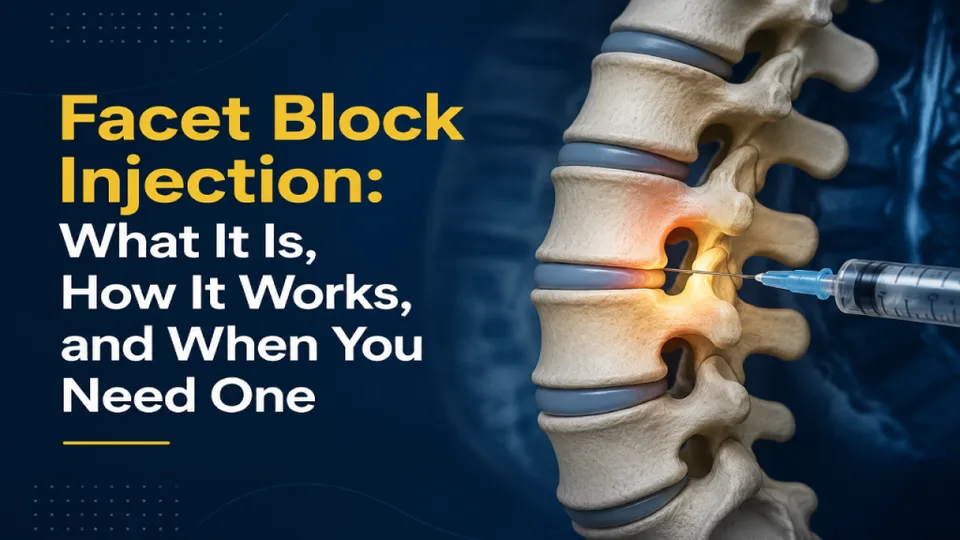
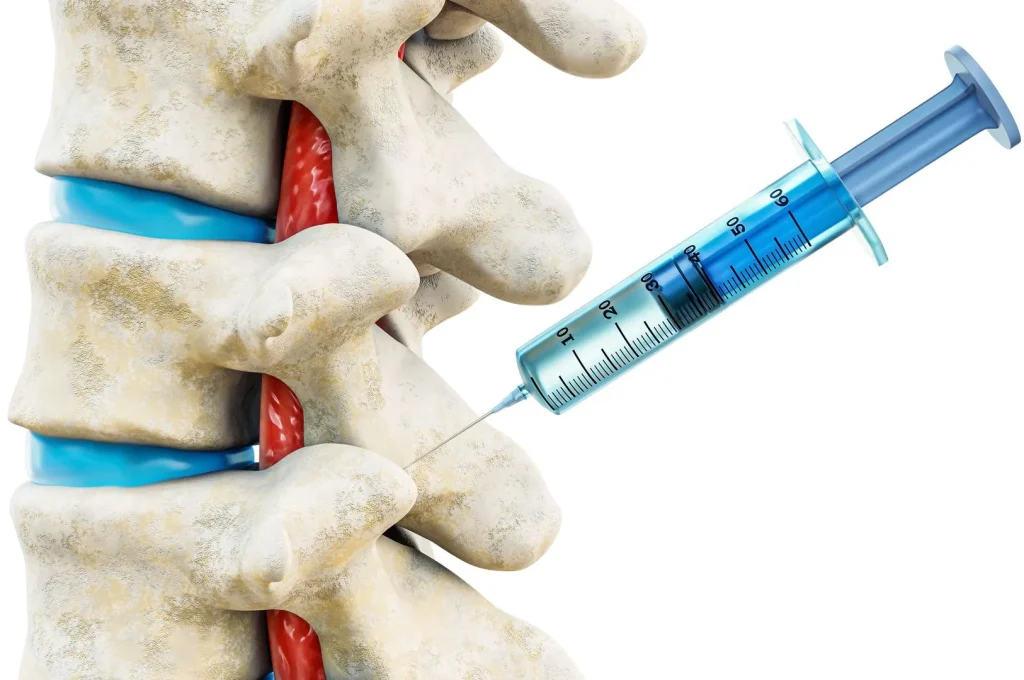
In a facet block injection procedure, the physician introduces the medication mixture containing anesthetics During the process of facet block injection, the anesthesiologist injects the solution comprising of the mixture of anesthetic drugs such as lidocaine or bupivacaine and a corticosteroid right into or near the facet joint within the spine.1 Here, the anesthetic will be responsible for instant pain reduction, whereas the steroid will assist in reducing the inflammation around the joint over several days to weeks.

The facet joints, or zygapophyseal joints as they should be known, are small joints present at the posterior aspect of the spine that link each vertebral body with the ones above and below it. 4 These joints allow the movement of the spine and prevent it from twisting. Since facet joints receive many nerves from the medial branch nerves, they have the capability of generating pain when irritated due to arthritis, inflammation, or injury. 2 3
What makes the facet block injection unique among spinal interventions is that it serves a dual purpose: it is both a diagnostic tool and a therapeutic treatment. 1 When a facet block eliminates or dramatically reduces a patient’s pain, it confirms that the targeted facet joint is the source of the problem. Information that imaging alone cannot reliably provide. At the same time, the anti-inflammatory medication within the injection reduces swelling and irritation within the joint, providing symptomatic relief that can last weeks to months. 4
Why Facet Block Injections Matter: The Prevalence of Facet Joint Pain
Facet joints are among the most common and most frequently overlooked sources of chronic spinal pain. Research published in Pain Physician and Insights into Imaging estimates that facet joints are responsible for 15–45% of chronic low back pain, 27–67% of chronic neck pain, and 34–48% of chronic thoracic spine pain.2 3 These numbers mean that nearly one in three patients presenting with persistent back or neck pain may have a facet-mediated component driving their symptoms.
Facet joint pain is common but can be difficult to diagnose because its symptoms often resemble those of other conditions, including herniated discs, muscle strains, and nerve impingement. Which explains why some never find relief. A properly administered facet block injection is the gold-standard method for determining whether a facet joint is the true pain generator.2 4
How Facet Block Injections Work
There are two primary types of facet block injections, each serving a specific clinical purpose:1 5
1. Intra-Articular Facet Joint Injection
The needle will be positioned directly into the joint capsule. Contrast dye will first be applied to ensure correct positioning of the needle using fluoroscopy. And then the anesthetic-steroid solution will be injected into the joint space. The method aims at addressing inflammation in the joint capsule and is most effective when there is inflammation of the joint lining. 5
2. Medial Branch Block (MBB)
The injection will not enter the joint itself, but rather the medial branches. Which are nerves that conduct pain messages from the facet joint to the brain. The anesthetic is injected near the nerves, which blocks the pain signals temporarily. Since the nerves are coming out of the facet joints on two different levels, correct injection at two levels is essential for an effective test.2 4
All the facet block injections at the Deuk Spine Institute are done with the use of fluoroscopic guidance and contrast verification. Fluoroscopic guidance is mandatory, because it is the needed to determine success or failure of the procedure. Researches state that there is a range of effectiveness of facet injections guided by fluoroscopy, which can be from 13% to 74%.5 6
Why Do You Need a Facet Block Injection?
A facet block injection may be recommended when you are experiencing chronic back or neck pain and your physician suspects the facet joints as the source. Common reasons a facet block is ordered include:1 2 4
To confirm the diagnosis. MRI and CT scans can reveal degenerative facet changes, but imaging findings do not reliably correlate with pain. A large percentage of people with severe facet arthritis on imaging have no pain, while many patients with debilitating facet pain show only modest imaging findings. The facet block is the definitive test: if the injection eliminates 80% or more of your pain, it confirms that specific joint as the pain generator.2 4
To reduce inflammation and provide relief. The corticosteroid component suppresses the inflammatory cascade inside the joint, relieving pain, reducing swelling, and often restoring enough comfort for patients to participate meaningfully in physical therapy.1 5
To guide further treatment decisions. A positive facet block response opens the door to more targeted, longer-lasting interventions such as radiofrequency ablation (RFA) or Deuk Plasma Rhizotomy®. A negative response redirects the clinical workup toward other potential pain sources such as disc pathology or sacroiliac joint dysfunction.4
What to Expect During a Facet Block Injection
A facet block injection is an outpatient procedure that typically takes 15–30 minutes. Here is what the process looks like at Deuk Spine Institute:

Before the Procedure
You will be asked about your current medications, allergies, and bleeding history. Blood thinners and anti-inflammatory medications may need to be paused beforehand. You should arrange for someone to drive you home.
During the Procedure
You will lie face down on a procedure table. The skin over the injection site is cleaned and numbed with a local anesthetic. Using fluoroscopic guidance, the physician advances a thin needle to the target facet joint or medial branch nerve. Contrast dye is injected to confirm exact needle placement on the live X-ray image. Once positioning is verified, the anesthetic-steroid mixture is delivered. Most patients feel only mild pressure during the injection.5
After the Procedure
You will be monitored briefly and asked to perform movements that normally provoke your pain to assess immediate response. The anesthetic component may provide relief within minutes, which is important diagnostic information. The steroid typically takes 3–7 days to reach full effect. Most patients return to normal activities within 24–48 hours with only minor soreness at the injection site.
How Long Do Facet Block Injections Last?
The duration of relief varies by patient, the severity of the underlying joint disease, and the precision of the injection. In general:4 5
The anesthetic component provides immediate but temporary relief lasting several hours, which is primarily useful for confirming diagnosis. The corticosteroid component, when accurately placed, provides anti-inflammatory relief that typically lasts weeks to several months. Some patients experience relief for 6–12 months, particularly when the injection is combined with a structured physical therapy program. However, it is important to understand that facet block injections treat the inflammation. Not the underlying joint degeneration. When the steroid wears off and the degenerative joint continues to produce inflammation, the pain returns.5
Patients who require repeat injections every few months are strong candidates for a more durable treatment approach.
Facet Block Injections at Deuk Spine Institute: Why Precision Matters
One of the most common reasons facet block injections fail is that they are not performed with sufficient precision. A facet block that misses the target; even by a few millimeters will not provide diagnostic information or therapeutic relief. This is why Deuk Spine Institute takes a fundamentally different approach:
Fluoroscopy with contrast confirmation on every injection. We never inject blindly. Every needle placement is verified in real-time with fluoroscopic imaging and radiopaque contrast dye to ensure the medication reaches the exact target structure.5 6

Meticulous joint identification. Before any injection, our physicians conduct a thorough clinical evaluation: including physical examination, imaging review, and pain provocation testing. To identify the most likely pain-generating joints. The injection then tests that hypothesis.
Dual-purpose approach. Every facet block at Deuk Spine Institute is treated as both a diagnostic and therapeutic procedure. We track your pain response carefully because that information directly shapes your treatment plan going forward.
We successfully treat patients from Orlando, Melbourne, Tampa, and West Palm Beach who previously had no response to facet injections administered at other spine institutes. In many cases, our patients responded well to facet block injections once they were performed accurately. With some not needing any further treatment before returning to physical therapy and continuing their lives pain-free.
When Facet Block Injections Are Not Enough: Advanced Treatment Options
Facet block injections are an excellent first-line intervention, but they are not a permanent solution for everyone. When injections confirm the facet joint as the pain source but provide only temporary relief, it is time to consider a more lasting approach.5
Radiofrequency Ablation (RFA)
Traditional RFA uses a heated probe to burn the medial branch nerve that transmits pain from the facet joint. It is effective but has a significant limitation: the nerve typically regenerates within 6–12 months, and the pain returns. Many patients find themselves locked into a cycle of repeat ablations to maintain moderate pain relief.
Deuk Plasma Rhizotomy® (DPR)
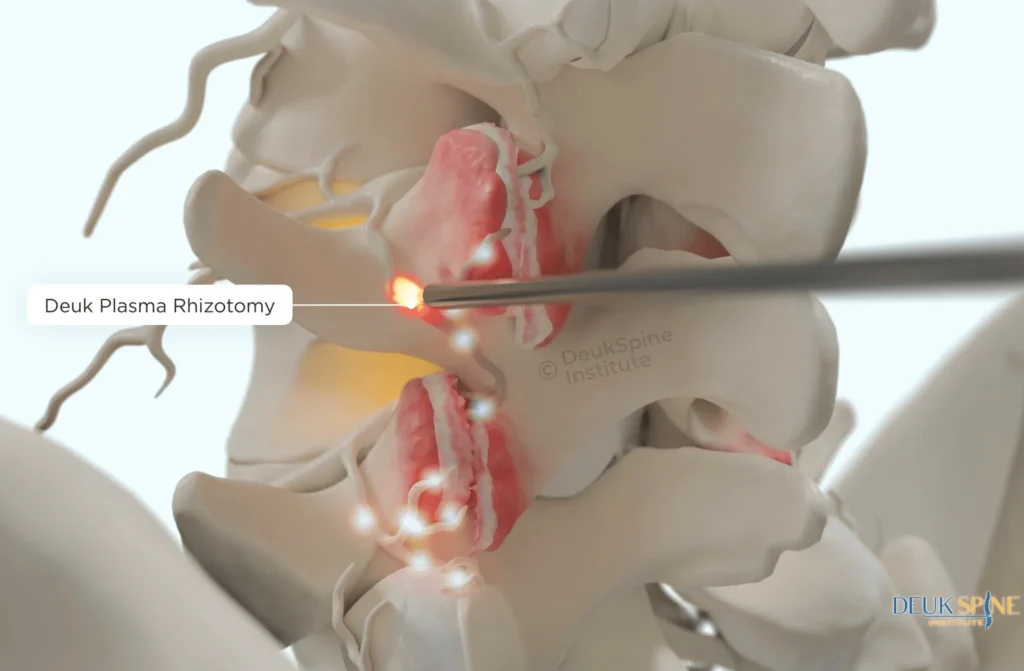
When medial branch blocks confirm that a specific facet joint is generating pain, Deuk Plasma Rhizotomy® deactivates the pain-carrying nerve precisely without burning, without hardware, and without fusion.
DPR is an outpatient, minimally invasive procedure performed under light sedation through a tiny incision. The endoscopic technique allows the identification and treatment of the medial branch supplying the painful facet with low-temperature plasma energy. The advantage of the plasma energy used in this procedure is that it decomposes the target nerve tissue using a significantly lower temperature compared with the traditional RF energy.
Not less significant is what the DPR does not do: the procedure does not involve any fusion of the segments, no implantation of metal material, no excision or destruction of the disc, facet joint, and limitation of normal motion of the spine. The patient gets up on his feet immediately after the procedure and resumes normal activities in 72 hours.
Patient Testimonial
Facet injections find the pain.
DPR ends it.
Facet joints cause up to 45% of chronic back pain and 67% of chronic neck pain — but injections only last weeks to months. Traditional RFA burns the nerve, yet it regrows within a year. Deuk Plasma Rhizotomy permanently deactivates the pain-carrying nerve with low-temperature plasma — no burning, no fusion, no hardware, no loss of motion.
Board-certified neurosurgeon · Fluoroscopy + contrast on every injection ·
FAQ’s
What is a facet block injection?
A facet joint block is a minimally invasive procedure in which a doctor injects a combination of a local anesthetic and corticosteroid directly into a facet joint in the spine. The injection can serve both diagnostic and therapeutic purposes by helping identify the joint causing the pain while also reducing inflammation and providing pain relief.¹
How long does a facet block injection last?
The anesthetic provides temporary relief lasting several hours, which can help confirm the condition. The steroid reduces inflammation and may provide relief for several weeks to several months. In some cases, relief can last 6–12 months, particularly when the procedure is combined with physiotherapy, depending on the severity of joint deterioration.⁴ ⁵
Is a facet block injection painful?
Most patients report only mild pressure or a brief sting during the injection. The skin is numbed with a local anesthetic before the procedure needle is advanced. Many patients describe the experience as far less uncomfortable than the chronic pain they have been living with.
What is the difference between a facet block and a medial branch block?
The facet block is an intra-articular injection where medication is injected within the facet joint capsule. Medial branch block is administered to those smaller nerves carrying pain messages from the facet joint to the brain. Both of them are diagnostic tools but medial branch blocks are more specific in diagnosing the facet joint pain and are a prerequisite to ablative procedures.2 4
Why didn’t my facet injection work?
The most common reason a facet injection fails to provide relief is inaccurate needle placement. Without fluoroscopic guidance and contrast confirmation, the medication may not reach the intended target. Other possibilities include incorrect identification of the pain-generating joint or the presence of a different underlying condition such as a disc herniation or sacroiliac joint dysfunction.5 6
Are facet block injections a long-term solution?
No. Facet block injections treat the inflammation, not the underlying joint degeneration. They are valuable for confirming the diagnosis and providing temporary relief during acute flare-ups, but the pain typically returns once the steroid wears off. Patients who need repeat injections every few months are strong candidates for a more durable procedure such as Deuk Plasma Rhizotomy®.5
What are the risks of facet block injections?
Facet block injections are generally considered safe. Uncommon risks include temporary soreness at the injection site, mild bruising, allergic reaction to the medication, and in rare cases, infection. Serious complications are extremely rare when the procedure is performed by an experienced physician under fluoroscopic guidance.1
Does insurance cover facet block injections?
Most major insurance plans, Medicare, and workers’ compensation cover diagnostic and therapeutic facet joint injections when medical necessity is documented. Coverage for advanced procedures varies by carrier Deuk Spine Institute’s team can verify your benefits during a free MRI review.
What is the difference between a facet block injection and an epidural steroid injection?
A facet block injection targets the facet joint or its nerve supply on the back of the spine and is used to diagnose and treat facet-mediated pain. An epidural steroid injection delivers medication into the epidural space surrounding the spinal cord and nerve roots, and is typically used for radicular pain caused by disc herniations or spinal stenosis. The two procedures address different pain sources.
Will I need surgery if facet injections stop working?
Not necessarily. When facet injections confirm the diagnosis but stop providing lasting relief, the next step is typically a nerve-targeted procedure such as Deuk Plasma Rhizotomy®: an outpatient, motion-preserving procedure that permanently deactivates the pain-carrying nerve without fusion or hardware. Spinal fusion is rarely appropriate for facet pain alone and should be reserved for true instability, deformity, or fracture.
Sources
View Sources
- Perolat R, Kastler A, Nicot B, et al. Facet joint syndrome: from diagnosis to interventional management. Insights into Imaging. 2018;9(5):773–789.
- Alexander CE, Varacallo M. Lumbosacral Facet Syndrome. StatPearls. National Library of Medicine. Updated March 2025.
- American Academy of Physical Medicine and Rehabilitation (AAPM&R). Facet Mediated Pain. PM&R KnowledgeNow. Updated January 2025.
- Do Y, Lee E, Chee CG, Lee JW. Lumbar Facet Joint Injection: A Review of Efficacy and Safety. Journal of the Korean Society of Radiology. 2024;85(1):54–76.
- Fogarty AE, et al. The effectiveness of fluoroscopically guided lumbar facet steroid joint injections: A systematic review. Interventional Pain Medicine. 2025.
- Hasoon J, Mahmood S, Nguyen A, et al. Revisiting Therapeutic Facet Joint Injections for Chronic Spinal Pain: A Case Series. Orthopedic Reviews. 2024;16.