By Dr. Ara J. Deukmedjian, MD
Board Certified Neurosurgeon
Medically reviewed on June 25th 2026
Medical Disclaimer: The material contained within this article should be regarded purely for informative objectives. Consult a doctor in all cases related to the subject material within this text.
Key Points
✓ Spinal decompression surgery takes pressure off the spinal cord or nerve roots by removing what is pressing on them, usually bone, ligament, or part of a disc. ¹
✓ Lumbar spinal stenosis is the most common reason spine surgery is recommended for adults over 65. Studies estimate it affects roughly 11% of the general population, and the rate rises with age. ¹ ²
✓ Open laminectomy improves pain and disability scores long term, but about 14% of patients in a 5-year meta-analysis needed another operation. ³
✓ In a meta-analysis of multilevel lumbar stenosis, minimally invasive decompression matched open laminectomy for pain relief at one year, with shorter stays and fewer complications. ⁴
✓ Decompression does not require fusion in most cases. Fusion is reserved for documented instability, deformity, or fracture. ¹
✓ A systematic review of unilateral laminotomy decompression reported overall complication rates of 18 to 20% and dural tears in 3.6 to 9% of cases. ⁵
✓ “Spinal decompression” can also refer to non-surgical traction therapy, which is a different treatment explained below.
✓ When a herniated or torn disc is the source of compression, endoscopic procedures like Deuk Laser Disc Repair® can decompress the nerve without removing bone, cutting muscle, or fusing the spine.
What Is Spinal Decompression Surgery?
Spinal decompression is an umbrella term for any surgery that takes pressure off the spinal cord or the nerve roots leaving it. Surgeons call that pressure compression. Compression is what produces burning sciatica down the leg, the heavy legs of neurogenic claudication, tingling down the arm from a neck disc, or weakness and numbness along a nerve’s path.
The most common decompression operations are:
- Laminectomy: removes the lamina, the back wall of the vertebra, to open up the central spinal canal.
- Laminotomy: removes a smaller piece of the lamina, creating a window rather than taking off the whole back wall.
- Foraminotomy: widens the foramen, the side tunnel where a nerve root exits the spinal column.
- Discectomy and microdiscectomy: removes the part of a herniated disc that is pressing on the nerve.
- Endoscopic decompression: performs one of the procedures above through a pencil-width port with a camera.
Spinal Decompression Therapy vs. Spinal Decompression Surgery
The same phrase is used for two very different treatments. Spinal decompression surgery physically removes the tissue compressing a nerve. Non-surgical spinal decompression therapy uses a motorized traction table to gently stretch the spine.
Traction therapy is usually given in multiple sessions of 20 to 45 minutes over several weeks. The goal is to lower pressure inside the disc and ease pressure on nearby nerves. Some patients report short-term relief, but evidence for long-term benefit is limited and still debated.
Traction is generally not recommended for people with spinal fractures, tumors, osteoporosis, spinal infection, prior spinal hardware, or pregnancy. It is also not appropriate for cauda equina syndrome, severe nerve compression, or advanced spinal stenosis. The rest of this article covers the surgical meaning of spinal decompression.
Who Needs Spinal Decompression Surgery?
Three things have to line up before decompression makes sense. There needs to be a structural problem on imaging, that problem has to match the patient’s symptoms, and conservative care has either failed or is not a safe option to continue.
When all three are present, these diagnoses most often lead to surgery:
1. Lumbar spinal stenosis (LSS)
In the low back, the spinal canal can narrow from several directions at once. A ligamentum flavum that has thickened over the years, arthritic facet joints, and discs bulging backward into the canal all take up space. ¹
Past age 65, no other condition leads more people to spine surgery. Around 11% of the general population has it, and the number climbs with age. ¹ ²
The symptom pattern is called neurogenic claudication. The legs grow heavy and painful with standing or walking, and relief comes when the patient sits or leans forward. Many people discover the “lean on the shopping cart” trick on their own before a doctor explains why it works.
2. Herniated disc
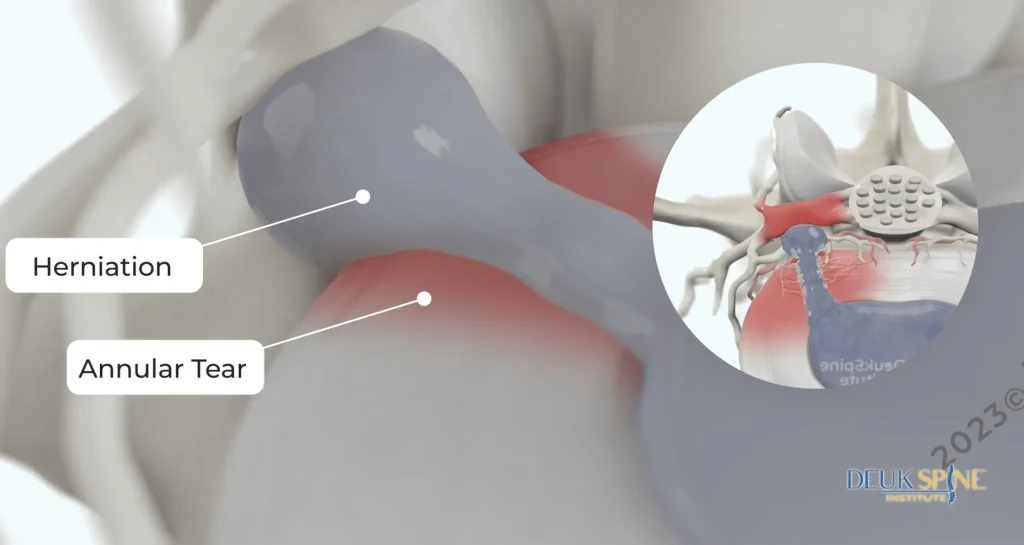
When the soft center of a disc pushes through a tear in its outer wall, it can press directly on a nerve root. The fix is usually narrower than people expect: remove the piece of disc causing the compression. The whole disc does not need to come out, and the back of the vertebra does not need to be removed to reach it.
3. Foraminal stenosis
Bone spurs and disc material can narrow the side tunnel where a single nerve exits. Patients feel sharp, electric pain that follows that nerve’s path down the arm or leg.
4. Cervical myelopathy
This is pressure on the spinal cord in the neck, not just on a nerve root. It is one of the few situations where decompression is needed relatively quickly. Ongoing cord compression can cause progressive and sometimes permanent problems such as clumsy hands, poor balance, and falls.
5. Acute cauda equina syndrome
This is a surgical emergency. Sudden saddle numbness, loss of bladder or bowel control, and weakness in both legs from a large central disc herniation call for decompression within hours, not weeks.
What Spinal Decompression Surgery Actually Looks Like
“Decompression surgery” covers a wide range of operations. Patients are often surprised by how different the procedures are.
Open laminectomy (traditional decompression)
The surgeon makes a 3 to 6 inch incision down the middle of the back and moves the paraspinal muscles off the bone. The lamina, the spinous process, and sometimes parts of the facet joints are removed to free the thecal sac and nerve roots. The wound is closed in layers, and a hospital stay of 1 to 4 days is typical.
Open laminectomy works for the right patient. A meta-analysis of studies with at least 5 years of follow-up found greater satisfaction, less leg and back pain, less disability, and longer walking distance than before surgery. The reoperation rate in that analysis was about 14%. ³
Minimally invasive decompression (MIS)
The surgeon works through an incision under an inch long, using tubular retractors that spread muscle rather than cut it. A microscope or endoscope provides the view. The same bone and ligament still come out, but the muscles and posterior tension band are largely preserved.

A meta-analysis of multilevel lumbar stenosis compared minimally invasive decompression with open laminectomy. MIS produced shorter hospital stays, less blood loss, and lower complication rates, with comparable pain relief at one year. ⁴
Unilateral laminotomy with bilateral decompression
In this muscle-sparing technique, the surgeon approaches from one side, undercuts the spinous process, and decompresses both sides of the canal through a single small window. A systematic review of 371 patients found pain scores (VAS) fell from a range of 4.2 to 7.5 before surgery to 1.4 to 3.0 at final follow-up. The same review reported an overall complication rate of 18 to 20% and a dural tear rate of 3.6 to 9%. ⁵
Endoscopic and laser-based decompression
The surgeon views the disc, the nerve, and the source of compression directly through a pencil-width port and removes what is pressing on the nerve. When a disc is the source, no bone removal, muscle cutting, ligament release, or implants are needed. These are typically outpatient procedures under light sedation with same-day discharge.
This is the category that includes Deuk Laser Disc Repair®.
The Risks to Discuss Before Surgery
Spinal decompression is generally safe in experienced hands, but generally safe is not risk-free. Informed consent means knowing the full list.
- Dural tear (CSF leak): The membrane around the nerves can tear during bone removal. A systematic review of unilateral laminotomy reported this in 3.6 to 9% of cases, and rates run higher in revision surgery. ⁵
- Reoperation: About 14% of patients who had laminectomy for lumbar stenosis returned for another operation within five years, for recurrent stenosis, instability, or adjacent segment disease. ³
- Spinal instability: Removing too much bone, especially at the facet joints, can leave the segment mechanically unstable. This is one of the main reasons a planned decompression becomes a decompression plus fusion.
- Adjacent segment disease: After a level is decompressed, and especially after it is fused, the levels above and below take on extra load. They can wear faster over time.
- Pain that persists or returns: Decompression relieves compression. It does not repair a torn disc or calm an arthritic facet joint, so pain from those sources can remain after surgery.
- General surgical risks: Infection, bleeding, blood clots, and anesthesia reactions are uncommon but worth taking seriously.
In head-to-head comparisons, minimally invasive approaches show lower complication rates than open laminectomy, with similar pain relief at one year. ⁴
Conservative Care: What Should Happen First
Outside of true emergencies such as cauda equina syndrome, progressive myelopathy, or severe or worsening weakness, major guidelines recommend starting with non-surgical care. ¹
- Activity modification: Limit the positions that load a stenotic segment. Long periods of standing and sustained backward bending are usually the worst.
- Physical therapy: A flexion-based program with attention to core strength and hip mobility tends to help most.
- Oral medications: NSAIDs address inflammation. When nerve pain dominates, neuropathic medications such as gabapentin or duloxetine may work better than standard pain relievers.
- Epidural steroid injections: These are useful for confirming the diagnosis and for short-term relief. They are not a long-term solution.
If 6 to 12 weeks of consistent conservative care bring no meaningful improvement, and the MRI matches the symptoms, surgical decompression becomes a reasonable conversation.
Decompression vs. Decompression Plus Fusion
This is one of the most important distinctions to understand before agreeing to surgery. Decompression alone relieves pressure on the nerve and leaves the joint moving.
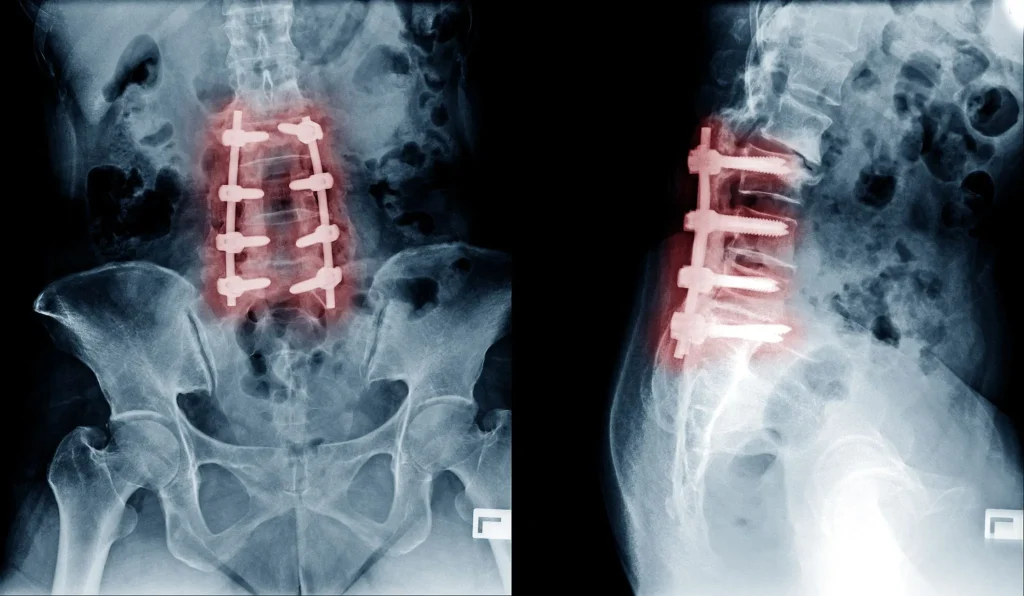
Decompression with fusion does the same thing, then permanently joins two or more vertebrae using screws, rods, and bone graft.
Fusion has genuine indications, including progressive spondylolisthesis, scoliosis, fracture, tumor, and significant deformity. Without documented instability, adding fusion to a decompression for pain alone is generally not indicated. When fusion is proposed and the reason is unclear, a second opinion can help confirm the diagnosis.
How Deuk Laser Disc Repair® Decompresses the Nerve Without a Laminectomy
In working-age adults, the most common source of nerve compression is a herniated, bulging, or torn disc. When the disc is the cause, removing bone from the back of the spine creates room around the nerve but leaves the damaged disc in place.
Deuk Laser Disc Repair® (DLDR®) is an outpatient endoscopic procedure performed under light sedation. Dr. Deukmedjian reaches the damaged disc through natural anatomic pathways using a 7mm lumbar or 4mm cervical incision and direct endoscopic visualization. He locates the herniation or annular tear, then uses targeted laser energy to remove the responsible tissue and seal the tear in the disc wall.
What DLDR® does not do is just as important:
- It does not remove the lamina.
- It does not cut or strip paraspinal muscles.
- It does not fuse any segment.
- It does not implant screws, rods, plates, or cages.
- It does not destabilize the spine.
- It does not restrict normal motion.
DLDR® is available for the lumbar, cervical, and thoracic spine and takes about 20 minutes per disc. Patients go home the same day, typically walking within about an hour. Across more than 2,700 procedures, Deuk Spine reports 99% average pain relief for treated pain sources (published as a peer-reviewed abstract) and a 0.01% complication rate, results that apply when the diagnosed pain source matches the treated pathology.
Facet joint and sacroiliac joint pain often accompany disc disease. For those sources, Deuk Plasma Rhizotomy® deactivates the pain-carrying nerve without hardware or fusion.
Decompress the nerve without removing bone or fusing your spine.
Months of back pain and now they want to operate? Before you agree to a laminectomy or fusion, send your MRI for a free review by Dr. Deukmedjian and learn whether an endoscopic, motion-preserving option like Deuk Laser Disc Repair® can take the pressure off your nerve — no bone removal, no muscle cutting, no hardware.
- 99%
- Average pain relief
- 0.01%
- Complication rate
- 72hrs
- Back to normal activity
FAQs
What is spinal decompression surgery in simple terms?
It is any surgery that removes pressure from the spinal cord or nerve roots. The surgeon removes bone (laminectomy), ligament, or disc material that is pinching a nerve. Once the nerve has room, inflammation settles and symptoms such as sciatica, leg heaviness, or numbness often improve.
How serious is spinal decompression surgery?
It depends on the technique. A traditional open laminectomy is a major inpatient operation with a hospital stay, meaningful blood loss, and a recovery measured in weeks to months. Minimally invasive and endoscopic decompressions are much smaller outpatient procedures, and most patients go home the same day.
Is spinal decompression therapy the same as spinal decompression surgery?
No. Spinal decompression therapy is non-surgical traction on a motorized table, given over several sessions. Spinal decompression surgery physically removes the bone, ligament, or disc tissue pressing on a nerve.
What is the success rate of spinal decompression surgery?
In studies of lumbar stenosis with 5 or more years of follow-up, patients had less leg and back pain and less disability than before surgery, with a reoperation rate of about 14% over that period. ³ Results depend heavily on patient selection, surgeon experience, and how well imaging findings match symptoms.
What is the difference between decompression and fusion?
Decompression removes tissue that is pinching a nerve and leaves the joint mobile. Fusion permanently joins two or more vertebrae with hardware. Fusion is appropriate for documented instability, deformity, or fracture, and is generally not indicated for pain in an otherwise stable spine.
How long does it take to recover from spinal decompression surgery?
Commonly cited ranges are 6 to 12 weeks for most daily activities after open laminectomy, with full recovery taking 3 to 6 months or longer. Minimally invasive decompression usually takes 2 to 6 weeks. After endoscopic procedures such as Deuk Laser Disc Repair®, patients go home the same day and are typically walking within about an hour.
What are the most common complications?
Reported complications include dural tears, recurrent stenosis or herniation, instability that sometimes requires a second operation, adjacent segment disease, infection, and persistent pain. A systematic review of unilateral laminotomy decompression found overall complication rates of 18 to 20%, with dural tears in 3.6 to 9% of cases. ⁵ Minimally invasive techniques show lower complication rates than open laminectomy with comparable pain relief. ⁴
Can spinal decompression surgery be done without removing bone?
Yes, when the compression comes from a herniated disc rather than bony stenosis. Endoscopic, laser-based procedures such as Deuk Laser Disc Repair® remove only the herniated disc tissue through a small port, without removing lamina, facet joints, or ligament.
Will I need a fusion after decompression?
Not in most cases. Fusion is reserved for documented instability, deformity, or fracture. If fusion is recommended and the reason is not clear to you, ask your surgeon to show you the imaging that documents instability, or get a second opinion.
Does insurance cover spinal decompression surgery?
Most major insurance plans, Medicare, and workers’ compensation cover medically necessary decompression procedures. Coverage for specific advanced techniques varies by carrier. Deuk Spine Institute’s team verifies benefits during a free MRI review.
Medical Disclaimer: This article is for educational purposes only and is not a substitute for professional medical advice. Consult a qualified physician about your specific condition before making any treatment decision.
Sources
- Katz JN, Zimmerman ZE, Mass H, Makhni MC. Diagnosis and Management of Lumbar Spinal Stenosis: A Review. JAMA. 2022.
- Jensen RK, Jensen TS, Koes B, Hartvigsen J. Prevalence of lumbar spinal stenosis in general and clinical populations: a systematic review and meta-analysis. European Spine Journal. 2020.
- Machado GC, Ferreira PH, Yoo RI, et al. Long-Term Outcomes of Laminectomy in Lumbar Spinal Stenosis: A Systematic Review and Meta-Analysis. Global Spine Journal. 2022.
- Minimally Invasive Decompression versus Open Laminectomy in Multilevel Lumbar Stenosis: A Systematic Review and Meta-Analysis. World Neurosurgery. 2025.
- Algarni N, Al-Amoodi M, Marwan Y, et al. Unilateral laminotomy with bilateral spinal canal decompression: systematic review of outcomes and complications. BMC Musculoskeletal Disorders. 2023.
- Munakomi S, Cruz R. Lumbar Spinal Stenosis. StatPearls. National Library of Medicine. 2024.