By Dr. Ara Deukmedjian, MD
Board Certified Neurosurgeon
Reviewed on July 15, 2026
Disclaimer: The information contained within this article is for educational purposes only. And is not a substitute for personalized medical advice.
Key Points
✓ Back surgery is a structural fix for a mechanical problem, not a first-line treatment. 75–90% of back pain resolves with 6–12 weeks of appropriate conservative care. ¹
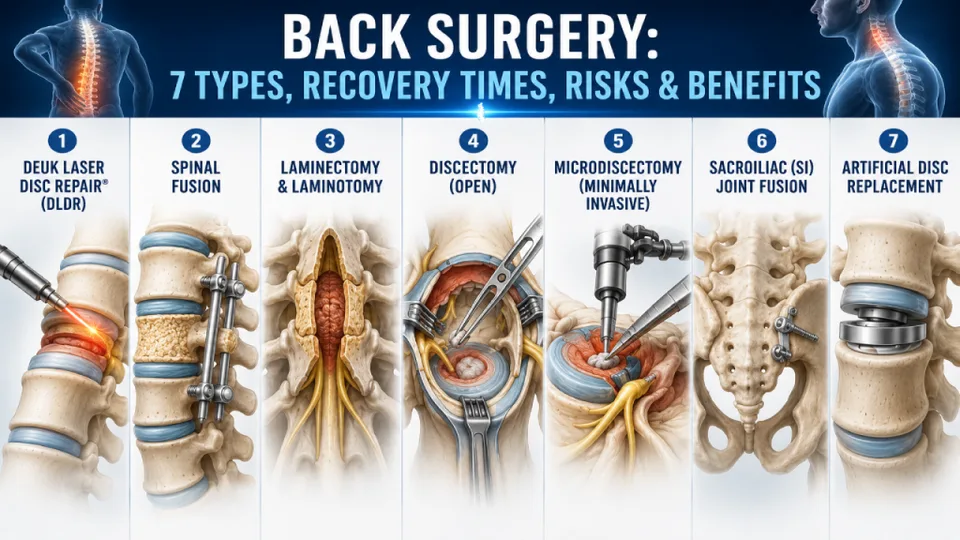
✓ Seven procedures dominate the field: Deuk Laser Disc Repair®, spinal fusion, laminectomy/laminotomy, discectomy, microdiscectomy, SI joint fusion, and artificial disc replacement. Recovery ranges from 72 hours to 12 months. ²
✓ 25–33% of microdiscectomy patients report poor outcomes despite a “technically successful” surgery. ³
✓ 11–36% of fusion patients develop adjacent-segment disease within 2–7 years, and long-term satisfaction drops to 68% at 10 years. ⁴ ⁵
✓ Longer symptom duration before surgery correlates with worse outcomes. Do not rush, but do not needlessly delay once conservative care has clearly failed. ⁶
✓ True minimally invasive surgery uses a 4–7 mm incision, removes no bone, cuts no muscle, and places no hardware. Most “minimally invasive” fusion still uses 1–2 inch incisions.
✓ Deuk Laser Disc Repair® has a 99% pain relief for treated pain sources and 0.01% complication rate across 2,700+ procedures. ⁷
The Short Answer: Do You Actually Need Back Surgery?
In case your MRI scan indicates herniated disc, bulging disc, annular tear or stenosis. And your surgeon has advised a laminectomy, discectomy or spinal fusion, it is wise to do more research. Stop and get a second opinion. The great majority of structural back pain is caused by a small, focal area of damaged disc tissue. It can be removed through a 4–7 mm endoscopic laser incision, under local anesthesia, in under an hour. Without cutting muscle, removing lamina, or placing hardware. ⁷ ⁸
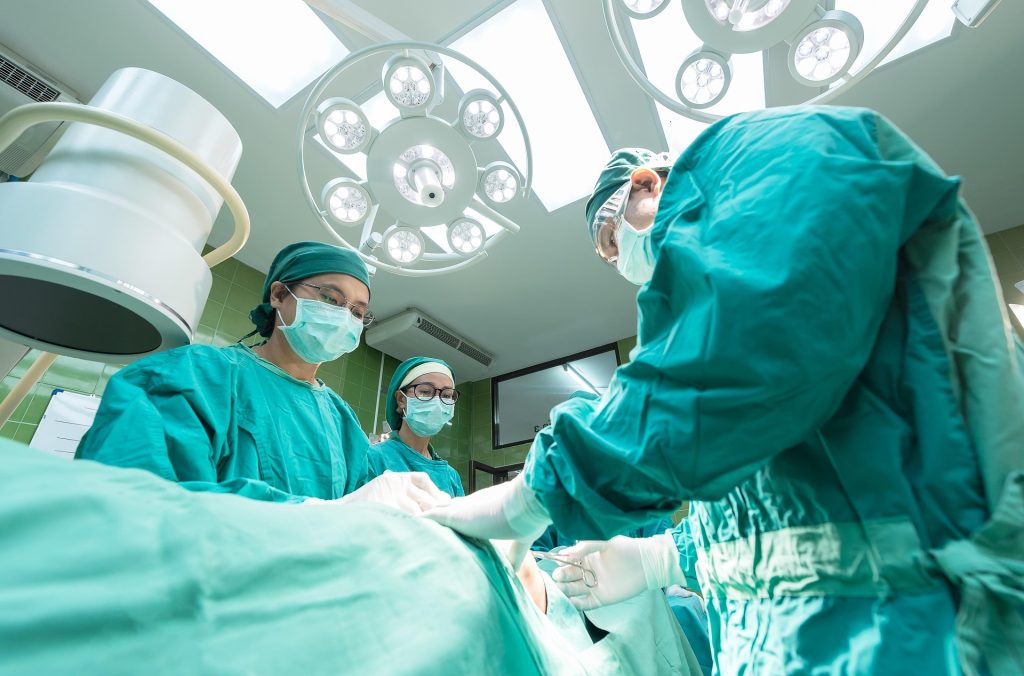
Traditional fusion permanently eliminates motion at the treated level. And carries a documented risk of adjacent-segment degeneration over the following decade. ⁴ In the absence of: instability, fracture, tumor, infection, or severe deformity, fusion is rarely the only option and is often not the best one.
What Is Back Surgery?
Back surgery is any operative procedure performed on the spine to relieve pain, decompress a nerve, remove damaged tissue, or stabilize a structural problem. It is not a single operation. It is a family of procedures, each designed for a specific pathology.
The goals of any well-planned back surgery should be to:
- Eliminate or significantly reduce pain at its structural source.
- Restore function and mobility for normal daily activity.
- Preserve as much natural anatomy as possible, including motion.
- Prevent further deterioration of the treated and adjacent levels.
Fusion based methods, which traditionally are used to meet the first aim, compromise the others 2, 3, and 4. Contemporary endoscopic and laser technologies can manage them simultaneously. ⁷ ⁸
What structural conditions cause patients to do surgery?
- Herniated or bulging discs.The inner core of the disc presses against the outer cover and affects the nerve root.
- Annular tears. Tears in the disc’s outer layer that trigger chronic inflammatory pain (discogenic pain). ⁹
- Degenerative disc disease. Age-related disc dehydration, height loss, and instability.
- Spinal stenosis. Narrowing of the central canal, lateral recess, or foramen that compresses neural structures. ¹⁰
- Spondylolisthesis. A vertebra moves forward onto another vertebra underneath.
- Facet joint arthritis. The breakdown of two small joints at the back of each vertebra that help control spinal movement.
- Bone spurs. Excess bone growths that press into the spinal canal or foramen.
Diagnosis is the key to a good operation. Operating on the wrong source of pain is one of the leading causes of “failed back surgery syndrome.” ³
When Should You Actually Consider Back Surgery?
Surgery is a reasonable option when conservative care has been exhausted and the pain is either disabling or neurologically progressive. Not before.
Evidence-based indications for surgical evaluation
- Conservative care has failed after 6–12 weeks. Systematic review 2025 concludes that appropriate first-line management involves. Physiotherapy, NSAIDs, activity changes, and, when necessary, an injection of epidural steroids. ¹
- Neurological deficit progressively worsening. Evidence of increasing weakness, numbness or loss of reflexes should trigger immediate steps being taken. In a German study in 2024, length of symptoms is linked to poor neurological outcome. ⁶
- Pain is severe and debilitating interfering with work and sleep.
- MRI/CT scan findings alone are insufficient.
- Emergency red flags. Cauda equina syndrome (sudden bowel or bladder dysfunction, saddle anesthesia, rapidly progressive bilateral leg weakness) requires urgent surgical evaluation, not a second opinion by email.
The timing paradox
You should not rush into surgery. You should also not needlessly delay it once conservative care has clearly failed. A 2024 study of microdiscectomy outcomes found that longer preoperative symptom duration was one of the strongest predictors of a poor result. ³ The window matters.
The MRI is not a diagnosis
Up to 80–90% of asymptomatic adults over age 50 show disc bulges, degeneration, and foraminal narrowing on MRI. ¹¹ An MRI finding is a piece of evidence. Not a verdict. Surgery based on imaging alone, without a matching history and exam, is a red flag.
General Benefits and Risks of Back Surgery
- Pain elimination or significant reduction
- Increased range of motion due to non-fusion surgery
- Reduction/elimination of need for opioid use and other pain medications
- Reversal of any neurologic deficit
- Ability to return to work and recreational activities
General surgery risks
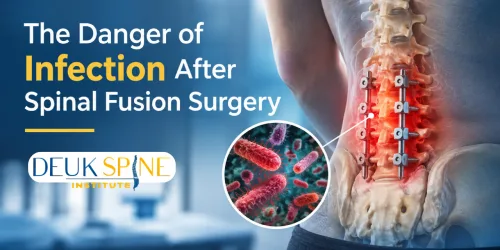
- Wound infection from surgery
- Bleeding / Blood clots
- Anesthesia-related complications
- Nerve / dural damage
- Failed surgery / persistent pain
- Need for revision surgery
- Adjacent-segment disease
- Hardware complications
Risk is not a fixed number. A truly minimally invasive 4–7 mm endoscopic procedure and a multi-level open fusion carry very different complication profiles. Compare them procedure-by-procedure below.
The 7 Types of Back Surgery, Compared
1. Deuk Laser Disc Repair® (DLDR): The Motion-Preserving Standard
What it is
Deuk Laser Disc Repair® is a full-endoscopic, laser-based procedure that removes only the small area of damaged disc tissue causing pain typically 5–10% of the disc. While preserving the healthy remainder of the disc, the bone, the ligaments, and the facet joints. It is peer-reviewed and published as a safe and effective treatment for annular tears, herniated discs, bulging discs, degenerative disc disease, and foraminal stenosis. ⁷ ⁸
A 4–7 mm skin incision is made off the midline under fluoroscopic guidance. A tubular dilator spreads (rather than cuts) the paraspinal muscles. A high-definition endoscope is advanced under continuous saline irrigation. A side-firing Holmium:YAG laser is used to precisely ablate the offending disc tissue and clean the annular tear that is driving the inflammatory pain. ⁷
What DLDR treats
- Herniated discs
- Bulging discs
- Annular tears (a primary source of discogenic back pain) ⁹
- Foraminal stenosis
- Sciatica & cervical radiculopathy
- Compressed nerves
- Degenerative disc disease
- Chronic axial back and neck pain
Recovery time
- Discharge: Same day. Patients walk out within one hour.
- Return to sedentary work: 3–7 days.
- Return to most activities: 4–6 weeks.
- Lifting restriction: No lifting over 20 lb for the first 2 weeks.
- Hardware: No implants or hardware is used
Benefits
- True minimal invasiveness. 4–7 mm incision, closed with a single stitch or adhesive.
- Motion preservation. No fusion, no hardware, no adjacent-segment liability.
- Local anesthesia. No general anesthesia in most cases.
- Rapid recovery. Most patients return to normal activity within 72 hours.
- Documented outcomes. 99% pain relief for treated pain sources and 0.01% complication rate across 2,700+ procedures. ⁷
- Surgical guarantee. Deuk Spine Institute backs the procedure with a written surgical guarantee.
Who it is not for
- Segmental instability (spondylolisthesis with movement seen on flexion extension x-rays)
- Trauma, malignancy, or infection
- Profound and multiple-level deformity
- Cauda equina syndrome, which needs emergent surgical decompression
2. Spinal Fusion: The Conventional Method
What it is
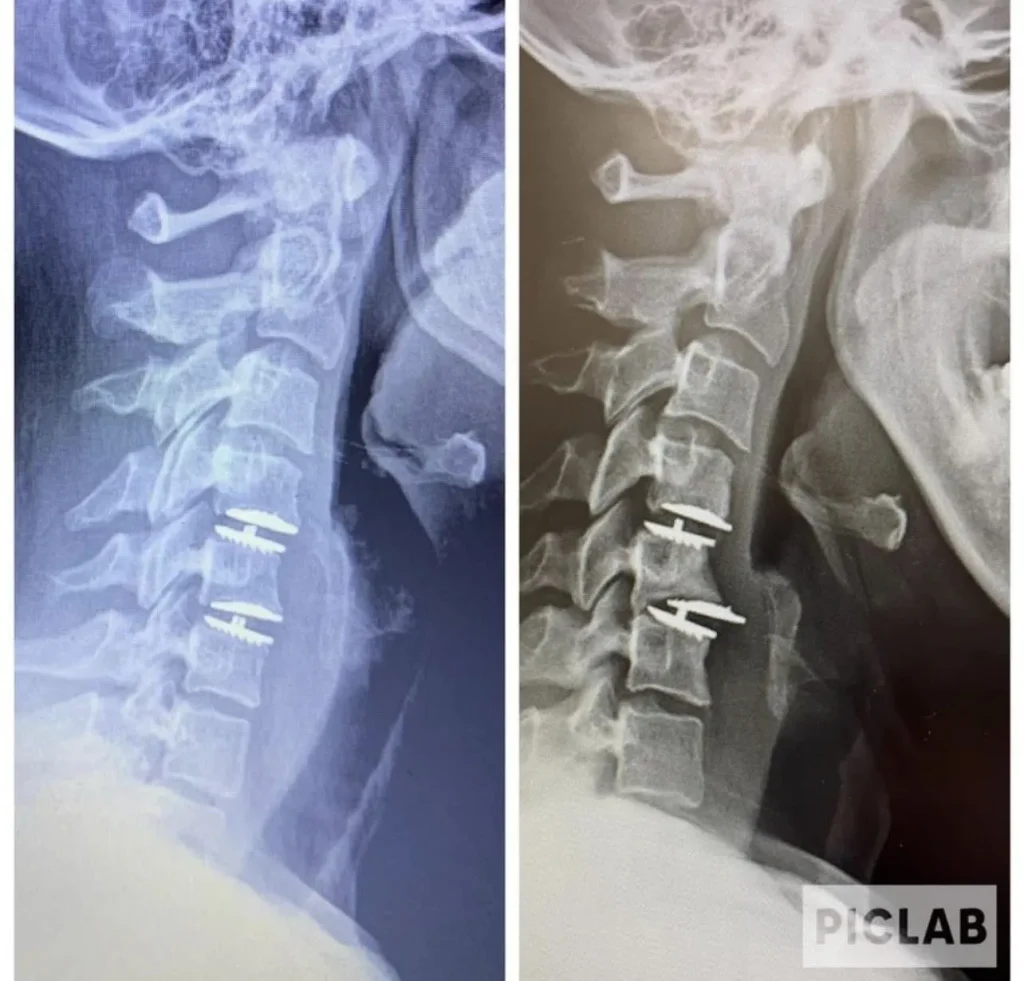
Spinal fusion permanently connects two or more vertebrae to form a single bone. With a bone graft and metal screws, rods, and plates to immobilize the segment during graft integration.
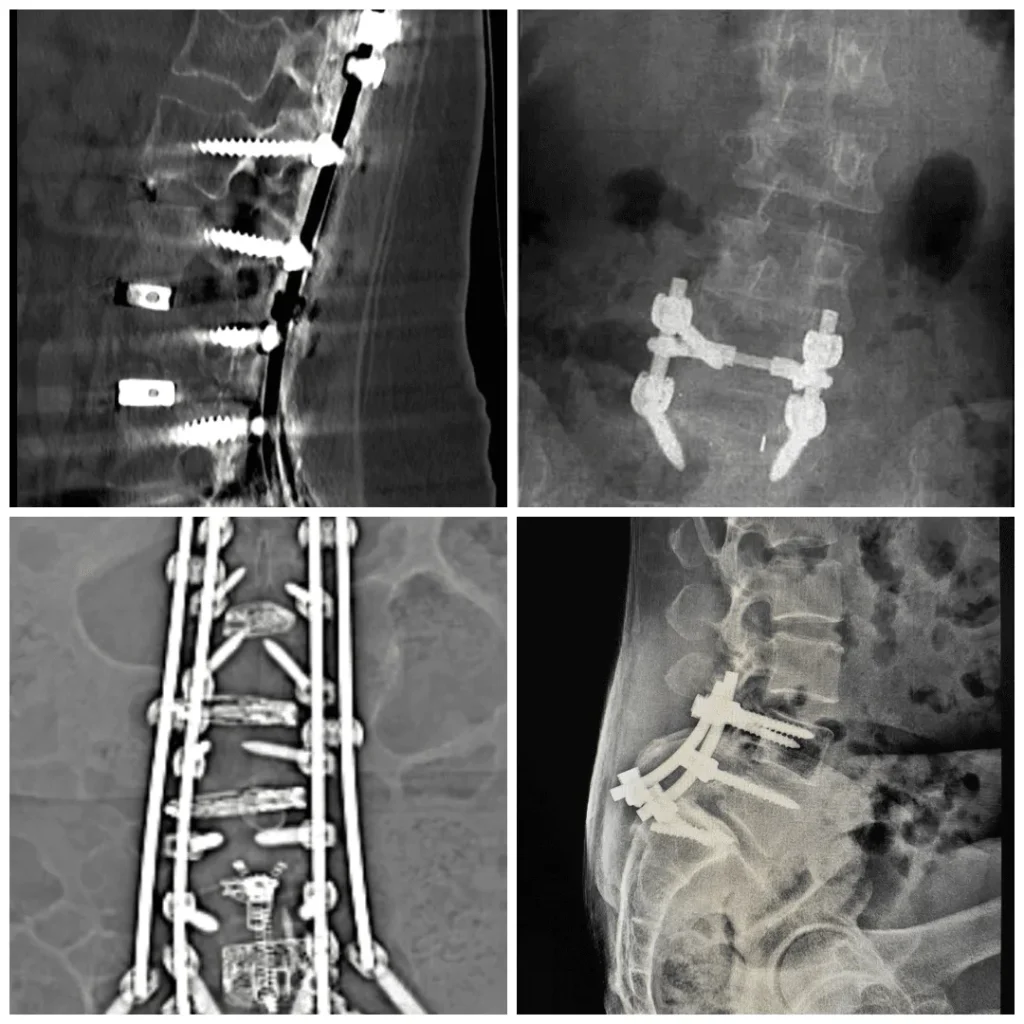
Common variants:
- ACDF: Anterior Cervical Discectomy and Fusion (neck front)
- PCDF: Posterior Cervical Discectomy and Fusion (neck back)
- TLIF: Transforaminal Lumbar Interbody Fusion
- XLIF: Extreme Lateral Interbody Fusion
- ALIF: Anterior Lumbar Interbody Fusion ¹²
What the evidence shows
- In a 2025 review paper, adjacent-segment degeneration has been reported in 36% and symptomatic adjacent segment disease in 11% of patients undergoing spinal fusion surgery for 2-7 years. ⁴
- A 2025 follow-up study for 10 years showed that although 80-85% of patients had improved during the first two years, the long-term satisfaction rate dropped to 68%. ⁵
Recovery time
- Bone fusion: 3–6 months for the graft to solidify; bone continues remodeling for a year.
- Hospital stay: 2–4 days at most centers (outpatient when performed at Deuk Spine Institute).
- Return to driving: ~4 weeks, once off opioids.
- Return to sedentary work: 6 weeks. Physical work: several months.
- Complete recovery: 6–12 months.
Benefits
- Restores stability in true instability.
- Corrects deformity and alignment.
- Eliminates painful motion at a demonstrably unstable segment.
Risks
- Fusion failure (pseudarthrosis)
- Adjacent-segment disease (11–36%) ⁴
- Hardware loosening or migration
- Bone graft donor-site pain
- Permanent, irreversible motion loss
- Extensive scar tissue formation
- Higher revision-surgery rate than most spine procedures
- Cost: $60,000 to $500,000+
3. Laminectomy and Laminotomy: Open Decompression
What it is
A laminectomy removes the lamina. The bony arch over the back of the spinal canal to decompress the nerves. A laminotomy removes only a portion of it. Bone spurs and thickened ligaments are also cleared.
These procedures decompress nerves but do not treat back pain. Removing bone also weakens the spinal segment, which is why laminectomy is frequently combined with fusion.
Recovery time
- Hospital stay: 2–4 days
- Return to driving: ~2 months
- Full recovery: 2–6 months
- Long-term: Most patients experience some residual stiffness or worsening of mechanical back pain.
Benefits
- Effective decompression of central canal stenosis
- Relief of radicular leg or arm pain from nerve compression
Risks
- Worsening or persistent back pain
- CSF leak (dural tear)
- Spinal instability from bone removal
- Prolonged postoperative opioid use
- Progression to fusion in a significant subset
- Cost: $50,000 to $150,000
4. Discectomy: Open Removal of Herniated Disc Material
What it is
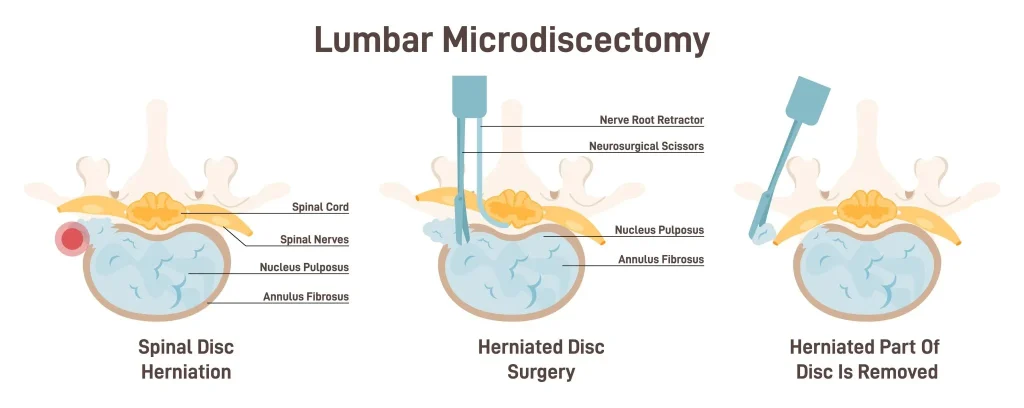
An open discectomy removes the herniated portion of a disc through a traditional incision to decompress a nerve root. It is most commonly performed in the lumbar spine for sciatica. It treats leg pain from nerve compression. It generally does not treat axial back pain and often worsens it. ³
Recovery time
- Hospital stay: Often several days
- Return to desk work: 3–4 weeks
- Return to physical work: 8–12 weeks
Benefits
- Relief of radicular leg pain from a compressive herniation
- Removes the offending disc fragment
Risks
- Recurrent herniation (5–15%)
- Nerve or dural injury
- Spinal instability from bone and ligament removal
- Worsening axial back pain
- Muscle damage from open dissection
5. Microdiscectomy: The “Minimally Invasive” Discectomy
What it is
The microdiscectomy surgery involves making an incision between 1-2 inches long and the use of an operating microscope to cut away the herniated disc. This is more specific than an open discectomy surgery; however, it involves removing bones, ligaments, and part of the facet joint.
What the evidence shows
A 2024 study of predictors of poor outcome after microdiscectomy found that 25–33% of patients reported unsatisfactory results despite a technically successful operation. ³ The strongest predictors of failure were:
- Longer preoperative symptom duration
- Predominantly axial back pain (rather than radicular leg pain)
- High BMI
- Notably, preoperative physical therapy was associated with worse surgical outcomes, suggesting the patients who ultimately needed surgery may benefit from earlier operative intervention
Recovery time
- Discharge: Usually same-day
- Immediate: Leg pain typically resolves post-op
- Return to full activity: 6 weeks to 3 months
Benefits
- Smaller incision than open discectomy
- Immediate relief of radicular leg pain in most patients
- Same-day discharge in most cases
Risks
- Recurrent herniation (5–15%)
- Spinal instability from facet joint removal
- Worsening back pain
- Poor patient-reported outcomes in 25–33% ³
6. Sacroiliac (SI) Joint Fusion
What it is
A procedure called SI joint fusion will insert bone or metal implants in the SI joint so that movement will no longer occur at the joint. This procedure will be done for patients who suffer pain because their SI joint dysfunction has already been confirmed.
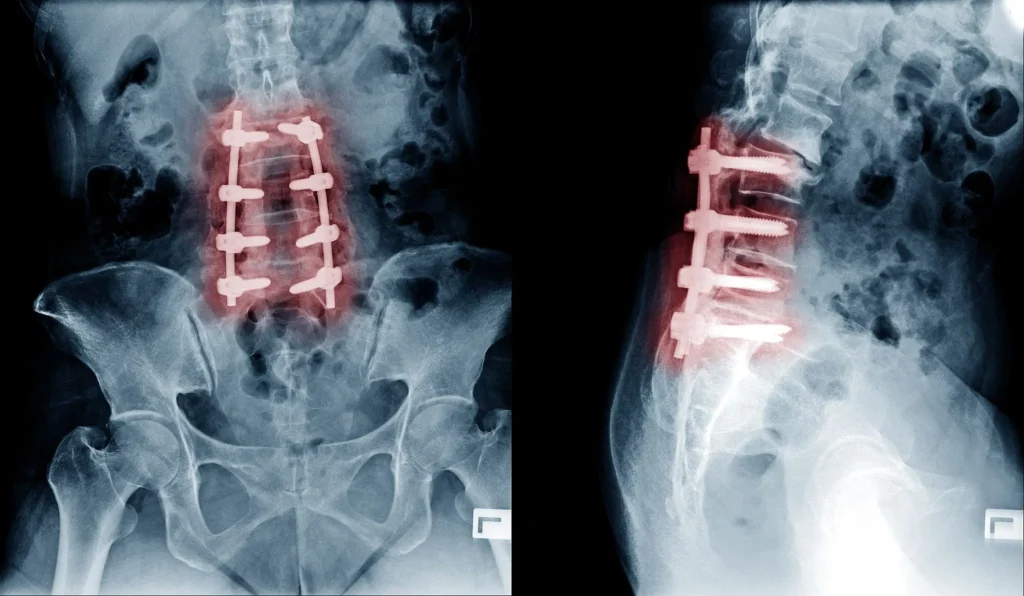
Important: The SI joint is an uncommon but real source of low-back and buttock pain. Diagnostic injections and physical therapy resolve the problem in approximately 90% of properly selected patients before fusion is ever considered.
Recovery time
- Discharge: Same or next day
- Walking: Within hours (often with a cane or walker initially)
- Physical therapy: Begins ~1 month post-op
- Activity restrictions: 3–4 months
- Full recovery: ~6 months
Benefits
- Stabilizes a truly unstable or degenerated SI joint
- Short operative time, small incision compared to lumbar fusion
Risks
- Fusion failure
- Adjacent-segment stress transferred to the lumbar spine
- Pelvic fracture
- Standard surgical risks (infection, bleeding, clots)
7. Artificial Disc Replacement
What it is
An artificial disc removes the disc and replaces it with a mechanical implant designed to preserve motion. Lumbar artificial disc replacement typically requires a front approach. Moving the abdominal organs and great vessels aside to reach the spine. The highest-risk exposure in spine surgery.
Recovery time
- Hospital stay: 2–3 days
- Walking: Within 24 hours
- Return to work: ~6 weeks
- Activity restrictions: Avoid hyperextension
Benefits
- Preserves motion at the treated level
- Removes the pain-generating disc
- Reduces adjacent-segment stress compared to fusion
Risks
- Implant dislocation, subsidence, or loosening
- Great-vessel or bowel injury from the anterior approach
- Retrograde ejaculation in male lumbar patients
- “Paradoxical fusion” the segment fuses spontaneously despite the implant
- Revision surgery is technically difficult and high-risk
Anesthesia: What to Discuss Before Any Back Surgery
Anesthesia risk is often overlooked in the surgical decision. Before consent, review with your anesthesiologist:
- Medical history. Hypertension, prior anesthesia reactions (propofol, fentanyl, tramadol), family history of malignant hyperthermia.
- Medications and supplements. Blood thinners (including turmeric, fish oil, ginkgo biloba), prescriptions, and OTC supplements.
- Airway and breathing. Obstructive sleep apnea, CPAP use, chronic lung disease.
- Cardiac risk. Known coronary disease, arrhythmia, or recent cardiac events.
Many DLDR procedures are performed under local anesthesia with light sedation, avoiding general anesthesia and the pulmonary, cardiac, and cognitive risks it carries; particularly in older adults.
Managing Pain During Recovery
The pain of “back surgery” is not one number. It is a function of:
- Procedure type. A 4–7 mm endoscopic incision does not cause the same postoperative pain as a multi-level open fusion.
- Surgeon skill and technique. Tissue-sparing dissection meaningfully reduces postoperative pain.
- Postoperative protocol. Multimodal, opioid-sparing pain management is now the standard of care.
- Patient factors. Preexisting chronic pain, opioid tolerance, and comorbidities all play a role.
Deuk Laser Disc Repair® patients typically require no opioid pain medication after discharge. A direct consequence of avoiding muscle cutting, bone removal, and hardware implantation.
How to Choose the Right Surgeon
Outcomes in spine surgery are strongly surgeon-dependent, and endoscopic spine surgery in particular has a defined learning curve of 20–40+ cases before complication rates stabilize. ¹³
Before you sign a consent form, ask:
- Are you board certified and fellowship trained in neurological surgery or orthopedic spine surgery?
- How many of this specific procedure have you personally performed in the last 12 months? Lifetime volume matters less than recent volume.
- What is your published or documented success and complication rate? A high-volume specialist can quote their own outcome data.
- Why this procedure over the alternatives? The recommended operation should be proportional to the pathology on your MRI.
- What will you not do? A surgeon who recommends fusion for every disc problem is not the right surgeon for a focal disc problem.
- Have I gotten a second opinion? If a fusion or laminectomy has been recommended. Get a free second opinion now.
Fix the disc without fusion, hardware, or bone removal.
Most “minimally invasive” back surgeries still use 1–2 inch incisions, remove bone, and place hardware. Before you consent to a fusion, laminectomy, or microdiscectomy, send your MRI for a free review by Dr. Deukmedjian and learn whether Deuk Laser Disc Repair® can treat the actual pain generator through a 4–7 mm incision — no bone removal, no muscle cutting, no hardware, and natural motion preserved.
- 99%
- Pain relief
- 0.01%
- Complication rate
- 2,700+
- Procedures performed
FAQs
How do I know if I really need back surgery?
You should consider back surgery when 6–12 weeks of appropriate conservative treatment (physical therapy, NSAIDs, activity modification, and where indicated a diagnostic injection) has failed, when you are developing progressive weakness or numbness, when pain is severely disabling, or when you have red-flag symptoms such as cauda equina syndrome. ¹ ⁶ MRI findings alone are not an indication. They must match your symptoms and physical exam. ¹¹
What is the difference between “minimally invasive” surgery and truly minimally invasive procedures like Deuk Laser Disc Repair?
Many procedures marketed as “minimally invasive” still use 1–2 inch incisions, remove bone and ligament, and place hardware. True minimally invasive endoscopic surgery. Including Deuk Laser Disc Repair® uses a 4–7 mm incision (about the diameter of a pencil eraser), removes no bone, cuts no muscle, places no hardware, and preserves natural motion. ⁷ ⁸ Ask specifically about incision size, whether bone is removed, whether fusion is planned, and whether hardware will be used.
Why did my doctor recommend fusion when motion-preserving alternatives exist?
Fusion is genuinely necessary for a minority of patients. Those with instability, high-grade spondylolisthesis, fracture, tumor, deformity, or infection. It is over-recommended in patients who do not have those problems. The reasons are structural: many spine surgeons were trained primarily in fusion, endoscopic laser techniques require additional specialized training, and the reimbursement for fusion is substantially higher than for endoscopic alternatives. If your surgeon becomes defensive when you ask about alternatives or discourages a second opinion, that is a red flag.
How can I verify a spine surgeon is qualified?
Confirm board certification through the American Board of Medical Specialties. Search PubMed and Google Scholar for the surgeon’s name plus the procedure. Genuine specialists publish their outcomes. Ask directly how many of the specific procedure they have performed in the last year, and request their personal complication rate. Check hospital and facility accreditation. Read patient reviews for patterns, not isolated comments. Dr. Deukmedjian has published multiple peer-reviewed studies on the DLDR technique with a 99% pain relief for treated pain sources and 0.01% complication rate across 2,700+ procedures. ⁷
How long is recovery after back surgery?
Recovery ranges from 72 hours to 12 months depending on the procedure. Deuk Laser Disc Repair®: back to normal activity in 72 hours, sedentary work in 3–7 days. Microdiscectomy: 6 weeks to 3 months. Laminectomy: 2–6 months. Spinal fusion: 6–12 months, with bone remodeling for a full year. Artificial disc replacement: ~6 weeks. Choose the procedure and by extension, the recovery that matches the actual pathology on your MRI.
Is back surgery covered by insurance?
Most major U.S. insurance plans, Medicare, and workers’ compensation cover medically necessary spine surgery, though coverage for specific advanced techniques varies by carrier. Deuk Spine Institute verifies benefits during a free MRI review.
Can back pain come back after surgery?
Yes. Recurrence rates vary sharply by procedure. Recurrent disc herniation after microdiscectomy is reported at 5–15%. ³ Adjacent-segment disease after fusion affects 11–36% within 2–7 years. ⁴ Long-term satisfaction after fusion drops to 68% at 10 years. ⁵ Motion-preserving procedures that leave healthy tissue in place have substantially lower published recurrence rates. ⁷ ⁸
What is the safest type of back surgery?
Safety is a function of tissue trauma, anesthesia risk, and hardware. Full-endoscopic procedures performed under local anesthesia through a 4–7 mm incision. Without bone removal, muscle cutting, or hardware — carry the lowest published complication rates. ⁷ ⁸ Anterior lumbar approaches (ALIF, artificial disc) carry the highest risk of major vascular and visceral complications. ¹²
Sources
View Sources
- Systematic review of conservative management for lumbar radiculopathy — Neurospine, 2025.
- Comparative outcomes of surgical procedures for lumbar degenerative disease — Deuk Spine Institute peer-reviewed publications.
- Predictors of poor outcome after lumbar microdiscectomy — International Journal of Spine Surgery, 2024.
- Adjacent segment degeneration and disease after lumbar fusion: systematic review — PMC, 2025.
- Ten-year patient-reported outcomes after lumbar fusion — PMC, 2025.
- Symptom duration and neurologic recovery after lumbar discectomy — Deutsches Ärzteblatt International, 2024.
- Deuk Laser Disc Repair® — peer-reviewed outcomes and patents.
- Full-endoscopic transforaminal decompression: outcomes and complication profile — endoscopic spine surgery literature.
- Discogenic pain and the role of the annular tear — spine pain physiology literature.
- Degenerative disc disease and spondylosis: pathophysiology — spine radiology literature.
- Prevalence of MRI findings in asymptomatic adults — imaging epidemiology literature.
- ALIF complication profile — vascular and visceral risk in anterior lumbar approaches.
- Learning curve in endoscopic spine surgery — endoscopic technique literature.