By Dr. Ara Deukmedjian, MD
Board Certified Neurosurgeon
Medically reviewed on Aug 19, 2026
Disclaimer: Information provided on this page is for general knowledge purposes only and should not be taken as medical advice.
Key Points
✓ It affects 3-5% of the population, where the lumbar variety is the most prevalent.
✓ Major causes of radiculopathy include herniation, degeneration of intervertebral discs, spinal stenosis, and bone spurs.
✓ Radiculopathy can be diagnosed through a physical examination, MRI, and EMG/NCS.
✓ Conservative management of the problem results in improvement in 75-90% of cases.
✓ Deuk Laser Disc Repair® has a 95% success rate when conservative treatment does not work.
What Is Radiculopathy?
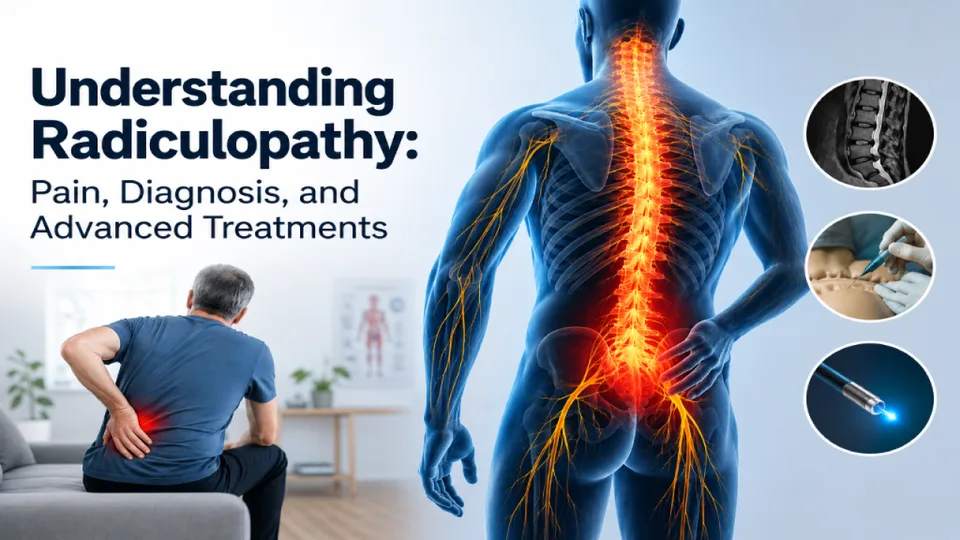
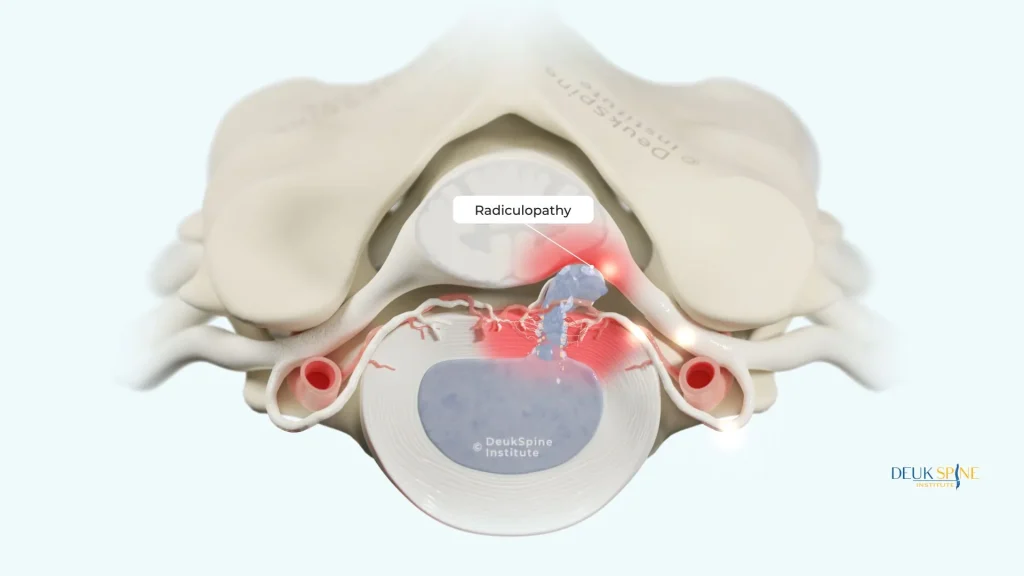
Many people describe it as an intense stabbing sensation starting from your neck into your arm or starting from your lower back towards your legs? You might be suffering from radiculopathy. This condition occurs due to compression, irritation, or inflammation of the nerve root extending from the spinal cord in the spinal region. 1
One other name for radiculopathy is “pinched nerve” and it is a disorder not just caused by back or neck pain but can be seen to cause problems to other parts of the body as well. Some of the symptoms of radiculopathy may include sharp pains, numbness, tingling, or “pins and needles” sensation, as well as muscle weakness in certain areas of the body. 2 These symptoms can make simple activities very difficult and prevent you from doing the things that you love.
Knowing what’s wrong with you is the first step towards getting help for it. The experts at Deuk Spine Institute have the expertise needed to diagnose and treat every kind of radiculopathy.
Types of Radiculopathy
Radiculopathy is classified by the region of the spine where the nerve compression occurs. Each type produces a distinct set of symptoms based on the nerves affected.
Cervical Radiculopathy
Cervical radiculopathy happens in the cervical spine which consists of the seven vertebrae making up the neck. If one of the nerve roots in the neck becomes compressed, it can result in pain that spreads to the shoulder, arm, and hand accompanied with weakness and numbness in muscles. 4 Cervical radiculopathy is found in about 85 of 100,000 people each year, and it is the C7 nerve root that is affected mostly. 4 Younger individuals develop cervical radiculopathy due to a herniated disc whereas older individuals suffer from degeneration and bone spurs. 1
Thoracic Radiculopathy
Thoracic radiculopathy involves the middle region of the spine and is the most uncommon among the three forms of radiculopathy. The symptoms may include pain around the ribs or pain extending to the chest, which could easily be confused for heart or stomach problems. Even though it is less common, it still needs thorough examination to eliminate other causes of pain in the chest area.
Lumbar Radiculopathy
Lumbar radiculopathy is the most common type, which constitutes about 60% of all radiculopathies. 7 It happens in the lower back and leads to sciatica. Sciatica pain is characterized by sharp shooting pains from the lower back to the buttocks to the legs. About 3 to 5 percent of the general population suffers from lumbar radiculopathy. 5 6 The L5 and S1 nerves are the most often involved, and signs include weak foot raising, lack of ankle reflexes, and numbness of the outside of the leg or foot.
What Causes Radiculopathy?
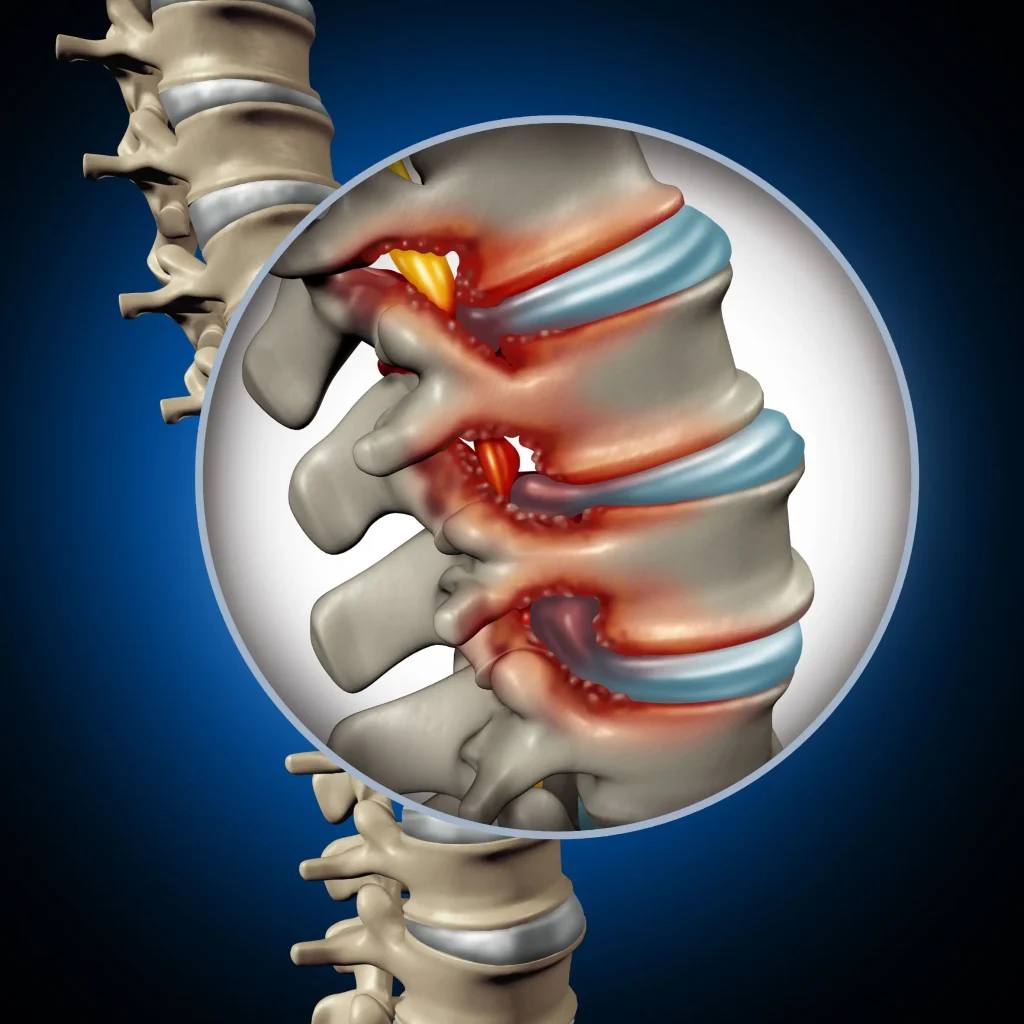
These nerves span the entire body from the spine into each individual extremity. Spinal nerve roots exit via tiny tunnels known as foramina and reside among the discs, ligaments, and bone of the vertebrae. If there is no degeneration or injury to the spine, then these tunnels will create a secure route. Nevertheless, there are various conditions that can create problems within these tunnels.
The most common causes include:
- Herniated discs — Is a disc composed of a tough outer portion called the annulus fibrosus and a soft inner core called the nucleus pulposus. A tear in the outer layer allows the inner portion to bulge outwards into the nerves located in the neighboring areas, causing inflammation. 2
- Degenerative disc disease — Changes occur in the spinal disc either due to aging or following some injury, causing the disc to lose its height, reducing the foraminal space, and compressing the spinal nerve roots. 18
- Spinal stenosis — Narrowing occurs in the spinal canal and neural foramen, exerting pressure on the spinal nerves. Causes of spinal stenosis include disc herniations, ligament hypertrophy, and bone spurs. 2
- Bone spurs (osteophytes) — Projections that grow on the spinal bones as a result of osteoarthritis. Bone spurs reduce the foraminal space, causing compression of nerve roots. 1
- Spondylolisthesis — One vertebra slips forward on top of the next vertebra, reducing the amount of space for the nerve roots. 18
Additional risk factors include: 5
- Age over 50
- Cigarette smoking
- Physically demanding occupations
- Prior spinal injury
Recognizing the Symptoms of Radiculopathy
Pain that extends along the course of the nerve affected from the spine to either the arm or leg depending on whether the radiculopathy affects the cervical or lumbar area, respectively, is one of the main signs of the disease. The range of other signs, however, varies from case to case.
Common symptoms include: 3
- Radiating pain that shoots from the spine into the arms or legs
- Numbness or reduced sensation in the affected limb
- Tingling or “pins and needles” sensations
- Muscle weakness affecting grip strength or the ability to lift the foot
- Reduced or absent reflexes in the affected area
Cervical radiculopathy usually presents with neck pain along with pain extending from the shoulder down to the arm and hand. Meanwhile, lumbar radiculopathy presents with low back pain along with pain that travels from the buttocks down to the thigh and the legs. a condition known as sciatica. 3
Early detection of radiculopathy is key to managing the condition because if left untreated, nerve compression can cause weakness and even nerve damage in extreme cases. 16
How Is Radiculopathy Diagnosed?
A diagnosis is needed since there are many other diseases which can present with similar symptoms, for example hip arthritis, problems of the blood vessels, and peripheral neuropathy. If the necessary tests are not carried out then inappropriate treatment will result and this will only make matters worse. 10
Physical Examination
The process starts with the physical examination. Your doctor will check your reflexes, your muscle strength and your sensory functions. Certain provocative tests. Like straight leg raising test for lumbar radiculopathy and Spurling test for cervical radiculopathy. These tests help to replicate your symptoms and help to find out which nerve root is affected.
MRI
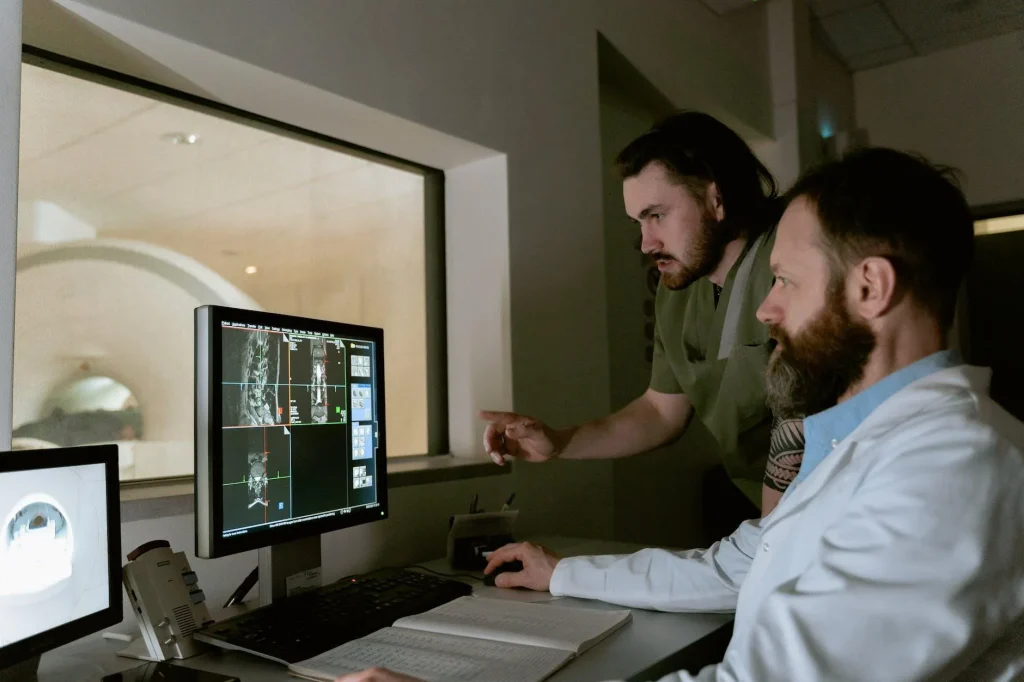
MRI is the gold standard imaging study for evaluating radiculopathy. This is because it gives an in depth visualization of the spine, spinal cord, nerve roots, intervertebral discs. An other surrounding soft tissues without exposure to any form of radiation. The MRI helps in diagnosing different conditions that could lead to nerve entrapment, such as herniated intervertebral discs and spinal stenosis. MRI without contrast is indicated as per ACR Appropriateness Criteria (as updated 2024) for use after 4-6 weeks of conservative management. 11
EMG/NCS
EMG and nerve conduction velocity studies are specific forms of electrodiagnostic testing that test muscle activity and how quickly the nerves conduct impulses. The value of EMG/Nerve Conduction Velocity Studies is for: 8
- Confirming which nerve root is affected
- Assessing the severity and chronicity of nerve damage
- Distinguishing radiculopathy from conditions that mimic it (such as peripheral neuropathy or plexopathy)
- Establishing a prognosis for recovery
EMG testing has relatively low sensitivity of around 50–71%, but very high specificity (almost 100%) in the diagnosis of radiculopathy, making it extremely reliable in the case of positive results. 9 The sensitivity of EMG/NCS testing in the diagnosis of radiculopathy amounts to 85%, and these tests allow quantification of the extent of nerve damage. Mild denervation (loss of less than 30% of motor units) indicates good chances of recovery, whereas severe denervation (greater than 70%) suggests a higher possibility of persistent damage. 10
At Deuk Spine Institute, we apply EMG/NCS testing along with sophisticated MRI imaging to create a comprehensive picture of the patient’s situation. It helps us determine which exact nerve is involved, to what extent it is compressed, and choose the optimal treatment strategy.
Radiculopathy Treatment Options
The treatment options of radiculopathy will vary depending upon the severity of symptoms, compression of the nerves, and the response to the treatment. The positive thing is that in most cases of radiculopathy, conservative treatment options suffice.
Conservative Treatments
Physical Therapy: Physical therapy usually remains the primary treatment option for radiculopathy. It is proven that about 90% of all patients of cervical radiculopathy experience recovery or significant improvement with the use of conservative treatment within 4-8 weeks. 14 Efficient physical therapy consists of various types of exercises, manipulations, patient education and other components.
Anti-Inflammatory Drugs: NSAIDs and oral steroids have anti-inflammatory properties that can be used to relieve pain associated with the inflammation near the nerve root compression.
Epidural Steroid Injections: If oral medication and physiotherapy is not enough, epidural steroid injections provide the delivery of a powerful anti-inflammatory agent directly to the area where there is pressure on nerves. Some studies have shown that epidural steroid injections may relieve radicular pain in 60% of cases for more than six months after transforaminal injection of corticosteroids, with an ideal period for treatment being 3–6 months after symptoms occurred. 12 13 A prospective study of the effects of lumbar transforaminal epidural steroid injections showed that 82.69% of cases had good results. 15
BMAC Therapy: Bone Marrow Aspirate Concentrate therapy utilizes the power of stem cells extracted from the bone marrow of the same patient. The stem cells are then injected into the affected part for treatment purposes.
Platelet Rich Plasma (PRP) Therapy: PRP therapy involves concentration of platelets, growth factors and stem cells from the patients’ body, which are then injected for promoting tissue regeneration.
Facet Block Injections: The injection of nerve block is used for treating pain signals transmitted through the facet joints of the spine. There are different ways to do so such as local anesthesia, radiofrequency ablation, and cryotherapy according to each individual’s case.
When Is Surgery Necessary?
Surgery is generally recommended when: 12 13
- Conservative treatments fail to provide adequate relief after 6–8 weeks
- Neurological deficits are progressive (worsening weakness or numbness)
- Imaging shows significant nerve compression that correlates with clinical symptoms
- The patient experiences loss of bladder or bowel control a medical emergency
One significant epidemiological study done in Rochester, Minnesota indicated that about 75% of patients with cervical radiculopathy improved with conservative management, and 20% improved through surgery. After a follow-up period of six years, it was observed that 90% of all patients in the two categories had comparable results. 14
Advanced Surgical Treatment: Deuk Laser Disc Repair®
When surgery is indicated, the choice of surgical approach matters enormously. At Deuk Spine Institute, we perform radiculopathy surgery using Deuk Laser Disc Repair® (DLDR). The most advanced minimally invasive laser spine surgery available.
How Deuk Laser Disc Repair Works:
Deuk Laser Disc Repair® was developed by Dr. Ara Deukmedjian MD, a world-renowned neuro-spine surgeon and a true pioneer in minimally invasive, laser, and endoscopic spine surgery. The procedure is an alternative to traditional open spine surgeries like spinal fusion, laminectomy, and total disc replacement.
The procedure begins with a very small incision; less than a quarter inch long. A cylindrical dilator is inserted to gently spread the muscle and create a narrow passage. The dilator is advanced into the symptomatic disc through the annular tear where the herniation originates, and a tubular retractor slides over it to establish the surgical corridor. The entire surgery is performed through this narrow tube using endoscopic visualization.
A Holmium YAG laser is precisely guided under endoscopic magnification to remove only the painful inflammatory tissue from the damaged disc. This process is called debridement of the annular tear. Developed by Dr. Deukmedjian, he was the first to publish this procedure. 17
After the removal of the inflamed tissue and the protruded disc materials, the instruments will then be withdrawn, resulting in an incision that can be closed with just one stitch and a dressing.
Advantages of Deuk Laser Disc Repair® include:
- 95% successful resolution of pain
- Outpatient procedure: No hospitalization required
- Surgery time of approximately one hour
- No cutting of bone or removal of structural tissue
- Preservation of normal spinal movement and disc flexibility
- No metal implants, fusion hardware, or biological material added to the spine
- No opioids required after surgery
- Rapid recovery allowing return to normal activities
Our goal is to always provide the highest level of care available to our patients, which means offering a variety of radiculopathy treatments that best fit your needs.
Conditions Related to Radiculopathy
Radiculopathy often accompanies or is caused by a number of other spine problems:
Herniated Disc: Herniated disc is one of the leading causes of radiculopathy. In case when the jelly-like substance that is present inside the spine disc protrudes from its tear in the outer shell, it may put pressure on the adjacent nerves and cause radiating pain and weakness. 2
Sciatica: Sciatica is a specific type of lumbar radiculopathy caused by compression of the sciatic nerve. The longest nerve in the body. It produces pain that travels from the lower back through the buttock and down the back of the leg. 3
Spinal Stenosis: Narrowing of the spinal canal compresses the nerve roots, producing radiculopathy symptoms. Stenosis is most common in people over age 50 and can occur in the cervical, thoracic, or lumbar spine. 2
Degenerative Disc Disease: Progressive deterioration of the intervertebral discs can lead to loss of disc height, foraminal narrowing, and chronic nerve root irritation. 18
Myelopathy: When compression occurs on the spinal cord itself (rather than just a nerve root), the condition is called myelopathy. This is more serious than radiculopathy and may require urgent surgical attention.
The shooting pain has a source.
We treat the source — not the symptom.
Radiculopathy — a pinched spinal nerve — affects 3–5% of the population and is the leading cause of sciatica. When physical therapy, medications, and injections aren’t enough, Deuk Laser Disc Repair removes only the damaged tissue compressing your nerve through an incision smaller than a pencil eraser. Same day. No fusion. No opioids.
Board-certified neurosurgeon · Pioneer in endoscopic laser spine surgery · No bone cutting · No metal implants
FAQ
How is radiculopathy diagnosed?
Diagnosis involves a combination of physical examination, MRI imaging, and electrodiagnostic testing (EMG/NCS). The physical exam identifies neurological deficits such as reflex changes, weakness, and sensory loss. MRI reveals the structural cause of nerve compression. 11 EMG/NCS testing confirms which nerve root is affected and assesses the severity of nerve damage. 8
Can radiculopathy heal on its own?
Many cases of radiculopathy improve with conservative treatment. Research indicates that approximately 75–90% of patients with cervical radiculopathy achieve significant improvement with physical therapy, medication, and time most within 4–8 weeks. 14 However, some cases require more aggressive intervention, particularly when neurological deficits are progressive.
What is the best treatment for radiculopathy?
A choice of the optimal therapy largely depends on the stage of the disorder development. The majority of patients resort to conservative treatment options including physiotherapy, anti-inflammatory drugs, and epidural steroid injections. If no pain relief is achieved using the conservative treatment methods within 6 to 8 weeks, or if the neurological symptoms worsen, minimally invasive surgery is an option. 12 13
How long does radiculopathy last?
The duration varies by severity and cause. Mild cases may resolve within a few weeks with conservative care. More persistent cases may take 3–6 months to improve. In cases where nerve compression is severe and left untreated, symptoms can become chronic and, in rare cases, cause permanent nerve damage. 16
What makes Deuk Laser Disc Repair different from other spine surgeries?
Deuk Laser Disc Repair® is a minimally invasive surgery through an endoscope which uses lasers to precisely cut only the portion of the disc causing the pain. Unlike conventional procedures such as spine fusion, laminectomy, or microdiscectomy, Deuk Laser Disc Repair® does not involve cutting any bones, it does not involve inserting any metal implants into the body, it preserves spinal movement, and does not need any opioid medicines as well. Its success rate is 95%.
Sources
View Sources
- American Academy of Orthopaedic Surgeons (AAOS). “Cervical Radiculopathy (Pinched Nerve).” OrthoInfo. https://orthoinfo.aaos.org/en/diseases–conditions/cervical-radiculopathy-pinched-nerve/
- Johns Hopkins Medicine. “Radiculopathy.” https://www.hopkinsmedicine.org/health/conditions-and-diseases/radiculopathy
- Cleveland Clinic. “Radiculopathy: Symptoms, Causes & Treatment.” Updated April 2026. https://my.clevelandclinic.org/health/diseases/22564-radiculopathy
- Cleveland Clinic. “Cervical Radiculopathy (Pinched Nerve in Neck).” Updated December 2025. https://my.clevelandclinic.org/health/diseases/22639-cervical-radiculopathy-pinched-nerve
- Physiopedia. “Radiculopathy.” https://www.physio-pedia.com/Radiculopathy
- ClinicalTrials.gov. “Impact of Direct Current Electrical Stimulation on Treatment of Lumbosacral Radiculopathy.” NCT06421558 Protocol. https://cdn.clinicaltrials.gov/large-docs/58/NCT06421558/Prot_SAP_000.pdf
- Wilderman Medical Clinic. “Radiculopathy – Cervical, Thoracic, and Lumbar.” 2024. https://drwilderman.com/conditions/spine-pain/radiculopathy-cervical-thoracic-and-lumbar/
- StatPearls (NCBI). “Electrodiagnostic Evaluation of Cervical Radiculopathy.” Updated August 2023. https://www.ncbi.nlm.nih.gov/books/NBK563152/
- NCBI/PMC. “Cervical radiculopathy for neurologists: the role of electrodiagnosis.” 2025. https://www.ncbi.nlm.nih.gov/pmc/articles/PMC12662699/
- Lone Star Neurology. “Sciatica and Pinched Nerves: EMG/NCS Testing Explained.” January 2026. https://lonestarneurology.net/others/sciatica-and-pinched-nerves-emg-ncs-testing-explained/
- American College of Radiology. “ACR Appropriateness Criteria: Cervical Pain or Cervical Radiculopathy — 2024 Update.” J Am Coll Radiol 2025;22:S136–S162.
- Medscape. “Lumbosacral Radiculopathy Treatment & Management.” https://emedicine.medscape.com/article/95025-treatment
- Medscape. “Cervical Radiculopathy Treatment & Management.” https://emedicine.medscape.com/article/94118-treatment
- Journal of Orthopaedic & Sports Physical Therapy (JOSPT). “Treatment of Patients With Degenerative Cervical Radiculopathy Using a Multimodal Conservative Approach.” 2011. https://www.jospt.org/doi/10.2519/jospt.2011.3592
- Cureus/NCBI. “Functional Outcomes and Successful Predictors of Lumbar Transforaminal Epidural Steroid Injections.” 2024. https://www.ncbi.nlm.nih.gov/pmc/articles/PMC10774995/
- Michigan Neurology Associates. “Recognizing the Signs of Radiculopathy Before It Worsens.” 2025. https://www.michiganneurologyassociates.com/blog/recognizing-the-signs-of-radiculopathy-before-it-worsens
- Deukmedjian AJ, et al. “Endoscopic laser disc debriding of the annular tear.” Published in Journal of Neurosurgery: Spine. 2012. https://pubmed.ncbi.nlm.nih.gov/23230523/
- Alexander CE, Weisbrod LJ, Varacallo MA. “Lumbosacral Radiculopathy.” StatPearls. February 2024. https://www.ncbi.nlm.nih.gov/books/NBK430837/