By Dr. Ara J. Deukmedjian, MD
Board Certified Neurosurgeon
Updated: Oct 6, 2026
Disclaimer: The information presented is meant for educational purposes only and should not be used for medical advice. Consult a healthcare professional before making any decisions about your treatment.
Key Points
- About 1.5 million spinal fusions are performed in the U.S. each year.¹
- Only about 50% of fusion patients achieve clinically meaningful back pain relief.²
- Fusion stabilizes a spinal segment. It does not cure discogenic pain.
- The six most common causes of post-fusion pain are infection, hardware failure, muscle injury, adjacent segment disease, pseudarthrosis, and untreated residual pain.
- Adjacent segment disease occurs because fusion transfers mechanical load to the discs above and below.³
- New weakness, numbness, loss of bowel or bladder control, or signs of infection are emergencies.
- Deuk Laser Disc Repair® treats the disc directly through a 4 mm incision: no fusion, no hardware, no opioids.
- DLDR® reports a 99% pain-relief rate and a 0.01% complication rate.
If a surgeon has told you that spinal fusion will end your chronic back or neck pain, you deserve to know what the peer-reviewed literature actually says about outcomes before you consent, and what your options are if you have already had a fusion and the pain has returned. Fusion remains one of the most frequently performed spine operations in the United States,¹ but the published data on its ability to resolve axial back and neck pain is far more sobering than most patients are told in the pre-operative visit.²
What Spinal Fusion Actually Does
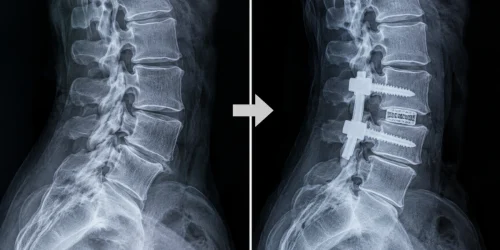
Spinal fusion is a kind of surgery that entails joining several vertebrae by placing bone grafts and metal hardware. 7 Including rods, pedicle screws, plates, and interbody cages depending on the case. 6 This can happen in the cervical, thoracic, or lumbar regions of the spine.
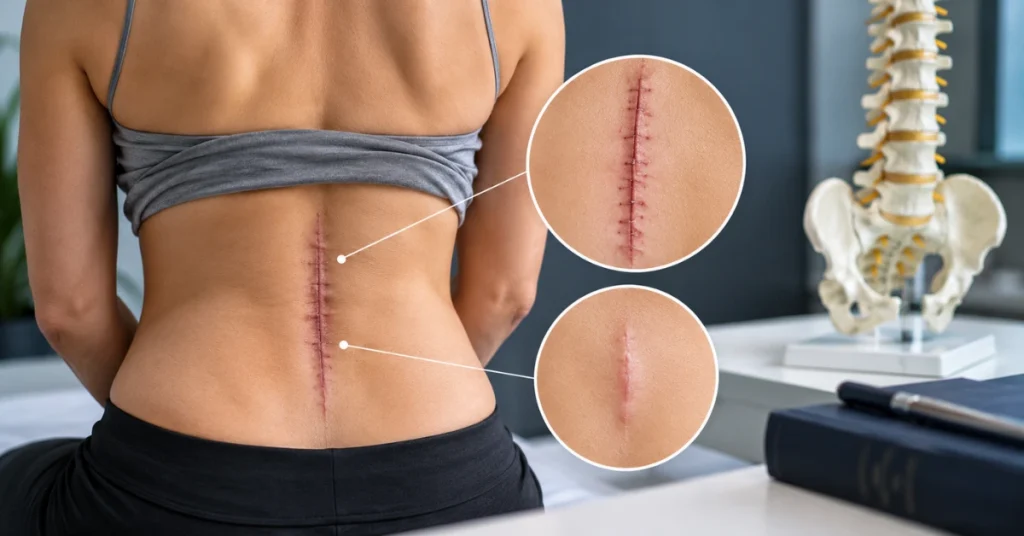
The biophysical aim of spinal fusion is to create an immobile unit between the vertebrae that are fused. The clinical rationale behind this operation is that the elimination of motion leads to the elimination of pain caused by a degenerated disc or an unstable spine. This is applicable in a limited number of conditions, which include instability, spondylolisthesis with slippage, deformity, trauma or tumor. In the case of axial back pain due to degenerative disc disease, there is not much evidence and the outcome data at two years shows that only about half of the patients achieve a clinically important improvement in pain.²
Why Pain Returns or Never Resolves After Fusion
Recurrent pain is pain that initially improves and then returns days, weeks, or months after surgery. Residual pain is pain that never meaningfully left. Both are common after fusion, and both have identifiable causes.
1. Surgical Site Infection
An infection whether superficial or deep following spinal fusion may be accompanied by back pain that may be new or worsening, fever, chills, drainage, redness or swelling around the incision site. The work up will be guided by the operating surgeon and will include inflammatory studies such as CRP as well as a white blood cell count, with MRI imaging being done with and without contrast if there is an infection in the deep spaces suspected. 4 11 12
2. Hardware Failure
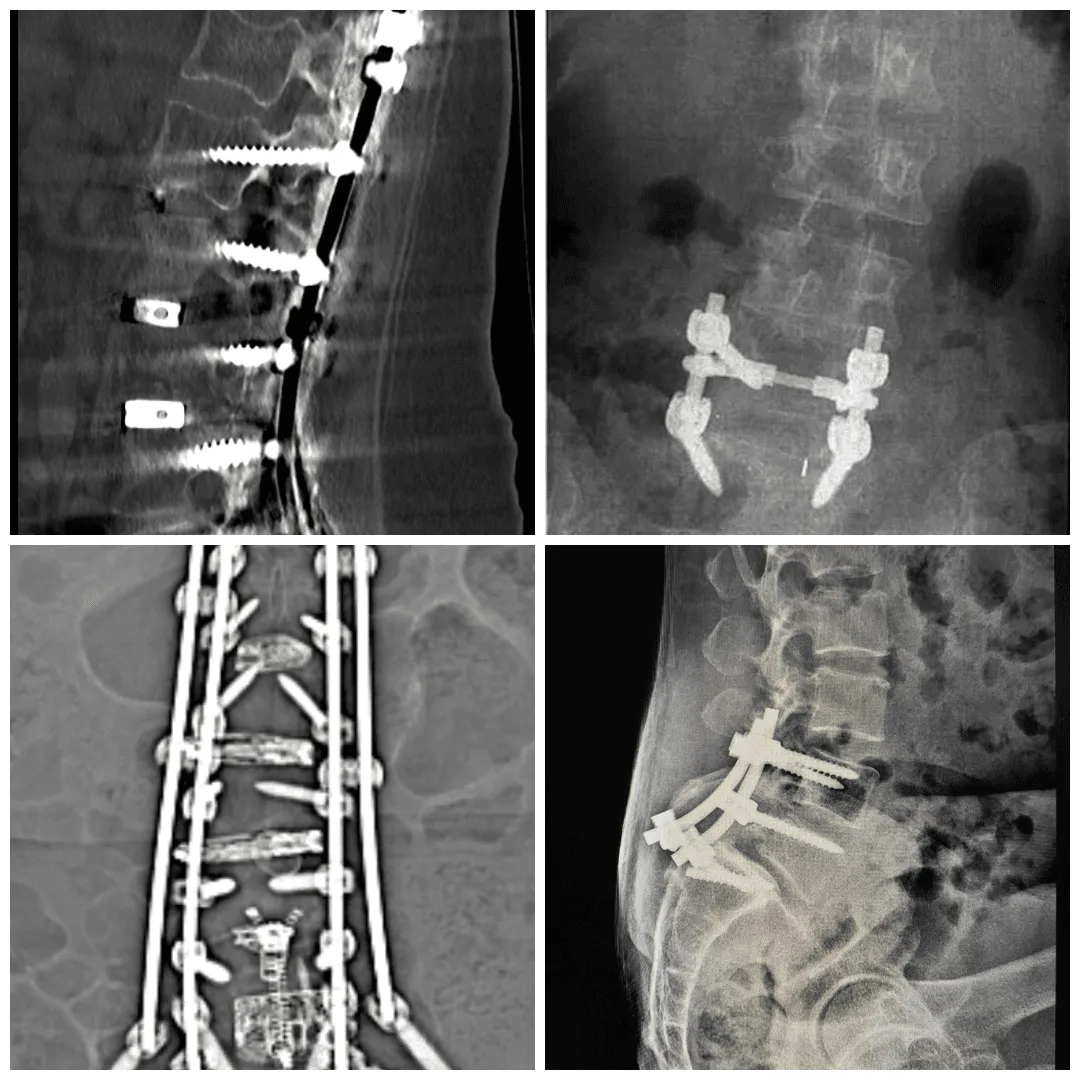
Loosening of screws and backing out of screws are possible. Fracture of rods can occur. Displacement and subsidence of cages within the vertebral body are other possibilities. This usually occurs through X-ray, CT, or MRI and has symptoms such as mechanical pain, radiculopathy, and neurological deficits. Symptom presentation may indicate the nature of complication. Hardware complications often need surgical intervention, and the probability of this problem is higher for individuals with poor bone quality due to osteoporosis or osteopenia. 9 10
3. Muscle and Soft-Tissue Injury
Open posterior fusion involves stripping the paraspinal muscles from the posterior structures. Studies using imaging of patients after fusion have revealed that there is considerable wasting and fatty invasion of the multifidus and erector spinae muscles, along with devascularization of a significant number of the muscles within the region of the surgical dissection.⁵ This results in chronic paraspinal muscle spasm and back pain.
4. Adjacent Segment Disease (ASD)
The term “adjacent segment disease” refers to the rapid degradation of the spinal motion segments either above or below the fusion site. 3 In terms of biomechanics, this phenomenon can be described in the following way: while one joint stops moving, the surrounding joints have to take on all the loads of shearing and flexion/extension movement. As a result, they undergo disc degeneration, facet arthropathy, stenosis, and even herniation.² In some cases, ASD becomes the reason why pain recurs after the surgery, usually within two to five years.
5. Pseudarthrosis (Failed Fusion)
Pseudarthrosis is a failure of the vertebrae to form a solid bony bridge. 8 Instead of a fused segment, the patient is left with a persistently mobile, painful motion segment and, often, loose hardware. Documented risk factors include smoking, which impairs the osteoblastic activity required for bone healing; obesity, which increases segmental load; and poorly controlled diabetes, which impairs the bone-healing cascade. Treatment is typically either revision fusion or long-term symptomatic management. Neither reliably restores a pain-free spine.
6. Residual Pain the Surgery Never Addressed
This may be one of the least recognized sources of persistent post-surgical pain despite a technically successful fusion. The problem is if the real source of the patient’s pain is due to a tear or inflammation of the disc, but the surgery did not take out the disc tissue causing the pain. The literature lays out that only 50 percent of patients who had lumbar fusion for back pain achieve the minimum clinically important difference in pain scores during their follow up period.² Fusion is not a treatment for discogenic pain. It is simply a stabilization procedure.
What To Do If You Are Still in Pain After a Fusion
Step 1: Return to the Operating Surgeon for a Structured Re-Evaluation
The doctor who did your fusion has your operative report, your implant information, your findings during surgery, and your post-op imaging schedule. This is important information needed for any kind of work-up. Ask for a work-up or re-work-up, and make sure that new imaging studies. Normally a standing X-ray of your lumbar spine and an MRI (or CT if hardware is a problem with the MRI) are requested to show the changes.
Step 2: Go to the Emergency Department for Red-Flag Symptoms
Certain symptoms are not candidates for a scheduled office visit. Seek immediate emergency care for any of the following:
- New or progressive weakness, numbness, or sensory loss in the arms or legs
- Loss of bowel or bladder control, saddle anesthesia, or urinary retention
- Sudden, severe, unrelenting pain that is different from your baseline
- Fever, chills, uncontrolled drainage, or opening of the surgical incision
These findings can indicate hematoma, acute nerve compression, cauda equina syndrome, or deep surgical site infection, and each is a time-sensitive diagnosis. 13
Step 3: Get a True Second Opinion Including Non-Fusion Options

Not all second opinions are equal. The surgeon who does laminectomy and fusion for his livelihood will be biased towards recommending that surgery. The spine surgeon who does both endoscopic and laser disc repair can present you with the complete picture of the range of treatments available and will truthfully tell you if your pain source can be addressed without further fusion implants.
The Alternative: Treat the Disc, Not the Segment
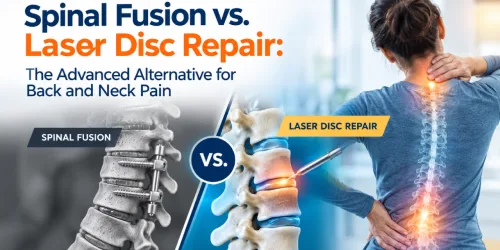
At the Deuk Spine Institute, our clinical position (grounded in decades of surgical experience and the published outcomes literature) is that the vast majority of chronic discogenic back and neck pain can be resolved by treating the diseased disc directly, without fusing the segment. 14
- Deuk Laser Disc Repair® (DLDR): A minimally invasive, endoscopic procedure performed through a 4 mm incision that removes herniated disc material and treats annular tears causing discogenic pain. No fusion. No hardware. No bone removal. One-hour outpatient procedure.
- Deuk Plasma Rhizotomy® (DPR): A plasma-energy procedure that provides longer-lasting relief than conventional radiofrequency ablation for facetogenic and sacroiliac joint pain.
- No post-operative narcotics required for either procedure. Patients go home the same day.
These approaches are not appropriate for every patient, and that is precisely why evaluation begins with a thorough review of your MRI, not with a procedure recommendation.
Fusion stabilizes a segment. It does not fix the biologic source of discogenic pain.
Take the Next Step
If you have been recommended for spinal fusion, or you are living with ongoing pain after a fusion that was supposed to end it, you have more options than most surgeons will present.
Submit your most recent MRI for a free review by Dr. Ara Deukmedjian and the clinical team at the Deuk Spine Institute. We will review your imaging, discuss your symptoms and goals, and walk you through every option, not just the ones offered by a single specialty.
1.5 million fusions a year. Half never achieve meaningful back pain relief
The fusion held. The pain stayed.
Now treat the disc.
Fusion immobilizes a segment—but it doesn’t remove the inflammatory disc tissue generating pain. Adjacent segment disease, pseudarthrosis, and retained pain generators are the most common reasons pain returns. DLDR treats the disc directly—even at levels next to an existing fusion.
meaningful pain relief
faster after fusion
in the U.S. each year
- Disc pain generator never removed
- Adjacent segments degenerate under extra load
- Paraspinal muscles atrophy from surgical dissection
- Pseudarthrosis leaves the segment unstable
- Revision fusion has higher complication rates
- Laser removes the inflammatory disc tissue directly
- Can treat discs adjacent to an existing fusion
- No muscle cutting, no bone removal
- No hardware—nothing left to fail
- Same-day outpatient, no narcotics required
Post-fusion facet pain? Deuk Plasma Rhizotomy® delivers permanent facet relief without another fusion.
Deuk Spine Institute · Board-certified neurosurgeon · Post-fusion patients welcome · Every option, not just more fusion
FAQ’s
Is it normal to still have back pain months after a spinal fusion?
Answer
Some amount of stiffness and pain in the muscles is normal throughout the fusion maturation process, which usually takes six to twelve months. But if there is pain in the back or other radicular pain after six months, then it is not just “normal recovery” but needs to be looked at systematically. According to the data available on the outcomes from these operations, only fifty percent of patients who have had a lumbar spine fusion operation for back pain show clinical improvement at two years.
What is the most common reason pain comes back after a successful fusion?
Answer
Adjacent segment disease is one of the most frequently identified causes of recurrent pain in the years following a fusion. When one spinal segment is immobilized, the discs and facet joints immediately above and below it absorb a larger share of the mechanical load, which accelerates their degeneration.³ Pseudarthrosis (failure of the vertebrae to actually fuse) and retained discogenic pain from a pain generator the fusion never addressed are the other common explanations.
When should post-fusion pain be treated as an emergency?
Answer
Emergency medical attention should be sought whenever there is new or worsening symptoms of muscle weakness in either the legs or arms, numbing, urinary and/or fecal incontinence, saddle anesthesia, or if there is acute pain that is worse than the normal pain you feel after surgery or any sign of an infection at the incision site, such as fever, chills, drainage, or dehiscence.
Can I have another surgery if my first fusion didn’t work?
Answer
Yes, but the issue is what kind of operation and by whom. Revision fusion has a greater complication rate than primary fusion and does not address the underlying cause of pain generation in discogenic pain with retained pain generator. For most fusion patients, the proper follow-up procedure will not be more fusions but a minimal surgical approach to treat the pain generator (residual disc herniation, adjacent level disc, or facet joint). The most valuable thing before going into a revision is a second opinion from a surgeon that can provide an alternative to fusion.
Does the Deuk Laser Disc Repair® procedure work for patients who have already had a fusion?
Answer
In many cases, yes. DLDR® can be used to treat a symptomatic disc at a level adjacent to a prior fusion, or in some cases at a non-fused level that was never the true pain source to begin with. Candidacy is determined by a review of the current MRI, the operative history, and a clinical examination. Upload your MRI for a free review to find out whether your anatomy is suitable.
Sources
View Sources
1: How Many Instrumented Spinal Fusions Are Performed Each Year in the United States — iData Research
2: Minimal Clinically Important Difference in Lumbar Fusion Outcomes — PubMed
3: Adjacent Segment Disease After Spinal Fusion — PMC
4: Recurrent Pain After Spine Surgery: Review — PMC
5: Paraspinal Muscle Devascularization After Posterior Spine Surgery — ScienceDirect
6: Spinal Fusion Overview — Mayo Clinic
7: Spine Structure and Function — Cleveland Clinic
8: Pseudarthrosis — Medical News Today
9: Osteoporosis Overview — MedlinePlus
10: Osteopenia — Harvard Health
11: C-Reactive Protein Test — MedlinePlus
12: White Blood Cell Count — Testing.com
13: Hematoma Overview — Cleveland Clinic
14: Discogenic Pain: Mechanisms and Management — PMC