Spinal fusion hardware failure happens when the screws, rods, plates, or cages placed during surgery loosen, break, or shift, most often because the bone never fully fused around them. The most common warning signs are a return of the original pain, new pain at a different spinal level, a grinding or clicking sensation called crepitus, and sometimes a visible bump near the incision. Confirmed hardware failure is generally treated with revision surgery to remove or replace the hardware, or with an extended fusion that stabilizes additional segments.
Not every hardware failure looks the same. Some patients notice something is wrong within weeks of surgery. Others don’t find out until a routine X-ray, years later, catches a broken screw they never felt. And the standard fix, more fusion hardware at more levels, carries its own complication: it can accelerate adjacent segment disease, the same process that may have contributed to the original failure.
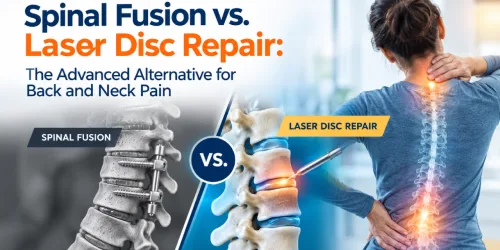
If you had a fusion and are now facing a second procedure to address loose or broken hardware, it’s worth knowing that another fusion is not automatically your only path forward. Deuk Laser Disc Repair® treats many of the underlying disc and nerve problems fusion was originally meant to solve, without hardware, without bone drilling, and without adding a new segment to fuse. A Free MRI Review can tell you whether that’s realistic for your specific case before you commit to more metal.
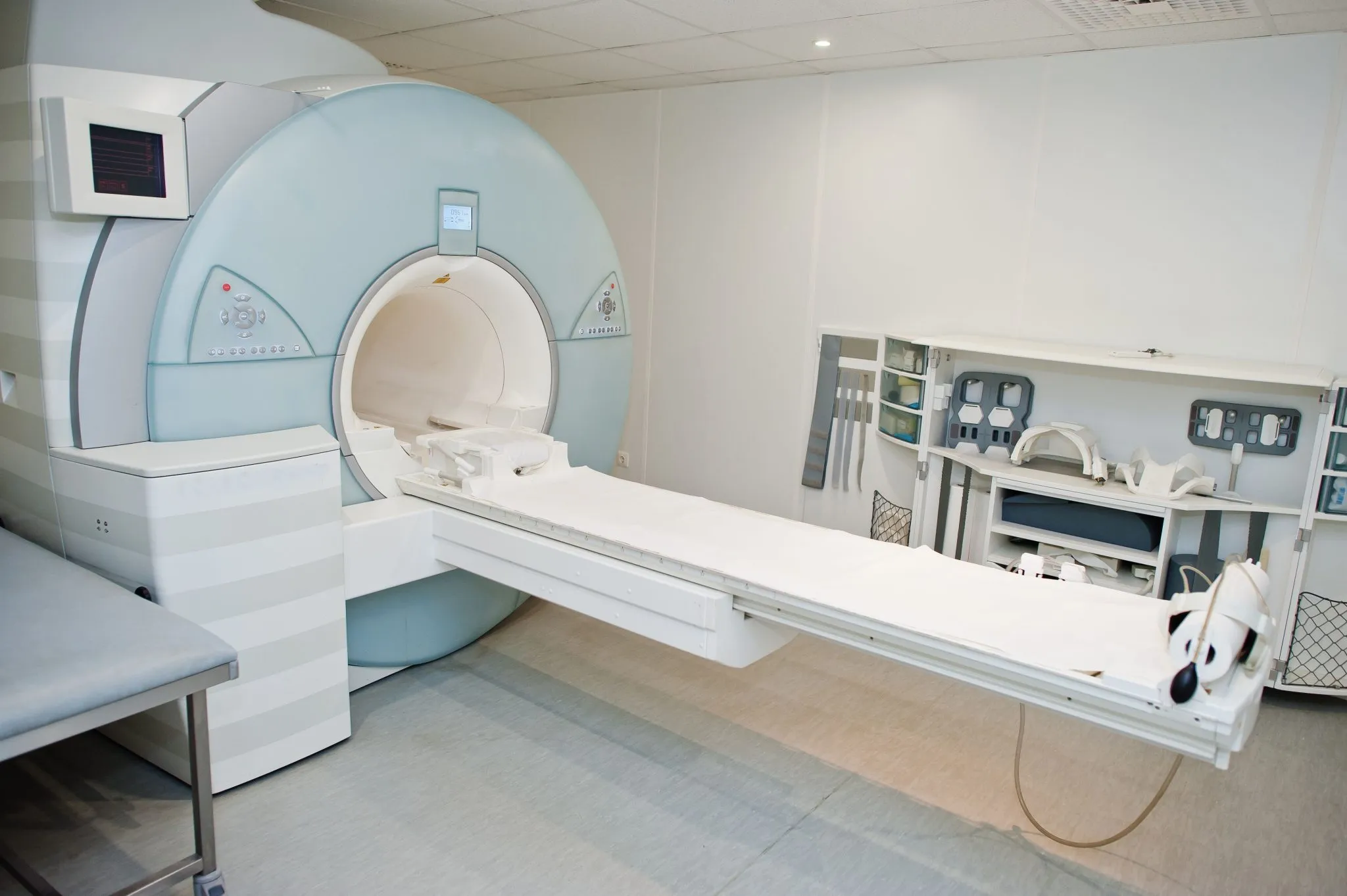
What Is Spinal Fusion Hardware Failure?
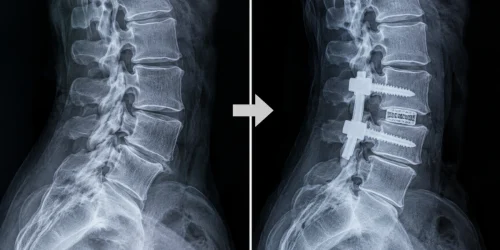
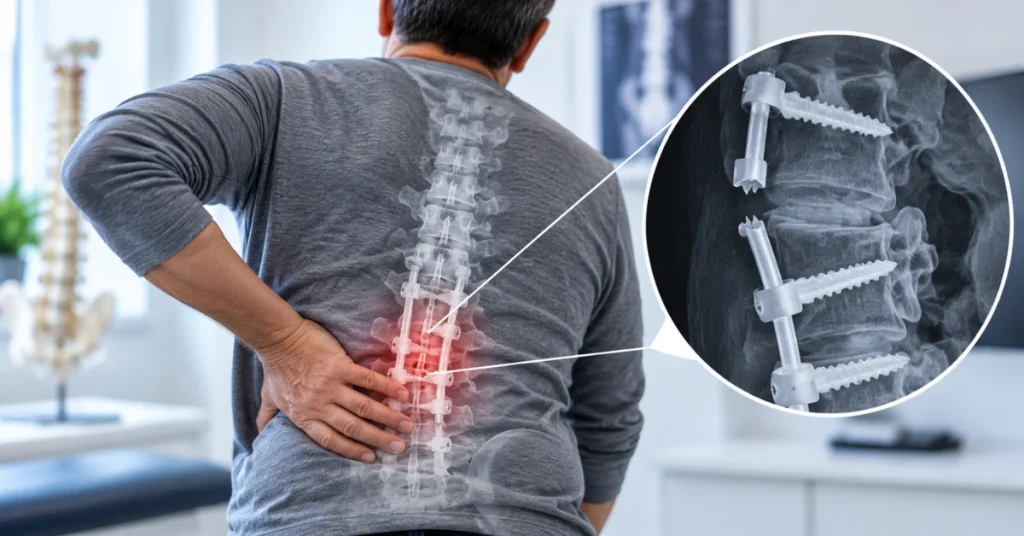
Spinal fusion hardware failure is the loosening, breaking, or migration of the pedicle screws, rods, plates, or interbody cages used to stabilize the spine during a fusion procedure. It is one of the most common reasons patients require a second spine surgery.
During a fusion, hardware acts like an internal cast. It holds two or more vertebrae rigidly in place while a bone graft grows across the space between them, a process called arthrodesis. Once solid bone has formed, the fusion mass, not the metal, is what actually stabilizes the spine.
The problem is that solid bone formation takes time, typically six to twelve months, and in a meaningful percentage of patients it never fully happens. When the bone doesn’t unite, the hardware is left doing a permanent job it was only designed to do temporarily. Under years of daily mechanical load, that’s when screws loosen and rods fatigue and crack.
What Causes Screws, Rods, and Cages to Fail?
Hardware fails for one of two underlying reasons: the bone never solidly fused around it, a condition called pseudarthrosis, or repeated mechanical stress fatigues the metal until it loosens or fractures.
Several factors make either outcome more likely:
- Osteoporosis or osteopenia, which reduces how firmly a screw can grip bone
- Diabetes, which is associated with higher rates of pedicle screw loosening
- Smoking, which significantly impairs bone graft healing
- Multi-level fusion, which places more mechanical demand across more hardware
- Obesity or high-impact activity resumed before the fusion has matured
- Infection at the surgical site, which can weaken the bone-hardware interface
- Poor screw-to-pedicle sizing at the time of surgery
Published research puts this in context. A 2025 systematic review and meta-analysis found an aggregate pedicle screw loosening rate of 23.8 percent after lumbosacral fusion, with individual study rates ranging from roughly 15 to 42 percent.1 In patients with osteoporosis, some studies report loosening rates as high as 60 percent, compared to under 15 percent in patients with healthy bone density.2
What Are the Symptoms of Failed Spinal Hardware?
The clearest symptom of failed spinal hardware is a return of the same pain the fusion was supposed to fix, sometimes alongside new symptoms at a different level of the spine.
Other signs to watch for include:
- Crepitus, a grinding, popping, or scraping sensation when you move
- A visible or palpable bump near the incision where hardware has shifted outward
- New numbness, tingling, or weakness radiating into an arm or leg
- Back spasms or nerve irritation not present earlier in recovery
- Pain that disrupts sleep or worsens with specific movements or positions
Some patients feel none of these symptoms at all. Hardware failure is sometimes discovered only on imaging obtained for an unrelated reason, which is why routine follow-up X-rays remain important even after you feel fully recovered.
How Soon After Surgery Does Hardware Failure Happen?
Hardware failure can appear within the first year after surgery or emerge gradually over many years, and the timing usually points to a different underlying cause.
Early failure, typically within the first six to twelve months, most often signals that the bone graft hasn’t fused yet. Radiolucent zones, a subtle sign of loosening visible on imaging, have been documented in over 40 percent of patients as early as six months postoperatively, though a portion resolve on their own as fusion progresses.3
Late failure, occurring years after surgery, is more often mechanical fatigue: metal that has held steady for a long time finally cracks under repetitive daily stress, sometimes at the exact level where a solid fusion never fully matured underneath it.
How Is Hardware Failure Diagnosed?
Hardware failure is diagnosed through a combination of your symptom history, a physical exam, and imaging that directly visualizes the screws, rods, or cages.
- X-ray: Usually the first step, often able to show a broken rod, a displaced screw, or a radiolucent zone around a loosening implant
- CT scan: Provides a more detailed cross-sectional view when X-ray findings are unclear or subtle
- MRI: Evaluates the surrounding soft tissue, nerves, and disc levels, particularly useful if new radiculopathy is present
- Physical and neurological exam: Checks for loss of sensation, weakness, or reflex changes that correlate with the imaging findings
If infection is suspected alongside hardware failure, bloodwork and sometimes fluid sampling are added to rule out a deep implant infection, which can itself cause screws to loosen.
What Happens Next? Your Treatment Options After Hardware Failure
What happens after a confirmed hardware failure depends on whether the bone has fused, whether you’re in pain, and how much of the original hardware is affected.
Broadly, patients fall into three paths:
- Conservative management: If the fusion is otherwise solid and pain is mild, some surgeons monitor loose hardware with periodic imaging rather than operating immediately, particularly if the loosening is not causing nerve compression
- Revision surgery: Broken or symptomatic hardware is typically removed and replaced, sometimes with larger screws, added cross-bracing, or bone graft augmentation to encourage the fusion to finally solidify
- Extended fusion: If the original levels never fused and adjacent segments have also degenerated, the fusion may be extended to additional vertebrae, which brings its own risk of accelerating problems at the new adjacent levels
This is the part patients are rarely told clearly beforehand: fixing failed fusion hardware very often means adding more fusion, not less, and each added level compounds the long-term motion loss that the original surgery already introduced.
Does Failed Hardware Always Mean More Fusion?
No, failed hardware does not always mean you need another fusion. Whether it does depends on why the original surgery was performed and what’s actually generating your current pain.
If your original fusion was done to treat a herniated disc, foraminal stenosis, or discogenic pain rather than true spinal instability or a fracture, it’s worth having your imaging reevaluated before agreeing to more hardware. In many of these cases, the structural pain generator, the disc or nerve tissue itself, can be addressed directly.
Deuk Laser Disc Repair® is a motion-preserving alternative that treats the disc and nerve pathology through a small incision, without bone drilling, screws, rods, or a new segment added to your fusion construct. It won’t apply to every failed hardware case, particularly where true structural instability exists, but it’s worth ruling out before you agree to extend the fusion further. Our guide to pain after spinal fusion walks through how we evaluate cases like this.
Can Spinal Hardware Failure Be Prevented?
Spinal hardware failure can’t be eliminated entirely, but several factors within your control meaningfully reduce the risk.
- Addressing bone density before surgery, since osteoporosis is one of the strongest predictors of screw loosening
- Quitting smoking well before and after surgery, since nicotine significantly impairs bone graft healing
- Following activity restrictions during the six to twelve month fusion window, even once pain has improved
- Managing diabetes and other conditions that affect bone healing
- Choosing a surgeon and facility with strong published fusion and complication rate data
None of these guarantee a solid fusion, since a meaningful percentage of hardware failure is tied to factors beyond patient control, including how much mechanical stress a given fusion construct is placed under.
Bottom Line
Loose screws and broken rods after spinal fusion are common, not rare, and they usually show up as a return of your original pain, a grinding sensation, or a visible bump near the incision. Diagnosis starts with an X-ray and often moves to CT or MRI. Treatment ranges from monitoring to revision surgery to an extended fusion, and it’s worth confirming what’s actually generating your pain before assuming more hardware is the only answer.
Frequently Asked Questions
How common is spinal fusion hardware failure?
Spinal fusion hardware failure is relatively common, with published research placing pedicle screw loosening rates at roughly 24 percent on average across lumbosacral fusions, and as high as 60 percent in patients with osteoporosis.
Can a broken rod in your back be fixed without surgery?
A broken rod in your back generally cannot be fixed without surgery once it is fractured, though a surgeon may recommend monitoring rather than immediate revision if the surrounding fusion is stable and you are not in significant pain.
What does hardware failure feel like after spinal fusion?
Hardware failure after spinal fusion often feels like a return of your original back or neck pain, sometimes paired with a new grinding or clicking sensation, spasms, or numbness and tingling radiating into an arm or leg.
How long do spinal fusion screws and rods last?
Spinal fusion screws and rods are designed to remain permanently in the body, but their mechanical job is meant to end once solid bone fusion occurs, typically within six to twelve months. Hardware that is still bearing full load years later, because fusion never solidified, is more prone to eventual failure.
Does removing spinal hardware fix the pain?
Removing spinal hardware fixes the pain in many cases where the hardware itself, rather than the underlying condition, is the source of symptoms, such as a painful prominent screw or broken rod. It does not resolve pain caused by a separate issue like adjacent segment disease or an unaddressed disc problem.
Is a second fusion the only option after hardware failure?
A second fusion is not always the only option after hardware failure. If the original fusion was performed for a disc or nerve problem rather than true instability, a motion-preserving alternative such as Deuk Laser Disc Repair® may address the underlying cause without adding more hardware.
Can spinal hardware failure be an emergency?
Spinal hardware failure can be an emergency if it causes sudden new weakness, loss of bladder or bowel control, or rapidly worsening neurological symptoms, in which case you should seek immediate medical care rather than waiting for a routine follow-up appointment.

Diagnosis. Answers. Relief.
Submit your MRI for a free expert review by Dr. Ara Deukmedjian, M.D. —
board-certified neurosurgeon. No obligation. Real answers.
Medical Disclaimer: This content is for educational purposes only and does not constitute medical advice. Individual results vary. Always consult your healthcare provider about your specific condition and treatment options.
References:
1. S1 Pedicle Screw Loosening: A Systematic Review and Meta-Analysis of Risk Factors and Outcomes, PMC
2. Incidence, Risk, and Outcome of Pedicle Screw Loosening in Degenerative Lumbar Scoliosis Patients, Global Spine Journal
3. Initial Appearance and Temporal Distribution of Pedicle Screw Loosening After Single-Level Lumbar Interbody Fusion, PMC