

Most middle back pain comes from muscle strain or ongoing poor posture, and it tends to settle on its own within a few weeks. The middle back covers a wide stretch of the spine, so the pain can feel different depending on the cause.
This guide covers the common causes of pain in the middle of the back, what the symptoms usually point to (including what one-sided pain can mean), practical relief options, and the warning signs that call for prompt care. The middle back spans T7 to T12, running from below the shoulder blades to the bottom of the ribs. Pain in this stretch is sometimes described as thoracic spine pain.
Where Exactly Is Your Middle Back?
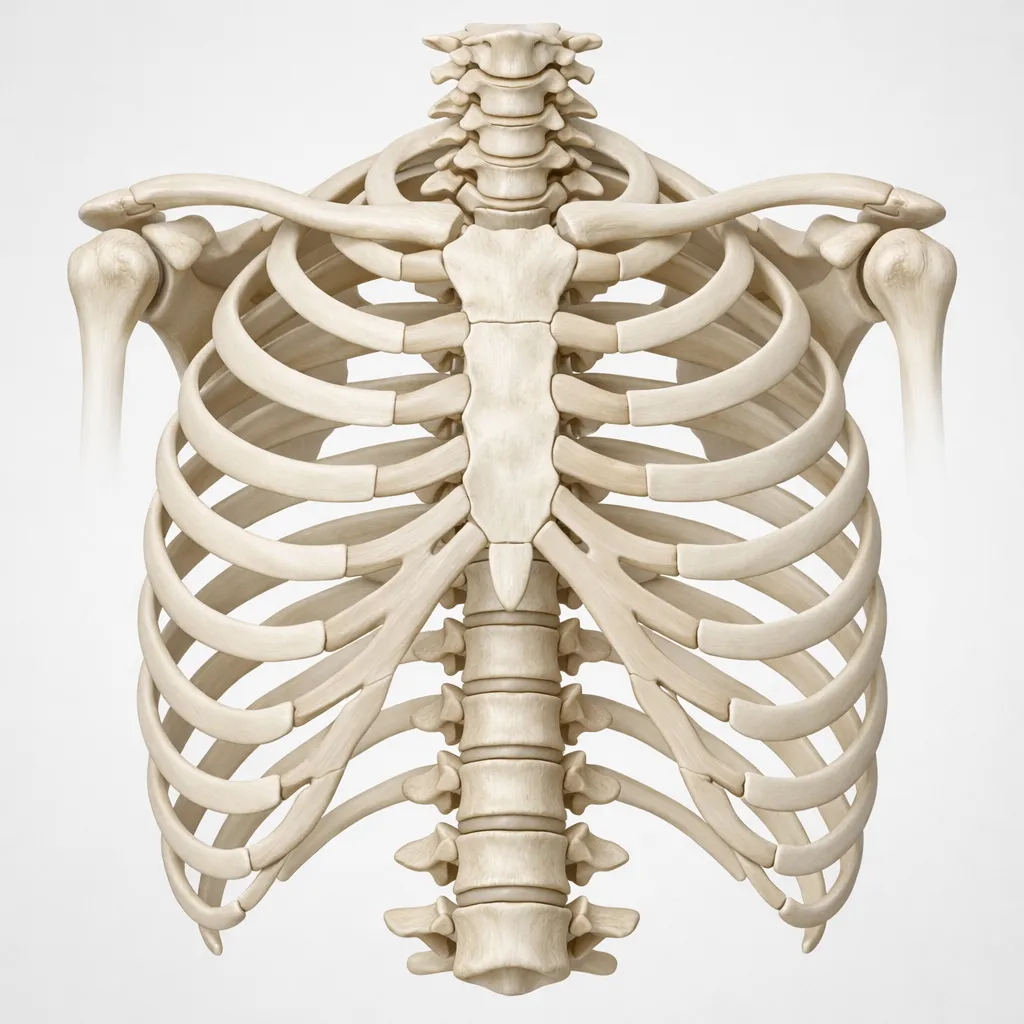
The middle back, or thoracic spine, runs from T7 to T12. It sits below the shoulder blades and above the lower back, roughly level with the lower ribs. Understanding the basic layout of the spine anatomy makes it easier to see why this region behaves differently from the neck or lower back. It sits between two other commonly discussed regions of the spine:
- Upper back: base of the neck down to the shoulder blades.
- Lower back: below the ribs, down to the pelvis.
Some sources use “upper back” loosely to describe the entire thoracic spine, so this same area may show up described either way depending on where someone reads about it. Both terms refer to broadly the same stretch of spine, and it’s worth reading more on upper back pain if that’s the term that brought you here. The terms mid-back and middle spine pain generally point to this T7–T12 region as well.
Common Causes of Middle Back Pain
Mid-back pain causes range from everyday strain to less common structural issues. Mechanical causes are by far the most frequent across the spine generally, so most of the list below leans toward the ordinary rather than the alarming:
- Muscle strain or postural fatigue. By far the most frequent cause, usually tied to slouching, repetitive movement, or overuse, and generally the least concerning of the group.
- Facet joint irritation is a common reason for back pain as well. These small joints between the vertebrae can become irritated from repetitive motion or general wear, and the irritation tends to cause a dull, localized ache with some stiffness. This pattern is covered in more detail under facet joints.
- Thoracic disc problems are possible too, though discs bulging or degenerating show up less often in the mid-back than they do in the neck or lower back. When they do occur, they can produce a recognizable set of thoracic disc symptoms.
- Then there’s osteoarthritis, which involves gradual wear-and-tear changes in the small spinal joints. These changes build up over years, become more common as people age, and sometimes leave the mid-back stiff.
- If pain came on suddenly and sharply, especially with movement, a compression fracture is worth considering. This is particularly true in older adults or anyone with osteoporosis.
- Scoliosis or other spinal curve issues can also play a role. An uneven curve puts more load on one side of the thoracic spine, which can lead to chronic one-sided discomfort.
- Less commonly, spinal stenosis (a narrowing of the spinal canal) can occur in the thoracic spine too, though it’s more typical in the neck or lower back. When it does happen here, it can cause aching or stiffness.
- Falls and trauma. A distinct cause from everyday lifting strain, and one that generally calls for a closer look regardless of how mild the pain initially seems.
Each of these can range from mild to more involved. The pattern of pain, whether sudden or gradual and localized or spreading, often gives a healthcare provider useful clues about which one fits a given case.
Symptoms of Middle Back Pain
Middle back pain can feel different depending on what’s causing it: a dull, constant ache; a sharp or burning pain; stiffness; or pain that gets worse when you move or breathe deeply. How it feels, along with exactly where it’s located, can help point to what’s behind it.
Is It Your Spine or Just a Muscle?
Pain that wraps around the ribs like a band, has a burning sensation, or comes with tingling and numbness in the back usually points to something nerve- or disc-related. Pain that stays in one spot and gets better with rest or heat is more often muscular.
Why One Side Hurts and Not the Other
For most people, one-sided pain comes down to asymmetric load: which side you carry on, twist toward, sleep on, or work from. This everyday explanation covers the large majority of one-sided cases, well before any organ-related possibility needs consideration.
What Left-Side Pain Can Mean
Musculoskeletal causes remain the most common explanation for left middle back pain. Less commonly, pain on this side can relate to organs positioned nearby, including the pancreas or spleen.
What Right-Side Pain Can Mean
Musculoskeletal causes are again the most likely explanation for right middle back pain. Organ-related possibilities on this side include the gallbladder or liver, usually alongside other signs rather than back pain alone.
Among middle back pain red flags, kidney issues such as stones or infection stand apart, since the kidneys are paired organs and can cause pain on either side.
Knowing which side is a useful sorting clue rather than a diagnosis on its own, and a healthcare provider is best placed to work out what it actually means in a specific case.
According to MedlinePlus, back pain is one of the most common medical complaints people experience, and most cases improve with rest and time even when the discomfort feels significant at first.
How to Relieve Middle Back Pain: Self-Care and Treatment Options
If you are looking for how to relieve middle back pain, start with basic self-care. Back away from whatever’s aggravating it, alternate heat and ice, keep moving gently rather than staying still, and take an OTC pain reliever if you need one. No special equipment required, and most people feel some relief within a few days.
It’s worth starting here first. In many instances, pain comes from muscle strain or bad posture and clears up on its own without needing anything more aggressive.
Stretches and Movements That Usually Help
A few low-risk movements tend to ease general stiffness and support recovery:
- Cat-cow: Gently arches and rounds the spine on hands and knees to loosen the mid-back.
- Seated trunk rotation: Rotates the torso side to side while seated, keeping the hips still and facing forward.
- Open-book rotation: Lie on one side with the knees bent, then rotate the top arm and chest open to stretch the thoracic spine.
- Thoracic extension over a chair back: Gently arches the mid-back over the top of a sturdy chair for a brief, controlled stretch.
- Foam-roller extension: Lie back over a foam roller placed under the shoulder blades, then gently and slowly extend the upper back.
These are general mobility movements rather than a prescribed program built for any one person, and it’s worth stopping any of them if symptoms increase rather than ease.

Physical therapy and posture correction are common middle back pain treatment strategies when self-care alone isn’t quite enough, helping address the underlying movement patterns behind pain that keeps recurring. When conservative care doesn’t bring the improvement expected, exploring other treatment options and getting imaging is a reasonable, positive next steps. These steps are worth taking sooner rather than later.
How Long Does Middle Back Pain Last?
Most simple middle back strains ease up within a few days to a few weeks with rest and basic self-care. Doctors generally call pain “acute” if it’s under six weeks and “chronic” once it’s stuck around for 12 weeks or more. The stretch in between is usually just a strain taking its time to heal, not a red flag.
It’s also normal for this kind of pain to flare up, settle down, then flare up again. That cycle on its own doesn’t mean things are getting worse. But if a few weeks of reasonable self-care hasn’t made a real dent in it, that’s a good enough reason to get it checked out rather than keep waiting.
How to Stop Middle Back Pain From Coming Back
A handful of practical habits can meaningfully reduce how often middle back pain returns, even without a formal exercise program or major lifestyle overhaul:
- Position variety over perfect posture. Changing position regularly throughout the day matters more than holding one “correct” posture for hours on end.
- Workstation setup. Keeping the screen at eye level and the chair supporting the lower back reduces strain that otherwise travels up through the mid-spine.
- Sleep position and pillow support. A supportive mattress and a pillow that keeps the spine reasonably aligned can ease stiffness that shows up first thing in the morning.
- Stress and muscle tension. Stress genuinely raises muscle tension and pain sensitivity. This is a real, measurable physical effect, not a sign that the pain is imagined or exaggerated.
- Lifting and carrying habits. Bending at the knees and keeping loads close to the body reduces strain on the thoracic spine during everyday tasks.
- General strength and activity. Staying generally active supports the muscles that hold the spine steady over time, without needing a specific training program to see the benefit.
None of these habits needs to be followed perfectly to make a difference. Small, consistent changes tend to add up over the following weeks and months.
Middle Back Pain Warning Signs: When to Be Seen Now
Most mid-back pain settles down on its own, but a few warning signs mean you shouldn’t wait it out. They’re uncommon, which is exactly why they matter when they appear:
- Fever, unexplained weight loss, or night sweats along with the pain.
- Numbness, weakness, or changes in bladder or bowel control. This combination needs care the same day.
- A history of cancer, which changes how any new back pain should be evaluated.
- Deep, tearing, unrelenting pain, especially with a sudden onset. This combination means calling 911 without exception.
- Pain following a fall, car accident, or other trauma, even when the pain initially seems mild or manageable.
Symptoms that suggest an organ is involved (such as nausea, vomiting, or pain with urination) are best directed to a primary care doctor or emergency department rather than a spine-focused visit, since they point toward a different underlying system entirely. Getting seen for the right reason, by the right provider, tends to lead to answers faster.
None of this is about assuming the worst. It’s simply about knowing which combinations of symptoms warrant a same-day conversation with a provider rather than a few more days of waiting to see what happens.
How Middle Back Pain Is Diagnosed
Doctors typically start by examining you and asking about the pain: when it began, what makes it worse or better, and whether you’ve noticed other symptoms alongside it. Often that’s enough to get a good sense of what’s going on.
If there are red flags, or the pain sticks around longer than a normal strain would, imaging like an X-ray or MRI usually comes next. But doctors don’t read those scans in a vacuum. They weigh them against your exam and history, because it’s actually pretty common for scans to show spinal changes even in people who have no pain at all.
For anyone who already has an MRI on hand, a free MRI review can be a helpful way to get a second read on existing results before deciding on next steps.
Conclusion
Most middle back pain traces back to muscle strain or posture and responds well to rest, gentle movement, and a bit of patience over the following weeks.
Paying attention to the warning signs above and giving the body reasonable time to recover covers the vast majority of cases. For anyone with an existing MRI who wants a second opinion on it, a free MRI review offers a simple, low-pressure first step.
Burning, band-like pain or tingling between the shoulder blades? That may be a thoracic disc — not a muscle
Stretching won’t fix a
damaged disc.
Middle back pain that wraps around the ribs, burns, or comes with tingling often points to a thoracic disc problem—not a pulled muscle. Pain lasting 12 weeks or more is chronic by definition. A free MRI review by a board-certified neurosurgeon identifies the source, and DLDR can repair the disc through a 4 mm incision—no fusion, no hardware.
is classified as chronic
up the middle back
removed, no hardware
- Assumes pain is muscular without imaging
- OTC meds & stretches mask symptoms
- Pain may become chronic after 12 weeks
- Nerve damage can progress undetected
- Red-flag symptoms may be overlooked
- Neurosurgeon pinpoints the exact source
- Confirms if a thoracic disc is involved
- 99% pain relief rate with DLDR
- 4 mm incision, same-day outpatient
- 0.01% complication rate
Board-certified neurosurgeon review · No insurance approval required · 100,000+ procedures performed
FAQs
What relieves middle back pain fastest?
Answer
Rest from the aggravating activity, combined with heat or ice and gentle movement, tends to bring the fastest relief for most cases. General over-the-counter pain relief can help too.
What does middle back pain on the left side mean?
Answer
It’s most often muscular, tied to posture or how the body is used day to day. Less commonly, it can relate to nearby organs such as the pancreas or spleen.
What does middle back pain on the right side mean?
Answer
Muscle-related causes are again the most likely explanation for pain on this side in most people. Organ-related possibilities include the gallbladder or liver, usually with other accompanying symptoms alongside the back pain itself.
How long does middle back pain usually last?
Answer
A simple muscular episode often improves within days to a few weeks with rest. Pain lasting 12 weeks or more is generally considered chronic and worth discussing with a provider.
Can stress cause middle back pain?
Answer
Yes, stress raises muscle tension and pain sensitivity.
Is it normal for middle back pain to come and go?
Answer
Yes, flare-and-settle patterns are common and don’t necessarily mean anything is worsening. Tracking the pattern can help you notice changes in your symptoms.
When should I get an MRI for middle back pain?
Answer
An MRI is typically considered if warning signs are present or if pain persists despite a reasonable period of self-care. A healthcare provider can advise on timing based on the specific symptoms involved.