
By Dr. Ara J. Deukmedjian, MD
Board Certified Neurosurgeon
Medically reviewed on September 9, 2026
Disclaimer: The contents provided in this article are for learning purposes only. It is always recommended to speak to a doctor about your personal health condition.
Key Points
✓ L1-L2 disc herniations cause groin pain by compressing nerve roots that innervate the inguinal region.¹ ²
✓ 46.5% of SI joint dysfunction patients report groin pain. More than those with disc herniation (8.1%) or spinal stenosis (6.8%).³
✓ Spinal groin pain is frequently misdiagnosed as a hip, urological, or gynecological problem.¹ ⁴
✓ MRI alone is not a diagnosis. Clinical correlation is essential because asymptomatic individuals often show disc herniations on imaging.² ⁶
✓ Deuk Laser Disc Repair® and Deuk Plasma Rhizotomy® offer minimally invasive, permanent solutions when conservative care fails.
Can a Herniated Disc Cause Groin Pain?
Most often, people associate the problem with a herniated disc with lower back pain and its radiating into the leg, the classical sciatic syndrome. There is another type of presentation of this pathology which can surprise both patient and doctor: groin pain due to compression of the nerves of the lumbar spine.
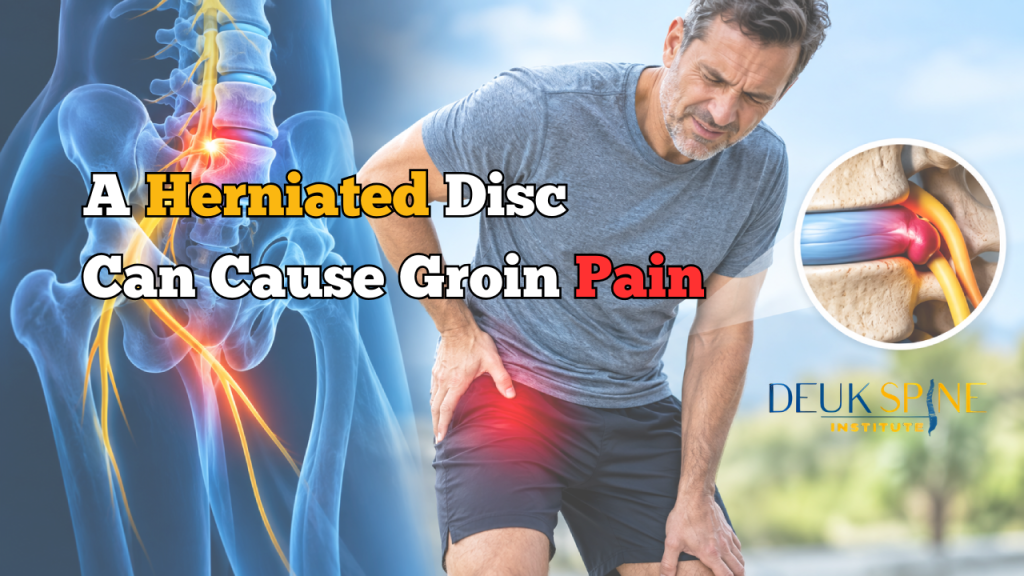
Yes, a herniated disc can cause pain in the groin, and its mechanism is determined by neuroanatomy of the spine. L1 nerve root leaves in the L1-L2 intervertebral foramen, and its compression by the herniated disc causes groin (inguinal area) pain and other sensations.² This occurs because the skin innervated by the L1 nerve root is the L1 dermatome, which directly corresponds to groin, thigh and lower abdominal wall.¹ ²
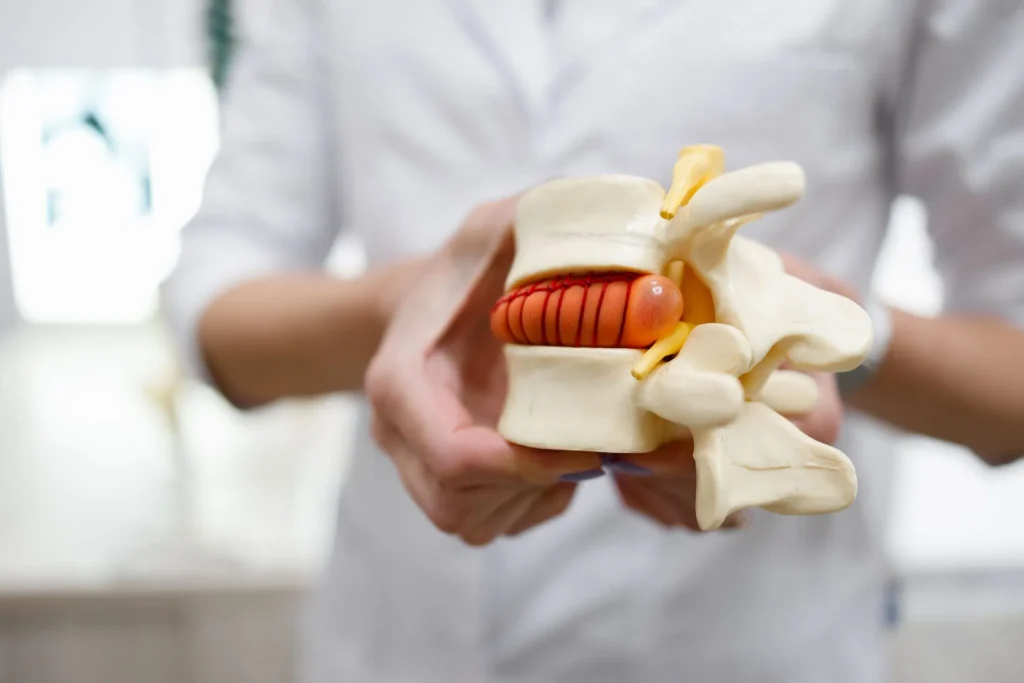
The upper lumbar region is significantly less common to be injured by a herniated disc than L4-L5 and L5-S1 levels, accounting for almost all cases of lumbar disc injuries.² Nevertheless, when it happens, the corresponding pain pattern differs considerably from the classical sciatica, so it tends to be mistakenly associated with other conditions.
What makes this even more diagnostically challenging is that lower lumbar herniations can also produce groin symptoms. A 2017 study published in the Journal of Orthopaedic Science found that 4.1% of patients with L4-L5 or L5-S1 disc herniations reported groin pain.⁵ The proposed mechanism involves the sinuvertebral nerve, which innervates the posterior annulus fibrosus and posterior longitudinal ligament.⁴ When these structures are irritated by a disc protrusion, pain signals can be referred to the groin region even without direct nerve root compression at the upper lumbar levels.
Herniated Disc Hip Pain: A Related Symptom
Groin pain caused by a lumbar disc herniation often overlaps with what patients describe as herniated disc hip pain. Since the L1-L4 spinal nerves innervate the hip joint, the front of the thigh, and the groin, an injury to one of these discs can manifest itself through a group of symptoms that affect all of these three body parts.³ ⁴ It is not uncommon for patients to be referred to an orthopedic surgeon first before their back gets examined.
Can a Bulging Disc Cause Stomach Problems?
This is a question patients frequently ask. While it is uncommon, certain lumbar disc injuries can cause referred sensations or compensatory muscular changes that are perceived as abdominal discomfort. Pain in the lower abdominal wall may be caused by upper lumbar herniations affecting L1 and L2 because these nerve roots also innervate the lower abdominals.¹ ² Furthermore, pain in the lower abdominal area due to L5-S1 disc herniation has been reported, but this phenomenon is poorly understood and usually follows referred pain rather than compression of the nerve root.
SI Joint Dysfunction: The Most Common Spinal Cause of Groin Pain
Whereas disc herniations have become synonymous with groin pain from the spine, the most common cause of groin pain originating from the spine is sacroiliac (SI) joint dysfunction.
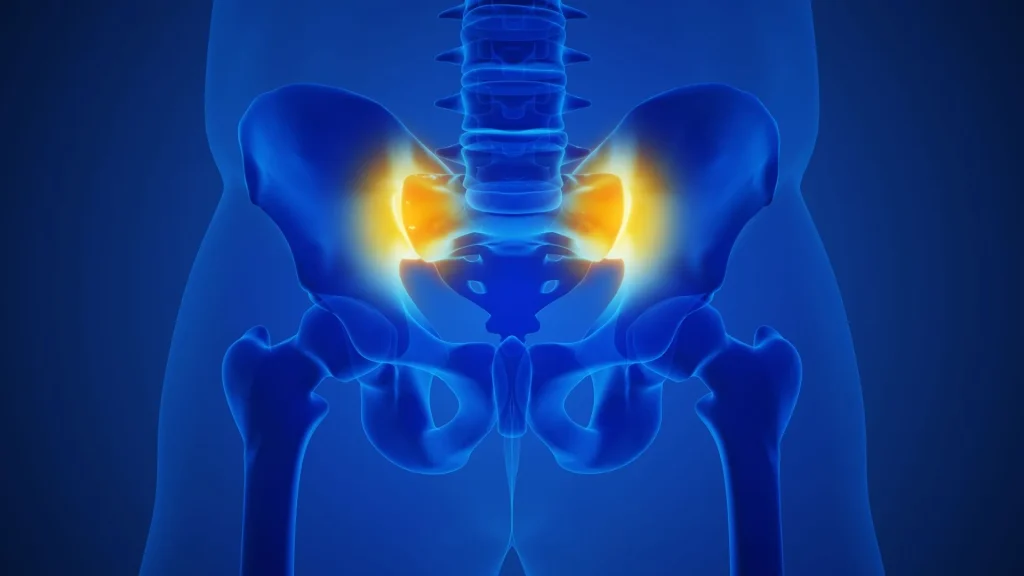
The SI joints are located at the junction where the sacrum meets the ilium on both sides of the pelvis. These joints are important for bearing weight from the upper body to the lower limbs when standing, walking, and running.⁶ However, SI joint dysfunction is often missed.
The groundbreaking study conducted by Kurosawa et al. (2017) established that 46.5% of the patients diagnosed with SI joint dysfunction presented with groin pain.³ Conversely, lumbar disc herniation and lumbar spinal stenosis were associated with groin pain in 8.1% and 6.8% of the patients, respectively.³ The implications of the results of this study can be summarized in one statement: when dealing with patients experiencing groin pain who have a history of lower back problems, SI joint dysfunction needs to be suspected.
This disorder is known to cause up to 15–30% of all the chronic lower back pain cases.⁷ It has been estimated that such risk factors as leg length difference, pregnancy, lumbar surgery, trauma, and inflammatory arthritis predispose to SI joint dysfunction.⁷ This disorder can manifest itself not only through groin pain but also through other symptoms such as buttocks pain, lower back pain, pain in the posterior thigh region, and sciatica-like sensations.
Why SI Joint Dysfunction Is Difficult to Diagnose
One of the primary reasons SI joint dysfunction remains underdiagnosed is that standard imaging studies such as X-rays and MRI scans often appear normal in affected patients.⁶ ⁷ The gold standard for confirming SI joint dysfunction is a diagnostic injection: if periarticular injection of local anesthetic into the SI joint produces more than 70% pain relief, the diagnosis is confirmed.³ ⁶
Physical examination findings can also help differentiate SI joint dysfunction from disc-related conditions. According to Kurosawa et al., pain provoked by the SI joint shear test and tenderness at the posterior superior iliac spine (PSIS) and long posterior sacroiliac ligament (LPSL) were significant physical signs that distinguished SI joint dysfunction from lumbar spinal stenosis and disc herniation.³
At Deuk Spine Institute, the proprietary Deuk Spine Exam integrates advanced clinical examination with image-guided diagnostics to trace pain back to its true origin. Achieving a 99% accuracy rate in identifying pain generators.
Referred Pain: Why Groin Pain Gets Misdiagnosed
Referred pain is a recognized condition whereby pain is experienced in an area that is separate from its actual origin.⁴ In spinal disease, referred pain happens due to nerves originating from various parts of the body converging in the same segment of the spinal cord. When the nerve in one region gets irritated, the brain will misinterpret this pain to be from a completely separate region.
In cases of lower back disc injuries or sacroiliac joint problems, this means groin pain is likely to be the main symptom despite the fact that the anatomical problem lies in the spine.
The reasons for which a prolonged period of diagnosis is required for patients with groin pain caused by spinal disorders are because of the following frequent cases of misdiagnosis:
- Inguinal hernia: The same anatomical region involved, leading to similar aching or pulling sensations in the groin.
- Labral tear of the hip joint: Groin pain in addition to the anterior thigh pain, especially during hip movements such as hip flexion and rotation; mimics upper lumbar radiculopathy pain.
- Prostatitis and urological diseases: Chronic pelvic pain syndrome can mimic the constant aching nature of groin pain due to referred pain.
- Gynecological diseases: Groin pain along with lower abdominal pain, endometriosis, ovarian cysts, and pelvic inflammatory disease; mimics L1-L2 radiculopathy pain.
- Athletic pubalgia (sports hernia): Most commonly seen in active individuals, athletic pubalgia can co-exist with or be misdiagnosed for the origin of groin pain due to spine.
Diagnostic workup, including history taking, neurological examination, imaging studies, and even sometimes diagnostic nerve blocks, may be helpful for accurate diagnosis.³ ⁶
How Long Does It Take for a Herniated Disc to Cause Groin Pain?
The time when groin pain arises due to a herniated disc is highly variable, dependent on how the injury occurred and on the general state of the spinal column. In cases where the problem arises acutely, like from lifting, falling, or twisting. Groin pain can develop within hours to days as the herniated disc material compresses the adjacent nerve root.²
For chronic or degenerative problems, however, the sequence is much more prolonged. In degenerative disc disease, where the vast majority of individuals develop an issue with at least one of their intervertebral discs by the age of 60, there occurs a progressive dehydration, shrinking, and weakening of the affected intervertebral disc. This, in turn, leads to a tearing of the outer annulus fibrosus layer.⁸
This inflammatory cascade is central to understanding why herniated disc pain persists. The leakage from the damaged disc includes inflammatory agents that continually affect the nerves close by and pain receptors. The body’s immune system tries to absorb this substance. But in most instances, the fragments get stuck in the annular tear leading to inflammation.
This is also why the conservative management options like NSAIDs, physical therapy, and epidural steroid injections can only offer a temporary solution to the problem because they treat the inflammation, but not the herniated disc that is causing it.
Differential Diagnosis: Ruling Out Non-Spinal Causes
Given the fact that there are many possible causes of groin pain, a comprehensive differential diagnosis is important to be able to diagnose the cause of the symptoms. Common non-spinal causes of groin pain include:
1. Inguinal Hernia
Symptoms of inguinal hernia include the presence of a visible/palpable groin bulge and aching/burning pain that becomes more intense upon coughing, straining, or standing for an extended period. Differing from spine-related groin pain, inguinal hernia symptoms include reproduction of pain with Valsalva maneuvers and alleviation when lying down.
2. Hip Labral Tear
The hip labrum is the fibrocartilaginous structure which surrounds the hip joint. A tear of the hip labrum causes sharp pain in the groin area exacerbated by flexion, rotation, and weight bearing.⁶ Hip labral tear pain differs from spine-related pain with the help of specific provocative hip tests (FADIR test) and MRI arthrography.
3. Kidney Stones
Renal calculi may result in sharp pain in the flank region that spreads to the groin and inner thigh. It resembles upper lumbar radiculopathy in its intensity and localization. Diagnosis is established by urinalysis and CT examination.
4. Gynecological/Urological Causes
Examples of gynecological and urological disorders causing groin/lower abdomen pain include endometriosis, ovarian cysts, prostatitis, and chronic pelvic pain syndrome.
A clinician experienced in spinal diagnostics can efficiently differentiate these conditions through a structured evaluation that includes history, neurological examination, and selective imaging. The Deuk Spine Exam streamlines this process by integrating clinical assessment with functional pain mapping, reducing the risk of misdiagnosis and unnecessary procedures.
How Do I Know If My Groin Pain Is Connected to My Back?
Spinal causes for groin pain should be considered when they are associated with the following signs and symptoms:¹ ² ⁶
- Lower back pain or back stiffness: Lower back pain that is experienced at the same time or prior to the groin pain.
- Numbness and tingling in inner thigh: Numbness and tingling in the area covered by the L1-L2 dermatomal distribution implies irritation of a spinal nerve root.
- Weakness in leg: Hip flexion and knee extension difficulty suggests L2, L3, or L4 spinal nerve root compression.¹
- Aggravation with bending, lifting, or prolonged sitting: Aggravation with mechanical maneuvers points towards structural abnormality in the spine.
- Aggravation with walking and standing, improvement with sitting: This symptomatology is characteristic of SI joint pathology and is a crucial distinction of groin pain arising from the hip pathology.³
A critical note: MRI and CT scans allow detecting structural abnormalities in the spine, but often detect changes that are unrelated to symptoms.⁶ Numerous studies have demonstrated that many people who do not suffer from any symptoms show disc herniation on imaging.⁶ Therefore, the importance of correlation between clinical findings and findings on the scan cannot be underestimated.
The Deuk Spine Exam integrates patient history, physical examination, and functional pain mapping to achieve a 99% accuracy rate in identifying the true pain generator, whether it is a herniated disc, SI joint dysfunction, or another source entirely.
Groin Pain Management: Why Symptom Masking Fails
Common treatment for groin pain associated with spinal issues: NSAIDs, heat, stretching, and physiotherapy. It can be a quick remedy for pain relief. But these treatment methods cannot help fix the actual problem that causes pain.⁹
NSAIDs usage can have certain risks as well: stomach ulcers, kidney damage, cardiovascular problems.⁹ The opioids used for pain treatment have well-known risks of addiction and dose increase, without solving the actual cause of pain.

Steroid epidural injections will only alleviate inflammation near the pinched nerve temporarily; however, this method does not solve the actual problem of herniated disc.
Surgical procedures such as discectomy and spinal fusion address the problem, but they have a higher risk and longer recovery period. Especially spinal fusion removes any movement from a certain segment of the spine, creating more stress to other segments.
How Do You Treat Referred Groin Pain from the Spine?
Successfully treating referred groin pain requires eliminating the source of the inflammation or nerve irritation. Not simply managing the downstream symptoms.
At Deuk Spine Institute, referred groin pain is addressed with precision-guided, minimally invasive procedures tailored to the specific pain generator:
Deuk Laser Disc Repair® (DLDR)
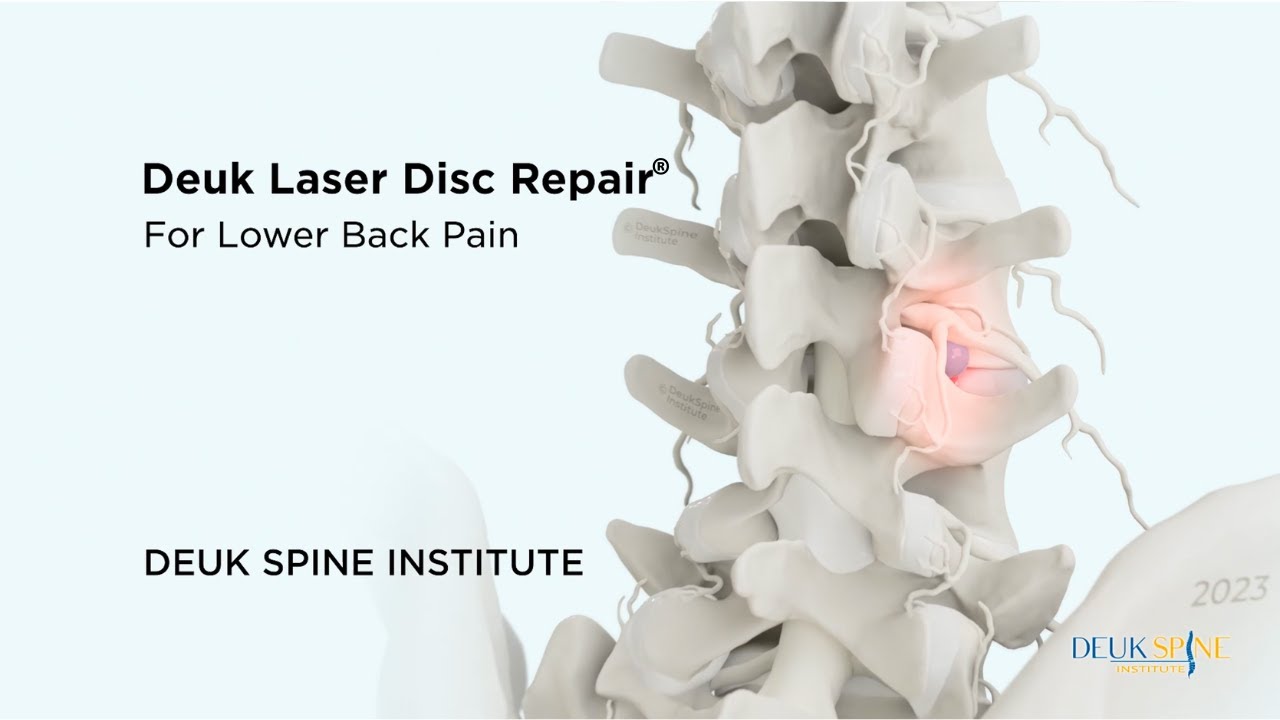
For groin pain caused by a herniated or bulging disc, Deuk Laser Disc Repair® offers a targeted solution. This endoscopic procedure uses laser technology to precisely excise only the inflamed, herniated disc material compressing the nerve root. While preserving the healthy disc structure and spinal motion. DLDR is performed as an outpatient procedure with no hospital stay required and carries a 0.01% complication rate across more than 2,750 procedures.
Deuk Plasma Rhizotomy® (DPR)
For groin pain originating from SI joint dysfunction or lumbar facet joint inflammation, Deuk Plasma Rhizotomy® provides a lasting solution. This advanced procedure uses a plasma radiofrequency wave to selectively disable the sensory nerves (medial branch nerves) that transmit pain signals from the affected joint. Permanently eliminating the pain without fusion, hardware, or loss of spinal motion.
Both procedures are outpatient, require no general anesthesia, and produce permanent results by addressing the root cause rather than masking symptoms.
Conclusion
Groin pain caused by spinal pathology. Whether from a herniated disc or SI joint dysfunction is more common than most patients and many clinicians realize. The key to effective treatment is accurate diagnosis: identifying the true pain generator through a comprehensive evaluation that goes beyond imaging alone.
At Deuk Spine Institute, we specialize in tracing pain to its source and eliminating it permanently with minimally invasive, motion-preserving procedures. If you are experiencing persistent groin pain and suspect your spine may be involved, schedule a free MRI review and take the first step toward lasting relief.
Groin pain from a spinal condition is misdiagnosed more often than it’s caught
Find the real pain generator.
Fix it—permanently.
Whether it’s a herniated disc compressing the L1 nerve root or SI joint dysfunction—the #1 spinal cause of groin pain—the Deuk Spine Exam pinpoints the source with 99% accuracy so treatment targets the problem, not just the symptom.
patients report groin pain
with the Deuk Spine Exam
across 2,750+ procedures
For groin pain caused by a herniated or bulging disc compressing a nerve root.
- Endoscopic laser targets only inflamed disc tissue
- Preserves disc structure and spinal motion
- Outpatient, no general anesthesia
For groin pain originating from SI joint dysfunction or facet joint inflammation.
- Plasma RF disables sensory pain nerves permanently
- No fusion, no hardware, no motion loss
- Outpatient, no general anesthesia
Deuk Spine Institute · Board-certified neurosurgeon · 20+ years · Motion-preserving procedures
FAQ’s
Can a herniated disc really cause groin pain?
View Answer
Yes. A herniation in the L1-L2 region can compress the L1 nerve root responsible for innervation of the groin region.¹ ² In case there is irritation or compression of the L1 nerve root, the symptoms will be groin pain, numbness, and tingling sensations. Herniations lower down in the lower lumbar spine, like those occurring in the L4-L5 region, may rarely lead to groin pain via the sinuvertebral nerve.⁴ ⁵
How do I know if my groin pain is from my spine or another condition?
View Answer
The pain due to spinal problems comes with back stiffness, pain radiating to the inner thigh, numbness or tingling of the inner thigh, weakness in the legs, or aggravation when bending, lifting, or sitting.¹ ² ⁶ If your groin pain is worse with walking and standing and relieved with sitting, SI joint problems should be ruled out.³ This is done by having an accurate clinical evaluation, MRI scan, and sometimes even a diagnostic block.
What is SI joint dysfunction, and why does it cause groin pain?
View Answer
Sacroiliac (SI) Joints: Located at the junction between the sacrum and the pelvis on either side, the SI joints are known to refer pain when they get inflamed, injured, or develop dysfunctions.³ ⁶ It has been found that about 46.5% of SI joint dysfunction patients suffer from groin pain, which occurs far more frequently than in case of disc herniation or spinal stenosis patients.³ SI joint dysfunctions are responsible for 15-30% of all chronic lower back pain conditions, and they are confirmed by periarticular injections.⁷
Can a bulging disc cause stomach problems?
View Answer
While rare, the damage to the L1 or L2 nerve root can cause referred pain or altered sensation in the lower abdominal wall since the L1 or L2 nerve roots innervate the lower abdomen muscles. ¹ ² For some people, it is felt as a vague pain or tightness in the stomach region. If you have abdominal symptoms along with back and groin pain, then spinal assessment must be included in your investigations.
Why does my groin pain keep coming back despite treatment?
View Answer
For instances where the groin pain is due to spinal structure problems such as a herniated disc or SI joint dysfunction. Treatments that focus on symptom alleviation alone, including NSAIDs, stretching, and heat application. Will give you temporary relief, if any. The disc material or inflammation from the joint continues to stimulate the nerve roots. Perpetuating the pain. And the solution lies in stopping the inflammation itself.
What is the Deuk Spine Exam, and how does it help diagnose groin pain?
View Answer
The Deuk Spine Exam is a proprietary diagnostic method used at Deuk Spine Institute that combines a detailed patient history, comprehensive neurological examination, and advanced image-guided diagnostics.³ Unlike relying on MRI findings alone. Which can show abnormalities in asymptomatic individuals. The Deuk Spine Exam correlates structural findings with your actual symptoms to identify the precise pain generator with 99% accuracy.⁶ This prevents misdiagnosis and ensures that treatment targets the true source of your groin pain.
Will I need surgery for groin pain caused by a spinal condition?
View Answer
This is not always the case. Conservative treatments, such as physical therapy, anti-inflammatory medication, and ergonomic changes, help many patients who have pain in their groin from a spinal cause.⁹ In cases where there is a definite problem that has been diagnosed, such as a herniated disc pinching on a nerve root, or a dysfunction of the SI joint, which is resistant to conservative treatment, a simple procedure will solve the problem permanently.²
How is Deuk Laser Disc Repair different from traditional discectomy or spinal fusion?
View Answer
Discectomy, the traditional surgery, entails excision of a larger part of the disc and usually requires anesthesia and hospitalization. The surgical technique of spinal fusion makes the fused vertebrae immobile and results in greater load on other segments of the spine. Deuk Laser Disc Repair® makes use of endoscopy and lasers for disc repair and eliminates the inflammation in the disc while retaining its intact structure along with its natural mobility.
Sources
View Sources
- Radicular Back Pain. StatPearls. National Library of Medicine. Updated October 2022.
- Lumbar Disc Herniation. StatPearls. National Library of Medicine. Updated August 2023.
- Kurosawa D, Murakami E, Aizawa T. Groin pain associated with sacroiliac joint dysfunction and lumbar disorders. Clinical Neurology and Neurosurgery. 2017;161:104–109.
- Takahashi Y, Takahashi K, Moriya H. Groin pain associated with lower lumbar disc herniation. Spine. 1997;22(15):1736–1740.
- Kurosawa D, Murakami E, Aizawa T. Groin pain associated with sacroiliac joint dysfunction and lumbar disorders. Clinical Neurology and Neurosurgery. 2017;161:104–109. (Lower LDH groin pain prevalence data.)
- Sacroiliac Joint Pain. StatPearls. National Library of Medicine. Updated August 2023.
- Cohen SP. Sacroiliac joint pain: a comprehensive review of epidemiology, diagnosis and treatment. Expert Review of Neurotherapeutics. 2013;13(1):99–116.
- Schoenfeld AJ, Weiner BK. Treatment of lumbar disc herniation: evidence-based practice. International Journal of General Medicine. 2010;3:209–214.
- Kreiner DS, Hwang SW, Easa JE, et al. An evidence-based clinical guideline for the diagnosis and treatment of lumbar disc herniation with radiculopathy. The Spine Journal. 2014;14(1):180–191.