By Dr. Ara J. Deukmedjian, MD
Board Certified Neurosurgeon
Reviewed on July 8, 2026
Disclaimer: The information contained within this article is for educational purposes only and is not a substitute for personalized medical advice.
Key Points
✓ Disc replacement surgery. Replaces a damaged spinal disc with an artificial implant that preserves motion, unlike a fusion. ¹
✓ Cervical disc replacement (CDR). Outperforms ACDF fusion on pain relief, neurological recovery, and reoperation rates in randomized trials with up to 20 years of follow-up. ² ³ ⁹
✓ Lumbar disc replacement shows adjacent segment disease rates of 2.0–2.8% at 10+ years, versus 14–29% after lumbar fusion. ⁴
✓ Ideal candidates have single- or two-level disc disease with healthy facet joints, no instability, and no osteoporosis. ¹ ⁶
✓ Main risks are implant subsidence, heterotopic ossification, adjacent segment disease, and complex revision surgery. ⁶ ⁷
✓ Major complication rates in high volume series range from 1.5–5% and depend heavily on surgeon experience. ⁷
✓ Recovery: 1–2 days in hospital, return to sedentary work in 1–4 weeks, full activity in 6–12 weeks.
✓ Many patients told they need disc replacement or fusion. Qualify instead for endoscopic laser decompression: no implant, no fusion, no bone removal. ⁸
✓ Deuk Laser Disc Repair® is a 7 mm outpatient alternative with a 99.6% success rate and a 0.01% complication rate across 2,000+ procedures. No hospital stay. Back to work the same week.
The Quick Answer
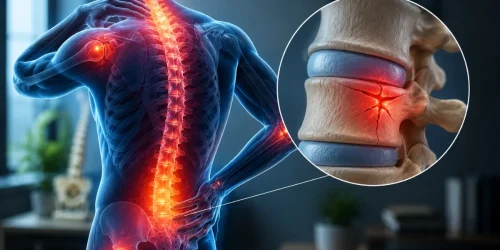
If your surgeon has told you that you need a spinal fusion for a herniated or degenerated disc in your neck or lower back. Disc replacement surgery is typically presented as the “modern” alternative. A metal-and-plastic artificial disc implanted in place of the damaged one. Designed to keep the spine moving. Compared to fusion a disc replacement preserves motion, reduces the mechanical stress placed on the discs above and below. And in most published cases produces better long-term patient-reported outcomes. ² ³ ⁴
But disc replacement is still a major surgery involving hardware. An anterior approach through the throat (for cervical) or the abdomen (for lumbar), and a permanent implant. It has a specific set of ideal candidates, a real complication profile, and a growing evidence base that patients should understand before consenting. And in a large percentage of cases where a disc replacement is recommended, an ultra-minimally-invasive endoscopic option can address the actual pain generator without any implant at all. ⁸
This guide walks you through what disc replacement surgery is, when it is appropriate, when it is not, and how to compare it against the alternatives you may not have been offered.
What Is Disc Replacement Surgery?
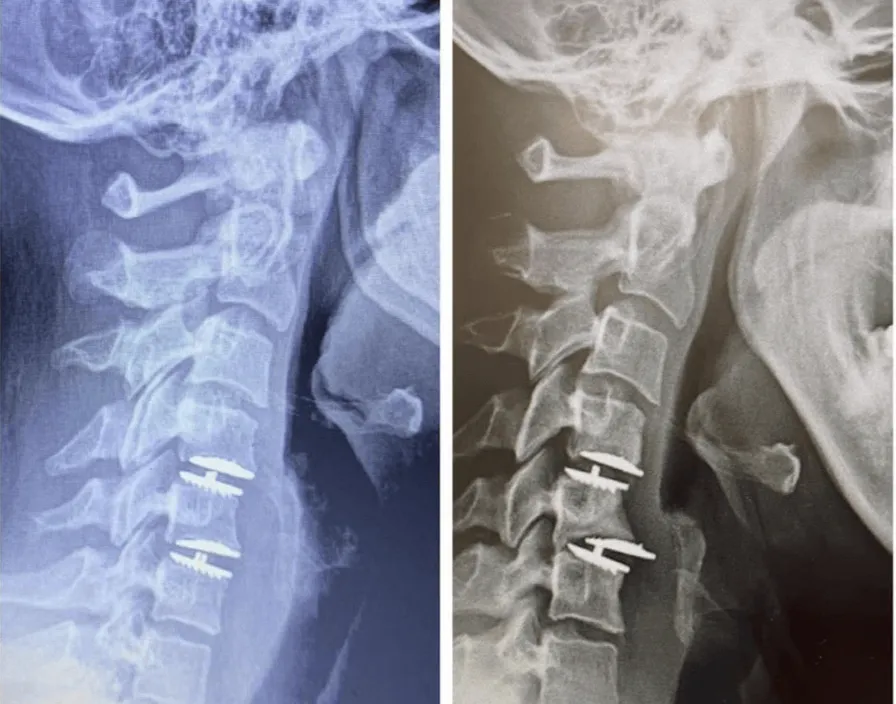
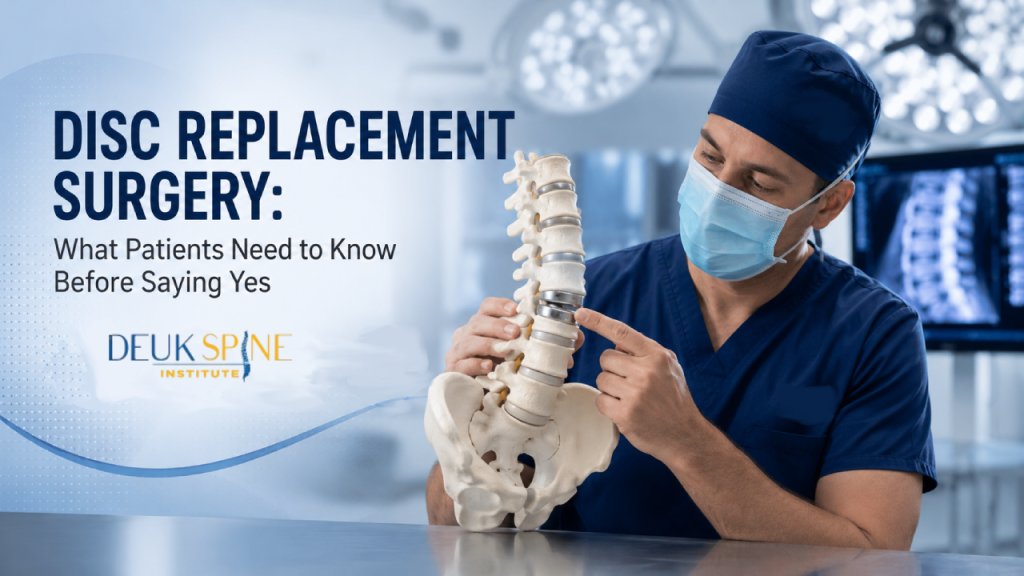
Disc replacement surgery is also called total disc arthroplasty (TDA). Or artificial disc replacement (ADR) is a spine procedure in which a diseased intervertebral disc is removed. And replaced with a mechanical implant. The disc implant is designed to reproduce the natural movement of the disc it replaces: flexion, extension, rotation, and lateral bending. Instead of locking the two vertebrae together the way an invasive fusion does. ¹
There are two main areas of the body where disc replacement surgery can be done:
- CDR stands for Cervical Disc Replacement. It is performed on the neck from the vertebrae C3 to C7. It is an alternative to Anterior Cervical Discectomy and Fusion (ACDF).
- LDR stands for Lumbar Disc Replacement. It is performed on the lower back. In most cases on the vertebrae L4–L5 and L5–S1. It is an alternative to lumbar fusion (ALIF, TLIF, PLIF, or posterolateral fusion).
The general procedure in both cases is as follows:
- General anesthesia is used during the surgery.
- For cervical disc replacement, a cut is made from the front side of the neck. For lumbar disc replacement from the front side of the abdomen.
- Muscles, blood vessels and abdominal organs (in the second case) are carefully shifted aside in order to access the front of the spine.
- The damaged disc is completely removed. Along with any bone spurs or herniated fragments pressing on the spinal cord or nerve roots.
- The artificial disc is usually a metal-on-polyethylene, metal-on-metal, or elastomeric implant. That is sized, positioned under fluoroscopic guidance, and anchored between the two vertebral bodies.
- The soft tissues are closed in layers.
Because motion is preserved at the treated level, the biomechanical load on the discs above and below is not increased the way it is after a fusion. That is the entire point of the procedure. ¹ ⁴
Cervical Disc Replacement vs. ACDF: What the Evidence Shows
Anterior Cervical Discectomy and Fusion has been the gold standard for cervical radiculopathy and myelopathy for decades. And it still is the most common cervical procedure performed in the United States. ² But over the last 15 years, high quality randomized controlled trials mandated by the FDA as part of Investigational Device Exemption studies. Have consistently favored cervical disc replacement across most measured outcomes.
A meta-analysis of eight prospective randomized controlled trials with 2,368 patients at a minimum 48-month follow-up. Found that CDR patients had:
- Significantly higher overall success rates
- Significantly higher Neck Disability Index (NDI) success
- Significantly higher neurological success
- Significantly lower rates of implant- or surgery-related serious adverse events
- Significantly lower rates of secondary surgical procedures
- Lower incidence of superior-level adjacent segment degeneration
compared to ACDF. ²
A separate systematic review of 14 randomized controlled trials with over 3,160 patients confirmed that CDR outperformed ACDF on patient-reported outcomes in both the short and medium-to-long term. ³ A more recent 10-year systematic review reinforced this finding. Long-term reoperation rates favored CDR, and the motion-preservation benefit did not disappear over time. ⁷
Even at 20 years of follow-up, a randomized single-level comparison of CDR and ACDF found both groups had significantly better NDI and VAS pain scores than before surgery, with a durable advantage for the disc replacement group in reoperation rates. ⁹
Bottom line: For appropriately selected patients with single-level or two-level cervical disc disease, the published evidence is now firmly on the side of disc replacement over fusion.
Lumbar Disc Replacement vs. Lumbar Fusion
The lumbar spine story is more nuanced than the cervical one. Lumbar disc replacement is technically more demanding, the approach through the abdomen carries greater risks, and the FDA approval pathway for lumbar devices has been more restrictive. But for the right patient, the long-term data is compelling.
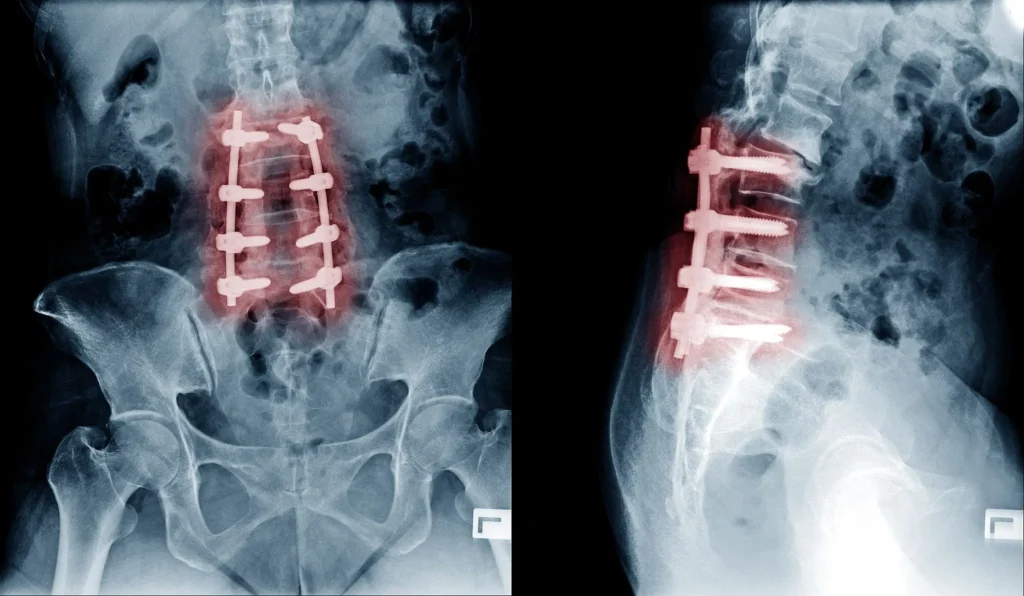
A 14-year mean-follow-up cohort of lumbar total disc replacement patients demonstrated durable pain relief, high patient satisfaction, and a low reoperation rate, with clear preservation of segmental motion. ⁵ In a separate analysis of 1,000 consecutive lumbar TDR patients, only 2.0% required reoperation for adjacent segment disease at long-term follow-up. ⁴ European cohorts with a minimum of 10 years of follow-up have reported adjacent segment degeneration rates of 2.0–2.8% after lumbar TDR. Dramatically lower than the 14–29% rates commonly reported after lumbar fusion. ⁴
A 10-year prospective series using a newer-generation elastomeric implant (M6-L) reported clinically significant improvements in patient-reported outcomes that were sustained at final follow-up, with no osteolysis-related device failures. ¹⁰
That said, lumbar disc replacement is not a solution for everyone with lower back pain. It works best for isolated discogenic pain at one or two levels in a patient with preserved facet joints, no instability, and no significant deformity. ¹ ⁶ Facet-mediated pain, spondylolisthesis, scoliosis, and osteoporosis all reduce or eliminate a patient’s candidacy.
Who Is a Candidate for Disc Replacement Surgery?
Disc replacement is a highly specific operation for a specific pathology. Most published inclusion criteria across the FDA IDE trials include: ¹ ⁶

- Single-level or two-level symptomatic disc disease
- Skeletally mature adult (typically 18–60 for lumbar, up to mid-60s for cervical)
- Failed at least 6 weeks of appropriate non-operative care
- Radiographic evidence of disc pathology corresponding to the patient’s symptoms
- Preserved facet joints at the target level
- No significant instability, spondylolisthesis, or deformity
- No osteoporosis (T-score better than −1.5 to −2.0 depending on device)
- No prior fusion at the adjacent level
- No active infection or malignancy
Contraindications that patients are frequently not told about include severe facet arthropathy, chronic opioid dependence, active workers’ compensation litigation in some studies, and morbid obesity. All of which have been associated with worse outcomes. ⁶ If your surgeon has not walked you through why you meet these criteria, that is a conversation worth having before you sign consent.
Risks and Complications of Disc Replacement Surgery
Any spine procedure that involves a permanent implant carries specific risks. The most commonly reported complications in the published literature include: ⁶ ⁷
- Implant migration or subsidence — the artificial disc shifts out of position or sinks into the vertebral body.
- Heterotopic ossification (HO) — new bone growth around the implant that can restrict or eliminate the motion the device was designed to preserve. In lumbar TDR long-term series, up to 3–5% of patients develop clinically significant HO. ¹⁰
- Adjacent segment disease — degeneration at the level above or below the implant. Substantially lower than after fusion, but not zero. ⁴
- Approach-related complications — for cervical replacement, dysphagia (difficulty swallowing) and dysphonia (voice changes); for lumbar replacement, injury to major blood vessels, injury to the sympathetic nerve chain (which can cause retrograde ejaculation in men), and bowel injury.
- Revision surgery — removing and replacing an artificial disc is significantly more complex than the original implantation, particularly in the lumbar spine where the great vessels have often scarred to the implant. This is the single most important long-term risk to understand.
Complication rates are strongly surgeon-dependent. High-volume disc arthroplasty surgeons in the FDA IDE trials reported major complication rates in the range of 1.5–5%, but community outcomes have varied more widely. ⁷
The Motion-Preservation Argument: Why It Matters
The core rationale for disc replacement over fusion is prevention of adjacent segment disease. When a spinal level is fused, the discs above and below must absorb the motion that the fused segment can no longer provide. Over 5–10 years, this accelerated wear can produce symptomatic degeneration at those adjacent levels. Often driving a second surgery. ⁴ ¹¹
Fusion-related adjacent segment disease has been documented in 14% of lumbar fusion patients in literature reviews, with reoperation rates as high as 29% in some series. ⁴ Cervical fusion produces a similar pattern the level above a C5–C6 fusion is a well-known site for delayed reherniation and stenosis. ¹¹
Motion-preserving procedures; whether that is disc replacement or an even smaller endoscopic decompression. Do not create that biomechanical liability. This is the single most important long-term argument in favor of disc replacement, and it is the reason so many spine societies have shifted their recommendations over the last decade.
The Alternative Most Patients Are Never Offered
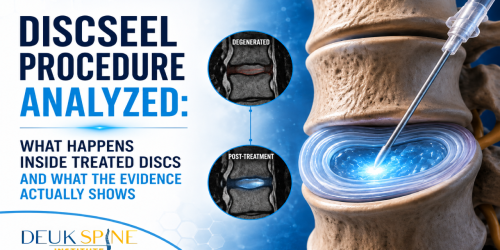
Both disc replacement and fusion require an anterior approach, a permanent implant, and in the lumbar spine. Mobilization of the great vessels. For a patient with a contained disc herniation, an annular tear, or a single-level degenerated disc that has not collapsed, an endoscopic laser procedure can decompress the exact same nerve root through a 7 mm incision, without an implant of any kind. ⁸
Deuk Laser Disc Repair® is one such procedure. It uses a high-definition endoscope and a precision laser to remove herniated disc material and shrink the annular defect. Treating the source of the pain while preserving the disc, the facet joints, and the spinal ligaments. In published outcomes across more than 2,700 Deuk Laser Disc Repairs® completed. The DLDR® has demonstrated a 99.6% success rate and a 0.01% complication rate, with most patients returning to normal activity within 72 hours.
Whether this is a realistic option for you depends entirely on what your MRI shows. That is what a second opinion is for.
How to Choose the Right Disc Replacement Surgeon
If you have been told you need a cervical or lumbar disc replacement. The surgeon matters more than the hospital name on the door. Use the checklist below.

1. Board certification and fellowship training
Look for board certification by the American Board of Neurological Surgery, the American Board of Orthopaedic Surgery, or the American Board of Spine Surgery. Plus a completed fellowship in spine surgery that specifically included artificial disc replacement training. Not every fellowship covers arthroplasty in depth.
2. Disc replacement case volume
Ask directly your surgeon these questions. How many disc replacements have you personally performed in the last 12 months? What is your revision rate? A surgeon performing 5 cervical arthroplasties a year is not equivalent to one performing 100. Case volume correlates strongly with implant positioning accuracy and long-term outcomes. ⁷
3. Published outcomes
A serious high-volume arthroplasty surgeon should be able to quote their own outcome data: success rate, complication rate, revision rate and ideally point to peer-reviewed publications. Vague or general answers about “national averages” are a red flag.
4. A clear, honest treatment plan
Your surgeon should be able to walk you through what your MRI shows, why they recommend a disc replacement specifically (as opposed to fusion or a smaller decompression), and what they will not do. If disc replacement is being recommended without a documented evaluation of the facet joints, bone density, or alternative endoscopic options, that is a conversation worth extending. ¹ ⁶
5. Independent patient reviews
Check Healthgrades, Vitals, Google, and state medical board records for the actual surgeon not the practice.
6. Get a second opinion
For any recommendation involving hardware, an implant, or fusion, a second opinion is standard practice. It costs a phone call and can change the course of your recovery for the rest of your life.
Treat your disc without an implant or fusion.
Before you agree to an artificial disc or a fusion, send your MRI for a free review by Dr. Deukmedjian. For contained herniations, annular tears, and single-level degenerative discs, Deuk Laser Disc Repair® can decompress the same nerve through a 7 mm incision — no implant, no bone removal, no hardware, and your disc, facet joints, and ligaments left intact.
- 99.6%
- Average pain relief
- 0.01%
- Complication rate
- 7mm
- Incision, outpatient
FAQs
What conditions can disc replacement surgery treat?
Disc replacement is most effective for single-level or two-level symptomatic disc disease. Cervical radiculopathy from a herniated or degenerated disc, cervical myelopathy from disc-osteophyte complexes, and lumbar discogenic pain from a degenerated disc without instability. It is generally not appropriate for spondylolisthesis, significant facet arthropathy, deformity, osteoporosis, or fracture. ¹ ⁶
Is disc replacement better than fusion?
For appropriately selected patients, the randomized-controlled-trial evidence favors disc replacement over fusion on most measured outcomes: pain relief, function, reoperation rates, and adjacent segment degeneration. In both the cervical and lumbar spine at follow-up ranging from 4 to 20 years. ² ³ ⁴ ⁹ “Better” always depends on the specific patient and the specific pathology.
How long is recovery after disc replacement surgery?
Most patients are discharged within 1–2 days. Return to sedentary work typically takes 1–2 weeks for cervical replacement and 2–4 weeks for lumbar replacement. Full activity usually resumes at 6–12 weeks, depending on the region operated on and the patient’s occupation.
How long does an artificial disc last?
Modern disc replacement devices are engineered to withstand tens of millions of cycles in bench testing and have shown durable performance out to 10–20 years in published clinical series. ⁵ ⁷ ⁹ ¹⁰ Longer-term real-world data is still accumulating, and a subset of patients will develop heterotopic ossification, subsidence, or wear-related issues that require revision.
What are the risks and complications of disc replacement?
Reported complications include implant migration or subsidence, heterotopic ossification, adjacent segment disease, approach-related injuries (dysphagia, vessel or nerve injury), and revision surgery. Major complication rates in high-volume series generally range from 1.5–5%. ⁶ ⁷ Revision of a lumbar disc replacement is particularly complex and is one of the most important risks to discuss with your surgeon before consenting.
Does insurance cover disc replacement surgery?
Cervical disc replacement is covered by most major U.S. insurance plans and Medicare for FDA-approved indications, generally at one or two levels. Lumbar disc replacement coverage is more variable. Some carriers still classify it as investigational for certain indications. Deuk Spine Institute verifies benefits as part of a free MRI review.
Is there an alternative that avoids the implant altogether?
Yes, for many patients. Ultra-minimally-invasive endoscopic decompression procedures. Such as Deuk Laser Disc Repair® can treat contained disc herniations, annular tears, and single-level degenerative disc disease through a 7 mm incision, without an implant, without bone removal, and without altering the spine’s structure. ⁸ Whether you are a candidate depends on your MRI.
Sources
View Sources
- Salzmann SN, Plais N, Shue J, Girardi FP. Lumbar disc replacement surgery — successes and obstacles to widespread adoption. Current Reviews in Musculoskeletal Medicine. 2017;10(2):153–159.
- Zou S, Gao J, Xu B, Lu X, Han Y, Meng H. Mid- to long-term outcomes of cervical disc arthroplasty versus anterior cervical discectomy and fusion for treatment of symptomatic cervical disc disease: a systematic review and meta-analysis of eight prospective randomized controlled trials. Journal of Orthopaedic Surgery and Research. 2017;12:143.
- Findlay C, Ayis S, Demetriades AK. Total disc replacement versus anterior cervical discectomy and fusion: a systematic review with meta-analysis of data from a total of 3160 patients across 14 randomized controlled trials. The Bone & Joint Journal. 2018;100-B(8):991–1001.
- Rainey S, Blumenthal SL, Zigler JE, Guyer RD, Ohnmeiss DD. Analysis of adjacent segment reoperation after lumbar total disc replacement. International Journal of Spine Surgery. 2012;6:140–144.
- Long-term outcomes of total lumbar disc prosthesis: sustained pain relief and functional recovery at 14-year follow-up. North American Spine Society Journal. 2025.
- Zigler JE, Blumenthal SL, Guyer RD, Ohnmeiss DD, Patel L. Progression of adjacent-level degeneration after lumbar total disc replacement: results of a post-hoc analysis of patients with symptomatic adjacent-level disease. Spine. 2018;43(20):1395–1400.
- MacDowell A, Robinson J, Kelley S, et al. Ten-year outcomes of cervical disc arthroplasty versus anterior cervical discectomy and fusion: a systematic review with meta-analysis. Spine. 2024;49(6):385–394.
- Hasan S, Härtl R, Hofstetter CP. The benefit zone of full-endoscopic spine surgery. Journal of Spine Surgery. 2019;5(Suppl 1):S41–S56.
- Twenty-year clinical outcomes of cervical disc arthroplasty vs. anterior cervical discectomy and fusion: a randomized single-level comparison. Journal of Neurosurgery: Spine. 2024.
- Lauryssen C, Coric D, Dimmig T, et al. Long-term outcomes following lumbar total disc replacement with M6-L: a prospective 10-year study. Journal of Spine Surgery. 2022;8(3):349–359.
- Hilibrand AS, Robbins M. Adjacent segment degeneration and adjacent segment disease: the consequences of spinal fusion? The Spine Journal. 2004;4(6 Suppl):190S–194S.