

By Dr. Ara Deukmedjian, MD
Board Certified Neurosurgeon
Medically reviewed on: September 9, 2026
Disclaimer: The contents provided in this article are for educational purposes only and do not constitute medical advice. Individual results may vary. Always consult with a qualified healthcare provider regarding your specific condition and treatment options before making any medical decisions.
Key Points
✓ Neck pain occurs in more than 203 million individuals around the world and is considered one of the leading causes of disability worldwide. 1
✓ It may be acute (less than 6 weeks) or chronic (greater than 3 months), with the primary cause being disc-related inflammation.
✓ In most patients, conservative management works, which involves physical therapy, medication, and exercise.
✓ Imaging modalities like MRI, X-ray, and CT scans are useful for determining the exact cause of neck pain.
✓ In case conservative management fails, there are other minimally invasive procedures available, such as Deuk Laser Disc Repair®, which do not involve any metal components.
✓ Consult a doctor immediately if you have symptoms like increasing weakness, numbness, incontinence, and neck pain after experiencing trauma.
What Is Neck Pain?
Neck pain is any type of pain felt in or around the cervical spine. The cervical spine is the upper part of the vertebral column consisting of seven vertebrae (C1-C7), which carries the weight of the head and acts as a channel through which the spinal cord passes down to the body. It is quite flexible; however, flexibility makes the neck prone to injuries and degeneration.
The results have shown that neck pain can be categorized based on its duration as follows:
Acute neck pain occurs from a few days up to six weeks due to an isolated incident like poor sleeping posture, muscle strain and minor injury. Less than acute neck pain occurs from six weeks to three months. Chronic neck pain takes longer than three months and typically implies an underlying problem in the cervical area like degenerative disc, herniated disc and nerve impingement.
Chronic neck pain that is not under control impacts your quality of life and causes disability. It is important to identify the cause of your neck pain.
What Causes Neck Pain?
Neck pain rarely has a single cause. Based on our clinical observations, most cases result from a combination of structural, biomechanical, and lifestyle factors. The most common underlying mechanisms include the following.
Disc Herniation and Annular Tears
These discs serve as cushions between the vertebrae. If the disc gets injured from trauma. It could develop a tear in its tough outer portion, referred to as the annulus fibrosus. This results in the compression of the soft interior part, known as the nucleus pulposus. Which leads to inflammation pushing through the tear. This is referred to as a herniation. The inflamed tissue sends out constant pain impulses and should put pressure on the nerve roots close to it. The herniation could cause radiation of pain, tingling sensation, or weakness of the arm.
Degenerative Disc Disease
As we age there is an associated decrease in the height of the cervical disc along with its water content. This process may lead to narrowing of the disc space. Leading to more pressure being placed on the surrounding structures and causing chronic neck pain. Our results demonstrate that degenerative disc disease is one of the commonest causes of chronic neck pain above the age of 40 years.
Facet Joint Arthritis
Facet joints refer to small joints found on the back part of each vertebra. Joint arthritis causes irritation, pain on motion, and limited movement. Facet joint pain can easily be confused with muscle spasm pain, which may lead to misdiagnosis.
Bone Spurs
When the disks wear out, sometimes the body tries to make the area more stable by producing additional bones. The problem with these bones is that they tend to compress the nerves by narrowing down the space between the spinal column and the exit point of the nerves.
Muscle Strain and Poor Posture
Excessive use of screens, forward head posture, and repetitive movements. May put strain on the neck muscles and ligaments. The strain that causes tension as a result of stress is another factor that adds to the problem; especially among people who tend to accumulate tension in their neck and shoulder areas.
Trauma
Car accidents, physical contact during sports activities, and falls may result in whiplash, disk problems, and bone breakage. Based on our experiences, even small accidents may lead to annular tears, which remain even when the initial pain is no longer there.
Spinal Stenosis
Spinal stenosis of the neck is also called cervical spinal stenosis. The disease compresses the spinal cord or nerve roots. Symptoms vary widely; however, they include neck pain, arm pain, numbness, weakness, and problems with coordination when the stenosis becomes advanced. Cervical stenosis should be diagnosed properly since it may lead to myelopathy.
What Are the Symptoms of Neck Pain?
Neck pain can take various forms. Depending on what is causing it. According to our clinical observations, the following are some common forms of presenting with neck pain: aching or stiffness in the neck or upper shoulders, pain that gets worse when certain movements are made. And a headache arising from the base of the skull.

If the cervical disc is compressing a nerve root. There will be pain, tingling, or numbness extending from the neck to the shoulder, arm, and even hand. This is called cervical radiculopathy. Muscle weakness in the arm or hand and restricted movement of the neck are other signs pointing to this problem.
Seek emergency medical treatment if you are experiencing neck pain together with arm weakness, poor coordination, trouble walking, and changes in bowel or bladder control. This could be a sign of spinal cord compression.
How Is Neck Pain Diagnosed?
The correct diagnosis is critical to treatment. Most patients experience several months of treatment with no change. Mainly because the exact cause of pain was never determined. The initial process includes gathering a medical history and performing a physical exam. Which involves testing range of motion, reflexes, strength, and sensation.
X-Ray
X-rays allow for quick visualization of the bony structures within the cervical spine. Narrowing of the space between discs, fractures, bone spurs, and signs of osteoarthritis may be visible. The soft tissue of the disc isn’t visible on x-rays.
MRI
MRI is the gold standard for assessing neck pain. The images obtained from this modality are highly detailed and include pictures of the discs, spinal cord, the nerves and other soft tissues in the area. This makes it the optimal diagnostic imaging modality in diagnosing conditions such as a herniated disc, spinal stenosis, nerve impingement and spinal cord injury. An understanding of your MRI is paramount in deciding the best treatment approach.
Our findings show that although MRI can help diagnose certain structural problems, correlation between the findings and the clinical presentation of the patient is necessary. It is common to find many people without any symptoms having herniated discs in their scans. This is why Deuk Spine Exam involves a clinical exam along with image guided diagnosis. Accuracy of 99% in diagnosing pain generators.
CT Scan
Computed tomography (CT) scanning is an excellent diagnostic tool that allows one to visualize bone structures very well and can be helpful in the detection of bone spurs and the actual narrowing of the bone. CT scanning is performed from all angles (360 degrees), and is recommended in cases when MRI cannot be performed.
Electrodiagnostic Studies
In case of suspected nerve compression, electromyography and nerve conduction tests can be recommended to determine the exact location and extent of the nerve involvement. They are especially useful in differentiating between nerve root and peripheral nerve problems.
What Are the Best Conservative Treatments for Neck Pain?
The overwhelming number of neck pain can be effectively managed through conservative means. Doctors generally advise that patients give non-invasive options time to work. Anywhere between six to twelve weeks, before looking into other forms of treatment. Conservative methods focus mainly on symptom management and natural healing.
Physical Therapy

Physical therapy is one of the most commonly recommended and scientifically-proven therapies for the management of neck pain. The 2025 network meta-analysis study, which was published in BMJ Open, has proven that musculoskeletal manual therapy, consisting of mobilization and manipulation, is one of the most recommended first-line therapies for neck pain in clinical practice guidelines. 2
There are two aspects of physical therapy for neck pain. Passive physical therapy involves interventions performed by the therapist and include heat or cold application, ultrasound, electrical stimulation, and manual traction therapy. A 2025 systematic review and network meta-analysis revealed that manual therapy should be considered the first-line conservative intervention for cervical radiculopathy and additional benefits of traction therapy are still to be investigated. 3
Active physical therapy consists of exercising done by yourself, which aims at building strength in the deep neck flexor muscles and scapular stabilizers, stretching, and posture correction. By doing regular exercise, you create muscle support around the cervical spine, which decreases mechanical stress on your intervertebral discs and joints.
Mind-body type exercises have gained popularity in recent years and have received scientific backing. According to a 2024 systematic review comparing the effects of various mindfulness-based exercises in people with chronic neck pain, all the forms such as yoga, Pilates, Tai Chi, and Qi Gong decreased pain and disability when compared to not being involved in any exercises, where yoga and heat therapy had the most significant effects. 4
In addition, a 2025 randomized controlled trial in Frontiers in Pain Research has shown that Tai Chi along with intermediate frequency therapy has helped with chronic non-specific neck pain. 5
Medications
Various drugs can be prescribed to treat neck pain and inflammation. NSAIDs, like ibuprofen and naproxen, decrease pain and inflammation. Paracetamol helps decrease pain but does not have an anti-inflammatory effect. Muscle relaxants help to ease spasms and to take part in physical exercises. In case of symptoms related to nerves, for instance tingling, neuropathic pain medication is often prescribed – gabapentin and pregabalin are examples. Oral corticosteroids can be prescribed in cases of acute inflammation flares.
It was found out from our clinical practice that although drug treatment provides relief from symptoms, it does not cure the structural problems – for example, annular tears and disc herniations. Besides, long-term usage of NSAIDs is associated with the risk of ulcers, renal problems, cardiovascular disease, and therefore cannot be a permanent way of treatment.
Cervical Epidural Steroid Injections
Epidural Steroid Injection involves the injection of a corticosteroid drug to reduce the inflammation and pain in the neck. This is done to relieve the pain and numbness experienced due to nerve root inflammation. Though not a long-term cure for the condition, these injections help the patient participate better in physical therapies and even delay surgery.
Facet Block Injections and Rhizotomy
When the pain in the neck results from the facet joint rather than the disc. Facet joint injections can serve as a means of confirming the condition and offering temporary pain relief through administering corticosteroid medication around the joints. In order to offer more lasting relief, there is an innovative treatment called Deuk Plasma Rhizotomy® (DPR). Which is a minimally invasive procedure and entails deactivating the tiny nerves carrying the pain signals from the arthritic facet joints.
Platelet-Rich Plasma (PRP) and BMAC Therapy
The advanced techniques for managing pain also use biologic procedures. PRP therapy injections concentrated growth factors derived from the patient’s own blood into the injury site to help regenerate tissues and decrease pain. On the other hand, BMAC therapy harvest stem cells from the patient’s bone marrow and uses them to regenerate cells within damaged tissues. These types of therapies are most suitable for appropriately selected patients.
Home Care and Lifestyle Modifications
There are various practical ways through which recovery can be facilitated to minimize the risk of developing it again in the future. Ice packs provide relief to inflammation caused by the condition, while heat can facilitate flexibility in the muscles. This is usually one of the first treatment methods of management that most people try.
It is also vital to put into account the ergonomic measures such as adjusting the screen to be at eye level, use of an appropriate chair that provides support to the neck area, and use of pillows that maintain the neck area in the neutral position during sleep. The latter entails the use of stress relieving techniques such as breathing and yoga.
When Should You Consider Surgery for Neck Pain?
Surgical treatment is not usually the primary option in treating neck pain. Most doctors will suggest trying conservative treatments for a minimum period of three to six months before going for a surgical procedure. Nevertheless, there are instances where surgery should be considered sooner rather than later.
According to our experience, the following circumstances necessitate consultations with a spinal specialist:
- Weakness in the arms or hands that is progressive in spite of conservative therapy
- Numbness or tingling that persists despite treatment
- Demonstration of spinal cord compression (myelopathy) with difficulties with balance or coordination
- Chronic and painful symptoms that severely impair normal functioning for three to six months of conservative care
- Worsening of neurological impairment rather than improvement
- Severe disc herniation or stenosis demonstrated on imaging studies correlated with symptoms
In case you are having any of these symptoms, it is best that you see a certified spine specialist who can evaluate your imaging results along with your clinical assessment and give you all the options available. Delay in diagnosis may result in permanent damage.
What Are the Best Surgical Treatment Options for Neck Pain?
When non-surgical management does not provide adequate relief, several surgical options are available. The right procedure depends on the specific structural problem causing your pain.
Deuk Laser Disc Repair® (DLDR)
The DLDR Procedure (Deuk Laser Disc Repair®) is the latest in minimally invasive treatment of discogenic neck pain. Discogenic neck pain arises from a degenerated or herniated cervical disc. The DLDR technique was created by Dr. Ara Deukmedjian, a renowned neuro-spine surgeon and founder of the Deuk Spine Institute. The procedure is carried out using a small four millimeter incision made in front of the neck and a high-powered laser to selectively remove the herniated material.
As there is no use of any metal implants and because soft tissues are not disturbed significantly, the DLDR procedure can be done on an out-patient basis and the patient can go back home the same day. In addition, our patients do not require any strong post-operative pain relieving drugs. On the basis of our clinical results, we have found that in 99% of cases, there is 99% pain relief with a less than 0.01% complication rate.
The DLDR Procedure does not involve fusing the affected disc.
Traditional Fusion Surgery (ACDF)
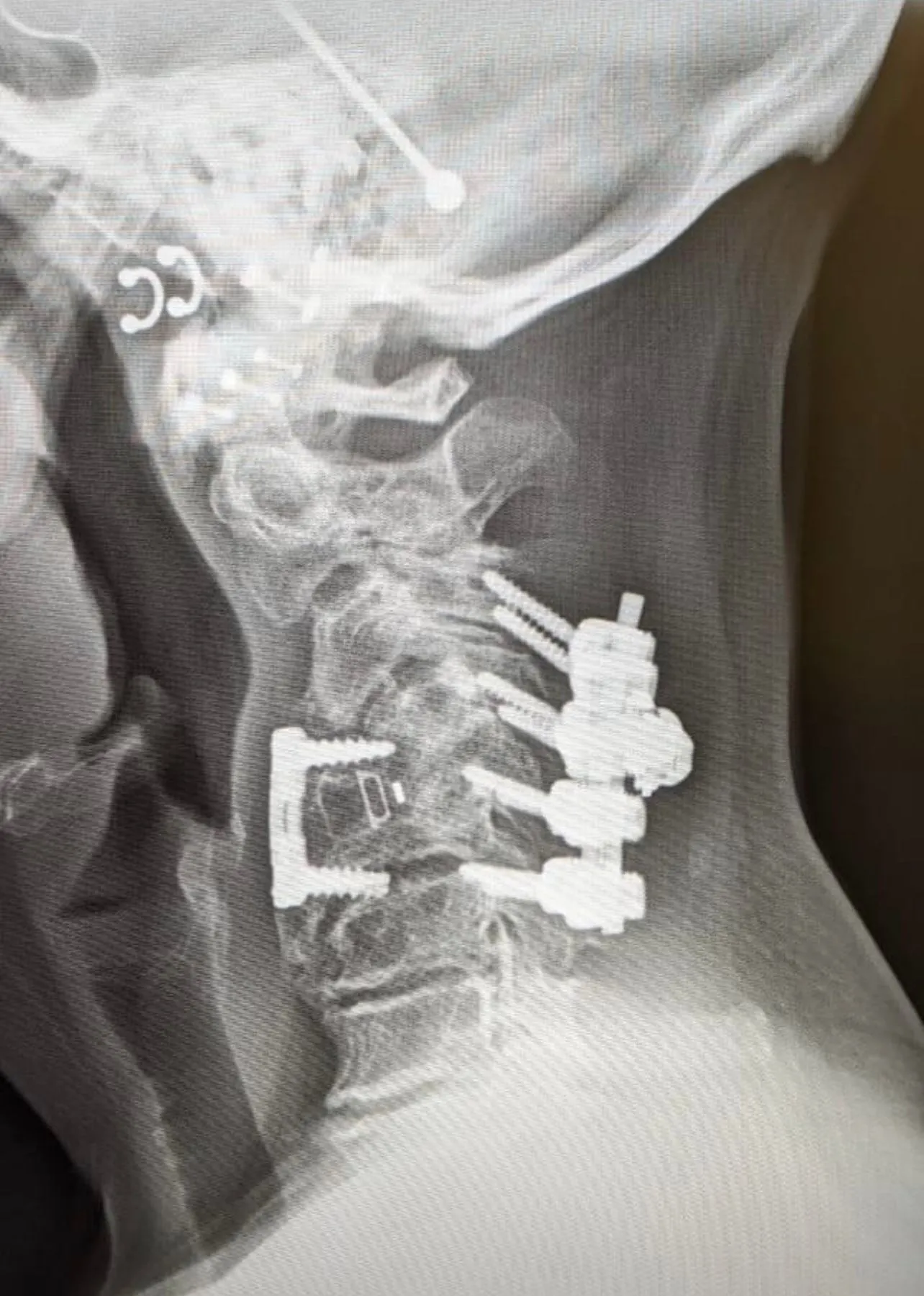
For several decades now, anterior cervical discectomy and fusion (ACDF) has been the gold standard in cervical disc herniation surgery. It includes removal of the damaged disc, decompression of the involved nerve or spinal cord, and fusion of the involved vertebrae with the use of bone graft and metal implants. Although it is a successful operation for the majority of cases, ACDF fusion surgery eliminates the normal mobility of the neck and redistributes load on the adjacent segments. Studies have found that the number of revisions because of adjacent segment disease is about 11%, while radiographic changes in adjacent segments reach 30%.
Laminectomy
Laminectomy surgery includes the removal of the lamina bone that is pressing on the spinal nerves. The lamina bone is located on the posterior side of the vertebral bones. Laminectomy surgery is usually performed to relieve cervical spinal stenosis.
Foraminotomy
In a foraminotomy procedure. An incision is made to enlarge the foramen from which the nerve root exits the spinal canal. The foramen may be compressed: due to bone spurs, ligaments, or any disc material that is present. It may be conducted anteriorly or posteriorly to the neck.
Minimally Invasive Endoscopic Surgery
Advances in endoscopic procedures have made cervical spine surgeries much less invasive than before. According to a systematic review conducted by researchers and recently published in the journal World Neurosurgery (2023), full-endoscopic cervical spine surgery is a safe procedure that produces positive results in terms of relieving pain and functional improvements. 6 The study states that even cases which were thought to be ineligible for endoscopic surgery, such as severe central stenosis or multilevel problems, can now be successfully treated through such innovative procedures. In addition, patients who underwent endoscopic procedures had much lower readmissions within 30 days.
Neck Pain Management Starts With an Accurate Diagnosis
Treating neck pain without proper diagnosis is like trying to solve a riddle. Drugs decrease inflammation temporarily, and physical therapy may be useful in cases where there is little structural damage, but neither can repair an annular tear or injury to your cervical disc. Only proper treatment will do the trick, but only once you find out what is causing your pain.
According to our research, many people who suffer from chronic pain have to go through unnecessary treatment procedures ranging from injections to drug therapy, simply because the source of their pain was never determined. At Deuk Spine Institute, we use the Deuk Spine Exam, which combines sophisticated clinical and image-guided diagnostic tests, allowing us to pinpoint the exact source of your pain with 99% accuracy.
If you have been trying to cope with your neck pain for months without success, it’s time for a thorough diagnosis. Book your free MRI review today!
Months of treatment with no change? The cause may never have been found
Diagnose it right. Fix the disc.
Keep your range of motion.
Most chronic neck pain starts with a damaged cervical disc. Medication and injections manage symptoms—but only treating the disc itself delivers lasting relief. Deuk Laser Disc Repair® does it through a 4 mm incision, with no metal, no fusion, and no hospital stay.
across treated patients
over 20+ years
with Deuk Spine Exam
- Removes disc, fuses vertebrae with metal
- Eliminates motion at treated segment
- ~11% revision rate from adjacent segment disease
- Hospital stay, general anesthesia, narcotics
- 4 mm incision, laser removes only damaged tissue
- Full cervical motion preserved
- No metal implants, no fusion
- Same-day outpatient, no narcotics required
Deuk Spine Institute · Board-certified neurosurgeon · No metal, no fusion, no hospital stay
Frequently Asked Questions
How do I know if my neck pain is serious?
Most neck pain does not constitute an emergency situation. In case you are experiencing any of the following: intense pain after an accident, gradually decreasing strength and numbness in the arms or hands, inability to coordinate movements or walk, or changes in bowel and bladder control; then you need immediate attention, because all these could mean that your spinal cord is compressed. According to our results, such situations must be urgently addressed to avoid long-term effects on the nervous system.
How long does it take for neck pain to get better with conservative treatment?
Many people suffering from acute neck pain tend to get better within one to two months by taking adequate rest and using over-the-counter pain medication along with some exercises. However, chronic neck pain usually necessitates the patient go through a rehabilitation program which normally lasts for six to twelve weeks. In our view, when patients do not improve for about three to four months, then we should refer them to an expert.
Is surgery always the last resort for neck pain?
Surgery, on the other hand, is considered when conservative treatment has failed and structural abnormalities that explain the patient’s complaints have been seen on imaging. Nevertheless, there are cases where surgery needs to be done more urgently, like in myelopathy that has progressed to neurological deficit. The objective remains to identify the best way to treat each patient accordingly.
What makes Deuk Laser Disc Repair® different from traditional neck surgery?
Cervical surgeries like ACDF involve removal of the disc along with fusion of the adjacent vertebrae by using screws, rods, and cages made of metal. This surgery involves changes in the biomechanics of the cervical region and has been linked with the development of adjacent segment disease in some percentage of cases. In Deuk Laser Disc Repair®, on the other hand, only 4-millimeter incisions are made, along with the use of a laser and no metal devices. This surgery is done on an outpatient basis and does not require any narcotics after surgery.
Can neck pain cause headaches?
Absolutely. Cervicogenic headaches come from the structures of the neck. This includes the top of the cervical joints, discs, and muscles. And are often confused with tension-type or migraine headaches. As clinicians, we see that cervicogenic headaches usually start with pain on one side of the head, at the back of the head and move up to the front or behind the eye.
Can poor posture cause chronic neck pain?
The forward flexion of the neck for a prolonged period of time due to excessive screen or computer use causes a lot of stress on the cervical spine. With every additional inch that the head is tilted forward, the load on the cervical spine structures increases considerably. Even though the change in posture and ergonomics will help to solve the problems related to the muscles, our research indicates that poor posture leads to faster disc deterioration.
Sources
View Sources
- GBD 2021 Neck Pain Collaborators. “Global, regional, and national burden of neck pain, 1990–2020, and projections to 2050.” The Lancet Rheumatology, March 2024.
- BMJ Open (2025). “Effectiveness of musculoskeletal manipulations in patients with neck pain: a systematic review and network meta-analysis.” PMC12519666
- Dove Medical Press (2025). “Manual Therapy for Cervical Radiculopathy: Effects on Neck Disability and Pain.” PMC12008560
- Conquer Chiari Research Update (June 2025). “Comparing Types of Exercise for Reducing Neck Pain” (summarizing 2024 systematic review on mindfulness-based exercises). conquerchiari.org
- Frontiers in Pain Research (2025). “Effects of Tai Chi combined with intermediate frequency therapy on patients with chronic nonspecific neck pain.” doi:10.3389/fpain.2025.1700212
- World Neurosurgery (2023). “Full Endoscopic Spine Surgery for Cervical Spondylotic Myelopathy: A Systematic Review.” PubMed PMID 37169077