By Dr. Ara Deukmedjian, MD
Board Certified Neurosurgeon
Medically reviewed on: September 15, 2026
Medical Disclaimer: This information is provided for general educational purposes only and does not provide medical advice. Consult your physician for medical assistance related to your own situation.
Key Points
✓ Spinal cord stimulators mask pain signals. They do not cure the underlying cause.
✓ Complication rates range from 32–43%, and ~45% of patients lose adequate relief within three years. ¹ ²
✓ Boston Scientific recalled 77,674 WaveWriter Alpha devices in July 2024 for software-related therapy interruptions. ³
✓ FDA data logged 107,728 adverse events and 428 deaths tied to SCS devices (2016–2020). ³
✓ Deuk Laser Disc Repair® treats pain at its structural source: same-day discharge, no implanted hardware, no narcotics.
Definition of Boston Scientific Spinal Cord Stimulator
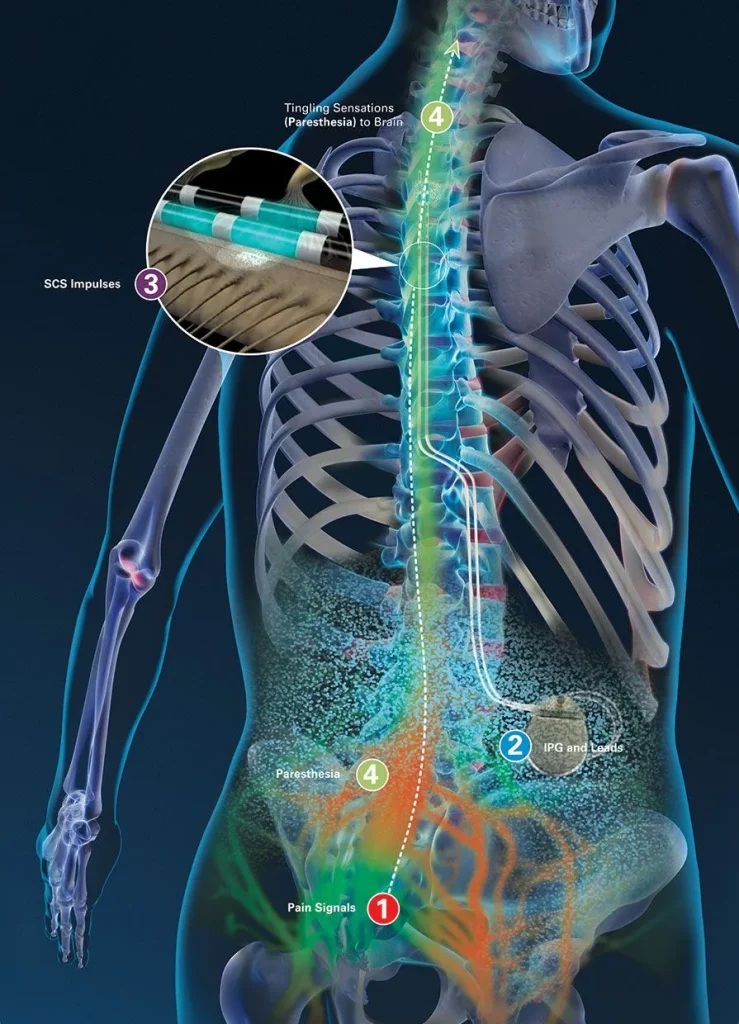
The Boston Scientific spinal cord stimulator is a medical device, which provides electrical impulses directly to the spinal cord. The impulses are supposed to interfere with the pain signals coming from the spine to the brain. Instead of feeling pain, the patient feels tingling sensations (paresthesia) or even gets stimulation at a frequency higher than the point of perception, if talking about more modern devices.
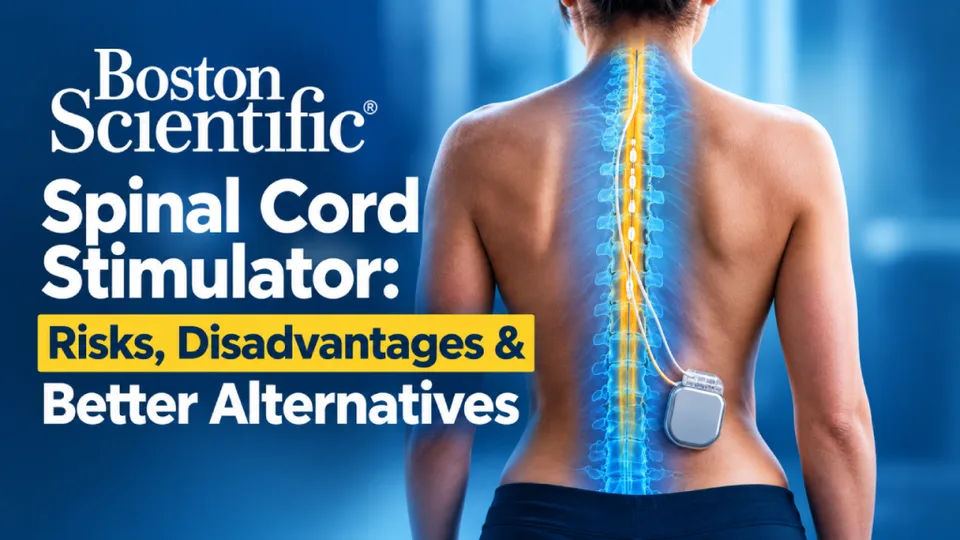
The stimulator includes three major components: the pulse generator, which resembles a pacemaker battery and is implanted under the skin; the leads, which are very thin and insulated wires located in the epidural space; and the hand-held remote that allows adjusting the stimulation parameters.
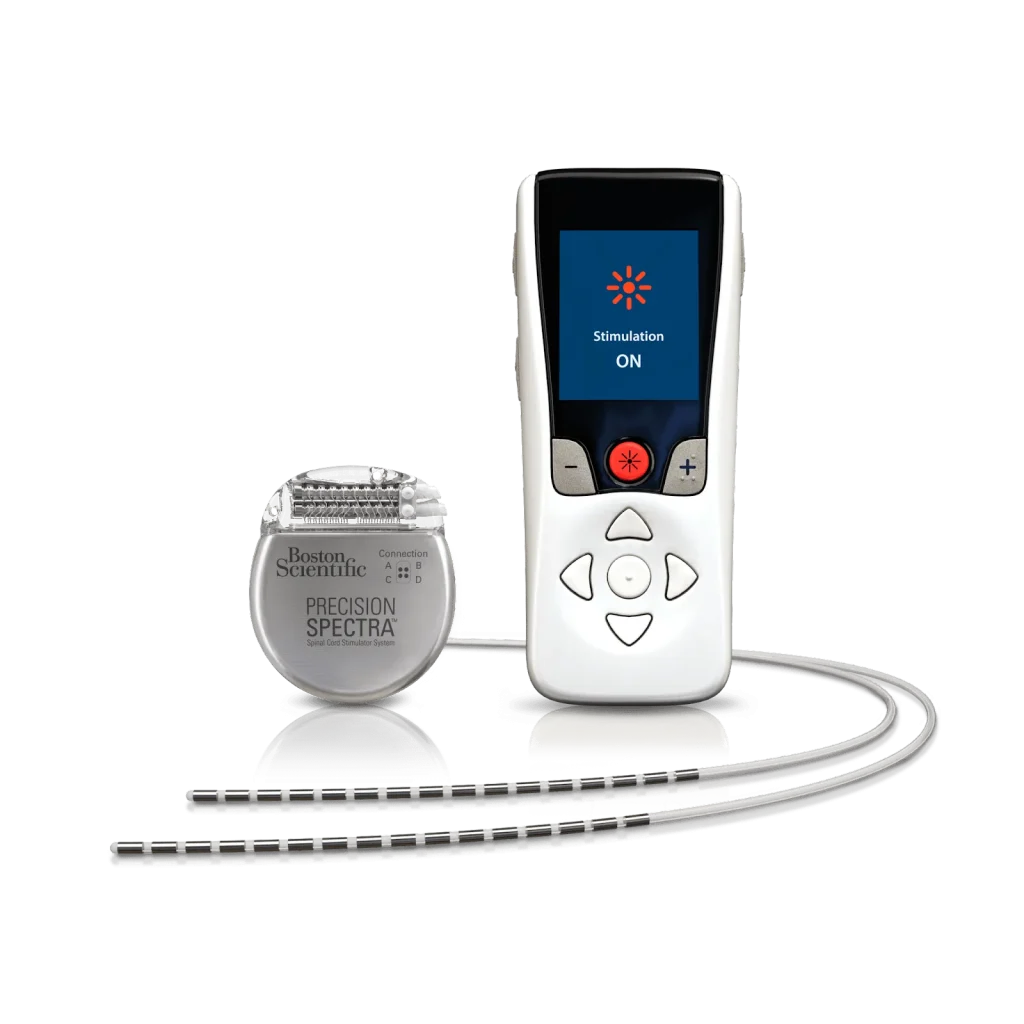
Boston Scientific currently produces the WaveWriter Alpha technology, which has several waveforms. There are both rechargeable and non-rechargeable versions.
What Does a Spinal Cord Stimulator Actually Do?
The most important thing to realize about a spinal cord stimulator is what it doesn’t do. It doesn’t cure the source of your pain.It is incapable of treating a herniated disc, an annular tear, a compressed nerve, or any form of degenerative disc disease. Its only purpose is that of blocking your pain through the application of electrical currents.
Why is this an important point? Because your source of pain is still there and it will get worse over time.
How a Boston Scientific Spinal Cord Stimulator Works
The implantation of a Boston Scientific spinal cord stimulator is a two-stage process.
Stage 1: The Trial Period
Before a permanent device is placed, patients undergo a trial period lasting approximately five to ten days. During this phase, temporary leads are inserted into the epidural space using a minimally invasive percutaneous approach. The leads are connected to an external pulse generator worn on the body. The trial is considered successful if the patient reports at least 50% pain reduction. However, a 2026 meta-analysis found that approximately 16.2% of patients assessed for SCS eligibility did not proceed past the trial phase, indicating that the therapy failed to provide even short-term benefit for a significant portion of candidates. ¹

Stage 2: Permanent Implantation
Once the test succeeds, the patient will be put under a second operation where the permanent device will be inserted. The pulse generator is placed under the skin, mostly below the lower back or in the buttocks area, while the permanent leads are placed inside the epidural space near the spinal cord.
Where Is the Device Implanted?
The pulse generator will be implanted subcutaneously in the area of the upper buttocks or lower flanks. The leads are inserted into the epidural space and placed posterior to the spinal cord in the level of the vertebra that matches the patient’s pain pattern.
Risks and Complications of Boston Scientific Spinal Cord Stimulators
The clinical literature documents a wide range of complications associated with spinal cord stimulator implantation. These risks apply broadly to SCS devices, including Boston Scientific models, and should be carefully considered by any patient evaluating this therapy.
Complication Rates in the Medical Literature
According to an article that appeared in Current Pain and Headache Reports in 2023, the total percentage for complication related to spinal cord stimulation lies between 31.9% and 43%. ² The most common complication reported is electrode migration, where leads get shifted from their initial position, causing loss of pain coverage or pain in other unwanted regions. Other complications recorded are hematoma formation, infection of the surgical wound, leakage of cerebrospinal fluid, and sometimes even injury to the spinal cord. ²
A 2025 retrospective study published in PMC examined percutaneous tonic spinal cord stimulator outcomes and found that 34.95% of patients required revision surgery, and 27.86% of patients developed unpleasant paresthesia, a complication in which the stimulation itself becomes a source of discomfort rather than relief. ⁴ The same study found that an estimated 30% of SCS devices are eventually explanted (surgically removed), with loss of efficacy being the most common reason, accounting for 26.6% to 43.9% of all explantations. ⁴
Documented Side Effects
Patients with implanted spinal cord stimulators may experience a range of adverse effects, including:
- Lead migration: The most common hardware complication, reported in approximately 13.2% of cases ³, resulting in loss of therapeutic stimulation or painful misdirected impulses
- Infection: Surgical site infections can occur around the leads, generator pocket, or both, sometimes requiring device removal
- Hardware malfunction: Device resets, battery failures, lead fractures, and connection failures can cause sudden loss of therapy or unexpected electrical stimulation
- Unpleasant paresthesia: Uncomfortable tingling, jolting, or shocking sensations, reported in more than one in four patients in one study ⁴
- Pain at the implant site: Persistent discomfort at the generator pocket or lead anchor sites
- Cerebrospinal fluid leak: Spinal headaches resulting from inadvertent dural puncture during lead placement
- Epidural hematoma: A rare but serious complication that can compress the spinal cord and require emergency surgery
- Allergic reaction: Immune response to the implanted materials
- Muscle weakness or neurological deficit: If leads are positioned too close to certain nerve structures
Boston Scientific Device Recalls
The spinal cord stimulators produced by Boston Scientific have faced numerous recalls from the FDA in the past years. Recently, in July 2024, Boston Scientific conducted a Class 2 recall for its WaveWriter Alpha Spinal Cord Stimulation System, covering around 77,674 units of the device across the globe. The issue with the product was found out to be associated with software design that led to resetting of the pulse generator while charging, causing temporary loss of stimulation and discomfort due to stopping and starting of the therapy. ³
Moreover, in September 2026, the FDA recalled the Boston Scientific Infineon CX Lead because the body of the lead was found to be subjected to mechanical stress in the area of anchoring, causing insufficient stimulation and possible lead replacement through surgery. ⁵
This clearly explains the risks involved with reliance on electronic devices for pain control.
FDA Adverse Event Data
However, this list is far from being limited to individual recalls of the devices. Data collected by FDA from the Adverse Events database shows that during the years 2016 to 2020 there have been 107,728 adverse events in relation to spinal cord stimulators, of which 428 led to death of the patients. ³ While each event does not necessarily mean an injury caused by the device itself, the scale of the problem is definitely considerable.
Does a Spinal Cord Stimulator Cure Pain?
No. Spinal cord stimulators do not cure chronic pain. This is perhaps the most important fact for patients to understand before considering implantation.
A spinal cord stimulator manages pain by electrically disrupting pain signals. It does not repair a damaged disc, remove inflammatory tissue, decompress a pinched nerve, or address any other structural pathology in the spine. The moment the device is turned off, removed, or ceases to function, the underlying pain source remains.
A 2026 systematic review and meta-analysis quantified the long-term durability of SCS therapy and found that at three years post-implantation, approximately 44.7% of patients with permanent implants had either undergone explantation or were reporting less than 50% pain relief. ¹ This means that for nearly half of all patients, the device either stopped providing meaningful benefit or was surgically removed within just three years of being placed.
The Parallel to Opioid Pain Management
There is an alarming similarity between the case involving spinal cord stimulators and that of the opioids. The 1980s and 1990s saw the promotion of opioids for chronic pain management. The sales agents persuaded doctors to prescribe these drugs while they got paid for doing so. The patients developed tolerance to the medication, taking more and more of them.

A similar pattern has emerged with spinal cord stimulators. Device manufacturers have invested heavily in marketing SCS devices to pain management physicians, offering financial incentives and practice-building support. Unlike board-certified neurosurgeons who specialize in identifying and treating the structural source of spinal pain, many pain management physicians who implant these devices are not trained to perform the definitive corrective procedures that address the root cause. The result is a growing population of patients with implanted devices that mask symptoms rather than resolve them, and that carry substantial complication and failure rates.
As reporting by major media outlets has documented, the financial relationship between device manufacturers and implanting physicians has driven rapid growth in SCS implantation volumes, often without adequate disclosure of long-term efficacy data to patients.
Living with a Boston Scientific Spinal Cord Stimulator
If you already have a Boston Scientific spinal cord stimulator, the following information addresses common questions about daily life with the device.
Is It MRI Compatible?
Boston Scientific’s present-day SCS units feature MRI conditional labels, which imply that it is possible to perform an MRI scan of the system on the patient under certain conditions specified by the manufacturer. Nevertheless, it is critical for you to let your radiologist and MRI technologist know about your neurostimulation unit prior to conducting any kind of scanning procedure.
Will It Set Off Airport Security?
The device will not typically trigger airport metal detectors. However, Boston Scientific recommends carrying your device identification card when traveling. Patients should request a hand inspection rather than passing through full-body scanners, as the effects of advanced imaging technology on the device have not been fully evaluated.
Can I Bathe, Shower, or Swim?
When the wounds that have been made through surgery heal. It is safe to bathe and shower again. However, note that submerging the implant in water, such as swimming and soaking in a hot tub. Should be discussed with your doctor.
What If It Stops Working?
In the event that your spinal cord stimulator no longer relieves pain or you feel unexpected sensations. You must contact the surgeon who implanted it as soon as possible. The problem could be a depleted battery, a movement of the leads, a mechanical failure of the stimulator, or a software problem. Your Doctor can give you an answer to this question.
Can It Be Removed?
Yes, spinal cord stimulators can be surgically removed (explanted). This is a separate surgical procedure that carries its own risks, including infection, bleeding, and potential nerve injury. As noted above, an estimated 30% of SCS devices are eventually removed. ⁴
Alternatives to the Boston Scientific Spinal Cord Stimulator
For patients with chronic back and neck pain caused by structural spinal pathology such as herniated discs, annular tears, or nerve compression, there are treatments that address the actual source of pain rather than simply masking symptoms.
Deuk Laser Disc Repair® (DLDR)
The Deuk Laser Disc Repair® procedure is the best available minimally invasive laser spine surgery. Created by Dr. Ara Deukmedjian, the renowned board-certified neurosurgeon who is also the founder of the Deuk Spine Institute, the DLDR treatment targets the actual cause of discogenic pain with the help of a highly powerful Holmium YAG laser.
How DLDR Works:
This procedure needs just one incision which will not be more than a quarter of an inch long. The next step involves inserting a hollow tube or cylindrical dilator into the body to make a path to the injured disc without any cuts in muscles or bones. An endoscopic camera enables surgeons to visualize what is going on inside the body during the procedure where the laser beam cuts out the damaged disc tissues. The surgical procedure will take one hour to perform.
Why DLDR Is Different:
- Treats the cause, not just symptoms: Unlike a spinal cord stimulator, DLDR removes the damaged disc material and inflammatory tissue that generate pain signals at their source
- No metal hardware implanted: Nothing is left behind in your body. There is no device to malfunction, no battery to recharge, and no recalls to worry about
- No post-operative narcotics required: Most DLDR patients do not need opioid medications after surgery
- Preserves spinal motion: DLDR does not fuse vertebrae or alter the biomechanics of the spine, preserving natural range of motion and avoiding adjacent segment disease
- Proven track record: Dr. Deukmedjian has reported an average of 99% pain relief for treated pain sources across more than 2,700 procedures, with a complication rate of 0.01%
Deuk Plasma Rhizotomy® (DPR)
Deuk Plasma Rhizotomy® is an out-patient surgery where the plasma energy is used to disrupt the tiny nerves which transfer the pain impulses from the arthritis affected joints. It offers pain relief in cases where the chronic pain is due to the arthritis affected facet joints and not from any damaged disc.
Conservative Treatment Options
Before any surgical intervention, most patients benefit from a thorough trial of conservative management, which may include:
- Physical therapy: Targeted strengthening, flexibility training, and postural correction to reduce mechanical stress on the spine
- Medications: NSAIDs, muscle relaxants, or neuropathic pain medications to manage symptoms during rehabilitation
- Epidural steroid injections: Targeted delivery of anti-inflammatory medication to reduce nerve root inflammation and provide temporary relief
- Lifestyle modifications: Ergonomic adjustments, weight management, and stress reduction techniques
The conservative treatment works best when it’s based on an exact diagnosis. MRI assessment made by an experienced spine specialist is necessary in order to determine the exact structural reason of your problem and prescribe proper treatment.
The Bottom Line
Boston Scientific spinal cord stimulators do not cure chronic back and neck pain. They mask pain signals without treating the underlying structural damage in the spine. Clinical evidence demonstrates that nearly half of all SCS patients experience device removal or inadequate pain relief within three years ¹, the overall complication rate ranges from 32% to 43% ², and FDA data reflects more than 100,000 adverse event reports including hundreds of patient deaths over a five-year period. ³
Our approach to successful pain management begins with making a proper diagnosis and then treating the problem at its source. The laser spine surgery at Deuk Spine Institute can help to alleviate herniated disc, sciatica, bulging disc, spinal stenosis, and other types of conditions that cause constant pain without the use of metal, without the need for a fusion, and without any risk of an electrical device implantation.
If you have a spinal cord stimulator or suffer from one that doesn’t give enough relief, ask for a free MRI evaluation to see if your condition can be successfully treated by a definitive minimally invasive procedure.
107,728 adverse events. 77,674 units recalled. Your spine deserves better
No device. No recalls. No recharging.
Just the pain—gone.
A spinal cord stimulator masks pain signals while the damaged disc keeps deteriorating. Nearly half of SCS patients lose adequate relief within three years. Deuk Laser Disc Repair® removes the damaged tissue that generates pain—permanently—with nothing left inside your body.
complication rate
device removed by yr 3
revision surgery
- Masks pain signals with electrical pulses
- 32–43% complication rate
- ~35% revision surgery rate
- Battery replacements, software recalls
- Disc damage continues to progress
- Removes the damaged disc tissue at its source
- 0.01% complication rate
- 99% pain relief across 2,700+ procedures
- No hardware left in your body
- Same-day outpatient, no narcotics
Pain from arthritic facet joints instead of a damaged disc? Deuk Plasma Rhizotomy® delivers permanent facet relief—no implanted device required.
Deuk Spine Institute · Board-certified neurosurgeon · No device, no fusion, no narcotics
FAQ
How effective are spinal cord stimulators for long-term pain relief?
However, the studies regarding the efficacy of SCS for the long term remain contradictory. Although there are some cases where the use of SCS provides a patient with noticeable alleviation of pain symptoms. According to a systematic review and meta-analysis conducted in 2026. In all, 44.7% of the participants have either had their devices removed or pain relief less than 50%. ¹ There is also some data indicating that complications in general have been from 31.9% to 43%, and around 35% of revision procedures. ² ⁴
What is the difference between a spinal cord stimulator and a treatment that cures the pain?
Spinal Cord Stimulator disrupts the pain messages that run between the spine and the brain. It does not fix the problem of the damaged disc. Neither does it reduce the inflammation or decompress the spine. The root cause is still there. With a technique such as the Deuk Laser Disc Repair® the herniation is removed. As a result, pain impulses are stopped at their root.
Has the Boston Scientific spinal cord stimulator been recalled?
Yes. The Boston Scientific recalled its WaveWriter Alpha spinal cord stimulators with 77,674 units under Class 2 recall in July 2024 due to the software defect leading to device reset and interruption of treatment while charging the device. ³ Another recall was made for the Infinion CX Lead in September 2026 due to mechanical stress limiting stimulation. ⁵ Patients are advised to verify whether they possess a defective device from the recall database of the FDA.
Can a spinal cord stimulator be removed if it stops working?
Yes, the removal of the device is possible through a process called explantation. Nonetheless, explantation itself is another surgical process that has inherent dangers such as infections, bleeding, scarring, and possibly nerve damage. Studies show that about 30% of all spinal cord stimulators undergo the explantation process mostly because of lack of effectiveness. ⁴
Who should I consult before getting a spinal cord stimulator?
Before undergoing a procedure involving the spinal cord stimulator, be sure to get a second opinion from an independent board-certified neurosurgeon or spine surgeon, one who will go through your MRI and medical history, determine the specific structure that is causing your pain, and outline all the different treatment options open to you, some of which include minimally invasive treatments aimed at correcting the underlying problem. A thorough second opinion may be what you need to make an informed decision. Deuk Spine Institute offers a free MRI evaluation service for you to start with.
Sources
View Sources
- Bikson M, et al. “Long Term Pain Reduction and Explantation Rates of Spinal Cord Stimulation: A Systematic Review and Meta-Analysis.” Neuromodulation, 2026. PubMed PMID 42573547
- Current Pain and Headache Reports (2023). “Complications of Spinal Cord Stimulation.” doi:10.1007/s11916-023-01190-7
- FDA MAUDE Database; Boston Scientific Recall Notices; reported adverse event data 2016–2020. FDA Medical Device Recalls
- PMC (2025). “Uncomfortable Paresthesia and Dysesthesia Following Tonic Spinal Cord Stimulator Implantation.” PMC12190327
- FDA (September 2026). “Spinal Cord Stimulator Recall: Boston Scientific Removes Infinion CX Lead.” FDA.gov