By Dr. Ara J. Deukmedjian, MD
Board Certified Neurosurgeon
Medically reviewed on October 15, 2026
Disclaimer: The information provided here is, for purposes only. It is not advice. Speak with your doctor about your treatment.
Key Points
✓ Pain in the spine is caused by a number of anatomical structures, namely intervertebral discs, facet joints, paraspinal muscles, ligaments, nerve roots, and sacroiliac joints.
✓ The vast majority of patients improve with conservative treatment, which involves specific physical therapy, exercises, postural correction, and modifications in their lifestyle.
✓ Updated 2025 guidelines by The BMJ discourage the use of various injection techniques and radiofrequency ablation in chronic axial spine pain due to poor clinical effect. 3
✓ Controlled exercise routines remain the best proven treatment modality for chronic lower back pain based on recent network meta-analyses. 2
✓ Surgery can be considered when there is a confirmed imaging diagnosis of a structural pathology consistent with clinical findings, and all other treatments have been tried. 5
✓ Minimally invasive endoscopic techniques like Deuk Laser Disc Repair® enable immediate discharge without hardware or fusion.
What Is Spine Pain?
Spine pain can be described as pain that comes from the back bones. The vertebral column has three major sections. The cervical spine, thoracic spine, and lumbar spine. Pain can originate in one section of the spine or extend to the shoulders, arms, hips, buttocks, or legs as a result of irritation or compression of the nerve root.
The vertebral column plays three major biological roles in the body. It supports the upright position of the human body. It enables the body to move in multiple directions. Its role is to protect the spinal cord. A spine injury is an injury, infection, damage or deformity that happens in the spine at any joint of discs, ligaments, nerves or muscles and it causes pain. A spine injury can affect daily activities such, as walking, sleeping, lifting, driving and sitting.
How Spine Pain Develops
Pain in the spine is generally multifactorial. More than one structure can contribute to a particular episode. The structures commonly reported to be the pain generators include:
- Intervertebral discs
- Facet joints
- Paraspinal muscles
- Spinal ligaments
- Nerve roots and dorsal root ganglia
- Sacroiliac (SI) joints
In disc-related conditions, mechanical stress or degeneration may result in an annular tear, a localized protrusion, or even a herniation. Disc material displacement may then lead to a localized inflammatory response and compression of the neural tissue. This leads to either axial back pain or radicular pain extending into the limbs. It should be stressed, however, that an abnormality found in the MRI does not necessarily mean a causal relationship. Imaging should always be correlated with symptoms. 1
The Three Spine Regions Explained
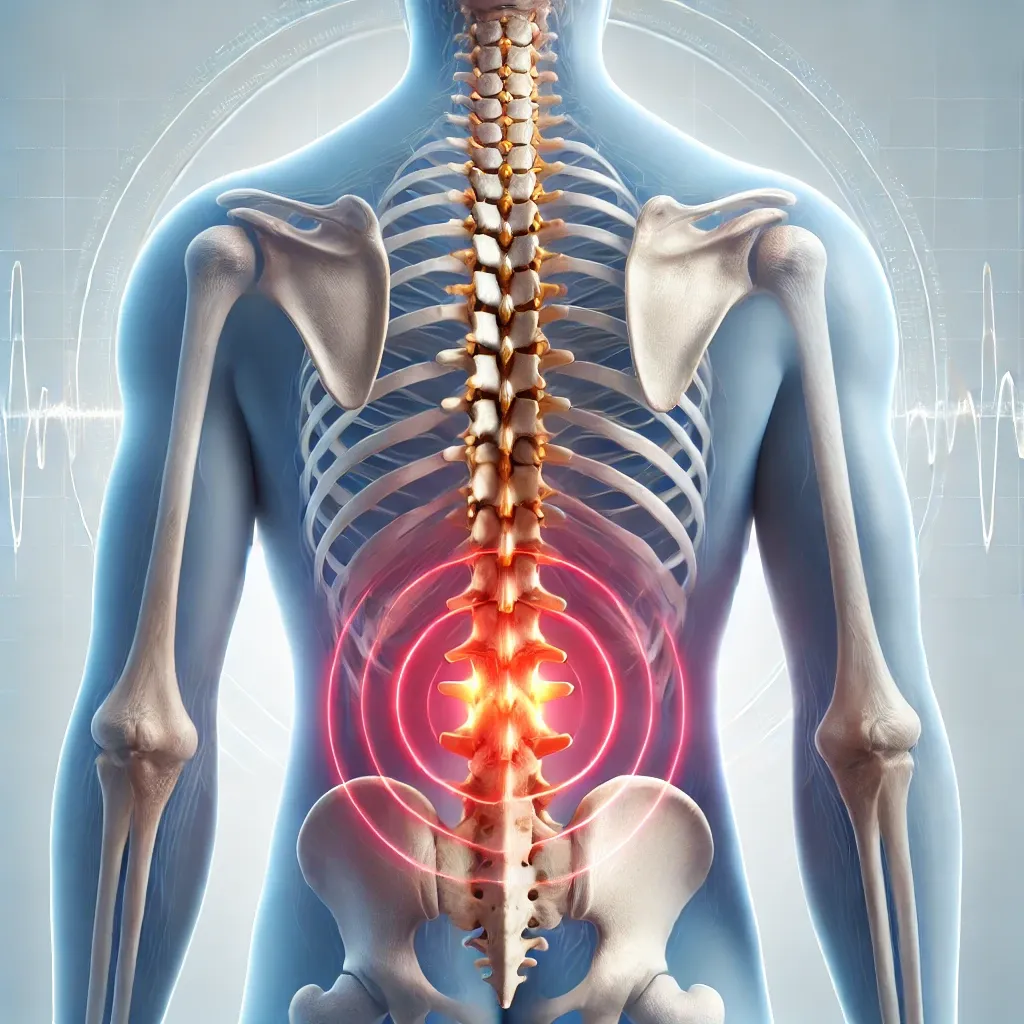
The vertebral column is anatomically divided as follows:
- Cervical spine (C1–C7): Supports the head and allows the greatest range of motion. Common site for whiplash injuries and disc herniation.
- Thoracic spine (T1–T12): Anchored by the rib cage, which makes this segment the most rigid and least prone to mechanical injury. Pain in this region may indicate referred visceral pathology.
- Lumbar spine (L1–L5): Bears the greatest axial load. Most frequent site of chronic back pain and disc degeneration.
What Causes Spine Pain?
A wide variety of diseases may cause spinal pain. The most commonly seen cases are the following:
Muscle strain caused by lifting, twisting, sitting for prolonged periods, or exerting sudden force.
- Ligament strain: caused by overstretching or sudden movements.
- Degenerative disc disease and disc herniation: either due to aging or injuries.
- Arthropathy of the facet joints: caused by osteoarthritis of the posterior joints.
- Spinal stenosis: a condition where there is narrowing of the spinal canal or the neural foramina.
- Scoliosis and kyphosis: abnormal curvatures affecting biomechanics.
- Osteoporosis and compression fractures: more common in older people.
- Inflammatory spondyloarthropathies: such as ankylosing spondylitis.
- Severe underlying diseases: such as spinal infection, tumor, or spinal cord injury (less common but should be immediately evaluated).
A 2025 study published in Scientific Reports showed that people with lower back pain had a big drop in how much their lower back could move when they were watched for 24 hours. This was different, from the people who did not have any pain. The study had a reference number. 4
How to Tell If Back Pain Is Muscle or Spine Related
Patients frequently ask how to distinguish muscular pain from a structural spine issue. The clinical features typically differ:
Muscle-related pain tends to:
- Feel sore, achy, or tight
- Worsen with specific movements and ease with rest
- Resolve within a few days to two weeks
- Lack any radiating leg or arm symptoms
Spine-related pain often:
- Produces sharp, shooting, or burning sensations
- Radiates into the limb (sciatica or cervical radiculopathy)
- Persists beyond two weeks
- Comes with neurological signs such as numbness, tingling, or weakness
A thorough physical examination combined with imaging when indicated remains the only reliable way to confirm the pain source.
Warning Symptoms That Require Immediate Care
- There are some warning signs that should prompt one to seek immediate medical attention. These include:
- Loss of control of bowel or bladder functions
- Fevers, chills, or weight loss for no apparent reason
- Numbness in the saddle or groin area (cauda equina syndrome)
- Weakness or paralysis of an arm or leg
- Pain after falling, car accident, or any other injury
- Severe pain at night that is not relieved by rest
How Spine Pain Is Diagnosed
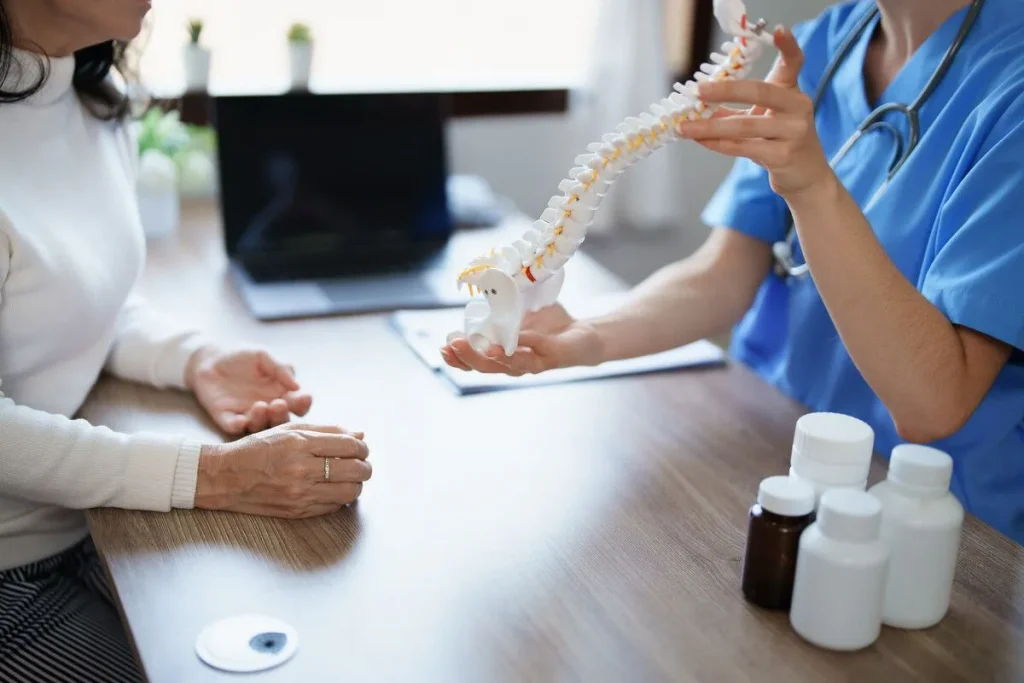
Diagnosis is essential since treatment should aim at the pain generator rather than just the site where pain is felt. Diagnosis usually entails:
- Thorough clinical history: onset, duration, radiation, and aggravating/relieving factors.
- Physical exam: strength testing, reflexes, sensation, and provocation maneuvers.
- Diagnostic studies: MRI, CT scan, or x-ray where there are red flags, radiculopathy symptoms, or treatment failure.
- Specific diagnostic tests: EMG or diagnostic nerve blocks can help identify the pain generator.
Imaging should be used with caution, since degenerative changes that come along with aging often occur in people without symptoms. For more help with longstanding symptoms, please visit our guide to chronic back pain management.
Non-Surgical Treatment Options
In most cases, conservative treatment becomes the basic component of treatment. Current studies confirm the effectiveness of movement-based rehabilitation as the primary treatment for chronic back pain. 2
Physical Therapy
Physical therapy is usually the first suggestion for any new or recurring spinal pain. A well-designed plan can include:
- Selective stretches
- Strengthening activities
- Joint mobilization
- Posture correction
- Education regarding proper body mechanics and ergonomics
The objectives of the treatment are threefold: to lessen the pain, regain functional ability, and decrease the risk of recurrence. New studies have shown that regular participation in a therapy program positively impacts pain levels and physical function in people with chronic lower back pain. 2
Exercise and Active Movement
Exercise continues to be the most empirically-supported treatment for ongoing spine pain. A network meta-analysis conducted in 2025 found that various forms of exercise resulted in reduced pain intensity. This includes Tai Chi, yoga, Pilates, walking exercises, core stabilization, and general stretching programs. 2
This is important since spine pain tends to cause a vicious cycle whereby the pain makes one unable to move around, resulting in stiffness of the spine muscles and limited movements. The most effective exercise would be a customized one that increases movement skills and abilities.
Mindfulness and Stress Management
Practices like meditation and cognitive behavior therapy are good to be considered along with chronic pain management. This is because these practices will not help in altering the physical problem involved here. However, the way one perceives the pain may be changed through these practices.

Nutrition and Lifestyle Modification
There are some aspects of the lifestyle that affect spine health and recovery:
- Maintaining a proper body weight to decrease axial load.
- Giving up smoking since it affects intervertebral discs’ nutrition.
- Having a good night’s sleep.
- Performing regular exercises.
- Having an anti-inflammatory nutrition consisting of natural products.
Changes in nutrition alone will not heal spine pain, however, if they are supplemented by active rehabilitation, they will be helpful.
Injection-Based Procedures
Interventional treatments of pain may be recommended in certain cases if an identified pain generator, e.g. a nerve root, facet joint, or inflamed disc is detected. However, interventional treatment may show varied levels of scientific support and should never be marketed as a magic bullet for all cases.
Strong recommendations against the routine application of several common injection and ablation interventions for treating chronic axial spinal pain were published by the BMJ Rapid Recommendations Panel as of 2025 because of a lack of evidence proving their effectiveness beyond that of placebo. 3
This means that interventional techniques are not contraindicated in any situations, however, patient selection and realistic expectations should be considered.
- Some techniques that can be used under selected conditions include:
- Epidural steroid injection
- Facet joint injection
- Medial branch block
- Radiofrequency ablation
- Selective nerve root block
- Sacroiliac joint injection
When Is Surgery Necessary?
Surgery is rarely the first-line treatment for spine pain. Operative intervention becomes appropriate under specific conditions:
- A clearly identified structural abnormality that matches the symptom pattern
- Persistent nerve root compression confirmed on imaging
- Progressive neurological deficit, such as weakness or sensory loss
- Severe disability that remains refractory to appropriate conservative care
- Spinal instability or deformity requiring correction
The 2025 evidence-based review of surgery for lumbar degenerative diseases noted that success is contingent upon proper selection of the right procedure based on the specific pathology and functional goals of the patient; not the use of one surgical technique for all cases of back pain. 5
Treatment Methods for Surgery
If surgery is required, it will be determined based on the diagnosis made. Some choices include:
Surgical Treatment Options
When surgery becomes necessary, the procedure selected depends on the underlying diagnosis. Options may include:
- Microdiscectomy: removal of herniated disc material pressing on a nerve
- Laminectomy: removal of the bony lamina to decompress neural structures
- Foraminotomy: enlargement of the neural foramen to relieve nerve compression
- Artificial disc replacement: motion-preserving alternative to fusion
- Spinal fusion: permanent joining of vertebral segments (associated with higher complication rates)
- Endoscopic laser procedures: targeted, minimally invasive techniques
At Deuk Spine Institute, we prioritize the least invasive effective option. Whenever appropriate, we recommend Deuk Laser Disc Repair® as the treatment that most directly addresses the root cause of disc-related pain.
Deuk Laser Disc Repair® (DLDR)
Laser spine surgery, at Deuk Spine Institute is an invasive endoscopic technique that helps people who suffer from chronic neck or back pain caused by disc damage. Of choosing conventional open spine surgery Laser spine surgery offers a less invasive option. The technique was invented by Dr. Ara Deukmedjian. Is specifically designed for people who suffer from pain caused by herniated or bulging discs.
How the DLDR Procedure Works
DLDR is performed through an incision measuring approximately 4 millimeters. A high-definition endoscopic camera provides direct, real-time visualization of the affected disc and surrounding anatomy. Using a precision laser, the surgeon vaporizes the inflamed or herniated tissue responsible for pain. Crucially:
- No bone is drilled or removed
- No muscle is cut or stripped
- No hardware, screws, or rods are implanted
- No fusion is performed
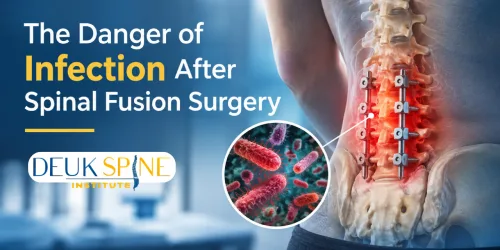
The procedure being totally endoscopic and non-disruptive to supporting structures allows for discharge on the same day. This technique significantly lowers the chances of developing infections following the procedure due to the high infection levels reported among instrumented fusions as mentioned in the previous work on infections following spinal fusions.
Recovery and Prevention
Recovery timelines depend on the diagnosis and the way it is treated. It has been found that most patients have a higher rate of recovery when they remain active and follow their prescribed exercise regime, rather than remaining bedridden.
Some ways to prevent this condition are:
- Maintaining good posture while sitting, standing, and lying down
- Proper lifting technique (lift using your legs, not your back)
- Staying away from smoking
- Maintaining healthy body weight
- Exercising the core, hips, and back muscles
- Handling stress properly
- Getting enough quality sleep
When to See a Spine Specialist
Consult a spine specialist if your pain:
- Persists beyond six weeks of conservative treatment
- Recurs frequently despite therapy
- Interferes with sleep, work, or daily function
- Produces radiating leg or arm symptoms
- Comes with any neurological warning signs
Seek emergency care immediately for red-flag symptoms suggesting nerve damage, cauda equina syndrome, infection, fracture, or malignancy.
Only 5% of disc tissue is diseased. Why remove the whole disc when you can repair it?
Injections mask the pain.
DLDR fixes the disc.
2025 BMJ guidelines now recommend against routine injections and radiofrequency ablation for chronic spine pain—they perform no better than placebo. When a damaged disc is the source, DLDR targets only the 5% of tissue causing your pain through a 4 mm incision and sends you home the same day.
meaningful pain relief
fusion removes it all
removed, no muscle cut
- Injections & ablation: no better than placebo
- Fusion removes the entire disc
- Metal hardware, screws & rods implanted
- 6–12 month recovery
- ~50% meaningful relief from fusion
- Targets only the damaged 5% of tissue
- No hardware, no fusion, no bone removed
- 4 mm incision, same-day outpatient
- Days-to-weeks recovery
- 99% pain relief · 0.01% complication rate
Board-certified neurosurgeon review · No insurance approval required · 100,000+ procedures performed
FAQs
What causes pain most often?
Answer
The common causes are muscle strain, problems with the discs between the bones in the spine, arthritis in the joints of the spine bad movement patterns and changes that happen as people get older. Nerves being irritated swelling in tissues and too much pressure from poor posture also play a big role. 1
How can I tell if back pain is coming from a muscle or from the spine?
Answer
Pain from a muscle usually feels like an ache in one place gets better when you rest and goes away in about two weeks. Pain from the spine often feels sharp or burning spreads into an arm or leg and might come with numbness, tingling or weakness. To find out for sure doctors use imaging. Check the patient carefully.
Is exercise safe when I have pain?
Answer
For people yes. New studies show that exercise is one of the ways to help with long-term back pain as long as the exercise program is made just for the person and gets harder slowly. 2
Are injections always helpful?
Answer
No. A guideline from 2025 in the BMJ Rapid Recommendations said that many common injections and treatments like radiofrequency ablation don’t help much for people with long-term pain in the middle of the back. 3
What causes pain after surgery?
Answer
After surgery pain can come from not taking pressure off a nerve from scar tissue growing from a disc problem coming back from other parts of the spine breaking down from metal parts hurting or from an infection. Infections are more likely when the spine is fused with metal parts as explained in our article about infections after surgery.
How is pain managed after spine surgery?
Answer
Today doctors use a mix of methods to manage pain after spine surgery. This includes medicines that’re not opioids, nerve blocks focused physical therapy, getting up and moving early and other ways like therapy that helps with thoughts and feelings. Procedures that are not big, like DLDR help reduce pain than old ways of doing surgery.
When is surgery truly necessary?
Answer
Surgery is right when a real problem in the spine is found, like a nerve being pressed the spine not being steady or when there is a growing problem with the nerves. This is true when other ways to treat the issue have not worked. 5
Can thoracic spine pain be as serious as lumbar or cervical pain?
Answer
Yes. Even though the middle part of the back is stiffer and not hurt often pain in that area can mean something very serious like a broken bone, an infection, a tumor or a problem from inside the body. Pain, in the middle of the back that’s very bad happens at night or doesn’t go away needs to be checked quickly.
Sources
View Sources
- Cleveland Clinic, Spine structure and function: https://my.clevelandclinic.org/health/articles/10040-spine-structure-and-function
- The BMJ, Commonly used interventional procedures for non-cancer chronic spine pain: https://www.bmj.com/content/388/bmj-2024-079970
- BMJ Group press release, Experts strongly recommend against spine injections for chronic back pain: https://bmjgroup.com/back-pain-recommendations/
- Nature Scientific Reports, Chronic low back pain is associated with a reduction in lumbar movement: https://www.nature.com/articles/s41598-025-04851-2
- PubMed, An evidence-based review of the current surgical treatments for lumbar degenerative disease: https://pubmed.ncbi.nlm.nih.gov/39919297/