
By Dr. Ara J. Deukmedjian, MD
Board Certified Neurosurgeon
Updated: October 22, 2026
Disclaimer: The information within this page is meant for learning only. It is not advice, diagnosis or treatment. Every person’s results can differ. Always talk to a board-certified spine specialist about your own situation before you start, change or stop any treatment. If you feel weakness, lose coordination or lose bowel or bladder control go to emergency medical care right away.
Key Points
✓ A disc bulge at C4-C5 means the disc between the 5th bones in the neck pushes out and can press on the C5 nerve.
✓ Symptoms include pain in the shoulder weakness in the deltoid muscle pain on the outside of the arm and numbness. The hand is usually not affected.
✓ Most patients get better, with care within 6 to 12 weeks.
✓ Surgery may be needed if the weakness gets worse the pain is very bad. If conservative care does not work.
✓ Fusion (ACDF) is not the only option. It ends neck motion and carries an 11% risk of adjacent segment disease.
✓ Deuk Laser Disc Repair® (DLDR): motion-preserving, outpatient, 4–7 mm incision, no hardware, 99.6% success rate.
✓ Always get a second opinion before a cervical fusion.
What Is a C4-C5 Disc Bulge?
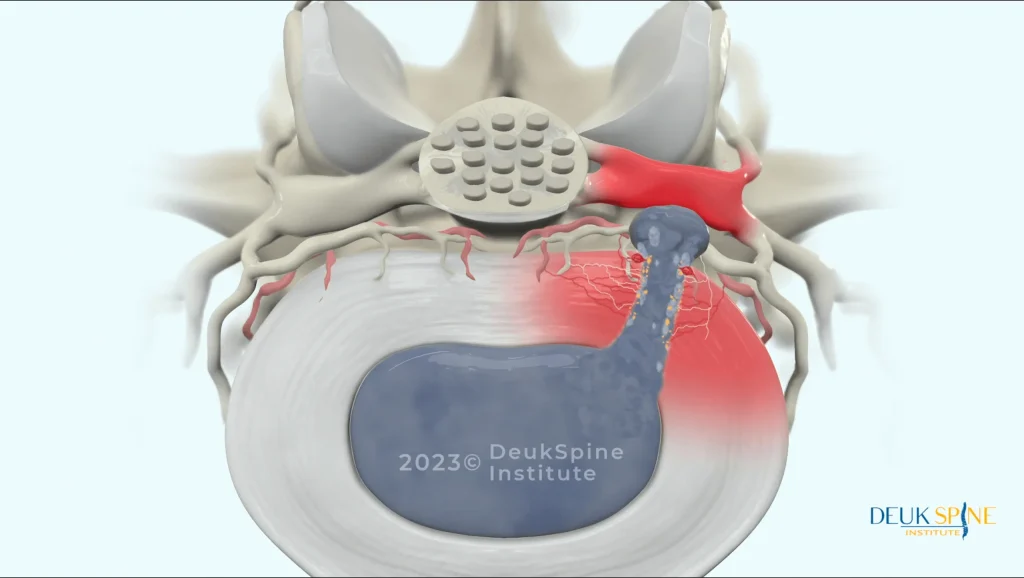
The C4-C5 disc is one of the discs that sits in the middle of the spinal column just between the fourth and fifth cervical vertebrae. You might know that the C4‑C5 disc works, like a weight‑bearing and shock‑absorbing part of your spine. The C4‑C5 disc has two parts: the outer ring called the annulus fibrosus and the inner core called the nucleus pulposus. If the annulus fibrosus gets weaker and stretches much without breaking the C4‑C5 disc can stick out – this is called disc protrusion. If the annulus fibrosus breaks and the nucleus pulposus leaks out that is a disc herniation. 2

A disc bulge extends symmetrically beyond the vertebral margins. The annulus remains intact. Disc protrusion is a focal bulge formed as the nucleus presses against a weakened annulus. The annulus is stretched but not torn. Disc extrusion is when the nucleus breaks through the annulus. Displaced material is still connected to the parent disc. Disc sequestration is when a fragment of disc material separates completely. These fragments often resorb more fully over time because the immune system treats them as foreign tissue. 3
The C4-C5 segment is responsible for carrying ten to twelve pounds of head weight when you sit upright. When you tilt your head forward the C4-C5 segment must support up to forty to sixty pounds. This heavy load, with the natural drying of disc tissue as you age explains why the C4-C5 segment often causes radiculopathy in adults over forty.
C4-C5 Disc Bulge Symptoms
Since the fifth cervical nerve root emerges between the fourth and fifth cervical vertebrae, any protrusion of disc material at this level results in a group of symptoms due to compression or irritation of the nerve.
Shoulder. Weakness of the deltoid muscle. This is the symptom. Patients complain about having a painful sensation in the outer shoulder and difficulty abducting their arm from the body. In severe cases, the shoulder may appear to be drooping. Radiating pain along the arm. It starts at the shoulder, travels down the outer side of the upper arm and sometimes even reaches the thumb side of the forearm. Tingling sensation. It occurs in the area innervated by the C5 nerve, i.e. in the outer shoulder and outer arm. The hand is usually unaffected, unlike carpal tunnel syndrome and lower cervical disc issues. Weakness of the biceps and biceps reflex. It is discovered during examination; patients complain about feeling fatigue when lifting groceries, a child or reaching for something inside a cabinet. It occurs in the part of the neck and gets worse when the neck is stretched or rotated.
Many times C4-C5 issues might result in very bizarre clinical presentations, for instance, chest wall-like pain, headaches of the mid cervical area, difficulty in swallowing, vertigo, stomach upset, or ringing in the ears. 4,5,6 Such unusual combination of symptoms explains well the importance of getting another opinion from another specialist because non-specialists might think that your symptoms could be caused by heart problems, ENT or psychological issues before taking appropriate images of the cervical spine.
One has to understand that not everything shown on an image necessarily correlates with the patient’s complaints. According to different studies using MRIs, there were a lot of adults with disc bulges detected on imaging who had normal discs. On the other hand, a person might have severe pain but no big disc bulge on MRI pictures. That is why I always analyze the MRI results together with the findings during the physical examination.
Causes and Risk Factors
Age-related degeneration is the common cause. Discs lose water content starting in the decade of life becoming thinner and more likely to bulge under normal pressure. 1 Acute trauma like whiplash from motor vehicle collisions falls and high-impact sports can cause an immediate disc bulge or make existing degeneration worse. A 2025 study said that MRI should be done after trauma even when X-rays and CT scans are normal because disc injury is often the only sign causing the patient’s symptoms. 7 Repetitive stress and bad posture such as forward head posture from using phones and computers increases the load on the cervical discs. Long periods in the position and working with arms above the head make the damage worse, over time. Smoking limits blood flow to disc tissue raises body- inflammation and is always linked to faster disc degeneration and poorer results after surgery. Being overweight and having metabolic diseases are connected to body- inflammation and slower healing of tissues. A family history of cervical disc disease is a risk factor that is becoming more understood.
The Importance of an Accurate Diagnosis
The single most important step in managing a C4-C5 disc bulge is getting the diagnosis right. In my experience, many patients spend months or years in failed treatments because the original workup was incomplete.
A complete neurologic examination must include Spurling’s test, the shoulder abduction relief test, strength tests of the deltoid and biceps, sensory tests of the C5 dermatome, and the biceps reflex test. The best diagnostic imaging modality is MRI. MRI shows the size and location of the herniation, the extent of foraminal stenosis, nerve root compression, and spinal cord compression. The recent literature supports the notion that an MRI must be ordered in all cases where there are clinical signs of nerve root compression in the presence of normal X-rays.8 X-ray does not show the disc but is useful in evaluating alignment, disc space height, bone spurs, and instability. The CT scan is done when an MRI cannot be done or when exact bony anatomy is needed. The EMG/NCS will help identify which nerve root is affected and differentiate radiculopathy from peripheral neuropathy such as carpal tunnel syndrome.
Why a Second Opinion Matters
I say this directly because it matters: if the first surgeon you see recommends a fusion for a C4-C5 disc bulge, you owe it to yourself to get a second opinion from a surgeon who performs motion-preserving procedures. Fusion surgeons tend to recommend fusion. Pain management physicians tend to recommend injections. Minimally invasive endoscopic surgeons tend to recommend decompression. The procedure you receive often reflects the training of the first specialist you consult, not what is objectively best for your spine.
Seek a second opinion if:
- Fusion has been recommended without any discussion of alternatives.
- You have progressive weakness in your shoulder or arm.
- Conservative treatment has not helped after 6 to 12 weeks.
- Your surgeon seems rushed, dismissive, or unwilling to review your actual MRI images with you.
Always bring the MRI images themselves, not just the radiology report. The report reflects one radiologist’s interpretation; a surgeon experienced in cervical disc pathology will often see things the report misses.
Conservative Treatment: What Works and What Doesn’t
Approximately 75 to 90 percent of patients with cervical disc herniations improve with comprehensive conservative care within 6 to 12 weeks. 9 Not every patient is a surgical candidate, and not every disc bulge needs surgery.
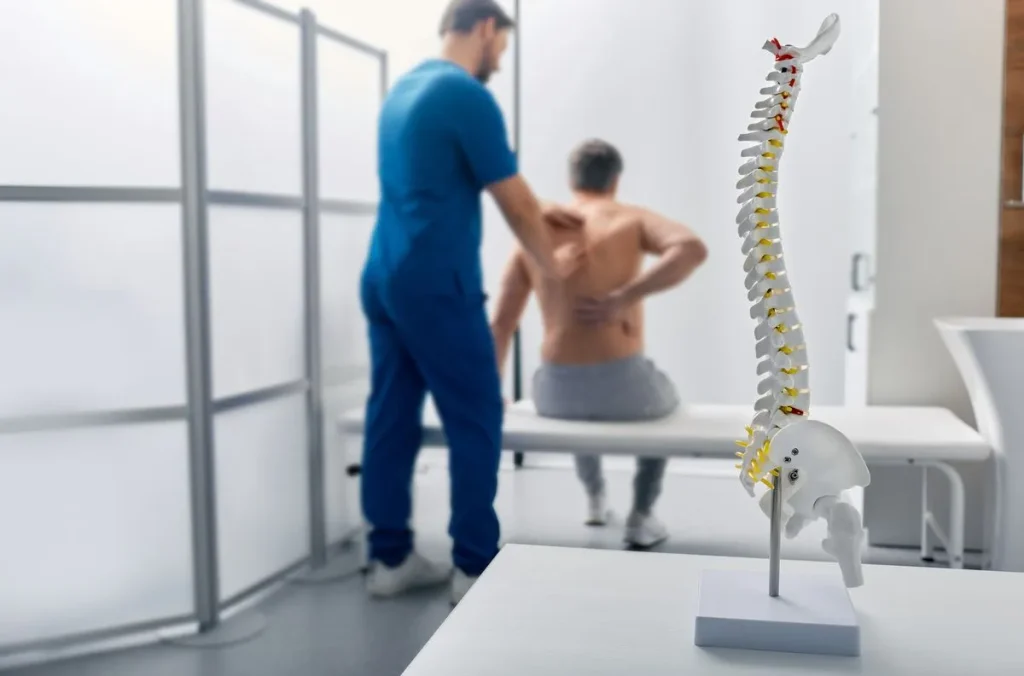
In a systematic review done in 2024, it is stated that structured physical therapy and traction are the first-line conservative management of cervical disc disease. I have seen patients who have benefited from these exercises. Chin tuck exercises, neck flexor muscle strengthening, scapular stabilization, and posture training are the exercises that will help keep the cervical spine healthy. Ibuprofen or naproxen can reduce the nerve root inflammation. Long-term use increases the risk of problems in the stomach, heart, and kidneys. These drugs should not be taken for a long period. Gabapentin and pregabalin help in treating radicular arm pain more effectively than analgesics. They should be taken only for a short period of time to break the pain-spasm cycle. Cervical epidural steroid injections may provide temporary relief to a number of individuals. It lasts from a few weeks to a few months. However, there are some risks involved in this procedure like infection, bleeding, nerve damage, and rarely spinal cord injury. Conservative management should be evaluated after 6 to 12 weeks. If it is still ineffective, continued management is not conservative anymore but prolonged disability.
When Surgery Is Necessary
Surgical evaluation is appropriate when any of the following are present:
- Motor deficit progressing to the shoulder and arm.
- Severe pain that is causing interference with rest, work, or function.
- Unsuccessful management conservatively, over a period of 8 to 12 weeks.
- Cervical Myelopathy – Gait disturbance or hand clumsiness. Cervical Myelopathy is an emergency.
Delaying necessary surgery carries real risks: permanent nerve damage, muscle atrophy that may not recover, chronic pain sensitization, and job or financial loss from extended disability.
Traditional Surgical Options and Their Limitations
For many years, anterior cervical discectomy and fusion (ACDF) has been a preferred surgery for treating spinal disorders. This involves removing the entire disc from between C4 and C5 vertebrae. The two bones are then fused together using a bone graft or cage. It is then fixed using a metal plate and screws. The risks associated with this surgical procedure include increased need for further surgeries due to adjacent segment disease. It affects about 11% of patients and is caused by extra pressure on the discs above and below the fused ones causing rapid wear of the discs.Swallowing difficulties known as dysphagia affect 10% to 50% of ACDF patients. About 5% to 10% of patients also experience difficulties with the fusion process and will require surgery. The recovery process takes about 3 to 6 months during which time the person has limited activity. There is also a risk of hardware failure such as loose screws and plate malposition.
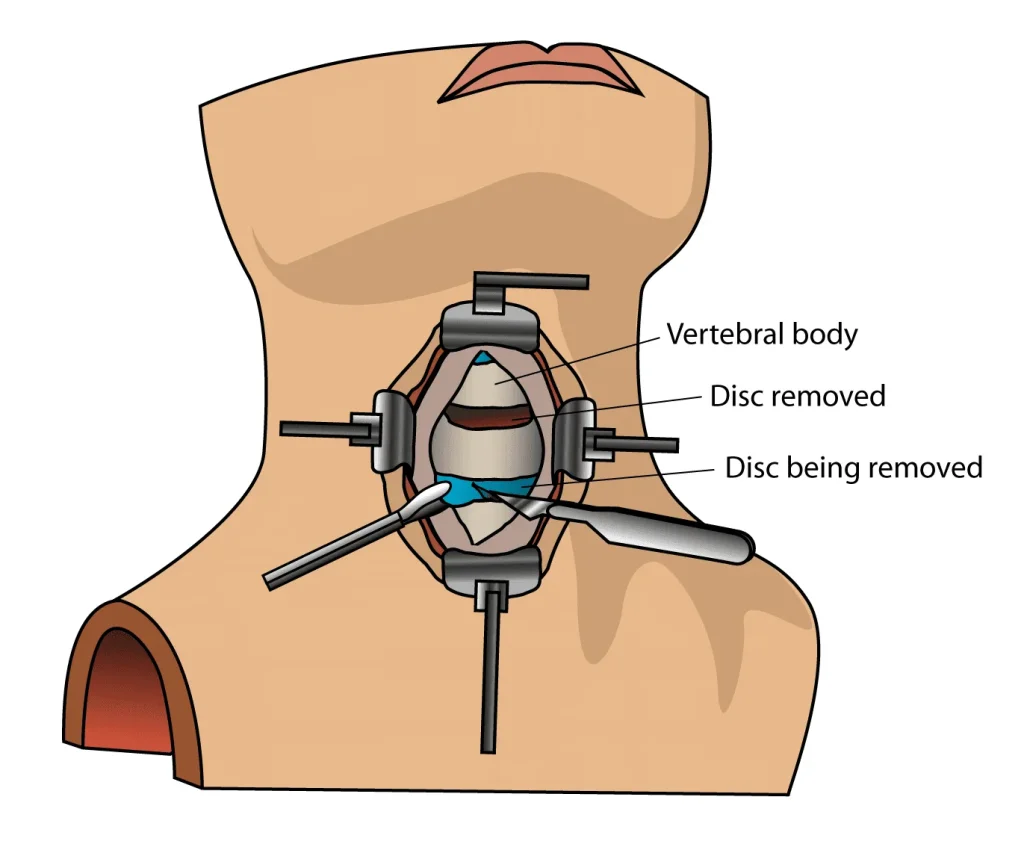
Posterior cervical foraminotomy accesses the spine from the back of the neck and widens the opening through which the C5 nerve root exits. Open versions of this procedure require significant muscle dissection and painful recovery, and the decompression may be incomplete if the pathology sits anteriorly.
Artificial disc replacement removes the native disc and replaces it with a prosthesis. In theory, this preserves motion.In practice device wear, heterotopic ossification and restrictions on who can be a candidate all limit how useful this treatment is in life. The cost is also much higher compared to fusion.
All open cervical surgeries carry the risks: infection, bleeding, nerve injury, spinal cord injury, trouble swallowing, problems with the hardware and the chance that symptoms don’t improve. Infection risk goes up when hardware is implanted. That’s one reason I don’t use fusion or metallic hardware in my practice.
The Better Way: Deuk Laser Disc Repair®
After years of watching patients suffer the long-term consequences of fusion, I developed Deuk Laser Disc Repair® (DLDR) to solve the C4-C5 disc problem without destroying the C4-C5 disc. It is the only cervical procedure I perform for a C4-C5 bulge.
Traditional surgery removes the whole disc because that is the easiest target with the instruments and training surgeons already have. DLDR removes only the small portion of the disc that is actually compressing the nerve, typically 5 to 10 percent of the disc volume, and leaves the rest of the healthy disc intact to continue doing its job.
DLDR is performed through a 4 to 7 millimeter incision, so small it is covered with a Band-Aid at the end of the case. A high-definition endoscope visualizes the surgical field in real time. A precision laser vaporizes only the damaged disc tissue pressing on the C5 nerve root. No fusion. No bone grafts. No metal plates. No screws. No artificial discs. The procedure takes about one hour and is performed under light sedation on an outpatient basis.
Most patients leave the recovery room within an hour after the procedure. They feel immediate relief from their arm pain. They go home on the day need only over-the-counter pain medication if needed and are back at desk work within three to five days. There is no term physical therapy because the natural spinal biomechanics have stayed the same.
DLDR has been written about in peer-reviewed literature. Has a 99.6 percent success rate in getting rid of disc-related pain and a zero percent surgical complication rate.14 Recent studies on minimally invasive endoscopic cervical methods continue to show results that are the same as or better, than traditional ACDF with much shorter recovery times and much lower complication rates.12,13
No fusion, no hardware, no adjacent segment disease from the DLDR, because the healthy portion of the disc is preserved and nothing is implanted. Therefore, no artificial disc is worn out, or fusion hardware to accelerate degeneration of adjacent levels.
The best way to know whether you are a candidate is to have your MRI reviewed. Upload your imaging for a complimentary review and virtual consultation with my team.
ACDF removes the entire disc and locks the segment with hardware. 11% develop adjacent-segment disease within 10 years
Shoulder pain from a C4-C5 disc doesn’t
mean you need a fusion.
The C5 nerve root controls your deltoid and upper arm. When a C4-C5 disc compresses it, you feel shoulder pain, arm weakness, and outer-arm numbness—but the hand is usually spared. ACDF fusion removes the whole disc and replaces it with a cage, locking the segment permanently. DLDR removes only the 5–10% of damaged tissue through a 4–7 mm incision, preserving full cervical motion.
care within 6–12 weeks
disease rate within 10 yrs
100,000+ procedures
- Entire disc removed & replaced with cage
- Segment permanently locked
- 11% adjacent-segment disease risk
- 10–50% experience post-op dysphagia
- 3–6 month recovery
- Only 5–10% of damaged tissue removed
- Full cervical motion preserved
- 99.6% success rate
- 0.01% complication rate
- 4–7 mm incision, desk work in 3–5 days
Board-certified neurosurgeon review · No insurance approval required · 100,000+ procedures performed
FAQs
What are the symptoms of a C4-C5 disc bulge?
Answer
Compression of the C5 nerve root creates a pattern of symptoms. People experience shoulder pain and weakness in the deltoid muscle. There is also pain that goes down the outside of the arm. They may feel numbness and tingling in the outside of the shoulder and upper arm. The biceps muscle is weak. The biceps reflex is less than normal. The hand is usually not affected, which is a sign that thiss C5 radiculopathy and not carpal tunnel syndrome. Neck pain and stiffness are often present. Some people have symptoms, like dizziness, nausea ringing in the ears and trouble swallowing. These symptoms should make a doctor do a check of the neck.
How is a C4-C5 disc bulge treated?
Answer
Treatment begins with an approach. First comprehensive conservative care is tried for six to twelve weeks. This includes therapy, with cervical traction and strengthening of the deep neck flexor muscles. It also involves using NSAIDs, neuropathic pain medications, posture correction and cervical epidural steroid injections. If conservative care does not. If there is progressive weakness surgery may be needed. Traditional surgical options include cervical discectomy and fusion posterior foraminotomy or artificial disc replacement. These procedures have long-term limitations. Deuk Laser Disc Repair® offers an approach. It removes the damaged part of the disc through a small incision of four to seven millimeters. It preserves motion, requires no hardware or fusion and has a published success rate of 99.6 percent. 14
Can a C4-C5 disc bulge heal on its own?
Answer
Many C4-C5 disc bulges get better without surgery. The bodys natural healing process takes over. Acute inflammation goes down. The immune system can absorb some of the displaced disc material small fragments that have broken off. The nervous system also adjusts over time. This is what we call healing.. Healing does not mean the disc returns to how it was before the injury. The underlying disc degeneration remains. That is why symptoms often come back. If symptoms last longer, than 6 to 12 weeks despite conservative treatment or if weakness gets worse at any time then it’s time to consider surgery. A surgical evaluation is recommended in these cases.
How long does recovery take after C4-C5 surgery?
Answer
Recovery depends entirely on which surgery is performed. ACDF requires 1 to 2 days in the hospital, 3 to 6 months for complete bony fusion, several weeks of narcotic pain management, and 4 to 6 weeks of restricted activity before returning to desk work. Posterior foraminotomy requires 8 to 12 weeks of recovery with significant postoperative pain from muscle dissection. Deuk Laser Disc Repair® is a same-day outpatient procedure; most patients walk out of recovery with immediate pain relief, return to desk work in 3 to 5 days, and reach complete healing in 2 to 3 weeks with no long-term activity restrictions.12
What is the difference between a disc bulge and a disc herniation?
Answer
A disc bulge sticks out evenly past the edge of the disc. The tough outer layer, called the annulus fibrosus is still whole. A herniation is different. It can be a protrusion, an extrusion or a sequestration.. In all these cases the annulus has actually ripped, letting the soft inner part of the disc push out. This kind of damage often causes nerve root irritation and might make someone need surgery sooner.. Whether it’s a disc bulge or a herniation the usual first step is to try non-surgical treatment. Surgery only comes into play if the conservative care doesn’t help or if nerves are in danger. 2
Should I get a second opinion before cervical spine surgery?
Answer
Yes. Cervical spine surgery is a decision that will affect your neck for the rest of your life. Fusion is irreversible. Hardware stays in you. Adjacent segment degeneration is a real long-term consequence. In my practice, I see a steady flow of patients who were told fusion was their only option when, in fact, they were excellent candidates for a motion-preserving alternative. A meaningful second opinion comes from a surgeon with different training and a different procedural toolkit than the first; a second fusion surgeon will usually confirm what the first fusion surgeon said. Deuk Spine Institute offers complimentary MRI reviews and virtual consultations with no cost or obligation.
What activities should I avoid with a C4-C5 disc bulge?
Answer
In the acute phase do not lift anything that weighs more than 10 to 15 pounds. Avoid overhead pressing. Stay away from running and contact sports. Do not hold your head in a position for a long time. Also avoid any jerking movements of the neck. Walking, swimming using freestyle and backstroke, riding a bike and doing gentle yoga are usually okay. Stop sleeping on your stomach. If you undergo DLDR, you can typically return to full activity within weeks with no permanent restrictions, because natural spinal mechanics are preserved. If you undergo fusion, some activity restrictions may be permanent in order to protect adjacent levels from accelerated degeneration.
Is Deuk Laser Disc Repair® FDA cleared and published in peer-reviewed literature?
Answer
Yes. DLDR is performed using FDA-cleared instrumentation and has been documented in peer-reviewed medical literature.14 It is not experimental; it is an established, outpatient procedure with more than 100,000 cases performed, a 99.6 percent success rate in treating the targeted pain source, and a published 0.01 percent complication rate.
Sources
View Sources
- https://pubmed.ncbi.nlm.nih.gov/20404946/
- https://pubmed.ncbi.nlm.nih.gov/24768732/
- https://pubmed.ncbi.nlm.nih.gov/28072796/
- https://pmc.ncbi.nlm.nih.gov/articles/PMC4522454/
- https://www.thelancet.com/journals/lancet/article/PIIS0140-6736(20)32027-4/
- https://pmc.ncbi.nlm.nih.gov/articles/PMC6690080/
- https://pmc.ncbi.nlm.nih.gov/articles/PMC12113928/
- https://pubmed.ncbi.nlm.nih.gov/23963016/
- https://journals.lww.com/jcjs/fulltext/2017/08020/management_of_cervical_monoradiculopathy_due_to.10.aspx
- https://pmc.ncbi.nlm.nih.gov/articles/PMC12242731/
- https://deukspine.com/blog/neck-surgery-c5-c6-c7-recovery-time-and-advantages/
- https://www.mdpi.com/2077-0383/13/7/2122
- https://jss.amegroups.org/article/view/4838/
- https://pmc.ncbi.nlm.nih.gov/articles/PMC3683169/
- https://deukspine.com/blog/best-sleeping-positions-pillows-neck-pain-relief/
- https://deukspine.com/blog/best-office-chairs-for-herniated-disc/
- https://pubmed.ncbi.nlm.nih.gov/20052961/