By Dr. Ara J. Deukmedjian, MD
Board Certified Neurosurgeon
Updated On Oct 13, 2026
Disclaimer: The information provided herein is for educational purposes only and is not to be taken as medical advice. Speak with your healthcare professional about your treatment.
Key Points
✓ There is a 33% increased risk of postoperative infections for spinal fusion surgeries compared to nonfusion surgeries.²
✓ The top causes of spinal infections include Staphylococcus aureus & Staphylococcus epidermidis.³ ⁴
✓ Infections can be classified as superficial or deep.⁵
✓ SSIs are either superficial (skin, subcutaneous tissue) or deep (muscle, bone, disc, epidural space).⁵
✓ Deep infections after instrumented fusion can appear up to a year post-op.⁶
✓ Discitis occurs in 2–5% of fusion patients, rising to 8.5% with instrumentation.¹⁰
✓ Fever, incision drainage, new weakness, or loss of bowel or bladder control after fusion is a medical emergency.
✓ Deep SSIs typically require 6+ weeks of IV antibiotics and often hardware removal.
✓ Deuk Laser Disc Repair® uses a 4 mm incision with no implanted hardware eliminating the main source of deep spinal infection.
✓ DLDR® reports a 99% pain-relief rate and a 0.01% complication rate across 100,000+ procedures.
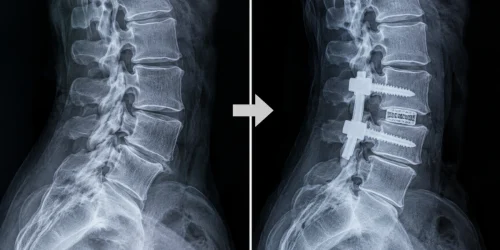
Infection is the problem that is least mentioned before the patient signs his or her consent for a spinal fusion surgery. Infection may easily take a surgery that was initially expected to last six weeks into an annual experience. Spinal fusion itself is a big operation. Which involves the placement of screws, rods, plates, and interbody cages. Hardware placement increases the probability of infections occurring because the presence of surfaces for bacteria growth becomes harder to control with antibiotics alone.² ⁷ If your doctor proposes spinal fusion, or you had spinal fusion and now suffer from fever and incision drainage. You should be told what the scientific research says about surgery infections.
Why Spinal Fusion Carries a Higher Infection Risk
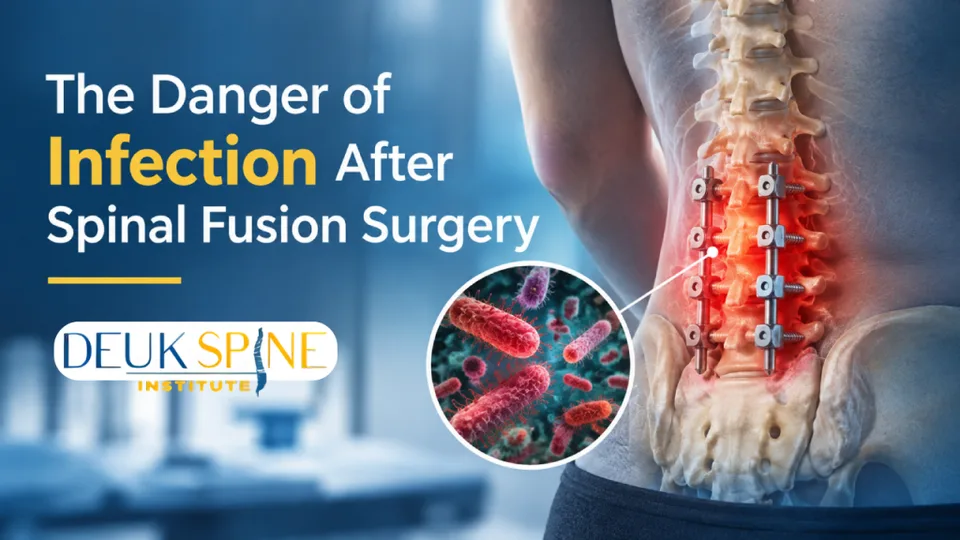
Any surgical incision is inherently an area where microbial invasion can take place. Spinal fusion procedure carries an even greater risk for three reasons: long incision, large amount of muscle and soft tissue retraction, and implanting foreign substance.² Hardware provides a surface where bacteria can develop biofilm. A protective coating making the organism immune to attack from the immune response and antibiotics.⁸ One study comparing the incidence rates found a 28% greater SSI risk in cases where spinal instrumentation was performed compared to those without hardware and 33% greater SSI risk in spinal fusion vs. spine surgeries.²
What Causes Infection After Spinal Fusion
Postoperative infections are caused by microorganisms that breach the body’s natural defenses during or after surgery. The sources are consistent across spine centers worldwide.
Bacteria: The Primary Culprits
Spinal SSI is largely caused by bacteria. The most common microorganisms are Staphylococcus aureus that are normally found on the skin and nasal cavity of many healthy individuals and Staphylococcus epidermidis that has an excellent ability to colonize medical devices. Gram negative bacteria like E. Coli and Pseudomonas aeruginosa can also be identified, especially in individuals who have been in the hospital for an extended period of time.
Fungi: Rare but Serious
These infections are rare but can happen. Certain species such as Candida albicans are normally found in individuals whose immune system is compromised, or who are suffering from diabetes mellitus, and have had long periods of broad-spectrum antibiotics.
Where the Pathogens Come From
- The patient’s own flora. The most common source. Bacteria from the skin, nasal passages, or gastrointestinal tract migrate into the surgical wound.⁴
- The operating room environment. Air, surfaces, and instruments can harbor organisms despite rigorous protocols.
- The surgical team. A rare source due to strict sterile technique, but documented.
- Postoperative contamination. Dressing changes and wound exposure before full epithelialization can introduce bacteria.
The Two Main Types of Spinal Surgical Site Infections
Infections following spinal surgery are divided based on their depth. The significance is that infections on the surface are treated with oral antibiotic therapy while deeper infections involving the device almost always necessitate going back into the operating room.⁵
1. Superficial Wound Infections
A superficial SSI appears in the skin and subcutaneous tissues directly underneath it. A superficial SSI develops within 30 days post-surgery and is accompanied by redness, warmth, swelling and pain of the area where the incision was made. The case of cellulitis is a good example of the classical one.
The appearance of a superficial infection is regarded as being more than a minor issue. Should no steps be taken to manage the situation, the infection may penetrate into the deeper tissues and result in the development of abscesses, which may need drainage. In addition to that, bacteria may travel through the blood stream and give rise to bacteremia, sepsis or even endocarditis.
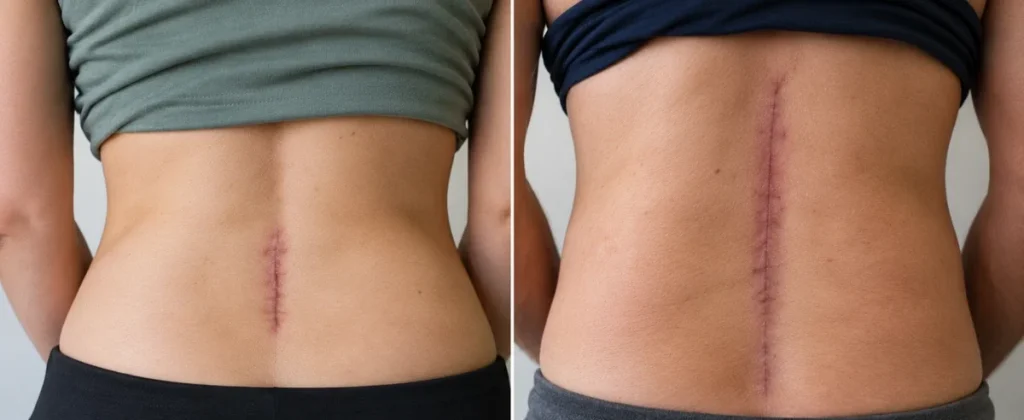
2. Deep Wound Infections
Deep spinal infections breach the layers of the skin and tissue to affect the muscle, fascia, and even the spine itself. They are the infections that haunt the nightmares of spine surgeons.
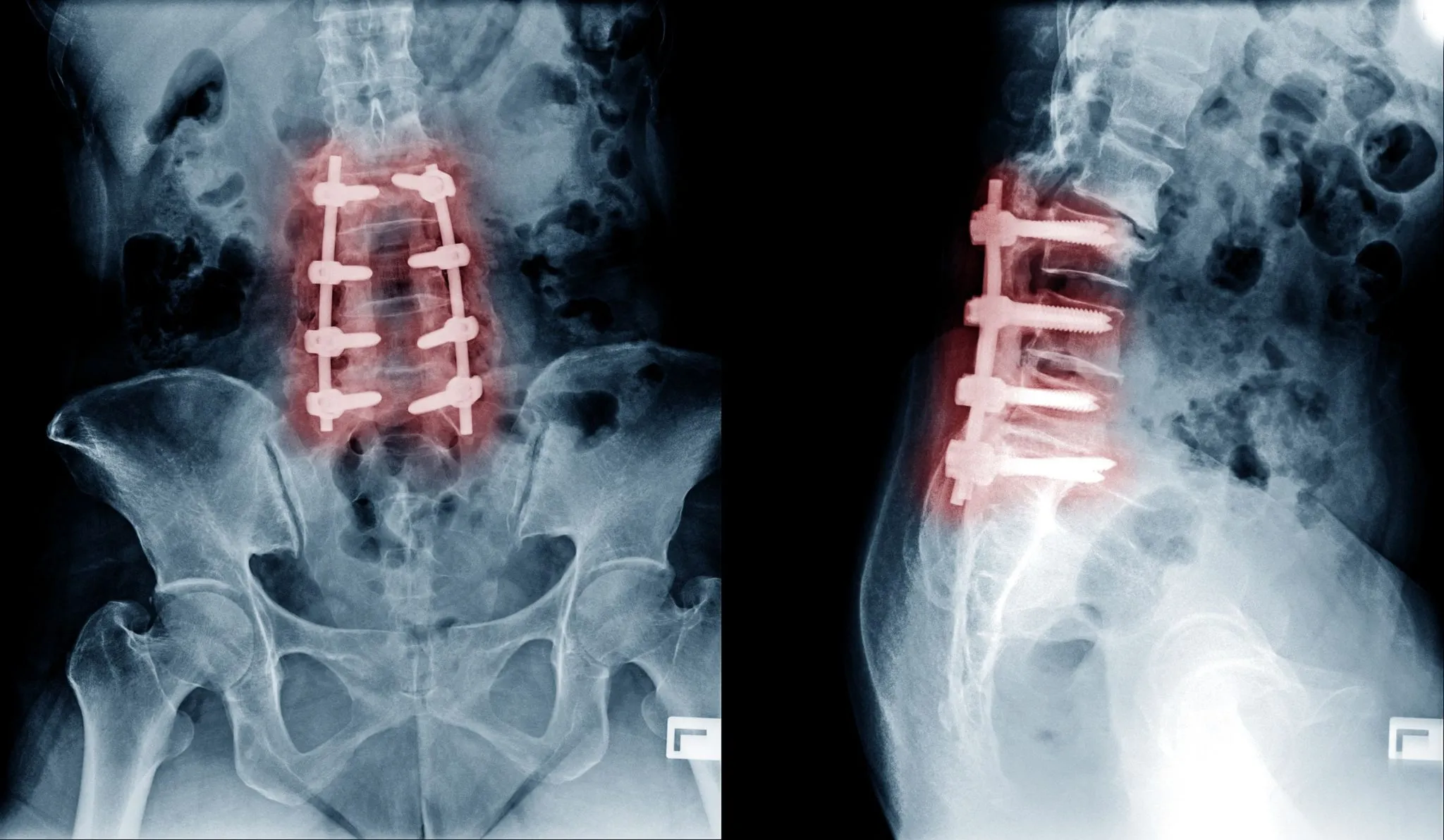
Deep infections occur in the first 30 days after surgery, but if there is hardware in place, they may take up to a year to develop as bacteria grow around the surface of the implant.⁶ Being that close to the spinal cord and nerve roots makes treatment very necessary. There are three types of deep spinal infections.
Discitis. Disc infection. Due to the low vascularity of the intervertebral disc, the immune system and antibiotics cannot easily reach the affected area; hence, treatment takes a long time to heal. There is severe, localized back pain that is aggravated by any movement. The rate of postoperative discitis ranges from 2%-5%, but 2.4%-8.5% if surgical intervention involves instrumentation.¹⁰
Vertebral osteomyelitis. This is infection in the vertebra, which can be in association with or apart from discitis. It causes inflammation and bone damage that affects the spine’s stability. Clinically, patients have severe back pain, fever, and neurological signs. The post-operative rate of occurrence is 3%-5%.¹¹
Epidural Abscess. An accumulation of pus in the epidural space, which lies between the dura mater and the vertebrae. This condition is considered an emergency in neurosurgery. Epidural abscess causes compression of the spinal cord and nerves due to its expansion, leading to a rapid progression of neurological symptoms. It should be urgently drained. Epidural abscesses account for approximately 5.5% of all spinal abscesses in instrumented spines.¹²
The Ripple Effect: Complications of a Deep Spinal Infection
The downstream consequences of a deep spinal infection are often more disabling than the original back problem the fusion was intended to solve.
- Additional surgery. Deep infection always involves another surgical procedure for debridement, where the wound is reopened and irrigation performed after removal of the affected tissues. In cases where implants are the cause of infection, they are usually removed.
- Pseudarthrosis (failed fusion). Infection interferes with the biochemical chain that makes it possible for bone graft to attach to vertebrae. Pseudarthrosis occurs, with no actual bone fusion. Preoperative symptoms may recur.
- Hardware loosening or removal. Infections at the level of screws and rods cause weakening of bones around them and their loosening. When the infection is uncontrolled around the hardware, it will have to be removed completely.
- Infection relapse. The presence of biofilm around retained implants may house inactive bacteria which may become active months later.⁸
- Prolonged immobility. Repeat surgeries and pain-driven inactivity produce their own complications: pressure ulcers, muscle atrophy, and venous thromboembolism (blood clots).
- Long-term IV antibiotics. Serious SSIs will take a minimum of six weeks of intensive IV antibiotics via a semi-permanent IV route, for example a PICC line.
- Opioid dependence. SSIs in themselves do not lead to addiction, however, because of the pain that follows the operation and the continued opioid prescription, a physiologic addiction can occur.
Systemic Side Effects of the Antibiotics Used to Treat Spinal SSIs
It should be noted that the drugs which can help to eliminate this deep spinal infection are themselves risky in their side effects and need to be balanced against damaging other organs.
- Pseudomembranous colitis. Prolonged antibiotic use damages normal gut flora and allows bad bacteria to overgrow. creating inflammation of the colon.
- Nephrotoxicity. Several of the antibiotics commonly used for spinal SSIs. Can hurt the kidneys and can cause acute kidney injury or, with prolonged exposure, chronic kidney disease.
- Hepatotoxicity. Drug-induced liver injury is a complication of long-course antibiotic therapy and requires blood monitoring.
- Bone marrow suppression. Prolonged antibiotic exposure can suppress hematopoiesis, producing anemia, neutropenia, and thrombocytopenia. A drop in red cells, white cells, and platelets that compounds recovery.
Red-Flag Symptoms That Require Emergency Care
Certain indications after a spinal fusion should never be scheduled through the first available office visit. The emergency room should be visited if:
- Fever, chill, or night sweats after the first few weeks postoperatively
- Incision site with redness, heat, swelling, or pus-like drainage
- Incision breakdown or opening
- Pain in the back that is sharply distinct compared to previous postoperative pain
- New sensation of weakness or numbness in the arms/legs
- Incontinence of the bowel/bladder or saddle anesthesia/urinary retention
- These may all be signs of deep SSI, epidural abscess, or cauda equina compression, respectively. Each requires urgent treatment.¹²
These findings can indicate deep SSI, epidural abscess, or cauda equina compression, each of which is a time-sensitive diagnosis.¹²

How Infection Is Prevented in the Operating Room
Since the risks involved are great, the modern spine center utilizes a multi-level prevention approach. This is not only useful for the spine center but will help patients ask the right questions before surgery.
- Sterilization of instruments using autoclaving, chemicals, or dry heat.
- Laminar flow operative theater utilizing HEPA filtered air systems and rigorous surface disinfection methods.
- Scrubbing of the surgical team, gowned and gloved where applicable.
- Skin antisepsis of the surgical patient just prior to the cut using chlorhexidine or iodine-based solutions.
- Antibiotic prophylaxis administered up to 60 minutes before surgery.
These layers substantially reduce but do not eliminate the risk of infection, particularly in operations involving hardware.
The Alternative: Treat the Disc Without Hardware
The clinical opinion at the Deuk Spine Institute, based on surgical experience spanning several decades and the scientific literature on treatment results, is that most cases of chronic pain caused by discs of the spine can be managed by treating the disc itself, rather than by performing fusion surgery with instrumentation.¹³
- Deuk Laser Disc Repair® (DLDR): A minimally invasive, endoscopic procedure performed through a 4 mm incision that removes herniated disc material and treats annular tears generating discogenic pain. No fusion. No hardware. No bone removal. One-hour outpatient procedure under sedation.
- Deuk Plasma Rhizotomy® (DPR): An energy-based plasma technology for facetogenic and sacroiliac joint pain, which provides more lasting pain relief compared to radiofrequency ablation.
- No implanted hardware and no post-operative narcotics for either procedure. Patients go home the same day.
Because DLDR has a 4 mm working channel and does not leave any permanent foreign bodies behind, the biggest risk factor when it comes to deep spinal SSI, that of hardware colonization, is completely out of the picture. These techniques do not suit everyone; hence, the first step of evaluating whether you are a candidate or not starts with an analysis of your MRI.
Take the Next Step
For those patients who have already been advised to undergo spinal fusion surgery, or are suffering from infection after their spinal fusion procedure, there are many more choices available than would be shown to you in a 15 minute appointment with an orthopedic surgeon.
Send us your latest MRI scan for a FREE review by Dr. Ara Deukmedjian at the Deuk Spine Institute.
We will review your imaging, discuss your symptoms, and walk you through every option, not just more fusion.
Hardware breeds biofilm. Biofilm breeds infection. DLDR uses no hardware
Fusion’s biggest risk is the metal
it leaves inside you.
Spinal fusion carries a 33% higher infection risk than non-fusion spine surgery—driven by the screws, rods, and cages bacteria colonize with biofilm. Deep SSIs can appear up to a year post-op, require 6+ weeks of IV antibiotics, and often mean hardware removal. DLDR repairs the disc through a 4 mm incision and leaves nothing behind.
fusion vs non-fusion
instrumented fusion
deep SSI treatment
- Screws, rods, cages & plates implanted
- Bacteria form biofilm on hardware
- Deep infections up to 1 year post-op
- 6+ weeks IV antibiotics if infected
- Hardware removal often required
- No hardware, no implants left behind
- No surface for biofilm to form
- 4 mm incision, same-day outpatient
- 99% pain relief rate
- 0.01% complication rate
Board-certified neurosurgeon review · No insurance approval required · 100,000+ procedures performed
FAQ’s
How common is infection after spinal fusion surgery?
Answer
Infection after spinal fusion surgery varies depending on the type of surgery.It depends on instrumentation used, and other factors related to the patient, but according to available statistics. The likelihood of SSIs for patients undergoing spine surgery without fusion is 33% lower compared with fusion surgery. While for instrumented surgery, the infection rates are 28% higher.² Incidence of discitis after spine fusion is from 2% to 5% while the incidence of discitis in spine fusion with instrumentation is 2.4% to 8.5%.¹⁰
What are the first signs of infection after spinal fusion?
Answer
Some of the early signs of infection at the site of a spine fusion include: redness, heat, swelling, tenderness, and discharge from the area of the incision. And these usually happen within the first 30 days after the operation. Some signs of deep infection include: fever, chills, night sweats, acute worsening of back pain unlike anything you’ve had after surgery, or even some neurological symptoms such as weakness, numbness, and loss of control of your bowels/bladder.
Can an infection develop a year after spinal fusion?
Answer
Yes. When implants are present, bacteria can form a biofilm on the hardware surface that shields them from both the immune system and systemic antibiotics, allowing infection to persist silently and then present clinically up to a year or more after the original surgery.⁶ ⁸ Late-presenting pain, unexplained fevers, or wound issues years out from a fusion are not “too late” to be an SSI and should be investigated.
Will I need to have my spinal hardware removed if I get an infection?
Answer
Not always, but often. Treatment of a deep SSI involving instrumentation typically starts with surgical debridement and prolonged intravenous antibiotics while attempting to retain the hardware so the spine remains stable. If the infection cannot be controlled, if biofilm has formed, or if the fusion has failed to consolidate, the hardware may have to be removed, which can compromise spinal stability and may require revision surgery once the infection has cleared.
How does Deuk Laser Disc Repair® reduce infection risk compared with spinal fusion?
Answer
DLDR® is performed endoscopically through a 4 mm incision, with no muscle stripping, no bone removal, and most importantly from an infection standpoint no implanted hardware. Because there is no screw, rod, cage, or plate left in the body, there is no permanent foreign surface for bacteria to colonize, which eliminates the single largest driver of deep spinal SSIs. The Deuk Spine Institute reports a 99% pain-relief rate and a 0.01% complication rate across more than 100,000 procedures. Upload your MRI for a free review to find out whether your anatomy is suitable.
Sources
View Sources
1: Surgical Site Infection After Spine Surgery: Overview — PMC
2: Risk Factors and Incidence of SSI in Instrumented Spinal Fusion — PubMed
3: Staphylococcus aureus — Centers for Disease Control and Prevention
4: Staphylococcus epidermidis — StatPearls / NCBI Bookshelf
5: CDC/NHSN Surgical Site Infection Event Definitions — CDC
6: Delayed Deep Infection After Instrumented Spinal Fusion — PMC
7: Spinal Fusion Overview — Mayo Clinic
8: Bacterial Biofilm on Spinal Implants — ScienceDirect / Spine Journal
9: Bacteremia, Sepsis, and Endocarditis — PubMed
10: Postoperative Discitis: Incidence and Management — PMC
11: Vertebral Osteomyelitis — Mayo Clinic
12: Spinal Epidural Abscess: Diagnosis and Management — PMC
13: Discogenic Pain: Mechanisms and Management — PMC