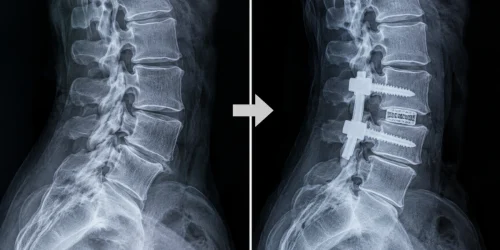


Most tingling or numbness felt in the back is a temporary nerve response caused by sitting too long in one position, sleeping awkwardly, or leaning against something firm. It usually fades within minutes of moving. But tingling or numbness in the back that keeps returning can point to a spine-related cause.
In a small number of cases, it signals something that needs urgent attention. This guide separates the three: what settles on its own, what is worth watching, and what to treat as an emergency. Anyone who needs the emergency signs immediately can skip ahead to the red-flag section below.
Tingling vs. Numbness: What’s the Difference?
Tingling in the back, or paresthesia, is an added sensation. It feels like pins and needles, buzzing, or a crawling-under-the-skin sensation. It happens when a nerve fires when it has no business firing, sending signals that don’t correspond to anything actually touching you.
Numbness in the back is the reverse. It’s a subtracted sensation: feeling drops out or fades because the signal from your skin isn’t reaching your brain the way it should.
Why does the distinction matter? Mainly because numbness that’s spreading, or numbness combined with muscle weakness, gets treated with more urgency than tingling on its own. Tingling in the back by itself, especially the kind that comes and goes, is much more often a temporary nerve squeeze than anything serious. “Numbness and tingling” as a phrase usually just lumps both patterns together.
What Causes Tingling and Numbness in the Back?
Tingling in the back and numbness can come from many places. Some are as harmless as sitting wrong for too long, while others are tied to something in the spine itself.
- Temporary nerve pressure. By far the most frequent cause. Sit, sleep, or lean the same way for too long and you compress a nerve just enough to interrupt its signal. Shift position and it usually clears up within minutes, with no lasting effect.
- Nerve compression from the spine. Herniated intervertebral discs, spinal stenosis, or a pinched nerve can each squeeze a nerve root right where it leaves the spine, and the tingling tends to radiate outward in a fairly predictable pattern.
- Sciatica and piriformis syndrome. When the sciatic nerve gets irritated by a disc issue lower in the back or a tight piriformis muscle in the buttock, the tingling in the lower back typically runs down through the buttock and leg.
- Muscle strain and irritation in facet joints. Even without an actual pinched nerve, irritated tissue near the spine can send tingling down the back. This is part of why some people feel real tingling even when imaging comes back clean.
- Peripheral neuropathy. Diabetes, low vitamin B12, or long-term heavy drinking can all damage nerves in a way that causes tingling well beyond just the back. NINDS points to diabetes as the top cause of peripheral neuropathy in the US.
- Shingles. A flare-up of the chickenpox virus can cause tingling or burning on one side of the back, sometimes showing up days before the rash does.
- Thoracic outlet syndrome. This cause is rarer but worth knowing. Tingling that starts in the upper back and travels into the arm and hand can feel like a pinched nerve in the neck, but here the nerves are compressed between the collarbone and the first rib. Blood vessels can be affected the same way.
Where You Feel It Matters: Upper, Middle and Lower Back
Where tingling or numbness shows up is a genuine clue to what’s happening, because each spinal nerve serves a fairly predictable strip of skin and muscle as it exits the spine. Matching the location to the likely nerve level is often the fastest way to narrow a cause down before any imaging is even needed.
See the spine anatomy guide for the full level-by-level map of what serves what.
Tingling and Numbness in the Upper Back
Upper back tingling or upper back numbness most often traces back to nerve irritation at the neck level, traveling downward; it can extend into the shoulder, arm, or even the fingers. This pattern is known as cervical radiculopathy.
Poor posture, trigger points between the shoulder blades, and even a past whiplash injury can produce this feeling of tingling and numbness in the upper back without any nerve being compressed at all.
Tingling and Numbness in the Middle Back
Middle back tingling is the least common of the three, usually positional or linked to spinal stenosis or a thoracic disc problem. Because thoracic nerve roots wrap around the torso rather than running straight down, symptoms here can present as a band-like sensation circling the ribs instead of a simple line down the back.
See the middle back pain page for a deeper look at this less-discussed area.
Tingling and Numbness in the Lower Back
The lower back is by far the most common site for tingling and numbness, usually from a herniated disc, spinal stenosis, or sciatica. Symptoms here often travel toward the buttock, leg, or foot rather than staying in one place, following the path of the irritated nerve root.
Anyone noticing this radiating pattern of numbness in the lower back can read the sciatica page for a closer look at causes, timelines, and relief options.
Not every case fits neatly into one zone; overlap between levels is normal.
One simple rule sums this up: sensation that travels away from the spine usually points to a nerve root being involved, while sensation that stays in one place is more often local tissue irritation instead.
Is It Coming From Your Spine? How to Tell
A nerve-related pattern tends to follow a band or stripe-like path along the skin, often shows up with radiating pain, and usually favors one side of the body. A positional or temporary pattern, by contrast, comes on after sitting or sleeping a certain way and eases within minutes of moving around.
There’s a third, honest pattern too: symmetrical, on both sides of the body, often in a glove-or-stocking distribution that reaches the hands and feet as well as the back. This pattern points away from the spine and toward a general nerve cause instead.
The table below lays out all three side by side.
When Tingling and Numbness Point to a Pinched Nerve
A pinched nerve happens when something nearby, such as a disc, a bone spur, or a swollen ligament, presses on a nerve root right where it exits the spine. That pressure interferes with the nerve’s signal, which is where the tingling, numbness, or weakness comes from, showing up somewhere along that nerve’s path.
There are two patterns you’ll see most often: tingling from the neck that runs into the arm and hand, or tingling from the lower back that runs into the leg and foot. Which one you get just comes down to where along the spine the compression is happening.
Does it mean lasting nerve damage? Usually not. If the compression goes away, either on its own or with treatment, the nerve typically recovers fine. What’s worth paying attention to is numbness that sticks around and comes with muscle weakness. That combination suggests the nerve has been under pressure long enough to matter, so it’s worth getting checked promptly.
If you’re not sure which situation applies to you, treat persistent numbness paired with weakness as the one to take seriously.
Tingling and Numbness Red Flags. When to Seek Care Right Away
The following symptoms are not spine-related in the usual sense. They signal a possible emergency, and none of them can wait for a scheduled appointment.
- Sudden weakness in the legs, or trouble walking.
- Loss of bladder or bowel control, or numbness around the groin and inner thighs (often called saddle numbness). This combination is known as cauda equina syndrome and needs emergency care immediately, not a routine visit.
- Numbness that is spreading or getting worse by the hour.
- Chest pain, shortness of breath, slurred speech, facial drooping, or sudden weakness on one side of the body. These can signal a heart attack or stroke, so call 911 right away.
- Fever, unexplained weight loss, or a personal history of cancer alongside new back symptoms.
- Symptoms that began right after a fall, car accident, or other trauma.
Every item on this list points toward an emergency department or a call to 911, not a spine specialist appointment or a request for a free MRI review. That distinction matters, since delaying emergency care to schedule a consultation could make a real difference.
None of these signs are common, and occasional tingling doesn’t mean any of them apply. If even one is present, however, treat it as urgent.
What Helps Tingling and Numbness in the Back?
For temporary, position-related tingling, a few simple approaches tend to help most people. None of this replaces a proper diagnosis when symptoms persist.
- Change position and move. This is the single most useful step for positional symptoms, and often the only thing needed. Standing up, walking a short loop, or simply shifting in the chair every 30 minutes can prevent tingling from building up in the first place.
- Try gentle mobility rather than rest. Cat-cow stretches, standing back extensions, chin tucks, and gentle trunk rotations are low-risk ways to keep nerves moving; stop immediately if any movement increases the tingling or numbness.
- Apply heat or ice, whichever feels more soothing, and consider a general over-the-counter upper back pain reliever if needed, without exceeding label directions.
- Pay attention to ergonomics and sleep position; a supportive pillow between the knees or under the lower back can reduce pressure overnight.
- Physical therapy is a common next step for tingling that doesn’t ease with simple changes on its own. See the treatment options page.
None of this amounts to a treatment plan. It’s simply what most people try first, and it’s worth mentioning at any appointment that follows.
How Tingling and Numbness in the Back Are Diagnosed
Diagnosis typically starts with a physical exam that checks reflexes, muscle strength, and sensation in different areas. The location of lost feeling helps narrow down which nerve or nerve root is affected. Imaging like an MRI or CT usually only comes into the picture if there are red-flag symptoms, or if the tingling and numbness have dragged on for more than a few weeks.
Nerve conduction studies and EMG are reserved for cases where a doctor needs to pin down exactly how a nerve is functioning, not just locate the compression. These tests are used less often than imaging, generally only when things still aren’t clear. If you already have an MRI on file, it can be reviewed at no cost as part of a second opinion.
Conclusion
Most tingling and numbness in the back turns out to be temporary and tied to posture or position. It resolves with a few simple changes: moving more, adjusting the sitting position, and giving it a little time. For the smaller group of cases with a genuine spine-related pattern, understanding where the sensation shows up and how it behaves is the first useful step toward relief.
Anyone with an existing MRI who wants a second look can request a free MRI review to see whether it explains what they’re feeling.
Numbness + weakness = nerve under pressure long enough to matter
Stop guessing.
Get a neurosurgeon to read your MRI.
Tingling that keeps returning often traces to a herniated disc, spinal stenosis, or a pinched nerve. A free MRI review by a board-certified neurosurgeon tells you exactly which nerve is affected—and whether DLDR can fix it without fusion, hardware, or a hospital stay.
tingling: herniated disc
compression needs attention
treatment after a denial
- Weeks of guesswork and worry
- Numbness can become permanent
- Muscle weakness may progress
- Imaging delayed by insurance denials
- Neurosurgeon identifies the exact nerve
- 99% pain relief rate with DLDR
- 0.01% complication rate
- No insurance approval needed
Board-certified neurosurgeon review · No insurance approval required · 100,000+ procedures performed
FAQs
What’s the difference between tingling and numbness?
Answer
Tingling is your nerves shooting off signals they shouldn’t be. Numbness is the opposite problem. Signals aren’t getting through. That’s why the area feels dull or dead.
When is back numbness a medical emergency?
Answer
Numbness may show up alongside loss of bladder or bowel control, numbness in the groin area, sudden leg weakness, or trouble walking. In these instances, it’s best to go for a consultation. This combination points to cauda equina syndrome, and it’s not something to wait out.
Can poor posture cause tingling in the back?
Answer
Definitely. If you stay in one position too long, you can compress a nerve enough to set off tingling, usually around the neck and upper back. It’s generally short-lived and clears up once you move and change position.
What causes tingling in the upper back?
Answer
Usually it traces back to the neck. In this pattern, called cervical radiculopathy, an irritated nerve sends tingling down through the shoulder, arm, or hand. Tight muscles between the shoulder blades and just plain bad posture play a role too, even without nerve involvement.
What causes tingling in the lower back?
Answer
A herniated disc, spinal stenosis, or sciatica are the usual suspects, and the tingling tends to radiate into the buttock, leg, or foot. Sometimes it’s nothing more than sitting too long, which is annoying but fades on its own.
Does tingling in the back mean nerve damage?
Answer
Not typically. If the compression clears up, the nerve usually bounces back fine. The bigger red flag is numbness that sticks around and comes with muscle weakness. That combination is worth getting looked at soon.
How long does tingling from a pinched nerve usually last?
Answer
Anywhere from a few days to a few weeks, often improving with rest, movement, and physical therapy. If it’s still going after four to six weeks, or it’s getting worse rather than better, that’s the point to bring it up with a doctor.