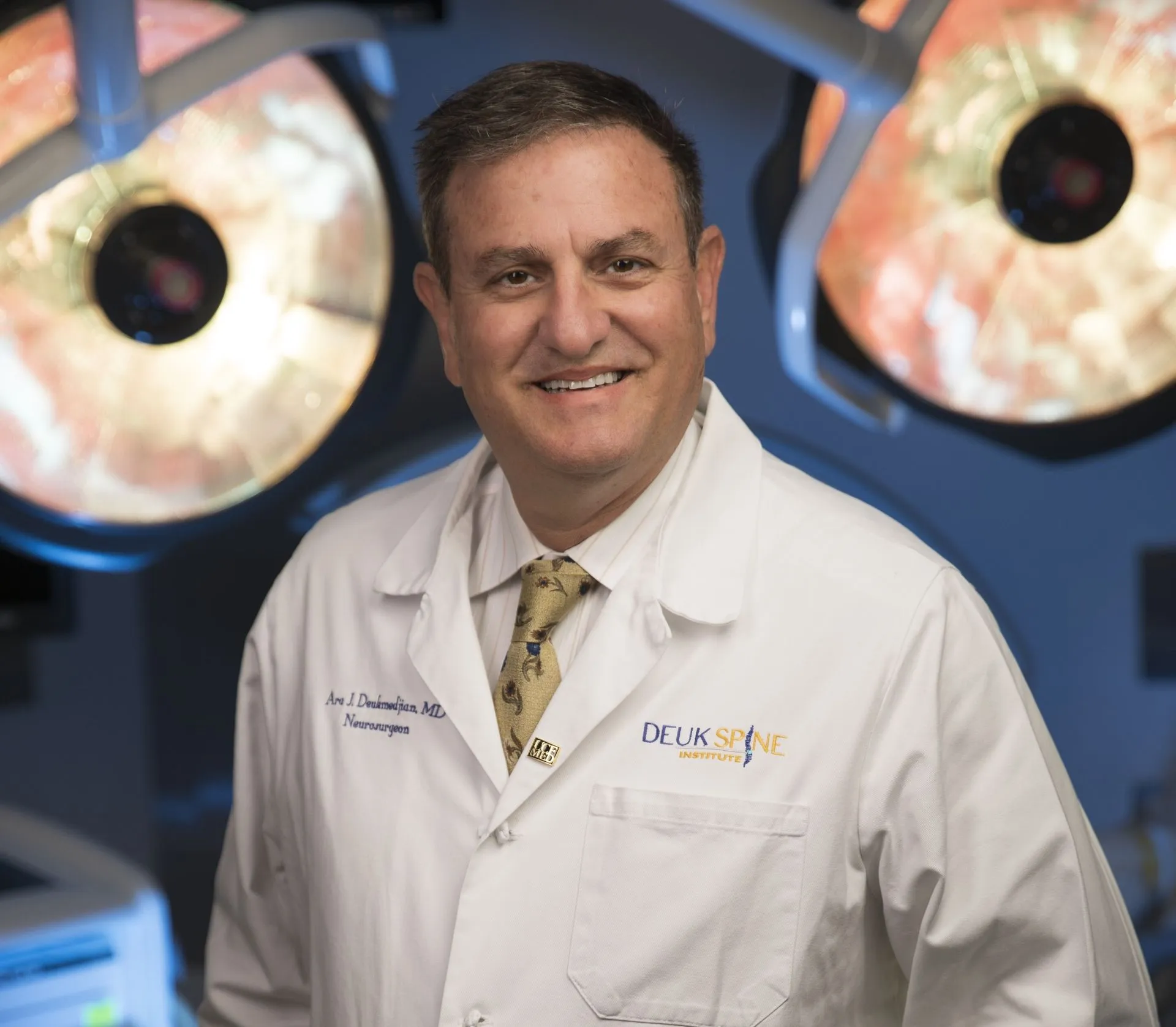
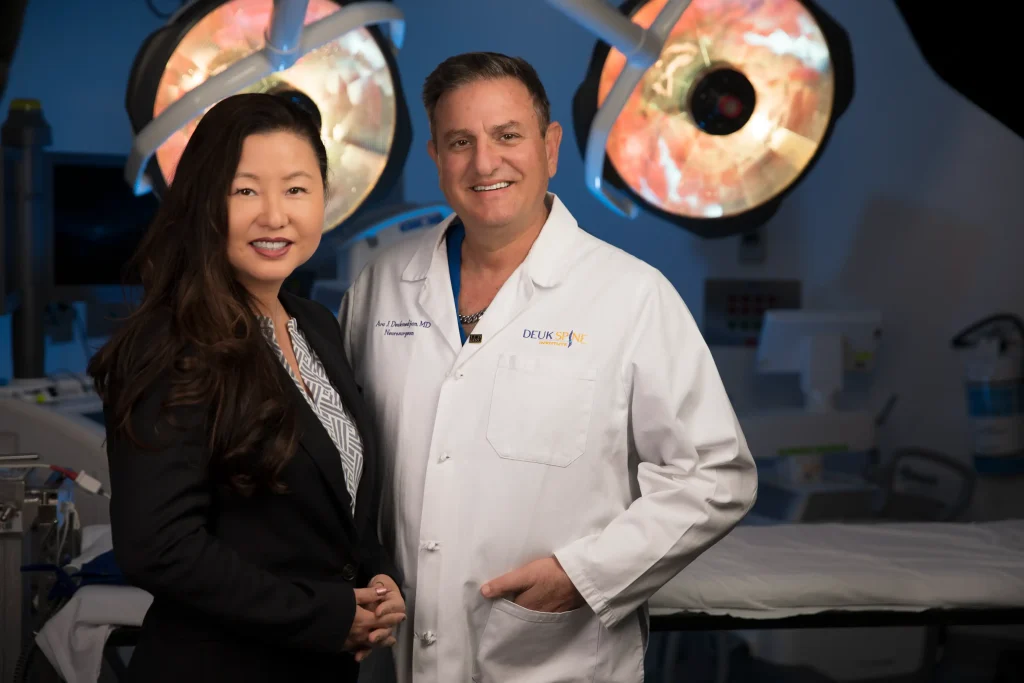
Before the patents. Before these procedures, no one else in the world could perform them. Before thousands of patients walked out of surgery the same day they walked in…
There was a decision.
To stop accepting old standards. To ask whether the way things had always been done was actually the best way. To build something new, not because it was profitable, but because patients deserved better. And Dr. Ara J. Deukmedjian wants the world to have one less person experiencing back pain.
That decision became a career. That career became his mission.
This is the story of what happened after Ara graduated from medical school and officially became a medical doctor.
The Beginning: Kennedy Space Center
Before the operating room. Before the patents. There was a launchpad.
During his neurosurgery residency at the University of Florida, Dr. Deukmedjian was selected for something most physicians never experience helping astronauts.
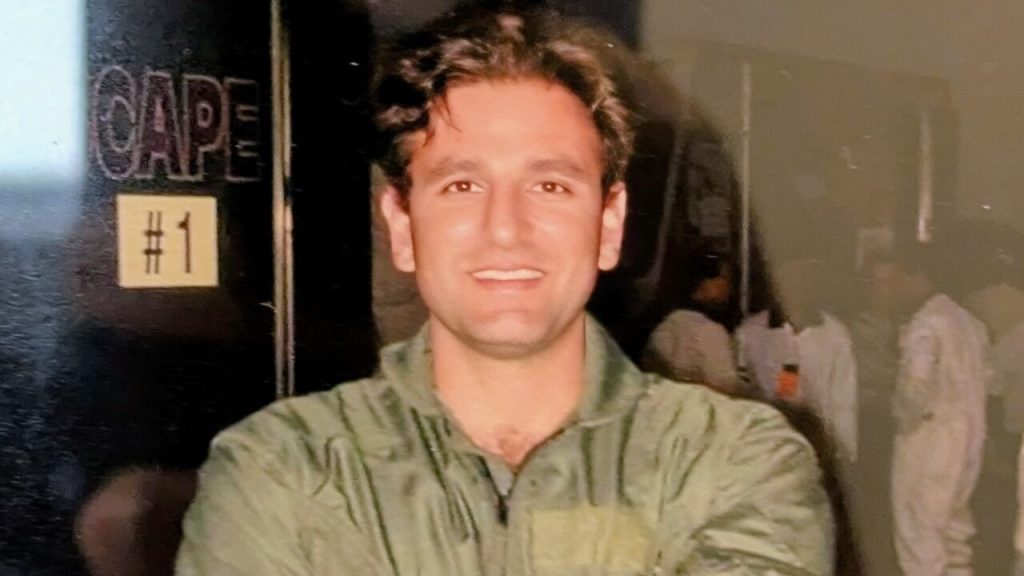
He joined the NASA Spaceflight Medical Team at Kennedy Space Center.
Between 2001 and 2004, he served on the ground medical crew for four Space Shuttle missions: STS-97, STS-105, STS-107, and STS-108. These were not routine assignments. STS-97 delivered the first solar arrays to the International Space Station. STS-107 ended in the tragic loss of Space Shuttle Columbia and her seven-person crew on February 1, 2003. One of the most tragic events in American space history.
Even after the space shuttle Columbia’s mission ended with seven people not coming home. Dr. Deuk continued to help NASA as best as he could. However, he had a stark reminder that some things can’t be fixed; only endured. He displayed compassion and leadership in one of NASA’s darkest moments.
NASA only works with the best and brightest. And also those who can handle the excitement and sadness of what can happen as man goes where he’s ever gone before.
Building From Zero
In 2004, residency complete, Dr. Deukmedjian arrived in Titusville, Florida.
No patient list. No reputation in the community. No guarantee of anything.
He had been recruited by Parrish Medical Center to fill the area’s need for a neurosurgeon. His wife, Sun Deukmedjian, PA, managed the office.
It was his father’s story, one generation later. Obstacles are not limits. They are problems waiting to be solved.
He built a practice from the ground up. And then he built something larger.
Dr. Ara Deukmedjian, MD, Sun Deukmedjian, PA, Arias Deukmedjian, and Arianna Deukmedjian founded Deuk Spine Institute in 2004, just after completing his neurological surgery residency and fellowship training at Shands Hospital at the University of Florida.
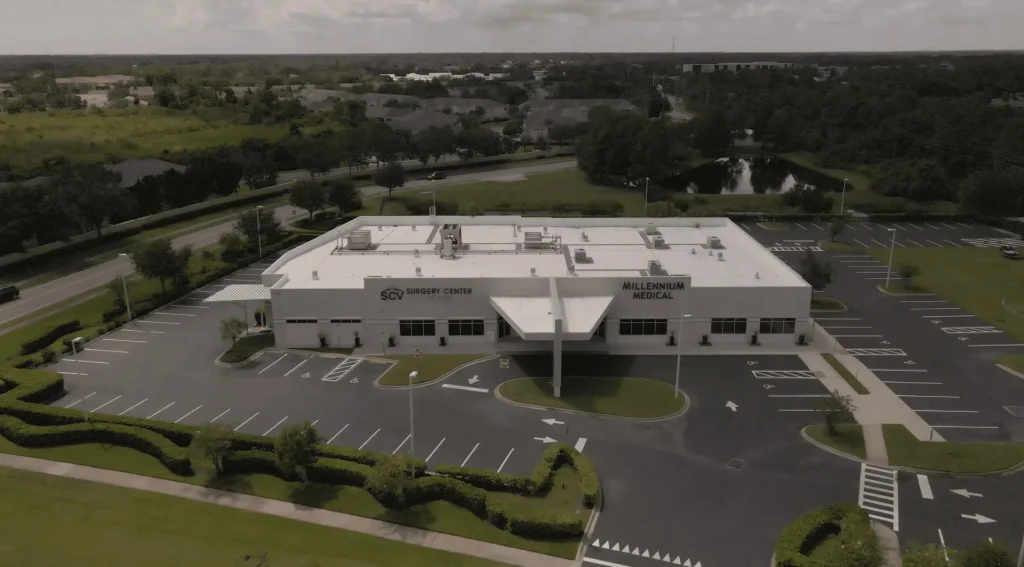
The institute that would eventually redefine spine surgery worldwide began as a single office, a short distance from a rocket launchpad.
The Question That Changed Everything
Most spine surgeons, when presented with a herniated disc, reach for a well-worn set of answers.
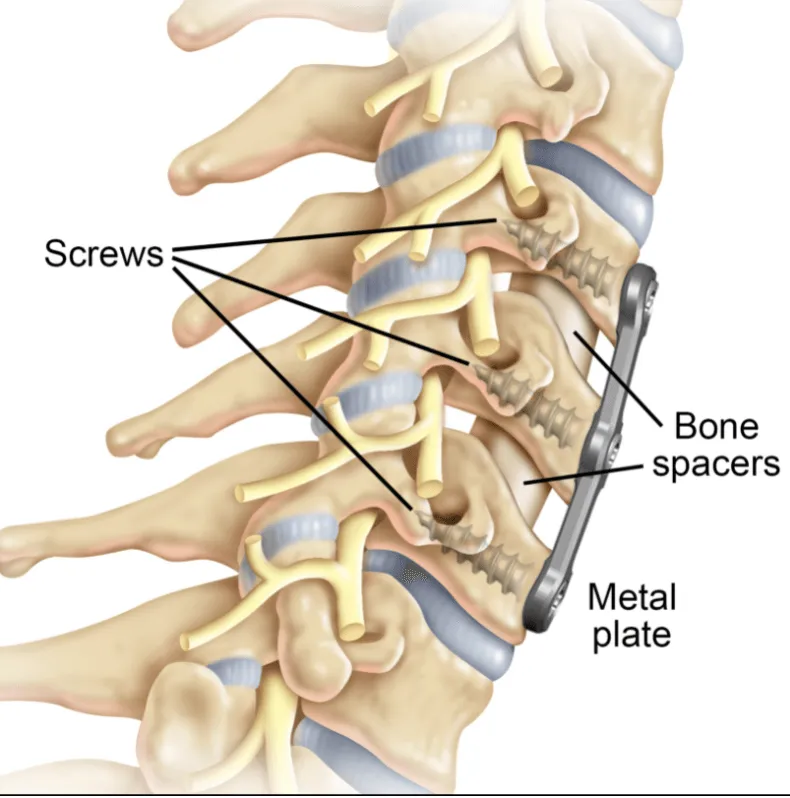
Remove the disc. Fuse the vertebrae. Insert hardware. Stabilize. Done.
It is a standard approach. It has been the only option for decades.
Dr. Ara Deukmedjian, MD, asked a different question.
Is fusion actually necessary? Or are we causing more damage than we are solving? 1
The Hardy Boys taught him: the obvious answer is often wrong. Sherlock Holmes confirmed it: the truth is usually deeper. And twenty years of training in pathology, neuroanatomy, and neurosurgery gave him the tools to look deeper than anyone had before.
In 2006, Dr. Ara Deukmedjian, MD, made a discovery about annular tears and has treated them since then, publishing his results in scientific journals.
What he found was not just a new technique. It was a new understanding.
The problem was being misdiagnosed all this time.
The Procedure That Didn’t Exist Yet
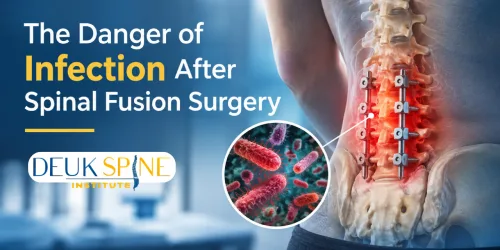
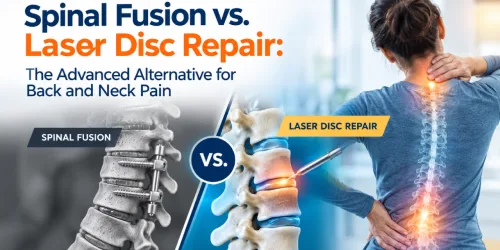
Traditional spine surgery for a herniated cervical disc meant one thing: anterior cervical discectomy and fusion (ACDF). 2 Remove the disc. Fuse the bones. Immobilize the segment. Accept the risks: hardware failure, adjacent segment disease, long recovery, and the permanent loss of that level’s natural motion.
Dr. Deukmedjian, MD, rejected the premise.
In 2005, he pioneered a different approach. One that entered the disc endoscopically, removed only the herniated fragment causing the problem, repaired the damaged tissue with laser energy, and left the disc’s structure and the spine’s natural movement intact.
Deuk Laser Disc Repair® is a novel, full-endoscopic, anterior cervical, trans-discal, motion-preserving, laser-assisted, non-fusion, outpatient surgical procedure to safely treat symptomatic cervical disc diseases, including herniation, spondylosis, stenosis, and annular tears.
No fusion. No hardware. No hospital admission. Patients went home the same day.
The results were not theoretical. They were documented, peer-reviewed, and published.
A prospective cohort of 66 consecutive patients underwent cervical Deuk Laser Disc Repair® and were evaluated postoperatively for resolution of headache, neck pain, arm pain, and radicular symptoms. 3 All patients had significant improvement in preoperative symptoms with an average symptom resolution of 94.6%. Fifty percent had 100% resolution of all preoperative cervicogenic symptoms.
94.6% success rate. No complications.
That is not incremental progress. That is a redefinition of what spine surgery can achieve.
Three Patents. One Mission.
What began with Deuk Laser Disc Repair® did not stop there.
The same diagnostic instinct that identified the root cause of disc disease turned to every other category of spine and joint pain that was being mismanaged, overtreated, or inadequately addressed by the medical mainstream.
The Deuk Spine Institute has three patents for the Deuk Plasma Rhizotomy® and Deuk Piriformis Release®. 4 These treatments, plus the Deuk Laser Disc Repair®, encompass 99% of all back and neck pain.
Each patent represents a problem that the existing system failed to solve. Each solution was developed not in a corporate R&D lab, but inside an operating room. By a surgeon who kept asking why the standard answer was not good enough.
Since 2004, over 2,750 Deuk Laser Disc Repair® procedures have been performed with an extraordinary 0.01% complication rate, compared to traditional spine surgery’s 5–50% complication rates.
Numbers like that do not happen by accident. They happen when a mind trained to find root causes in pathology labs, in neuroanatomy competitions, in NIH research grants, is turned loose on a problem that the medical community has stopped questioning.
Leadership That Matched the Science
Surgical innovation alone does not define a career.
Leadership does.
Inside the hospital system, Ara J. Deukmedjian, MD, rose through every layer of institutional leadership at Parrish Medical Center: Chair of the Department of Surgery, then Chief of Staff, then Vice President of the Medical Staff, then President-Elect of the Medical Staff. Each role requires a different kind of trust. Each is earned through merit and problem-solving.
At the county level, he served the Brevard County Medical Society across every elected position: Board Member, Secretary/Treasurer, Vice President, President-Elect, and ultimately President in 2012.
In the community that trusted him with its health, he engaged with the Florida Medical Association, sat on its Council on Legislation, and served as a delegate. He knew that policy shapes patient outcomes just as much as surgical technique.
And he did not stop at the operating room or the boardroom.
He was appointed Volunteer Assistant Professor of Neurosurgery at UCF School of Medicine in 2007 and was later elevated to Associate Professor of Neurosurgery in 2022. Training the next generation of surgeons with the same exactness that once won him the Retzius Neuroanatomy Competition.
The Results Speak for themselves
There is a version of this story that could be told in accolades.
Voted America’s Top Surgeon by Consumer Research Council from 2009 to 2013. Also, Most Compassionate Physician by Vitals.com in 2011, 2012 & 2013. And in 2011 & 2012, awarded the Patient Choice Award by Vitals.com.
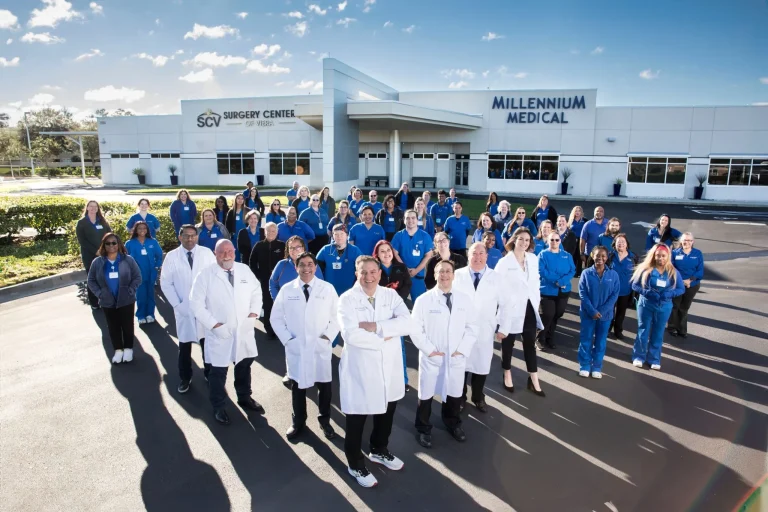
Those recognitions matter. But they are not the story.
The story is in the operating room results.
Patients report an average of 99% pain relief from discogenic sources, permanently, in just one treatment.
The story is in the peer-reviewed publications that were presented at the American Association of Neurological Surgeons annual meeting. Papers published in Surgical Neurology International and other journals. Work that can be scrutinized, replicated, and challenged by the broader scientific community. Work that holds up under that scrutiny means something… It’s proven to work.
The story is about the patients who came to Melbourne, Florida, from across the country and around the world. To get back pain relief from Dr. Deuk’s surgeries that can’t be found anywhere else.
What This Career Is Really About
The boy who noticed suffering before he could explain why. Decided to look closer and end back pain for good.
The valedictorian, who also led his soccer team. The medical student who finished first in his class of 170 and then stayed to teach. The resident who stood on the tarmac at Kennedy Space Center and watched rockets ascend. The surgeon who asked why spinal fusion was being treated as the only answer when it often wasn’t even the right question.
None of this was accidental.
It was the product of a mind that learned early from books, from competition, from nature, from his father’s example that obstacles are not limits. The standard answer is not always the correct one. That the real cause of suffering can be found, if you look hard enough and think clearly enough.
Dr. Ara J. Deukmedjian found it.
And then he built the tools, the patents, the institute, and the proof to do something about it.
That is not his career. This is his mission. Twenty years of focusing on one thing, making the lives of people better by ending back pain for countless people. Those who feel pain from everyday simple activities. If you are someone battling chronic back pain.
Submit your MRI for a free virtual consultation with Dr. Deuk now.