
By Dr. Ara J. Deukmedjian, MD
Board Certified Neurosurgeon
Reviewed on September 10th, 2026
Disclaimer: The contents provided in this article are for informational purposes only and do not constitute medical advice. Consult a qualified healthcare professional for diagnosis and treatment specific to your condition.
Key Points
✓ RFA treats facet joint pain, not herniated discs. These are different conditions with different pain sources.¹
✓ Relief is temporary. Nerves regenerate in 6–24 months, and pain returns.²
✓ RFA can’t reach disc inflammation or decompress pinched nerves.³
✓ Most back pain isn’t from facet joints. Only 15–45% of chronic cases are facet-related.⁴
✓ Herniated disc pain is driven by inflammatory mediators within the annulus fibrosus the RFA cannot access.⁵
✓ Deuk Laser Disc Repair® permanently removes damaged disc material. No fusion, no hardware, 0.01% complication rate.
Radiofrequency Ablation Does NOT Treat Herniated Disc Pain
If you’ve been told that radiofrequency ablation can fix your herniated disc, you’ve been given incomplete and potentially harmful information. RFA is one of the most commonly misapplied procedures in spine care today. While it has a legitimate role in managing facet joint pain, it does absolutely nothing to address the inflammation, nerve compression, and structural damage caused by a herniated disc.
At Deuk Spine Institute, we see this happen to our patients far too often. Patients come to us after months; sometimes years of repeated RFA procedures, still in pain, because no one explained that RFA was never designed for their condition in the first place. That’s why we’re here to set the record straight and give you a real solution.
What Is Radiofrequency Ablation, and What Does It Actually Treat?
Radiofrequency ablation is a pain management procedure. Not a corrective treatment. It uses heat generated by radio waves to create a lesion on specific nerves, temporarily preventing them from transmitting pain signals to the brain. According to the Cleveland Clinic, RFA targets the medial branch nerves that supply sensation to the facet joints, or the lateral branch nerves that serve the sacroiliac joints.¹
The key word here is temporarily. As UCLA Health explains, radiofrequency ablation provides temporary pain relief lasting approximately four to six months by using heat to block nerves in the facet joints.⁶ The Mayo Clinic Health System notes that while relief may last nine to twelve months and sometimes longer, pain typically returns once the nerves regenerate and the procedure must be repeated.²
RFA can be a reasonable option for patients with confirmed facet joint syndrome or sacroiliac joint dysfunction. But that’s the extent of its application. It does not treat disc herniations, degenerative disc disease, or any condition where the pain source is inside the disc itself.
Conditions RFA Can Appropriately Treat
RFA has a clinically validated role in two specific conditions:
- Facet Joint Syndrome — inflammation or arthritis in the small stabilizing joints of the spine
- Sacroiliac (SI) Joint Dysfunction — pain at the junction where the pelvis meets the spine
For either condition, a diagnostic medial branch block must first confirm that the facet or SI joint nerves are the actual pain source before RFA is offered.¹
Who Should NOT Receive RFA
If your pain stems from any of the following, RFA is not an appropriate treatment:
- Herniated disc
- Bulging disc
- Degenerative disc disease
- Nerve root compression (radiculopathy)
RFA cannot access the interior of a spinal disc, cannot reduce inflammation within the annulus fibrosus, and cannot decompress a pinched nerve root. Yet many patients with these conditions are still being sent for RFA procedures.
Understanding Herniated Disc Pain: Why RFA Misses the Mark
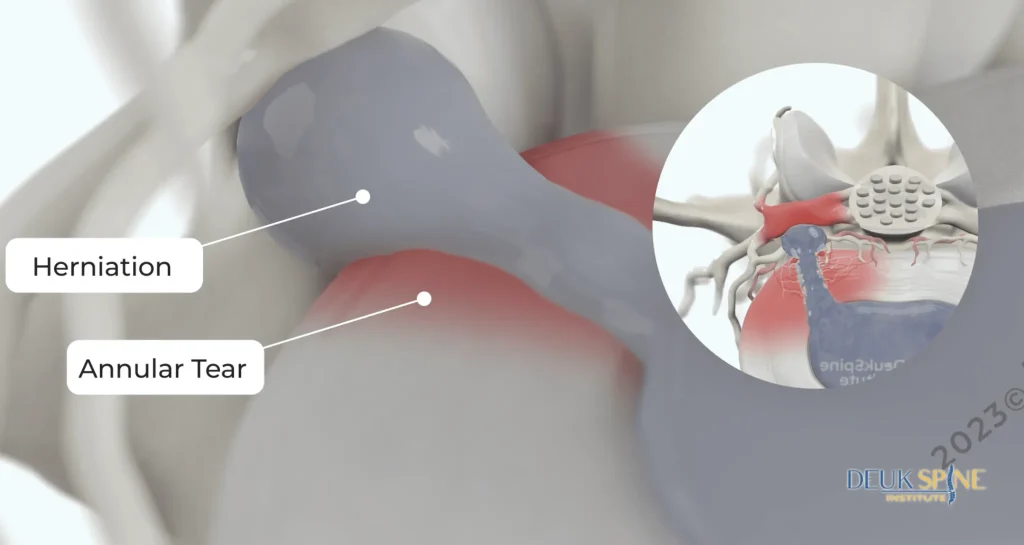
To understand why RFA fails herniated disc patients, you need to understand what’s actually causing the pain. When there is a protrusion of the nucleus pulposus out through the damaged annulus fibrosus, it is called a herniated disc. The Barrow Neurological Institute states that this protrusion not only puts pressure on the spinal nerves, but it also secretes chemicals that cause inflammation.⁷
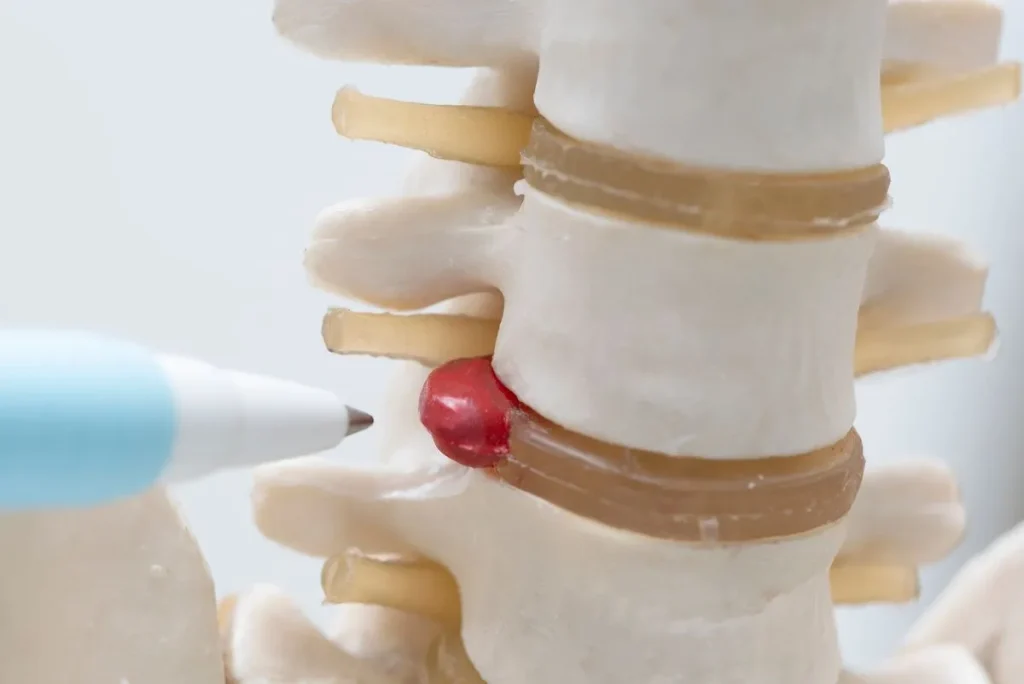
Research published in the NIH National Library of Medicine confirms that the high expression of inflammatory mediators associated with annulus fibrosus tears is what causes low back pain in disc herniation. Not the facet joints.⁵ A separate study found that inflammatory mediators within the disc are the primary drivers of discogenic pain, involving complex pathways including nerve infiltration deep into the degenerated disc tissue.⁸
Moreover, according to the NIH StatPearls article on disc herniation, herniation happens as a result of bulging of the nucleus pulposus beyond the annulus fibrosus. This happens mainly at weak posterolateral points and leads to end plate alterations due to inflammation and edema, which results in low back pain. Approximately 95% of herniations occur in the lumbar spine.³
RFA cannot reach any of these structures. The actual sources of herniated disc pain include:
- Mechanical nerve compression — the protruding disc fragment presses directly on spinal nerve roots
- Chemical inflammation — the nucleus pulposus leaks inflammatory mediators that irritate surrounding tissue
- Annulus fibrosus tears — micro-fissures in the outer disc wall trigger localized inflammatory pain⁵
- Neoinnervation — new sensory nerves grow into the degenerated disc, amplifying pain signals⁸
RFA addresses none of these. It burns a nerve outside the disc. The disc itself the actual source of pain remains untreated.
Symptoms of Herniated Disc Pain
Symptoms depend on the disc’s location:
Lumbar (lower back) herniation:
- Localized low back pain
- Radiating pain down one or both legs (sciatica)
- Numbness or tingling in the legs and feet
- Muscle weakness affecting walking or standing
Cervical (neck) herniation:
- Neck pain and stiffness
- Radiating pain into the shoulders, arms, or hands
- Numbness or tingling in the fingers
- Grip weakness or loss of fine motor control
These symptoms arise from nerve root compression and chemical inflammation. two mechanisms that have nothing to do with facet joints and therefore cannot be addressed by RFA.³ ⁷
The RFA Procedure: What It Does and What It Doesn’t Do
Here’s what happens during a typical RFA procedure:
- Positioning — the patient lies face down (lumbar) or on their back (cervical)
- Local anesthesia — the treatment area is numbed
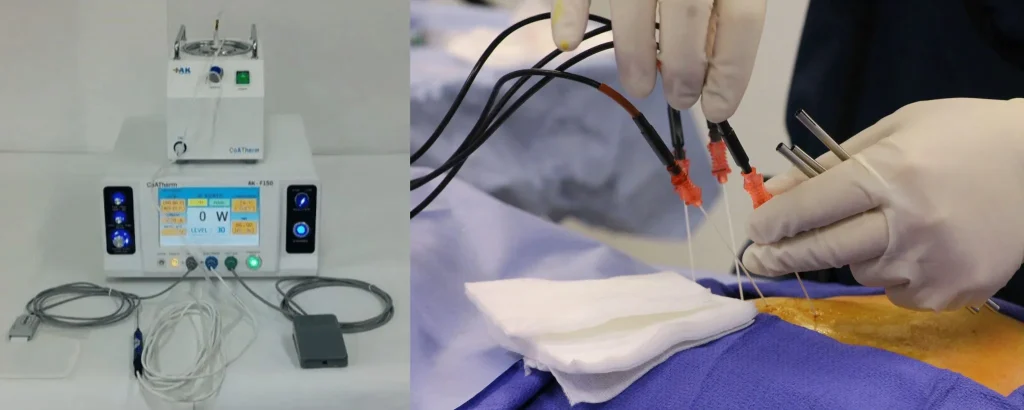
- Needle placement — a thin radiofrequency needle is inserted near the targeted medial branch nerve under X-ray (fluoroscopic) guidance
- Nerve verification — a mild electrical stimulation test confirms the correct nerve is being targeted without affecting motor function
- Ablation — the needle tip heats to approximately 80°C, creating a small lesion on the nerve to interrupt its pain signals¹
According to Spine-Health, relief can last six months to two years, though some patients experience no relief at all.⁹ The procedure typically takes 30 to 60 minutes depending on the number of nerve levels treated.
Recovery After RFA
Most patients can resume light activity within a day or two. Mild soreness or swelling at the injection site is common. Pain relief generally begins within two to four weeks.²
However, results are inherently temporary. As nerves regenerate; which they inevitably do pain returns. Many patients find themselves on a treadmill of repeated procedures, each providing diminishing returns, while the underlying condition continues to worsen.
Risks and Limitations of RFA
While RFA is considered minimally invasive, it carries real risks:
- Temporary increased pain or swelling at the treatment site
- Infection at the needle insertion point
- Nerve damage beyond the targeted area (rare)
- Misplaced needle damaging surrounding structures
- Incomplete pain relief or no relief at all⁹
The most significant limitation, however, is not a complication. It’s the fundamental design of the procedure. RFA is a nerve-blocking technique, not a cure. It masks a signal without addressing the source.
Why Spinal Fusion Is Not the Answer Either
Many patients who fail RFA are then directed toward spinal fusion. A major surgery that involves permanently joining two or more vertebrae using metal hardware, rods, screws, and bone grafts. Fusion eliminates motion at the treated segment, which can provide stability but introduces a well-documented cascade of new problems.
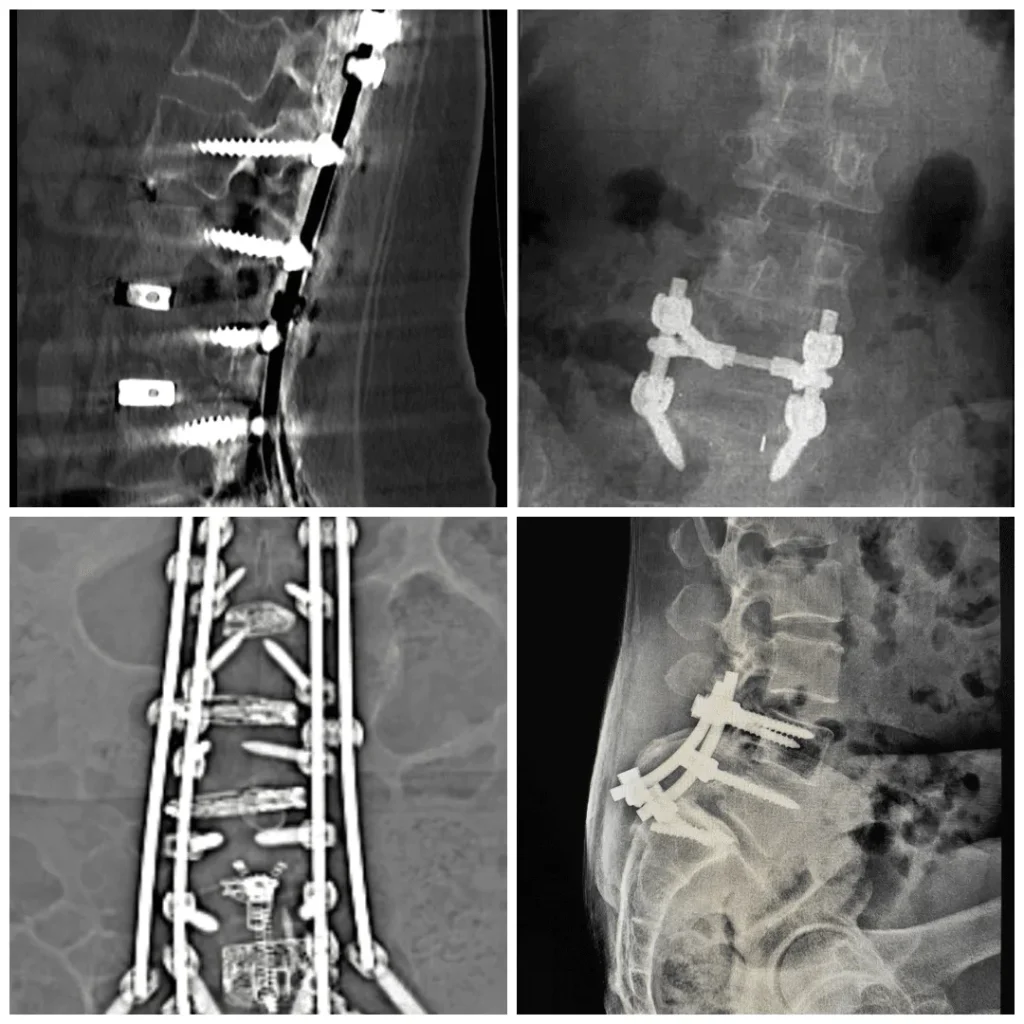
According to a review published in Spine journal, radiographic adjacent segment degeneration occurs in 36% to 100% of patients after lumbar fusion, with symptomatic adjacent segment disease developing in 5.2% to 18.5% of patients during follow-up periods.¹⁰ A separate analysis found the risk of adjacent segment disease runs 2% to 14% per year in the lumbar spine, and reoperation rates reach 22% within 10 years after cervical fusion.¹¹
Beyond adjacent segment disease, fusion carries additional drawbacks:
- Permanent loss of spinal motion at the treated level
- Lengthy recovery periods of six months or more
- Risk of hardware failure, loosening, or breakage
- Surgical risks including infection and significant blood loss
- Potential need for additional surgeries as adjacent segments break down under compensatory stress
- Chronic muscle damage from surgical dissection of the paraspinal muscles¹⁰ ¹¹
A Better Alternative: Deuk Laser Disc Repair®
Deuk Laser Disc Repair® (DLDR) is a non-fusion, minimally invasive procedure developed by Dr. Ara Deukmedjian that treats the root cause of herniated disc pain not just its symptoms. Unlike RFA, which burns a nerve outside the disc, and unlike fusion, which eliminates spinal motion, DLDR uses a precision laser to remove only the damaged, inflamed disc material that is compressing nerves and causing pain.
How DLDR® Differs from RFA and Fusion
Radiofrequency ablation masks pain signals. Spinal fusion eliminates motion. Deuk Laser Disc Repair® repairs the disc itself. The differences show up in every metric that matters to recovery and long-term outcomes.
The method is used to treat any disc herniation anywhere in the spine, whether in the cervical region, thoracic, or lumbar region, such as L3-L4, L4-L5, L5-S1, or C4-C5 and C5-C6. With more than 2,800 procedures performed and a 0.01% complication rate, DLDR cures you permanently by addressing the root cause of your pain.
For Facet Joint Pain: Deuk Plasma Rhizotomy®
For patients whose pain genuinely originates from the facet joints, Deuk Plasma Rhizotomy® (DPR) offers a permanent alternative to the temporary relief provided by conventional RFA. While traditional RFA creates a heat lesion that nerves eventually heal around, DPR uses advanced plasma technology to provide lasting facet joint pain relief without the cycle of repeated procedures.
What You Can Do Right Now
If you’ve been recommended radiofrequency ablation or you’ve already had it and the pain keeps coming back. You are not out of options. At Deuk Spine Institute, we’ve built a system to give patients real answers and real relief:
✅ Free MRI Review by a board-certified neurosurgeon. Not a technician, not a PA, but a surgeon who specializes in minimally invasive spine care
✅ Accurate diagnosis we identify whether your pain is coming from a disc, a facet joint, or another source, so you receive the right treatment for the right condition
✅ Minimally invasive laser spine surgery no hospital stays, no fusions, no unnecessary pain
We’ve helped thousands of patients who were told they had no options. Patients who were cycling through injections and ablations with no lasting relief. Finally get the diagnosis and permanent care you deserve.
RFA treats facet joints. Your herniated disc needs a different answer
Stop masking the signal.
Eliminate the source.
Only 15–45% of chronic back pain is facet-related. If your pain comes from a herniated disc, RFA can’t reach it—and fusion trades motion for hardware. Deuk Laser Disc Repair® removes the damaged disc material permanently, with no fusion and no metal.
nerves regenerate
not facet-related
performed to date
- Burns a nerve outside the disc
- Relief fades in 6–24 months
- Cannot reach disc inflammation
- Repeat procedures required
- Fuses vertebrae with metal hardware
- Eliminates motion at treated level
- Up to 22% reoperation in 10 yrs
- 6–12 month recovery
- Laser removes only damaged disc tissue
- Permanent relief at the source
- 0.01% complication rate
- Same-day outpatient, no hardware
Pain truly from facet joints? Deuk Plasma Rhizotomy® provides permanent facet relief—no repeated ablations.
Deuk Spine Institute · Board-certified neurosurgeon · Disc pain or facet pain—we treat the right one
Frequently Asked Questions
Does radiofrequency ablation work for herniated discs?
No. RFA targets the medial branch nerves that supply the facet joints.¹ It cannot access the interior of a spinal disc, reduce disc inflammation, or decompress a pinched nerve root.³ If your pain is caused by a herniated or bulging disc, RFA will not treat the source of your pain. It is only appropriate for confirmed facet joint or sacroiliac joint pain.
How long does radiofrequency ablation pain relief last?
The Mayo Clinic Health System says that relief normally lasts between nine and twelve months but some people get pain relief for several years.² However, since nerves regenerate, the pain comes back and the procedure needs to be done again. Some patients experience no relief at all.⁹
What percentage of back pain is caused by facet joints?
It is established in controlled diagnostic studies that facet joints contribute to 15%-45% of chronic low back pain conditions.⁴ Hence, the remaining proportion of chronic back pain patients 55%-85%. Suffer pain from other anatomical sources, usually herniated and degenerative discs.
What is the difference between RFA and Deuk Laser Disc Repair?
RFA burns a nerve to temporarily block pain signals from the facet joints.¹ It does not fix anything it masks a symptom. Deuk Laser Disc Repair® removes the damaged disc material that is causing nerve compression and inflammation, providing permanent relief. DLDR preserves the spine’s natural structure with no hardware, no fusion, and no bone removal.
Is spinal fusion the only surgical option for herniated discs?
No. Spinal fusion is a major surgery that permanently eliminates motion at the treated spinal segment and carries a significant risk of adjacent segment disease. Reported in up to 100% of patients radiographically and 5.2% to 18.5% symptomatically.¹⁰ Deuk Laser Disc Repair® is a minimally invasive, non-fusion alternative with a 0.01% complication rate and rapid recovery.
Can radiofrequency ablation make my condition worse?
RFA, by itself, is not likely to aggravate a herniated disc. The true risk comes when the diagnosis is wrong – receiving RFA for pain when the source of the pain is a herniated disc will continue to cause further deterioration of the condition while providing you only temporary, or no, pain relief.
How do I know if my pain is from a facet joint or a herniated disc?
An MRI is the gold standard for identifying disc herniations.³ For facet joint pain, doctors use a diagnostic medial branch block. A short-acting numbing injection near the facet joint nerve. If the block provides temporary relief, the facet joint is confirmed as a pain source.¹ At Deuk Spine Institute, our free MRI review can help identify your exact pain source so you receive the right treatment.
Sources
View Sources
- Cleveland Clinic. Radiofrequency Ablation (RFA): What It Is & Procedure. Updated 2025.
- Mayo Clinic Health System. Radiofrequency Ablation for Back Pain. Published September 2023.
- NIH StatPearls. Disk Herniation. Updated 2025.
- NIH PMC. Facet Joint Syndrome: Pathophysiology, Diagnosis, and Treatment. Published 2022.
- PubMed. Low back pain associated with lumbar disc herniation: role of moderately degenerative disc and annulus fibrous tears. Published 2015.
- UCLA Health. Radiofrequency Ablation — Spine Care.
- Barrow Neurological Institute. Herniated Disc. Updated 2026.
- NIH PMC. Annulus Fibrosus Injury Induces Acute Neuroinflammation and Chronic Glial Response in Dorsal Root Ganglion and Spinal Cord. Published 2024.
- Spine-Health. Radiofrequency Ablation (RFA) for Facet and Sacroiliac Joint Pain. Published 2019.
- Spine Journal. Adjacent Segment Disease after Lumbar or Lumbosacral Fusion: Review of the Literature.
- Mayfield Clinic. Q&A: Adjacent Segment Disease and Spinal Surgery. Published 2022.
- NIH StatPearls. Lumbar Facet Arthropathy. Updated 2023.