
By Dr. Ara Deukmedjian, MD
Board Certified Neurosurgeon
Medically reviewed on Aug 18, 2026
Disclaimer: Information provided on this page is for general knowledge purposes only and should not be taken as medical advice.
Key Points
✓ Chronic pain is prevalent among 24.3% of American adults (around 60 million) in 2023. ¹ ²
✓ Modern pain management focuses on addressing pain at its physical origin through minimalistic procedures rather than suppressing symptoms with drugs. ³ ⁴
✓ Epidural steroid injections offer only modest, short-term relief lasting up to three months (AAN, 2025). ⁵ ⁶
✓ Radiofrequency ablation provides facet joint pain relief lasting up to one year, but pain often returns as nerves regenerate. ⁷ ⁸
✓ PRP therapy is rated Level III (fair) evidence for intradiscal use by the 2025 ASIPP guidelines. ⁹ ¹⁰
✓ Failed back surgery syndrome occurs in up to 32.5% of traditional spine surgery patients. ¹⁹ ²⁰
✓ Deuk Laser Disc Repair® has a peer-reviewed 94.6% success rate, current 99% pain elimination rate, and 0.01% complication rate across 2,700+ procedures. ¹¹ ¹²
What Is Advanced Pain Management?
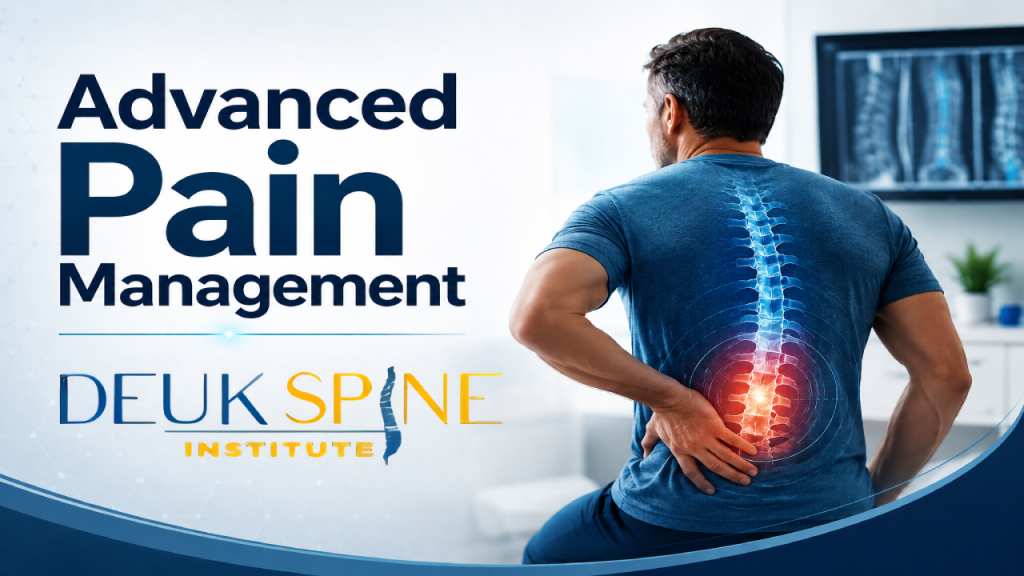
Advanced pain management is a medical specialty devoted to diagnosing and treating pain-related disorders using interventional techniques. Unlike general pain management, which often relies on oral medications alone, advanced pain management seeks to identify the structural source of pain and address it directly through targeted, minimally invasive procedures. ³ ⁴
The goal is not simply to reduce pain temporarily. It is to restore function, improve quality of life, and reduce or eliminate the need for long-term medication use including opioids. ⁴
Physicians who specialize in advanced pain management must possess in-depth knowledge of the physiology of pain, the ability to interpret specialized diagnostic imaging such as MRI and CT, skill in performing interventional procedures (such as epidural injections, facet blocks, nerve ablations, and regenerative therapies), and experience with both conservative and surgical treatment pathways. ³ ⁴

Why advanced pain management matters now
Chronic pain has become one of the most significant public health crises in the United States. According to CDC data published in November 2024, 24.3% of U.S. adults experienced chronic pain in 2023, up from 20.4% in 2019 an increase that occurred across most demographic groups. ¹ ² Of those, 8.5% (approximately 21 million people) experience high-impact chronic pain that frequently limits work and daily activities. ¹
The economic burden is staggering. A 2025 study published in Medical Care estimated that chronic pain costs the U.S. approximately $700 billion annually in direct healthcare costs, lost productivity, and disability payments. ¹³ Low back pain alone remains the leading cause of years lived with disability worldwide and is projected to affect 850 million people annually by 2050. ⁷
Meanwhile, opioid prescribing for chronic pain has dropped 52% from its 2012 peak, falling from 260.5 million prescriptions to 125.7 million in 2024. ¹⁴ This has created an urgent need for effective, non-opioid pain management alternatives. Which is precisely what advanced pain management provides.
Understanding Back Pain and Neck Pain: The Most Common Chronic Pain Conditions
The most common conditions treated through advanced pain management are chronic back pain and chronic neck pain. Understanding the underlying structural causes of these conditions is essential for effective treatment.
Back pain
Every day, millions of people across the United States experience back pain. Back pain can occur when there is a traumatic injury to an intervertebral disc in the spine, which causes an annular tear to form. The pressure on the disc causes herniation of the nucleus pulposus through the annular tear. This triggers an inflammatory response within the torn annular fibers, generating pain signals that travel up the nerves to the brain and produce localized back pain. ¹⁵ When inflammation spreads to nearby nerve roots, it causes radiating leg pain a condition known as sciatica. ¹⁵ ¹⁶
Neck pain
Over 30% of American adults have had neck pain. ¹⁷ It is caused by the same process as back pain. An injury to the intervertebral disc in the neck creates an annular tear and leads to the development of herniation, inflammation, and production of pain signals. Inflammation that involves the nerve roots results in radiating pain in the arm, numbness, or tingling – cervical radiculopathy. ¹⁷
Non-Surgical Advanced Pain Management Treatments
When conservative treatment options fail in treating chronic back or neck pain (rest, physiotherapy, and oral medication), there are several interventional methods that can be employed. Each one is aimed at a specific cause of pain, and it is this match between the two that most patients miss.
Epidural steroid injections (ESIs)
Epidural steroid injection is a procedure where steroids are administered into the area of the spine called the epidural space. This aims to decrease inflammation and relieve pain for cases like radiculopathy, herniated disc, and spinal stenosis. ⁵ ⁶
However, evidence for their long-term effectiveness is limited. A 2025 systematic review published in Neurology by the American Academy of Neurology (AAN), which analyzed 90 studies over a 16-year period, concluded that ESIs may modestly reduce pain for up to three months and disability for up to six months; but found no studies demonstrating effectiveness of repeated treatments or examining their impact on daily function and return to work. ⁵ ⁶
For patients with radiculopathy, the review found that 26% more patients receiving ESIs reported reduced disability at three months compared to controls, and 12% more at six months. ⁶ For spinal stenosis, the evidence was weaker and less consistent. ⁵
ESIs are best understood as a temporary, diagnostic, and symptom-management tool not as a cure for the underlying structural problem. ⁵ ⁶
Facet block injections and medial branch blocks
Facet joint injections refer to the administration of local anesthetics (and sometimes steroids) either in or around the facet joint to check whether the facet joint is causing pain. Medial branch blocks involve the injection of numbing medication around the tiny nerve fibers that carry pain sensations from the facet joints. ⁷ ⁸ The injections have a twofold function of being diagnostic and pain-relieving.
Radiofrequency ablation (RFA) / Rhizotomy
If diagnostic facet blocks demonstrate that the pain emanates from facet joints, radiofrequency ablation can offer more prolonged relief. Radiofrequency ablation utilizes the application of radiofrequency energy to create a thermal lesion in the medial branch nerve, thereby blocking pain signals from the facet joint. ⁷ ⁸
Radiofrequency ablation has emerged as the gold standard for the management of chronic pain resulting from facet joints, with literature demonstrating significant pain relief for up to a year or even longer in many cases. ⁷ A comparative effectiveness study carried out in 2026 reported that RFA was the most reliable form of percutaneous facet treatments in terms of providing prolonged relief. ⁸ However, nerve regenerations tend to occur within 6-18 months, and pain could resurface. ⁷ ⁸
A systematic review conducted in 2024 identified atrophy of the multifidus muscle as an important complication of RFA in the lumbar area. ⁷
The Deuk Plasma Rhizotomy® procedure offers an advanced endoscopic alternative to traditional radiofrequency ablation offering direct visualization of the facet joint and hence better management of the pain-generating site.
Platelet-rich plasma (PRP) therapy
PRP therapy concentrates platelets and growth factors from a patient’s own blood and injects them into damaged tissue to stimulate healing. For spinal pain, PRP has been used in both intradiscal and epidural applications. ⁹ ¹⁰
The 2025 ASIPP (American Society of Interventional Pain Physicians) guidelines the most comprehensive evidence-based review of regenerative therapies for chronic low back pain. Rated intradiscal PRP at Level III (fair) evidence with a moderate clinical recommendation. ⁹ A 2023 systematic review of 13 RCTs and 27 non-RCTs found that PRP offers a safe alternative with significant benefits and minimal side effects. ¹⁰
However, a 2025 meta-analysis comparing PRP to corticosteroid injections for lumbar radicular pain found that PRP did not demonstrate superior improvements in pain or disability scores, and called for higher-quality RCTs with standardized PRP preparation protocols. ¹⁸
PRP therapy is promising but should be considered within a comprehensive treatment plan rather than as a standalone solution.
Bone marrow aspirate concentrate (BMAC) therapy
BMAC therapy is an example of a stem cell-based therapy for regeneration. Bone marrow houses stem cells that have the capability of differentiating into bone, cartilage, and connective tissues. Using a special needle, an enriched collection of these cells is collected from the bone marrow of the patient and injected into the site of injury to regenerate tissues. ⁹
Intradiscal BMAC received a fair Level III evidence according to ASIPP 2025 guidelines with a moderate clinical recommendation same as PRP. ⁹ More high-quality randomized controlled trials will be necessary for further evidence.
When Non-Surgical Treatments Fail: Surgical Options
Once conservative treatment and interventional techniques have not produced results despite being administered adequately for a sufficient trial period (usually 6–12 weeks) or when there is progression of neurologic symptoms, surgical interventions come into play. ¹⁶
A surgery needs to be chosen depending on the underlying pathology responsible for the pain. Sadly, there are numerous people who undergo spinal surgeries, which do not bring about any significant results. A prospective cohort study conducted in 2024 involving 512 patients found that there was a presence of FBSS among 32.5% of the study participants, while a study using an insurance claims database involving over 102,000 patients found that 8.4% were diagnosed with FBSS within a year of their first surgery. ¹⁹ ²⁰
Traditional spine surgeries and their limitations
Classical surgical interventions for disc-related back and neck pain are:
Spinal fusion is performed by surgically joining two or more vertebrae with metal instruments and bone grafts. Although it is useful for providing stability, this procedure leads to a loss of mobility of the fused vertebral segments, and adjacent segment disease is a recognized complication. ¹⁹ ²¹
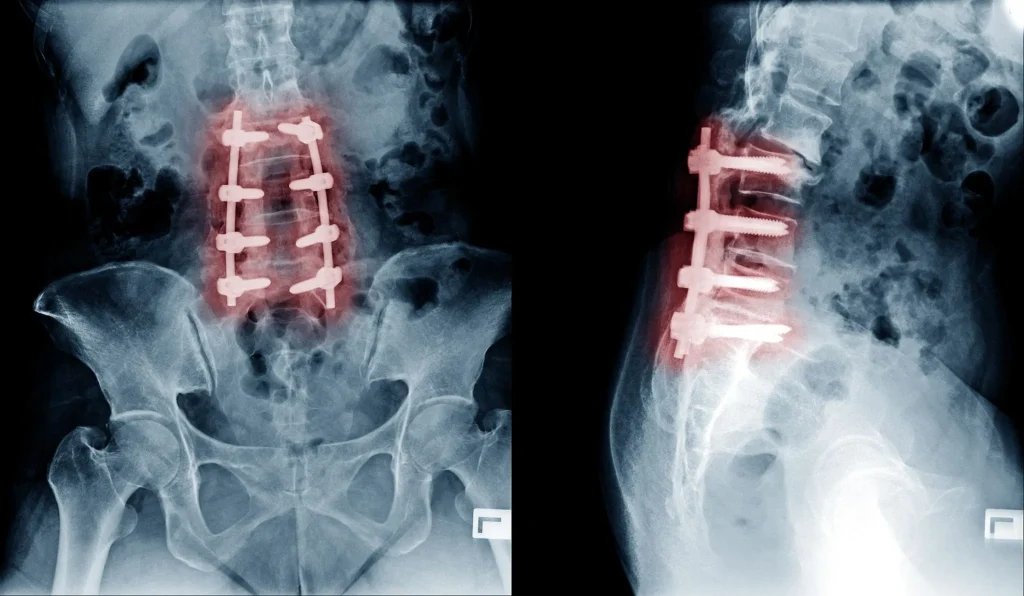
Microdiscectomy is a technique aimed at the removal of the herniated part of the disc. Although it helps to relieve leg pain, it does not eliminate an inflammation of annular tear; thus, the main cause of axial back or neck pain remains. ²¹
Laminectomy is a removal of part of the bony vertebra called lamina to decompress the spinal cord. This procedure requires cutting through bone and muscles, thereby damaging structural integrity of the spine. ²¹
All of the above surgical procedures are characterized by hospitalization, anesthesia, large amount of tissue trauma and prolonged recovery time. There are significant risks of serious complications including infection, hardware malfunction, dural tears, and even revision surgery. ¹⁹
Deuk Laser Disc Repair®: The Minimally Invasive Alternative
Deuk Laser Disc Repair® is a full-endoscopic, minimally invasive laser spine surgery developed by Dr. Ara Deukmedjian, MD. A board-certified neurosurgeon and a pioneer in endoscopic back and neck pain treatment. ¹¹ ¹²
Unlike traditional surgeries that cut through bone, remove healthy tissue, or fuse vertebrae together, DLDR treats the actual structural source of discogenic pain: the inflamed posterior annular tear. Dr. Deukmedjian was the first surgeon in the world to publish this endoscopic laser debridement technique. ¹¹
How Deuk Laser Disc Repair® works
The procedure begins with a 4–7 mm incision smaller than the diameter of a pencil eraser. A cylindrical dilator is inserted to gently separate muscle tissue (without cutting it), creating a narrow passage through which the entire surgery is performed endoscopically. ¹¹ ¹²
An endoscopic camera is inserted through a tubular retractor, providing high-definition visualization inside the disc. A precision Holmium YAG laser is guided with millimeter accuracy to remove only the damaged, inflamed tissue from the posterior annular tear and the herniated nucleus pulposus. This process is called debridement of the annular tear. Eliminates the pain-generating tissue while preserving healthy disc structure. ¹¹
The procedure takes approximately one hour, is performed under light sedation in an outpatient surgery center, and the patient goes home the same day. No hospital admission is required. No opioid painkillers are needed after surgery. ¹¹ ¹²
Published outcomes
Deuk Laser Disc Repair® is the only peer-reviewed, published surgery that specifically treats the inflamed annular tear as the source of discogenic pain. Published outcomes include:
A peer-reviewed study in Surgical Neurology International on 66 consecutive cervical DLDR patients found a 94.6% overall success rate, with 50% of patients achieving 100% resolution of all symptoms. VAS pain scores dropped from 8.7 preoperatively to 0.5 postoperatively. No perioperative complications occurred. ¹¹
Published peer-reviewed abstracts on lumbar DLDR in 215 procedures demonstrated 91.7% resolution of axial pain and 92.1% resolution of radicular symptoms with zero complications. ¹²
Current outcomes across more than 2,700 procedures show 99% pain elimination with a 0.01% complication rate. ¹² ²²
Conditions treated
Deuk Laser Disc Repair® effectively treats several spinal conditions at their structural source:
Herniated disc — When the nucleus pulposus pushes through a torn annulus fibrosus and compresses nearby nerves, DLDR removes the herniated material and debrids the inflamed annular tear. ¹¹
Bulging disc — Similar to herniated discs, bulging discs that cause pain through annular inflammation and nerve compression can be repaired with the same endoscopic laser technique. ¹¹
Degenerative disc disease — Untreated disc inflammation leads to progressive disc degeneration. DLDR treats the inflamed annular tear before further degeneration occurs. ¹¹
Spinal stenosis — When herniated discs or degenerative changes narrow the spinal canal, DLDR can remove the contributing disc pathology and decompress the neural structures. ²²
Sciatica and radiculopathy — Radiating arm or leg pain caused by disc herniation compressing nerve roots is directly addressed by removing the herniated material. ¹¹ ¹⁶
Advanced Pain Management: Non-Surgical vs. Surgical Treatments Compared
Epidural injections and radiofrequency ablation manage symptoms. Fusion eliminates motion. Deuk Laser Disc Repair® repairs the source. Here is how each approach compares across the metrics that shape outcomes and recovery.
Curing Chronic Pain: Beyond Pain Management
While advanced pain management techniques provide essential tools for diagnosis and temporary relief, the ultimate goal should be eliminating the source of chronic pain not managing it indefinitely.
At Deuk Spine Institute, we treat a variety of spinal conditions using world-class interventional pain management techniques, evidence-based therapy, and groundbreaking surgeries such as Deuk Laser Disc Repair®. We understand that becoming pain-free can feel like being reborn.
If you are suffering from chronic back or neck pain, submit your MRI for a free review and begin your path toward living a pain-free life.
60 million Americans live with chronic pain.
You don’t have to be one of them.
Epidural injections wear off in three months. RFA nerves regrow within a year. Spinal fusion fails up to 32.5% of the time. These treatments manage pain — Deuk Laser Disc Repair® eliminates it at the source, through a 4–7 mm incision, same-day, no opioids.
Board-certified neurosurgeon · 2,700+ procedures · Same-day outpatient · No opioids required
FAQs
What is advanced pain management?
Advanced pain management is a field in medicine which utilizes interventional methods like injection procedures, nerve blockades, regenerative treatment methods, and minimally invasive surgical operations to treat the structures causing chronic pain. ³ ⁴ While conventional pain management mainly employs medicines, advanced pain management aims at locating the structures or nerves which cause the pain.
What is the most effective treatment for chronic back pain?
The most effective treatment depends entirely on the specific structural cause of your pain. ³ Facet joint pain responds well to radiofrequency ablation. ⁷ ⁸ Disc-related pain (herniated discs, bulging discs, degenerative disc disease) is most effectively treated by procedures that address the damaged disc itself. Deuk Laser Disc Repair® has a published 94.6% success rate for cervical disc disease and current outcomes showing 99% pain elimination. ¹¹ ¹² Epidural steroid injections provide only short-term relief. ⁵ ⁶
Do epidural steroid injections actually work for back pain?
A 2025 systematic review by the American Academy of Neurology found that epidural steroid injections may modestly reduce pain for up to three months and disability for up to six months for some patients but the effects are limited and there is no evidence that repeated injections are effective. ⁵ ⁶ They are best used as a diagnostic and short-term management tool, not a long-term solution.
What is the difference between pain management and pain elimination?
Pain management attempts to decrease pain to a tolerable level using repetitive treatments like injections, medicines, or physiotherapy. Pain elimination involves addressing the structural cause of pain (inflammation of annular tear or disc herniation) and treating it so that the pain will not recur in the future. ¹¹ Deuk Laser Disc Repair® eliminates the cause of discogenic pain as opposed to managing the pain.
Is PRP therapy effective for back pain?
PRP has demonstrated itself to be effective as a safe and non-surgical treatment for chronic low back pain. The 2025 ASIPP guidelines have assigned a Grade III (fair) level of evidence to the intradiscal use of PRP with a moderate clinical recommendation. ⁹ ¹⁰ Nevertheless, a 2025 meta-analysis showed that PRP was not superior to corticosteroid injections when treating lumbar radicular pain. ¹⁸ PRP can be considered in the overall treatment strategy; however, it has not been proven to be equivalent to surgical treatment of diagnosed disc problems.
What is failed back surgery syndrome, and how common is it?
Failed back surgery syndrome (FBSS) refers to persistent or recurrent pain after one or more spinal surgeries. A 2024 prospective study found FBSS occurred in 32.5% of cases. ¹⁹ A large insurance database study of over 102,000 patients found 8.4% were diagnosed with FBSS within 12 months. ²⁰ FBSS is most common after spinal fusion and multi-level procedures. The high failure rate of traditional spine surgery is one of the key reasons for minimally invasive alternatives like Deuk Laser Disc Repair® which has a 0.01% complication rate. ¹² ¹⁹
How is Deuk Laser Disc Repair® different from traditional spine surgery?
Deuk Laser Disc Repair® is a full-endoscopic procedure performed through a 4–7 mm incision under light sedation. ¹¹ It uses a precision laser to remove only the damaged, inflamed tissue inside the disc while preserving healthy disc structure and spinal motion. Traditional surgeries such as spinal fusion, laminectomy, and microdiscectomy involve larger incisions, general anesthesia, hospital stays, bone cutting, and significantly longer recovery periods. ¹¹ ¹² ²¹ DLDR patients go home the same day and do not require opioid painkillers after surgery. ¹¹
Sources
View Sources
- Lucas JW, Sohi I. Chronic pain and high-impact chronic pain in U.S. adults, 2023. NCHS Data Brief No. 518. Nov 2024.
- MMWR QuickStats: Chronic pain by sex and urbanization — U.S., 2023. MMWR. 2025;74(7).
- Physiopedia. Pain management overview. 2024.
- Manchikanti L, et al. ASIPP opioid guidelines for chronic non-cancer pain. Pain Physician. 2023;26:S7–126.
- Armon C, Narayanaswami P, et al. ESIs for chronic back pain: AAN systematic review. Neurology. Feb 2025.
- AAN press release. Epidural steroid injections for chronic back pain. Feb 14, 2025.
- Radiofrequency Ablation. StatPearls. Updated Jul 2026.
- Comparative effectiveness of RFA, cryodenervation, and endoscopic denervation for lumbar facet pain. Spine. 2026;10:S42–S51.
- Manchikanti L, et al. ASIPP regenerative therapy guidelines: 2025 update. Pain Physician. 2025.
- Schol J, et al. Cell transplantation and PRP for disc degeneration-related pain: systematic review. JOR Spine. 2024;7(2):e1348.
- Deukmedjian AJ, et al. DLDR for symptomatic cervical disc disease. Surg Neurol Int. 2013;4:68.
- Deuk Spine Institute. Peer-reviewed publications & patents.
- Guy GP Jr, et al. Economic costs of chronic pain — U.S., 2021. Med Care. 2025;63(9):679–685.
- AMA. National opioid prescribing trends. 2025 Report.
- Davis D, et al. Sciatica. StatPearls. Updated Jan 2024.
- Physiopedia. Lumbar radiculopathy. 2024.
- Cohen SP. Epidemiology, diagnosis, and treatment of neck pain. Mayo Clin Proc. 2015;90(2):284–299.
- PRP vs corticosteroid injections for lumbar radicular pain: systematic review and meta-analysis. J Orthop Surg Res. 2025.
- Li Z, et al. Risk factors and prediction model for FBSS. Heliyon. 2024;10(22):e40607.
- Baber Z, Erdek M. FBSS incidence by setting and procedure type. Spine J. 2022.
- Clinical insights and statistical analysis of FBSS: multicentric retrospective review. PMC. 2024.
- Deuk Spine Institute. DLDR outcomes and clinical data.