
By Dr. Ara Deukmedjian
Board Certified Neurosurgeon
Reviewed on July 28, 2026
Disclaimer: The material provided herein is purely educational and does not qualify as professional medical advice. Actual results may differ. Consultation with your personal physician regarding your individual case should always be sought.
Key Points
- Pain in the thoracic spinal region affects one out of ten men. And one out of five women, but it is underdiagnosed.¹
- Postural issues and muscle strain are the most prevalent causes, although slipped discs, fractures, and joint problems can be overlooked.
- Symptoms frequently mimic heart, lung, or GI conditions. Delaying accurate diagnosis.
- Leg weakness progressing down, bowel or bladder disturbances. Or persistent nighttime pain are serious warnings that need urgent attention.
- Various pain sources: discs, facets, costovertebral joints. All have to be treated differently.
- Deuk Laser Disc Repair® is the treatment for discogenic thoracic pain with a 99.6% success, 0.01% complication rate, same day return to activities, and no fusion.¹⁶
Pain that is felt in between your shoulder blades or that surrounds your rib cage area can be very worrying and puzzling. The type of back pain caused by the thoracic spine, the twelve vertebrae of the mid-spine, affects many more people than expected. Studies have found that this condition affects 1 in 10 men and 1 in 5 women at any one point in time, and 3%-55% of workers during one year.¹ ²
Contrary to neck pain or low back pain, the causes of thoracic spine pain tend to go undiagnosed. The symptoms can be mistaken for heart attacks, lung ailments, or digestive system issues, leading patients into expensive loops of diagnosis before getting down to the root musculoskeletal problem. This article addresses all significant causes of thoracic spine pain, the red flags that call for medical attention, and treatments available.
Understanding the Thoracic Spine
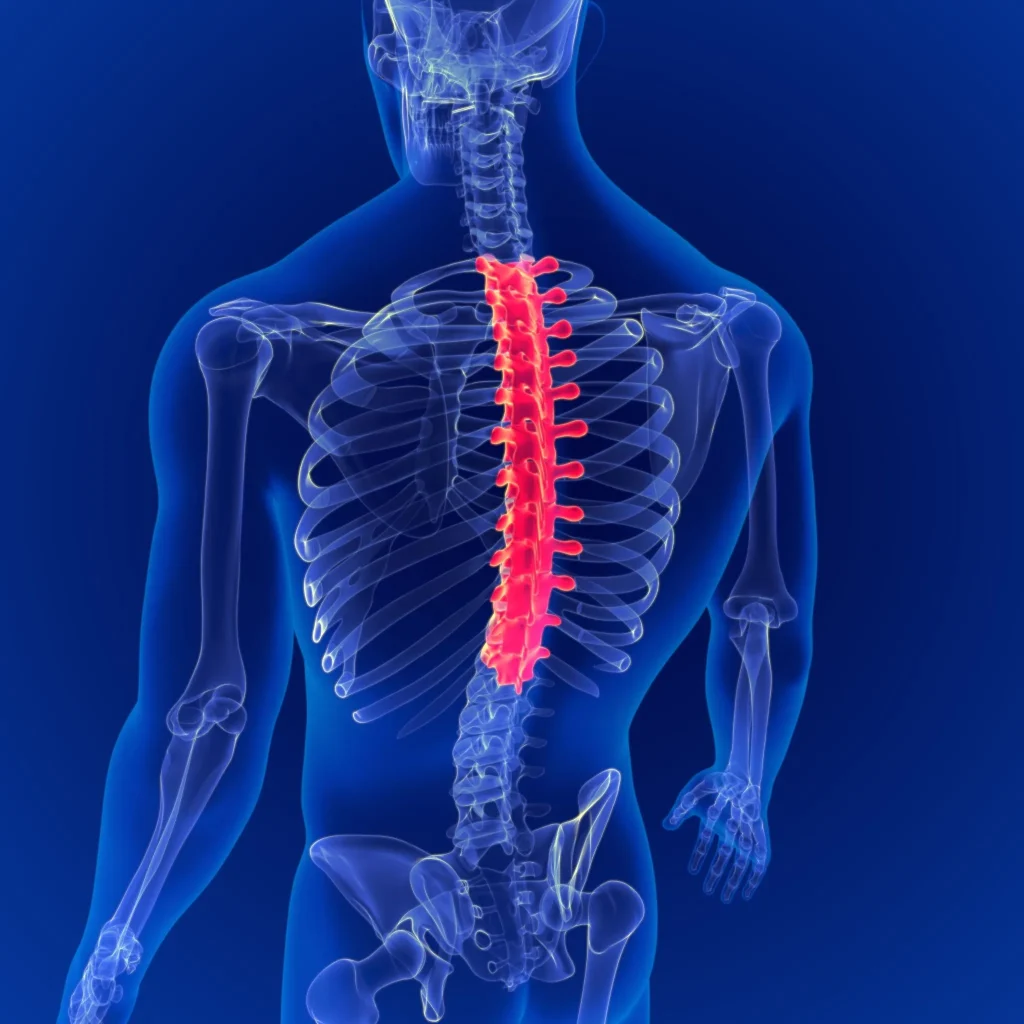
The thoracic region is composed of twelve vertebrae (T1-T12). Which lie between the neck and lower back sections.³ These vertebrae articulate with two ribs each and form the thoracic cavity housing the heart and lungs. What distinguishes the thoracic spine from other regions is the rib articulation that limits its flexibility but provides protection.
This is a two-edged sword because thoracic disc herniation is rare compared to lumbar and cervical disc herniation, but when there are any complications at this site, they tend to be persistent and easily ignored.
Key structures that can generate thoracic pain include:
- Intervertebral discs: shock absorbers between each vertebra
- Facet joints: small paired joints at the back of each vertebra
- Costovertebral and costotransverse joints: where each rib connects to the spine⁴
- Paraspinal muscles, ligaments, and fascia: the soft tissues that enable movement
Each structure requires a different treatment approach, making accurate identification of the pain source essential.
Common Causes of Thoracic Spine Pain
Muscular Strain and Myofascial Pain
Muscular pain is the main reason why people have chest pain.⁵ Since there is less flexibility in the thorax, there will be more work from the surrounding muscles in any movement of the upper body. Some of these causes are:
- Prolonged poor posture during desk work
- Repetitive overhead movements
- Heavy lifting with improper form
- Sudden awkward twisting injuries
The pain is usually experienced as a dull ache between the shoulder blades and gets worse with prolonged postures and improves with activity. Pain may also be referred from myofascial trigger points, which are hypersensitive spots within tight muscles, leading to perplexing symptoms.
Poor Posture and Postural Dysfunction
Slumping causes an exaggeration of thoracic kyphosis beyond normal limits, causing stress to ligaments and compression of the front of the discs. The following vicious cycle then occurs as a result:
- Chest muscles become tight, drawing the shoulders forward.
- The back muscles become weak and stretched.
- This imbalance (upper crossed syndrome) progressively worsens pain.
What starts as postural fatigue can, over years, accelerate disc degeneration and facet joint arthritis. Turning a correctable habit into structural damage.
Thoracic Disc Herniation
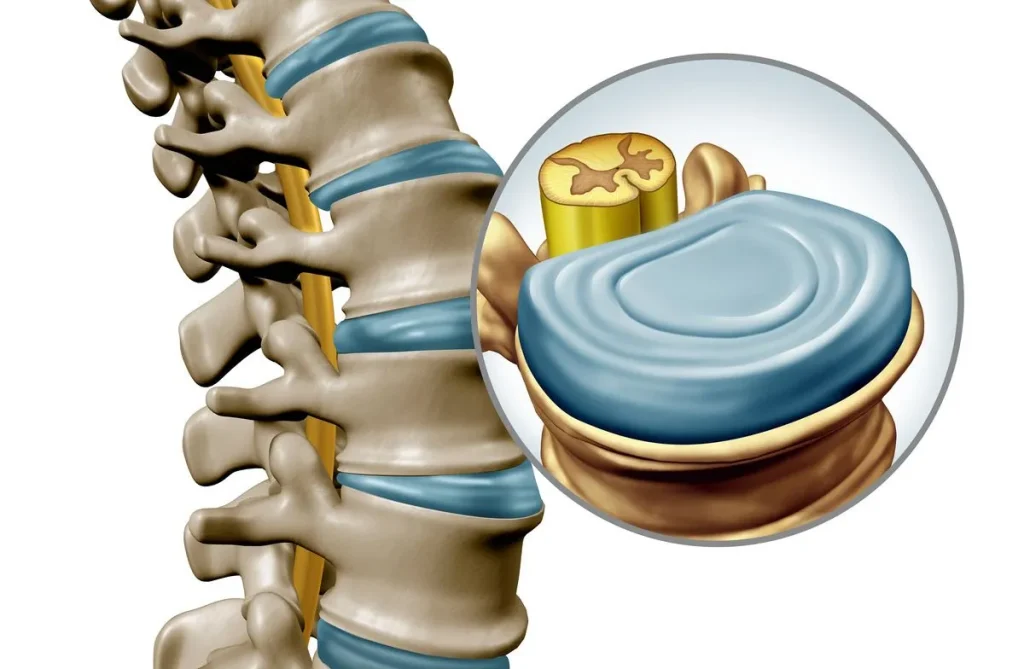
Thoracic disc herniation happens when the inner material of the disc breaks through the outside material into the spinal canal. The incidence rate of thoracic disc herniation is 0.25–0.75%. Which is very low compared to other disc herniations. However, it needs special consideration due to the narrowness of the thoracic canal.⁶
The lower levels (T8–T12) account for about 75% of thoracic herniations.⁷ Symptoms depend on direction:
- Central herniation: spinal cord compression (myelopathy). Difficulty walking, leg weakness, balance problems, possible bowel/bladder dysfunction.
- Lateral herniation: nerve root compression (radiculopathy). Band-like pain wrapping around the chest wall or abdomen.⁸
The major causative factors are age-related degeneration, injury, stress, genetics, and inflammation.⁶
Thoracic Degenerative Disc Disease

With aging, the thoracic discs tend to lose water and thus cannot act as cushioning agents anymore. The consequences include:
- Disc bulging encroaching on the spinal canal
- Bone spur formation at vertebral endplates
- Foraminal narrowing that compresses exiting nerves
- Altered facet joint mechanics at affected levels
The condition often progresses silently for years. By the time symptoms become significant, multiple levels may be involved.
Thoracic Facet Joint Dysfunction
Thoracic facet joints control the range of rotation and lateral flexion in the thoracic spine.⁹ Inflammation or arthritis in this joint leads to the following symptoms:
- Deep pain in the midline that can extend to the scapula
- Aggravation by extension, rotation, or holding a fixed position
- Stiffness in the morning that gets better with movement
- Tenderness on palpation
Facet joint problems often arise due to degenerative discs in the corresponding levels, where degeneration causes a loss of disc height and thus leads to excessive load on the facets.
Costovertebral and Costotransverse Joint Dysfunction
Of the most under-diagnosed reasons for chest pain, the costovertebral joints are the joints between each rib and the spine.4 Dysfunction manifests itself in painful one-sided pain that is exacerbated by:
- Deep breathing, coughing, or sneezing
- Chest rotation or side flexion
- Overhead movements (upper thoracic joints) or chest rotation (middle/lower thoracic joints)
These symptoms mimic other conditions, including heart problems and lung conditions. Case studies have documented patients being sent for heart tests prior to discovering the true source of the problem.¹⁰
Vertebral Compression Fractures
Compression fractures happen due to vertebral body collapse, often because of osteoporosis. They are the most common fractures of osteoporosis, with 40% of women experiencing them by the time they are 80 years old.¹¹ These types of fractures happen easily when the bones are weak:
- Bending forward or picking up an object of moderate weight
- Forceful coughing or sneezing
- Tripping or falling off a step
Usually, the vertebra collapses in the wedge shape, leading to an increased kyphosis of the thoracic region.12
Scheuermann’s Disease
This developmental condition causes excessive thoracic kyphosis during adolescence through structural wedging of three or more consecutive vertebrae. Unlike postural kyphosis, it cannot be corrected by standing straighter.¹³
- Affects 1–8% of the population; presents during the adolescent growth spurt.¹⁴
- The 7th through 10th thoracic vertebrae are most commonly involved.
- Curves exceeding 75 degrees are especially likely to cause severe, persistent pain.
- About 50% of patients with thoracic deformity report severe back pain.¹⁵
- It is often mistaken for “poor posture,” leading to delayed treatment.
If untreated, Scheuermann’s disease will increase the pace of disc degeneration, which can further result in problems like stenosis, radiculopathy, and spinal cord compression.
Thoracic Spinal Stenosis
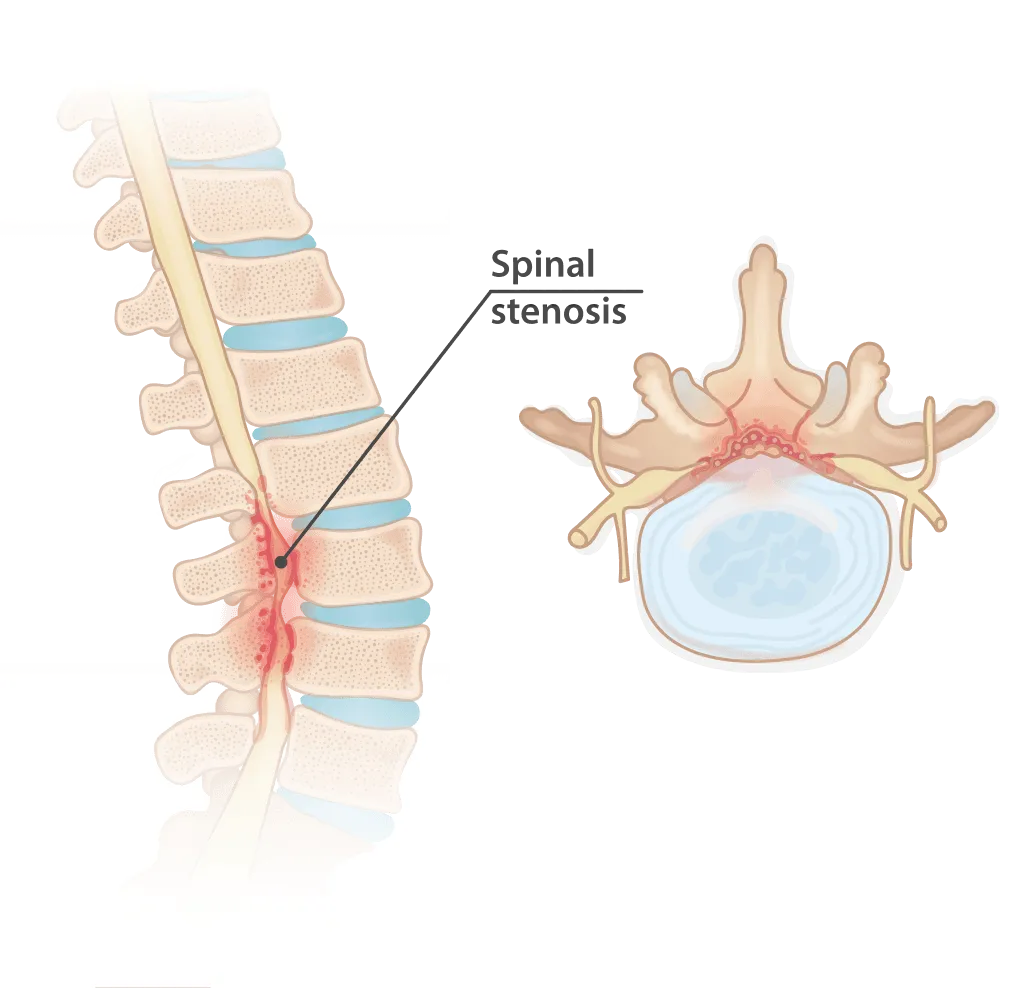
Thinning of the thoracic spinal canal is especially dangerous since the canal is already quite narrow in this area. The condition develops through degenerative means such as disc bulge, enlarged facets, bone spurs, and thickened ligaments. It develops slowly:
- Progressive leg weakness or heaviness
- Balance and coordination difficulties
- Gait abnormalities
- Lower extremity numbness
- Bowel or bladder dysfunction in advanced cases
Many patients attribute these slowly developing symptoms to aging rather than recognizing spinal cord compression.
Scoliosis and Spinal Deformities
Abnormal lateral curvature of the thoracic spine can produce chronic mid-back pain from muscle imbalances, facet stress, and disc degeneration at the curve’s apex. Degenerative scoliosis is developing in adults from asymmetric joint and disc wear. It is an increasingly common cause of complex thoracic pain.
Thoracic Radiculopathy
Compression of a thoracic nerve root produces distinctive band-like pain radiating from the back around the chest or abdomen.⁵ Described as burning or electric, it can mimic:
- Heart attack symptoms
- Shingles (before the rash)
- Gallbladder or pancreatic disease
This diagnostic mimicry makes thoracic radiculopathy one of the most frequently delayed diagnoses in spine care.
Inflammatory and Autoimmune Conditions
Several conditions preferentially affect the thoracic spine:
- Ankylosing spondylitis – progressive stiffness and pain, eventually fusing vertebrae into a fixed forward posture.
- Rheumatoid arthritis – affects thoracic facet joints and costovertebral joints.
- Psoriatic or reactive arthritis – affects thoracic vertebral bones.
The characteristic feature of inflammation of the spine is its increase with inactivity and relief with activity with early morning stiffness persisting for more than 30 minutes.
Spinal Tumors and Infections
Rarity notwithstanding, cancer that has spread to other body parts tends to occur in the thoracic spine. This cancer includes breast, lung, prostate, and kidney cancers. The symptoms may include:
- Pain that increases at nighttime
- Unexplained weight loss or fever
- History of cancer or immunosuppression
- Constant, progressive pain unrelieved by rest
Spinal infections can cause rapid neurological deterioration and require urgent treatment.
Visceral pain due to organs
Thoracic spinal nerves innervate many internal organs, so visceral conditions can present as mid-back pain:
- Cardiac: Heart attack, angina, pericarditis
- Pulmonary: Pneumonia, pleurisy, pulmonary embolism
- GI: Esophageal disorders, gallbladder disease, pancreatitis
- Vascular: Aortic dissection or aneurysm
Emergent care is recommended for any new thoracic pain, especially if associated with chest tightness or breathing difficulty.
Symptoms and Signs that you Cannot Ignore
Warning Signs that Need Immediate Medical Attention
- Weakness in your legs or sudden trouble walking
- Incontinence of the bowels or bladder
- Numbness of the saddle region (groin and inner thighs)
- Acute pain after suffering an injury
- Chest pain along with thoracic pain, shortness of breath or fast heart beat
- Fever in combination with back pain
- Pain dramatically worse at night in every position
Symptoms Warranting a Scheduled Evaluation
- Pain persisting beyond 2–3 weeks despite self-care
- Progressively worsening pain
- Numbness or tingling into the chest wall or extremities
- Band-like pain radiating around the ribcage
- Morning stiffness lasting over 30 minutes
- Pain with unintentional weight loss
How Thoracic Spine Pain Is Diagnosed
History and Physical Examination
Your physician will assess pain patterns, posture, spinal alignment, range of motion, strength, reflexes, and sensation. Provocative tests help identify whether pain originates from facet joints, costovertebral joints, muscles, or discs.
Imaging
- X-rays: bony alignment, fractures, deformities
- MRI: gold standard for discs, spinal cord, tumors, infections
- CT scans: detailed bony assessment, calcified herniations
- Bone scans: suspected fractures, infection, or metastatic disease
Advanced Diagnostics
Specific pain generators may be detected by performing diagnostic blocks, facet injections, and thoracic discography. If imaging studies do not give any clear conclusions. It is important to note that MRI findings do not necessarily correspond to patient complaints. A competent clinical examination should always come first.
When to Seek Treatment
The majority of patients find relief in two to three weeks of self-treatment. Exercise changes, over-the-counter anti-inflammatory medications, physical therapy, and posture correction.
If you’ve been told you need thoracic fusion or open surgery, a second opinion is strongly advisable. Advances in minimally invasive spine surgery now offer options that weren’t available even a few years ago. Most critically, ensure all pain generators have been identified. Many patients suffer because treatment addresses one source while others go undiagnosed.
Deuk Laser Disc Repair®: A Minimally Invasive Treatment for Thoracic Spine Pain
Surgery on the thoracic spine in traditional approaches, including fusion, laminectomy, and open discectomy, poses great dangers since the canal is small, and there is the proximity of the spinal cord. Such surgeries involve staying in hospital for long periods, several months of rehabilitation, and use of pain medication.
Thoracic Deuk Laser Disc Repair® takes a fundamentally different approach.¹⁶ Developed by Dr. Ara Deukmedjian, this endoscopic laser procedure removes only the inflamed disc tissue causing pain through a tiny 4–7mm incision, preserving 90–95% of the healthy disc. No hardware, no fusion, no destruction of normal anatomy.
What Thoracic DLDR® Treats
- Thoracic herniated discs, bulging discs, and disc protrusions
- Degenerative disc disease and annular tears
- Thoracic spinal stenosis and foraminal narrowing from disc pathology
- Thoracic radiculopathy (nerve compression causing chest wall or rib pain)
- Thoracic discogenic pain (dorsalgia), estimated to account for 85% of chronic thoracic pain¹⁶
Key Advantages
- Same-day outpatient procedure: walk out within approximately one hour
- 95% success rate: over 2,750 patients treated with no surgical complications¹⁶
- Complete motion preservation: no fusion, no hardware, no adjacent segment disease
- Rapid recovery: return to normal activities within days, not months
- No narcotics: postoperative discomfort managed with OTC medications
- Precision diagnosis: proprietary exam identifies exact pain-generating discs with 99% accuracy
Who Is a Candidate?
Ideal candidates have disc-related thoracic pain that hasn’t responded to conservative treatment. If you’ve been recommended for fusion, laminectomy, or open discectomy, you may qualify for this minimally invasive alternative. Upload your MRI for a free consultation with Dr. Ara Deukmedjian.
Treat the thoracic disc without fusion or spinal-cord risk.
The thoracic canal is anatomically narrow, which is exactly why conventional surgery here carries higher spinal-cord risk and is often delayed. If your MRI shows a thoracic disc herniation or degeneration driving band-like chest or mid-back pain, send your MRI for a free review by Dr. Deukmedjian and learn whether Deuk Laser Disc Repair® can decompress the exact pain-generating disc through a 7 mm incision — no fusion, no hardware, same-day return to activity.
- 99.6%
- Success rate
- 0.01%
- Complication rate
- Same-day
- Return to activity
Frequently Asked Questions
What is the most common cause of thoracic spine pain?
Muscular strain and myofascial dysfunction from poor posture, desk work, or repetitive movements. However, many patients also have underlying facet joint, costovertebral joint, or disc problems that go undiagnosed. A thorough evaluation of all pain generators is essential.
Can thoracic spine pain be a sign of something serious?
Yes. Red flags include progressive leg weakness, bowel/bladder changes, fever, unexplained weight loss, or a cancer history. The thoracic spine is also the most common site for metastatic tumors, and pain can be referred from the heart, lungs, or GI tract.
Why does my thoracic spine hurt when I take a deep breath?
Most commonly costovertebral or costotransverse joint dysfunction. These rib-to-spine joints move with every breath, so irritation makes deep inhalation painful. If the pain is new, severe, or comes with shortness of breath, seek evaluation to rule out cardiac or pulmonary causes.
How long does thoracic spine pain typically last?
Muscular issues often resolve in 2–6 weeks. Joint dysfunction takes longer and usually needs targeted treatment. Chronic conditions like DDD and stenosis require ongoing management. If pain persists beyond three weeks or worsens, see a spine specialist.
Can poor posture permanently damage my thoracic spine?
Years of chronic slouching can accelerate disc degeneration, facet arthritis, and fixed kyphosis. The good news: postural correction with targeted strengthening can slow or halt progression at any stage, but early intervention works best.
What is the difference between thoracic spine pain and a heart attack?
Cardiac pain usually feels like chest pressure with shortness of breath, sweating, or arm/jaw radiation. Thoracic spine pain is more localized to the back and reproducible with movement. However, the two can overlap. New pain with shortness of breath, sweating, or a sense something is seriously wrong warrants emergency evaluation.
Sources
View Sources
- Fouquet N, et al. Prevalence of thoracic spine pain in a surveillance network. Occup Med. 2015;65(2):122–125.
- Briggs AM, et al. Thoracic spine pain in the general population: a systematic review. BMC Musculoskelet Disord. 2009;10:77.
- Cleveland Clinic. Thoracic Spine: What It Is, Function & Anatomy.
- Physiopedia. Costotransverse Disorders.
- Denver Back Pain Specialists. Thoracic Pain Causes & Treatments.
- Goodman Campbell Brain and Spine. What Is a Herniated Thoracic Disc?
- HealthCentral. Thoracic Herniated Disc: Symptoms and Treatment.
- Barrow Neurological Institute. Herniated Thoracic Disc.
- Cole Pain Therapy Group. Thoracic Segmental Joint Dysfunction.
- Elevate Healthcare. Thoracic Facet & Costovertebral Joint Dysfunction.
- University of Maryland Medical Center. Thoracic Compression Fractures.
- Hospital for Special Surgery. Kyphosis.
- Wikipedia. Scheuermann’s Disease.
- Radsource. Scheuermann’s Disease.
- AAPM&R. Scheuermann’s Disease. PM&R KnowledgeNow.
- Deuk Spine Institute. Benefits of Thoracic Deuk Laser Disc Repair®