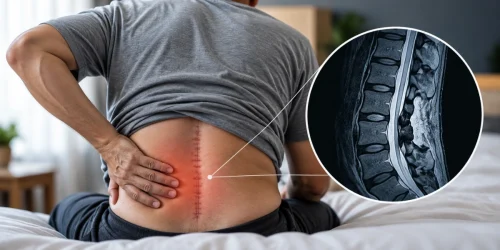


Pain management is built to control symptoms. Inflammation, nerve signaling, muscle guarding, these are what injections and medications target. What they don’t do is repair the structural problem generating those symptoms in the first place. When that problem, most often a torn or degenerated disc, is never identified and treated, the pain predictably returns once an injection wears off or a medication’s effect fades.
But the answer isn’t the same for everyone. Pain management genuinely works well when the source is inflammatory, temporary, or hasn’t been pinpointed yet. Repeat injections that stop lasting as long, or medications that need higher doses to do anything, are usually a sign the source was never confirmed, not that nothing more can be done. Most patients are never told that an MRI by itself cannot identify which structure is actually generating the pain.
If you’ve tried injections or medication and you’re still hurting, the more useful question is whether your actual pain generator has ever been confirmed. The Deuk Spine Exam® correlates your MRI with a physical exam and pain history to find out whether a treatable disc source exists, and a free MRI review is a low-cost way to check before trying another round of the same approach.
Why Doesn’t Pain Management End Chronic Pain
Pain management interrupts pain signals and reduces inflammation. It does not repair torn or degenerated tissue causing them. If a disc is the actual generator, the relief pain management provides is temporary, because the damaged tissue underneath was never touched.
Shots and pills quiet the pain, but if the disc underneath is still torn, the quiet doesn’t last. Once an injected steroid wears off or a nerve regains its ability to signal, the pain tends to return right where it started, sometimes worse than before.
What Is Pain Management Actually Designed To Treat
Interventional pain management targets pain signaling itself. Epidural injections, facet block injections, radiofrequency ablation, and nerve blocks all work on the nervous system’s response to pain, not on the tissue causing it.
Pain management is a strong fit in a few situations:
- An unclear source while diagnostic workup is still in progress
- A purely inflammatory flare with no structural damage behind it
- Bridging pain control before or after a separate procedure
What it isn’t designed to do is repair torn disc tissue or close a structural defect. When the pain keeps returning after each round of treatment, that’s often the clue that the source itself was never addressed.
Why Do Injections and Medications Lose Their Effect Over Time
Acute inflammation, the kind from a minor strain, typically heals on its own within about two weeks. Chronic inflammation from an unresolved disc injury doesn’t follow that pattern. It persists, and over time it can drive neoinnervation, meaning pain-carrying nerve fibers grow into the damaged tissue itself.
Each injection calms that signal for a while. But if the disc tissue keeps generating the same inflammatory response, the nerve fibers regrow, the signal returns, and many patients find they need injections more often or at higher doses just to get the same relief.
This is different from the conservative treatment failure point most doctors use, typically 6 to 12 weeks of non-surgical care without improvement. A disc that keeps re-inflaming past that window is telling you something about the source, not about your pain tolerance.
How Do You Know If an Untreated Disc Is the Real Source
MRI alone cannot diagnose a pain source. It has to be correlated with a physical exam and your actual symptom history. A review of discogenic low back pain published in the National Institutes of Health’s PMC database notes that diagnosing an internally disrupted disc as the primary pain source is genuinely difficult to differentiate from other causes of mechanical or radicular pain, which is exactly why imaging by itself isn’t enough. Learn more about why MRI alone is never enough to confirm a diagnosis.
A few patterns suggest an untreated disc may be the actual generator:
- Pain tied to a specific movement or position, like bending or sitting, rather than pain that’s constant regardless of activity
- A history that matches a known injury or gradual onset, not a sudden, unrelated flare
- MRI findings in the posterior annular tear region that line up with where the pain is felt
- Leg or arm symptoms alongside the back or neck pain, which can point to nerve involvement from the same disc
None of these confirm a diagnosis on their own. That correlation work is exactly what a proper diagnostic exam is for.
What Does Treating the Source Instead of the Symptom Look Like
Deuk Laser Disc Repair® (DLDR®) removes the inflammatory tissue and performs debridement of the posterior annular tear itself, through a 7mm lumbar or 4mm cervical incision, same-day outpatient. The tear then heals naturally over 9 to 12 months rather than being sealed or patched. It’s one of several minimally invasive treatment options built around treating the confirmed source directly.
In Dr. Deukmedjian’s clinical experience across over 2,700 DLDR® procedures spanning 30+ years, patients report an average of 99% pain relief for treated pain sources, with a 0.01% complication rate. Results apply when the diagnosed pain source matches the treated pathology, which is why confirming the source first matters as much as the procedure itself.
This is a structural approach, not a substitute for pain management in every case. It’s specifically for patients whose pain traces back to a disc that pain management alone was never going to fix.
When Is It Time to Look Past Pain Management
A few signals are worth paying attention to:
- Injections that used to last months now wear off in weeks
- Medication doses have crept up without a matching improvement in pain
- Pain has continued past the typical 6 to 12 week conservative treatment window
- Imaging shows a finding that lines up with where and how the pain shows up
None of these mean pain management failed you. They usually mean it’s time to find out whether there’s an identifiable, treatable source underneath it.
Bottom Line
Pain management can quiet a pain signal, but it can’t repair a torn or degenerated disc. If relief keeps fading faster each time, the more productive step isn’t another round of the same treatment, it’s confirming whether a treatable source actually exists. The Deuk Spine Exam® and a free MRI review are built to answer exactly that question.

Diagnosis. Answers. Relief.
Submit your MRI for a free expert review by Dr. Ara Deukmedjian, M.D. —
board-certified neurosurgeon. No obligation. Real answers.
Frequently Asked Questions
Does pain management help chronic back pain?
Pain management can help chronic back pain when the source is inflammatory, unclear, or being managed while a diagnosis is in progress. It’s less effective long term when a structural problem like a torn disc was never identified and treated directly.
Why does pain management stop working over time?
Pain management stops working over time when the underlying tissue damage, often a disc injury, keeps generating the same inflammatory signal. Nerve fibers can regrow into the damaged tissue, which is why injections that once lasted months may start wearing off in weeks.
Can an MRI alone diagnose the source of chronic pain?
An MRI alone cannot diagnose the source of chronic pain, because disc abnormalities show up on imaging in many pain-free people too. A reliable diagnosis correlates the MRI with a physical exam and a detailed pain history.
What is the difference between managing pain and treating its source?
The difference between managing pain and treating its source is that management interrupts pain signals temporarily, while treating the source addresses the actual damaged tissue, such as a torn disc, that’s generating those signals.
How long does it take for a treated disc to heal?
A treated disc typically heals over 9 to 12 months after the inflammatory tissue is removed and the tear is debrided. This is a natural healing process, not an immediate repair.
Is Deuk Laser Disc Repair® right after failed injections?
Deuk Laser Disc Repair® may be an option after failed injections if a Deuk Spine Exam® confirms a treatable disc source. It isn’t automatically the next step for everyone, since the right treatment depends on what’s actually generating the pain.
This information is provided for general educational purposes and does not constitute medical advice. Individual results vary, and outcomes described apply to treated pain sources following an accurate diagnosis. Consult with a qualified physician to determine the right approach for your specific condition.