

By Dr. Ara Deukmedjian
Board-Certified Neurosurgeon
Medically reviewed on May 21, 2026
Medical Disclaimer: This content is for educational purposes only and does not constitute medical advice. Individual results may vary. Always consult with a qualified spine specialist about your specific condition and treatment options.
Key Points
✓ Peer-reviewed research shows that 61.3% of second opinions for spine surgery disagree with the original recommendation, and 75% of those discordant second opinions recommend conservative (non-surgical) care instead of the operation initially proposed. ²
✓ A prospective study of 485 patients already recommended for spine surgery found that only 15.5% received the same surgical recommendation after a full second-opinion review. The diagnosis itself changed in 59.8% of cases. ¹
✓ Multiple analyses estimate that 30% to 46% of lumbar fusion surgeries performed in the United States are unnecessary under the best available evidence, and complications from lumbar fusion occur in up to 18% of patients. ⁶
✓ Between 10% and 40% of traditional spine surgery patients develop Failed Back Surgery Syndrome (FBSS). A chronic pain that persists or worsens after the operation. ⁷ ⁸ Once it develops, revision surgery success rates fall to roughly 50%, 30%, 15%, and 5% for the first, second, third, and fourth attempts. ⁷
✓ A second opinion is most valuable before the first incision. Hardware cannot be unscrewed, fused vertebrae cannot be unfused, and removed bone does not grow back. That’s the Deuk Laser Disc Repair® is the safer alternative to open spine surgery.

The Short Answer: Yes
If a spine surgeon has recommended a fusion, laminectomy, discectomy, or any other operation on your back or neck, the answer to “should I get a second opinion” is always yes. Not because surgeons are wrong on purpose. Not because the system is uniformly corrupt. But because spine surgery is one of the most variable, high-stakes, and irreversible interventions in modern medicine, the published data on second-opinion concordance is alarming.
What the Research Actually Says About Second Opinions in Spine Surgery
Most patients assume that if one fellowship-trained spine surgeon recommends a procedure, another one will agree. The evidence says otherwise.
On Average 61% Of Doctors Disagree On Treatment
A review published in Cureus analyzed 14 studies on second opinions in spine surgery and reached four conclusions that every prospective surgical patient should know about: ²
- About 40.6% of spine consultations are second-opinion cases, meaning a substantial portion of the patient population is already questioning their first recommendation. ²
- 61.3% of those second opinions are discordant with the original. Meaning the second surgeon disagrees on diagnosis, surgery, or both. ²
- 75% of discordant second opinions recommend conservative (non-surgical) management rather than the operation initially proposed. ²
- The discordance is not limited to one procedure type. It applies across discectomy, laminectomy, and fusion recommendations. ²
When a second spine surgeon looks at the same MRI and the same patient, they recommend a different plan more than half the time, and when they disagree, three out of four times they recommend not operating.
The Prospective Study: Surgery Confirmed for Only 15.5%
A separate prospective observational study followed 485 patients who had already been recommended for spinal surgery and put them through a structured second-opinion process involving a physiatrist, an orthopedic surgeon, and, when needed, a multidisciplinary review board. The findings: ¹
- The diagnosis differed from the first opinion in 59.8% of patients. ¹
- After full review, only 143 patients (33.6%) were ultimately recommended for surgery. ¹
- Of those, only 66 patients (15.5%) received the same surgical recommendation as the first opinion. ¹
- 55.3% were instead advised to pursue conservative treatment, and 11.1% were determined not to have a surgical spinal diagnosis at all. ¹
Out of every 100 patients walking around with a spine surgery recommendation in hand, roughly 85 of them would receive a different plan after a thorough second look and the majority of those would be told they don’t need surgery.
The Mayo Clinic Proceedings Data
A widely cited Mayo Clinic Proceedings analysis found that second opinions result in a major change in diagnosis, treatment plan, or prognosis in 10% to 62% of cases across medical specialties. ⁵ Spine surgery sits at the high end of that range, not the low end, because the imaging is complex, the decision-making is subjective, and the financial incentives are large.
Why Spine Surgery Recommendations Vary So Much
Patients reasonably ask. How can two trained surgeons look at the same MRI and reach different conclusions? The reasons are well documented in the medical literature.
1. The MRI Almost Always Shows “Something”
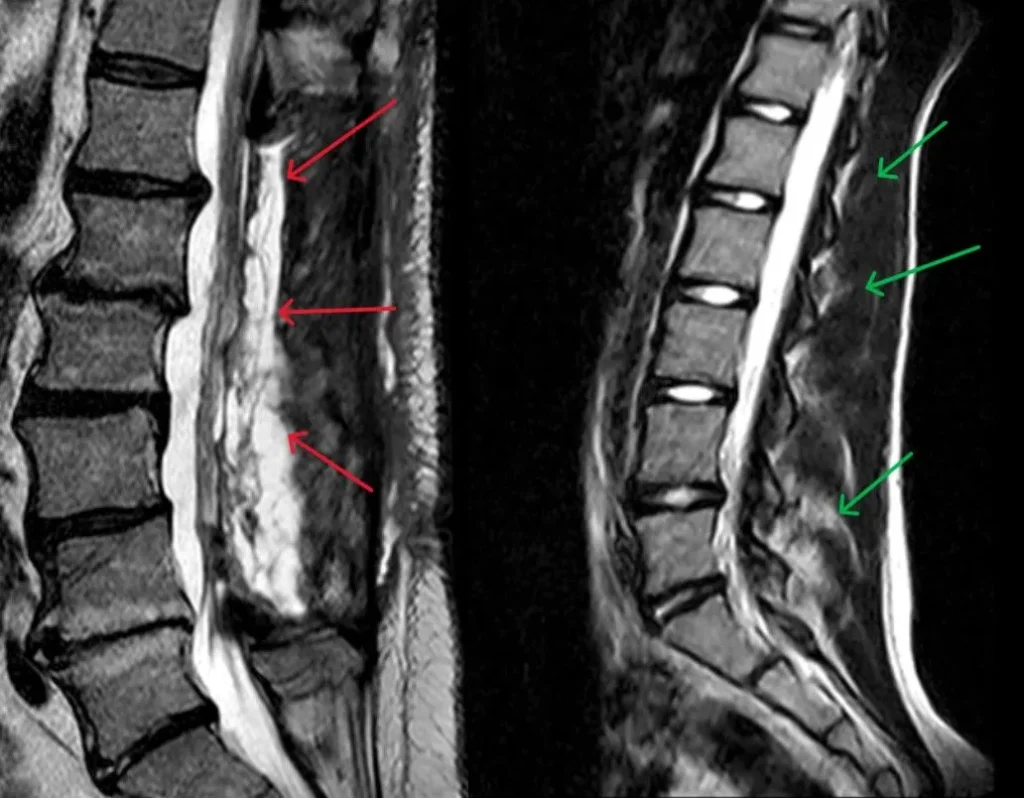
By the age of 50, the majority of adults; including those with no back pain at all. Have at least one abnormality on lumbar MRI. Disc bulges, mild stenosis, facet arthrosis, and annular fissures are common findings in completely asymptomatic people. The question is never “is there something abnormal on the MR?.” The question is “is this finding actually the source of this patient’s pain?” Surgeons who skip rigorous correlation between symptoms, exam, and imaging end up operating on incidental findings that were never causing pain.
2. Surgeons Tend to Recommend What They Know How to Do
A surgeon trained primarily in open lumbar fusion will look at a degenerated disc and see a fusion candidate. A surgeon trained in endoscopic disc repair will look at the same image and see a candidate for a 4mm to 7mm laser procedure. A pain management physician will see a candidate for a targeted injection. None of them are necessarily lying. They are pattern-matching to the tools they have. This is exactly why getting an opinion from a surgeon with a different skill set than your first one is so valuable.
3. Financial Incentives Are Real and Documented
Lumbar fusion is one of the highest-reimbursed procedures in orthopedic and neurosurgical practice. A 2023 Lown Institute analysis found that hospitals performed roughly one low-value back procedure on a Medicare patient every eight minutes, costing the program over $1.9 billion in three years. ⁶ That is a structural problem in the system, not a moral indictment of any individual surgeon, but it is a reason for patients to verify any recommendation against an independent opinion.

4. Multi-Disciplinary Review Changes Outcomes
When surgical decisions are made by a multidisciplinary group rather than a single surgeon, fewer fusions happen. ³ A 2017 study of 137 patients previously recommended for back surgery found that when non-surgeons (physical therapists, pain specialists, physiatrists) were empowered to weigh in, nearly 66% of those patients were redirected to non-surgical options. Same patients. Same imaging. Different process. Different conclusion.
When You Absolutely Should Get a Second Opinion
Some scenarios make a second opinion essential, not optional. If any of these apply to you, do not consent to the procedure until you have heard from another qualified spine surgeon:
- Spinal fusion has been recommended for back pain without neurological symptoms (no weakness, no foot drop, no progressive numbness). Fusion for degenerative back pain alone is one of the most contested indications in spine surgery and one of the highest-yield situations for a second opinion.
- You are over 65 years old and a large open procedure has been recommended. Older patients undergoing inpatient multi-level surgery have the highest documented rates of Failed Back Surgery Syndrome. ¹⁰
- Multi-level surgery is on the table. Each additional level multiplies surgical risk, blood loss, hardware burden, and adjacent segment disease risk. ¹⁰
- The recommended procedure is a revision of a previous spine surgery. Revision success rates drop to roughly 30% on the second operation, 15% on the third, and 5% on the fourth. ⁷ The bar to operate again must be high.
- Your symptoms have been present less than 6 weeks without a true emergency (no cauda equina syndrome, no progressive weakness, no spinal cord compression). The vast majority of acute disc herniations and back pain episodes improve substantially with conservative care over weeks to months.
- No one has explained, in specific anatomic terms, exactly what structure on your MRI is generating your pain. “You have a bad disc” is not a diagnosis. “Your L4-L5 disc has a paracentral protrusion compressing the traversing L5 nerve root, which correlates with the numbness on the lateral aspect of your foot and the weakness of your foot dorsiflexors” is a diagnosis.
- A diagnostic injection has never been done to confirm the pain generator before a large operation is performed.
- You have been told you need surgery within days and there is no true neurosurgical emergency. Pressure to consent quickly is, with rare exceptions, not a clinical necessity. It is a scheduling preference.
What a Genuinely Useful Second Opinion Looks Like
A meaningful second opinion is more than a five-minute glance at your MRI by another surgeon in the same network. It should include all of the following:
A Fresh Review of Your Imaging by a Different Set of Eyes
The second surgeon should review your actual MRI images, not just the radiologist’s report. And identify, in writing or in conversation with you, what they see and which findings they believe are clinically relevant. If a surgeon is willing to recommend surgery without personally reviewing your imaging, that is itself a reason to seek a different opinion.

An Independent Physical Examination
Imaging without examination is incomplete. Examination without imaging is incomplete. A real second opinion requires both.
A Specific Anatomic Diagnosis
You should leave the second consultation able to answer the question: “Which structure in my spine is generating my pain, and how confident is the surgeon in that diagnosis?” If the answer is vague, the surgical plan built on it will be too.
The Deuk Spine Alternative
For almost every spine condition, there is a spectrum of treatment from observation, to physical therapy, to targeted injections, to minimally invasive endoscopic procedures, to open surgery, to fusion. A useful second opinion walks you through where on that spectrum your condition realistically sits and why. At Deuk Spine Dr. Ara Deukmedjian pioneered the Deuk Laser Disc Repair®. A minimally invasive surgery that treats back pain from herniated discs with a 4 – 7mm incision.
Clear Disclosure of the Surgeon’s Outcomes
You are entitled to ask any surgeon what their personal complication rate, infection rate, and reoperation rate are for the procedure they are recommending. A surgeon who cannot or will not answer those questions with specifics is asking you to consent to something they have not measured.
Independence from the First Opinion
The second-opinion surgeon should not be in the same practice, the same hospital system, or the same financial arrangement as the first. The scoping review on second opinions specifically called out that independence from the original consulting provider is essential to avoid conflict of interest. ² Asking your original surgeon’s partner for a second opinion is not really a second opinion.
What If the Second Opinion Agrees With the First?
Sometimes it will. In the studies cited above, between 30% and 50% of second opinions confirm the original recommendation. ³ When that happens, you have something valuable: a much stronger basis for consenting to surgery, with two independent surgeons reaching the same conclusion through different pathways. That is exactly the situation in which surgery is most likely to actually help.
If the second opinion disagrees with the first, you have something even more valuable: the chance to step back and figure out which assessment is right before anything irreversible happens. In that scenario, a third opinion often from a surgeon with yet a different specialty (orthopedic spine if the first two were neurosurgeons, or vice versa) is reasonable. The cost of additional consultations is trivial compared to the cost of an unnecessary fusion. ⁴
The Procedures Where Second Opinions Matter Most
Not every spine intervention carries the same stakes. The procedures where second opinions are most consequential are the ones that are most invasive, most expensive, and most irreversible.
| Procedure | Why a Second Opinion Is Especially Important |
| Lumbar Spinal Fusion | High complication rate (up to 18%) ⁶, high FBSS rate (30–46%) ⁷, causes adjacent segment disease in roughly 18% of patients, irreversible, and the evidence for fusion in degenerative back pain without instability is contested across multiple systematic reviews. ⁶ |
| Cervical Fusion (ACDF or Posterior) | Permanently eliminates motion at the operated level, increases stress on adjacent cervical segments, and is sometimes recommended for findings that could be managed with disc-preserving alternatives. |
| Laminectomy | Removes bone permanently, can produce instability requiring later fusion, and has documented FBSS rates ranging from 10% to over 40%. ⁷ |
| Multi-Level Procedures | Risk compounds with each level. The literature consistently identifies multi-level surgery as a top predictor of FBSS. ¹⁰ |
| Revision Spine Surgery | Each successive operation has lower odds of success. ⁷ A second opinion is not optional before a second, third, or fourth operation. |
| Spinal Cord Stimulator Implantation | A significant device implant with its own complication and explant rates. Often recommended for FBSS that could have been avoided in the first place. |
How to Get a High-Quality Second Opinion
Practical steps that improve the value of the second consultation:
- Get a complete copy of your imaging on disc or via patient portal, not just the radiologist’s report. The second surgeon needs to see the images themselves.
- Write down your symptoms in a timeline. When the pain started, what makes it worse, what makes it better, what you have already tried, and what your current functional limitations are. Memory at the consultation is unreliable.
- Bring your medication list and a list of all conservative treatments you have already completed: physical therapy duration and type, injections, medications, chiropractic, acupuncture, activity modifications.
- Ask the second surgeon to identify the pain generator in anatomic terms, not generalities.
- Ask what the least invasive procedure is that could address your problem, even if it is not the one they personally perform.
- Ask about non-surgical alternatives explicitly. If the answer is “you’ve tried everything,” push back and ask which specific things, for how long, and at what intensity.
- Ask what happens if you do nothing for another three to six months. For most non-emergent spine conditions, the answer is honest information about natural history, not pressure.
- Verify the surgeon’s experience with motion-preserving and minimally invasive alternatives, not just fusion volume.
A virtual consultation with MRI review is, for many patients, an efficient first step. It does not require travel, allows the surgeon to study the imaging in detail, and produces a written or verbal recommendation that can be compared directly against the first opinion.
When Surgery Truly Cannot Wait
A second opinion is not always appropriate. There are spine conditions that constitute true surgical emergencies and require treatment within hours, not weeks:
- Cauda equina syndrome: sudden loss of bladder or bowel control, saddle anesthesia (numbness in the groin or inner thighs), or rapidly progressive weakness in both legs.
- Acute spinal cord compression from trauma, tumor, infection, or epidural abscess with progressive neurologic deficit.
- Unstable spinal fracture with neurologic compromise or risk of cord injury.
- Rapidly progressive motor weakness such as a foot drop developing over hours to days.
In any of these scenarios, the appropriate destination is the emergency department, not the consult schedule of a second opinion. Fortunately, these emergencies represent a small minority of spine surgery decisions. The overwhelming majority of recommended fusions, laminectomies, and discectomies are elective, which means there is time. Usually weeks to months to get an second opinion.
When to Seek Medical Attention
| Level of Care | Symptoms |
| Get a Second Opinion — schedule a consultation with an independent spine specialist | Surgery has been recommended for chronic back or neck pain. The recommended procedure is a fusion, multi-level operation, or revision. You are uncertain whether non-surgical alternatives have been fully explored. The original surgeon could not specifically identify the pain generator. |
| See a Specialist Promptly — within days to a week | New or worsening leg/arm pain, numbness, or tingling. New mild weakness. Pain that is not improving after several weeks of conservative care. |
| Emergency — Go to the ER Immediately | Sudden loss of bladder or bowel control. Saddle anesthesia (numbness in the groin or inner thighs). Rapidly progressive weakness in one or both limbs. Severe spine pain after trauma. Fever with severe back pain. These can indicate cauda equina syndrome, spinal cord compression, or spinal infection — all surgical emergencies. |
The Bottom Line
Should you get a second opinion before spine surgery? The peer-reviewed evidence is unambiguous. The second opinion will disagree with the first roughly 6 times out of 10 ², and when it disagrees, it will recommend not operating roughly 3 times out of 4. ² Between 30% and 46% of lumbar fusions performed in the United States are likely unnecessary by the best evidence available ⁶, and between 10% and 40% of all traditional spine surgery patients develop chronic pain that is worse than what they started with. ⁷ ⁸
A second opinion is not a sign of distrust. It is not a betrayal of your original surgeon. It is the standard of care for any major irreversible medical decision, and in spine surgery. Where the wrong operation produces some of the most disabling chronic pain in modern medicine. It is the single most protective step a patient can take.
If a spine surgery has been recommended for you or a loved one, submit your MRI for a free virtual consultation before consenting. An independent review of your imaging, your symptoms, and your alternatives is not a delay in your care. It is your care.
Frequently Asked Questions
Is it rude to ask my spine surgeon for a second opinion?
No. It is medically appropriate and ethically expected. Reputable surgeons routinely encourage second opinions, especially for major procedures like fusion. A surgeon who discourages a second opinion or pressures you to commit before you have heard from another specialist is signaling something important about how they practice.
Will my insurance cover a second opinion for spine surgery?
In most cases, yes. Many private insurers and Medicare cover second-opinion consultations for surgical procedures, and some insurers actively require a second opinion before approving lumbar fusion or other high-cost spine procedures. Call your insurance carrier and ask specifically about second-opinion coverage before scheduling.
Where should I get a second opinion?
Ideally from a surgeon who (1) is not in the same practice or hospital system as the first, (2) has a different sub-specialty focus or technique repertoire than the first, and (3) has documented experience with both surgical and non-surgical management of your condition. A neurosurgeon offers a useful counterpoint if the first opinion came from an orthopedic spine surgeon, and vice versa.
How much does a spine surgery second opinion cost?
It varies. Many spine centers, including Deuk Spine Institute, offer free virtual MRI reviews specifically because the cost of an unnecessary fusion is so much higher than the cost of an extra consultation. In-person second opinions are typically billed as a specialist consultation and covered, at least in part, by most insurance plans.
What if the second opinion recommends surgery too, but a different surgery?
This is common and is one of the most valuable outcomes of seeking a second opinion. The two surgeons may agree that something needs to be done but disagree on what. In that case, the question becomes which procedure is least invasive, motion-preserving, and supported by the strongest evidence for your specific anatomic problem. A third opinion is reasonable to break the tie.
Is it ever too late to get a second opinion?
Not until the moment you are wheeled into the operating room. Surgical consents can be revoked, scheduled dates can be moved, and pre-operative testing is reversible. Hardware in your spine is not. If you have any hesitation in the days before a scheduled spine surgery, postpone and get another opinion. The recovery from “I delayed my surgery by two weeks” is much easier than the recovery from “I had the wrong surgery.”
Should I get a second opinion for minimally invasive spine procedures too?
Yes, although the urgency is lower. The principle that another expert should review the indications, the imaging, and the alternatives applies to any elective spine procedure. The downside risk is lower for a truly minimally invasive endoscopic procedure than for a multi-level fusion, but the principle is the same.
Can I get a second opinion just from my MRI without traveling?
Yes. Virtual MRI review consultations have become widely available and are particularly valuable for second opinions, because the surgeon can study the imaging in detail, compare it to the proposed surgical plan, and discuss findings with you directly without geographic constraint.
Sources
- Lenza M, Buchbinder R, Wang Y, et al. Second opinion for degenerative spinal conditions: an option or a necessity? A prospective observational study. BMC Musculoskeletal Disorders. https://www.ncbi.nlm.nih.gov/pmc/articles/PMC5561586/
- Cremers M, Zadpoor AA, et al. Second opinion in spine surgery: A scoping review. Cureus / National Library of Medicine. https://www.ncbi.nlm.nih.gov/pmc/articles/PMC8422531/
- Traeger A, Buchbinder R, Harris I, et al. Second opinions for spinal surgery: a scoping review. BMC Health Services Research, 2022. https://www.ncbi.nlm.nih.gov/pmc/articles/PMC8932184/
- Lenza M, Ferraz SB, et al. Cost-effectiveness of a second opinion program on spine surgeries: an economic analysis. BMC Health Services Research, 2023. https://www.ncbi.nlm.nih.gov/pmc/articles/PMC10731842/
- Van Such M, Lohr R, Beckman T, Naessens JM. Extent of diagnostic agreement among medical referrals. Mayo Clinic Proceedings. https://www.mayoclinicproceedings.org/
- Lown Institute. Older Americans get unnecessary back surgeries at an alarming rate. https://lownhospitalsindex.org/unnecessary-back-surgery-2025/
- Daniell JR, Osti OL. Failed Back Surgery Syndrome: A Review Article. Asian Spine Journal. 2018;12(2):372-379. https://pubmed.ncbi.nlm.nih.gov/29713421/
- Baber Z, Erdek MA. Failed back surgery syndrome: current perspectives. Journal of Pain Research. https://pmc.ncbi.nlm.nih.gov/articles/PMC5106227/
- Orhurhu VJ, Chu R, Gill J. Failed Back Surgery Syndrome. StatPearls, National Library of Medicine. https://www.ncbi.nlm.nih.gov/books/NBK539777/
- The incidence of failed back surgery syndrome varies between clinical setting and procedure type. Clinical Neurology and Neurosurgery. 2022. https://pubmed.ncbi.nlm.nih.gov/35810607/