
Medical disclaimer. This article is for educational purposes only and does not replace medical advice, and individual results vary. Talk with your physician about your specific condition and treatment options.
If a surgeon has told you that you need a spinal fusion, the question underneath every other question is whether a fusion treats what is actually causing your pain. For many patients, the answer points somewhere else. Alternatives to spinal fusion range from nonsurgical care to motion-preserving procedures, and the right one depends on which structure in your spine is producing the pain.
Key points
- Fusion addresses instability. It stops motion at a segment, which is the right answer for an unstable spine and a less certain one for pain coming from a torn disc or an arthritic joint.
- Your pain source decides the option. Disc tears, facet joint arthritis, and nerve compression each have different alternatives to spinal fusion.
- Reoperation after fusion is real. A large 2007 registry study found that about 1 in 5 patients fused for degenerative conditions other than spondylolisthesis had another lumbar operation within 11 years.
- Some patients do need a fusion. High-grade or unstable slips, unstable fractures, and progressive deformity are examples.
- Diagnosis comes first. MRI findings have to be matched to a physical exam and your symptom history before any surgical decision.
No cost · No obligation
Live Pain Free
Upload your MRI for a free expert review by Dr. Ara Deukmedjian, M.D. — board-certified neurosurgeon. Ten minutes can change your life.
Why Your Pain Source Decides Whether You Need a Fusion
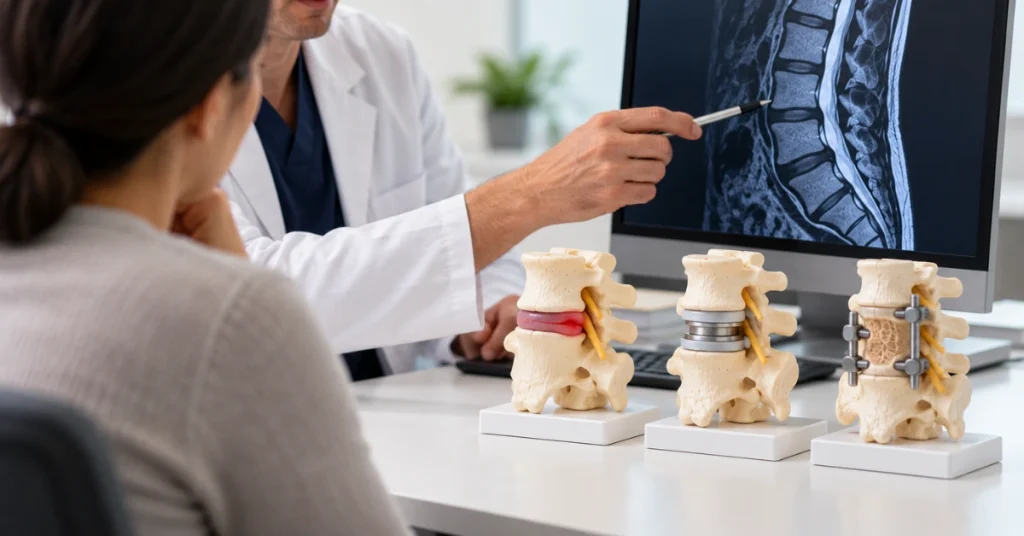
A spinal fusion joins two or more vertebrae with bone graft and hardware, usually screws, rods, and an interbody cage, so the segment stops moving. That solves a mechanical problem. Most chronic back pain starts with injured tissue instead.
In Dr. Deukmedjian’s clinical experience across 30+ years and more than 2,700 Deuk Laser Disc Repair® procedures, disc injuries account for roughly 85% of chronic back pain. Facet joint arthritis is second, and the sacroiliac joint and piriformis muscle together account for about 10%. This is a practice-based framework drawn from clinical experience, not a published research taxonomy.
Disc pain usually starts with a posterior annular tear, a tear in the tough outer layer of the disc called the annulus fibrosus. Chronic inflammation in and around that tear irritates pain-sensitive tissue, and over time pain nerve fibers can grow into the damaged area. Herniated nucleus pulposus, the gel-like material from the center of the disc, can add to the problem.
Fusing that level stops it from moving, but it does not remove the inflamed tissue in the tear. It also shifts load to the discs above and below, which is why adjacent segment disease after a fusion is a documented reason for a second surgery.
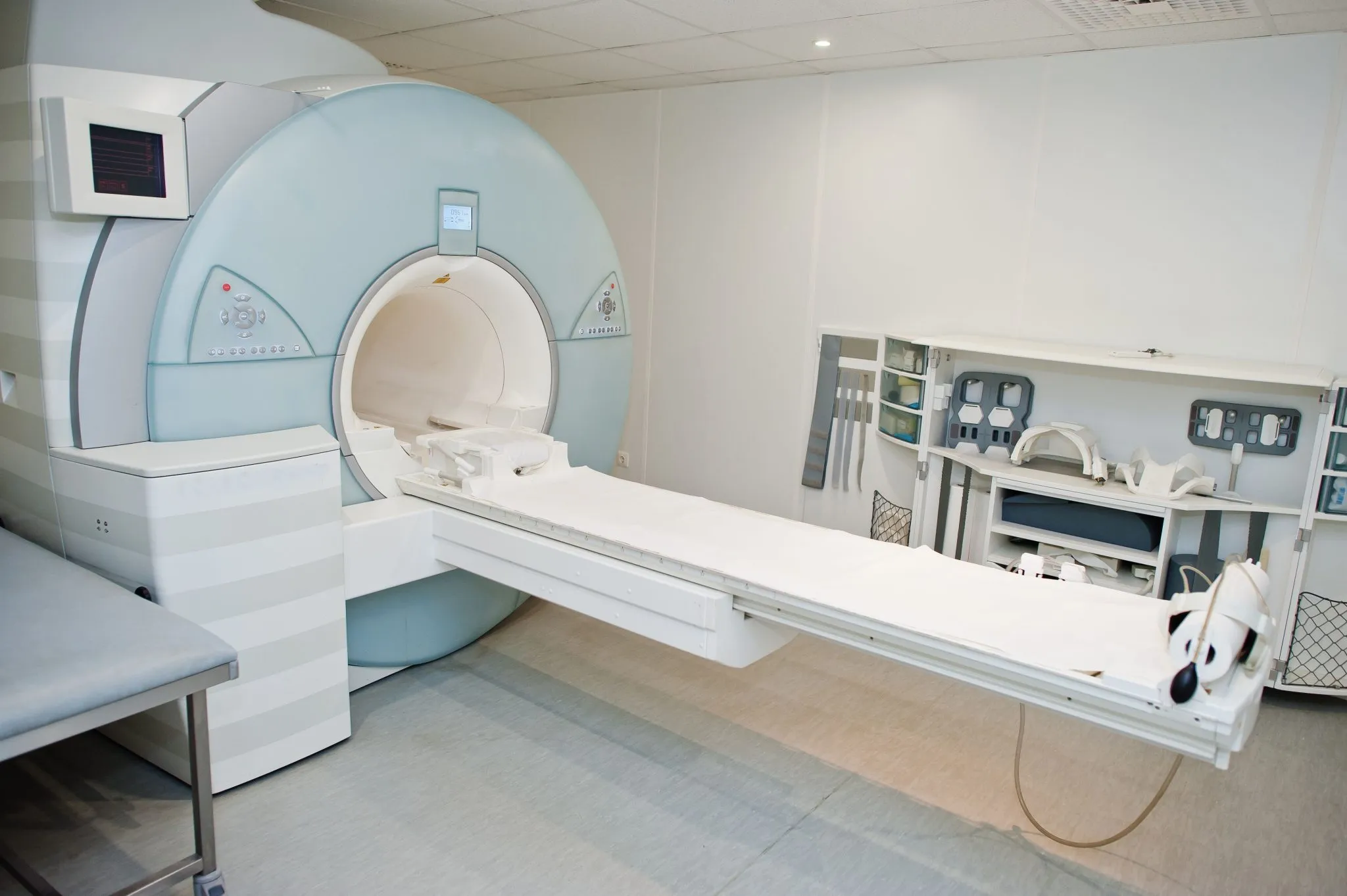
That is also why an MRI alone cannot settle the question. An MRI shows structure, not pain. A finding on the report has to be matched to a physical exam and your symptom history before it is treated as the source.
Nonsurgical Alternatives to Spinal Fusion to Try First
Most patients should try conservative care before surgery of any kind. When pain has not improved after about 6 to 12 weeks of well-run nonsurgical treatment, conservative care is generally considered to have failed, and surgical alternatives to spinal fusion enter the conversation.
- Physical therapy. Strengthening and mobility work can help when structural damage is minimal. Weak muscles and poor posture are usually compensation for an injury rather than its cause, so therapy alone rarely resolves a torn disc or an arthritic joint.
- Anti-inflammatory medication. Anti-inflammatories can calm a flare. They do not change the structure producing the pain.
- Epidural steroid injections. An injection near an inflamed nerve root can reduce radiating leg or arm symptoms for weeks to months in many patients. Relief is often temporary.
- Activity and weight changes. Adjusting lifting, sitting time, and body weight reduces load on the lumbar discs.
- Chiropractic care and bracing. Some patients report short-term relief, but neither treats a structural tear.
If these have not worked, the next step is a diagnosis specific enough to show which of the alternatives to spinal fusion, if any, fits your spine.
Motion-Preserving Surgical Alternatives to Spinal Fusion
Each of the spinal fusion alternatives below targets a different structure. None of them is right for every patient, which is why the diagnosis matters more than the procedure name.
Deuk Laser Disc Repair® for Disc-Sourced Pain
Deuk Laser Disc Repair® is an endoscopic laser procedure that removes inflammatory tissue and herniated nucleus pulposus from the posterior annular tear, then debrides the tear so it can heal naturally over 9 to 12 months. It takes about 20 minutes per disc through a 7mm lumbar or 4mm cervical incision, with no bone drilling and no hardware left in the spine.
DLDR® is a same-day outpatient procedure, and most patients are walking within about an hour. In a published peer-reviewed abstract, patients reported an average of 99% pain relief for treated pain sources, and the practice reports a 0.01% complication rate and a 0% infection rate across more than 2,700 procedures.
DLDR® treats herniated discs, bulging discs, annular tears, and degenerative disc disease when the disc is the confirmed pain source. It does not stabilize an unstable segment or correct a spinal deformity.
Deuk Plasma Rhizotomy® for Facet and SI Joint Pain
When the pain comes from an arthritic facet joint or the sacroiliac joint, Deuk Plasma Rhizotomy® deactivates the pain-carrying nerves inside that joint. It is a 30-minute outpatient procedure, and the practice has performed more than 1,000 of them.
Artificial Disc Replacement
Disc replacement removes the damaged disc and inserts an artificial implant that keeps the level moving. It is available in the neck and the lower back, and the candidate criteria are narrower than for fusion, particularly when the facet joints at the same level are arthritic. The tradeoffs are laid out in how disc replacement compares with fusion.
Decompression Without Fusion
When a herniated disc, thickened ligament, or bone spur is compressing a nerve, surgeons can remove that tissue without fusing the spine. Options include microdiscectomy, laminotomy, foraminotomy, and endoscopic discectomy. These procedures relieve radiating leg or arm symptoms from nerve compression, and they are not designed to treat back pain coming from a torn disc.
Ultrasonic Spine Surgery
Ultrasonic spine surgery is a decompression performed with an ultrasonic bone scalpel, a tool that cuts bone with high-frequency vibration instead of a rotating drill. The vibration cuts rigid bone while the softer tissue around it, including the membrane covering the nerves, is less likely to be damaged. It is a different instrument for a laminectomy or laminoplasty, not a different operation, so it treats the same nerve compression those procedures treat.
The instrument changes the operation less than the name suggests. A 2023 meta-analysis in Asian Spine Journal of cervical myelopathy surgery found less blood loss with the ultrasonic tool, but no significant difference in complication rates or functional outcomes compared with conventional instruments. If your pain comes from a torn disc rather than a compressed nerve, the tool used for decompression does not change whether decompression is the right treatment.
Basivertebral Nerve Ablation
For some patients, back pain comes from the vertebral endplates next to a degenerated disc, visible on MRI as Modic changes. Basivertebral nerve ablation uses a small probe to deactivate the nerve inside the vertebral body that carries that pain signal.
How Spinal Fusion Alternatives Compare With a Fusion
The table compares what each treatment targets and what it leaves behind. Outcome rates are left out on purpose, because studies of different procedures measure different patients and different results, so they cannot be compared side by side.
| Treatment | What it targets | Hardware left in the spine | Motion at the treated level | Typical setting |
|---|---|---|---|---|
| Spinal fusion | An unstable or painful segment, by stopping its motion | Screws, rods, cage, bone graft | Eliminated | Hospital stay |
| Deuk Laser Disc Repair® | Inflamed posterior annular tear and herniated disc material | None | Preserved | Same-day outpatient |
| Deuk Plasma Rhizotomy® | Pain nerves inside an arthritic facet or SI joint | None | Preserved | 30-minute outpatient visit |
| Artificial disc replacement | A damaged disc, replaced with an implant | Artificial disc | Preserved | Usually hospital based |
| Decompression without fusion | Tissue compressing a nerve | Usually none | Preserved when stability is kept | Outpatient or short stay |
| Epidural steroid injection | Inflammation around a nerve root | None | Preserved | Office or clinic procedure |
Which Alternative Fits Your Condition or Disc Level
Spinal Stenosis
Spinal stenosis is narrowing around the nerves, and it causes leg symptoms such as heaviness, cramping, or weakness with walking that eases with rest. It does not cause back pain on its own. If you have both, they are two separate conditions with two separate sources.
Decompression without fusion, endoscopic decompression, and interspinous spacers, small implants that hold open space for the nerves, are common spinal fusion alternatives for stenosis. When a herniated disc contributes to the nerve compression, DLDR® may be an option, but it does not treat stenosis that requires bony decompression.
Degenerative Disc Disease
Degenerative disc disease is often recommended for fusion because the disc looks worn on MRI. In many patients, the pain actually comes from annular tears and chronic inflammation within that disc, which is the tissue DLDR® removes. Disc replacement and basivertebral nerve ablation are other alternatives, depending on the MRI findings.
Spondylolisthesis
In a stable Grade 1 slip, the slip itself is often not the pain source. The pain frequently comes from a torn disc or arthritic facet joints at the same level, which DLDR® or Deuk Plasma Rhizotomy® may treat without changing the alignment.
Higher-grade slips and slips that shift on flexion and extension X-rays are a different situation. DLDR® does not stabilize a slipped segment, and for unstable spondylolisthesis a fusion is often the appropriate operation.
Scoliosis
DLDR® does not correct a spinal curve. Many adults with degenerative scoliosis, however, have pain from one specific disc or facet joint within the curve, and that source may be treatable on its own. A progressive curve causing nerve or spinal cord problems is different and often needs surgical correction.
L4-L5 and L5-S1
In Dr. Deukmedjian’s clinical experience, L4-L5 is the most commonly injured disc level, followed by L5-S1. When the pain source at either level is a torn disc or an arthritic facet joint rather than instability, a motion-preserving alternative to spinal fusion may apply.
When Is Spinal Fusion Necessary?
A fusion stops motion, and some spines need motion stopped.
- Unstable or high-grade spondylolisthesis. A slip that moves or has progressed past a low grade usually needs stabilization.
- Unstable spinal fractures. Traumatic or compression fractures that compromise the spine’s integrity may require fixation.
- Progressive deformity. Scoliosis or kyphosis that is worsening and causing neurological decline often needs correction.
- Instability after decompression. When a prior surgery removed enough bone to destabilize a segment, fusion may be needed.
- Tumor or infection. Disease that damages the vertebrae can require stabilization after treatment.
The reoperation data reflect this split. Research by Martin et al. in Spine (2007), a Washington State reoperation study followed 24,882 lumbar surgery patients for 11 years. For spondylolisthesis, fusion patients needed fewer repeat operations than decompression-alone patients (17.1% vs 28.0%), while for other degenerative conditions fusion patients needed more (21.5% vs 18.8%).
If one of these conditions applies to you, a fusion may be the right call, and a second opinion should confirm it rather than argue against it. the complications patients weigh before a fusion are worth understanding either way.
Why Fusion Gets Recommended When Alternatives Exist
The answer is rarely bad faith. More often, the diagnostic process does not separate pain caused by instability from pain caused by disc inflammation, and without that distinction a fusion appears to address what the MRI shows.
The Deuk Spine Exam® was developed for that step. It correlates your MRI with a physical exam and your pain history, with a reported 99% diagnostic accuracy, to identify whether you are a candidate for DLDR®, Deuk Plasma Rhizotomy®, another procedure, or a fusion.

Diagnosis. Answers. Relief.
Submit your MRI for a free expert review by Dr. Ara Deukmedjian, M.D. —
board-certified neurosurgeon. No obligation. Real answers.
Frequently Asked Questions About Spinal Fusion Alternatives
Is there a better alternative to spinal fusion?
For many patients, yes, when the pain source is something fusion does not directly treat, such as a torn disc or an arthritic joint. For an unstable segment, fusion is often the better choice.
When do surgeons advise against a spinal fusion?
Many spine specialists are cautious about fusion when no instability is present, when the pain source has not been confirmed, or when several levels would need to be fused for back pain alone.
What is the newest alternative to spinal fusion?
Recent options include endoscopic techniques that work through incisions measured in millimeters, basivertebral nerve ablation for endplate-related pain, and motion-preserving implants such as artificial discs. Ask any surgeon for published outcomes and complication rates.
Is laser spine surgery a real alternative to fusion?
It can be, when the laser is used through an endoscope to treat the disc itself. Before any laser procedure, ask whether the laser treats the disc or is used only for the approach, who performs the procedure, and whether the outcomes are published.
How does recovery compare with a fusion?
Recovery from a lumbar fusion is typically measured in months, because the bones need time to fuse. Most DLDR® patients walk within about an hour and return to light activity within days, while the treated annular tear continues to heal over 9 to 12 months.
Can spinal fusion be done without hardware?
Yes, a non-instrumented fusion uses bone graft alone, without screws or rods, and relies on bone growing across the level on its own. Many surgeons add hardware because it holds the vertebrae still while the graft heals. Either way the level stops moving, so whether a fusion fits your pain source is still the first question.
If another surgeon has told you that a fusion is your only option, a second opinion costs you the time it takes to send your MRI. The Deuk Spine Institute team reviews it and tells you honestly whether a motion-preserving procedure fits your pain source or whether a fusion is the right call. Send your MRI for a free review, with no cost and no obligation.
Medical disclaimer. This article is general education, not a diagnosis or treatment recommendation, and outcomes vary from patient to patient. Decisions about spine surgery should be made with a qualified physician who has examined you.