By Dr. Ara Deukmedjian
Board Certified Neurosurgeon
Reviewed on Aug 4, 2026
Disclaimer: This information is for educational purposes only and is not intended to replace the advice of a physician. Results may vary from person to person. Consult your doctor regarding your particular situation.
Key Points
✓ Laserspine Institute suddenly shut down its operation on March 1, 2019, abandoning nearly 1,500 patients who were under its treatment. ¹ ²
✓ This was after the company had paid out almost half a billion dollars in lawsuits and judgments over the last 14 years of its operations, including a $264 million federal court judgment against it. ¹ ³
✓ Many former LSI patients still need minimally invasive spine care but are understandably cautious about choosing a new provider after their experience.
✓ Not all “minimally invasive” spine surgery is equal. Many clinics that advertise laser spine surgery only use the laser to cut skin, not to treat the disc itself. Patients should ask whether the laser actually enters and treats the damaged disc. ⁴
✓ Adjacent segment disease occurs in approximately 36% of fusion patients on imaging and 11% develop clinical symptoms within two to seven years. Motion-preserving procedures eliminate this risk entirely. ⁵
✓ A 2025 systematic review confirmed that minimally invasive spine surgery produces lower postoperative pain scores, reduced blood loss, shorter hospital stays, and fewer infections compared to open approaches. ⁶
✓ Deuk Laser Disc Repair®: 99% pain relief for treated pain sources, 0.01% complication rate, 2,700+ procedures. Motion-preserving, outpatient, same-day recovery. No bone removal. No hardware. No fusion.
Why did the Laser Spine Institute Go Out of Business?
The title of this article suggests a question that many people reading this article are probably familiar with, but it is still worth answering in order to understand what went wrong with Laser Spine Institute and therefore what to seek in your next choice of providers.
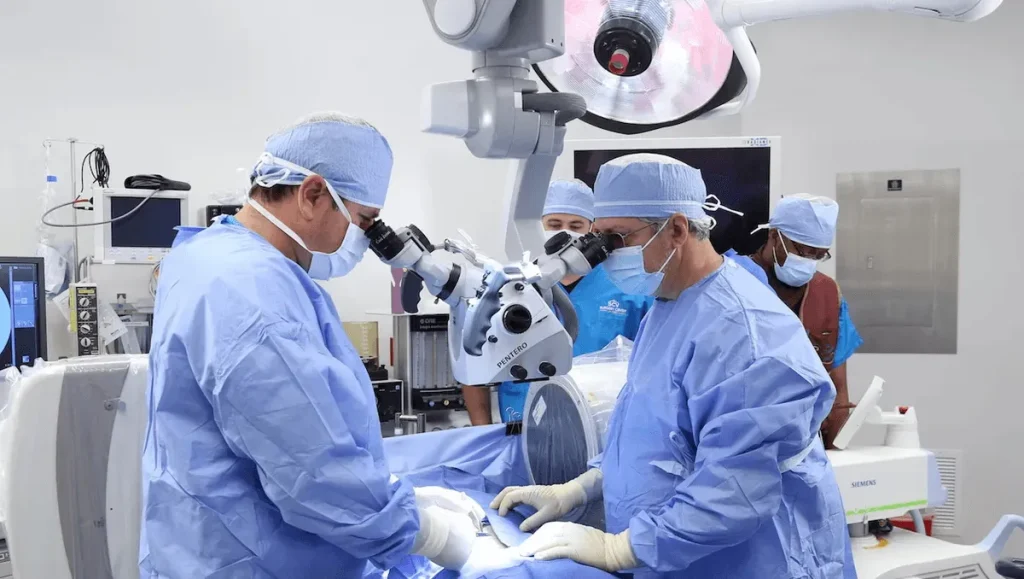
Laser Spine Institute started its operation in 2005 in Tampa, Florida, as a company of three doctors operating from one operating room with nine employees. Its founders heavily promoted Laser Spine Institute as one of the pioneers in laser and minimally invasive spinal surgeries. The rapid development of the company can be observed through statistics of 2017 when LSI had surgery centers in four cities, namely Tampa, Cincinnati, Scottsdale, and St. Louis, over 1,000 employees and revenues of approximately $220 million per year. ¹ ³
The growth, however, masked a deeply troubled foundation.
The Legal Problems
LSI was entangled in a series of lawsuits that ultimately drained the company of more resources than it could generate. The most significant case resulted in a $264 million federal court judgment against the company for breach of fiduciary duty, conspiracy, defamation, and violations of the Florida Deceptive and Unfair Trade Practices Act. ¹ ³
In a separate case, a Pennsylvania court ordered LSI to pay $20 million to the estate of a patient who died following a procedure at one of its facilities. ¹

In 2013, professional wrestler Terry “Hulk Hogan” Bollea filed a $50 million malpractice lawsuit against the institute, alleging that LSI performed six unnecessary endoscopic procedures over 19 months that worsened his back condition rather than improving it. Bollea claimed he experienced only short-term relief after each procedure and ultimately required traditional surgery elsewhere to address his back problems. ⁷ ⁸
Over its 14-year existence, Laser Spine Institute paid out close to half a billion dollars in legal settlements and judgments. ¹
The Sudden Closure
On March 1, 2019, CEO Jake Brace announced the immediate and permanent closure of all Laser Spine Institute facilities. According to the company’s statement, banks had frozen LSI’s accounts and seized its remaining cash, making continued operations impossible. ² ³
The closure was devastating in its abruptness. Employees arrived at work that morning only to learn they no longer had jobs. The patients, who were scheduled to undergo surgery the same week, and who had already traveled to Tampa and booked themselves in hotels, were stranded without any surgery, without any follow-up, and without any way to access their medical information. ² ⁹
Two class-action lawsuits were later filed against LSI, claiming that LSI had not given the mandatory 60 days’ notice to its employees, as required by the Worker Adjustment and Retraining Notification Act. ¹⁰
What the Closure Means for Former Patients Today
For former LSI patients, the implications extend well beyond the initial shock. Patients who underwent procedures at LSI and later developed complications had no continuity of care. Those whose conditions progressed had to start from scratch, often repeating consultations, imaging, and evaluations that they had already completed and paid for.
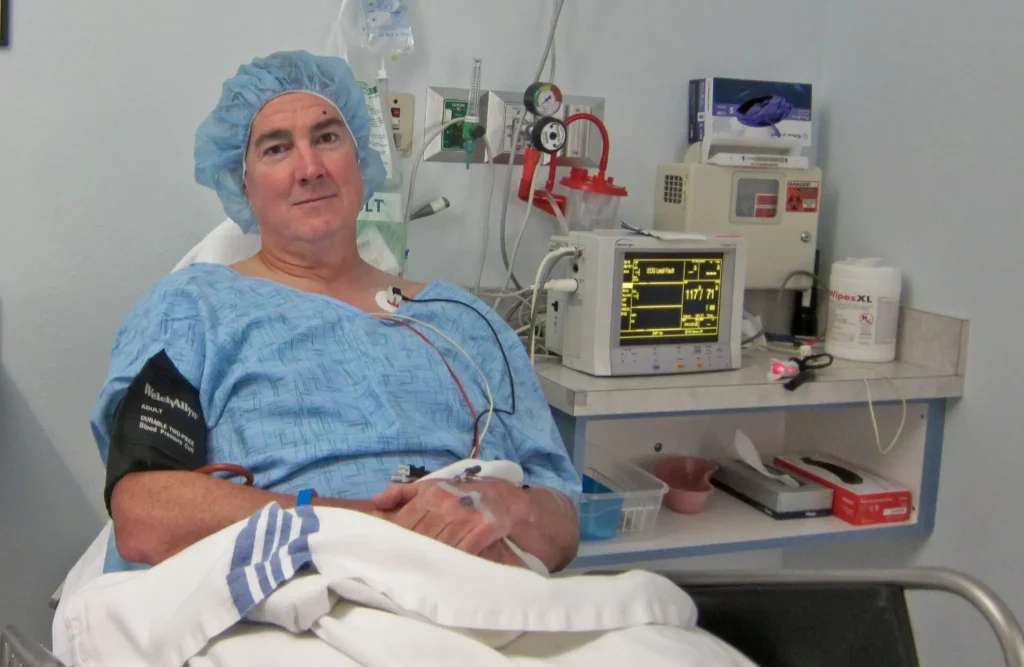
Many former LSI patients remain cautious and skeptical, and rightfully so. The experience taught them a painful lesson about the difference between a corporation that performs spine surgery and a physician-led practice that is built on surgical excellence.
What to Look for in a Laser Spine Institute Alternative
The LSI closure exposed several red flags that spine patients should now use as a checklist when evaluating any minimally invasive spine surgery provider. Having treated patients who were directly displaced by the LSI closure, and having spent over two decades developing and refining minimally invasive techniques, I can identify exactly what separates a trustworthy alternative from another corporate operation.
1. Verify That Laser Actually Treats the Disc
This is the most important distinction in laser spine surgery, and it is the one thing that most patients will not think to ask about. Some of the practices offering “laser spine surgery” actually just use the laser to cut skin initially before surgery. The actual treatment of the damaged disc is performed using traditional instruments. This is not laser disc repair. It is conventional surgery with a laser incision. ⁴
The meaning of laser spine surgery is that the actual laser goes into your disc and works on vaporizing, debriding, and removing the degenerative inflammatory tissue which is causing you the pain. The distinction is quite significant.
The thing to ask yourself is: “Is the laser entering and treating my disc, or is it just used for the skin incision?”
2. Look for a Surgeon-Founded, Physician-Led Practice
Laser Spine Institute was a corporate entity. It grew through marketing budgets and aggressive expansion, not through a single surgeon’s commitment to advancing a specific technique over decades. When the money ran out, the doors closed and patients were left behind.
A physician-led practice is fundamentally different. The surgeon’s name, career, and reputation are inseparable from the outcomes. There is no corporate board making financial decisions that override clinical judgment. The incentive structure is aligned with patient results, not shareholder returns.
3. Demand Published Outcomes and Peer-Reviewed Research
Any practice can claim high success rates on a website. It is all about whether these claims have been substantiated using data from peer-reviewed medical journals that give details of complications with the methodology used, and not over a period of months but years.
4. Confirm Motion-Preserving Philosophy
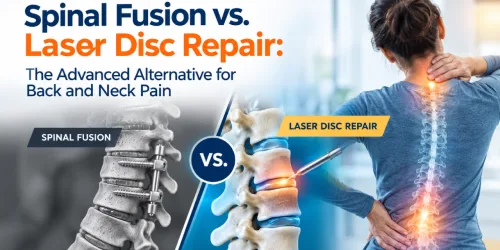
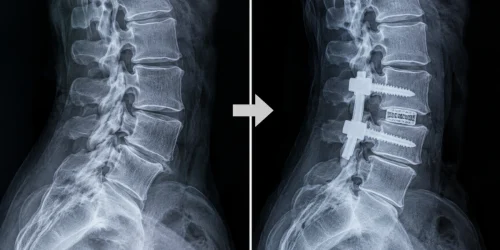
Some practices that market themselves as “minimally invasive” still recommend spinal fusion as their primary surgical intervention. Fusion permanently eliminates motion at the treated segment, requires hardware implantation (screws, rods, cages), and carries a documented risk of adjacent segment disease where the levels above and below the fusion deteriorate and may require additional surgery. ⁵ ¹¹

A systematic review examining 7,374 lumbar fusion patients identified adjacent segment disease as a significant complication, with pooled incidence rates of 36% for radiographic changes and 11% for clinical symptoms. ⁵ Another meta-analysis reported a 5.9% per-year incidence of adjacent segment degeneration after fusion. ⁵
A true alternative to LSI should offer procedures that preserve spinal motion, preserve the disc, and require no hardware.
5. Verify Insurance Acceptance and Financial Transparency
One of the concerns raised about LSI was the financial structure of patient care. Patients who had paid deposits for scheduled surgeries lost those funds when the company closed. ⁹ ¹⁰
Look for a practice that accepts major insurance plans, provides clear financial information before treatment, and does not require large upfront deposits that would be at risk if business operations change.
Why Deuk Spine Institute Is the Leading Alternative
Deuk Spine Institute was not created to fill the void left by Laser Spine Institute. It was already operating, innovating, and producing outcomes that LSI never achieved. The comparison is instructive not because the two practices are similar, but because they represent fundamentally different models of spine care.
Physician-Led, Not Corporate-Driven
Deuk Spine Institute was founded by Dr. Ara Deukmedjian, a board-certified neurosurgeon with over two decades of experience in minimally invasive spine surgery. Every surgical technique used at Deuk Spine Institute was developed, refined, and patented by Dr. Deukmedjian himself. The practice exists to advance a specific surgical philosophy: cure disc pain by removing the source of inflammation while preserving the disc, the bone, the ligaments, and the natural motion of the spine.
This is not a chain of surgery centers managed by rotating physicians. It is a destination practice led by the surgeon who invented its signature procedures.
Deuk Laser Disc Repair® (DLDR): How It Works
Deuk Laser Disc Repair® is the procedure that former LSI patients most commonly seek when they discover Deuk Spine Institute. It is also the procedure that most clearly illustrates the difference between real laser disc surgery and the approach LSI used.
Through a 4–7 mm incision, small enough to cover with a single adhesive bandage, a specialized endoscope provides high-definition visualization inside the disc space. A side-firing holmium laser targets only the damaged, inflammatory disc material inside the annular tear, typically just 5–10% of the total disc volume. The laser vaporizes and removes this pathological tissue while simultaneously debriding the annular tear itself, which is the source of discogenic pain that fusion and many other procedures do not address.
What is not done during DLDR: No bone is cut. No lamina is removed. No hardware, screws, rods, or cages are implanted. No muscles are stripped from the spine. The disc itself is preserved. Full range of spinal motion is maintained permanently.
Recovery After DLDR
- Day of surgery: Most patients notice significant pain relief immediately upon awakening. They walk out of the facility within an hour and go home the same day.
- First week: The tiny incision heals within days. Most patients require only over-the-counter pain medication, if any. Many return to desk work within 3–5 days.
- 2–4 weeks: Complete healing occurs. Patients resume most normal activities.
- Long-term: No fusion means no adjacent segment disease. Full range of motion is preserved permanently.
Documented Results
- 99% patient-reported success rate in eliminating disc-related pain
- 0.01% complication rate across 2,700+ procedures
- Over 15 years of clinical experience
- Published in peer-reviewed medical literature
- Covered by most major insurance plans
- Procedures performed at a state-of-the-art facility in Melbourne, Florida
Additional Procedures
Deuk Plasma Rhizotomy® (DPR): When pain originates from the facet joints or sacroiliac joint rather than the disc, this 10-minute outpatient procedure permanently disconnects the pain nerve through a 4 mm incision. No hardware. No fusion. No repeat procedures needed.
Deuk Piriformis Release®: For patients whose sciatica originates from piriformis syndrome rather than a disc problem, this minimally invasive procedure permanently releases the piriformis muscle’s compression of the sciatic nerve through a single 4 mm incision.
Laser Spine Institute vs. Deuk Spine Institute
The two names are easy to confuse, but they are entirely separate organizations with different histories, different leadership, and very different outcomes. Here is a side-by-side comparison across every metric that matters.
The Science Behind Motion-Preserving Spine Surgery
Understanding why motion preservation matters requires understanding why fusion creates problems. When a spinal segment is fused, the vertebrae above and below that segment must compensate for the lost motion. This places abnormal biomechanical stress on adjacent discs, facet joints, and ligaments, accelerating their degeneration.
Adjacent Segment Disease: The Hidden Cost of Fusion
Adjacent segment disease (ASD) is a well-documented complication following spinal fusion. A systematic review and meta-analysis examining over 7,374 fusion patients found the following ⁵:
- Radiographic adjacent segment degeneration occurred at rates ranging from 8% to 100% depending on follow-up duration
- Clinical adjacent segment disease (requiring treatment) occurred at rates between 5.2% and 18.5%
- A pooled incidence of 36% for radiographic changes and 11% for symptomatic disease within two to seven years post-fusion
- A separate analysis found a 5.9% per-year incidence rate of adjacent degeneration
These are not theoretical risks. They translate to a substantial percentage of fusion patients eventually needing additional surgery on the segments adjacent to their original fusion. This creates a cascade effect: the second fusion increases stress on the next adjacent level, potentially requiring a third operation, and so on.
Why Motion Preservation Breaks the Cycle
Procedures that preserve disc structure and spinal motion, like Deuk Laser Disc Repair®, eliminate the risk of adjacent segment disease entirely because they do not alter the biomechanics of the spine. ⁴ The treated segment continues to move normally, distributing forces across the spine the way nature intended. No segment is overloaded. No cascade begins.
A 2025 systematic review confirmed that minimally invasive techniques produce significantly lower blood loss, shorter hospital stays, reduced infection rates, and lower postoperative pain scores compared to open surgical approaches. ⁶ When these advantages are combined with motion preservation, the long-term superiority of approaches like DLDR becomes clear.
For Former LSI Patients: How to Get Started
If you were a patient of Laser Spine Institute, whether you had a procedure performed there, were scheduled for surgery when the doors closed, or simply consulted with LSI before the closure, Deuk Spine Institute can help.
Step 1: Upload Your MRI for a Free Review
If you have existing MRI images, you can upload them directly for a complimentary review by Dr. Deukmedjian’s team. If your MRI is outdated (more than 12 months old) or if you no longer have access to your imaging from LSI, we will guide you through obtaining a current MRI.
Step 2: Virtual Consultation
Geography is not a barrier. Deuk Spine Institute offers free virtual consultations for patients across the United States and internationally. During this consultation, Dr. Deukmedjian will review your imaging, correlate it with your symptoms, and provide a clear, honest assessment of your options.
Step 3: Treatment Plan
If you are a candidate for one of our procedures, you will receive a comprehensive treatment plan including the specific procedure recommended, what to expect before, during, and after surgery, insurance verification, and travel arrangements for out-of-state patients.
The laser enters the disc, not just the skin.
Discover the only true alternative to the Laser Spine Institute. Here at Deuk Spine Institute we offer the most advanced laser spine surgery options. Send your MRI for a free review by Dr. Deukmedjian and learn whether Deuk Laser Disc Repair® can treat the exact pain-generating tissue through a 7 mm incision, with the disc, bone, ligaments, and natural motion preserved.
- 99%
- Pain relief
- 0.01%
- Complication rate
- 2,700+
- Procedures performed
Frequently Asked Questions
What happened to the Laser Spine Institute?
Laser Spine Institute closed abruptly on March 1, 2019, after banks froze the company’s accounts due to financial insolvency. The closure followed years of mounting legal judgments totaling nearly half a billion dollars, including a $264 million federal court ruling for breach of fiduciary duty and unfair trade practices. All four locations in Tampa, Cincinnati, Scottsdale, and St. Louis were shuttered simultaneously, laying off over 350 employees and leaving approximately 1,500 active patients without care. ¹ ² ³
Is Deuk Spine Institute the same as Laser Spine Institute?
No. Deuk Spine Institute and Laser Spine Institute are completely separate entities with no shared ownership, physicians, or corporate affiliation. Deuk Spine Institute was founded independently by Dr. Ara Deukmedjian, a board-certified neurosurgeon, and has been operating continuously since 2004. The surgical techniques used at Deuk Spine Institute, including Deuk Laser Disc Repair®, were developed and patented by Dr. Deukmedjian and differ fundamentally from the procedures LSI performed.
What is the best alternative to Laser Spine Institute?
For patients seeking a true minimally invasive, motion-preserving approach to spine surgery, Deuk Spine Institute represents the most advanced alternative currently available. Unlike LSI, which primarily used laser technology for skin incisions, Deuk Laser Disc Repair® uses a holmium laser to directly treat the damaged disc tissue through a 4–7 mm incision. The procedure has a 99% patient-reported success rate and a 0.01% complication rate across more than 2,700 procedures. No bone is removed, no hardware is implanted, and patients go home the same day.
Can former Laser Spine Institute patients be treated at Deuk Spine Institute?
Yes. Deuk Spine Institute regularly treats patients who previously had procedures at LSI, as well as patients who were scheduled for LSI surgery when the institute closed. Whether your original condition has persisted, progressed, or you developed new symptoms, Dr. Deukmedjian can evaluate your current imaging and provide an honest assessment of your treatment options. Upload your MRI for a free review.
Does Deuk Spine Institute accept insurance?
Yes. Deuk Spine Institute accepts most major insurance plans. The practice also provides insurance verification services and financing options for patients who need them. For specific insurance questions, contact the office directly at 1-800-349-6922.
How is Deuk Laser Disc Repair® different from what Laser Spine Institute offered?
The fundamental difference is in how the laser is used. LSI’s procedures primarily used the laser to cut through skin, then employed conventional surgical instruments for the actual treatment. Deuk Laser Disc Repair® uses a side-firing holmium laser that enters the disc space through a specialized endoscope and directly vaporizes and removes only the damaged, inflammatory disc material while debriding the annular tear. This approach preserves approximately 90–95% of the healthy disc, removes no bone, implants no hardware, and maintains full spinal motion permanently.
Sources
View Sources
- Deuk Spine Institute. Laser Spine Institute Review: Closed & What’s Next. Published March 11, 2026.
- Laser Spine Institute. Press Release: Laser Spine Institute to Close its Doors, Citing Lack of Financing for Continuing Operations. PR Newswire. March 1, 2019.
- Becker’s ASC Review. Laser Spine Institute 18 months after closure — What happened to its $56M Tampa HQ? August 28, 2020.
- Deuk Spine Institute. Alternatives to Spinal Fusion With Deuk Spine Institute. Published April 29, 2026.
- Mesregah MK, Yoshida B, Lashkari N, et al. Demographic, clinical, and operative risk factors associated with postoperative adjacent segment disease in patients undergoing lumbar spine fusions: a systematic review and meta-analysis. Spine J. 2022;22(6):1038-1069.
- Esposito F, Bove I, Vitulli F, et al. Less Is More: Evaluating the Benefits of Minimally Invasive Spinal Surgery. Life. 2025;15(1):8.
- E! News. Hulk Hogan Slaps Laser Spine Institute With $50 Million Suit, Claims “Unnecessary Surgeries” Damaged His Career. January 14, 2013.
- Fightful. Exclusive: Hulk Hogan Gets Another Huge Settlement. October 20, 2016.
- WTSP News. Laser Spine Institute closure leaves hundreds of patients with no answers. March 4, 2019.
- Becker’s ASC Review. Class action suits look for answers after Laser Spine Institute’s abrupt closure — 7 insights. March 7, 2019.
- Hashimoto K, Aizawa T, Kanno H, Itoi E. Adjacent segment degeneration after fusion spinal surgery — a systematic review. Int Orthop. 2019;43:987-993.