
By Dr. Ara Deukmedjian
Board-Certified Neurosurgeon
Medically reviewed on May 19, 2026
Medical Disclaimer: This content is for educational purposes only and does not constitute medical advice. Individual results may vary. Always consult with your healthcare provider about your specific condition and treatment options.
Key Points
✓ The honest answer to “Can I return to work, lifting, running, and golf?” depends almost entirely on which spine surgery you have. Traditional open Spine surgeries like fusion cause extensive damage to muscle and bone. Leading to longer recovery times. While with laser spine surgery you’re up and walking in hours.
✓ Studies of return to work after lumbar fusion show roughly 75% of working-age patients return to work within 2 years, with significantly lower rates among patients with physically demanding jobs. 1
✓ Most golfers return to the green in 6 months after a lumbar fusion. The time frame is shorter if the patient receives a laminectomy or microdiscectomy. 2
✓ Adjacent segment disease (ASD) accelerated degeneration of the discs above and below a fusion. Has a documented cumulative incidence that reaches 23.6% at 10 years and 66.7% at 15 years after lumbar fusion. 3
✓ After Deuk Laser Disc Repair®, patients walk out of the surgery center the same day, return to desk work within days, and return to lifting, running, and golf within weeks. There is no muscle cutting, no bone removal, or hardware installed during the surgery.
✓ Piriformis syndrome is one of the most overlooked causes of lingering buttock and leg pain that keeps people off the golf course and out of the gym. Deuk Piriformis Release® treats it as an outpatient procedure with immediate relief.

The Question Every Spine Surgery Patient Asks
Before anyone signs a consent form, the same three questions come up in the office.When will I be able to go back to work? Will I run again? Will I play golf? Play with my kids and be able to live an active lifestyle like: running and playing golf?
These are important questions. They are the questions that determine whether a surgery is worth doing. A procedure that “succeeds” on the MRI but leaves a patient unable to play with their children, carry groceries and participate in non-content sports. Even after a successful surgery if a patient feels limited in these areas. And can’t live the life they want. Was the surgery really a success?
The answer is that activity level after spine surgery is dictated more by the type of surgery than by the original injury. The same herniated disc treated two different ways produces two completely different restrictions for patients after spine surgery.

What Recovery Looks Like After Traditional Spine Surgery
Traditional open spine procedures: laminectomy, discectomy, and especially spinal fusion; share a common problem. They require cutting through muscle, removing bone, and in the case of fusion, locking vertebrae together with screws, rods, and cages. Minimally invasive techniques have been shown to reduce tissue damage to the spinal muscles compared with open surgery, but the traditional open approach is still the standard recommendation at most centers. 4 And the body responds to that level of trauma exactly the way it responds to any major surgery: with inflammation, scar tissue, and a recovery process that could take weeks to months.
Return to Work After Fusion or Laminectomy
Return to work after lumbar fusion varies widely depending on the patient and preoperative work status, with published rates ranging from 43% to 90%. 1 A prospective cohort study of working-age patients found that approximately three-quarters of lumbar fusion patients returned to work within 2 years of surgery, and that work absenteeism was significantly higher in patients with physically demanding occupations. Only 60% of patients with predominant leg pain returned to their physically heavy occupations in the first year following lumbar fusion. 1 A separate retrospective analysis at two academic centers in Germany found that 75% of working-age patients returned to work after anterior lumbar interbody fusion, with a median return time of 3 months. 5
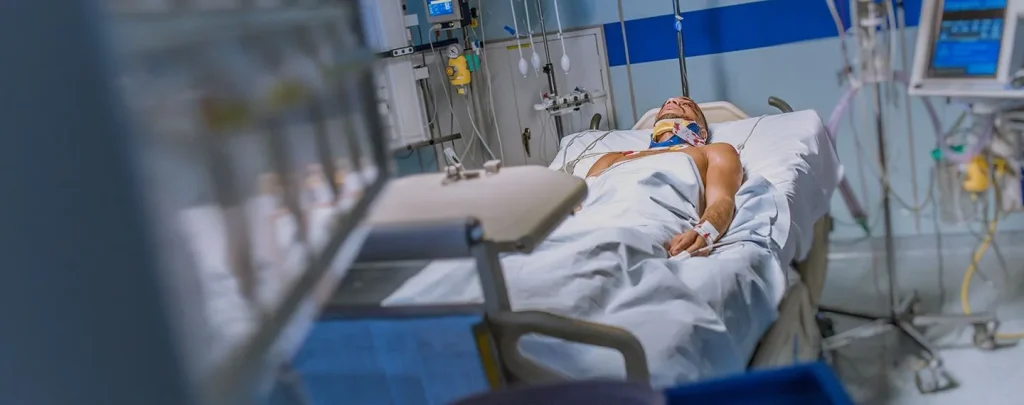
A systematic literature review of minimally invasive versus open lumbar fusion concluded that patients undergoing the minimally invasive technique generally return to work more quickly and require less post-operative narcotic medication for pain control. 4 The takeaway is consistent across the studies: the bigger the surgical footprint; the more unlikely someone is to return to work.
Lifting Restrictions
Standard post-fusion instructions limit lifting to 5 to 10 pounds for the first 6 to 12 weeks, with a gradual progression that often caps below pre-injury capacity. Patients are told to avoid bending, twisting, and lifting from below the knees indefinitely. The reason is mechanical. A fused segment cannot move, so every load placed on the spine is absorbed by the segments above and below the fusion. 6 However, patients that undergo the Deuk Laser Disc Repair®(DLDR) have a lifting restriction of 40 pounds. And not 5 to 10 pounds. Not to mention you completely avoid adjacent segment disease. Due to the fact that no screws or rods are used in the procedure.
Running
Most surgeons advise patients to avoid running, jumping, and other high-impact activities for at least 6 months after fusion. Some recommend a permanent switch to low-impact exercise: walking, swimming, stationary cycling. The concern is that repeated impact loads on a fused spine concentrate stress at the adjacent levels. Where the documented cumulative incidence of adjacent segment disease climbs steadily over time. Reaching 6.3% at 5 years, 23.6% at 10 years, and 66.7% at 15 years after lumbar fusion. 3 Here is the difference with the DLDR. Within days after surgery you can swim, walk and exercise if you’re lifting under 40 pounds.

Golf
Golf is one of the most spine-intensive sports in the world. Peer-reviewed biomechanical analysis has measured peak compressive loads at the L4-L5 segment exceeding 6 to 8 times body weight during the downswing, with even higher peaks reported in other studies. 8 Low back injuries account for up to 50% of all injuries reported by golfers. 9, 7
The implications for fusion patients are direct. In the largest published survey of North American spine surgeons, the most common recommended time for return to golf was 4 to 8 weeks after lumbar laminectomy or microdiscectomy, 2 to 3 months after anterior cervical fusion, and 6 months after lumbar fusion; a statistically significant difference. 2 A subsequent retrospective single-surgeon series at Rush University and a 2021 systematic review both reported that most golfers can return to play within 12 months of cervical or lumbar fusion, with 54.3% to 80% returning to a similar or improved level of play. 10, 11 That is meaningful, but it also means a non-trivial percentage of golfers do not return to their previous level, and the recovery window for those who do is measured in months, not weeks.

This is the trade-off no one explains in the consultation. Fusion does not just treat a bad disc. It permanently changes how the spine moves, and the published data on adjacent segment disease shows that fused patients face a rising, time-dependent risk of needing another operation at the levels above and below the original fusion. 3, 6
What Recovery Looks Like After Deuk Laser Disc Repair®
Deuk Laser Disc Repair® is a minimally invasive spine surgery. Instead of cutting muscle, removing bone, and locking vertebrae together, the procedure uses a 4mm to 7mm incision and a laser to treat the actual pain generator inside the disc. No muscle is cut. No bone is removed. No hardware is implanted. The spinal segment remains mobile. The principle that less surgical trauma produces faster recovery and fewer downstream complications is consistent with the broader endoscopic and minimally invasive spine publications. 4, 12
Return to Work
Most office workers begin work within a few days. Patients with physical jobs typically return within 2 to 4 weeks, with no permanent lifting restrictions because no spinal structure has been removed or fused. There is no large surgical wound to protect, no muscle reattachment to wait for, and no hardware to settle. Research time and again has shown only positive advantages of minimally invasive back surgery. 4
Lifting
There is a 40 pound lifting restriction after Deuk Laser Disc Repair® that patients will need to maintain for 4 -6 months. The muscles that protect the spine were never cut. The bones that support the load were never removed. Meaning that patients can have higher lifting restrictions than open spine surgery options.
Running
Because the spine is motion-preserved and the soft tissues are largely undisturbed, patients return to running within 4 to 6 weeks in most cases. There is no fusion to protect, no hardware to stress-test, and no permanent loss of segmental motion. There are no changes to the spine that cause adjacent segment disease because of fusion hardware. 3, 6
Golf
Golf is, in our experience, the activity that benefits most from a motion-preserving approach. The published data on golfers shows that the most common return-to-golf timeline after a lumbar microdiscectomy or laminectomy is 4 to 8 weeks 2 and Deuk Laser Disc Repair® is less invasive than either of those procedures. Because the lumbar segments remain mobile, the full rotational arc of the golf swing is preserved. Patients typically resume light chipping and putting within 2 to 3 weeks and a full swing within 4 to 8 weeks. They do not lose their swing because they have not lost any range of motion in the spine.
This is why patients fly to Deuk Spine Institute from across the country and around the world. The procedure does not just fix the disc. It allows you to go back to your normal life quicker than any other procedure.

Patient Story: A Michigan Golfer Goes Back On Course
One of the clearest illustrations of what motion-preserving spine surgery can do comes from a Michigan patient who was referred to Deuk Spine Institute after more than 10 years of chronic lower back pain.
He had been seeing a doctor in Michigan and had gone through a long course of spinal injections. The injections helped for a while, but eventually they stopped working. His Michigan doctors then recommended the next step: a spinal fusion to splice his vertebrae together. Both of his daughters are nurses. Both of them told him not to do it.
A neighbor in Titusville, Florida had been to Deuk Spine Institute and recommended Dr. Deukmedjian. Before even traveling to Florida, the patient submitted his MRI for review, met with Dr. Ara Deukmedjian virtually, and learned that the actual pain generator was discogenic. A condition that Deuk Laser Disc Repair® is specifically designed to treat without fusion. He flew down, had the procedure as an outpatient, and went home.
About a month after the disc repair, he developed new pain in his buttock. On evaluation, the cause was piriformis syndrome, a condition in which the piriformis muscle in the buttock develops a tear or chronic spasm and produces pain that can radiate into the lower back and down the leg. It is commonly missed because it mimics sciatica from a disc, and it frequently shows up after years of disc disease have changed the mechanics of the hip and pelvis.
He returned to Deuk Spine Institute for a Deuk Piriformis Release®, another minimally invasive outpatient procedure. The relief was immediate. On camera with Dr. Deukmedjian shortly afterward, he confirmed that the buttock pain was completely gone, that he no longer needed pain medication, and that he was off the muscle relaxants as well.
When Dr. Deukmedjian asked him what life would look like now, his answer captured exactly why this question matters:
“Well, I’m going to get back to golf again, which I didn’t do at all this year because I couldn’t. So I’ll be back to golfing and back to some of the outside activities that I used to do. Back to the gym, working out. Back to life like it was before I started to have back pain.”
That is the answer every spine surgery should be able to produce. Not “managed.” Not “improved.” Back to life like it was before.
His final word on the experience was about the surgical approach itself. He liked the idea of the non-invasive back surgery, because rather than cutting up his back and his spine, it was, in his words, really a minimum invasion. After two procedures and zero hospital stays, he was pain-free, off medication, and planning his return to the course.
Why Piriformis Syndrome Matters for Athletes and Active Patients
A meaningful number of patients who think they have a “back” problem actually have a piriformis problem. The piriformis is a small muscle deep in the buttock that the sciatic nerve runs directly underneath (and sometimes through). When that muscle tears, spasms, or shortens, it compresses the sciatic nerve and produces pain that radiates exactly like a herniated disc.
For golfers, runners, lifters, and anyone who works on their feet, an undiagnosed piriformis problem is a season-ender. Cortisone injections, stretching, and physical therapy can help short-term, but when the muscle itself has a structural problem, Deuk Piriformis Release® is a targeted minimally invasive procedure that addresses the source. Like Deuk Laser Disc Repair®, it is performed as an outpatient procedure with rapid return to activity.
The Michigan golfer’s story is the clearest reminder of why both conditions need to be on the diagnostic table. Treating only the disc and missing the piriformis (or vice versa) leaves the patient in pain and convinced the surgery failed. Treating both lets them go back to golf.
How to Set Realistic Expectations Before Surgery
Before consenting to any spine surgery, the following questions are worth asking out loud:
- What is the specific structure on my MRI that is generating my pain, and how was it confirmed?
- What activity restrictions will I have at 6 weeks, 3 months, 6 months, and 1 year after this procedure?
- Will I be able to return to my job at full duty? My sport at full intensity?
- Will my lumbar motion be preserved, or will it be permanently reduced?
- What are the published reoperation rates and adjacent segment disease rates for this specific procedure?
- What is the least invasive option that can treat my specific pain generator?
If the answers involve months of restricted lifting, permanent activity modifications, and a non-trivial probability of a future fusion at an adjacent level, the recommended procedure may not be the right one for an active patient. 3 As discussed in detail in our previous article on Failed Back Surgery Syndrome, the first spine surgery you get can change your life for the better or worsen it. At Deuk Spine we have the track record to prove that you’ll experience complete relief of your pain.
The Bottom Line
Whether you can work, lift, run, and play golf after spine surgery is not a fixed answer. It is a function of what was done to your spine. Traditional open procedures and fusion impose long recoveries and permanent restrictions because they remove or lock the structures that make those activities possible, and the data on return to work, return to golf, and adjacent segment disease confirms it. 1, 2, 3 Motion-preserving minimally invasive procedures like Deuk Laser Disc Repair® and Deuk Piriformis Release® address the actual pain generator without taking anything from the spine that you will need later.
The Michigan golfer came in with 10 years of pain and a fusion recommendation. He left pain-free, off medication, and headed back to the first tee. That outcome is not luck. It is a function of the right diagnosis, the right procedure, and a surgical philosophy that treats the spine as something to be preserved rather than rebuilt.
If you are weighing spine surgery and your real concern is whether you will get your life back: your job, your gym, your morning run, your Saturday tee time. Submit your MRI for a free virtual consultation. Dr. Deukmedjian will personally review your imaging and tell you exactly what is generating your pain and which minimally invasive option can fix it without taking the activities you care about with it.
Frequently Asked Questions
How soon can I go back to work after Deuk Laser Disc Repair®?
Most desk-job patients return within a few days. Patients with physically demanding jobs typically return within 2 to 4 weeks. Because the procedure preserves spinal anatomy and does not involve muscle cutting or bone removal, there are no permanent work restrictions. By comparison, published return-to-work timelines after lumbar fusion range widely, with one prospective study finding that approximately 75% of working-age patients returned within 2 years and significantly lower rates among those in physically demanding jobs.
Will I have lifting restrictions for the rest of my life after spine surgery?
After traditional fusion, many patients have permanent lifting and bending restrictions because the fused segment cannot absorb load the way an intact spinal segment can, and the adjacent segments are placed under increased mechanical stress. After Deuk Laser Disc Repair®, there are no permanent lifting restrictions. Patients ease back in over a few weeks, then return to full activity.
Can I run after spine surgery?
After fusion, running is often discouraged for at least 6 months and sometimes indefinitely because of accelerated stress on adjacent spinal segments and the documented long-term incidence of adjacent segment disease. 3 After Deuk Laser Disc Repair®, most patients resume running within 4 to 6 weeks, since segmental motion and soft tissues are preserved.
When can I play golf again after spine surgery?
In the largest published survey of spine surgeons, the most common recommended return to golf was 4 to 8 weeks after lumbar laminectomy or microdiscectomy and 6 months after lumbar fusion. 2 A 2021 systematic review found that 54.3% to 80% of golfers returned to play at a similar or improved level within 12 months of fusion. After Deuk Laser Disc Repair®, which is less invasive than either microdiscectomy or laminectomy, most patients are putting and chipping within 2 to 3 weeks and back to a full swing within 4 to 8 weeks.
What is piriformis syndrome and why does it matter for golfers?
The piriformis is a small muscle deep in the buttock that lies directly over the sciatic nerve. When it tears or spasms, it produces sciatica-like pain that mimics a disc problem. For golfers, runners, and lifters, an undiagnosed piriformis problem can be a season-ender. Deuk Piriformis Release® is a minimally invasive outpatient procedure that treats it directly.
Can both a disc problem and piriformis syndrome be treated at Deuk Spine Institute?
Yes. As the Michigan golfer’s case shows, both conditions frequently coexist, and both can be treated as separate minimally invasive outpatient procedures. Treating one and missing the other leaves the patient in pain. Treating both restores normal function.
Do I have to travel to Florida to be evaluated?
No. The initial consultation is a free virtual MRI review. Dr. Deukmedjian reviews the imaging and discusses options remotely. Patients travel to Florida only for the procedure itself, which is performed on an outpatient basis.
Sources
- Return to work within 2 years of lumbar fusion: a prospective cohort study. PMC. https://www.ncbi.nlm.nih.gov/pmc/articles/PMC12357179/
- Abla AA, Maroon JC, Lochhead R, Sonntag VK, Maroon A, Field M. Return to golf after spine surgery. Journal of Neurosurgery: Spine. 2011;14(1):23-30. https://thejns.org/spine/view/journals/j-neurosurg-spine/14/1/article-p23.xml
- Temporal Patterns of Risk Factors for Adjacent Segment Disease After Lumbar Fusion: 5 Years or More and up to 15 Years. Journal of Clinical Medicine. 2025. https://www.mdpi.com/2077-0383/14/10/3400
- Wang X, Borgman B, Vertuani S, Nilsson J. A systematic literature review of time to return to work and narcotic use after lumbar spinal fusion using minimal invasive and open surgery techniques. BMC Health Services Research. 2017. https://www.ncbi.nlm.nih.gov/pmc/articles/PMC5488344/
- Return to Work Following Anterior Lumbar Interbody Fusion with Percutaneous Posterior Pedicle Fixation: A Retrospective Analysis from Two Academic Centers in Germany. PMC. https://pmc.ncbi.nlm.nih.gov/articles/PMC11433232/
- Park P, Garton HJ, Gala VC, Hoff JT, McGillicuddy JE. Adjacent segment disease after lumbar or lumbosacral fusion: review of the literature. PubMed. https://pubmed.ncbi.nlm.nih.gov/15534420/
- Lim YT, Chow JW, Chae WS. Lumbar spinal loads and muscle activity during a golf swing. PubMed. https://pubmed.ncbi.nlm.nih.gov/22900401/
- Gluck GS, Bendo JA, Spivak JM. The lumbar spine and low back pain in golf: a literature review of swing biomechanics and injury prevention. Spine Journal. 2008;8(5):778-788. https://pubmed.ncbi.nlm.nih.gov/17938007/
- Low back pain and golf: A review of biomechanical risk factors. PMC. https://pmc.ncbi.nlm.nih.gov/articles/PMC9219256/
- Shifflett GD, Hellman MD, Louie PK, Mikhail C, Park KU, Phillips FM. Return to Golf After Lumbar Fusion. PMC. https://pmc.ncbi.nlm.nih.gov/articles/PMC5435149/
- Return to Golf Following Cervical and Lumbar Spinal Fusion: A Systematic Review. PubMed. https://pubmed.ncbi.nlm.nih.gov/34438101/
- Full-endoscopic versus microscopic lumbar discectomy for lumbar disc herniation: a systematic review and meta-analysis. European Spine Journal. 2024. https://pubmed.ncbi.nlm.nih.gov/41512930/