Medical Disclaimer: This content is for educational purposes only and does not constitute medical advice. Individual results may vary. Always consult with a qualified spine specialist about your specific condition and treatment options.
Spinal Fusion Surgery: What You Need to Know
There will be over 1.2 million patients undergoing spinal fusion surgery in 2025. Up to 46% of those patients will require invasive revision surgery. Why? Because spinal fusion requires cutting into healthy bone to place metal rods, screws and cages to immobilize the spine, which can result in a number of potential complications and the need for further surgery.
CONDITIONS WHERE SPINAL FUSION MAY BE RECOMMENDED
There are several key conditions where spinal fusion is commonly recommended treatment:
- Herniated discs
- Degenerative disc disease
- Bulging discs
- Spondylosis
- Scoliosis
- Kyphosis
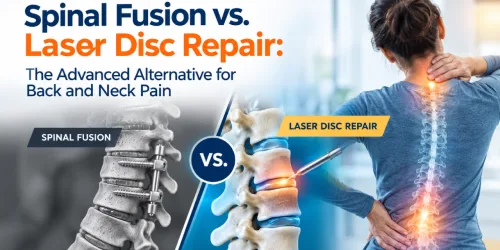
If you’ve been recommended for spinal fusion surgery, it’s important to have all the facts to make an informed decision. Let’s look at spinal fusion surgery and the other treatment options, including the less invasive Deuk Laser Disc Repair®, designed to treat the source of back pain directly.
WHAT IS SPINAL FUSION?
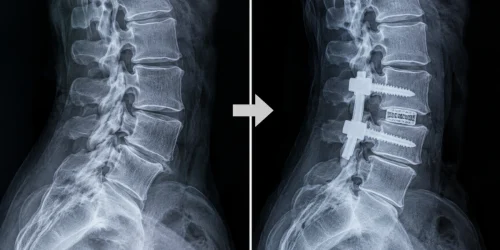
Spinal fusion is a big business, a $5 billion market, and it is routinely recommended by surgeons to stabilize the spine and reduce pain caused by compressed nerves. Fusion immobilizes the vertebrae by welding them together, eliminating the natural movement of the spine, keeping it in place so the nerves are not aggravated further.
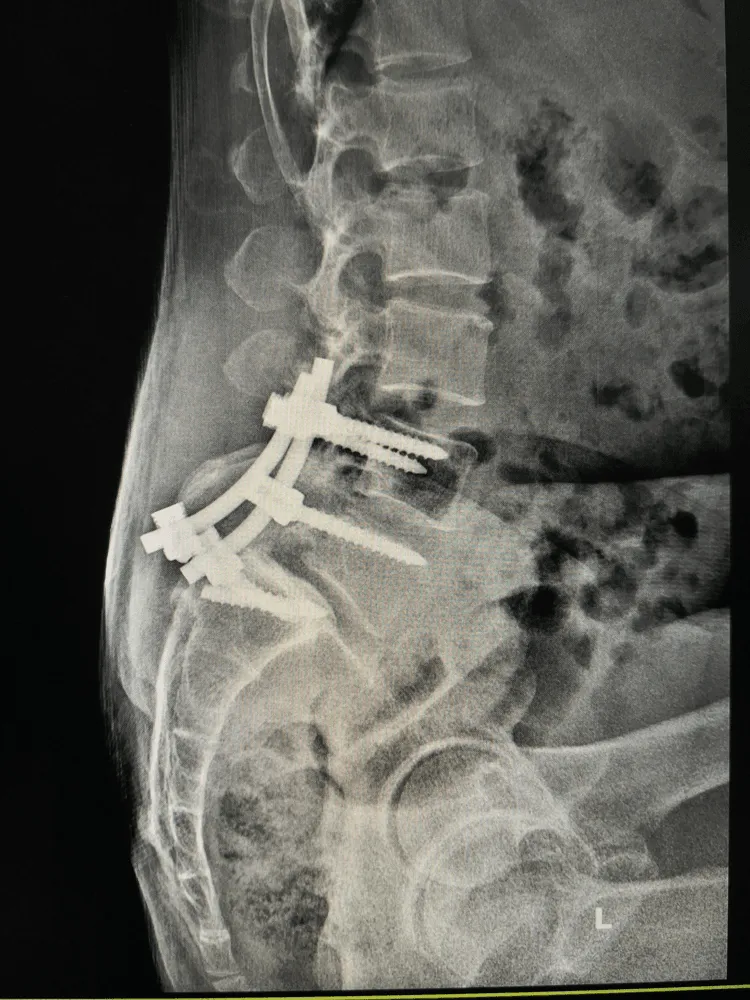
The surgery requires bone grafting to form a bridge between the affected vertebrae, with placement of screws, plates and rods into healthy bone to hold it all together. The result, depending on the number of levels (number of vertebrae affected), is a spine that no longer moves naturally, with healthy bone that is overly stressed and may become compromised.
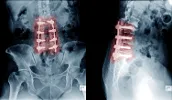
Typical recovery times for spinal fusion vary by individual, with the average being six months to one year. Many post-operative patients experience lingering chronic pain that never fully resolves and are referred to pain management for ongoing treatment.
Spinal fusion is a lucrative surgery for the surgeon, the hospital, and the medical device company, and it is often presented as a patient’s only treatment option. Learn more about the spinal industry and what goes on behind the scenes by watching the docudrama Spine Scam.
SPINAL FUSION COMPLICATIONS
It’s important to understand the potential problems that can occur after spinal fusion surgery when considering your options:
- Limited mobility: loss of spinal flexibility. We have seen many patients whose fusion surgery has limited their ability to move naturally from the fusing of the vertebrae. The higher number of levels fused, the higher the risk of impaired movement.
- Adjacent segment disease (ASD): this occurs in the spinal joints located above and below the fusion, where the joints are at higher risk of degenerating and becoming painful, which can necessitate additional surgery.
- Revision Surgery: revision surgery rates are between 8-46% for all fusion patients. This is a corrective second surgery to address conditions that have developed from the fusion surgery.
- Nerve damage: while fusion can alleviate some nerve pain, it generally takes up to two years for nerve damage to repair itself.
- Scar tissue: spinal fusion always results in soft tissue disruption and the formation of scar tissue around the spine.
SPINAL FUSION USING MINIMALLY INVASIVE SPINAL SURGERY TECHNIQUES
Minimally invasive spinal fusion surgery is often recommended by surgeons because it involves smaller incisions, which can aid a quicker early recovery. The implication that this is a fundamentally different treatment option can be misleading. It may be a smaller incision, but the bone grafting and hardware placement remain the same. Recovery from the incision itself may be somewhat faster; the underlying bone healing time is not.
DR. DEUKMEDJIAN’S BACKGROUND WITH SPINAL FUSION
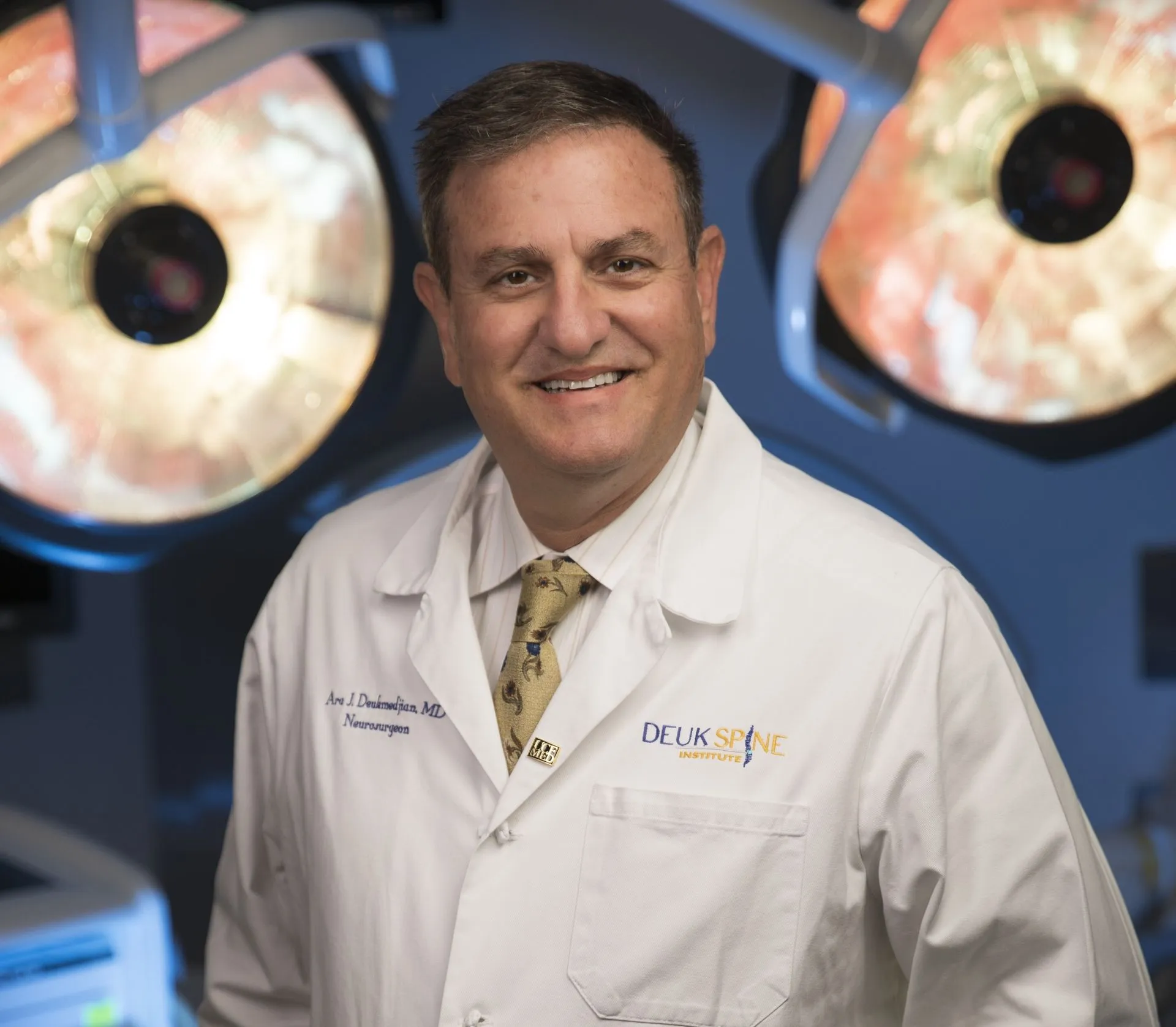
Dr. Ara Deukmedjian performed thousands of spinal fusion procedures earlier in his career and is a published researcher on spinal fusion outcomes. That experience shaped his decision to develop a minimally invasive endoscopic laser alternative, Deuk Laser Disc Repair®, now used at Deuk Spine Institute. Comparing surgeon credentials, case volume, and published outcomes is an important step before committing to any spine procedure. You can review surgeon comparisons here.
AN ALTERNATIVE APPROACH: DEUK LASER DISC REPAIR
At Deuk Spine Institute, we treat back and neck pain by working to eliminate its source rather than manage the symptoms. If you’re looking for back pain relief, if you’ve been recommended for a spinal fusion, or are continuing to live with chronic back pain after a failed fusion surgery, our team can help you understand your options. No cutting or compromising healthy bone, no hardware placement, minimally invasive under twilight sedation, with a recovery time of less than three days for most patients.
How do we do it? We use our Deuk Laser Disc Repair® procedure, a patented, minimally invasive endoscopic laser spine surgery designed to treat the source of back pain directly. An endoscope is placed through a 4mm opening in the spine at the affected level, and a laser is used to remove inflamed tissue from the tear and address the nerves that are the root cause of the pain.
The result? The procedure takes about an hour, and most patients walk out of our outpatient clinic within hours with minimal discomfort and no need for addictive painkillers. Patients typically return to our clinic the next day for a post-op review and are cleared to return to normal activity.
Does it work? In Dr. Deukmedjian’s clinical experience, Deuk Laser Disc Repair® has achieved 99% pain relief for treated pain sources, when the diagnosed pain source matches the treated pathology, across 2,700+ procedures. It took over 30 years and thousands of surgical hours to identify the structural sources of chronic back pain and refine the laser technique used to treat them.
We also livestream select procedures with patient written consent, allowing you to witness our technique.
WE’RE HERE TO HELP
We know how disruptive chronic back pain can be to your life. As neurosurgeons and health care professionals, we have dedicated ourselves to eliminating the source of chronic back pain rather than simply managing it.
Take the first step: upload your most recent MRI to receive a free review and consultation with Dr. Ara Deukmedjian, M.D., the founder of Deuk Spine Institute, who developed the Deuk Laser Disc Repair® procedure. Members of our team will reach out to discuss your options.
OUR COMMITMENT
Your back is one of the most important and vital sets of nerves, bones and tissue in your body. It’s why our entire staff is committed to providing a high level of patient care. We hold each other accountable and set high expectations for every member of our team.
When you come to Deuk Spine Institute, you’ll be the center of a team of health care professionals dedicated to treating the source of your back pain.
Feel free to reach out to us: 1.800.FIX.MY.BACK
Medical Disclaimer: This article is for educational purposes only and does not substitute for a consultation with a qualified physician. Individual outcomes vary, and candidacy for any procedure depends on an individualized evaluation of your specific spine condition.