

By Dr. Ara J. Deukmedjian, MD
Board Certified Neurosurgeon
Medically reviewed on June 30, 2026
Medical Disclaimer: The material contained within this article is for informational purposes only. Consult a qualified physician in all cases related to the subject material within this text.
Key Points
✓ Most patients can avoid spine surgery. Conservative care is first-line for lumbar disc herniation without severe deficit. ¹
✓ Some Herniated discs will feel better after conservative care; 87.77% for sequestrations. ²
✓ Long-term outcomes of PT and surgery are comparable at 1–2+ years for most disc herniations. ³
✓ Epidural steroid injections help short-term (≤3 months) but don’t reduce the likelihood of surgery. ⁴ ⁵
✓ Chiropractic manipulation is generally safe (1 in 1M–100M serious risk) but contraindicated in cauda equina, severe stenosis, fracture, or progressive deficit. ⁶
✓ Surgery is mandatory only for cauda equina, progressive motor weakness, or cervical myelopathy. ¹
✓ When conservative care fails, Deuk Laser Disc Repair® decompresses the nerve without bone removal, muscle cutting, or fusion.
The Short Answer
For most patients told they need spine surgery, the answer is yes, you can probably avoid it at least for now. And in many cases permanently. The major spine guidelines, including the World Federation of Neurosurgical Societies (WFNS) and North American Spine Society (NASS), are consistent on this point: conservative care comes first, surgery comes later, and a meaningful percentage of patients never need the operating room at all. ¹
What “conservative care” actually means is where patients get misled. However, physical therapy, epidural injections, and chiropractic manipulation cannot be used interchangeably, they cannot be used on all diagnoses, and there is a huge variance in the research that supports the use of each modality. This paper will continue to explore how each modality works and its limits.
There is also a fourth option most patients are never told about: endoscopic, motion-preserving procedures that decompress the nerve without removing bone or fusing the spine. More on that at the end.
When Surgery Is Not Optional
Before discussing what to try first, it’s worth being clear about when conservative care is not the right path. There are a handful of true surgical emergencies, and delaying them to “try PT for a few more weeks” causes permanent damage. ¹

- Cauda equina syndrome. Sudden loss of bladder or bowel control, saddle numbness, and bilateral leg weakness. This is a surgical emergency, treated in hours, not weeks.
- Progressive motor weakness. A foot drop that is getting worse, or new weakness in a major muscle group, is a nerve in trouble. The longer it is compressed, the lower the chance of full recovery.
- Cervical myelopathy. Pressure on the spinal cord itself. Not just a nerve root producing: clumsy hands, balance problems, and falls. Decompression is needed relatively quickly.
- Spinal infection, tumor, or unstable fracture. Surgery is structural, not optional.
If none of the above apply, the patient almost always has time to try conservative care first.
Option 1: Physical Therapy
Physiotherapy is the best proven non-surgical intervention for the diseases that compel the majority of people to opt for spinal surgery: herniated lumbar disc, sciatica, mechanical back pain and many types of cervical radiculopathy.

What the evidence actually shows
The most surprising finding in the modern spine literature is how often the body fixes the problem on its own when given the chance. A 2024 meta-analysis of 31 articles and over 2,200 cases showed an average spontaneous rate of recovery from disc resorption under conservative treatment of 70.39%, and in case of sequestration, it reached 87.77%. ²
In other words: the disc which causes pressure on the nerve usually gets reabsorbed and shrinks without and with surgery. Physical therapy assists this process by eliminating irritation, improving mobility and creating stability of the spine needed to avoid reoccurrence.
Spine Patient Outcomes Research Trial (SPORT), which was the biggest spine research ever, examined the patients for up to 8 years. The surgery was initially more effective in pain relief but both methods provided about equal results in the long term. ³ The systematic review of 2025 comparing surgical and conservative management of the prolapsed lumbar disc also showed that there is no difference between two approaches after 24 months from surgery. ⁷
What physical therapy actually does
A real PT program not a sheet of generic stretches usually includes:
- Flexion- or extension-biased exercise, depending on which position relieves the patient’s symptoms (McKenzie-style directional preference).
- Core and hip strengthening to offload the lumbar segment.
- Manual therapy and traction to mobilize stiff segments.
- Postural and ergonomic correction for whatever is driving the daily load.
- Nerve glide / neural mobilization for radicular symptoms.
A 2025 systematic review and meta-analysis published in Frontiers in Neurology concluded that exercise therapy significantly improves pain, function, and disability in lumbar disc herniation when compared to passive care. ⁸
When physical therapy is not enough
Physical therapy underperforms when:
- The compression is from bony stenosis or a calcified disc, where there is nothing for the body to reabsorb.
- The patient has neurological deficit that is progressing.
- The annular tear is patent and continues to leak inflammatory material onto the nerve.
- 6–12 weeks of real therapy have come and gone with no meaningful improvement.
At that point, the question is no longer “PT or surgery”. It’s which procedure is least destructive.
Option 2: Epidural Steroid Injections (ESIs)
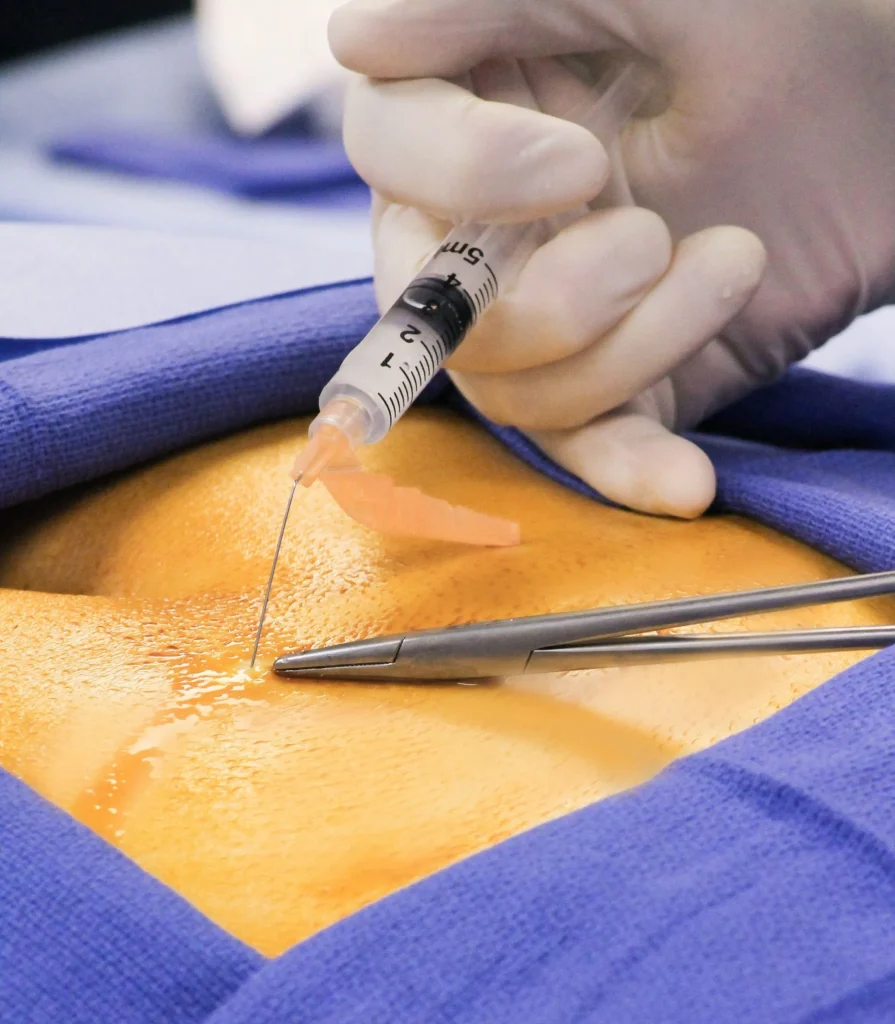
Epidural steroid injections involve administering an anti-inflammatory medication into the epidural space as close to the inflamed nerve root as possible. The procedure has been used since 1953 for treating lumbar radicular pain, and it continues to be one of the most frequently carried out spine procedures in the United States. ⁹
What the evidence actually shows
The 2025 American Academy of Neurology systematic review. 90 randomized controlled trials is the most rigorous summary available. The conclusions: ⁴
- For cervical and lumbar radiculopathy, ESIs probably reduce short-term pain (success rate difference is 24%, number needed to treat 4) and disability (NNT 6).
- For lumbar spinal stenosis, ESIs possibly reduce short-term disability.
- For long-term pain or disability in either condition, the evidence is insufficient.
- There is no evidence that ESIs reduce the likelihood of going on to spine surgery.
A separate 2025 clinical review in Cureus reached the same conclusion: ESIs are an effective bridge therapy. Useful for getting a patient through a flare or buying time for natural healing, but they are not a curative treatment for most patients. ⁵
The honest framing
An epidural is most useful when:
- The patient is in a severe pain flare and needs functional relief to participate in physical therapy.
- The diagnosis is uncertain and a targeted injection helps confirm which nerve root is the pain generator.
- The patient wants to delay or avoid surgery for a specific reason (work, life event, pregnancy, etc.).
ESIs are not most useful when:
- The patient is hoping for a permanent fix from an injection alone.
- Bony compression not inflammation is the dominant problem.
- The compression is structural and progressive.
There are definite risks involved, although they are fairly rare. These include increased pain, infection, dural puncture, epidural hematoma, and, rarely, nerve injury. Repeated procedures can lead to additional side effects associated with steroids, such as bone density loss and, upon frequent use, epidural lipomatosis. ⁴
Option 3: Chiropractic and SMT
Spinal medicine’s most controversial topic is certainly chiropractic care, which includes spinal manipulative treatment (SMT). Research results on the issue are more complicated than both sides usually acknowledge.

What research tells us
Several systematic reviews have concluded that spinal manipulation is a clinically significant form of treatment for mechanical low back pain, with its effectiveness not being inferior to that of any other non-surgical methods that are recommended. ⁶ As for patients with lumbar disc herniation with radiculopathy, the research results available are not as numerous, but, again, generally positive provided proper patient selection.
In a 2025 systematic review and meta-analysis of 26 randomized controlled trials involving 2,766 patients with lumbar disc herniation, it was discovered that the treatment had a significant impact on increasing cure rates and JOA and Oswestry Disability Index scores. ¹⁰
The safety question
The largest reviews estimate the risk of causing a disc herniation or cauda equina syndrome through lumbar spinal manipulation at between 1 in 1 million and 1 in 100 million treatments. ⁶ That is genuinely low, but it is not zero, and the risk concentrates in specific clinical situations.
Manipulation is absolutely contraindicated in the following situations: ⁶
- Cauda equina syndrome
- Neurological deterioration
- Myelopathy due to severe spinal stenosis
- Acute fractures, tumors, or infections
- Osteoporosis
- Post-surgical spinal instability
What chiropractic truly solves
Chiropractic care is most helpful in cases of mechanical back pain, facet joint pain, and mild to moderate disc pain in a patient without red flags. A patient with progressive foot drop or saddle anesthesia would need imaging studies and surgical evaluation, not manipulation.
Why Conservative Treatment Doesn’t Repair The Disc
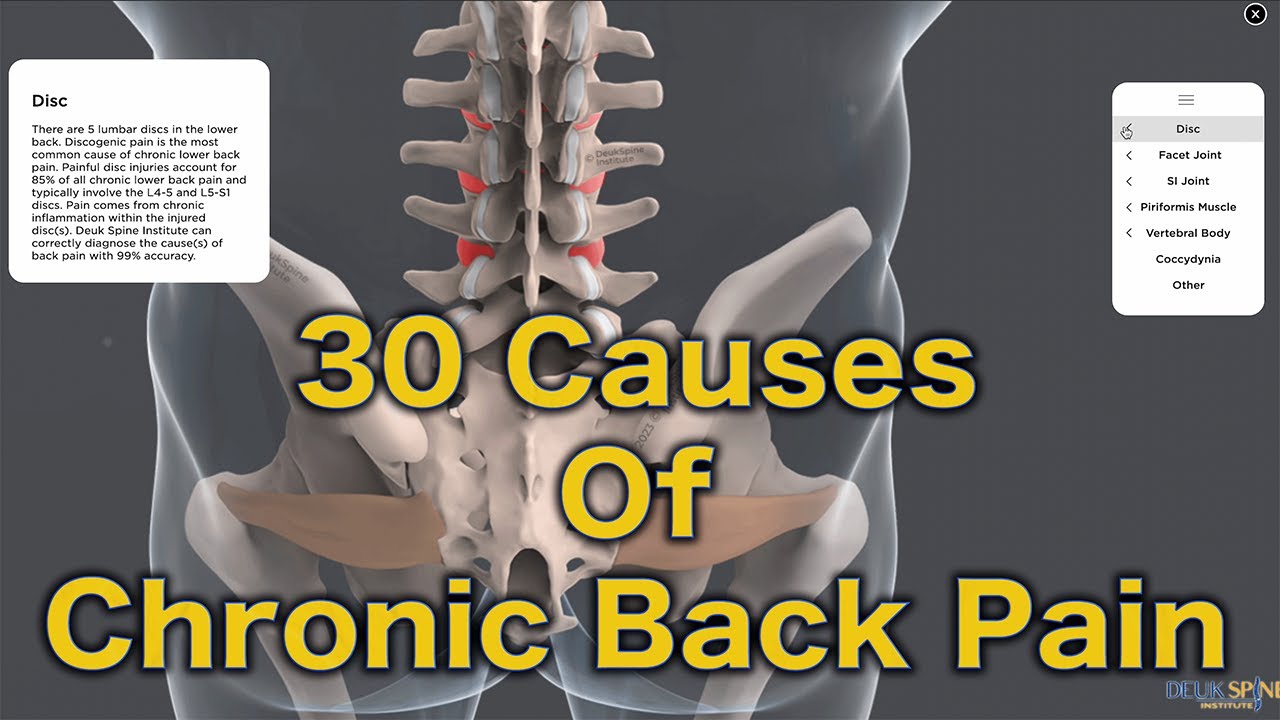
This is where the silence starts: Physical therapy, injections, and chiropractic treatments all help with pain relief, but they do not correct the issue.
- Physical therapy can help take the pressure off a problem segment and promotes healing, but it does not repair an annular tear.
- A epidural injection can lessen the inflammation that is going on around a nerve that is inflamed, but it cannot take out the piece of the disc pressing on it.
- Chiropractic visits help return motion to a problem segment, but it does not regrow a degenerated disc.
For the majority of patients, that is enough. The body heals on its own, the symptoms resolve, and life moves on. For a smaller group of patients, the structural problem keeps generating pain no matter how much symptom management is layered on top of it. That is the group that ends up at a surgeon’s office.
The question for that group is not “surgery or no surgery.” The question is which surgery, because the difference between a 4-millimeter endoscopic procedure and a multi-level fusion is enormous.
What to Try Before Surgery
For the patient who isn’t a surgical emergency and is genuinely trying to avoid the operating room, the evidence-supported sequence looks like this: ¹
- Physical therapy program for 6-12 weeks that involves the actual examination of the patient by a physical therapist, who then designs a directional preference program for the individual.
- Specific drug treatment for neuropathy pain (e.g., gabapentin or duloxetine).
- Epidural steroid injection when pain hinders participation in physical therapy.
- Chiropractic care as an adjunct for mechanical and facet-mediated pain in carefully selected patients without red flags.
- Re-imaging and surgical opinion if 6–12 weeks of real conservative care have come and gone without meaningful improvement, or if a new neurological deficit appears at any point.
The mistake patients make is not skipping step 6. It’s skipping steps 1–5 and going straight to a fusion recommendation.
When Conservative Care Fails: A Smaller Surgery, Not a Bigger One
If 6–12 weeks of conservative care have failed and the MRI lines up with the symptoms, surgery becomes a reasonable conversation but the type of surgery matters more than the decision to operate.
Traditional open laminectomy and spinal fusion are major operations. A meta-analysis with 5+ years of follow-up showed that approximately 14% of patients undergoing laminectomy for lumbar stenosis return to the operating room within five years for recurrent stenosis, instability, or adjacent segment disease. ¹¹ Complication rates for open and laminotomy decompression run 18–20%, with dural tears in 3.6–9% of cases. ¹²
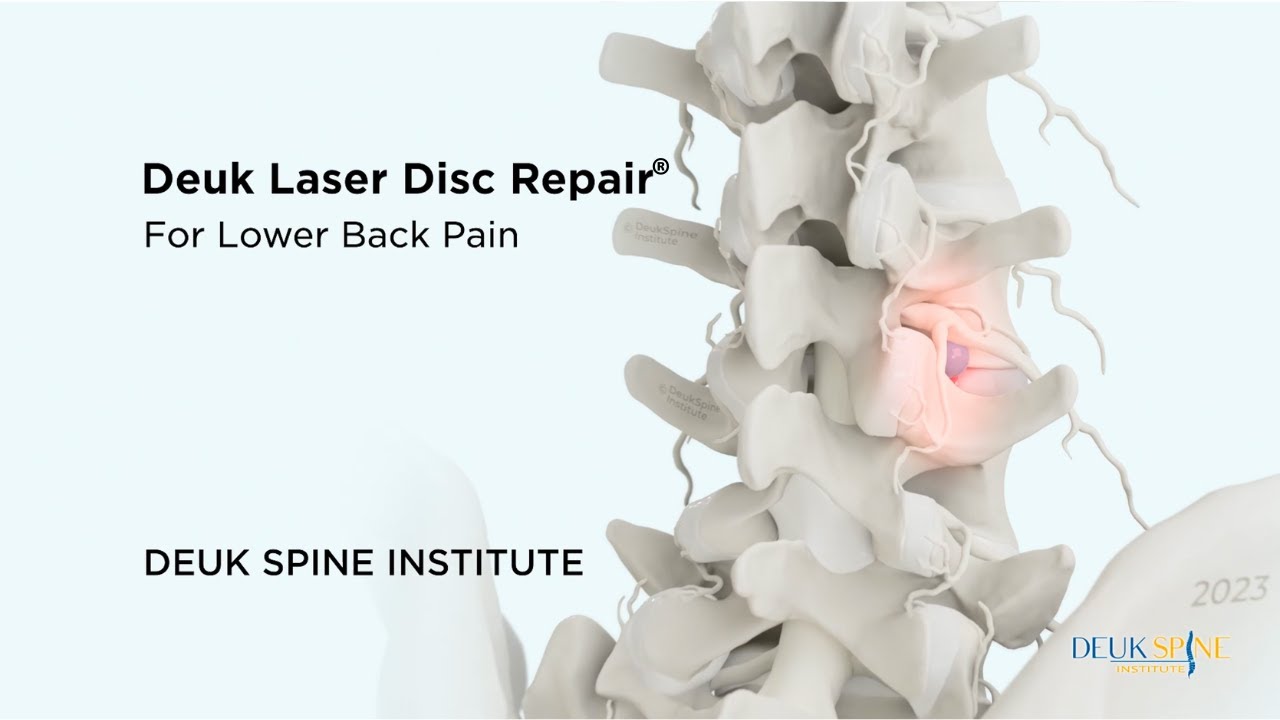
Endoscopic, motion-preserving procedures take a different approach. The Deuk Laser Disc Repair® (DLDR) procedure is an outpatient endoscopic operation performed under light sedation through a 4–7mm incision. Targeted laser energy removes the herniated tissue and seals the annular tear at its source.
What DLDR does not do is just as important:
- It does not remove the lamina.
- It does not cut or strip paraspinal muscles.
- It does not fuse any segment.
- It does not implant screws, rods, plates, or cages.
- It does not destabilize the spine.
- It does not restrict normal motion.
For facet pain and SI joint pain are common companions to disc disease. The Deuk Plasma Rhizotomy® deactivates the pain-carrying nerve without burning, hardware, or fusion.
The point is not that surgery is always the answer. For the majority of patients, it isn’t. The point is that if a patient has truly exhausted conservative care and surgery is on the table, the choice is not limited to “laminectomy or fusion.” There is a third category endoscopic, motion-preserving that did not exist a generation ago.
If conservative care has failed, you still don’t have to choose fusion.
Most patients can avoid spine surgery — but if you’ve given 6 to 12 weeks of real conservative care an honest try and the pain hasn’t budged, the choice isn’t only “laminectomy or fusion.” Send your MRI for a free review by Dr. Deukmedjian and learn whether an endoscopic, motion-preserving option like Deuk Laser Disc Repair® could decompress the nerve — no bone removal, no muscle cutting, no fusion.
- 99%
- Average pain relief
- 0.01%
- Complication rate
- 72hrs
- Back to normal activity
FAQs
Can I avoid spine surgery completely?
In most cases, yes. Most patients suffering from disc herniation, sciatica, and mechanical lower back pain respond well to six to twelve weeks of conservative treatment, and studies have found that the outcomes in the long term for both surgery and non-surgical management of disc herniation are the same for the vast majority of disc herniation patients. ³ However, the exceptions are cauda equina syndrome, motor weakness, and cervical myelopathy.
How long should I try physical therapy before considering surgery?
The standard recommendation is 6–12 weeks of structured, real physical therapy — not a generic handout — before surgery is seriously discussed for non-emergency conditions. ¹ If symptoms are improving at the 6-week mark, continue. If they are unchanged or worsening, re-imaging and a surgical opinion are appropriate.
Do epidural steroid injections fix the problem or just mask it?
They mask it. ESIs reduce inflammation around an irritated nerve and probably provide short-term pain relief in lumbar and cervical radiculopathy, but the evidence does not support long-term pain relief or a reduced rate of progression to surgery. ⁴ Used correctly, an epidural is a bridge — it buys time for natural healing or makes physical therapy possible. It is not a cure.
Is chiropractic care safe for a herniated disc?
For a carefully selected patient without red flags, yes — the serious complication rate is estimated between 1 in 1 million and 1 in 100 million treatments. ⁶ But spinal manipulation is contraindicated in cauda equina syndrome, progressive neurological deficit, severe stenosis with myelopathy, fracture, infection, tumor, and severe osteoporosis. Anyone with new bladder/bowel symptoms, saddle numbness, or progressive weakness needs imaging and a surgical opinion before any manipulation.
Will my herniated disc heal on its own?
In many cases, yes. A 2024 meta-analysis found a spontaneous disc resorption rate of 70.39% with conservative care, and 87.77% for the largest sequestrated fragments. ² The body actively reabsorbs herniated disc material over weeks and months in a large majority of cases.
When does “avoiding surgery” become the wrong decision?
When the patient has new or progressing neurological deficit, when 6–12 weeks of real conservative care have failed, when bladder or bowel control is affected, when cervical cord compression is present, or when imaging shows a structural problem that cannot be resolved by symptom management. At that point, delaying surgery makes the eventual operation larger, not smaller — and the recovery longer.
If I do need surgery, is fusion my only option?
No. Fusion is appropriate for documented instability, scoliosis, fracture, tumor, or significant deformity — not as a default add-on to a routine decompression for pain. ¹³ A second opinion is strongly warranted when fusion is recommended in the absence of documented instability. Endoscopic procedures like Deuk Laser Disc Repair® can decompress the nerve without removing bone, cutting muscle, or fusing the spine.
Does insurance cover conservative care and endoscopic spine procedures?
Most major insurance plans, Medicare, and workers’ compensation cover physical therapy, epidural injections, and medically necessary spine procedures. Coverage for specific advanced techniques varies by carrier. Deuk Spine Institute’s team verifies benefits during a free MRI review.
Sources
View Sources
- Kreiner DS, Hwang SW, Easa JE, et al. An evidence-based clinical guideline for the diagnosis and treatment of lumbar disc herniation with radiculopathy. North American Spine Society. The Spine Journal. 2014.
- Clinical Spine Surgery. Spontaneous regression of lumbar disc herniation: a systematic review and meta-analysis of 31 studies. 2024.
- Weinstein JN, Lurie JD, Tosteson TD, et al. Surgical vs nonoperative treatment for lumbar disk herniation: the Spine Patient Outcomes Research Trial (SPORT). JAMA. 2006; long-term follow-up published in Spine. 2014.
- Narouze S, Souzdalnitski D, Cohen SP, et al. Epidural Steroids for Cervical and Lumbar Radicular Pain and Spinal Stenosis: Systematic Review Summary. Report of the AAN Guidelines Subcommittee. Neurology. 2025.
- Lumbar Epidural Steroid Injections for Chronic Spinal Pain: A Clinical Review of Efficacy and Evidence. Cureus. 2025.
- Oliphant D. Safety of spinal manipulation in the treatment of lumbar disk herniations: a systematic review and risk assessment. J Manipulative Physiol Ther. 2004.
- Surgical versus conservative management of lumbar disc prolapse: A systematic review and meta-analysis. Journal of Musculoskeletal Surgery and Research. 2026.
- Clinical efficacy of exercise therapy for lumbar disc herniation: a systematic review and meta-analysis of randomized controlled trials. Frontiers in Neurology. 2025.
- Chou R, Hashimoto R, Friedly J, et al. Epidural Corticosteroid Injections for Radiculopathy and Spinal Stenosis: A Systematic Review and Meta-analysis. Annals of Internal Medicine. 2015.
- Efficacy of oblique pulling manipulation combined with adjunct therapies for lumbar disc herniation: a systematic review and meta-analysis. Frontiers in Neurology. 2026.
- Machado GC, Ferreira PH, Yoo RI, et al. Long-Term Outcomes of Laminectomy in Lumbar Spinal Stenosis: A Systematic Review and Meta-Analysis. Global Spine Journal. 2022.
- Algarni N, Al-Amoodi M, Marwan Y, et al. Unilateral laminotomy with bilateral spinal canal decompression: systematic review of outcomes and complications. BMC Musculoskeletal Disorders. 2023.
- Katz JN, Zimmerman ZE, Mass H, Makhni MC. Diagnosis and Management of Lumbar Spinal Stenosis: A Review. JAMA. 2022.