

Most pain in the upper back comes from posture and muscle tension. Long hours at a desk are a frequent trigger. Simple changes to daily habits usually ease the discomfort. This guide covers the T1 to T6 vertebrae, which run from the base of the neck down to the shoulder blades.
The sections below explain where upper back pain starts and which causes are most common. They also cover what one-sided pain and other symptoms mean, plus the main treatment options. Anyone with chest pain or shortness of breath should skip straight to the warning signs section below.
Where Is Your Upper Back, Exactly?
The upper back covers the spine from the base of the neck down to the lower edge of the shoulder blades. Spine specialists label this stretch as the T1 to T6 vertebrae. The letter T refers to the thoracic spine, which is the part of the spine attached to the ribs. These six vertebrae run from the base of the neck down to the level of the shoulder blades.
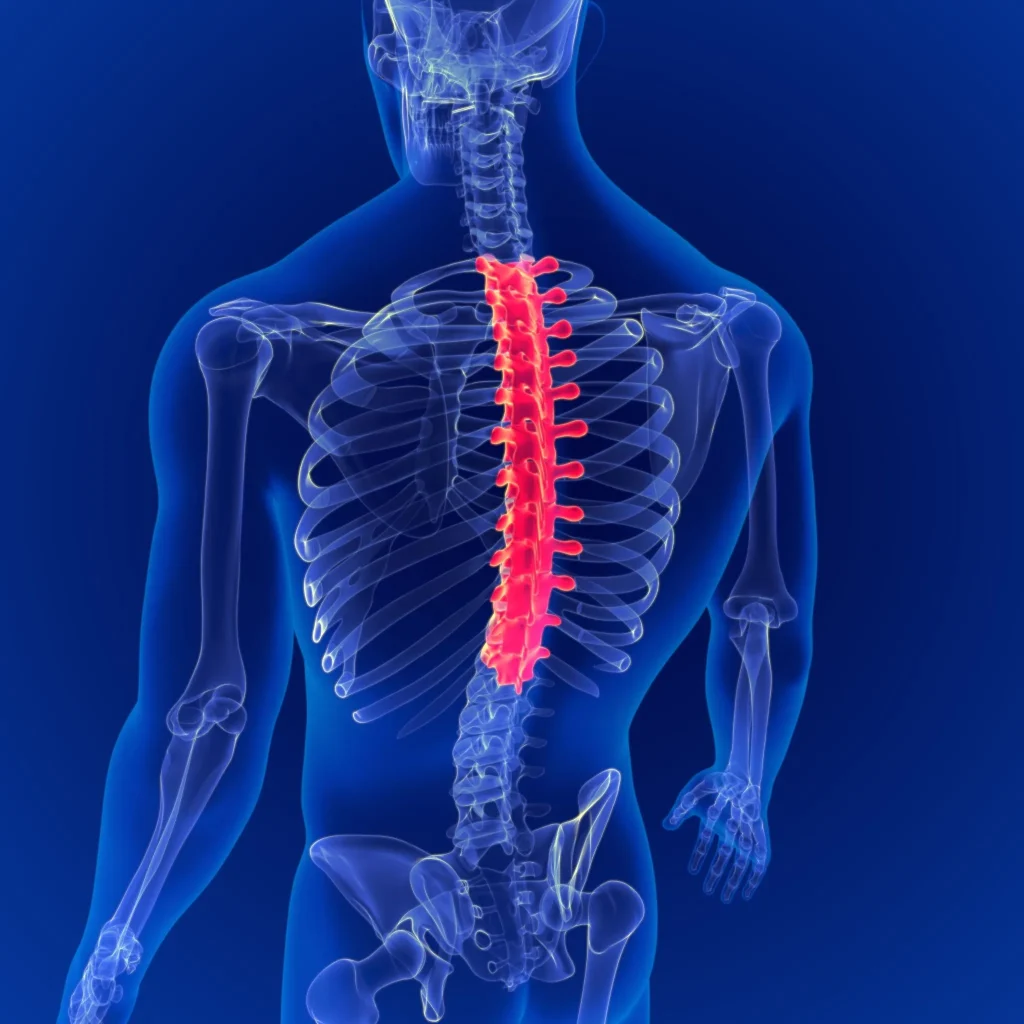
Above this zone sits the cervical spine, a separate area tied to neck pain that triggers headaches or arm pain. Below the shoulder blades, the lower thoracic vertebrae shape the region linked to middle back pain. Some medical sources use the term upper back for the entire thoracic spine from T1 to T12. The anatomy stays the same under either label.
Common Causes of Upper Back Pain
The list of upper back pain causes ranges from everyday muscle strain to structural changes in the spine. Each item below gives a short overview.
- Muscle tension from posture or long periods of sitting is the most common cause of all. The tension builds in the trapezius across the shoulders and the rhomboids beside the spine.
- Poor ergonomics place steady strain on the upper spine. Tech neck describes the forward head tilt that phone and screen use tends to create.
- Muscle strain can follow a heavy lift or a sudden twist of the torso. The discomfort usually starts soon after the movement. Rest with gentle movement tends to help it settle.
- Thoracic or cervical disc issues can irritate surrounding nerves. A damaged disc in this area may produce pain between your shoulder blades.
- Osteoarthritis of the facet joints brings stiffness to the spine. The facet joints are small hinges at the back of each vertebra. Cartilage wear can make twists feel sore.
- Myofascial trigger points are tight knots inside a band of muscle. They explain the familiar knot under the shoulder blade that sends pain somewhere else.
- Rib and costovertebral joint irritation is unique to the thoracic spine. These joints connect each rib to a vertebra. Irritation there can make a deep breath feel sharp.
- Spinal curve conditions can also play a part, since the spine anatomy relies on natural curves to spread load. Kyphosis rounds the upper spine forward, and scoliosis bends the spine into a sideways curve. A compression fracture, a small collapse in a vertebra, can affect older adults or people with osteoporosis.
Upper Back Pain and Posture: Why Desk Work Is Often the Real Cause

Desk work is one of the most common contributors to discomfort in this region. Three patterns tend to show up together during a long workday. Forward head posture moves the head ahead of the shoulders. Rounded shoulders roll toward the chest as the arms reach for a keyboard.
Long screen time holds the body in that shape for hours at a stretch. This pattern places extra work on the trapezius and rhomboids. Over time, that effort can leave the upper back tight at the end of the day. Tight muscles in this chain can explain why shoulder pain and neck pain sometimes appear alongside it.
The real issue lies in the load placed on the same tissue for too long. Any single position held for hours can tire the muscles, however upright it looks. Small shifts through the day give those muscles a chance to recover.
Upper Back Pain on One Side: What Right-Side and Left-Side Pain Can Mean
One-sided pain in the upper back is usually muscular. Referred pain from an organ is possible, though a muscle source remains the likelier explanation. Referred pain is pain felt in one place from a problem located somewhere else.
Why One Side Hurts and Not the Other
Asymmetric load explains the large majority of one-sided discomfort. Daily habits tend to favor one side of the body. Common examples include the hand that holds the mouse and the shoulder that carries a bag. The side of the desk where the monitor sits matters too. So does the side a person sleeps on each night.
What Left-Side Upper Back Pain Can Mean
For upper back pain on the left side, musculoskeletal causes come first. A tight rhomboid or a strained trapezius on that side is the usual source. In less common cases, organs on this side that can refer pain include the heart and aorta along with the spleen and pancreas. Any sign of a heart problem belongs in the warning signs section below.
What Right-Side Upper Back Pain Can Mean
Upper back pain on the right side often starts with musculoskeletal causes, such as muscle strain, joint irritation, or repetitive movements. Using a mouse with the right hand or carrying a bag with a strap on the right can also contribute. Organ-related possibilities on this side include the gallbladder, liver, and right lung.
Kidney and lung causes deserve separate consideration because these are paired structures. The kidneys sit on both sides of the spine, while the lungs occupy both sides of the chest. Pain from either source can therefore occur on the left or right. The side of the pain can help a doctor sort through possible causes, but it is a useful clue rather than a diagnosis.
Possible Organ-Related Causes
Symptoms of Upper Back Pain
Symptoms of upper back pain can include a dull or sharp pain, a tender-to-touch sensation, or pain on movement. Stiffness can occur, especially if the back is in one position for a long time. Pain can also occur with certain movements such as twisting or reaching overhead.
Common descriptions include sharp or dull pain along with throbbing and burning. Others report an ache that radiates or a pins-and-needles feeling. The right word for the sensation helps a doctor narrow the cause.
A few notes before an appointment make the visit more useful. A phone note works well for this.
- Where the pain sits and whether it spreads
- When it started and what time of day it peaks
- What makes it better or worse, such as rest or desk work
- Other symptoms that appear alongside it, such as numbness or fever
- How long it has lasted, since pain beyond 12 weeks counts as chronic
Muscle Tension or Something More?
Muscular pain tends to come and go with posture or activity. It usually improves with rest, stretching, or heat. The pain also stays in one area of the back.
Nerve or disc pain follows a different pattern. Pain of this type persists and spreads outward. It may also bring the kind of tingling and numbness in the back that signals nerve irritation.
When Symptoms Include Arm Tingling or Weakness
Pain that radiates into the shoulder or arm can point to nerve involvement. Tingling or weakness in the arm makes a muscle knot a less likely cause. One possible source is nerve compression near the base of the neck.
A pinched nerve in the neck can send symptoms along the path of that nerve into the arm. These symptoms deserve a prompt check with a specialist.
Treatment Options and Relief for Upper Back Pain

First-line self-care for the upper back starts with simple changes to position. A new chair setup or regular breaks from the desk can take pressure off tired muscles. Heat relaxes tight tissue, while ice can calm a fresh strain. Over-the-counter pain relievers are another common option for short-term relief.
Small adjustments of this kind cost little and fit into a normal day. Conservative care is a sensible first step for the majority of cases. The posture and muscle causes behind upper back pain tend to respond to these basic measures. It also gives the body time to settle before any further steps.
Simple Stretches and Movements to Try
The movements below are gentle ways to restore mobility.
- Chin tucks: Gently draw the chin straight back, as if making a double chin, then hold briefly.
- Wall slides: Stand with the back and arms against a wall, then slowly slide the arms up and down.
- Open-book rotations: Lie on one side with knees bent, then open the top arm across the body toward the floor behind.
- Doorway chest stretch: Rest the forearms on a door frame and lean forward gently to open the front of the shoulders.
These are general mobility movements and no substitute for a prescribed program. Stop any movement that increases symptoms.
Physical therapy and ergonomic changes are a common next step. A physical therapist can build a plan around the specific pattern of pain. Ergonomic changes at work can keep progress steady.
Some pain continues despite these steps. Persistent pain or new arm symptoms are a good reason to see a specialist. Imaging at that stage can clarify the source and guide the next treatment option. This visit is a practical way to get clear answers.
How to Stop Upper Back Pain From Coming Back
Once the ache settles, a few everyday changes can keep it from creeping back.
- Workstation setup: The top of the monitor should sit roughly at eye level. A chair that props up the lower back helps, and so does lifting the phone toward the face for longer reads.
- Movement breaks and activity: Getting up every half hour, even just to refill a water glass, gives tired muscles a reset. Walking, swimming, or light strength work a few times a week keeps them in shape.
- Sleep position and pillow height: Back or side sleeping is usually kinder to the upper back than lying face down, which leaves the neck twisted for hours. The pillow should keep the head in line with the spine. Stacked too high, it pushes the chin forward all night.
- Carrying and lifting habits: The shoulder that always carries the bag is the sore one. Switching sides, or wearing a backpack on both straps, spreads the weight. When lifting, keep the load close to the chest.
Upper Back Pain Warning Signs: When to Be Seen Now
Some symptoms can’t wait for a regular appointment. Chest pain is one of them, especially when it comes with shortness of breath or a cold sweat, because that combination can point to a heart attack. The same goes for pain that moves into the jaw or down an arm while those other signs are present. Call 911 right away in these situations.
Sudden, severe, tearing pain between the shoulder blades also calls for 911. This type of pain can point to a tear in the aorta, the body’s main artery. Emergency teams need to rule this out quickly.
Other signs call for a prompt visit to a doctor. These symptoms may point to a condition beyond simple muscle strain.
- New weakness, numbness, or slowed coordination in the arms or legs
- New changes in bladder or bowel control
- Fever, unexplained weight loss, or night sweats, as well as a history of cancer
- Pain after a fall, a car accident, or another kind of trauma
Anyone with these signs should skip home stretches until a doctor has checked the cause of the pain. A checklist version of these signs appears below for quick reference.
How Upper Back Pain Is Diagnosed
A diagnosis starts with a conversation about the history of the pain. The doctor asks when it began and what changes it. A physical exam follows, with a check of posture, movement, and tender spots.
Specialists who assess thoracic spine pain look for signs of nerve or joint involvement during this exam. Imaging such as an X-ray or MRI comes into play when warning signs appear. It may also help when pain persists beyond a few weeks.
An MRI shows discs, nerves, and soft tissue in detail. People who already have an MRI can get it read and explained through a free MRI review. The findings then shape a care plan that fits the source of the pain.
Upper back pain that keeps coming back? Find out what’s behind it.
Don’t just manage the pain.
Find out what’s causing it.
Upper back pain often comes from posture, muscle tension, or strain. But persistent pain, pain that spreads, or symptoms such as arm tingling or weakness can point to nerve or disc involvement. A review of your MRI can help clarify what may be causing your symptoms and what treatment options may be appropriate.
near the shoulder blades
is considered chronic
and soft tissue in detail
- Posture and long periods of sitting
- Muscle tension or strain
- Poor workstation ergonomics
- Facet joint or rib joint irritation
- Spinal curve conditions
- Pain that persists despite conservative care
- Pain that spreads into the shoulder or arm
- Tingling or numbness
- New arm weakness
- Symptoms suggesting nerve or disc involvement
Deuk Spine Institute · Board-certified neurosurgeon · MRI review available · Get more clarity about the source of your pain
FAQs: Upper Back Pain
Can bad posture really cause upper back pain?
Answer
Yes, posture is one of the most common causes of pain in the upper back. Long hours with the head forward and the shoulders rounded strain the trapezius and rhomboids. The issue is time spent in one position, so short regular movement breaks tend to help.
What’s the best treatment for upper back pain?
Answer
The best first step for most cases is conservative self-care. Heat or ice, gentle stretches at home, and posture changes at the desk tend to ease muscular pain. Physical therapy or a specialist visit is a sensible next step for pain that persists beyond a few weeks.
Is upper back pain ever a sign of a heart problem?
Answer
Yes, in some cases, pain in the upper back can signal a heart problem such as a heart attack. Warning signs include chest pain, shortness of breath, a cold sweat, or pain that spreads to the jaw or arm. Anyone with these symptoms should call 911 right away.
What does it mean if upper back pain is only on one side?
Answer
One-sided pain in the upper back usually comes from muscle strain on that side. Daily habits such as mouse use, a bag on one shoulder, or a favored sleep side place extra load on one side. Less commonly, an organ can refer pain there as well.
When should you worry about upper back pain with arm tingling?
Answer
Arm tingling with back pain deserves a prompt doctor visit when it persists or returns. It can point to nerve compression, such as a pinched nerve near the base of the neck. New arm weakness, clumsy hands, or bladder changes call for urgent medical care.
How do you sleep with upper back pain?
Answer
A back or side position with a pillow that keeps the neck level with the spine tends to be the most comfortable choice. A pillow that sits too high can push the head forward overnight. The prevention section above covers sleep setup in more detail.
What’s the difference between upper back pain and neck pain?
Answer
Neck pain starts in the cervical spine, while pain in the upper back starts in the thoracic spine below it. In this guide, the upper back covers the T1 to T6 vertebrae down to the shoulder blades. The two areas connect, so tension in one can spread into the other.
Conclusion
Most cases of upper back pain respond well to simple posture and activity changes. Regular breaks, a good workstation setup, and gentle movement tend to keep the muscles calm. The steps in this guide offer a practical place to begin. Some pain follows a different pattern, with arm symptoms or discomfort that lingers. For those cases, a free MRI review offers a helpful next step toward clear answers. Clear findings make the next conversation with a specialist more productive.