
Medical Disclaimer: This content is for educational purposes only and does not constitute medical advice. Individual results may vary. Always consult with your healthcare provider about your specific condition and treatment options.
The basics of Annular Tear: causes, symptoms, and treatment
Annular tears are medical conditions that often develop as a result of traumatic injury within the human spine, specifically the spinal disc. Posterior annular tears can be a source of back or neck pain and discomfort, even when they don’t affect the spinal nerve roots. Nerves in the spine exit immediately behind the disc annulus through the intervertebral foramen to form the peripheral nervous system. For this reason, any condition that adversely affects the spinal nerve roots is bound to result in far-reaching consequences across the rest of the body.
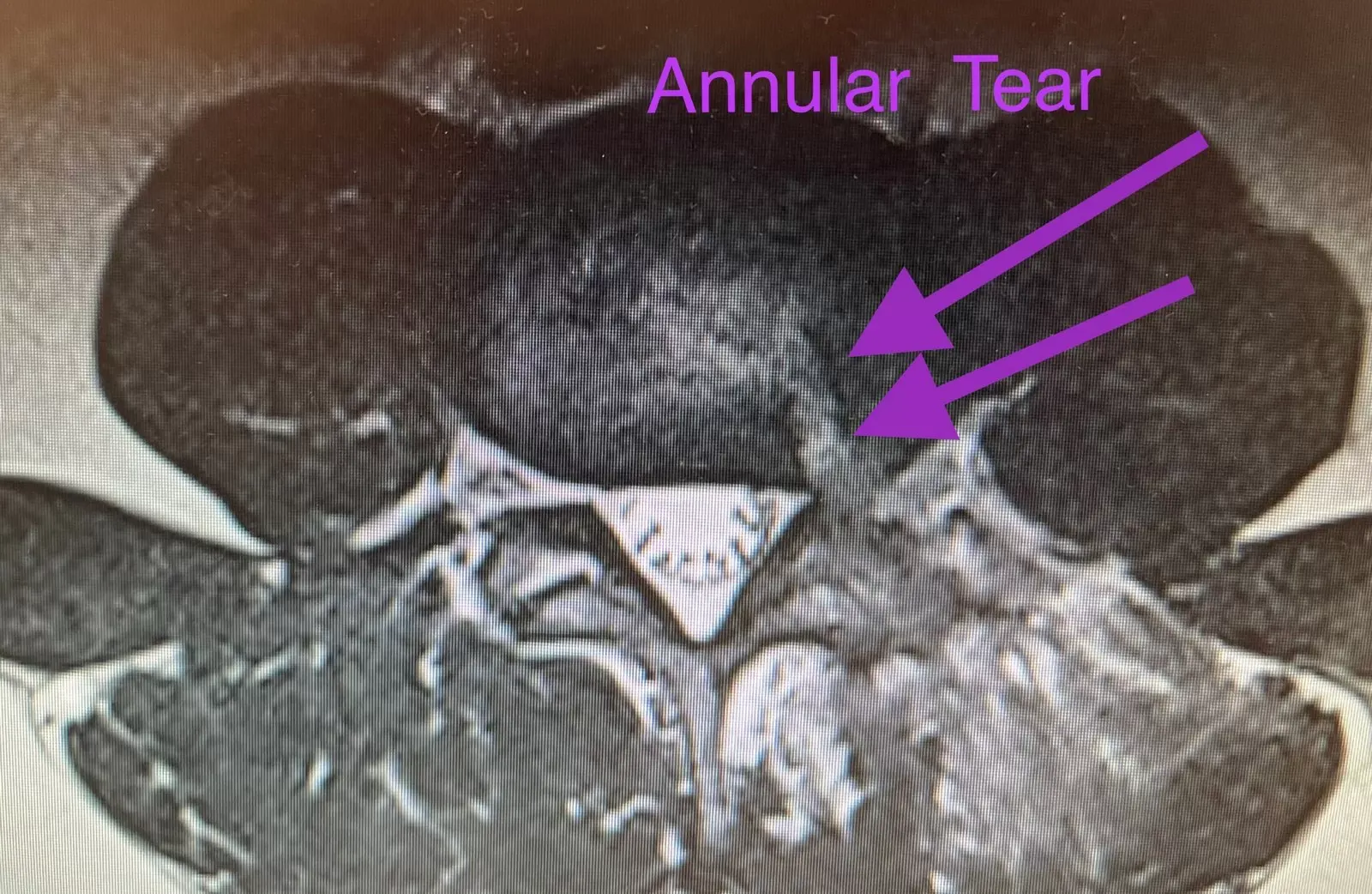
What is an Annular tear?
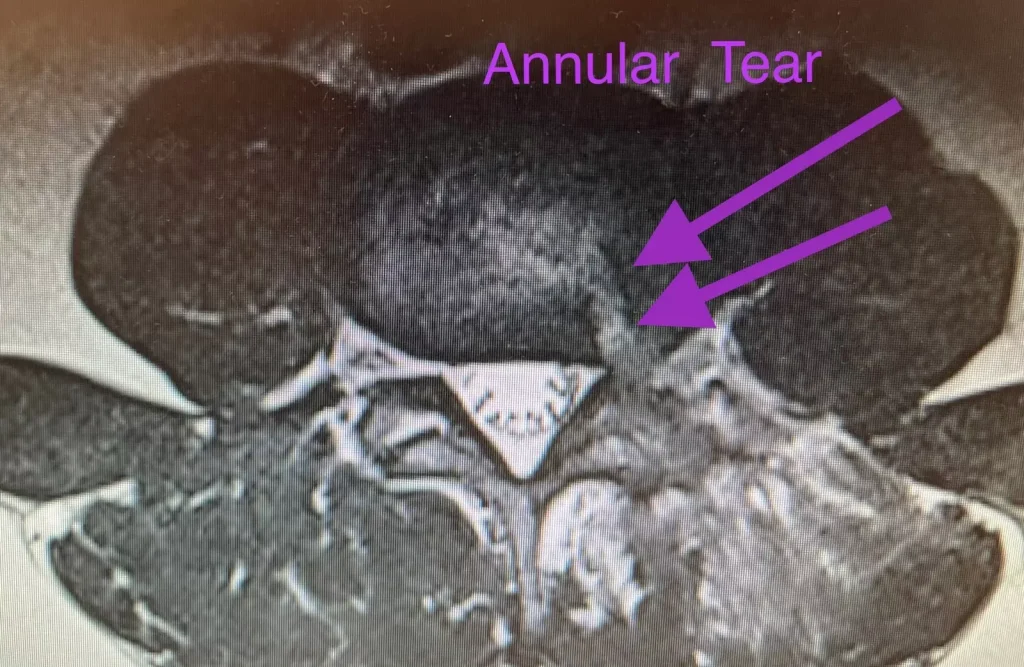
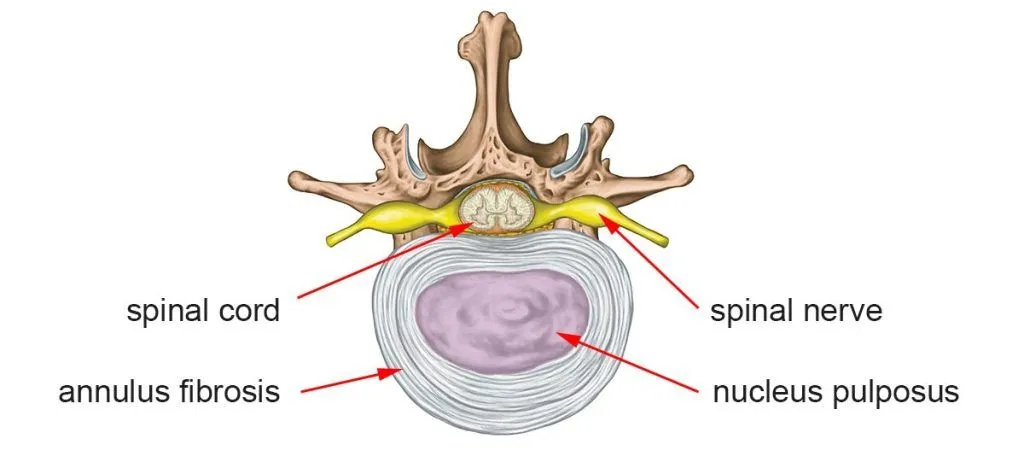
An annular tear develops when the annulus fibrosus, the firm outer tissue of a spinal disc, is damaged and splits open. The jelly-like inner core of the disc, known as the nucleus pulposus, squeezes out of the annular tear and into the spinal canal. It is quite common for an annular tear to be the first insult to a disc that results in a bulging disc. Bulging discs are herniated discs with small herniations of the nucleus pulposus. Through repetitive trauma to the disc, herniations get larger and frequently more symptomatic. Symptoms include back or neck pain, pain down the arm or leg, numbness, tingling and weakness.
An annular tear usually develops from trauma to the intervertebral disc. In its early stages, the tear may not cause any discomfort because the tissue still provides enough support to contain the nucleus pulposus in a painless state. However, as the crack opens wider, the disc’s gel-like central fluid may squeeze out (herniate) under increased pressure from normal activities like bending, jumping, lifting or twisting. This condition can cause high levels of pain and discomfort as we will discuss below.
No cost · No obligation
Live Pain Free
Upload your MRI for a free expert review by Dr. Ara Deukmedjian, M.D. — board-certified neurosurgeon. Ten minutes can change your life.
General Types of Annular tear
There are three identified types of annular tears;
1. Concentric Tears
Concentric tears form in a ring that encircles the disc nucleus. A crack occurs circumferentially in the layers of the outer wall (annulus fibrosus), causing the layers to partially or entirely separate. Torsion injuries or bending the back improperly are common causes of concentric tears.
2. Peripheral/transverse tears
Transverse tears start at the disc’s outermost rim and can progress to the nucleus. The outside section of the disc is densely innervated with pain receptors; therefore, an annular tear in this region can’t go unnoticed. This crack does not originate from the inner layer, hence it is frequently caused by an injury. However, the condition can progressively deteriorate the conditions of the disc nucleus.
3. Radial tears
The tear starts in the inner layer of the disc and progresses to the outer layer. These tears have the potential to crack to the very edge of the annulus fibrosus, causing a total separation of the tissue. They don’t always generate symptoms because they start from the core of the disc, where pain receptors are minimal. If the nucleus pulposus squeezes through the disc’s outer wall, it might result in a herniated disc.
Annular Tears by Location Within the Disc
Beyond the type of tear, the location of the tear within the disc also affects symptoms and treatment approach:
- Central annular tears occur in the middle of the posterior disc wall and are less likely to compress a specific nerve root directly, though they can still generate significant pain due to inflammation.
- Paracentral annular tears occur slightly off-center and are more likely to affect a single nerve root, often producing one-sided symptoms.
- Posterior annular tears occur along the back wall of the disc, the area most densely populated with pain-sensing nerve fibers, making them a common source of localized back or neck pain even without nerve root involvement.
When an annular tear occurs alongside a disc bulge, treatment typically follows the same conservative-first approach: physical therapy, anti-inflammatory medication, and activity modification for 6-12 weeks. If symptoms persist, Deuk Laser Disc Repair® addresses both the bulging disc material and the annular tear itself in a single procedure.
How does an Annular tear occur in the spine?
There are 33 vertebral members in the human spinal column. Discs separate approximately 22 of these bones. These intervertebral discs cushion and protect the vertebrae, absorb trauma, and aid in the even distribution of weight in the back. The nucleus, or inner part of the disc, is a soft, gelatinous fluid, while the annulus fibrous, or outer half, is made of collagen connective fibers arranged in a criss-cross pattern for stability.
These elastic discs, when healthy, allow individuals to perform various athletic actions. These discs also absorb the shocks and forces that move through the spine. Extremely long durations of sitting or standing might put compressional stresses on your spine.
Throughout low-intensity exercise or activity, the spinal discs keep the vertebrae from colliding with one another. They are not, however, injury-proof.
The spinal discs tend to dry out as a result of normal aging. Usually, the spinal discs begin to deteriorate rapidly after the age of 30. The annulus, similar to dry skin, becomes more susceptible to damage. Furthermore, whenever the body is subjected to a high-impact exercise, trauma, or strenuous motions, additional pressure is created in the spine, which can cause the disc to wear out faster. The discs will begin to break down due to the increasing pressure, losing moisture and flexibility, resulting in cracks and tears. If cracks occur in the disc’s resistant exterior tissue, the gel-like core within the disc will surge to the sore area on the outside.
The annulus can completely tear open if the pressure is high enough, releasing disc fluid into the intervertebral area.
Causes of annular tear
Annular tears are expected as a result of human aging’s regular wear and tear. An abrupt, severe injury, on the other hand, can cause this disease to appear much sooner. The following factors frequently cause an annular tear:
Bone spurs
Inflammation caused by bone degeneration in the spine can lead to the growth of bone spurs. Cartilage degradation can result in joint instability and inflammation as a result of bone-on-bone contact. The body responds by creating extra bone in the place of missing cartilage to stabilize and strengthen the damaged joint. The spine is one of the most prevalent sites for bone spur development.
Bone spurs are not harmful in and of themselves. However, they can become uncomfortable when they impinge on nearby spinal nerves. Bone spurs are known to cause annular tears as well when they creep into the intervertebral region.
Spinal injuries
When any of the structures that support the spine sustains an unforeseen accident or chronic deterioration, it is called a spinal injury. The spinal vertebrae, spinal cord, spinal nerves, intervertebral discs, and supportive tissues such as muscles, tendons, and ligaments are among these structures.
Approximately 80% of people experience back pain at some point in life, whether due to daily activity or an injury.
These injuries can have long-term implications. Including chronic pain and discomfort.
Degenerative Disc Disease
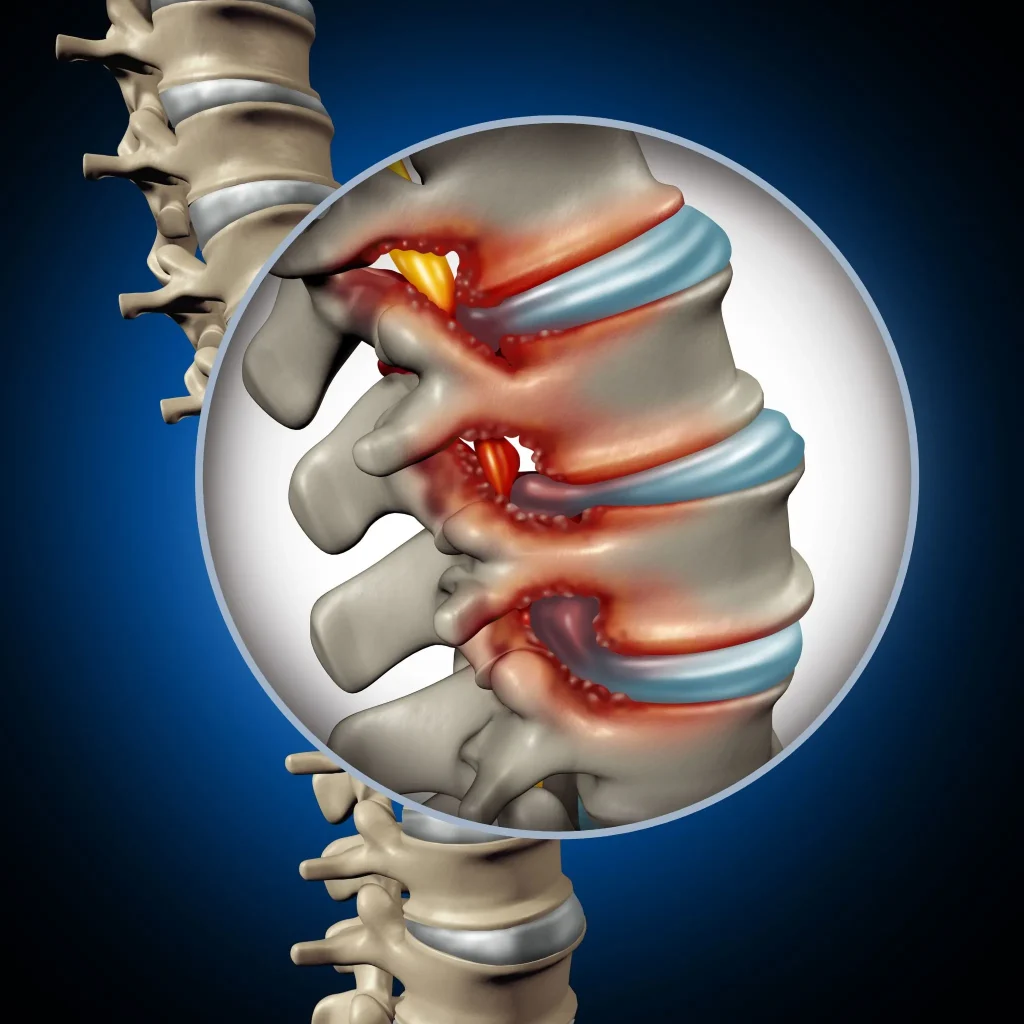
Excessive wear and tear cause the spinal discs to break down, resulting in this disorder. This is frequently accompanied by a loss of fluid within the disc. The disc begins to lose part of its flexibility as it dries out. As a result, the disc is more prone to tearing. Degenerative disc disease is a slow-moving disorder that occurs over time.
Degenerative disc disease can begin as early as the age of 30. On the other hand, symptoms are more likely to appear later in life and are dependent on an individual’s habits or lifestyle.
Symptoms of Annular Tear
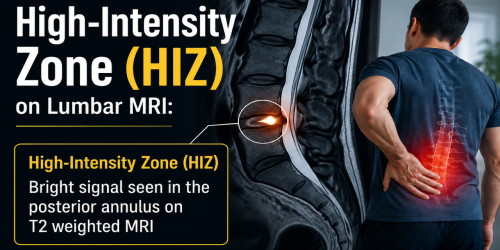
Imaging tests are often used to establish the presence of an annular tear in the spinal column. Your doctor will need to schedule an MRI or CT scan to uncover soft tissues, such as spinal discs. A physical examination should also be performed, including or feeling the spine and probing any uncomfortable locations.
The only drawback of this system is that an MRI will not pick up on all annular ruptures. Your doctor may then elect to perform a CT discogram as a follow-up procedure. A liquid dye is injected into the disc and viewed on a CT scan during this operation. The dye will contrast with the disc, allowing any tears, no matter how minor, to be seen.
Diagnosis of annular tear
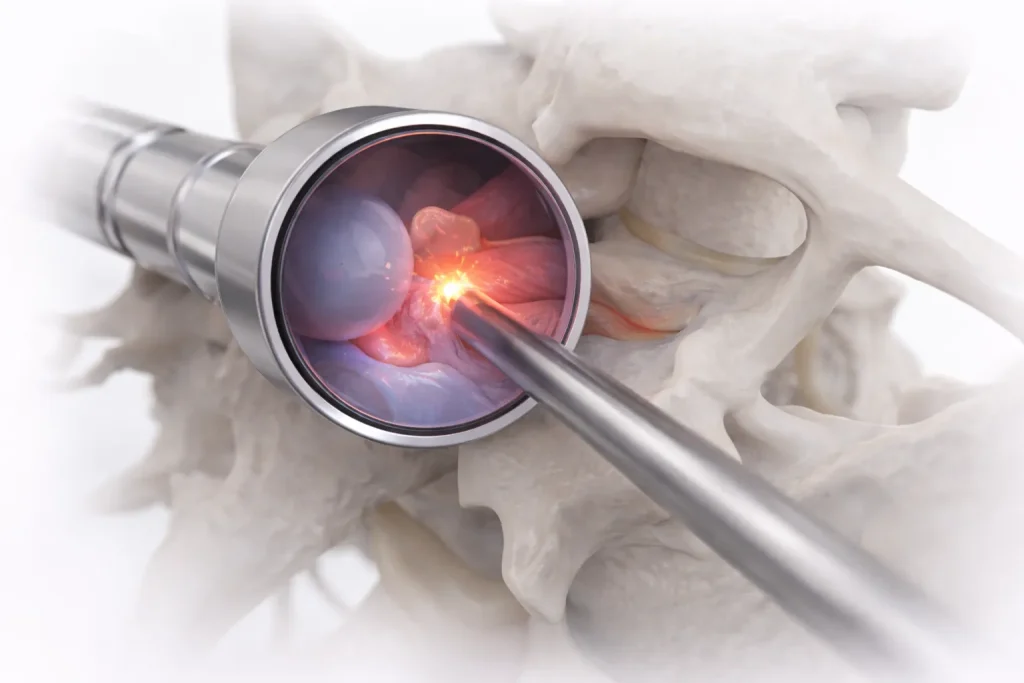
Deuk Laser Disc Repair® is an effective treatment approach for annular tears. The Deuk Laser Disc Repair® treatment is a minimally invasive procedure. The surgeon utilizes an endoscope (a small tube with a light and camera attached) to reach the source of back discomfort without removing any supporting joints, bones, or ligaments by passing through a natural small opening in the spine called the neural-foramen. Deuk Laser Disc Repair® is an outpatient procedure that treats damaged disc tissue through a small endoscopic opening. he procedure uses FDA-approved technology and should be discussed with a spine specialist after MRI review.
The surgeon uses a narrow endoscope to visualize the injured disc and then uses a precision laser to remove only the damaged disc tissue that is causing the pain. Because the injured tissue accounts for only 5 to 10% of the total disc tissue, the precision laser will not affect the surrounding bone and tissues, preserving the healthy disc.
Bulging discs, sciatica, spinal stenosis, pinched nerves, herniated discs, and other disorders that cause significant, chronic pain can all be treated successfully with Deuk Laser Disc Repair®. There is no need for a hospital stay, narcotic painkillers, or opioids with this treatment. Patients can leave the clinic an hour after surgery with only a 1/4-inch incision and a bandaid. In over 2,700 Deuk Laser Disc Repair® procedures, we maintain a 0.01% complication rate, with patients returning home safely the same day.
Treatment of annular tear
Developing annular tears is an expected part of aging. However, there are certain factors that put you at a greater risk of developing this spine condition. Some of them include being overweight, maintaining a poor posture, and introducing toxic materials into your body system. Annular tears can also be caused by repetitive, heavy lifting in jobs that put a lot of strain on the back.
Further risk factors to avoid are;
● High-impact activities such as sports and running which can cause overuse injuries.
● Traumatic injuries that can be sustained as a result of a fall, a car accident, or a sports collision
● Acute injuries that can be caused by incorrect lifting and twisting procedures
● Obesity, which puts undue strain and pressure on the back.
Another point to note is you’re more likely to suffer another intervertebral disc tear if you’ve had an annular tear. This can happen in the same place or in a completely different location. The best strategy to prevent a recurrence is to keep your back healthy and strong, as well as reduce your risk of injury through a series of lifestyle modifications. Living a healthy lifestyle, exercising on a constant basis, and training your core are guaranteed ways to protect your back and reduce your risk of injury or re-injury.
At Deuk Spine Institute, we specialize in minimally invasive surgical techniques and well-rounded spine treatments to cure back and neck pain. Our world-class physicians are personally invested in the well-being of every patient. Start your treatment with us today by submitting your MRI onlinefor a free remote review to determine your candidacy for surgery. You can also visit one of our locations in person by calling patient services at 321-255-6670.
No cost · No obligation
Live Pain Free
Upload your MRI for a free expert review by Dr. Ara Deukmedjian, M.D. — board-certified neurosurgeon. Ten minutes can change your life.
Medication
NSAIDs (nonsteroidal anti-inflammatory drugs) are available over-the-counter and can help with mild to severe pain and inflammation. If you’re in a lot of pain, your doctor might recommend stronger anti-inflammatory or nerve pain drugs. Your doctor might prescribe muscle relaxants if you have muscle spasms.
Physical Therapy
Physical therapy protects the back by increasing its strength, flexibility, and range of motion. When exercising, the aim is to avoid further injuries. As a result, having a physician assist the patient in determining which workouts are appropriate for the given condition is preferable. Exercises also help strengthen the core, which helps stabilize, support, and protect your back and spine.
Annular tears can heal on their own, but it might take anywhere from 18 months to two years for them to do so. Physical therapy and medicine, both conservative, can aid. If traditional treatment approaches and therapeutic pain management techniques fail to relieve pain, minimally invasive surgery may be required.
Depending on the severity of the tear, Deuk Spine Institute may use several treatments to provide relief, including physical therapy, injections, and minimally invasive spine surgery (Deuk Laser Disc Repair®). Some providers may recommend spinal fusion for severe cases, though this approach permanently limits motion at the treated segment and carries risks that motion-preserving alternatives can often avoid.
To speed up the healing process after surgery, a recovering patient should focus on staying active. Maintaining blood circulation while healing from disc surgery is the primary key to strengthening the immune system as well as the muscles. Walking, cycling, swimming, utilizing an elliptical trainer, and strengthening core muscles to promote spinal stability are all examples of effective low-impact workouts.
Deuk Laser Disc Repair®
Minor annular tears may go undetected for a long time. Engaging in activities that put a lot of stress or pressure on the back or neck, on the other hand, might exacerbate a slight tear, resulting in lower back pain, neck pain, and discomfort in the limbs and shoulders. Because of the large number of nerve fibers present, major tears can cause severe distress. Additionally, if an annular tear causes the spinal disc to herniate, pressing against nerves in the spinal column, symptoms may emerge.
Patients will observe different symptoms depending on the location of the annular tear;
Lumbar annular tear symptoms
The sciatic nerve is one of the primary nerves that annular tear might impact in the Lumbar area. Compression or irritation of nerve roots of the sciatic nerve can induce sciatic pain that radiates down the buttock and leg. Patients will experience other symptoms such as weakness, loss of sensation, and stabbing pain in the legs, thighs, groin, and hips.
Cervical annular tear symptoms
Neck pain, numbness, weakness in the arms, loss of flexibility or mobility in the neck, and
muscular spasms are symptoms of an annular rupture in the cervical spine.
Preventing Annular Tears
While annular tears can develop from normal aging, several habits can lower your risk:
- Maintain good posture: Reducing prolonged slouching or forward-leaning postures lessens ongoing strain on the disc’s outer wall.
- Strengthen your core: A strong core helps stabilize the spine and reduces the load placed on the discs during daily movement.
- Lift with proper form: Bending at the knees rather than the back, and avoiding twisting while lifting, reduces acute injury risk.
- Stay active with low-impact exercise: Regular movement like walking or swimming keeps the discs hydrated and supported.
- Maintain a healthy weight: Reducing excess strain on the lower back lowers pressure on the intervertebral discs.
Surgery is not always necessary for an annular tear. Most people improve with non-surgical treatments such as physical therapy and activity modification. If symptoms persist despite these conservative approaches, Deuk Laser Disc Repair® is an effective treatment approach for annular tears and the pain they create.
If you’re dealing with ongoing back or neck pain and suspect an annular tear may be the cause, submit your MRI for a free review with Dr. Ara Deukmedjian to find out if you’re a candidate for treatment.

Diagnosis. Answers. Relief.
Submit your MRI for a free expert review by Dr. Ara Deukmedjian, M.D. —
board-certified neurosurgeon. No obligation. Real answers.