By Dr. Ara Deukmedjian
Board-Certified Neurosurgeon, Deuk Spine Institute
Medically reviewed on April 23, 2026
Medical Disclaimer: This content is for educational purposes only and does not constitute medical advice. Individual results may vary. Always consult with your healthcare provider about your specific condition and treatment options.
Key Points
✓ Deuk Laser Disc Repair® is a minimally invasive procedure that uses a surgical laser through a 4mm to 7mm incision to treat damaged spinal discs.
✓ It is most effective for herniated discs, bulging discs, annular tears, sciatica, and discogenic back or neck pain.
✓ Peer-reviewed outcomes for endoscopic laser disc repair show success rates between 94% and 99% in properly selected patients.¹ ²
✓ Recovery is typically measured in days rather than months, with no hospital stay, no hardware, and no opioid narcotics required.
✓ Not every clinic advertising “laser spine surgery” actually uses a laser inside the disc. Asking the right questions protects patients from marketing claims.
What Is Laser Spine Surgery?
A spinal disc works like a jelly-filled pastry between two vertebrae. The tough outer ring is called the annulus fibrosus, and the gel-like center is the nucleus pulposus. When the outer ring tears and the inner gel pushes outward, the result is a painful disc herniation.
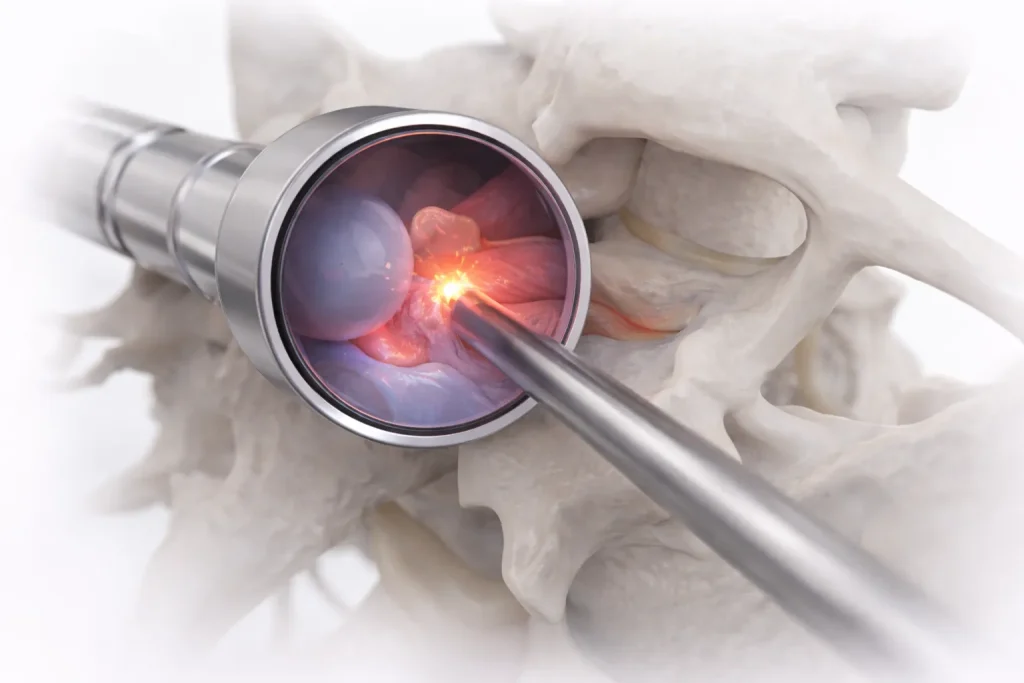
Laser spine surgery uses a surgical-grade laser, delivered through an endoscope, to treat that damaged disc from the inside. Instead of cutting muscle and removing bone, the surgeon works through a small incision and uses the laser to vaporize inflamed tissue, remove herniated material, and debride the annular tear so it can heal naturally.
Types of Laser Spine Surgery
- Percutaneous Laser Disc Decompression (PLDD): FDA-approved since 1991. Uses a needle to deliver laser energy into the disc, reducing internal pressure. Best for contained herniations with an intact outer wall.⁴
- Endoscopic Laser Disc Repair: Combines full endoscopic visualization with laser ablation. Allows direct visualization of the annular tear and precise debridement of the pain source.¹
- Laser-Assisted Open Surgery: A laser is used only to make the skin incision, while the rest of the procedure is performed as standard open surgery. The laser does not enter the disc.
Conditions Laser Spine Surgery Treats
- Herniated discs causing back, neck, arm, or leg pain
- Bulging discs with contained displacement of disc material
- Annular tears producing chronic discogenic pain
- Sciatica and cervical radiculopathy from nerve root compression
- Degenerative disc disease with discogenic pain as the primary symptom
Laser spine surgery does not treat facet joint arthritis, sacroiliac joint pain, piriformis syndrome, or pure spinal stenosis without a disc component. However, the Deuk Plasma Rhizotomy® does treat facet pain permanently.
How the Deuk Laser Disc Repair® Works
- Performed in an outpatient surgery center under local anesthesia with light sedation
- Small incision(4mm – 7mm) is made, less than a quarter inch long
- A dilator separates the paraspinal muscles rather than cutting them
- A tubular retractor is positioned at the painful disc using imaging guidance
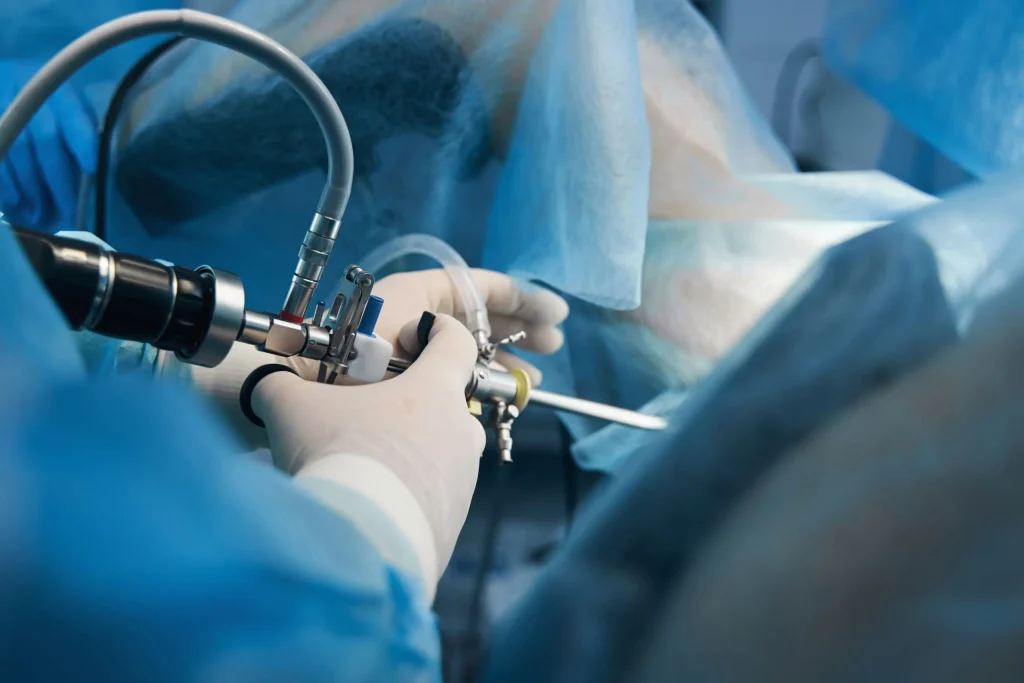
- An endoscope and Holmium:YAG laser are introduced through the tube
- The laser vaporizes inflamed tissue, removes herniated nucleus pulposus, and debrides the annular tear
- Total time: approximately 20 minutes per disc
- No bone drilling, no muscle cutting, no hardware implantation
What Is the Success Rate of Laser Spine Surgery?
Success rates depend on the specific procedure, the patient, and the diagnosis.
- A 2024 systematic review in the European Spine Journal found that full-endoscopic discectomy produced outcomes comparable to or better than traditional open microdiscectomy, with significantly less tissue trauma.¹
- A prospective study of Deuk Laser Disc Repair® in cervical disc disease reported a 94.6% success rate with no perioperative complications.²
- Current outcomes across more than 2,700 Deuk Laser Disc Repair® procedures document a 99% pain elimination rate, 0.01% complication rate, and 0% infection rate.
Accurate diagnosis matters more than surgical technique. A technically perfect procedure on the wrong structure produces zero benefit.³ That’s why it’s important to speak with a neurosurgeon who specializes in minimally invasive laser surgery. Dr. Ara Deukmedjian is one of the leading specialist in the US when it comes to laser spine procedures.
Why Laser Spine Surgery For Bulging Disc?
Most patients assume pain from a bulging disc comes from the bulge pressing on nerves. In reality, much of the pain comes from inflamed tissue inside the annular tear.
Laser spine surgery for a bulging disc:
- Vaporizes inflamed tissue inside the tear
- Removes displaced disc material pressing on nerves
- Debrides damaged annular fibers so the tear can heal
- Preserves healthy disc tissue, disc height, and spinal motion
What Is Thoracic Laser Spine Surgery?
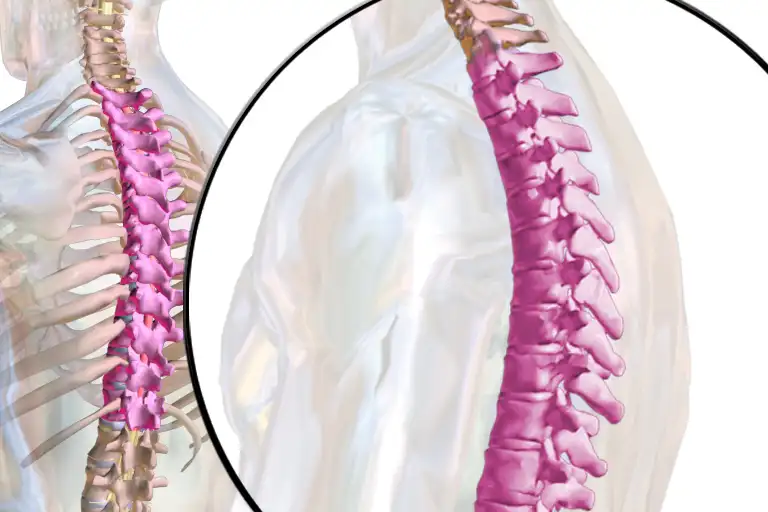
Thoracic laser spine surgery treats disc problems in the middle twelve vertebrae between the neck and lower back. Traditional thoracic surgery is particularly invasive because of the rib cage and proximity to the spinal cord. The endoscopic laser approach:
- Uses a small portal instead of a large open incision
- Avoids rib removal
- Allows direct visualization of the disc and surrounding structures
- Significantly reduces surgical trauma for properly selected patients
What Is the Cost of Laser Spine Surgery?
Cost depends on the facility, geographic location, and insurance coverage. In general:
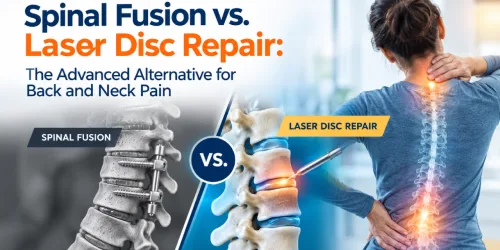
- Traditional lumbar fusion in the United States: $80,000 to $150,000
- Laser spine surgery is typically a fraction of that amount
- Outpatient procedure (no hospital stay)
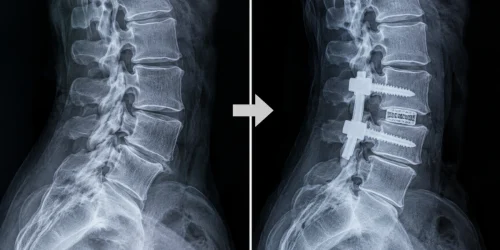
- No implanted hardware (no screws, rods, or cages)
- No extended rehabilitation or prolonged disability
Insurance coverage varies by procedure code and insurer. Deuk Spine Institute offers free MRI reviews so patients can understand costs before making any decision.
Recovery Timeline

Endoscopic laser spine surgery at Deuk Spine Institute:
- Within 1 hour: Patients walk
- Within 2 to 3 hours: Discharged home
- Same day: Showering resumes; walking encouraged
- Within 3 days: Return to desk-based work with lifting restrictions
- Weeks: Low-impact activities (swimming, cycling, walking)
- Several months: High-impact activities (running, jumping, contact sports)
- 9 to 12 months: Annular tear completes natural healing
Pain is managed with over-the-counter ibuprofen or acetaminophen. No opioid narcotics are prescribed because there is minimal internal trauma.
Compare that to traditional surgery:
- Laminectomy with fusion: 3-inch incision, 3 to 5 day hospital stay, mandatory opioid prescriptions, 6 to 12 months restricted recovery
- Microdiscectomy: Muscle stripping, partial bone removal, weeks to months of recovery, permanent alteration of spinal mechanics
Finding A Laser Spine Surgery Near You
“Laser spine surgery near me” is one of the most common patient searches, and also where the most marketing confusion exists. Many clinics advertise the term but do not actually use a laser to repair the disc.
Before scheduling, ask:
- Does the laser actually enter the disc? If it only makes the skin incision, it is not laser disc repair.
- What is the actual incision size? True endoscopic laser surgery uses a 4mm to 7mm incision.
- How many of this specific procedure has the surgeon performed? Thousands of cases prove that the surgeon is an experienced laser spine surgeon.
- Is there peer-reviewed outcome data? Real procedures with real results get published.
- What are the documented complication and infection rates? Accept specific numbers, not ranges.
When to Seek Medical Attention
See a spine specialist if you experience:
- Back or neck pain radiating into arms or legs
- Numbness, tingling, or muscle weakness
- Symptoms that have not improved after several weeks of conservative care
Seek emergency care immediately for:
- Sudden loss of bladder or bowel control
- Saddle anesthesia (numbness in the groin or inner thighs)
- Rapidly progressive weakness in both legs
These are signs of cauda equina syndrome, a surgical emergency.
If you have been dealing with chronic back or neck pain. Submit your MRI for a free virtual consultation with Dr. Deukmedjian. Where he’ll go over your MRI and give you the best minimally invasive surgery options.
Frequently Asked Questions
What is laser spine surgery?
A minimally invasive endoscopic procedure that uses a surgical laser inside the disc to vaporize herniated material and debride the inflamed annular tear. The incision is typically 4mm to 7mm, and no bone, muscle, or hardware is removed or implanted.
What is the success rate of laser spine surgery?
Peer-reviewed data on Deuk Laser Disc Repair® shows a 94.6% success rate in cervical disc disease, and current outcomes across more than 2,700 procedures show a 99% pain elimination rate with a 0.01% complication rate.² Results depend heavily on accurate diagnosis.³
What is the cost of laser spine surgery?
Cost varies by facility, region, and insurance, but is typically a fraction of traditional open spine surgery, which can range from $80,000 to $150,000 for lumbar fusion. Free MRI reviews are available to help patients understand their specific options.
What is laser spine surgery for a bulging disc?
For bulging discs, the laser is used to vaporize inflamed tissue inside the annular tear, remove displaced disc material, and debride damaged fibers. Healthy disc tissue is preserved, maintaining disc height and motion.
What is thoracic laser spine surgery?
An endoscopic laser procedure performed in the middle twelve vertebrae of the spine. It avoids the large incisions, rib removal, and lengthy recovery associated with traditional open thoracic surgery.
Is laser spine surgery safe?
When performed by an experienced surgeon on a properly selected patient, endoscopic laser spine surgery has very low complication rates.¹ Deuk Laser Disc Repair® documents a 0.01% complication rate and 0% infection rate, compared to 1% to 4% infection rates reported for traditional spine surgery.²
Sources
- Full-endoscopic versus microscopic lumbar discectomy for lumbar disc herniation: a systematic review and meta-analysis. European Spine Journal. 2024.
- Deukmedjian AR, et al. Deuk Laser Disc Repair® for cervical disc disease: a prospective clinical study. Peer-reviewed publication, Deuk Spine Institute.
- A systematic review of treatment guidelines for lumbar disc herniation. Neurospine. 2025;22(2):389-402.
- Percutaneous laser disc decompression: long-term outcomes and patient selection criteria. Journal of Neurosurgery: Spine. 2024.