By Dr. Ara J. Deukmedjian, MD
Board-Certified Neurosurgeon
Medically reviewed on June 17, 2026
Medical Disclaimer: This content is for educational purposes only and does not constitute medical advice. Individual results may vary. Always consult with your healthcare provider about your specific condition and treatment options.
Key Points
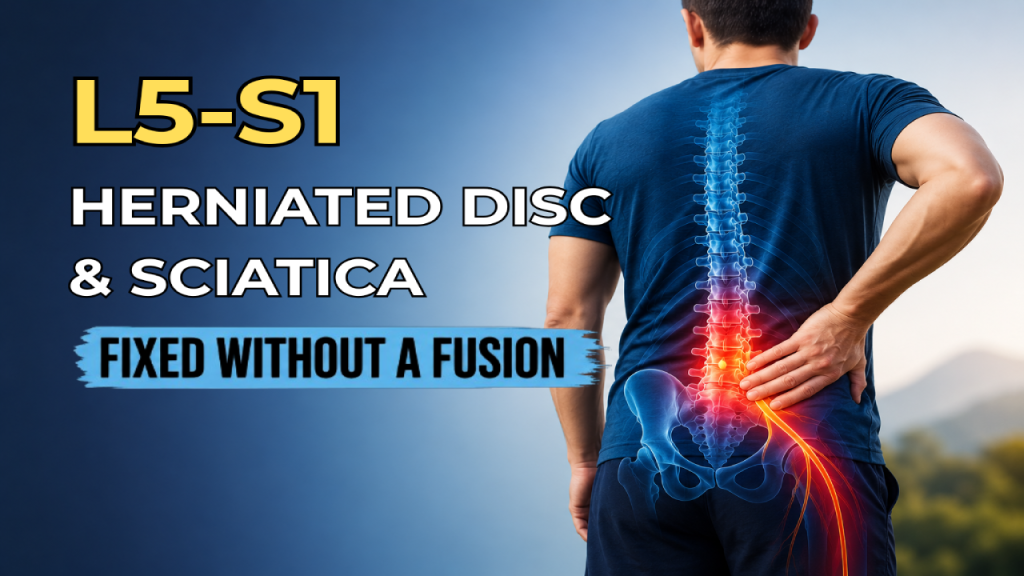
✓ The patient was a young, athletic woman who traveled from Sao Paulo, Brazil, with severe low back pain radiating down the left leg, consistent with a herniated L5-S1 disc, left-sided sciatica, and piriformis syndrome.
✓ A herniated disc produces sciatica through a combination of mechanical pressure on the nerve root and chemical inflammation from the displaced disc material. ¹
✓ The disc was treated with a minimally invasive endoscopic approach the Deuk Laser Disc Repair®. Reaching the disc through the natural foraminal opening with a roughly 7 mm (1/4 inch) incision under X-ray guidance, then removing herniated fragments and using a laser to clean the annular tear.
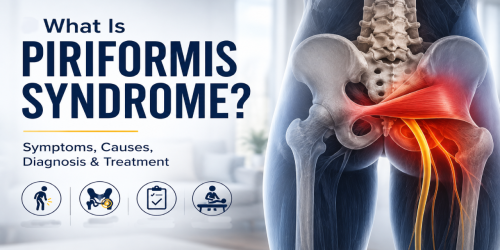
✓ Because the patient also had piriformis syndrome, a Deuk Piriformis Release® was performed. Piriformis syndrome is an uncommon and sometimes contested cause of sciatica; conservative care is tried first, and surgery is reserved for cases that do not respond. ³
✓ Both procedures were completed the same day with minimal blood loss, and the patient just needs to comeback in the morning for a quick check up.
Why This Patient Needed Treatment
The patient was a young, athletic woman who traveled from Sao Paulo, Brazil, in severe pain. She described relentless low back pain shooting down her left leg, to the point that she could not sit still. Her MRI showed two problems that can each cause this picture and often coexist: a herniated disc at L5-S1 and piriformis syndrome on the same side.

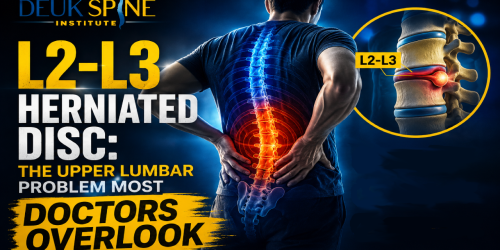
A herniated disc happens when the soft center of the disc, the nucleus pulposus, pushes through a tear in the tough outer wall, the annulus fibrosus. When that displaced material reaches the nearby nerve root, it can produce sciatica: pain, numbness, tingling, or weakness traveling down the leg along the path of the affected nerve. The L5-S1 and L4-L5 levels are the two most commonly herniated discs in the lower back.
How a Herniated Disc Causes Sciatica
Sciatica from a disc herniation is not purely a pinching problem. Research shows it results from two overlapping mechanisms: direct mechanical compression of the nerve root, and chemical irritation from inflammatory mediators released by the herniated disc material, including cytokines such as TNF-alpha and interleukins. ¹ This is why two people with similar-looking MRIs can have very different symptoms, and why reducing both the pressure and the inflammatory source matters.
The Procedure: Deuk Laser Disc Repair
The disc was treated through a minimally invasive laser spine procedure called the Deuk Laser Disc Repair®. Rather than cutting through back muscle and removing bone, this approach reaches the disc through the foramen, the natural opening where the nerve exits the spine.
Step by step
After numbing medicine and sedation, a spinal needle was guided to the L5-S1 disc using fluoroscopy in two views, front to back (AP) and from the side, to confirm position next to the herniation. A small incision of roughly 7 mm allowed placement of a guide wire, a dilator, and an endoscopic working tube. Through the endoscope, the herniated fragments were removed piece by piece. A typical herniation comes out in many small fragments rather than one large piece. Finally, a laser was used to debride, or clean, the annular tear where disc material was lodged.
Why minimally invasive matters
Endoscopic minimally invasive spine surgery spares the paraspinal muscles and bony structures, which is associated with less blood loss, less tissue trauma, and a quicker recovery. The Deuk Laser Disc Repair®, a full-endoscopic procedure developed as an alternative to spinal fusion has demonstrated strong clinical effectiveness, with a prospective cohort study reporting an overall success rate of 94.6% in patients treated for symptomatic disc herniations. ²
Addressing the Piriformis: Deuk Piriformis Muscle Release
This patient also had piriformis syndrome, so a Deuk Piriformis Release® was performed through a small incision in the buttock. The piriformis is a muscle deep in the buttock, and the sciatic nerve runs very close to it, so an injured or spasming piriformis can produce buttock pain and sciatica that mimics a disc problem.
It is worth being clear-eyed about this diagnosis. Piriformis syndrome is considered uncommon and is a clinical diagnosis of exclusion, made after ruling out more common causes like a disc herniation. Standard care begins conservatively with activity modification, physical therapy, and sometimes injections, and surgical release is generally reserved for patients whose sciatica does not respond to those measures. ³ In refractory cases, release of the muscle can relieve pressure on the sciatic nerve.
Surgical Approaches to a Herniated Disc
The best choice depends on the specific herniation, the symptoms, and the patient. A minimally invasive option is not automatically right for everyone, and a larger operation is not automatically necessary.
Recovery and What Comes Next
Both procedures were completed the same day with minimal reported blood loss. At Deuk Spine Institute patients rest after surgery, return for a short checkup the next morning, and follow a simple daily walking program rather than a long course of physical therapy. Recovery timelines vary from person to person.
If you have back pain with sciatica, the most important first step is an accurate diagnosis, because the same leg pain can come from a disc, the piriformis muscle, the facet joints, or other sources, and the right treatment depends on the cause. Many disc herniations improve with conservative care, so surgery is not always the first or only option.
If a procedure has been recommended, two questions are worth asking. First, what exactly is causing my pain, and how was that confirmed? Second, what is the least invasive option that can effectively treat my specific problem? A second opinion is a reasonable step before any spine procedure.
Frequently Asked Questions
What is a herniated disc?
A herniated disc occurs when the soft inner core of a spinal disc pushes through a tear in the disc’s outer wall. If the displaced material reaches a nearby nerve root, it can cause sciatica, meaning pain, numbness, tingling, or weakness that travels down the leg. ¹
How does a herniated disc cause sciatica?
Through two mechanisms working together: physical pressure on the nerve root and chemical inflammation from the herniated disc material. Both can irritate the nerve, which is why treatment aims to relieve the pressure and the inflammatory source. ¹
Can piriformis syndrome cause sciatica?
Yes, but it is uncommon and can be hard to diagnose because it mimics more common causes such as a disc herniation. It is usually treated conservatively first, with surgery reserved for cases that do not respond. ³
Do bone spurs cause back pain?
Often they do not. Bone spurs (osteophytes) are common findings that are frequently incidental and painless. In some cases they can contribute to narrowing or nerve compression, but they should be interpreted alongside your symptoms and the rest of your imaging rather than assumed to be the cause. ⁴
Does a herniated disc always require surgery?
No. Many herniations improve with conservative care over time. Surgery is considered when symptoms are severe, progressive, or persistent despite appropriate non-surgical treatment.
Sources
- Lumbar radiculopathy and the role of inflammation in disc herniation-associated sciatica. AAPM&R KnowledgeNow. PM&R
- Deukmedjian AJ, Cutright STJ, Cianciabella A, Deukmedjian A. Deuk Laser Disc Repair® is a safe and effective treatment for symptomatic cervical disc disease. Surg Neurol Int. 2013;4:68. PubMed
- Han SK, et al. Surgical treatment of piriformis syndrome. Clin Orthop Surg. 2017. PubMed
- Radicular back pain: osteophytes can contribute to nerve impingement but are frequently asymptomatic. StatPearls. NCBI