
By Dr. Ara J. Deukmedjian, MD
Board Certified Neurosurgeon
Medically reviewed on June 24, 2026
Medical Disclaimer: The information provided within this article is for educational purposes only. Always consult a medical physician in regards to your own individual situation.
Key Points
✓ Facets are the small, paired synovial joints that connect the back of each vertebra to the one above and below, guiding spinal motion and limiting excessive rotation. ¹
✓ Facet joint pain is estimated between 15–45% of all chronic low back pain cases, and 27–40% of patients with persistent back pain have a facet-mediated component. ² ³
✓ The most common cause is osteoarthritis of the joint, with an incidence of 10–15% in the general adult population and significantly higher in patients over 60. ³
✓ Symptoms include localized back or neck pain that worsens with extension, twisting, or standing — and improves with forward bending. ¹
✓ Facet pain is confirmed not by MRI alone but by a diagnostic medial branch block, since imaging findings do not reliably correlate with which joint is generating pain. ² ⁴
✓ Conservative care (NSAIDs, physical therapy, activity modification, injections) is the first step but produces only short-lived relief in many patients. ⁵
✓ Deuk Plasma Rhizotomy® deactivates the pain-carrying medial branch nerves of an arthritic facet joint without fusion, hardware, or destruction of the joint itself.
What Is a Facet Joint?
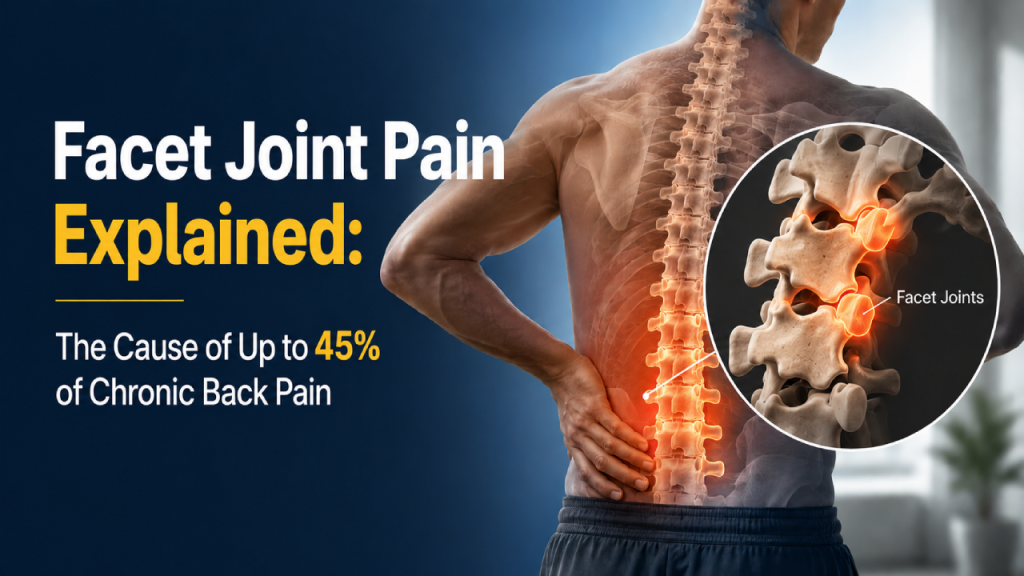
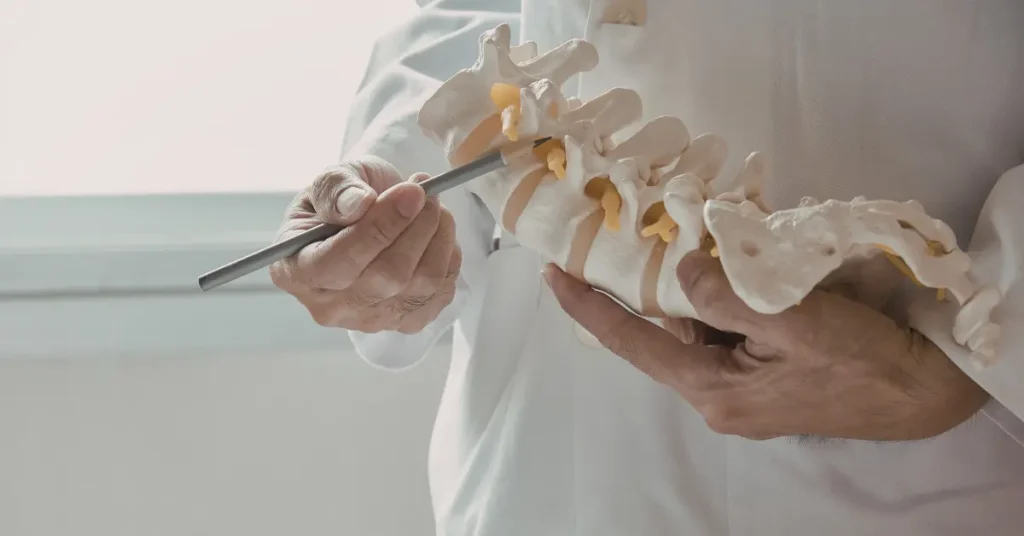
The vertebra in the back attaches to the vertebra both above and below it in 3 different places – at the disc (in the front), and on a pair of facet joints in the back. These are also sometimes referred to as facet or zygapophyseal (or Z-joints), and consist of the bottom part of the vertebra in the back sticking down (inferior articular process), meeting the very top of the vertebra in the back underneath (superior articular process). ³
Facets are true synovial joints, complete with hyaline cartilage, a synovial membrane, a fluid-filled capsule, and rich nerve supply from the medial branch of the dorsal ramus of the spinal nerve. ¹ Their job is to guide and limit motion. Facet joints let you bend and rotate while keeping vertebrae aligned and the spinal canal protected.
Therefore facet joints are richly innervated and contain poorly vascularized cartilage that heals slowly, they are a major and often underrecognized source of chronic back and neck pain. ³
What Causes Facet Joint Pain?
“Facet syndrome” is a medical label rather than a single disease. To treat it correctly, you first need to know what is irritating the joint. The common drivers are:
1. Facet osteoarthritis (most common)
Just like the knees or hips, facet joints wear out. As the disc in front loses height with age, the facets behind it bear progressively more load. Cartilage thins, the joint capsule thickens, bone spurs form, and the joint becomes inflamed. ¹ ² This degenerative process is often called spondylosis. The single most frequent cause of facet pain and the reason prevalence rises sharply with age. ³
2. Whiplash and trauma
Facets may become injured during a forced hyperextension or rotational injury of the neck (from trauma: a fall, a car collision, a sports accident) and also due to torn joint cartilage. The facets of C2-C3 and C5-C6 are especially vulnerable to whiplash injuries, while torn capsules which are not properly addressed later serve as long-term chronic pain providers.

3. Repetitive extension and rotation
Jobs and sports that demand repeated bending backward or twisting: gymnastics, golf, tennis, roofing, plumbing. Load the facets directly and accelerate facet damage.
4. Adjacent segment disease (ASD) after fusion
When a level is fused, the facets above and below the fusion absorb the load that segment used to share. Which unfortunately leads to facet arthritis at the adjacent level and is one of the most common reasons patients return for a second surgery years after the first.
5. Facet synovial cysts
Degenerated facet joints can extrude a fluid-filled cyst that, depending on where it sits, can pinch an adjacent nerve root and produce radicular pain in addition to local back pain. ⁶
What Facet Joint Pain Actually Feels Like
Facet pain has symptoms that separates it from disc pain:
- Localized, axial pain. Aching in the low back, mid-back, or neck. Usually one-sided or worse on one side rather than shooting down the leg or arm.
- Pain that worsens with extension and rotation. Leaning backward, twisting to look over the shoulder, standing for long periods, or lying face-down on the stomach all load the facets and reproduce the pain. ¹
- Pain that relieves when I bend over. When I sit down or curl my body into the fetal position, facet load is eased, thus relieving pain at the facets. Leaning forward to rest a counter.
- Morning pain that’s eased by movement. Just as other areas that suffer with arthritis are stiffest in the morning or after a period of rest, facets loosen and feel better with a few minutes of exercise.
- Referred pain but not true radiculopathy. Lumbar facet pain can refer into the buttock and back of the thigh, but it typically stops above the knee. Cervical facet pain can refer into the shoulder, scapula, and base of the skull. ³ This is not the same as a pinched nerve, which follows a specific dermatome down to the foot or hand.
If your pain runs past the knee or past the elbow, follows a sharp electric-line pattern, or comes with true numbness or weakness, you are likely dealing with a disc-driven nerve compression rather than a facet problem or both.
How Facet Joint Pain Is Diagnosed
Here is the part that catches most patients off guard: MRI cannot tell you with certainty that a facet joint is the source of pain. Degenerative facet changes show up on imaging in a huge percentage of pain-free adults, and many patients with severe facet pain have only modest findings on their scans. ² ⁴
A real workup includes:
- Physical exam — description of the pain and provoking and alleviating factors; location and intensity of the pain on examination (facet joint palpation) and provocative maneuvers (extension-rotation).
- Imaging: X-ray, MRI, CT scan, occasionally SPECT scan to eliminate other causes (dislocated or herniated disc, broken bone, tumor, infection) and to see the severity of facet joint degeneration.²
- Diagnostic Medial Branch Block — A small injection of local anesthetic on the medial branches supplying a certain facet that transmit the pain is injected. If 80% of your pain reduces from using that block, then we can say this particular facet is a source of your pain. Usually a second diagnostic MBB is performed to confirm and help rule out positive false blocks.
Skipping the medial branch block and treating off MRI alone is one of the most common mistakes in spine medicine and one of the most common reasons facet treatments “fail.”
Conservative Treatment: What to Try First
For most patients, the first 4 to 8 weeks of treatment do not involve a procedure. Standard conservative care includes: ⁵
- Activity modification — avoid prolonged extension, heavy lifting overhead, and repetitive twisting while staying generally active.
- Physical therapy focused on core and gluteal strength, hip mobility, and posture work that takes load off the posterior elements.
- NSAIDs to reduce joint inflammation, used short-term and with awareness of GI and kidney risk.
- Manual therapy and spinal manipulation in appropriate candidates. ⁴
- Intra-articular facet injections of steroid and anesthetic, which can give weeks-to-months of relief but rarely solve the problem on their own. ⁵
What the data shows you should know: conservative treatments for facet syndrome “induce short-lived amelioration of symptoms” and frequently fail to provide durable relief. ⁵ If your pain returns every time a steroid wears off, the joint is telling you the problem is structural, not temporary.
When to Move Beyond Conservative Care
It is reasonable to consider an interventional procedure when:
- Pain has persisted longer than 6–12 weeks despite real conservative effort
- Two confirmatory medial branch blocks have identified the specific level(s) generating pain ²
- Injections give clear but short-lived relief and the pattern keeps repeating
- Pain is significantly interfering with sleep, work, or daily function
The Problem with Traditional Surgical Options
When facet pain becomes chronic, traditional surgical options range from reasonable to wildly disproportionate.
Standard radiofrequency ablation (RFA) uses a heated probe to burn the nerve. It works, but the effect typically lasts 6 to 12 months before the nerve grows back. And patients are often locked into repeating the procedure to get moderate pain relief. The thermal spread can also irritate surrounding tissue.
Spinal fusion is sometimes recommended for “facet syndrome” even when there is no instability and this is where patients should slow down. Fusing a level eliminates motion permanently, transfers load to adjacent segments, and accelerates facet wear at the levels above and below. A significant share of fused patients return years later with new pain at a new level. Fusion should be reserved for true instability, deformity, or fracture not for a joint that hurts.
How Deuk Plasma Rhizotomy® Treats Facet Joint Pain at Its Source
When medial branch blocks confirm that a specific facet joint is generating the pain, Deuk Plasma Rhizotomy® (DPR) deactivates the pain-carrying nerve precisely and durably — without burning, without hardware, and without fusion.
DPR is an outpatient, minimally invasive procedure performed under light sedation through a tiny incision. Guided by direct endoscopic visualization, the medial branch of the dorsal ramus serving the painful facet is identified and treated with low-temperature plasma energy. The plasma energy breaks down the targeted nerve tissue at a much lower temperature than traditional radiofrequency, which minimizes collateral thermal damage and produces a permanent result.
What it does not do is equally important:
- It does not fuse any segment.
- It does not implant any metal hardware.
- It does not remove or damage the disc.
- It does not destroy the facet joint itself.
- It does not restrict your normal motion.
Deuk Plasma Rhizotomy® is available for the lumbar facets, cervical facets, thoracic facets, and the SI joint. Patients walk out the same day and return to normal activity within 72 hours with light restrictions.
Find out if your facet pain can be fixed without a fusion.
Months into back or neck pain and the injections aren’t lasting? Send your MRI for a free review by Dr. Deukmedjian and learn whether a no-fusion, motion-preserving option like Deuk Plasma Rhizotomy® could deactivate the pain at the source. No hardware, no burning, no fusing.
- Outpatient
- Same-day discharge
- No fusion
- Motion preserved
- 72hrs
- Back to normal activity
FAQs
What does facet joint pain feel like?
Facet joint pain is felt as a deep, tight, low back, neck, or thoracic pain exacerbated by extending ( leaning backwards), twisting and prolonged standing, while easing up with sitting and extending forwards. The pain can radiate to the shoulder or buttock, but usually does not refer beyond the knee or elbow. ¹ ³
Can facet joints heal on their own?
For acute facet pain caused by a simple strain, rest and anti-inflammatories may suffice. Facet osteoarthritisthe major source of chronic facet pain, however, is a physical, degenerative problem. Because facet joints lack blood flow, they do not repair themselves – this is the reason why chronic facets pain doesn’t respond long to conservative therapies. ³ ⁵
What is the difference between facet pain and a herniated disc?
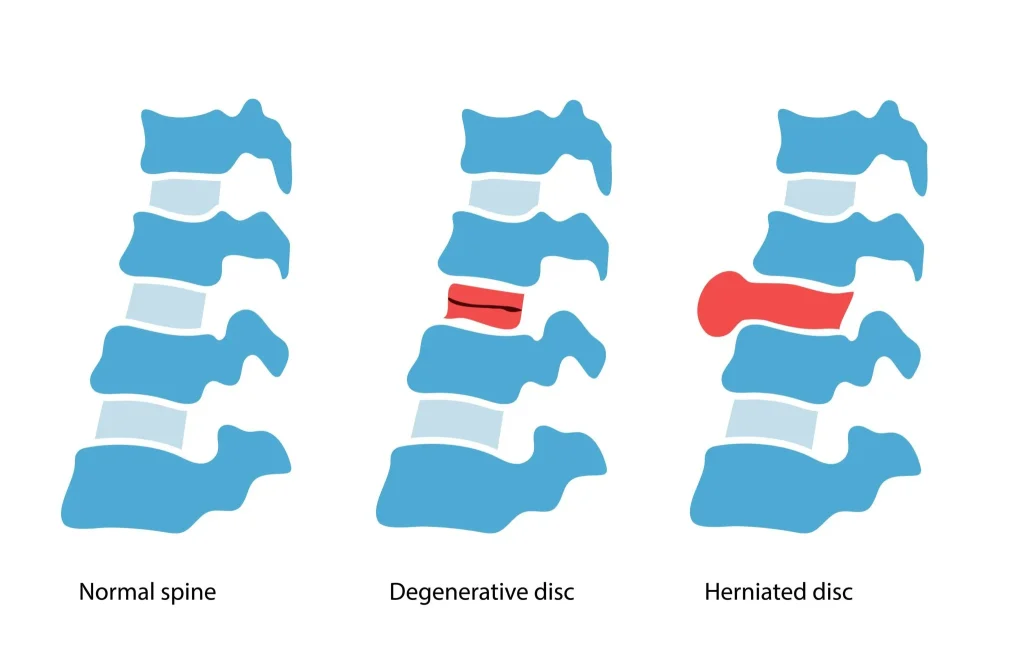
A herniated disc pushes on a nerve in the spine, causing intense, sharp pain that radiates away from the spine in a specific nerve distribution. This nerve pain typically runs down the leg or arm and may cause tingling, numbness, or weakness. Facet pain refers to pain in a joint of the spinal bones, typically focused in the back or neck, with worsening symptoms related to turning the body or leaning back, but the pain usually does not radiate further down the arm or leg beyond the elbow or knee. Sometimes these problems may co-exist.
Are facet joint injections a long-term solution?
No. Steroid injections can give weeks to months of relief and are valuable for confirming the diagnosis and getting relief from acute flare-ups, but the underlying joint degeneration continues. Patients who require repeat injections every few months are good candidates to discuss a more lasting option. ⁵
Does insurance cover facet joint procedures?
Most major insurance plans, Medicare, and workers’ compensation cover diagnostic medial branch blocks and ablative procedures for facet joint pain when medical necessity is documented. Coverage for specific advanced procedures varies by carrier — Deuk Spine Institute’s team can verify your benefits during a free MRI review.
Will I need a fusion for facet joint pain?
Almost never. Fusion is appropriate for true instability, deformity, or fracture — not for an arthritic facet joint. If a surgeon is recommending fusion solely for facet pain, a second opinion is strongly warranted before agreeing.
Is Deuk Plasma Rhizotomy® right for my facet pain?
Deuk Plasma Rhizotomy® is the right answer when medial branch blocks confirm that a specific facet joint (or several) is the source of your pain. It is not the right tool for nerve root compression cause by a herniated disc, for instability requiring stabilization, or for tumors, infections, or unstable fractures. A free MRI review identifies which category your specific condition falls into.
Sources
- Perolat R, Kastler A, Nicot B, et al. Facet joint syndrome: from diagnosis to interventional management. Insights into Imaging. 2018;9(5):773–789.
- Curtis E, Lin J, Higgins M, et al. Lumbar Facet Joint Disease: What, Why, and When? Journal of Clinical Medicine. 2024.
- Alexander CE, Varacallo M. Lumbosacral Facet Syndrome / Facet Joint Disease. StatPearls. National Library of Medicine.
- Mann SJ, Viswanath O, Singh P. Lumbar Facet Arthropathy. StatPearls. National Library of Medicine.
- Vasileva R, Chaudhry HA, Singh JR, et al. Amniotic membrane and/or umbilical cord tissue for treatment of facet joint syndrome: a narrative review. Journal of Orthopaedic Surgery and Research. 2023.
- Lumbar Facet Joint Cyst Treated With Decompression and Interlaminar Stabilization. PMC.