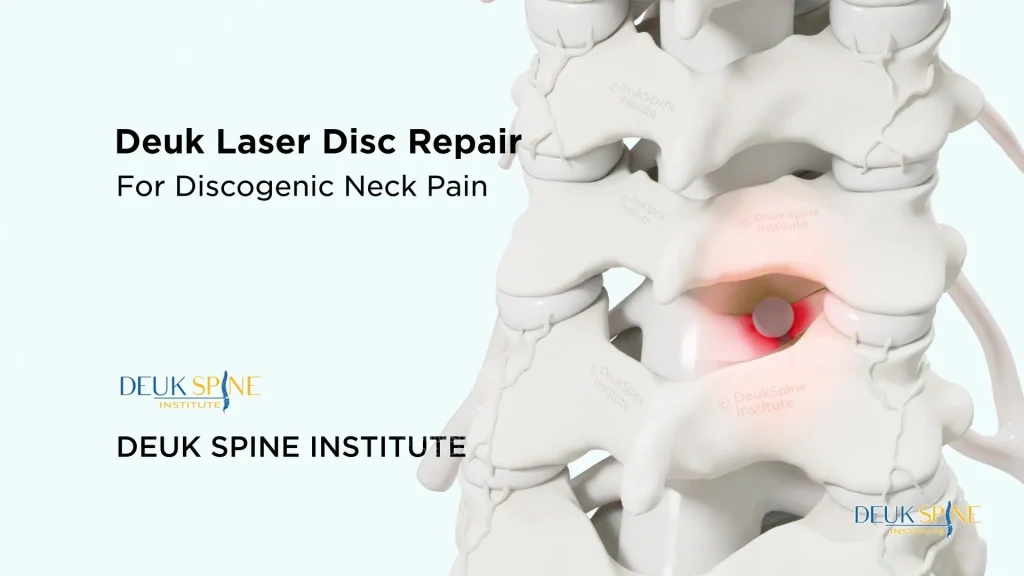
Medical Disclaimer: This content is for educational purposes only and does not constitute medical advice. Individual results may vary. Always consult with a qualified spine specialist about your specific condition and treatment options.
Deuk Laser Disc Repair® vs ALL INVASIVE NECK TREATMENTS
If you are suffering fromchronic neck pain, headaches, or debilitating pain, numbness, and tingling shooting down your arm—symptoms commonly known ascervical radiculopathy—you know how debilitating it can be. It can control your life, preventing you from working, sleeping, and enjoying time with your family. For too long, patients have been told that their only options for finding lasting relief are risky, complicated surgeries that carry high rates of failure.
At Deuk Spine Institute, we know patients deserve better. We know that the focus must be on eliminating the source of your pain while preserving the integrity of your spine. When facing treatment for a damaged disc in your cervical spine, you have three clear priorities: be free from your symptoms, avoid neck surgery complications, and have the fastest recovery possible.
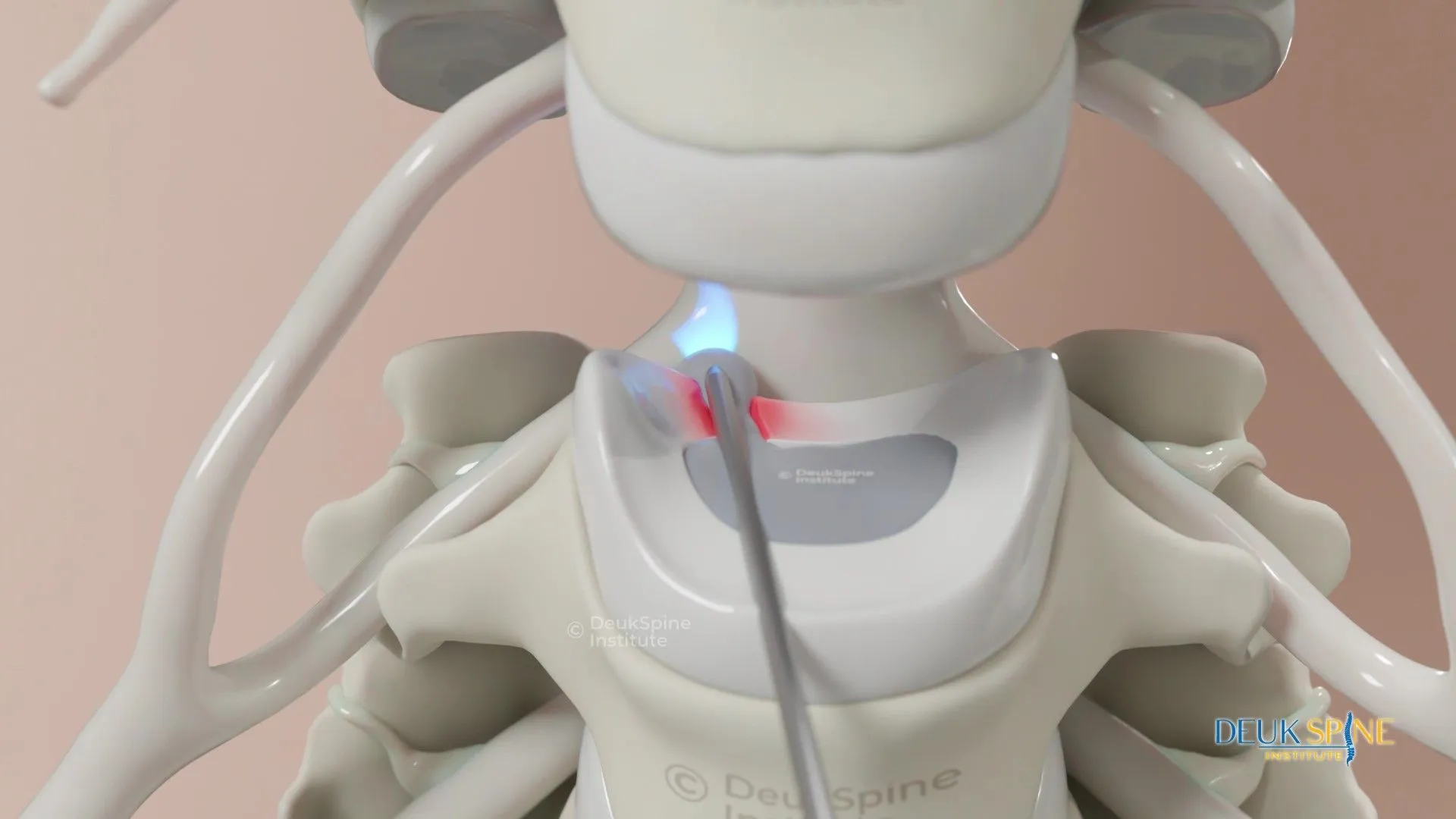
Deuk Laser Disc Repair® (DLDR®) is designed to deliver on all three fronts through a minimally invasive, motion-preserving approach.
Pinpointing the True Cause of Your Neck Pain
Neck pain has different causes, but it is critical to understand where the problem is most concentrated.
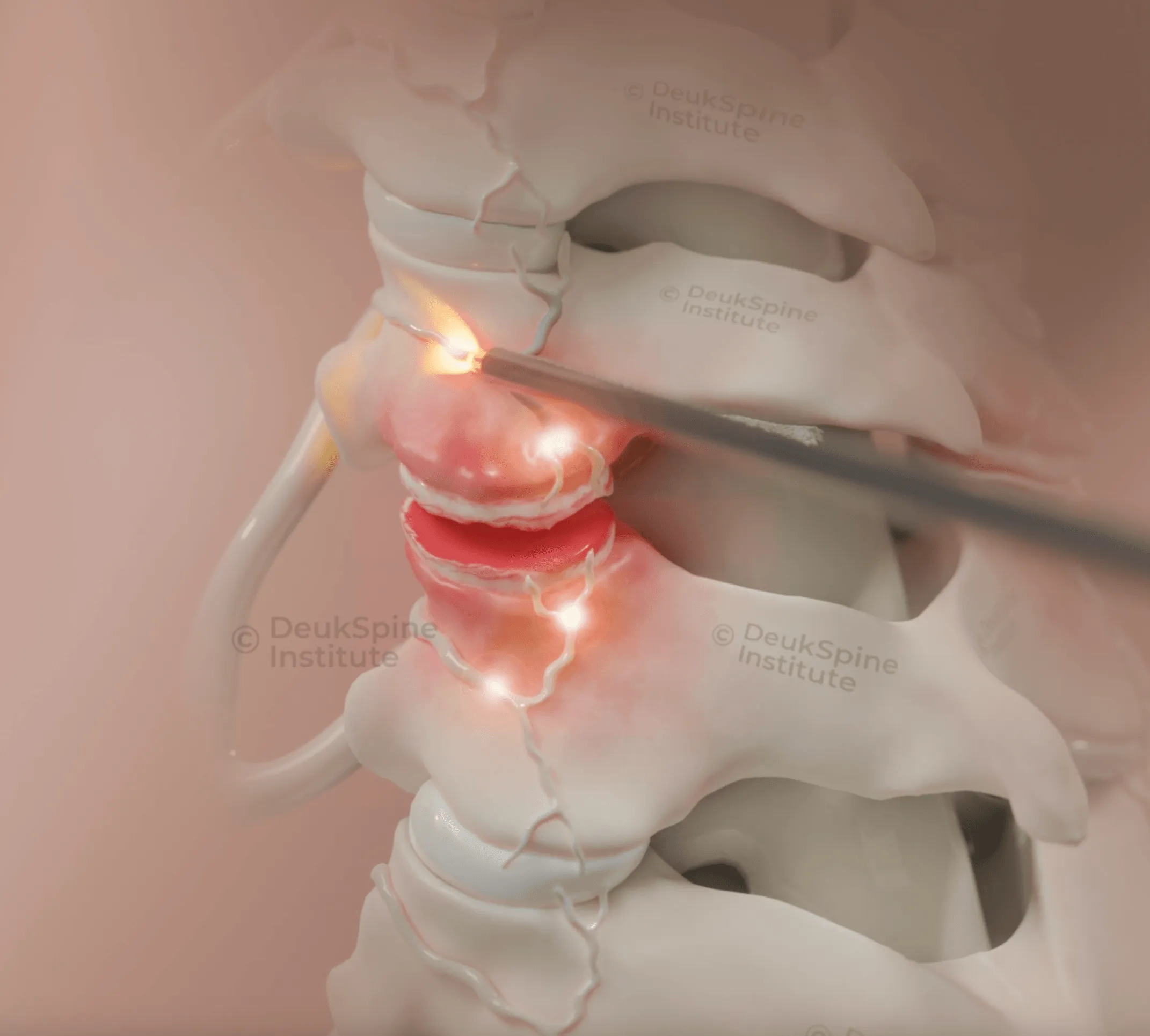
In over 85% of chronic neck pain cases, the source of suffering is acervical disc herniation. This condition occurs when the soft inner material of the spinal disc (nucleus pulposus) pushes out through a tear in the disc’s tough outer wall (annulus fibrosus). This extruded material can compress or irritate the delicate nerve root as it exits the spine, leading to the familiar symptoms of radiating arm pain, numbness, weakness, and persistent chronic neck pain. The herniated material itself can induce the production of potent inflammatory cytokines, creating a chemical “soup” that sensitizes and irritates the surrounding nerve tissue.
Additionally, the spine has facet joints that can also cause pain—a condition known asfacet joint disease—this accounts for a far smaller percentage of chronic cases. Thedisc is the primary culprit, and common treatments fail to permanently remove the inflammatory disc material, leaving patients in persistent pain.
Patient’s Non-Negotiable Priorities
When considering any neck pain treatment for a herniated disc, your goals should be clear. They are the standard against whichevery surgeon and every procedure should be measured:
- Permanent Symptom Elimination: Your number one priority is complete neck pain relief. You want to be sure the symptoms down your arm, the headaches, and the stiffness will be gone for good, not just a slight chance they will be alleviated.
- Avoidance of Complications: The more invasive the treatment, the higher the risk of complications such as blood clots, infections, nerve injury, and adjacent segment disease. A less invasive procedure is generally associated with a lower risk of long-term complications.
- Rapid Recovery: You want to return to a normal life, work, and activities as quickly as possible. Months or years of rehabilitation or reliance on devices and in-home care are unacceptable.
Long-Term Results: The treatment must not create new problems years down the road. You need neck surgery that also preserves motion and structural integrity so you can remain active.
Traditional Neck Fusion: High Risk, Low Reward
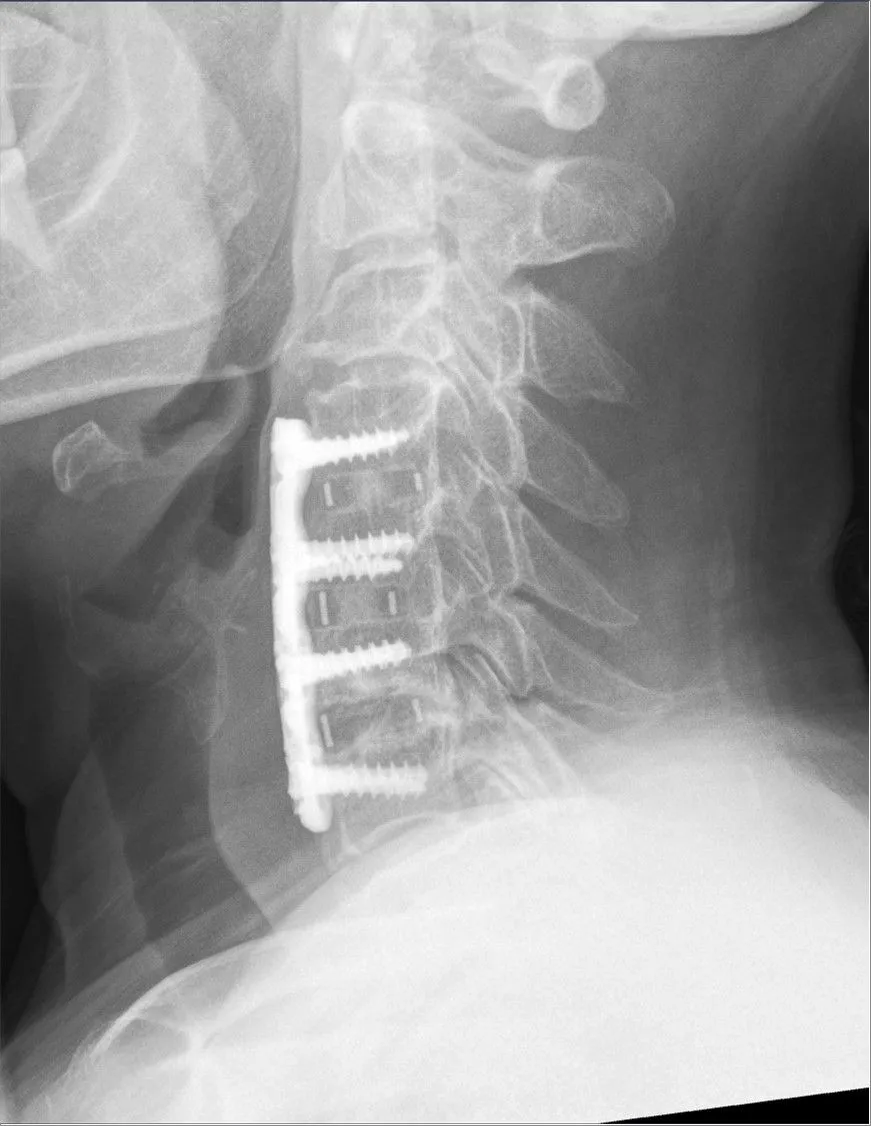
ACDF carries asignificant risk due to the delicate anatomy of the anterior neck. Complications, including injury to surrounding structures, are common:
- Vascular, Airway, and Neural Risks: There is risk of injury to blood vessels, the trachea, and the esophagus.
- Dysphagia and Hoarseness:Postoperative dysphagia (difficulty swallowing) is frequent, with some prospective studies reporting incidence rates as high as 60%. Other common complications include excessive neck swelling,hoarseness, and infection.
Overall Risk: While complication rates vary widely, studies document significant overallpostoperative complication rates, including pseudarthrosis (failure to fuse) and worsening myelopathy.
Low Success Rate for Pain
Despite the high invasiveness, the success rate of ACDF in eliminating neck pain is highly debatable. While it can be successful for arm pain (radiculopathy), relief for persistent axial neck pain is much less certain, often reported between73% and 83%. This figure is worth weighing against Deuk Laser Disc Repair®’s reported outcomes for treated pain sources. Patients deserve to understand every option before consenting to a surgery where one-fifth to one-quarter may still experience persistent neck pain after such an invasive operation.
The Long-Term Catastrophe: Adjacent Segment Disease (ASD)
The fusion process itself is fundamentally flawed. By eliminating motion at the fused segment, the stress of movement is transferred to the discs immediately above and below the fused level. This dramatically accelerates their wear,leading to ASD. This common complication often requires the patient to undergo a second, equally aggressive fusion surgery a few years later.
The Flaws of Other Invasive Alternatives
Artificial Disc Replacement (ADR)
Artificial discs attempt to solve the ASD problem by preserving motion (ACDF vs. artificial disc). However, they introduce a new set of risks while retaining many of the old ones:
- Failure and Migration: ADR involves implanting a mobile disc made of metal and plastic.Complications include disc migration, failure to bind to the bone, or fracture of adjacent vertebrae, particularly in patients with osteoporosis or osteopenia.
- Persistent Symptoms: If the nerve decompression during the surgery is incomplete or the disc alignment is improper, the procedure can fail, resulting in persistent neck pain and cervical radiculopathy.
ASD: While proponents claim better results,meta-analyses show that while the rate of subsequent adjacent-level surgery favoring disc replacement emerges around five years, the risk of ASD and the need for reoperation still exists.
Posterior Cervical Fusion (Laminectomy)
Procedures involving a cervical laminectomy and fusion through the back of the neck also entail a large incision. They are associated with a long list of risks, including nonunion (failure of the bones to fuse), infection, spinal fluid leaks (up to 10% in revision surgeries), and nerve damage. The recovery is oftenlong, painful, and requires months of restriction.
The Opioid Trap
All of these invasive neck surgeries—ACDF, ADR, and posterior fusion—require the postoperative use of narcotic painkillers (opioids). Opioids are dangerous, addictive, and can be abused. Studies have shown thatpatients taking chronic opioid therapy before cervical fusion surgery have an increased risk of wound complications, infections, and a significantly higher rate of reoperation, including due to adjacent segment disease.

Why Non-Surgical Options Have Limits
- Epidural Steroid Injections (ESIs): A treatment often recommended by pain management doctors.ESIs involve injecting steroids to temporarily reduce inflammation. While they may provide relief for days or weeks, the pain often returns because the source of pain (the annular tear and inflammatory material) is not directly treated. Moreover, the injected steroids are absorbed and can cause systemic side effects, including high blood pressure, elevated blood sugar (a concern for diabetic patients), anxiety, and even HPA-axis suppression.
- Spinal Cord Stimulators: These are highly invasive implanted devices that mask symptoms rather than treating the source of pain. They can cause scar tissue to develop, migrate out of position, and require the patient to carry a permanent implanted device for life.
Physical Therapy: Physical therapy is valuable for fitness and mobility, but on its own it does not address the structural source of neck pain from a herniated disc.
Discover the Dark Side of the Spinal Fusion Industry
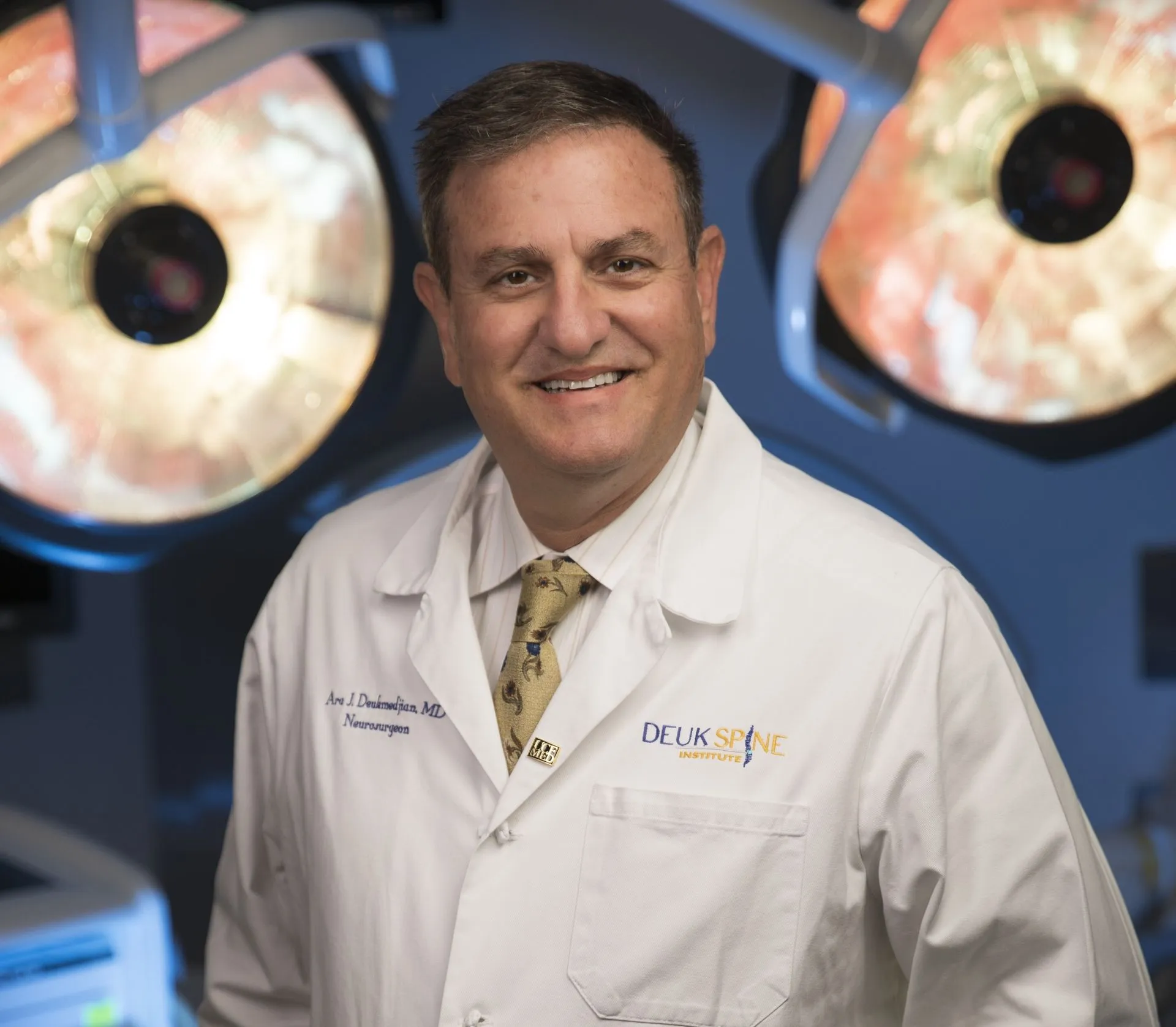
Dr. Deukmedjian discusses concerns around how artificial disc replacements and fusion procedures are sometimes marketed to patients.
How Deuk Laser Disc Repair® Treats the Source of Neck Pain
Deuk Laser Disc Repair® is a minimally invasive option for a herniated, bulging, extruded, ruptured, or degenerated disc in the cervical spine.
This is a state-of-the-art, arthroscopic procedure performed byDr. Deukmedjian. Using anadvanced endoscope and a half-millimeter-wide laser, the surgeon accesses the damaged disc through a tiny incision, avoiding muscle damage. The Deuk Spine Institute offers:
- Precision Treatment: The laser vaporizes and removes the damaged, inflammatory disc material and fragments that are causing the pain. The nerves and spinal cord are visualized directly during the procedure.
- Reported Outcomes: In Dr. Deukmedjian’s clinical experience, DLDR® has achieved 99% pain relief for treated pain sources, when the diagnosed pain source matches the treated pathology.
- Low Complication Rate: The DLDR® procedure has maintained a 0.01% complication rate.
- Rapid Recovery: Many patients experience relief and are discharged within an hour of the procedure. They often return the next morning for a quick checkup, achieving a same-day neck surgery recovery and returning to normal activity without the need for postoperative opioids (non-narcotic neck pain treatment).
If you are seeking minimally invasive neck surgery with recovery time measured in hours, not years, and lasting relief from the source of your pain, Deuk Laser Disc Repair® may be worth exploring. For more information, watch Dr. Deukmedjian explain the differences between DLDR® and other treatments inDeuk Laser Disc Repair® vs ALL INVASIVE NECK TREATMENTS.
An Alternative Approach: Deuk Laser Disc Repair® (DLDR®)
For patients suffering from debilitating pain or severe instability, the benefits of spinal surgery might seem to outweigh the risks. But as outlined above, these procedures are not without consequences. Deuk Laser Disc Repair® (DLDR®) was developed as a motion-preserving alternative that avoids the muscles, nerves, ligaments, tendons, and joints that traditional approaches disturb.
Upload your latest MRI for a free review and a personal consultation with Ara Deukmedjian, M.D., founder of Deuk Spine Institute and creator of the Deuk Laser Disc Repair® procedure.
Medical Disclaimer: This article is for educational purposes only and does not substitute for a consultation with a qualified physician. Individual outcomes vary, and candidacy for any procedure depends on an individualized evaluation of your specific spine condition.