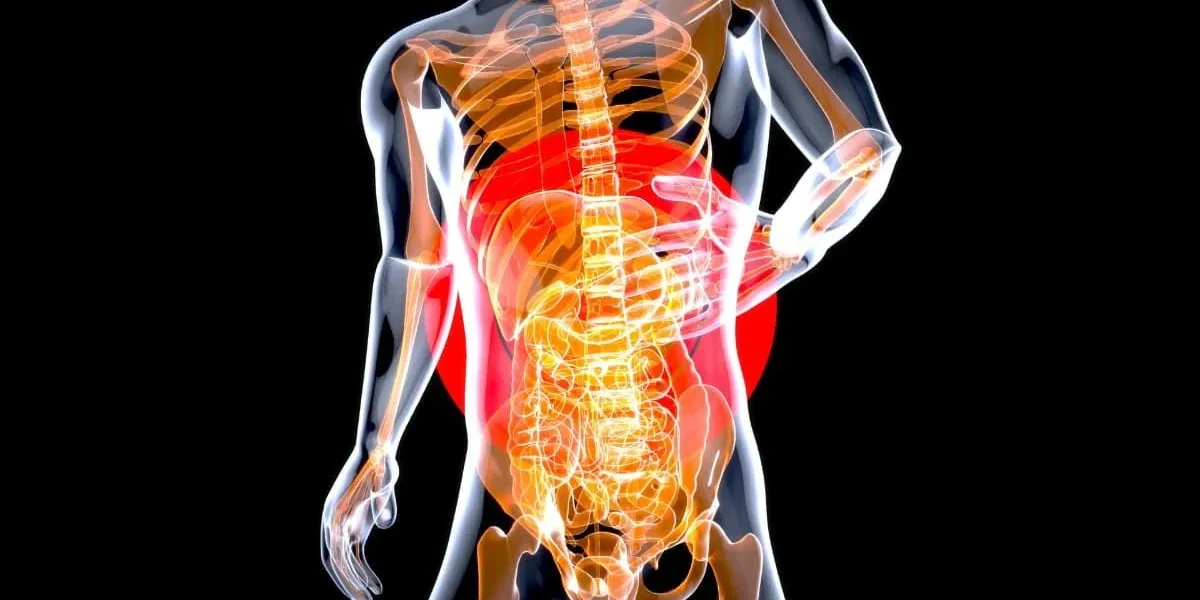
You have the MRI report. It describes a herniated disc, maybe a bulge at L4-L5, maybe some degenerative changes. Your doctor reviewed it, told you what it showed, and recommended a treatment. But here is the problem with that approach to the diagnosis of back pain: an MRI shows structural anatomy. It does not show pain. You cannot see pain on an MRI. Pain is a physiologic and functional abnormality, something an imaging study cannot measure, locate, or confirm.
After over 30 years performing spine surgery and completing over 2,700 Deuk Laser Disc Repair® procedures, I have reviewed thousands of MRIs alongside patient histories and physical examinations. The MRI is the most helpful diagnostic imaging test we have for spine conditions. It is also routinely misused as a standalone diagnosis, and that misuse is why the vast majority of doctors are never able to properly identify the actual sources of a patient’s back pain.
Accurate diagnosis of back pain requires combining imaging, neurological examination, and symptom correlation. How back pain is diagnosed correctly, and why most diagnostic workups fall short, is what this article explains.
Medical Disclaimer: This content is for educational purposes only and does not constitute medical advice, diagnosis, or treatment. Individual results may vary. Always consult with a qualified healthcare provider regarding your specific condition and treatment options.
30
structurally identifiable sources of chronic back pain identified through clinical experience
99%
diagnostic accuracy with the Deuk Spine Exam®
5
average pain generators per chronic back pain patient, all must be treated for complete relief
Why the Diagnosis of Back Pain Is More Difficult Than Most Doctors Acknowledge
Through clinical experience at Deuk Spine Institute, I have identified 30 very specific, structurally identifiable sources of chronic back pain. How back pain is diagnosed, and whether all of those sources are identified, determines whether the treatment that follows actually resolves the pain or simply manages one of several active contributors. The most prevalent source is disc injury, accounting for approximately 85% of chronic back pain. Facet joint arthritis accounts for roughly 5%, sacroiliac joint pain approximately 5%, piriformis syndrome approximately 5%, and vertebral fractures less than 0.5%.
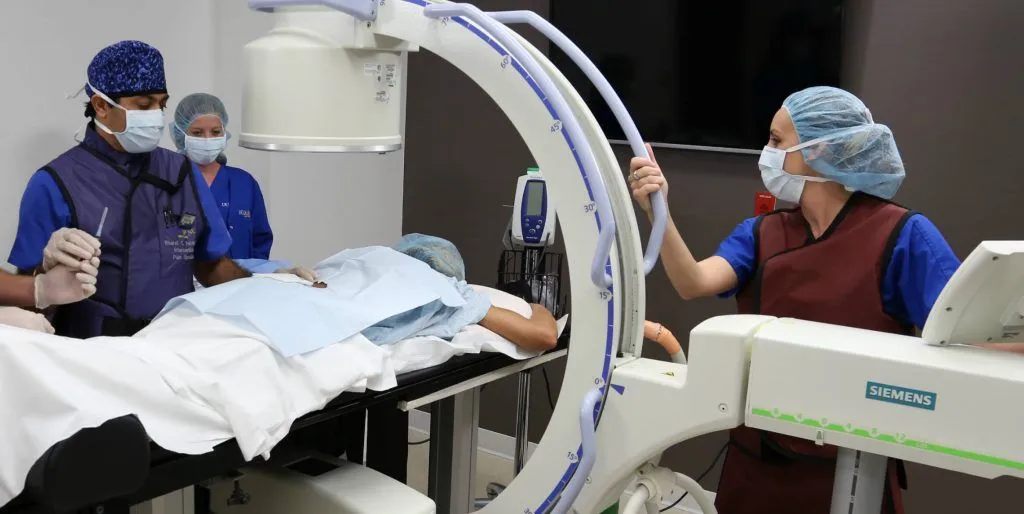
Most patients do not have a single pain generator. The average chronic back pain patient has five concurrent pain generators. Every one of them must be identified and treated for the patient to experience complete relief. Treating one while the others go undiagnosed explains why so many patients improve partially after a procedure and then plateau, the other sources were never addressed.
The reason the vast majority of doctors cannot properly diagnose the actual sources of back pain is not a lack of imaging technology. It is a failure to understand that imaging findings must be correlated with examination and symptoms before they mean anything diagnostically. A disc herniation on MRI is an anatomical observation. Whether that herniation is the source of the patient’s pain requires a different kind of analysis entirely.
What MRI Shows and What It Does Not
MRI is the most useful imaging study for back pain diagnosis, and it is where the diagnostic workup should start. It provides detailed visualization of soft tissue structures, including discs, ligaments, nerve roots, and spinal cord, that plain X-rays and CT scans cannot match. For identifying herniated discs, disc degeneration, spinal stenosis, nerve compression, and some facet joint changes, MRI is irreplaceable.
What MRI cannot do is tell you where the pain is coming from. MRI shows structural abnormalities. Pain is a physiologic and functional event, the result of inflammation, nerve sensitization, and chemical signaling that does not appear on any imaging study. Two patients can have identical MRI findings and completely different pain experiences, or no pain at all.
Several specific limitations make MRI insufficient as a standalone diagnostic tool for back pain:
- 100% of adults over 45 have disc herniations visible on MRI, with or without any symptoms whatsoever. Having a disc herniation on imaging does not confirm it is causing pain.
- Only 10 to 15% of disc herniations are symptomatic. The other 85 to 90% are incidental findings that are not generating the patient’s pain.
- Radiologists miss disc bulges from annular tears more than 50% of the time. The specific finding most associated with discogenic pain is also the one most frequently overlooked on standard MRI reads.
- Standard MRI rarely identifies inflammation in the posterior annular fibers. The exact location where disc pain originates is poorly visualized on routine sequences.
- Annular tears are not typically visible on standard MRI. The High Intensity Zone (HIZ), a white area occasionally seen in the posterior annulus, can suggest inflammation in that region, but its absence does not rule out a painful annular tear, and its presence does not confirm one.
- Annular tears alone do not cause symptoms. What generates pain is when the nucleus pulposus herniates into the annular tear, triggering chronic inflammation at that site. That distinction cannot be made from imaging alone.
This is why a complete diagnosis of back pain cannot be made from an MRI report. The imaging is a starting point, not a conclusion. Learn more about the herniated disc conditions we diagnose and treat.
How Back Pain Is Diagnosed: The Three-Component Framework
How back pain is diagnosed accurately depends on three elements working together: advanced imaging, a focused neurological examination, and in some cases, selective diagnostic injections. No single component produces a reliable diagnosis alone. Proper diagnosis before treatment is what prevents failed procedures and patients cycling through ineffective injections for years.
The physical examination is where the diagnosis of back pain moves from anatomy to function. A focused neurological exam correlates the patient’s symptoms with specific nerve distributions to determine which spinal level is involved and whether the problem involves nerve irritation, nerve compression, or axial pain from disc and joint structures.

There is a critical distinction here that most patients are never clearly explained. Back pain and radiating arm or leg pain are two separate problems that may share a common source but require separate evaluation. Pinched nerves do not cause back pain. They cause radicular symptoms, shooting, electric-like sensations that travel along a specific nerve pathway into the arm or leg, driven primarily by chemical nerve inflammation rather than simple mechanical compression. Identifying those symptoms and mapping them to a dermatome tells the examiner which nerve root is involved and at which level.
The neurological exam for back pain diagnosis assesses five components:
- Dermatomal sensory testing evaluates sensation in specific skin territories to identify which nerve root level shows changes.
- Motor strength testing assesses weakness in specific muscle groups, which maps directly to corresponding nerve levels.
- Reflex testing identifies diminished or absent reflexes at specific levels that correlate with nerve root involvement.
- Range of motion and provocation testing uses movements that reproduce or worsen pain to identify the structural source and direction of pathology.
- Palpation and positional testing differentiates pain sources: facet joint pain typically worsens with extension and rotation, while disc pain often worsens with flexion and axial loading.
When the neurological examination findings match the imaging findings at the same spinal level, the examiner gains confidence that the imaged abnormality is the actual pain generator. When they do not match, further investigation is required before a diagnosis can be established.
The Role of Selective Diagnostic Injections
When imaging and neurological examination leave diagnostic uncertainty, selective diagnostic injections can help clarify which structure is generating pain. These are not primarily therapeutic injections given to reduce inflammation. They are diagnostic tools used to confirm or rule out a specific pain source.
Three injection types are used most commonly in this diagnostic context:
- Medial branch blocks deliver a small amount of anesthetic to the nerve branches that supply a specific facet joint. Significant, measurable pain relief following the injection confirms the targeted facet joint as a pain generator.
- Sacroiliac joint blocks use the same anesthetic approach to isolate SI joint pain from other pelvic and lumbar sources, which is critical because SI joint pain can closely mimic lumbar disc symptoms in its location and pattern.
- Nerve root injections target specific nerve roots with anesthetic. Significant temporary relief confirms that the targeted nerve root is involved in the pain syndrome and that inflammation is the active process, meaning structural correction is still required for lasting resolution.
Diagnostic injections are a valuable component of the workup but are not a replacement for the examination or imaging. They confirm hypotheses generated by the clinical picture. See our page on epidural and diagnostic injection options for more detail.
The Deuk Spine Exam®: How Accurate Diagnosis of Back Pain Is Achieved
The Deuk Spine Exam® is a structured diagnostic framework that integrates MRI review, neurological examination, and complete symptom history to identify all pain generators with 99% diagnostic accuracy. It is the diagnostic step that precedes every procedure performed at Deuk Spine Institute, and it is what separates a treatment plan built on confirmed pain sources from one built on imaging findings alone.
Through clinical experience with over 250,000 patients treated since 2004 and more than 100,000 procedures performed, the Deuk Spine Exam® has refined the process of correlating imaging findings with functional presentation to identify which abnormalities are actually generating pain and which are incidental. Research published through PubMed Central (PMC7051459) found annular tears present in approximately 73% of discs examined in patients with chronic lower back pain, a finding that underscores how common the primary pain generator is and how reliably it is missed on standard diagnostic workups.
The exam can be completed virtually, which is why approximately 90% of patients who receive care at Deuk Spine Institute travel from other states and countries. Patients submit their MRI for review, complete a detailed symptom history, and receive a diagnostic consultation before traveling. That process produces a specific diagnosis with identified pain generators before anyone boards a plane.
Most patients with chronic back pain have been through multiple providers without receiving a definitive diagnosis of their pain sources. The Deuk Spine Exam® was developed precisely because the standard approach, reviewing an MRI and correlating it loosely with a chief complaint, leaves most patients with incomplete diagnoses and therefore incomplete treatment plans. Learn more about the Deuk Spine Exam® diagnostic process.
What a Complete Diagnosis of Back Pain Makes Possible
The difference between a treatment plan built on a confirmed diagnosis of back pain and one built on an MRI report is the difference between treating the actual source and treating a structural finding that may or may not be causing the symptoms. Treating the wrong structure, or treating only one of several active pain generators, is the most common explanation for failed spine surgery and for patients who cycle through injections and procedures without lasting improvement.
When all pain generators are identified and confirmed through the Deuk Spine Exam®, approximately 95% of chronic back pain patients are treatable with targeted outpatient procedures:
- Disc injuries respond to Deuk Laser Disc Repair®, the only procedure that directly addresses the posterior annular tear, removes the inflammatory tissue, and allows the disc to heal naturally without fusion hardware.
- Facet joint and sacroiliac joint arthritis respond to Deuk Plasma Rhizotomy®, a 30-minute outpatient procedure that permanently eliminates the pain-mediating nerves inside the affected joint.
- Piriformis syndrome responds to the Deuk Piriformis Release®, a minimally invasive outpatient procedure using a 4mm incision that releases the scar tissue causing chronic piriformis muscle pain.
Each procedure is outpatient, same-day discharge, targeting the specific structural source confirmed by the Deuk Spine Exam®. With over 2,700 Deuk Laser Disc Repair® procedures completed and a complication rate of only 0.01%, the outcomes are built on confirmed diagnoses, not imaging assumptions.
If you have received an MRI and a treatment recommendation but have not had a thorough neurological examination and symptom correlation, you may not have a complete diagnosis yet. How back pain is diagnosed correctly, through imaging, examination, and symptom correlation together, determines whether the treatment plan that follows will actually work. Submit your MRI for a free review by Dr. Deukmedjian and find out whether all of your pain sources have been identified. See our free MRI review page to get started, or learn more about the conditions we treat to understand how your specific diagnosis maps to a curative procedure.
Medical Disclaimer: This content is for educational purposes only and does not constitute medical advice, diagnosis, or treatment. Individual results may vary. Always consult with a qualified healthcare provider regarding your specific condition and treatment options.