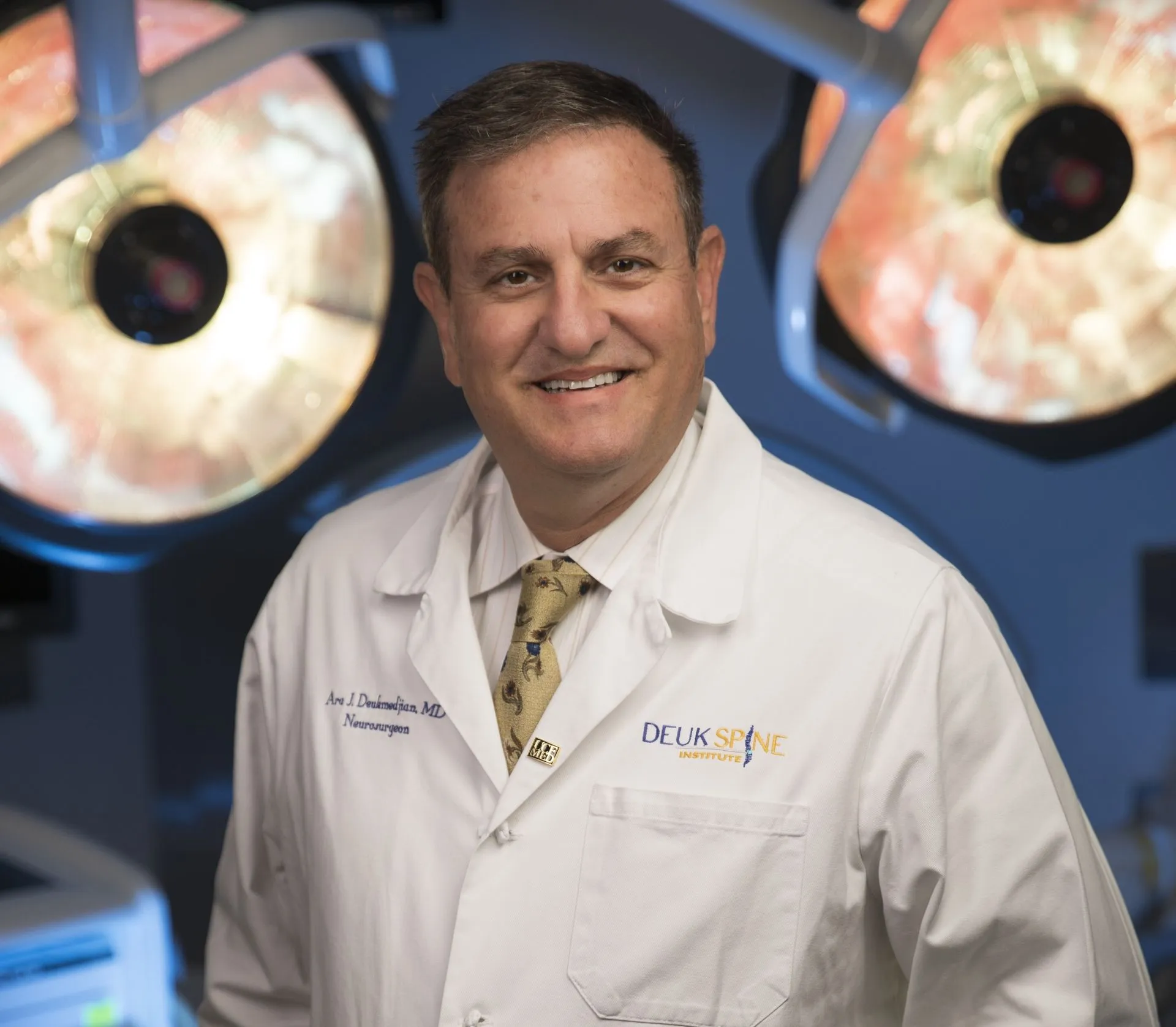
By Dr. Ara J. Deukmedjian, MD
Board Certified Neurosurgeon
Medically reviewed on August 25, 2026
Disclaimer: The contents provided in this article are for learning purposes only. It is always recommended to speak to a doctor about your personal health condition.
Key Points
✓ Spinal fusion does not cure back or neck pain. It eliminates motion at the fused segment, which increases mechanical stress on adjacent levels and frequently leads to new or worsened pain over time.¹ ²
✓ Spinal fusion carries a high complication rate. Documented risks include infection, hardware failure, adjacent segment disease, blood clots, vertebral fracture, nerve damage, and prolonged chronic pain.¹ ³
✓ It can take months to years for spinal fusion patients to recover, as opposed to weeks. Patients are on prescription pain medications and muscle relaxants even after the surgery period, while some never recover fully.⁴ ⁵
✓ Spinal fusion is rarely your only option. Conditions like spondylolisthesis, stenosis, and degenerative disc disease can often be treated with minimally invasive alternatives that preserve spinal motion.⁶
✓ Deuk Laser Disc Repair® offers a proven alternative: a 7mm incision, outpatient procedure with a 0.01% complication rate, 99.6% pain relief, and same-day recovery: no screws, rods, or cages required.
Video Transcript
I’m Dr. Ara Deukmedjian, CEO and founder of the Deuk Spine Institute. I’m here today to talk to you about five myths about spinal fusion.
First myth is that spinal fusion will cure your back or neck pain. This is the furthest thing from the truth. If you pin your surgeon down and ask them or her, “Will your fusion cure my back or neck pain?” they will universally tell you they will not. And that’s because spinal fusion does not cure back or neck pain. Spinal fusion actually makes back or neck pain worse in most patients. If you don’t believe me, go on social media. You’ll see thousands of posts about patients who have had spinal fusion done and they’re in worse pain now afterwards than they were before. Why is it that spinal fusion doesn’t cure back pain? Because spinal fusion doesn’t address the source of back or neck pain. This is what spinal fusion does. It stops movement of your spine. Well, when you stop movement in certain joints, it’s going to make other joints and other areas work harder and wear out faster. And when they wear out faster, you’re going to be in more pain.
Second myth, spinal fusion is safe. This is the furthest thing from the truth. Spinal fusion is one of the most dangerous surgeries we do on the spine. Spinal fusion has a high complication rate. Complications include infections, hardware breakage, migration of the implant, loosening, fracture of vertebrae, adjacent segment disease, heart attack, stroke, pneumonia, blood clots. All of these are complications that are well known for spinal fusion.
The third myth about spinal fusion is that the recovery will be fast. People who have spinal fusion often take years to recover from the surgery. This is because spinal fusion causes trauma to your body. When the surgeon goes in and makes the big incision, peels the muscles off your spine, starts removing normal bones and ligaments, all that damage to your body is going to cause a long recovery for you. Often you’ll be on narcotic painkillers, muscle relaxers, anti-inflammatories for years after your surgery. Many people don’t even make a full recovery from spinal fusion.
Fourth myth is that spinal fusion is the only treatment available for you. You have to have a spinal fusion. Surgeons often point to spondylolisthesis, which is a slippage of bones, or stenosis, or malalignment such as scoliosis or kyphosis as the reason to do spinal fusion. But stop. You don’t need a spinal fusion. There are better alternatives. Spinal fusion is never the only option.
And finally with number five, they tell you you’re going to be normal with normal activity after your fusion. This is the furthest thing from the truth. How can you have a normal back and do normal activities when your spine is fused with metal rods and screws and you can’t move it? Of course, that’s not true. They just want you to sit down and have a spinal fusion so they can make the big bucks and you’re going to be left with the consequences of having a fusion done. There are better alternatives. Do yourself a favor. Look into laser spine surgery. Much better alternative than spinal fusion. At Deuk Spine Institute, we do it through a 7mm incision. Our patients go home an hour after surgery. We have a 99.6% elimination or cure of your symptoms from the areas that we treat and it’s a permanent treatment.
Thanks for speaking with me today. I’m Dr. Deukmedjian. See you soon.
What Is Spinal Fusion?
The procedure of spinal fusion entails fusing one or more vertebrae together through the aid of metal screws, rods, cages, and plates. This surgical process aims at stopping the movement between the vertebrae to provide relief from any pain due to instability or compression of nerves.¹ In practice, however, this approach introduces a cascade of biomechanical problems that can leave patients worse off than before surgery.
In America, the total number of spinal fusions done annually using implants is about 1.62 million, making it one of the most frequently and lucratively performed procedures in the world.³ The operation usually entails cutting an opening 3-8 inches into the patient’s body, dissection of the spinal muscle from the bone, excision of healthy bone, ligaments, and facet joints, removal of the entire intervertebral disc, and finally securing the vertebrae with a metal device.¹
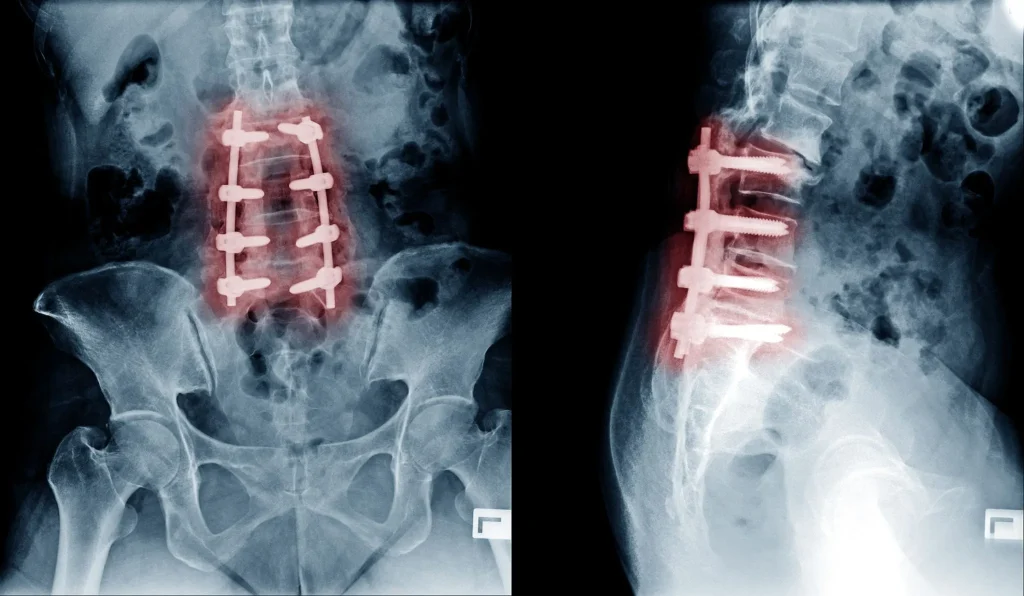
While being commonly performed, an increasing number of medical studies and thousands of patient accounts cast doubts regarding whether spinal fusion lives up to its preoperative promise. Speaking of the five myths of spinal fusion, Dr. Deukmedjian discusses some of the most common misunderstandings that patients are offered before their procedure and demonstrates why less invasive techniques usually yield better results.
Myth 1: Spinal Fusion Will Cure Your Back or Neck Pain
This is the myth that leads more patients astray than any other. As Dr. Deukmedjian explains in the video. If you press your surgeon on this question directly, most will admit that spinal fusion does not cure back or neck pain. The procedure eliminates movement at the fused segment, but movement is not what causes chronic spinal pain in most cases. The actual pain generators are typically damaged discs, inflamed facet joints, compressed nerves, and torn annular fibers. None of which are repaired by bolting vertebrae together.¹ ²
What makes this particularly concerning is that spinal fusion frequently makes pain worse over time. When you eliminate motion at one level of the spine, the segments above and below must compensate by absorbing additional mechanical stress. This excessive wear and tear is known as adjacent segment disease and is considered to be one of the best-documented complications after spinal fusion surgeries. A study that was published in the journal Scientific Reports indicates that radiological adjacent segment degeneration occurs in 36–84% of those who underwent spinal fusion and the complication itself affects up to 24% of these individuals.² The incidence rate increases by about 2–14% per year in lumbar patients and 3% per year in cervical patients.⁷
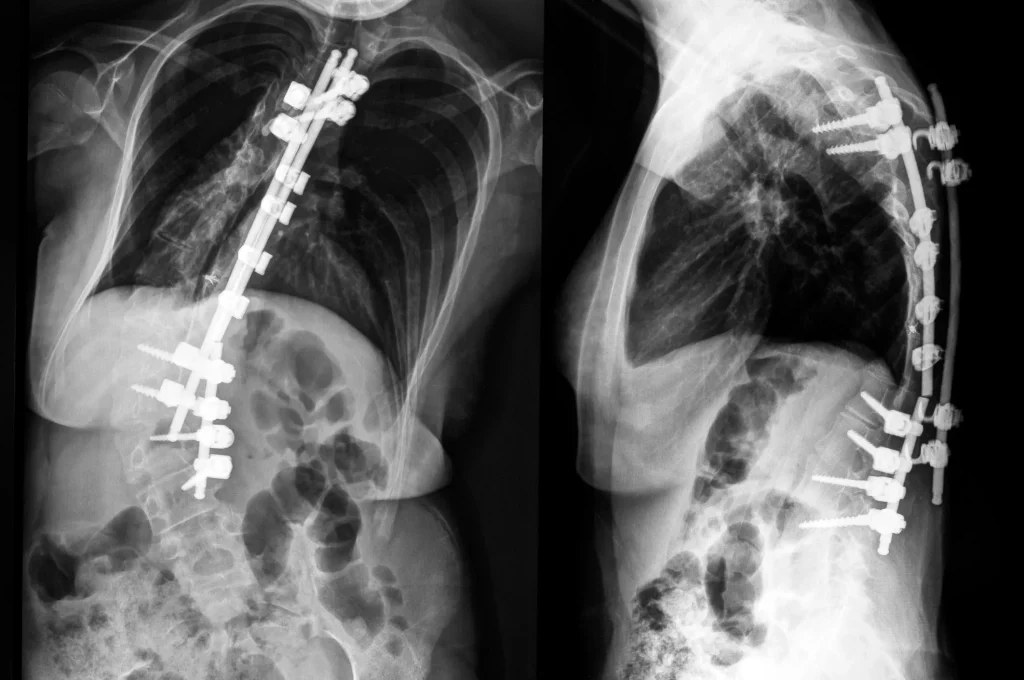
In another research carried out at The Spine Journal, it was found that out of 102,000 patients who had undergone lumbar fusion surgery and decompressive surgery, 5.4% of them had experienced failed back surgery syndrome within six months after surgery, rising to 8.4% after one year.⁴ For difficult cases like lumbar spine fusion, failure rates have been as high as 30-46%.⁵ Success rate drops drastically with each revision surgery; for example, from 30% success for the second operation, 15% for the third and 5% for the fourth.⁵
It simply means that spinal fusion doesn’t deal with the problem itself; it only immobilizes the spine using hardware which leads to more problems and additional surgeries.
Myth 2: Spinal Fusion Is Safe
The second myth Dr. Deukmedjian addresses is the belief that spinal fusion is a safe procedure. While all surgeries carry inherent risks, spinal fusion stands apart as one of the highest-risk procedures performed on the spine. Its documented complications are extensive and well-established in the medical literature.¹ ³
The list of known complications includes infection (discitis, osteomyelitis, surgical site infections), hardware failure (screw loosening, rod breakage, cage migration), vertebral fractures and subsidence, adjacent segment disease, nerve root damage resulting in permanent weakness or numbness, spinal fluid leaks from dural tears, excessive scar tissue formation around the spine and nerves, deep vein thrombosis and pulmonary embolism, heart attack and stroke, proximal junctional kyphosis (abnormal curvature developing above the fusion site), sexual dysfunction (particularly common with anterior approaches), and in rare cases, death from surgical complications.¹ ³
A multicenter study published in Global Spine Journal found that implant-related complications alone add over $13,500 to the cost of each case and significantly extend hospital stays.³ The reoperation rate caused by implant-related complications remains high, particularly in elderly patients undergoing complex or multi-level fusions.³
What Deuk Spine Institute reports with their minimally invasive procedures stands in stark contrast. Deuk Laser Disc Repair® has achieved a 0.01% complication rate and a 0% infection rate across more than 2,750 procedures performed since 2004, compared to traditional spine surgery’s 5–50% complication rates.⁶
Myth 3: Recovery from Spinal Fusion Will Be Fast
As Dr. Deukmedjian explains, spinal fusion causes significant trauma to the body. The surgical approach requires a large incision, forceful retraction or stripping of the paraspinal muscles from the spine, removal of stabilizing bones and ligaments, and drilling into vertebral bone to anchor screws and rods.¹ The body’s response to this level of surgical trauma is prolonged inflammation, extensive scar tissue formation, and a recovery timeline that stretches far beyond what many patients are led to expect.
The typical spinal fusion patient requires a 2 to 5-day inpatient hospital stay under general anesthesia with intubation. Operating times are considerably longer than minimally invasive alternatives, increasing exposure to anesthetic risk. Post-surgically, patients commonly remain on narcotic painkillers, muscle relaxers, and anti-inflammatory medications for months or even years.¹ ⁵ Formal return to unrestricted activity often takes 3 to 12 months, and many patients report that they never fully return to their pre-surgical activity levels.

Research has identified paraspinal muscle atrophy as a significant predictor of poor postoperative outcomes after lumbar fusion. A study published in The Spine Journal found that age and paraspinal musculature atrophy are among the most important factors determining surgical results, highlighting that the very muscle damage caused by the fusion approach contributes to ongoing disability.⁸
Compare this with Deuk Laser Disc Repair®, which is performed through a 4 to 7mm incision under light IV sedation. The procedure takes approximately 20 minutes per disc. Patients recover in about 45 to 60 minutes and walk out of the surgical center the same day. Average blood loss during the procedure is less than 2 ml. Most patients resume normal activities within days, without the need for opioid or narcotic painkillers.⁶
Myth 4: Spinal Fusion Is Your Only Option
Surgeons frequently point to conditions like spondylolisthesis (vertebral slippage), spinal stenosis (canal narrowing), and deformities like scoliosis or kyphosis as absolute indications for fusion. While there are rare cases in which fusion may be the only viable option. Such as severe traumatic fractures or true cauda equina syndrome. These represent a small fraction of the fusions actually performed.¹
The financial incentives driving fusion recommendations cannot be overlooked. Spinal fusion is one of the highest-reimbursed spine surgeries in the world, generating $15,000 to $20,000 in surgeon fees and $50,000 to $150,000 in total hospital revenue per case. The hardware alone: screws, rods, cages, and plates. Costs $10,000 to $50,000 per surgery, with medical device companies aggressively marketing these products to surgeons.¹

Beyond the initial procedure, the pipeline of revenue that follows a fusion is significant. Over 90% of spinal fusion patients eventually end up needing another surgery, thus perpetuating the cycle of revision surgeries, hardware removals, and chronic pain management involving re-injections, radiofrequency, spinal cord stimulators, and prolonged use of opioids.¹
In the case of herniated discs, bulging discs, degenerative disc disease, spinal stenosis, sciatica, and radiculopathy, which are diagnosed in the majority of the patients, there exist safe and effective options for treatment of the root cause of pain.
Myth 5: You Will Return to Normal Activity After Fusion
The final myth Dr. Deukmedjian addresses is the promise that patients will return to normal activity with a normal-functioning spine after fusion. The fundamental biomechanical reality makes this impossible: when vertebrae are permanently locked together with metal rods and screws, that segment of the spine can no longer move. The natural flexibility, range of motion, and shock-absorbing capacity of the fused level are eliminated permanently.¹
This loss of motion affects everything from bending and twisting to walking and sitting comfortably. It also creates a domino effect throughout the rest of the spine. The segments adjacent to the fusion are forced to compensate for the lost mobility, absorbing additional stress with every movement. Over time, this accelerated wear leads to adjacent segment disease. Degeneration, herniation, stenosis, and instability at the levels above and below the fusion.² ⁷

Studies show that the reoperation rate for adjacent segment disease after cervical fusion alone is approximately 22% within ten years, with an annual risk of about 3%.⁷ In the lumbar spine, the risk is even higher, accumulating at 2–14% per year.⁷ For patients undergoing multi-level fusion, the biomechanical strain on remaining mobile segments increases further, accelerating the timeline to additional surgical intervention.
The promise of “returning to normal” after fusion is not supported by the clinical evidence. Patients with metal hardware permanently implanted in their spine face permanent restrictions on mobility, ongoing risk of hardware-related complications, and a high probability of requiring additional surgery in the years following their fusion.
A Better Alternative: Deuk Laser Disc Repair®
As Dr. Deukmedjian emphasizes at the conclusion of his video, there are better alternatives to spinal fusion and the evidence supports this decisively. Deuk Laser Disc Repair® represents the most advanced minimally invasive laser spine surgery available, offering a fundamentally different approach to treating the conditions that surgeons commonly use to justify fusion.
Rather than eliminating spinal motion by bolting vertebrae together, Deuk Laser Disc Repair® uses a Holmium YAG laser delivered through an endoscopic approach to target and remove only the damaged, pain-generating tissue within the disc. The torn annular fibers and herniated nucleus pulposus causing the patient’s symptoms. The procedure is performed through an incision smaller than a dime (4–7mm), preserving all normal bones, ligaments, muscles, and facet joints.⁶
The results over two decades and more than 2,750 procedures speak for themselves:⁶
99.6% pain relief from the treated areas, with permanent results. 0.01% complication rate, compared to traditional spine surgery’s 5–50%. No risk of infection, getting rid of one of the most dreaded complications of any surgery. Same day outpatient procedure under light intravenous sedation – no general anesthesia required, no breathing tube needed, no overnight stay in the hospital. About one hour to recover, with many people walking out of the operating room within days. No hardware implanted. No screws, rods, cages, or plates. Natural spinal motion is preserved at the treated level, eliminating the risk of adjacent segment disease caused by fusion.
For patients whose pain originates from facet joints rather than discs, Deuk Plasma Rhizotomy® offers a similarly minimally invasive, motion-preserving solution that permanently deactivates the pain-carrying nerve with low-temperature plasma energy. Without the burning associated with traditional radiofrequency ablation.
1.62 million fusions a year.
Most of them aren’t necessary.
Spinal fusion doesn’t cure pain — it locks vertebrae together, destroys mobility, and triggers adjacent segment disease in up to 84% of cases. Failure rates run 30–46%, and each revision surgery cuts your odds in half. There is a better way.
Board-certified neurosurgeon · 2,750+ procedures since 2004 · 0% infection rate · No opioids after surgery
FAQ’s
Does spinal fusion cure back pain?
False. Spinal fusion immobilizes the treated segment, but it does not deal with the true cause of most back and neck pain. The cause of such pain is disc degeneration, facet joint inflammation, and pinched nerve roots. There is proof of adjacent segment disease occurring among a certain percentage of individuals who have undergone spinal fusion surgery, leading to new or increased pain in adjacent segments.¹ ²
What is the failure rate of spinal fusion?
Failed back surgery syndrome affects approximately 10–40% of patients who undergo lumbar spine surgery, with fusion procedures carrying higher rates (30–46%) compared to simpler decompression procedures.⁴ ⁵ Success rates decline sharply with each additional surgery, falling to approximately 30% after a second procedure and as low as 5% after a fourth.⁵
What is adjacent segment disease?
Adjunct segment syndrome refers to the wear and tear of spinal segments adjacent to a fusion, which happens because these adjacent segments have to bear additional load due to the fact that there will be no motion in the fused part of the vertebrae. Radiographic signs of this complication occur in 36% to 84% of all cases of spinal fusion, while symptom development is at 2% to 14% per annum.² ⁷
How long does it take to recover from spinal fusion?
Full recovery from spinal fusion typically takes 3 to 12 months, and many patients remain on narcotic painkillers, muscle relaxers, and anti-inflammatories for extended periods. Some patients never achieve full recovery. This contrasts sharply with Deuk Laser Disc Repair®, where patients recover in approximately one hour and resume normal activities within days.⁶
Is spinal fusion my only option for spondylolisthesis or stenosis?
For most people, the answer is no. Although fusion surgery may be suggested to address problems such as vertebral slippage and spinal stenosis, procedures such as Deuk Laser Disc Repair® offer an option that can resolve the problem without immobilizing the spine.
What is Deuk Laser Disc Repair®?
Deuk Laser Disc Repair® is a minimally invasive outpatient laser spine surgery that treats the actual source of back and neck pain through a 4–7mm incision. Using endoscopic visualization and a Holmium YAG laser, the procedure removes only damaged disc tissue while preserving all normal spinal structures. The procedure has a 99.6% pain relief rate, a 0.01% complication rate, and patients go home the same day.⁶
How does Deuk Laser Disc Repair® compare to spinal fusion?
Deuk Laser Disc Repair® uses a 4–7mm incision versus fusion’s 3–8 inch incision, requires no hardware, preserves spinal motion, is performed outpatient under light sedation, and has a 0.01% complication rate versus fusion’s 5–50%. Patients walk out in about an hour compared to a 2–5 day hospital stay with fusion.⁶
Sources
View Sources
- Deuk Spine Institute. Spinal Fusion Surgery: Risks, Complications & Better Alternatives.
- Park HJ, et al. Risk factors for early-onset adjacent segment degeneration after one-segment posterior lumbar interbody fusion. Scientific Reports. 2024;14(1).
- Koshimizu H, et al. Implant-Related Complications after Spinal Fusion: A Multicenter Study. Global Spine Journal. 2024.
- The incidence of failed back surgery syndrome varies between clinical setting and procedure type. The Spine Journal. 2022.
- Daniell JR, Osti OL. Failed Back Surgery Syndrome: What It Is and How to Avoid Pain After Surgery. Spine-health. 2023.
- Deuk Spine Institute. Deuk Laser Disc Repair®: Laser Spine Surgery.
- Mayfield Clinic. Q&A: Adjacent Segment Disease and Spinal Surgery. 2022.
- Schönnagel L, et al. Predicting postoperative outcomes in lumbar spinal fusion: development of a machine learning model. The Spine Journal. 2024;24(2):239-249.