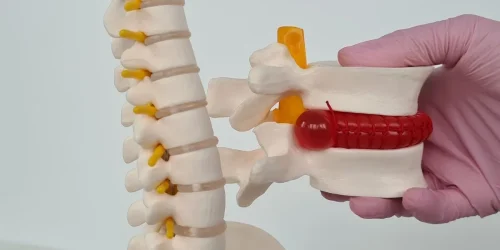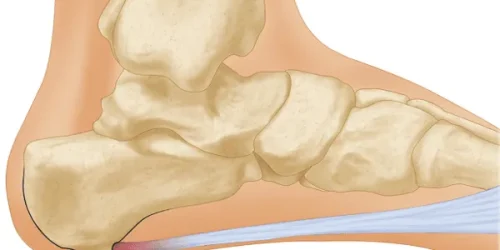
In the United States, nearly 65 million people report suffering from chronic back pain, with millions more experiencing chronic neck pain. Chronic neck and back pain are among the most prevalent conditions in the country, and also one of the most costly, ranking sixth overall, with an annual cost of more than $12 billion. Traditionally, people turn to surgery as a last resort in the hope of finding relief.
However, many patients refuse spine surgery because the traditional methods offered are highly invasive. Open spine surgery involves soft-tissue trauma, removal of healthy bone and muscle, long hospital stays, and significant drawbacks.
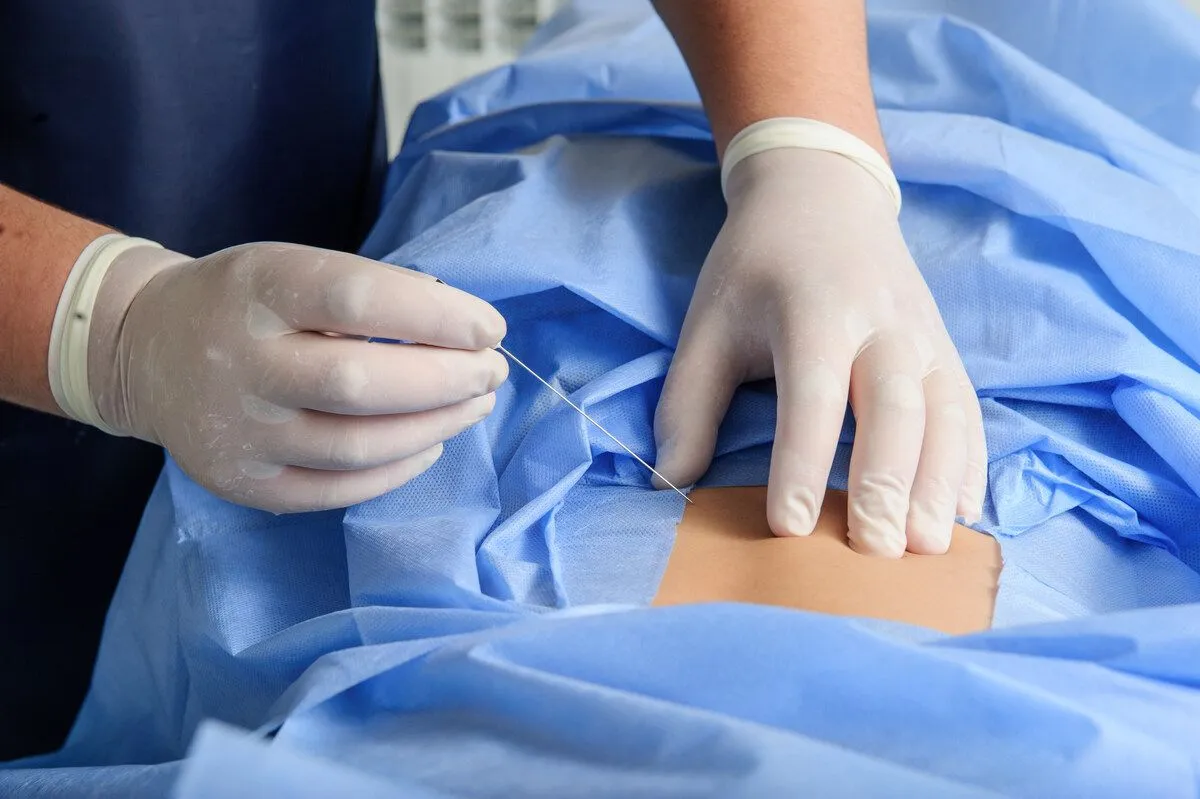
Fortunately, spine care has evolved with new technology and innovative ideas. At the Deuk Spine Institute, we offer minimally invasive outpatient spine surgery with minimal bleeding, no multi-day hospital stays, and no need for painkillers after surgery.
Understanding the Downsides of Open Spine Surgery
To appreciate the benefits of minimally invasive spine surgery, it is important to understand the challenges associated with traditional open spine surgery.
Open spine surgery involves large incisions by surgeons to access the spine. They have to cut through muscle, ligaments, and even remove healthy bones.
1. Soft-Tissue Trauma
Muscles and ligaments provide stability and support to the spine. Cutting them during surgery creates inflammation during the post-op recovery period, leading to pain and delayed recovery that can last for weeks or even months after surgery.
2. Lots of Bleeding
The large incisions created during open spine surgery can disrupt large blood vessels and lead to significant amounts of blood loss during surgery. The amount of bleeding often requires blood transfusions and the placement of drainage tubes near the wound to manage fluid build-up, demanding extended hospital monitoring.
3. Opioid Pain Killers Post-Op
Due to the invasiveness of open spine surgery, patients often experience significant discomfort during recovery and require post-operative pain medications—especially narcotics. Opioids carry risk, including addiction, respiratory depression, and side effects like constipation. Some patients require intravenous opioid drips for weeks after surgery because of their resulting pain.
4. Higher Rate of Complication
With surgery being open and highly invasive, there are huge risks of complications that can come from open spine surgeries. These include:
- Infections
- Blood Clots
- Nerve Damage
- Spinal Fluid Leaks
These are just a few of many on the list of many complications that can result from open spine surgery.
Searching For a Safe Alternative?
Find out if you are a candidate for Deuk Laser Disc Repair®, get your free consultation and MRI review today.
Progress and Challenges in Minimally Invasive Spine Care
Over the last two to three decades, minimally invasive spine surgery (MISS) has transformed the landscape of modern spine care. With the introduction of tubular retractors, endoscopic visualization, and advanced imaging, surgeons can now address many spinal problems through far smaller incisions than those required in open surgery. These approaches preserve muscle, reduce blood loss, lower infection risk, and shorten recovery time. Studies consistently show that patients undergoing minimally invasive procedures often return to daily activities much faster than those recovering from traditional open surgery.
Despite these advancements, MISS still faces real challenges. Even with smaller incisions and better tools, most conventional MISS procedures require some degree of muscle splitting, soft-tissue disruption, or bone removal to reach the damaged disc or nerve. This means that although the trauma is reduced, it is not eliminated entirely. In addition, widespread adoption of newer techniques varies significantly across the country—many spine surgeons still rely on traditional or partially minimally invasive techniques because they require less training time or involve equipment their hospital already owns.
Another challenge is the consistency of outcomes. While MISS can deliver strong results, success rates vary depending on the surgeon’s skill, the technique used, and the underlying diagnosis. Research shows that some common minimally invasive surgeries—such as minimally invasive fusions or microdiscectomies—do not always prevent recurring symptoms or long-term degeneration at the treatment level. For some patients, symptoms improve temporarily but return months or years later if the root cause of pain wasn’t fully addressed.
Another important point: many minimally invasive techniques are designed to decompress or stabilize the spine but not to cure the underlying disc damage. Procedures like TLIF, PCDF, and even artificial disc replacements can reduce pressure on nerves but do not repair the internal tears or inflammation within damaged discs. And because fusion hardware or implants introduce foreign material, patients may face new issues years later—including adjacent segment disease, hardware failure, or stiffness.
These remaining limitations are exactly why centers like the Deuk Spine Institute focus not just on technique, but on treating the true source of pain, and doing so with the smallest incision possible and without cutting bone, muscle, or ligaments. The field continues to advance, but this gap between “less invasive” and “truly curative” remains a longstanding challenge in spine care nationwide.
The Deuk Spine Difference: Precision, Smaller Incision, and Better Outcomes
The difference between standard minimally invasive surgeries and those offered at the Deuk Spine Institute is significant.
Our procedures use either a 4 or 7-millimeter incision, which is much smaller than incisions used in other surgeries.
The key difference is not just the size of the incisions, but the philosophy and precision behind our advanced techniques.
Deuk Laser Disc Repair® and the Deuk Plasma Rhizotomy® are designed to eliminate pain, whereas fusion surgeries are not. Not to mention the hardware that surgeons put in your body for these surgeries can cause more issues down the line.
We target the source of your pain
Here, we pride ourselves on diagnosing patients’ true source of pain. Unlike other spine surgeries like Transforaminal Lumbar Interbody Fusion (TLIF), Posterior Cervical Decompression and Fusion (PCDF), Artificial Disc Replacement (ADR) — which have a 50% success rate in eliminating pain, our procedures permanently eliminate pain with a 99.6% success rate.
We leave your muscles, bone, ligaments, and tendons intact
We perform surgery without cutting muscle, ligaments, or removing bone. This unique approach results in significantly less trauma and ensures that your spine’s natural ability and strength (its biomechanics) are fully preserved, leading to a much safer and faster recovery compared to other surgeries, like spinal fusion.
You recover faster
Most importantly, our minimally invasive surgeries do not require post-operative narcotics. They are completely outpatient, meaning you get to go home the same day, and patients return to normal activities usually the next day. With incisions as small as 4 or 7-millimeters, recovery time is dramatically shorter compared to traditional spine surgery.
Patient Story
After 50 failed surgeries, this patent is finally pain-free with DLDR®.
You Have Options: A Safer Path to Ending Spine Pain
Many patients are told that spinal fusions and open spine surgery are their only option to eliminate back and neck pain. What they often do not know is that these surgeries may not accomplish what they expect—and they carry significant risks.
Minimally invasive spine surgery here at the Deuk Spine Institute is the spinal fusion alternative people are looking for. With our FDA-approved surgeries and proven track record of success in eliminating back and neck pain permanently, we offer the most advanced spine surgeries in the world.
Why risk long recovery times, limited mobility, and ongoing pain—when Deuk Spine offers a better, safer, and more effective alternative?
Make Your First Pain-Free Move
If you are seeking relief from chronic back and/or neck pain, we can help improve your quality of life and enable you to live pain-free.
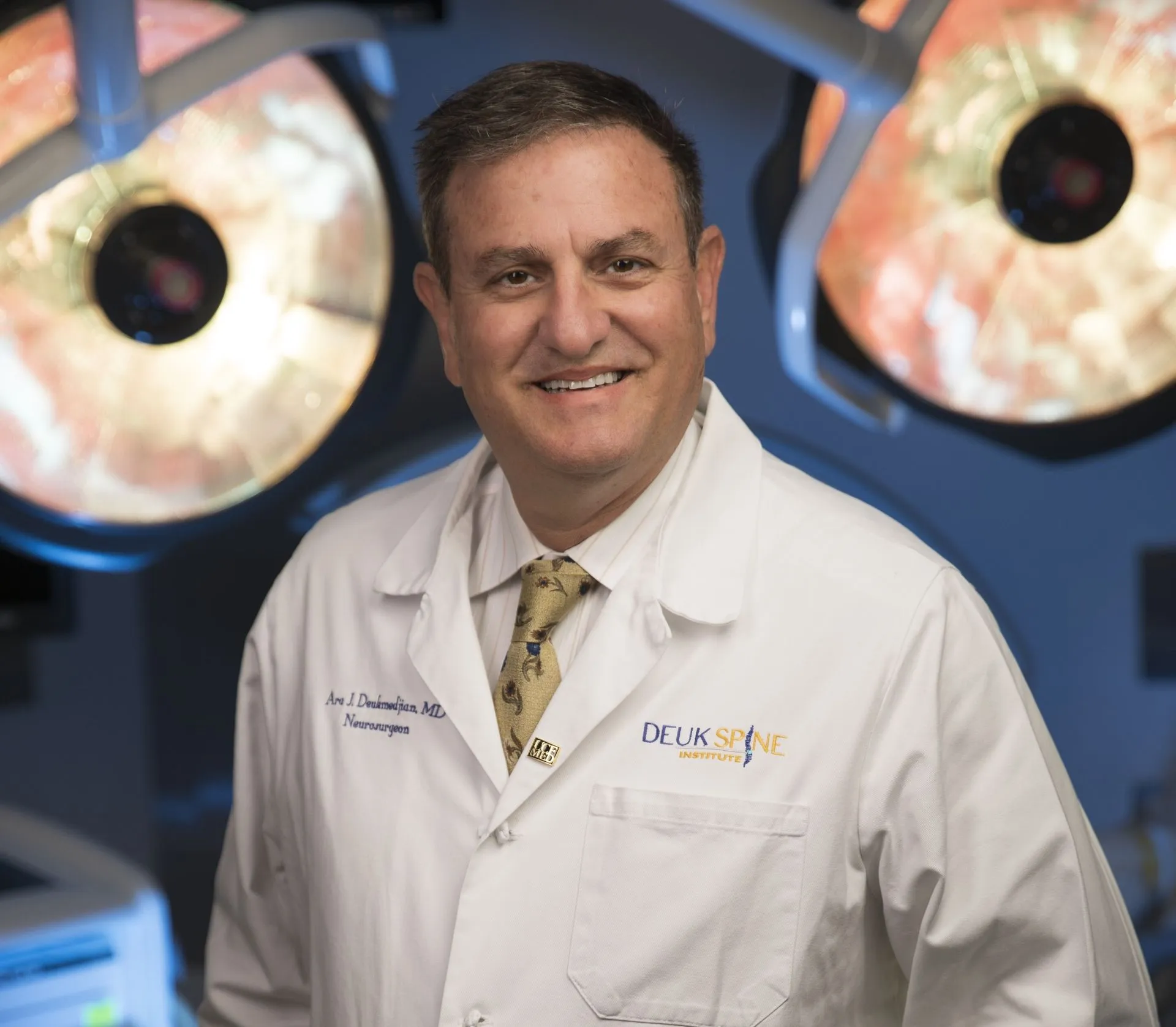
Upload your latest MRI for a free review and a personal consultation with myself, Ara Deukmedjian, M.D., founder of Deuk Spine Institute and creator of the Deuk Laser Disc Repair® procedure.
Watch Deuk Laser Disc Repair® in Action
Our goal is to be completely transparent about our process and procedures for treating neck issues. We livestream surgeries with our patients’ written consent, allowing you to observe our technique.
Watch a Recent DLDR® Procedure
FAQs
Q: What is the biggest difference between Deuk Laser Disc Repair® and conventional minimally invasive surgery (like a microdiscectomy)?
A: While both are minimally invasive, most conventional procedures still require some muscle manipulation or bone removal. The Deuk Laser Disc Repair® is a truly motion-preserving procedure that uses a precise laser and an endoscope through a small incision (4mm or 7mm) to remove only the damaged disc tissue, without cutting muscle, ligaments, or removing any healthy bone, leading to a higher success rate and a faster recovery.
Q: Will I need to stay overnight in the hospital after a Deuk Spine procedure?
A: No. Procedures like the Deuk Laser Disc Repair® are performed on an outpatient basis. This means patients walk out the same day and can typically return to normal, low-impact activities the very next day, dramatically reducing the risks and costs associated with multi-day hospital stays.
Q: If I’ve been told I need spinal fusion, am I still a candidate for Deuk Laser Disc Repair®?
A: In many cases, yes. Spinal fusion is a common recommendation for chronic discogenic pain, but the Deuk Laser Disc Repair® is a proven, highly successful, motion-preserving alternative. We recommend uploading your most recent MRI for a free, personal review to determine if the Deuk Spine approach is the safer, more curative option for your specific condition.