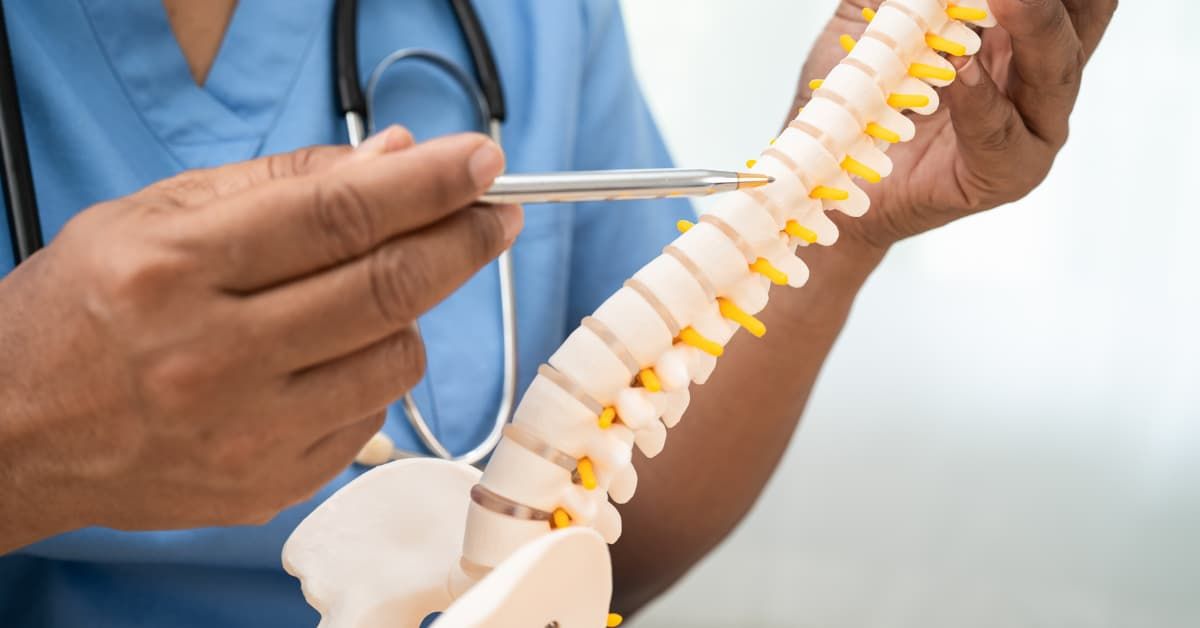
Your surgeon just told you that fusion is your only option for chronic back pain. You've already tried physical therapy, injections, and medications. Now you're facing a decision about invasive spine surgery that will permanently eliminate motion in part of your spine, require months of recovery, and involve drilling into bone and inserting hardware.
After over 30 years performing spine surgery and completing more than 100,000 procedures, I've learned something critical about laser spine surgery vs fusion. Most patients facing fusion recommendations don't need it. The vast majority have treatable disc injuries that respond to motion-preserving endoscopic procedures, but they're being steered toward fusion for reasons that have more to do with surgeon training and financial incentives than optimal patient outcomes.
Here's what you need to understand about these fundamentally different surgical approaches, the tissue destruction that fusion causes, and why the financial structure of spine surgery creates a dangerous bias toward recommending the most invasive option.
The Fundamental Difference in Surgical Philosophy
When comparing laser spine surgery vs fusion, you're looking at two procedures with completely opposite goals. Fusion aims to eliminate motion at a painful spinal segment by permanently joining vertebrae together with bone grafts and metal hardware. The theory is that if the segment can't move, it can't cause pain.
Motion-preserving laser spine surgery, specifically the Deuk Laser Disc Repair®, takes the opposite approach. It targets the actual source of pain in approximately 85% of chronic back pain cases, which is inflammation in the posterior annular tear of an injured disc. Based on my clinical experience with over 2,700 Deuk Laser Disc Repair® procedures, this approach permanently eliminates pain while preserving your spine's natural motion and stability.
The difference isn't just philosophical. It's about understanding what actually causes your pain and whether destroying normal spinal anatomy is necessary to treat it.
The Tissue Destruction Reality of Spinal Fusion
Here is the hard truth that rarely gets discussed openly: spinal fusion was never intended to treat back pain. It was designed to stabilize the spine after trauma or severe deformity. Because it doesn't address the actual source of back pain, the pain frequently persists or gets worse after fusion surgery.
Patients go through one of the most invasive procedures in all of medicine, endure months of painful recovery, and come out the other side with the same back pain they started with, plus new problems created by the surgery itself.
Fusion carries a long list of serious risks that every patient should understand before consenting.
- Hardware migration and failure, where screws, rods, or cages shift out of position or break, often requiring revision surgery
- Spinal infection at the surgical site, requiring extended antibiotic treatment or additional procedures
- Spinal fluid leak from dural tears, causing severe headaches and potential complications
- Abdominal organ injuries during anterior approaches to the spine
- Vertebral fractures from screw placement or stress on weakened bone
- Pneumonia, heart attack, and stroke from prolonged general anesthesia and major surgery
- Blood clots from extended immobility during recovery
- Pain medication addiction from heavy opioid protocols required during the long recovery
- Paralysis from nerve damage caused by surgical manipulation near the spinal cord
These are not rare, theoretical concerns. They are documented complications that occur with regularity. And because fusion doesn't target the actual source of most back pain, patients often endure these risks only to find their back pain unchanged or worse.
Bone, Ligament, and Muscle Destruction
Fusion requires drilling into vertebrae, removing portions of facet joints and lamina, and placing screws or rods. This bone removal is permanent and irreversible. To access the spine, surgeons must cut through the posterior ligaments and strip the multifidus muscles away from the bone.
The paraspinal muscles undergo damage that goes far beyond simple retraction. Underneath the surface, the muscle tissue is dying. Literally dying. The sustained pressure causes muscle necrosis, and the tissue begins converting into scar tissue. The muscles don't just weaken, they melt away. It's more than cutting. It's wholesale destruction of muscles, ligaments, and bone. The denervation from severing nerve supply leads to atrophy that never fully reverses, leaving permanent structural damage that no amount of physical therapy can restore.
Adjacent Segment Disease and Internal Scarring
The extensive tissue trauma from fusion triggers massive scar tissue formation. This internal scarring, called epidural fibrosis, can bind nerves to surrounding tissues and create entirely new sources of chronic pain. When you fuse vertebrae together, you eliminate motion at that segment and create permanent stiffness.
The segments above and below must compensate by moving more than they were designed to move. Studies show that adjacent segment disease develops in 20-30% of fusion patients within 5-10 years, often requiring additional surgery and creating a cascade of procedures that progressively reduce spinal mobility.
Endoscopic Laser Surgery: Precision Treatment Without Destruction
The Deuk Laser Disc Repair® uses a 4mm incision, smaller than a dime. Through this tiny opening, I access the injured disc using specialized endoscopic instruments and direct visualization. There is no bone drilling, no ligament cutting, no muscle stripping. No spinal fusion, no implanted hardware, no bone removal of any kind.
In approximately 85% of chronic back pain cases, pain originates from inflammation in the posterior annular tear of an injured disc. When the nucleus pulposus herniates through a tear in the annulus fibrosus, it triggers chronic inflammation. Small pain nerve fibers grow into the inflamed tissue, creating persistent pain signals.
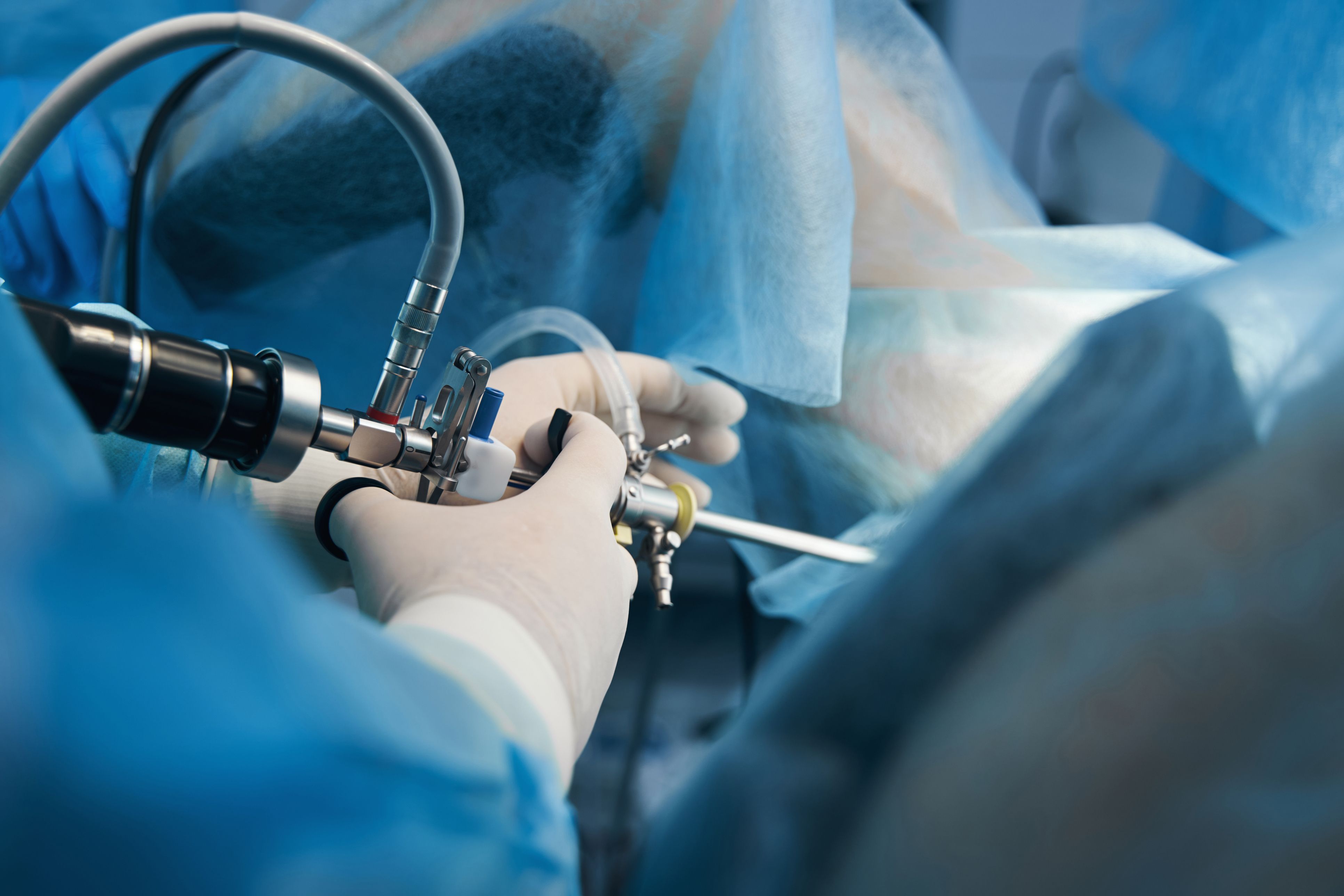
The Deuk Laser Disc Repair® directly addresses this mechanism. Using laser energy and specialized instruments, I remove the inflammatory tissue and herniated disc material from the posterior annular tear and perform careful debridement. No discectomy is performed, meaning healthy disc tissue is preserved. This eliminates the pain source while allowing the tear to heal naturally over 9-12 months. No cadaver bone grafts are needed. No metal screws or rods are implanted. No artificial disc replacements are inserted. The body's own healing processes produce a stable result without the complications that hardware creates.
Fusion doesn't address this mechanism at all. It simply tries to eliminate motion, hoping that if the segment can't move, it won't hurt. That's why so many fusion patients still have back pain after surgery.
By preserving your spine's native anatomy, including discs, ligaments, facet joints, and muscles, you don't develop adjacent segment disease because forces remain distributed normally across all spinal levels. This is what makes endoscopic disc repair fundamentally different from fusion. Instead of creating permanent changes to your spinal structure, the procedure works with your body's existing architecture.
In my clinical experience with over 2,700 Deuk Laser Disc Repair® procedures, patients report an average of 99% pain relief for treated pain sources, with a complication rate of 0.01%. Patients typically walk within an hour after the procedure and return to normal activities within days to weeks.
The Financial Incentive Problem in Spine Surgery
A multi-level fusion can pay a surgeon 2-3 times what they would receive for performing intricate brain surgery. This creates a dynamic where surgeons who perform fusion regularly generate far more revenue than those who focus on motion-preserving alternatives. When a surgeon has trained primarily in fusion techniques, when their entire practice revolves around fusion, and when fusion generates the majority of their income, they naturally see more patients as fusion candidates. This isn't necessarily intentional deception. It's how human psychology works when financial incentives align with specific treatment approaches.
Many spine surgeons never received training in motion-preserving endoscopic techniques. If a surgeon doesn't know how to perform the Deuk Laser Disc Repair®, they can't offer it. The only tool they have is fusion, so every problem starts to look like it needs fusion to fix it.
Device manufacturers heavily market fusion hardware, sponsor conferences, fund research that favors fusion, and create financial relationships with surgeons who use their products. Insurance companies often approve fusion more readily than newer motion-preserving procedures, not because fusion produces better results, but because it's been "standard of care" for decades. The entire system pushes toward more invasive, more expensive procedures when simpler solutions would better serve most patients.
Comparing Outcomes
Based on my clinical experience, patients report an average of 99% pain relief for treated pain sources. The complication rate is 0.01%, with zero major complications across these procedures. No infections, no permanent nerve damage, no spinal fluid leaks requiring revision surgery. Recovery is measured in hours.

Research published in spine surgery journals shows that 20-40% of fusion patients continue experiencing significant pain even after successful fusion. This condition, called failed back surgery syndrome, occurs because fusion doesn't address the actual pain mechanisms. Recovery typically requires 3-6 months, and in many cases extends well beyond a year.
When Fusion Remains Appropriate
Fusion does have legitimate indications. Severe spinal instability from high-grade spondylolisthesis, major deformity correction for progressive neurological problems, and acute spinal fractures with dislocation causing cord compression may all require fusion. The Deuk Laser Disc Repair® is appropriate for back pain from disc injuries and spinal instability, not for acute traumatic fractures with dislocation.
However, these scenarios are rare. Based on my clinical experience evaluating thousands of patients through our free MRI review program, less than 5% of patients recommended for fusion actually have conditions that make fusion necessary. The other 95% have treatable disc injuries that would respond to motion-preserving procedures.
Making an Informed Decision
When a surgeon recommends fusion, ask these questions.
- What is causing my pain? Get a specific anatomical explanation.
- Why is fusion necessary? Ask for specific criteria that make your case a fusion candidate.
- What are the motion-preserving alternatives? If your surgeon says none exist, get a second opinion.
- What is your complication rate? Surgeons should track and know their outcomes.
- How many of these procedures have you performed? Experience matters significantly.
The comparison between laser spine surgery vs fusion reveals fundamental differences in surgical philosophy, tissue impact, and patient outcomes. Fusion destroys normal anatomy in an attempt to eliminate motion, causing permanent changes to your spine's biomechanics and carrying serious risks from hardware failure to paralysis. Motion-preserving procedures like the Deuk Laser Disc Repair® target the actual pain source while preserving your spine's natural function.
The financial incentives in spine surgery create biases toward recommending fusion even when less invasive alternatives would serve patients better. Based on my clinical experience with over 2,700 Deuk Laser Disc Repair® procedures and more than 100,000 total procedures since 2004, the vast majority of patients recommended for fusion don't need it.
If you're facing a fusion recommendation, take the time to understand your specific condition and explore all treatment options. Submit your MRI for a free review to learn whether your condition requires fusion or whether motion-preserving treatment would be more appropriate. This review comes with no obligation and provides the independent assessment you need to make an informed decision about your spine surgery.