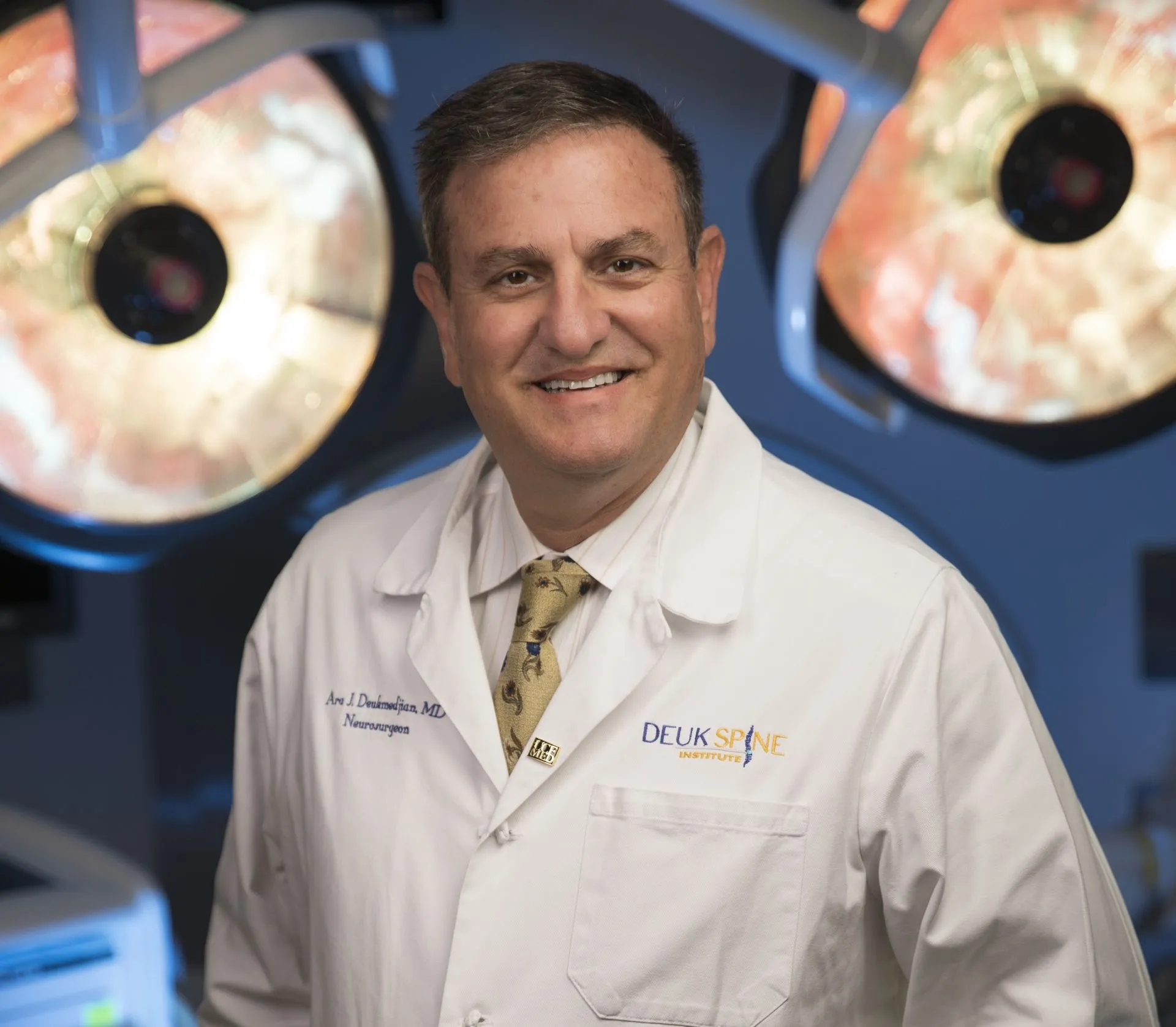
By Dr. Ara Deukmedjian, MD
Board-Certified Neurosurgeon, Deuk Spine Institute
Medically reviewed on February 5, 2026
Medical disclaimer: This content is for educational purposes only and does not constitute medical advice. Individual results may vary. Always consult with your healthcare provider about your specific condition and treatment options.
Ultra-minimally invasive endoscopic spine surgery may sound like the latest advancement in spine surgery, but it is the result of more than 50 years of steady innovation focused on patient safety, precision, and faster recovery. Modern endoscopic procedures offered at leading centers build on this long track record of refining techniques to reduce tissue damage, preserve motion, and improve outcomes for people with neck, mid‑back, and lower‑back pain.
Early Foundations in Minimally Invasive Spine Surgery
The story begins in the 1960s and 1970s, when spine surgeons first adopted magnifying loupes and operating microscopes to better see nerves, discs, and other delicate structures while working to make surgical incisions smaller.1 This early emphasis on careful visualization and tissue preservation laid the foundation for minimally invasive spine surgery and, eventually, for today’s ultra-minimally invasive endoscopic approaches.
The Birth of Percutaneous and Endoscopic Disc Surgery
By the mid‑1970s, pioneers such as Dr. Parviz Kambin in the United States and Dr. Sadahisa Hijikata in Japan demonstrated that it was possible to reach and treat damaged discs through narrow tubes inserted directly through the skin, rather than through large open cuts.2 Their percutaneous techniques, including early endoscopic lumbar discectomy and percutaneous nucleotomy,3 proved that surgeons could remove painful disc material while leaving most of the surrounding muscle and bone intact, a key step toward the motion‑preserving procedures that many patients now seek.
From Experimental Concepts to Reliable Endoscopic Techniques
In the late 1980s and beyond, the introduction of endoscopic cameras led to the definition of anatomical “safe zones,” such as Kambin’s triangle.4 And continuous improvements in optics and instruments transformed these early concepts into reliable, image‑guided procedures. Building on this foundation, later innovators including Dr. Anthony Yeung (YESS technique for the lumbar spine), Dr. Sang‑Ho Lee and Dr. Gun Choi (cervical endoscopic surgery), and Dr. Ara Deukmedjian (thoracic and multi‑level ultra-minimally invasive endoscopic spine surgery) have helped develop and apply the most advanced forms of ultra-minimally invasive endoscopic spine surgery in real‑world patient care.5,6,7,8

Dr. Anthony Yeung and the YESS Method – Founding Ultra-Minimally Invasive Lumbar Surgery
The Revolutionary “Inside-Out” Approach to Lumbar Disc Surgery
In the early 1990s, while most spine surgeons were performing traditional open discectomy or microdiscectomy for lumbar disc herniations, procedures that required relatively large incisions, muscle stripping, bone removal, and extended recovery times, Dr. Anthony T. Yeung was pioneering a radically different approach. Working from his practice in Arizona, Dr. Yeung developed what would become known as the Yeung Endoscopic Spine Surgery (YESS) technique, a transforaminal, posterolateral endoscopic method that he often described as an “inside-out” approach to treating painful lumbar disc pathology.
The fundamental innovation of the YESS technique was its ability to access and treat disc herniations through a natural anatomical corridor, Kambin’s triangle, the safe zone bounded by the exiting nerve root, the traversing nerve root, and the superior endplate of the lower vertebra, using a small working cannula and endoscope rather than traditional open exposure.9 This approach allowed Dr. Yeung to enter the disc space directly, visualize pathology from the inside, and selectively remove herniated and unstable nuclear material under direct endoscopic vision while avoiding the muscle trauma, bone removal, and nerve retraction inherent in conventional surgery.10
What set the YESS technique apart from earlier percutaneous methods was the size of the incision and Dr. Yeung’s comprehensive philosophy of identifying and treating endoscopic pain generators. Rather than simply removing visible disc herniations based on MRI findings, the YESS approach incorporated evocative discography; the use of contrast dye and sometimes methylene blue staining during the procedure to identify exactly which tissue was painful and mechanically unstable.9 This allowed for highly selective removal of only the pathological disc material, preserving as much normal disc architecture as possible and thereby reducing the risk of recurrent herniation and maintaining spinal stability.11
Developing the Tools: The 7mm Working Cannula and Multi-Channel YESS Endoscope
To make his “inside-out” selective endoscopic discectomy practical and reproducible, Dr. Yeung recognized that specialized instrumentation did not yet exist. Working closely with Richard Wolf Surgical Instrument Company, he set out to design a dedicated endoscopic system optimized specifically for transforaminal lumbar spine work.
The result was a multi-channel, fluid-integrated rigid endoscope with a working channel large enough to accommodate surgical instruments, including graspers, radiofrequency probes, and laser fibers, yet small enough to pass through a 7mm portal, dramatically smaller than the incisions required for traditional open or even “minimally invasive” microdiscectomy.12 Dr. Yeung paired this endoscope with a matching set of serial dilators and working cannulae that could be advanced through soft tissues to Kambin’s triangle without cutting or stripping muscle, creating a stable working corridor for the endoscope and instruments.10
In his detailed technical chapter “Posterolateral Selective Endoscopic Diskectomy: The YESS Technique,” Dr. Yeung describes how the working cannula and multi-channel YESS endoscope provide access from pedicle to pedicle within the lumbar spine, enabling the surgeon to remove not only contained disc herniations but also extruded and migrated fragments through the same small portal; a capability that had previously been thought to require open surgery.11 The design allowed simultaneous visualization, irrigation to maintain a clear field, and instrument manipulation, all through a single small-bore scope.
This instrumentation was refined through the mid-1990s based on Dr. Yeung’s accumulated surgical experience and feedback. By 1997, the design was “frozen” for commercial production, and the YESS endoscope system received FDA 510(k) clearance, marking the beginning of the modern era of endoscopic disc surgery.12
Collaboration with Richard Wolf and the Evolution of Endoscopic Optics
Dr. Yeung’s partnership with Richard Wolf Surgical Instrument Company extended beyond simply manufacturing his initial endoscope design. Richard Wolf, a German medical device company with deep expertise in endoscopic imaging across multiple surgical specialties, recognized the potential of Yeung’s transforaminal approach and invested in developing progressively more sophisticated spine endoscopy platforms based on the YESS concept.
As part of this ongoing collaboration, Richard Wolf engaged European orthopedic and spine surgeons, including German orthopedic surgeon Dr. Sebastian, according to historical accounts, to help refine camera technology and develop even smaller-diameter, higher-resolution optics for spine endoscopy. While detailed English-language publications specifically profiling Dr. Sebastian’s individual contributions are limited, this pattern of collaboration between innovative surgeons and medical device engineers was essential to advancing endoscopic spine technology throughout the late 1990s and early 2000s.13
The modern descendants of the original YESS endoscope, Richard Wolf’s VERTEBRIS endoscopy system and ENDOCAM Logic 4K imaging platform, incorporate decades of refinement in optics, illumination, camera sensors, and ergonomics, providing spine surgeons with ultra-high-definition visualization through working channels that are even smaller than Yeung’s original 7mm system.14 These advances trace their direct lineage back to Dr. Yeung’s pioneering work in the 1990s, demonstrating how his initial vision of selective endoscopic discectomy through a small working portal has continued to evolve and improve.
Teaching the Next Generation: DISC and International Dissemination
Dr. Yeung did not keep the YESS technique proprietary or limited to his own practice. Instead, he became a tireless educator and advocate for endoscopic spine surgery, founding the Desert Institute for Spine Care (DISC) in Arizona, which grew into one of the world’s premier centers for endoscopic lumbar surgery and a major international training site for surgeons seeking to learn these techniques.
At DISC, Dr. Yeung hosted visiting surgeons, fellows, and observers from around the world who came to learn the YESS method through hands-on training, live surgical demonstrations, and didactic courses. Among those who trained with Dr. Yeung were surgeons who would themselves become pioneers and innovators in endoscopic spine surgery, including Dr. Ara Deukmedjian, who spent extended periods at DISC learning lumbar endoscopic techniques before going on to develop his own cervical and thoracic applications, as well as European and Asian surgeons who carried the YESS philosophy back to their home countries and helped establish endoscopic spine surgery programs internationally.9
Dr. Yeung’s publications and lectures repeatedly reference the importance of proper training and the steep learning curve associated with transforaminal endoscopic discectomy. In his review article “The Yeung Percutaneous Endoscopic Lumbar Decompressive Technique (YESS™),” he emphasizes that achieving consistent good outcomes requires not only proper patient selection and technical skill but also a deep understanding of the pain generator concept; the idea that successful endoscopic surgery depends on identifying and treating the specific anatomical lesion responsible for the patient’s pain, whether that lesion is intradiscal (within the disc itself) or extradiscal (such as foraminal stenosis or a migrated fragment).15
Clinical Experience and Outcomes: Over 10,000 Procedures
Over the course of his career from 1991 until his retirement in 2019, Dr. Yeung personally performed more than 10,000 endoscopic lumbar procedures using the YESS technique and its evolutions, treating patients with a wide spectrum of painful degenerative lumbar conditions, including disc herniations, foraminal stenosis, facet cysts, annular tears, and discogenic back pain.16
In his comprehensive review “Transforaminal Endoscopic Decompression for Painful Degenerative Conditions of the Lumbar Spine: A Review of One Surgeon’s Experience with Over 10,000 Cases Since 1991,” Dr. Yeung reports that once the learning curve was mastered and proper patient selection criteria were applied, the YESS technique achieved an overall 90% good-to-excellent success rate in appropriately selected patients.16 This extraordinary case volume, representing nearly three decades of continuous clinical experience with a single surgical approach, provided an unmatched evidence base for understanding the capabilities, limitations, and long-term outcomes of endoscopic lumbar surgery.
Why Dr. Yeung Is Considered the Founder of Ultra-Minimally Invasive Endoscopic Spine Surgery for the Lumbar Spine
Several factors support characterizing Dr. Anthony Yeung as the true founder of ultra-minimally invasive endoscopic spine surgery for the lower back:
First, he developed a complete, coherent surgical system, not just a modified approach to existing techniques, but an entirely new paradigm combining novel instrumentation (the multi-channel YESS endoscope and 7mm working cannula), a standardized transforaminal access pathway (through Kambin’s triangle), a diagnostic philosophy (evocative discography and pain generator identification), and targeted treatment strategies (selective endoscopic discectomy and thermal annuloplasty).10
Second, he achieved FDA 510(k) clearance for his YESS endoscope system in 1997, making it the first commercially available, regulatory-approved platform specifically designed for transforaminal endoscopic lumbar surgery and marking the transition from experimental technique to established medical device.9,12
Third, he built an extraordinary evidence base through his personal performance of over 10,000 endoscopic lumbar procedures over 28 years, documenting techniques, outcomes, complications, and refinements in numerous peer-reviewed publications and technical chapters that became foundational texts for surgeons learning endoscopic spine surgery.15,16
Fourth, he actively disseminated the YESS technique through international teaching and training, including hundreds of surgeons at DISC and through courses worldwide, and personally mentoring many who would go on to become leaders in endoscopic spine surgery in North America, Europe, and Asia.9
Fifth, multiple independent academic reviews of endoscopic spine surgery history explicitly credit Dr. Yeung and the 1997 YESS endoscope as marking the beginning of the “modern era of endoscopic disc surgery,” recognizing his unique role in transforming percutaneous lumbar discectomy from an experimental concept into a standardized, reproducible, and widely adopted surgical technique.9,12
Drs. Sang-Ho Lee and Gun Choi — Cervical Endoscopic Surgery Pioneers
The Evolution from Open Surgery to Cervical Endoscopy
Cervical disc disease has historically been treated with open anterior cervical discectomy and fusion (ACDF), a highly effective but invasive procedure that permanently stiffens the operated spinal segment. As minimally invasive spine surgery matured in the lumbar region during the 1980s and early 1990s, forward-thinking surgeons began exploring whether similar endoscopic techniques could be adapted for the more delicate and constrained anatomy of the cervical spine. The challenge was significant: the cervical region houses the spinal cord, vertebral arteries, and critical anterior neck structures, leaving little margin for error.17
This technical challenge required centers willing to invest in new instrumentation, develop surgical protocols, and accumulate the clinical experience necessary to prove that cervical endoscopy could be both safe and effective. Wooridul Spine Hospital in South Korea emerged as one of the world’s earliest and most prolific centers to systematically translate endoscopic principles from the lumbar spine to cervical procedures.
Wooridul Spine Hospital: Institutional Leadership in Endoscopic Innovation
According to Wooridul’s documented institutional history, the hospital first established percutaneous endoscopic laser-assisted lumbar discectomy (PELD) in 1992, marking its entry into laser-assisted endoscopic spine surgery. Building on that foundation, Wooridul hosted Asia’s first world congress on endoscopic spine disc surgery in 1993, signaling the hospital’s commitment to advancing and sharing endoscopic techniques globally.18
The critical transition to cervical endoscopy came in 1994, when Wooridul established percutaneous endoscopic laser-assisted cervical discectomy (PECD), making it one of the first organized programs specifically focused on endoscopic treatment of cervical disc herniation. This was not an isolated experiment; over the following years, Wooridul developed dedicated cervical instrumentation, including what they termed the “WSH cervical endoscopy set,” specifically designed for soft cervical disc herniation. Between 1993 and 2002, Wooridul treated 1,127 patients with soft cervical disc herniations using PECD under local anesthesia, demonstrating that the technique was not only feasible but scalable to high-volume practice.19
This institutional track record, combining early adoption, high patient volumes, dedicated instrument development, and international educational congresses, positioned Wooridul as a global reference center for cervical endoscopic surgery and created the environment in which Drs. Sang-Ho Lee and Gun Choi would refine and standardize these techniques.
Dr. Sang-Ho Lee: Founding Leader and Early Pioneer
Dr. Sang-Ho Lee is the founding chairman and lead spine surgeon at Wooridul Spine Hospital in Seoul. His role in the development of endoscopic spine surgery is well documented in Wooridul’s institutional records and in independent academic reviews. A 2019 peer-reviewed article on endoscopic spine surgery in the Republic of Korea explicitly identifies “Sang-Ho Lee (SH Lee) from Wooridul Hospital in Seoul” as one of the country’s first-generation endoscopic spine surgeons and states that he is “amongst the pioneers in the field of endoscopic spine surgery (ESS).” This same review specifically highlights his contributions to cervical endoscopic surgery and credits him with developing anterior percutaneous endoscopic cervical discectomy procedures.20
Dr. Lee’s career spans nearly five decades of specialization in spine surgery. A hospital-produced profile video describes how he developed what the hospital claims was the world’s first laser spine surgery technique and notes that international patients travel to Seoul specifically to receive his minimally invasive procedures.21 Under his leadership, Wooridul not only performed large volumes of PECD but also contributed to foundational concepts in motion-segment-preserving strategies, sophisticated classification systems for disc migration patterns, and endoscopic foraminoplasty techniques that have influenced spine surgery well beyond Korea.20
Wooridul’s philosophy under Dr. Lee emphasized “causal treatment,” targeting the root pathological lesion rather than just managing symptoms, and promoting early patient mobilization with minimal tissue disruption.22 This patient-centered approach, combined with Dr. Lee’s early adoption of laser-assisted and endoscopic methods, helped establish cervical endoscopy as a credible alternative to traditional open fusion in carefully selected patients with soft disc herniations.
Dr. Gun Choi: Technical Refinement and Safety Standardization
Dr. Gun Choi, a spine surgeon at Wooridul Hospital in Pohang, represents the next generation of surgeons who took Dr. Lee’s early concepts and systematized them into well-defined, reproducible cervical endoscopic procedures. The 2019 Korean endoscopic spine surgery review explicitly names “Gun Choi (G Choi) from Wooridul Hospital in Pohang” alongside Dr. Lee as among the country’s pioneers in the field.20
Dr. Choi’s key contribution lies in technical standardization and safety refinement. In a published technical report titled “A new progression towards a safer anterior percutaneous endoscopic cervical discectomy,” Dr. Choi and colleagues describe specific modifications to the obturator and working cannula design aimed at protecting surrounding soft tissues during anterior cervical access.23 The report details fluoroscopic and anatomical landmarks designed to reduce the risk of injury to the esophagus, trachea, and neurovascular structures, and emphasizes careful patient selection; specifically, patients with soft, lateral, or paracentral herniations causing unilateral radiculopathy.
By tightening indications, standardizing the access trajectory, and introducing design improvements to reduce complication risk, Dr. Choi helped transform anterior PECD from an experimental technique into a clearly defined minimally invasive option with predictable outcomes. This work, combined with long-term clinical data showing that anterior PECD can maintain cervical alignment and achieve symptom relief comparable to ACDF while preserving motion, solidified the technique’s place in modern spine surgery.24
Clinical Outcomes and Evidence Base
The evidence supporting cervical endoscopic surgery has grown substantially since Wooridul’s early work. Technical reviews describe both anterior and posterior percutaneous endoscopic cervical approaches as effective for carefully selected patients. One study of 32 patients with foraminal disc herniation treated by posterior PECD reported 91% good clinical outcomes at approximately 30 months of follow-up, with no significant deterioration in cervical curvature or segmental angles, demonstrating preservation of sagittal alignment.25
Trial data have further validated the approach by comparing full-endoscopic posterior PECD with standard ACDF, concluding that posterior PECD is a safe and effective alternative when indications are met.26 A long-term follow-up study of anterior endoscopic cervical discectomy similarly found durable neurological improvement and low reoperation rates, while emphasizing that preservation of the anterior two-thirds of the disc and careful maintenance of cervical lordosis are critical to long-term success.27
These clinical results demonstrate that when performed by experienced surgeons in properly selected patients, typically those with soft disc herniations, unilateral radiculopathy, and adequate disc height, cervical endoscopic surgery can deliver pain relief and functional improvement comparable to ACDF while avoiding fusion, preserving motion, and reducing approach-related morbidity.
Global Dissemination and Legacy
Wooridul’s influence on cervical endoscopic surgery extends far beyond Korea. The hospital developed structured fellowship programs and minimally invasive spine surgery (MISS) courses that list PECD with the Wooridul cervical system as a core training topic.28 Surgeons from around the world have traveled to Wooridul to learn these techniques, creating a network of practitioners trained in the specific methods developed by Drs. Lee and Choi.
In recognition of their work, Dr. Lee and colleagues have received academic honors, including a “Best Poster” award for research on endoscopic cervical discectomy presented at an international conference.29 More importantly, the techniques they pioneered are now performed at specialized centers worldwide, with ongoing refinements in visualization technology, instrument design, and indications expanding the role of cervical endoscopy in modern spine surgery.
Positioning in the Evolution of Minimally Invasive Spine Surgery
From a historical perspective, Drs. Sang-Ho Lee and Gun Choi represent the critical bridge between early lumbar endoscopy and modern full-endoscopic cervical procedures. Dr. Lee’s early introduction of PECD at Wooridul in 1994, the creation of dedicated cervical endoscopic systems, and the treatment of over a thousand patients in the program’s first decade demonstrated that cervical endoscopy was not merely feasible but could be performed safely at scale.18,19 Dr. Choi’s subsequent technical refinements and safety-focused reports provided a framework for other surgeons to adopt these methods more confidently and consistently.23
Their combined contributions, institutional leadership, high-volume clinical experience, dedicated instrument development, technical standardization, outcome documentation, and international education established percutaneous endoscopic cervical discectomy as a credible, motion-preserving alternative to traditional anterior cervical fusion for appropriately selected patients with symptomatic cervical disc disease.
Dr. Ara Deukmedjian – Ultra-Minimally Invasive Innovation and Thoracic Endoscopy
From Traditional Spine Surgery to Motion Preservation
Dr. Ara Deukmedjian’s professional journey illustrates the evolution of spine surgery from conventional open procedures toward ultra-minimally invasive, motion-preserving techniques. Like most spine surgeons of his generation, Dr. Ara Deukmedjian began his career performing traditional operations, including lumbar fusions, laminectomies, microdiscectomies, and anterior cervical discectomy and fusion (ACDF). These procedures, while effective at decompressing neural elements and stabilizing the spine, require relatively large exposures, significant muscle dissection, bone removal, and, in the case of fusions, permanent elimination of motion at the treated spinal segment.30
In educational videos produced by his practice, Dr. Ara Deukmedjian describes how standard fusion procedures, such as a transforaminal lumbar interbody fusion (TLIF) at L5-S1, involve stripping paraspinal muscles from bone, removing lamina and facet joints, placing screws and rods, and inserting an interbody cage, all of which contribute to postoperative pain, prolonged recovery, and the known risk of adjacent-segment degeneration over time. Over the course of his practice, Dr. Ara Deukmedjian became increasingly dissatisfied with the collateral tissue damage inherent in these traditional approaches and began seeking alternatives that could achieve equivalent or superior pain relief with dramatically less tissue disruption.31
This philosophical shift led him to pursue advanced training in full-endoscopic, laser-assisted disc surgery, ultimately culminating in the development of his own branded technique: Deuk Laser Disc Repair® (DLDR). he also developed two other techniques, Deuk Plasma Rhizotomy® (DPR) and Deuk Piriformis Muscle Release®.
Training Under Global Endoscopic Pioneers
To make the transition from open fusion surgery to ultra-minimally invasive endoscopy, Dr. Ara Deukmedjian sought mentorship from surgeons who had pioneered these techniques in high-volume centers. He spent extended periods training in lumbar endoscopy with Dr. Anthony Yeung at the Desert Institute for Spine Care (DISC), where he learned the principles of selective endoscopic discectomy, transforaminal access, targeted fragment removal, and preservation of stabilizing spinal structures that Dr. Yeung had developed and refined over decades.
Building on this foundation, Dr. Ara Deukmedjian then worked with Drs. Sang-Ho Lee and Gun Choi. This dual apprenticeship, combining Dr. Yeung’s lumbar endoscopy expertise with Drs. Lee and Choi’s cervical techniques, exposed Dr. Ara Deukmedjian to proven methods for full-endoscopic disc surgery across the entire spine. Following these experiences, he set out to develop a standardized, reproducible protocol for lumbar, cervical, and, critically, thoracic disc pathology in a U.S. outpatient surgery center setting.
Development of Deuk Laser Disc Repair® (DLDR)
The technique that emerged from Dr. Ara Deukmedjian’s training and clinical evolution is Deuk Laser Disc Repair®, which he defines as a full-endoscopic, laser-assisted, non-fusion, motion-preserving procedure performed on an outpatient basis. In peer-reviewed literature, cervical DLDR® is described as “a novel full-endoscopic, anterior cervical, trans-discal, motion-preserving, laser-assisted, non-fusion, outpatient surgical procedure” for symptomatic cervical disc disease.32
The published cervical DLDR® protocol uses a small anterior working-channel endoscope to directly visualize the posterior vertebral endplates, annulus fibrosus, posterior longitudinal ligament, neuroforamina, and herniated disc fragments under continuous irrigation. The procedure involves selective removal of displaced nuclear fragments, endoscopic foraminoplasty to decompress the exiting nerve root, and laser-assisted debridement of abnormal tissue within the annular tear, all performed through a tubular retractor without the need for bone removal, implants, or fusion hardware.32
Importantly, the cervical DLDR® study emphasizes that all patients in the series would otherwise have been candidates for traditional ACDF but were instead treated with this motion-preserving alternative.32 This patient selection criterion is significant because it directly compares DLDR® against the established standard of care rather than treating only marginal cases.
Cervical DLDR®: Clinical Outcomes and Evidence
The clinical outcomes reported for cervical DLDR® provide the evidentiary foundation for Dr. Ara Deukmedjian’s claim that ultra-minimally invasive, motion-preserving surgery can match or exceed the results of traditional fusion. In a published study, approximately 50% of patients experienced complete resolution of their preoperative symptoms, and an impressive 95.6% achieved at least 80% symptom resolution.33
Perhaps most notably, the study reports zero intraoperative or postoperative complications in this cohort, with all procedures performed on an outpatient basis and no cases requiring spinal implants or conversion to fusion.33 Recent unpublished data reveals that patients report a 99.6% elimination of pain after DLDR®. These data support the assertion that DLDR®, when performed in appropriately selected patients with soft cervical disc herniations, can deliver robust pain relief and functional improvement comparable to ACDF while avoiding the permanence of fusion, preserving segmental motion, and enabling same-day discharge.

Extension to Thoracic Endoscopy: A Pioneering Application
While lumbar and cervical endoscopic techniques had been developed and validated by the early 2000s, the thoracic spine remained largely neglected in the endoscopic revolution. Thoracic disc herniations and painful annular tears are relatively uncommon compared to lumbar or cervical pathology, and traditional surgical approaches to the thoracic spine, such as thoracotomy or thoracoscopy, carry significant morbidity due to the need to access the spine through or around the rib cage, lungs, and great vessels.
Dr. Ara Deukmedjian positioned himself as a pioneer in the application of full-endoscopic, laser-assisted disc repair specifically to the thoracic spine. Educational materials from Deuk Spine Institute describe thoracic Deuk Laser Disc Repair® as “the first fully FDA-compliant spine surgery designed specifically to treat painful thoracic discs with inflamed posterior annular tears.”34 The procedure is performed percutaneously through a narrow tubular retractor, often under twilight anesthesia, using a Holmium:YAG laser to selectively remove herniated disc material, inflammatory tissue, scar tissue, calcifications, and bone spurs from within the annular tear and adjacent epidural space.
Practice-level descriptions emphasize that thoracic DLDR® involves no lamina removal, no facetectomy, and no hardware placement, yet allows direct endoscopic visualization of thoracic disc pathology and neural structures while the laser and micro-instruments remove the offending tissue.35 Case demonstration videos show Dr. Ara Deukmedjian performing thoracic DLDR® at levels such as T7-8 and T10-11, with patients standing and walking soon after surgery, illustrating the goal of maintaining full spinal motion while achieving rapid recovery.36
Although peer-reviewed thoracic DLDR® outcome data are more limited than the cervical series, these technical and educational resources establish Dr. Ara Deukmedjian as an early adopter and strong advocate for full-endoscopic, laser-assisted disc repair in the thoracic spine, a region where minimally invasive options have historically been scarce and where his work represents a meaningful advance in reducing surgical morbidity for patients with thoracic discogenic pain.
DLDR® Technology and Patent Portfolio
The technology underlying Deuk Laser Disc Repair® and other procedures extends beyond simply using an endoscope and laser; Dr. Ara Deukmedjian has been granted multiple patents covering specific systems and methods that support his ultra-minimally invasive approach. His patents include:
- Percutaneous surgical treatment for piriformis syndrome37
- Pain treatment using wanding of percutaneous surgical probe over sensory nerve38
- Electrocautery rhizotomy using wanding of energized electrocautery probe39
- Systems and methods for repairing spinal disc injury or treating spinal disc disease40
What Distinguishes DLDR® from Standard Endoscopic Discectomy
Conceptually, DLDR® sits within the broader family of full-endoscopic disc surgeries that use a working-channel endoscope, continuous irrigation, and mechanical instruments to access and decompress disc pathology. However, several factors distinguish DLDR® as presented in Dr. Deukmedjian’s publications and practice materials:
- Standardized, protocolized approach: The cervical DLDR® paper describes a consistent anterior endoscopic trajectory, trans-discal access, selective nuclear fragment removal, and routine laser-assisted annular debridement and foraminoplasty, all executed in an outpatient setting by a single surgeon without hardware or fusion.32 This represents a protocolized sequence of steps rather than a generic “endoscopic discectomy.”
- Emphasis on annular repair: DLDR® literature repeatedly stresses laser debridement of abnormal tissue within the annular tear to promote healing, not merely mechanical decompression, a conceptual shift from fragment removal alone to tissue repair and regeneration.33,34
- Cross-regional application: While many endoscopic systems were initially developed and validated in the lumbar spine, DLDR® is described as a unified conceptual approach that Dr. Ara Deukmedjian applies to cervical, thoracic, and lumbar discs, with particular attention to the challenging thoracic region.32,34
Searching for an Unbiased Second Opinion?
Upload your latest MRI for a free consultation and review with Dr. Ara Deukmedjian.
Why Ultra-Minimally Invasive Endoscopic Spine Surgery Remains Underutilized
Despite compelling clinical evidence, technical refinements, and documented outcomes accumulated over more than three decades of development, ultra-minimally invasive endoscopic spine surgery remains significantly underutilized in the United States compared to other countries, particularly in Asia and parts of Europe. While surgeons like Drs. Lee, Choi, and Deukmedjian have demonstrated that endoscopic techniques can deliver outcomes comparable to or better than traditional open fusion surgery, often with faster recovery, motion preservation, and fewer complications, the vast majority of American patients with disc herniations and spinal stenosis continue to receive conventional open procedures.
This discrepancy between available technology and actual clinical practice stems from a complex interplay of systemic, economic, educational, and informational barriers that have slowed the adoption of ultra-minimally invasive endoscopic spine surgery in mainstream spine care.
The United States Lags Behind in Surgical Laser Technology Adoption
The United States has historically been slower than other developed nations to integrate laser-assisted surgical techniques into standard medical practice, and spine surgery is no exception. While laser spine surgery has been performed at high-volume centers in South Korea, Japan, Germany, and other countries since the 1990s, American spine surgeons have largely continued to rely on traditional mechanical instrumentation, open exposures, and fusion-based approaches.
This technological lag is not due to a lack of access to laser systems or endoscopic equipment; these technologies are readily available and FDA-approved. Rather, it reflects deeper structural issues in how new surgical techniques are evaluated, reimbursed, taught, and integrated into clinical practice within the U.S. healthcare system. The result is that many American patients remain unaware that motion-preserving, outpatient, laser-assisted endoscopic alternatives to traditional fusion surgery even exist.
Insurance Coverage Barriers Create a Catch-22
Perhaps the single greatest obstacle to widespread adoption is inadequate insurance reimbursement. While traditional open spine surgeries, including lumbar fusion, laminectomy, and anterior cervical discectomy and fusion, are universally covered by Medicare, Medicaid, and private insurance plans, endoscopic spine procedures are frequently denied coverage or classified as “experimental” or “not medically necessary.”
This creates a profound catch-22: insurance companies often refuse to cover these techniques because they claim insufficient evidence of superiority over traditional methods, yet the reason such evidence remains limited in U.S. populations is precisely that insurance denial prevents most patients from accessing these procedures, thereby limiting the accumulation of large-scale American outcome datasets.
For patients, this coverage gap means that even when they learn about ultra-minimally invasive endoscopic spine surgery and find a qualified surgeon, they must choose between paying tens of thousands of dollars out-of-pocket for an endoscopic procedure or accepting a fully-covered traditional fusion surgery, even if the fusion involves greater tissue trauma, longer recovery, permanent motion loss, higher long-term risks such as adjacent segment degeneration, and higher costs over the long-term. Given this financial reality, most patients understandably choose the covered option, regardless of the potential clinical and financial advantages of endoscopy.
This reimbursement barrier also discourages surgeons from investing the substantial time and resources required to master minimally invasive techniques, since performing procedures that insurance won’t cover makes it difficult to build a sustainable practice.

Traditional Spine Surgery Is an Established Business Model
The economic infrastructure of American spine surgery has been built around traditional open procedures and fusion surgeries over many decades. Hospitals, device manufacturers, surgical instrumentation companies, and surgeons themselves have developed deeply entrenched business models centered on operations that require significant hardware implants, extended operating room time, overnight or multi-day hospital stays, and extensive postoperative rehabilitation.
Spinal fusion surgery, in particular, represents a multi-billion-dollar industry. Each fusion case involves the sale of pedicle screws, rods, cages, bone graft materials, and biologics, components that generate substantial revenue for medical device companies and hospitals. Economic incentives favor procedures that use these high-cost implants rather than motion-preserving techniques that require minimal instrumentation.
By contrast, ultra-minimally invasive procedures are typically performed on an outpatient basis, with minimal or no implants, shorter operating times, and rapid patient recovery; all of which reduce hospital revenue, device sales, and the overall cost (and thus reimbursement) associated with the episode of care. While this is beneficial for patients and healthcare systems concerned with value-based care, it disrupts existing financial arrangements and revenue streams that have supported spine surgery departments, device manufacturers, and ancillary services for decades.
This creates institutional resistance to change: teaching hospitals and private practices that have invested heavily in fusion-based spine programs, surgical infrastructure, and device relationships have limited financial incentive to champion techniques that would reduce their procedural revenue and hardware sales.
Ultra-Minimally Invasive Is Not Widely Taught in Residency and Fellowship Programs
Medical education in the United States follows established curricula that are slow to incorporate emerging techniques, particularly when those techniques are not yet considered standard of care. The overwhelming majority of neurosurgery and orthopedic spine surgery residency programs teach traditional open spine surgery approaches, laminectomy, discectomy, and fusion techniques, as the foundational methods for treating disc herniations, stenosis, and degenerative disc disease.
Full-endoscopic spine surgery, particularly with laser-assisted techniques, is rarely included in standard residency training. As a result, most newly graduated spine surgeons in the U.S. have limited or no exposure to these techniques during their formal training. Without this foundational knowledge, surgeons must seek out specialized post-residency fellowships or hands-on courses at centers like Wooridul or with surgeons like Dr. Ara Deukmedjian to learn endoscopic techniques, an investment of time and money that many are unwilling or unable to make, particularly when insurance coverage for these procedures remains uncertain.
Furthermore, the hierarchical nature of surgical training means that attending surgeons teach the techniques they themselves learned and practice. If senior faculty at teaching hospitals were trained exclusively in open fusion methods, they would naturally pass those methods on to residents and fellows, perpetuating a cycle in which ultra-minimally invasive techniques remain outside the mainstream surgical education pipeline.
The absence of these methods from standard training programs also means there is limited peer-reviewed American literature, limited conference presentations at major U.S. spine surgery meetings, and limited integration into clinical practice guidelines; all of which further marginalize these techniques in the eyes of the broader surgical community.
This has resulted in a very small cohort of U.S.-based spine surgeons who offer ultra-minimally invasive procedures, often in cash-pay or concierge practice models, while the vast majority of spine surgeons continue to perform traditional open procedures that fit within established reimbursement and training frameworks.
The Confusing Messaging Environment Around Spine Treatments
Patients seeking information about spine surgery options face a chaotic, often contradictory environment of messaging. On one end of the spectrum, aggressive marketing by some spine surgery centers, including claims of “miracle cures,” “FDA-approved laser surgery,” or “non-surgical solutions,” creates skepticism and confusion. These marketing claims, which often overstate benefits or downplay risks, make it difficult for patients to distinguish legitimate, evidence-based UMIESS procedures from unproven or exaggerated offerings.
On the other end of the spectrum, mainstream spine surgery practices and academic medical centers often provide conservative, traditional information focused primarily on established procedures like fusion and laminectomy, with little or no mention of endoscopic alternatives. This creates an information vacuum in which patients are unaware that motion-preserving, outpatient endoscopic options even exist.
Professional spine surgeons who do offer ultra-minimally invasive procdures must navigate this challenging environment carefully: if they describe the benefits of endoscopy too enthusiastically, they risk being perceived as engaging in the same kind of hype that surrounds less credible “laser spine surgery” marketing; if they are too cautious, patients may not understand the real advantages these techniques can offer over traditional fusion.
This confusion extends to referring physicians as well. Primary care doctors, pain management specialists, and neurologists who refer patients for spine surgery often have limited knowledge of these techniques and may default to recommending traditional spine surgeons they know and trust, even if those surgeons do not offer endoscopic options.
The result is a fragmented, confusing educational landscape in which truthful, evidence-based information about ultra-minimally invasive endoscopic spine surgery is drowned out by either overhype or silence, leaving both patients and professionals uncertain about when and for whom these techniques are appropriate.

The Path Forward: Overcoming Barriers to Adoption
Addressing the underutilization of ultra-minimally invasive techniques in the United States will require coordinated efforts across multiple stakeholders:
- Insurance reform: Payers must reevaluate coverage policies for endoscopic spine procedures, particularly in light of growing international studies and U.S. case series demonstrating outcomes comparable to or superior to fusion, with lower complication rates and faster recovery.
- Education and training: Residency and fellowship programs should integrate ultra-minimally invasive techniques into standard spine surgery curricula, ensuring that the next generation of surgeons is exposed to both traditional and endoscopic approaches.
- Outcome registries and research: Building robust, long-term outcome databases for ultra-minimally invasive procedures performed in U.S. populations will provide the evidence base necessary to support broader insurance coverage and clinical acceptance.
- Patient education: Clear, evidence-based information about the benefits, risks, and appropriate indications for these techniques must be made widely available to patients and referring physicians, cutting through the confusion created by both aggressive marketing and institutional silence.
- Advocacy: Professional societies, patient advocacy groups, and pioneering surgeons must work together to advocate for policy changes that recognize the value of motion-preserving, ultra-minimally invasive spine surgery as a legitimate first-line option for appropriately selected patients.
Until these systemic barriers are addressed, ultra-minimally invasive techniques will likely remain a niche offering in the United States, available primarily to patients who can afford to pay out-of-pocket or who are willing to travel internationally for care, despite the existence of proven techniques that could spare many patients the trauma, recovery time, and long-term complications associated with traditional fusion surgery.
Frequently Asked Questions
Can endoscopic spine surgery treat sciatic nerve pain?
Yes, endoscopic spine surgery can effectively treat sciatic nerve pain (sciatica) caused by lumbar disc herniation. Percutaneous endoscopic lumbar discectomy (PELD) was specifically developed to address nerve compression causing sciatica. The procedure uses a small working-channel endoscope to directly visualize and remove herniated disc material compressing the nerve root, achieving pain relief comparable to traditional open surgery with smaller incisions, less postoperative pain, and faster recovery.
How does ultra-minimally invasive endoscopic spine surgery address spinal stenosis?
UMIESS offers a less invasive alternative for carefully selected patients with spinal stenosis. Endoscopic decompression techniques allow surgeons to access stenotic areas through small tubular retractors, using endoscopic visualization to remove bone spurs, thickened ligamentum flavum, and herniated disc material compressing nerves while minimizing disruption to muscles, facet joints, and stabilizing structures. The technique is most effective for foraminal or lateral recess stenosis causing radicular pain.
Is endoscopic surgery effective for L4-L5 disc herniation?
Yes, endoscopic spine surgery is highly effective for L4-L5 disc herniation, one of the most common applications of UMIESS. Percutaneous endoscopic lumbar discectomy (PELD) has been extensively studied for L4-L5 herniations, showing equivalent pain relief and functional improvement to traditional open microdiscectomy with advantages including smaller incisions (7-8mm), less muscle damage, faster recovery, lower risk of epidural scarring, and preservation of posterior spinal structures.
What are the benefits of endoscopic surgery for cervical spine conditions?
Endoscopic surgery for cervical spine conditions offers several key benefits: motion preservation (avoiding fusion), smaller incisions (less than 1cm), less tissue trauma, outpatient procedure with rapid recovery, avoidance of hardware complications, and lower risk profile. Clinical studies show 96% of patients achieve at least 80% symptom resolution with outcomes comparable to traditional ACDF but without permanent fusion.
Is minimally invasive surgery appropriate for a C5-C6 disc bulge?
Minimally invasive endoscopic surgery can be highly appropriate for symptomatic C5-C6 disc bulge when conservative treatment has failed, the patient has clear radicular symptoms correlating with C6 nerve compression, the bulge consists of soft disc material, disc height is preserved, there is no spinal cord compression (myelopathy), and no significant instability exists. Both anterior and posterior endoscopic approaches can treat C5-C6 pathology on an outpatient basis while preserving motion.