
Choosing an endoscopic spine surgeon comes down to four things. Fellowship training in the specific endoscopic technique your condition requires, a meaningful annual case volume in that exact procedure, outcomes data you can actually verify, and a diagnostic process that correlates your MRI with a physical exam rather than reading the scan alone. A patient who confirms these four before booking avoids the two most common mistakes: choosing on convenience, and choosing a surgeon who is trained mainly in open or fusion surgery but markets endoscopic language loosely.
Here is the part most patients miss. Endoscopic is not a licensed specialty or a protected credential, so the word on a website or a business card confirms nothing on its own. There is also a harder question sitting underneath the surgeon question: whether you are even a candidate for endoscopic treatment given your specific pathology, and whether the surgeon you are vetting has a diagnostic process rigorous enough to answer that honestly.
That second question is worth answering before you spend time on consults or travel. A free MRI review is one way to test a surgeon’s diagnostic process without committing to anything. Dr. Ara Deukmedjian, MD, FAANS, a board certified neurosurgeon at Deuk Spine Institute, built the Deuk Spine Exam® around exactly this correlation problem, combining MRI review with a physical exam and pain history to reach 99% diagnostic accuracy in identifying which structure is actually causing your pain. The vetting questions below apply whether or not you ever call this practice.
No cost · No obligation
Live Pain Free
Upload your MRI for a free expert review by Dr. Ara Deukmedjian, M.D. — board-certified neurosurgeon. Ten minutes can change your life.
What Makes a Spine Surgeon Qualified to Perform Endoscopic Surgery
A qualified endoscopic spine surgeon has completed a spine fellowship with specific, hands on training in endoscopic technique, not just general minimally invasive exposure. Board certification alone does not confirm this.
Board certification through the American Board of Neurological Surgery or the American Board of Orthopaedic Surgery confirms a surgeon completed residency training in spine and nervous system disorders. It does not, by itself, confirm endoscopic skill.
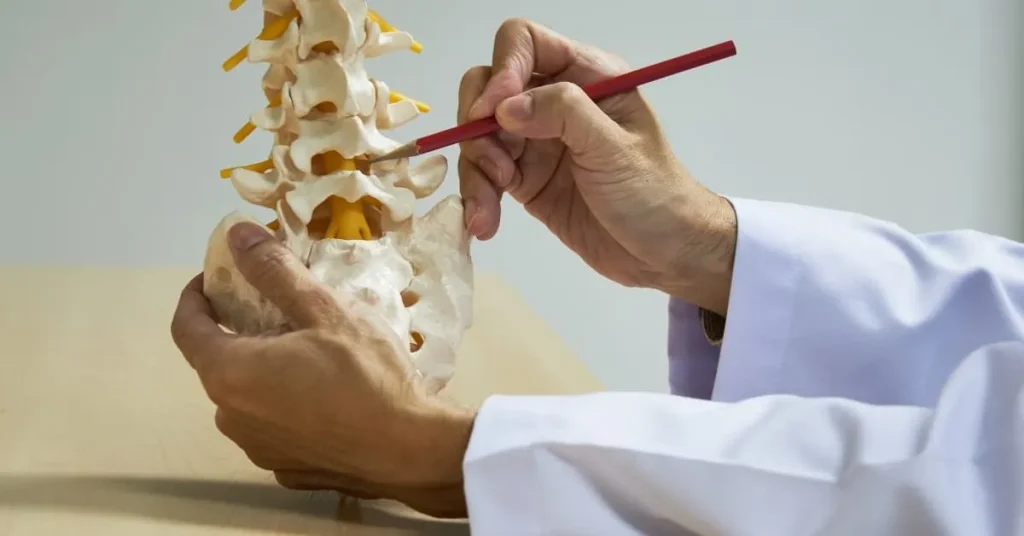
Endoscopic technique is a distinct set of hands, working through a 4mm to 7mm portal with camera visualization instead of direct sight, in a confined space, with different instruments than open surgery uses. Most residencies do not teach it in depth. A surgeon typically picks it up through a dedicated fellowship, cadaver courses, or an extended mentorship under a surgeon who already does high volumes of it.
Ask directly where the surgeon trained in endoscopic technique specifically, not spine surgery generally. A vague answer here is itself useful information.
What Is the Difference Between a General Spine Surgeon and an Endoscopic Specialist
A general spine surgeon can perform some endoscopic cases but may default to open or fusion techniques for anything complex. An endoscopic specialist has built a practice specifically around the technique and can explain, in detail, which pathologies it treats well and which it does not.
This distinction matters because the two surgeons will often give you different recommendations for the same MRI. A general surgeon who is comfortable with fusion may recommend fusion. A surgeon who trained specifically in endoscopic and motion preserving technique may see the same disc and recommend treating the torn tissue directly instead.
Neither recommendation is automatically wrong. But you want to know which lens you are getting a recommendation through before you agree to anything.
Ways to tell the difference in a first conversation:
- Case description. An endoscopic specialist describes exactly what the scope sees and treats. A generalist describes the procedure in broader strokes.
- Candidacy language. A specialist tells you plainly when you are not a good candidate for endoscopic treatment. A generalist may not raise the option at all.
- Practice focus. Ask what percentage of the surgeon’s caseload is endoscopic versus open or fusion. A low percentage suggests it is a side offering, not a specialty.

How Many Endoscopic Procedures Should Your Surgeon Have Performed Each Year
There is no single universal number, but a surgeon performing only a handful of endoscopic cases a year is unlikely to have refined the skill the way a high volume specialist has. Ask for the surgeon’s annual case count in the specific procedure you need, not a lifetime total across all techniques.
A lifetime total sounds impressive but can hide a low recent volume, especially if a surgeon shifted toward endoscopic technique only recently or performs it occasionally alongside a mostly open practice.
At Deuk Spine Institute, Dr. Deukmedjian has performed over 2,700 Deuk Laser Disc Repair® procedures across 30+ years, with a documented 0.01% complication rate. That combination, high volume sustained over decades, is what separates a refined skill set from an occasional offering.
How Do You Verify a Surgeon’s Outcomes and Complication Rate
You verify a surgeon’s outcomes by asking for published, peer reviewed data rather than accepting a verbal claim, and by checking whether the numbers are attributed to a specific study or simply stated as fact. A surgeon with real published outcomes will usually cite them without hesitation.
Any surgeon can say their complication rate is low. Few can point you to a published abstract or journal article that reports it. That gap is worth noticing.
When comparing outcomes claims, ask for:
- The source. Is this figure from a published, peer reviewed abstract or article, or is it an internal estimate.
- The scope. Does the stated success rate apply to all patients treated, or only to patients whose diagnosed pain source matched the treated pathology.
- The timeframe. Is this a recent figure, or does it reflect outcomes from years or decades ago before the surgeon’s technique matured.
A surgeon who welcomes these questions and has a specific, sourced answer is showing you exactly the kind of transparency this decision deserves.
Why Diagnosis Matters as Much as Surgical Technique
The most skilled endoscopic surgeon cannot help you if the diagnosis is wrong. A surgeon’s diagnostic process, not just their technical skill, determines whether surgery actually resolves your pain.
MRI imaging alone cannot diagnose the source of your pain. It has to be correlated with a physical exam and your specific pain history, because imaging findings and symptoms do not always line up cleanly.
Research by Jensen et al. in the New England Journal of Medicine (1994) found that a large share of people with no back pain at all show disc abnormalities on MRI. That means an MRI report listing a bulge or a herniation does not, on its own, prove that finding is the source of your pain. A surgeon who treats whatever the MRI report lists, without correlating it against your actual symptoms and a hands on exam, risks operating on the wrong level or the wrong structure entirely.
Ask any surgeon you are vetting how they confirm that a specific imaging finding is actually causing your specific pain, rather than simply being present on the scan.
What Questions Should You Ask an Endoscopic Spine Surgeon Before You Book
Ask direct questions about training, volume, outcomes, and diagnosis before you schedule anything, and pay attention to how specifically the surgeon answers.
Bring this list to a consult or a phone screening:
- Where did you complete fellowship training specifically in endoscopic spine technique?
- How many endoscopic procedures of my specific type do you perform annually?
- What is your complication rate, and is it published anywhere?
- How do you confirm my MRI finding is actually the source of my pain?
- What happens if I am not a good candidate for an endoscopic approach?
- Can I speak with a patient who had a similar procedure?
- What does recovery actually look like week by week, not just on day one?
A surgeon who answers all seven specifically and without defensiveness has given you real information. A surgeon who deflects two or three of them has also given you real information.
What Should Make You Pause Before Choosing a Surgeon
Certain responses are worth treating as warning signs rather than minor friction. A surgeon who discourages a second opinion, who cannot describe their own training in specific terms, or who moves straight to scheduling surgery without a thorough exam is showing you something important.
Pause if a surgeon:
- Dismisses questions about training or volume without giving a specific answer.
- Cannot explain how they confirmed your MRI finding matches your symptoms.
- Pushes back on a second opinion or frames it as unnecessary or disloyal.
- Recommends surgery before conservative treatment has had a real chance to work, absent an urgent finding like progressive weakness.
None of these signs alone proves a surgeon is wrong for you. Together, they are worth taking seriously.

Should You Get a Second Opinion Before Committing to Any Procedure
Yes. A second opinion costs you little beyond the time to send your imaging, and it gives you a second, independent read on both the diagnosis and the recommended treatment.
This matters most when a surgeon recommends something invasive, like a fusion, without walking you through motion preserving alternatives first. A second surgeon reviewing the same MRI may reach a different, better supported conclusion, especially if their diagnostic process weighs the exam and pain history as heavily as the imaging.
Getting a second opinion is not an insult to the first surgeon. It is a normal, expected step before a decision that affects your spine for years.
Bottom Line
Vetting an endoscopic spine surgeon means checking specific fellowship training, real annual case volume in your exact procedure, verifiable published outcomes, and a diagnostic process that goes beyond the MRI report. A surgeon who answers those four areas specifically and transparently has earned a closer look. One who cannot, or who resists a second opinion, has given you a reason to keep looking.

Diagnosis. Answers. Relief.
Submit your MRI for a free expert review by Dr. Ara Deukmedjian, M.D. —
board-certified neurosurgeon. No obligation. Real answers.
Frequently Asked Questions
Is endoscopic spine surgery a recognized medical specialty?
Endoscopic spine surgery is not a separately licensed specialty or a protected credential. It is a technique that spine surgeons pick up through fellowship training, courses, and mentorship on top of their board certification in neurosurgery or orthopaedic surgery.
How do I know if a surgeon has enough endoscopic experience?
You know a surgeon has enough endoscopic experience by asking for their annual case count in your specific procedure and how that volume has been sustained over time, not just a lifetime total across all techniques.
Can any spine surgeon perform endoscopic procedures?
Not every spine surgeon can perform endoscopic procedures well, since the technique requires specific training beyond general residency education. A surgeon who occasionally uses a scope is not the same as one whose practice is built around the technique.
What if my MRI shows a herniated disc but I’m not sure surgery is needed?
If your MRI shows a herniated disc but you’re not sure surgery is needed, that uncertainty is exactly why a correlated exam matters, since imaging findings alone do not confirm that a specific disc is your actual pain source.
Is it rude to ask a surgeon about their complication rate?
It is not rude to ask a surgeon about their complication rate. A confident, experienced surgeon expects the question and typically answers it specifically, often with a published figure to point to.
Should I get a second opinion if I’ve already been told I need surgery?
You should get a second opinion even if you’ve already been told you need surgery, particularly when the recommendation is for a more invasive procedure like fusion, since a second read on your imaging and exam can confirm or change that plan.