Procedure Not Recommended
Temporary Relief That Misses the Mark
⚠️ While Deuk Spine Institute can perform Facet Joint Injections, we do not recommend them.
This page explains why — learn the risks before consenting to this procedure.
UNDERSTANDING THE PROCEDURE
While there are legitimate medical indications, financial incentives often drive how frequently these injections are administered.
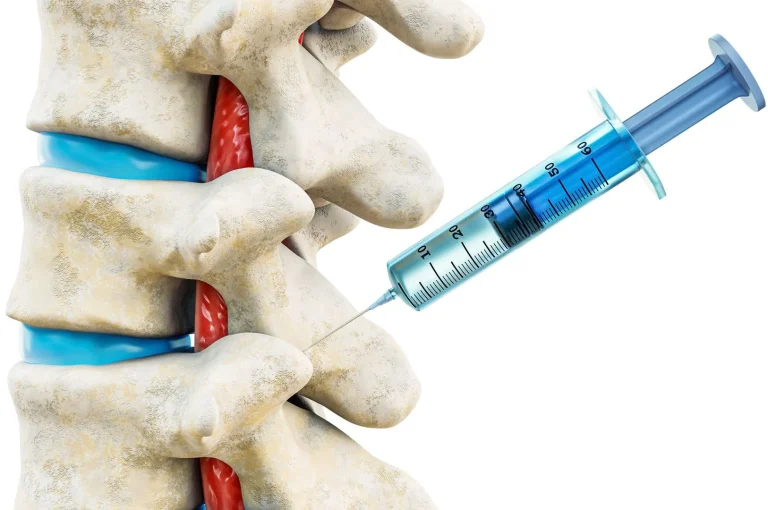
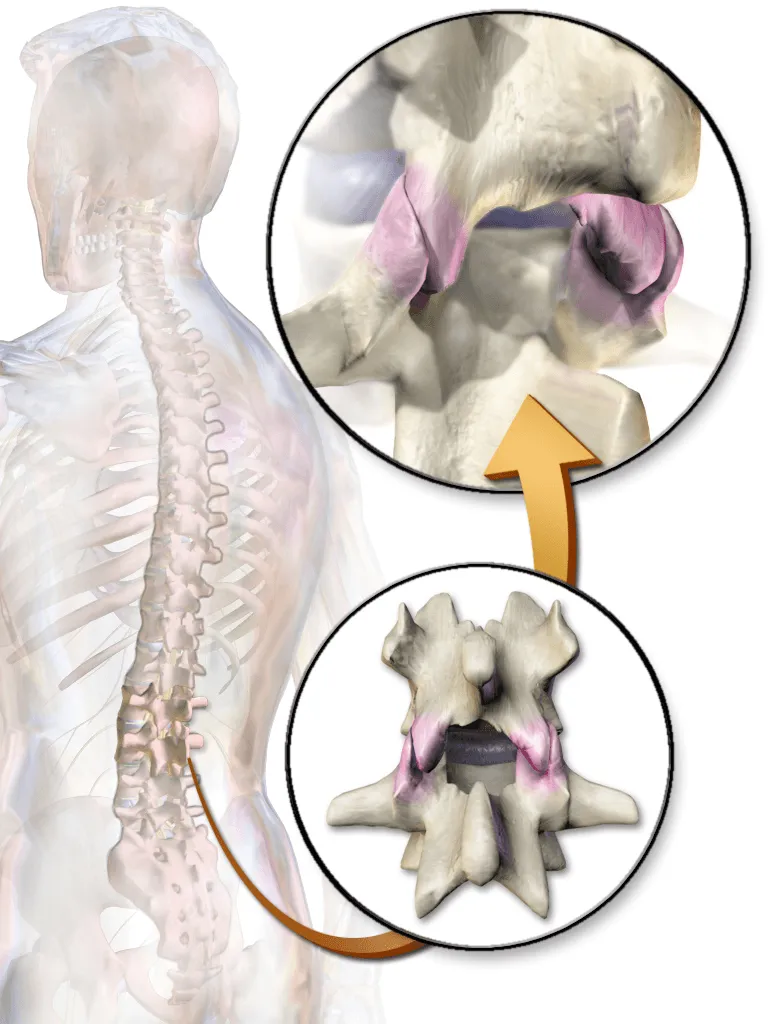
Facet joints are small stabilizing joints located at each segment of the spine. When these joints degenerate due to aging, arthritis, or injury, the cartilage wears down and the surrounding capsule becomes inflamed. This condition — facet joint syndrome — causes localized back or neck pain that worsens with twisting and bending. Injections aim to deliver anti-inflammatory medication directly into the affected joint to reduce swelling and pain.
Facet joint pain can radiate into the shoulders, upper back, buttocks, or thighs depending on which spinal level is affected. Pain typically increases with prolonged standing, arching the back, or rotating the spine. The injection is intended to numb the pain-transmitting nerves around the facet joint and reduce inflammation, but the underlying degeneration remains completely untreated. The pain-generating nerves continue to fire once the medication wears off.

Facet joint injections take only minutes to perform, allowing physicians to schedule a high volume of patients per day. The combination of low overhead and fast turnaround creates a highly profitable revenue stream.
Because relief is always temporary, patients are scheduled to return every 3–6 months indefinitely. This creates a recurring revenue pipeline that can generate tens of thousands of dollars per patient over time without ever addressing the root cause.
Facet joint injections are frequently used as “diagnostic” procedures — if the injection temporarily reduces pain, it is used to confirm the facet joint as the source. This diagnosis then justifies further expensive treatments like radiofrequency ablation or additional injection series.
Surgeons routinely inject multiple facet joints in a single visit, with each joint billed as a separate procedure. A single appointment treating 4–6 joints can generate thousands in reimbursement, incentivizing treatment of joints that may not even be symptomatic.
THE PROCEDURE
The videos below contain real procedural footage. Viewer discretion is advised.
Painful joints can be treated with anti-inflammatory or numbing medication injections. The physician identifies which facet joints are causing pain through physical examination and imaging.
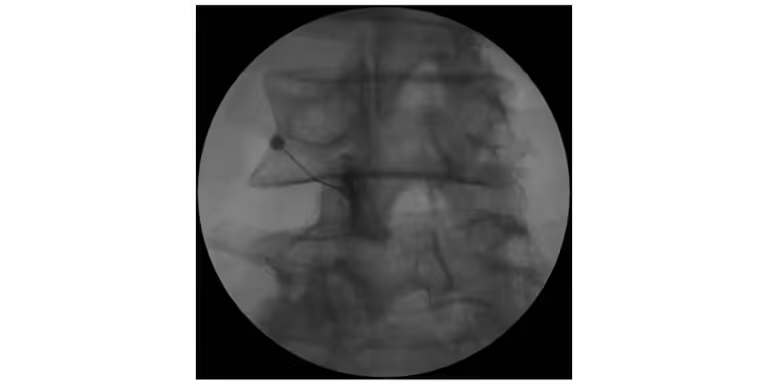
Medical image guidance (fluoroscopy/X-ray) is used to visualize the spine and guide the needle to the correct location near the facet joint.
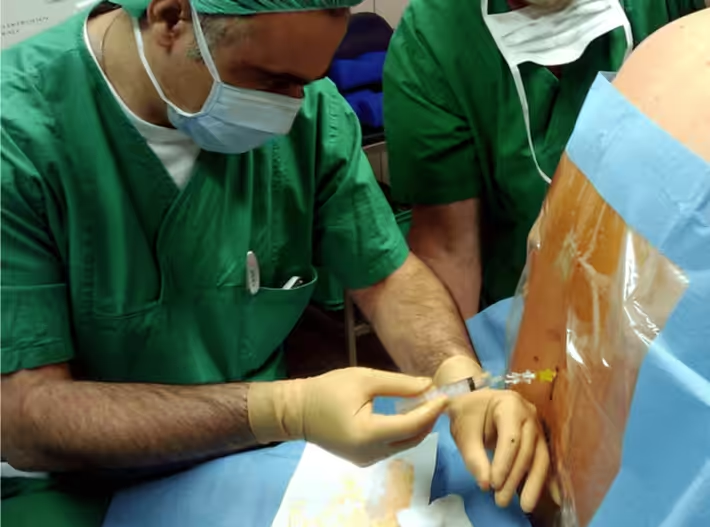
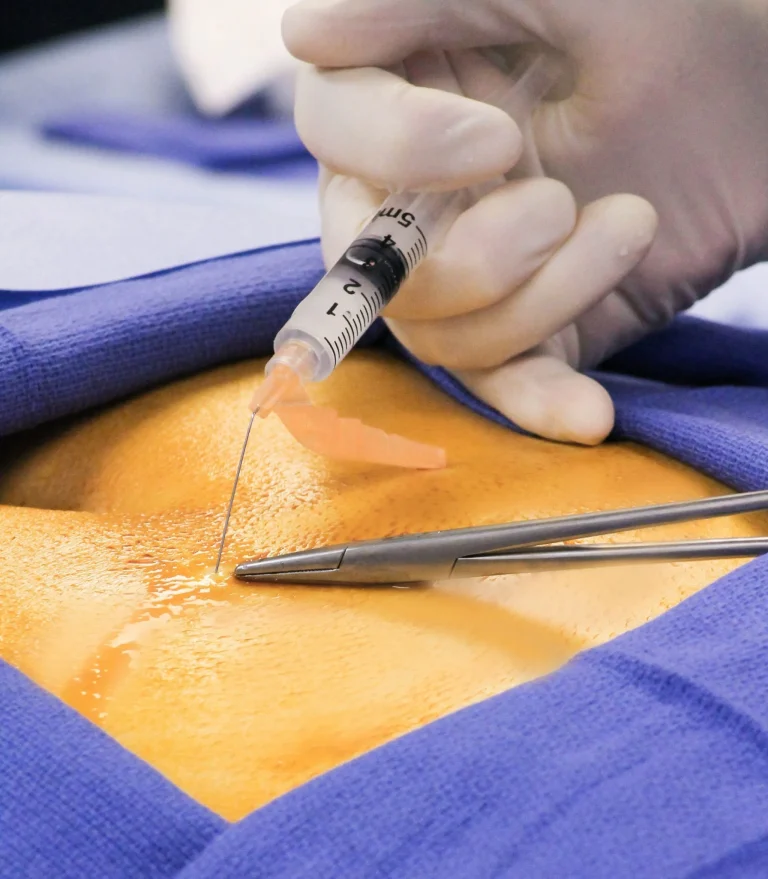
A needle is placed through the skin and directed toward the targeted facet joint using real-time imaging guidance.
The needle is advanced until it reaches the facet joint capsule. Contrast dye may be injected to confirm proper needle placement within the joint space.
Medication is injected into the facet joint. This can include steroid, lidocaine, platelet rich plasma (PRP), or stem cells depending on the physician’s approach.
CRITICAL RISKS
4 documented reasons why this procedure fails to deliver lasting results.
Images below contain medical imagery. Viewer discretion is advised.
Clinical studies consistently show that the majority of facet joint injections either provide no meaningful relief or deliver only a brief reduction in pain lasting days to weeks. The underlying joint degeneration, cartilage loss, and nerve irritation remain completely unaddressed.
Even when a facet joint injection does provide relief, the effect is inherently temporary. Steroids suppress inflammation for a limited time, and anesthetics like lidocaine wear off within hours. Patients are locked into a cycle of repeated injections every 3–6 months.
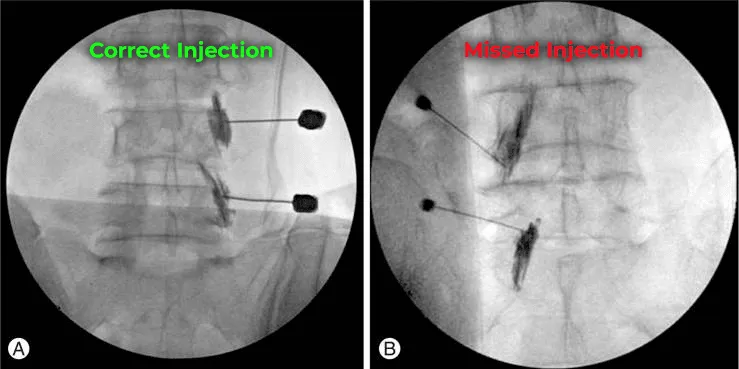
Research has demonstrated that a significant percentage of facet joint injections fail to place medication accurately within the joint capsule, even when fluoroscopic (X-ray) guidance is used. The medication disperses into surrounding tissue with no therapeutic benefit.
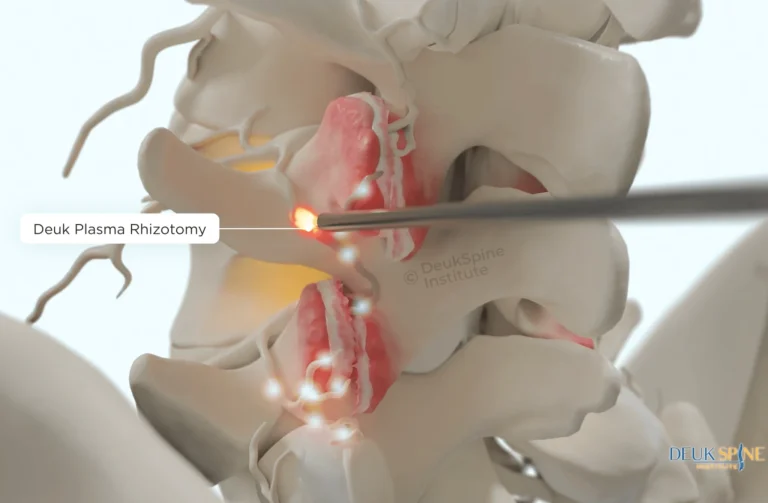
Deuk Plasma Rhizotomy® uses advanced plasma technology to precisely address the pain-transmitting nerves of the facet joint, providing long-term relief without the need for repeated injections. Instead of temporarily masking pain with steroids, plasma rhizotomy eliminates the pain signal at its source.
DOCUMENTED COMPLICATIONS
Images below contain real medical imagery. Viewer discretion is advised.
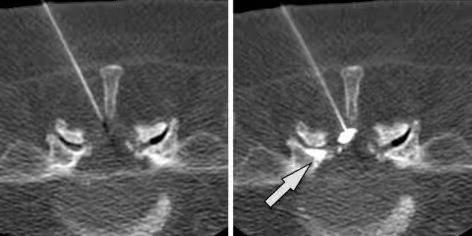
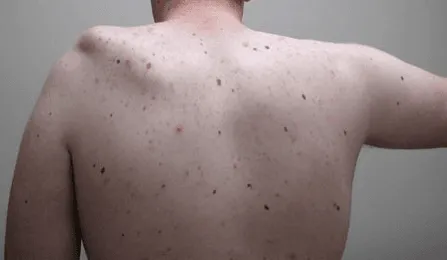
The injection needle can damage nearby nerve roots, causing radiating pain, numbness, or weakness in the arms or legs depending on the spinal level treated.
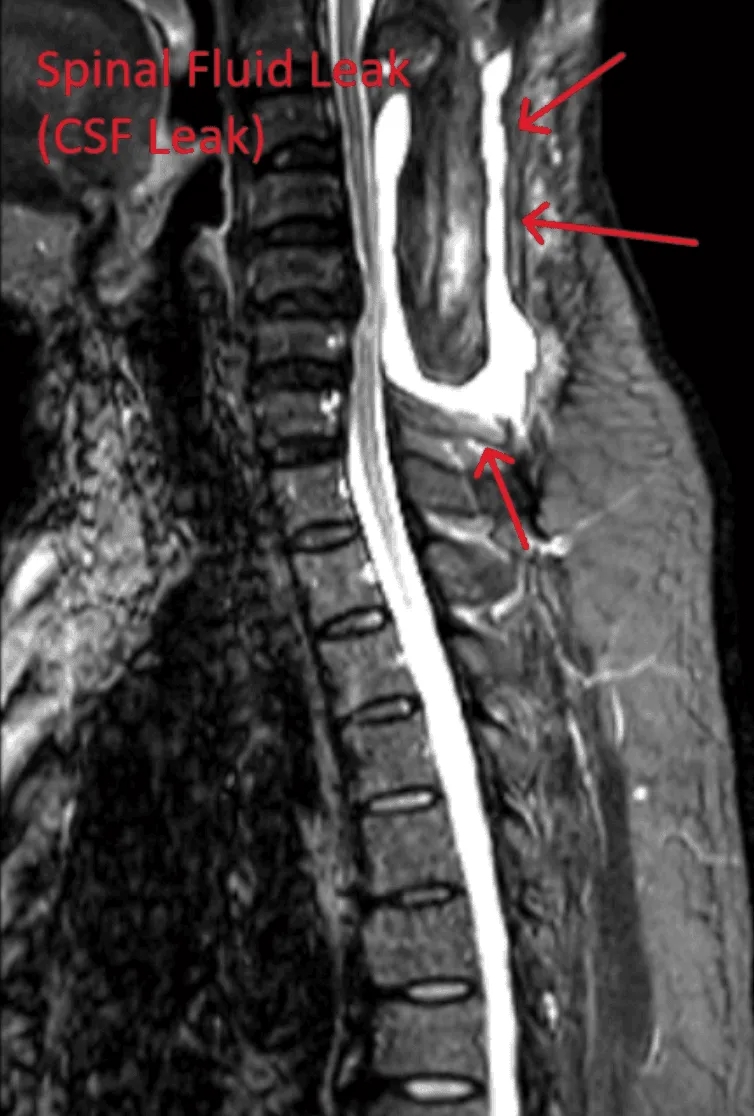
Accidental puncture of the dural membrane can cause cerebrospinal fluid leaks, leading to severe positional headaches and potential need for additional procedures.
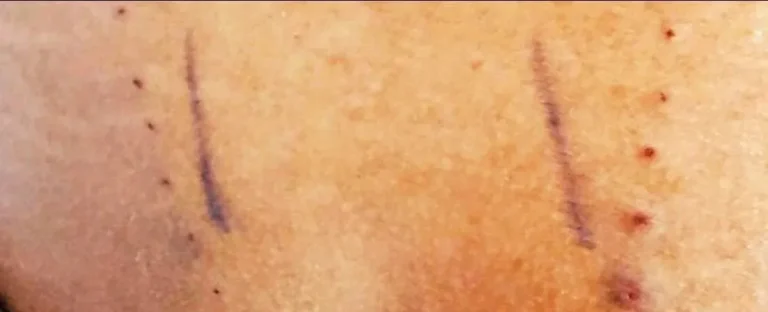
Repeated needle insertion into the facet joint can cause direct mechanical injury, accelerating cartilage breakdown and worsening the very condition being treated.
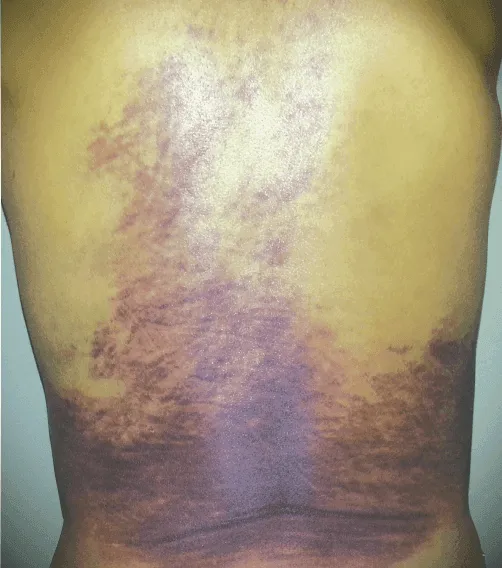
The injection site is close to highly vascularized spinal structures. Bleeding can occur at the injection site or deeper within the spinal canal, causing hematomas and increased pain.
Some patients experience a paradoxical increase in pain following the injection, either from needle irritation, steroid flare reactions, or further aggravation of the inflamed joint.
WHAT WE RECOMMEND INSTEAD
Instead of temporarily masking facet joint pain with repeated injections, Deuk Plasma Rhizotomy® uses advanced plasma technology to precisely target and eliminate the pain-transmitting nerves — providing long-term relief without steroids, needles, or repeat visits.
Rather than temporarily numbing inflammation, plasma rhizotomy addresses the facet nerve completely — eliminating the pain signal at its source for lasting relief.
Advanced plasma technology targets pain-transmitting nerves with precision, unlike a needle injection that frequently misses its target joint entirely.
Patients experience years of pain relief instead of weeks. By eliminating the nerve signal, the procedure delivers results that injections can never match.
Break free from the cycle of injections every 3–6 months. One plasma rhizotomy procedure replaces years of repeated needle visits and steroid exposure.
Feature
Facet Joint Injection
Deuk Plasma Rhizotomy®
Approach
❌ Injects medication near joint
✅ Plasma ablation of pain-transmitting nerves
Duration of Relief
❌ Hours to weeks
✅ Long-term (years)
Accuracy
❌ Many injections miss the joint
✅ Image-guided precision targeting
Repeat Treatments
❌ Every 3–6 months indefinitely
✅ Rarely needed
What Can Be Injected
❌ Steroid, lidocaine, PRP, stem cells
✅ N/A — no injections needed
Treats Root Cause
❌ No — temporarily masks inflammation
✅ Yes — eliminates pain signal
Procedure Time
❌ 15–30 minutes
✅ Similar — outpatient
Complication Rate
❌ Nerve damage, joint injury, bleeding
✅ Minimal complications
Success Rate
❌ Variable — often ineffective
✅ High success rate
Long-term Outcome
❌ Indefinite injections or escalation to surgery
✅ Lasting pain relief
A BETTER ALTERNATIVE
No injections. No steroids. Proven plasma technology. Break free from the cycle of temporary injections and treat your facet joint pain at its source with lasting results.
Pain Relief (Years)
Plasma Technology
Outpatient Procedure