
Your back pain has sent you to three different doctors. The orthopedic surgeon recommended fusion. The pain management doctor offered injections. Your primary care physician suggested physical therapy. Three board-certified physicians. Three completely different diagnoses. Same MRI.
I know this frustration because after 20 years performing spine surgery exclusively, I’ve examined thousands of patients who received incorrect diagnoses from qualified physicians who simply weren’t trained to identify the specific pain generators causing chronic back pain. The truth is that most doctors – including many board-certified surgeons – cannot accurately diagnose the actual source of back pain.
Here’s what most patients don’t understand: not all board-certified spine surgeons have the same training, procedure volume, or diagnostic capabilities. The difference between a general surgeon who occasionally performs back surgery and a fellowship-trained neurosurgeon who specializes exclusively in spine surgery isn’t just significant – it determines whether you get an accurate diagnosis or continue years of failed treatments.
The Critical Training Gap Between Neurosurgery and Orthopedic Surgery
When you search for a board-certified spine surgeon, you’re making one assumption: that board-certification means specialized expertise in spine surgery. That assumption costs patients years of ineffective treatment.
Board certification in orthopedic surgery or neurosurgery confirms a physician has completed residency training and passed rigorous examinations. It’s an important credential. But board certification alone doesn’t indicate specialized spine expertise, high procedure volumes, or advanced training in identifying specific pain generators like annular tears.
Orthopedic Surgery Training and Spine Exposure
Orthopedic surgeons complete five years of residency training, rotating through multiple subspecialties: shoulders, knees, hips, hands, feet, trauma, and spine. In a typical orthopedic residency, spine surgery represents approximately 10% of total case volume – roughly six months of focused spine experience spread across five years.
After residency, many orthopedic surgeons begin general practice, performing joint replacements, arthroscopy, trauma surgery, and occasional spine procedures. Some pursue additional fellowship training in spine surgery, but this is optional.
Neurosurgery Training and Spine Focus
Neurosurgeons complete six to seven years of residency training after medical school. During that training, approximately 70% of surgical cases involve the spine. A neurosurgery resident performs hundreds of spine procedures before completing training.
I trained at the University of Florida in Gainesville, ranked as a top 3 neurosurgery residency program nationally. I graduated from USC Keck School of Medicine, ranked #1 with Highest Distinction, which gave me first choice of training programs. I chose the University of Florida specifically because of their spine surgery volume and expertise.
The volume difference matters. A neurosurgeon who completes residency has performed more spine procedures as a resident than many orthopedic surgeons perform in their entire careers. After residency, I completed NIH-funded fellowship training in spine surgery, focusing exclusively on advanced minimally invasive techniques.
Fellowship Training: Where Specialized Expertise Develops
Fellowship training represents an additional one to two years of focused study after residency. For spine surgery, fellowship training provides exposure to complex cases, mentorship from specialized experts, research opportunities, and most critically, diagnostic refinement in identifying subtle pain generators that routine training misses.
This additional training is where surgeons learn to identify annular tears, the source of back pain in 85% of patients with chronic symptoms. It’s where they develop clinical judgment to distinguish between disc herniations that cause pain and disc herniations that are incidental findings. It’s where they learn that an MRI alone cannot diagnose the source of back pain.
After fellowship training, I’ve spent 20 years performing spine surgery exclusively. Not occasional back surgeries between other procedures. Spine surgery only. Every day. That focused experience led to development of the Deuk Laser Disc Repair – a patented procedure that directly treats annular tears.
Why MRI Alone Cannot Diagnose Back Pain
Here’s a fact that changes how you should approach finding a spine surgeon: an MRI is a picture of anatomy, not a diagnosis of pain. That distinction matters more than most patients realize.
Every person over 45 walking around without any back pain has disc abnormalities that would show up on imaging. Disc bulges, herniations, degenerative changes – all visible on MRI, all completely asymptomatic in most people.
Of those disc herniations, only 10% to 15% actually cause pain. The other 85% to 90% are incidental findings – anatomical changes unrelated to the patient’s symptoms.
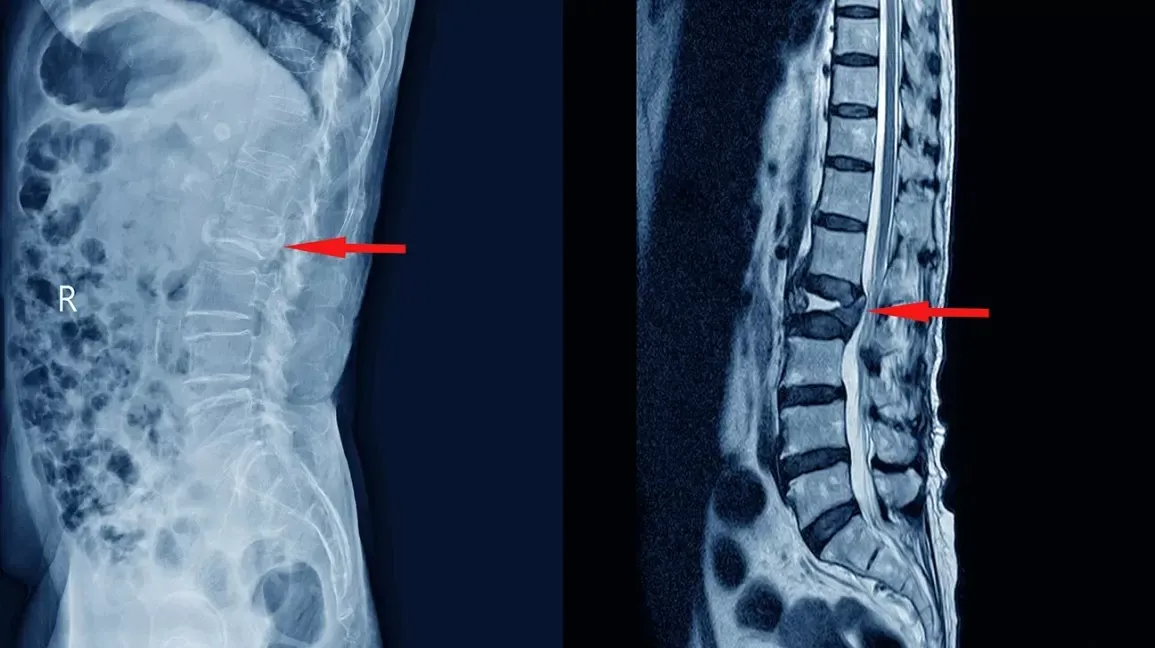
An MRI cannot tell you which disc herniation is causing pain and which is incidental. It can’t identify inflammation in the posterior annular fibers. It can’t show which of multiple potential pain generators is creating symptoms. It can’t distinguish between nerve compression that causes leg pain and annular tears that cause back pain.
Yet most physicians look at an MRI, see a disc herniation, and conclude that’s the source of pain. That approach fails for most patients with chronic back pain, because the actual pain generator isn’t the disc herniation itself – it’s the tear in the posterior annulus where that herniation is stuck, causing chronic inflammation.
The Deuk Spine Exam: 99% Diagnostic Accuracy
The physical exam is more important than the MRI for identifying pain generators. The Deuk Spine Exam combines three elements:
- Detailed physical examination: Specific maneuvers that reproduce or eliminate pain, testing that identifies which movements trigger symptoms
- Pain history analysis: Understanding when pain started, what makes it better or worse, how it has changed over time
- MRI correlation: Using imaging to confirm physical findings, not to replace clinical judgment
This three-part examination achieves 99% diagnostic accuracy in correctly identifying the specific structure generating pain – the disc level, the facet joint, the sacroiliac joint, or the piriformis muscle causing symptoms.
Most physicians spend five to ten minutes on physical exam, check reflexes, test strength, then order an MRI and base treatment on what imaging shows. The Deuk Spine Exam takes 30 to 45 minutes, testing pain reproduction with specific movements, identifying patterns that distinguish different pain sources, and correlating those findings with MRI to confirm which anatomical abnormality corresponds to clinical symptoms.
That level of examination requires specialized training and understanding of biomechanics for each potential pain generator. Medical school doesn’t teach this. Residency training touches on it briefly. Fellowship training and 20 years of focused practice develop it.
The Five Pain Generators Most Doctors Miss
The average patient with chronic back pain has five pain generators. Not one source of pain. Five separate structures contributing to their symptoms. When a physician sees a disc herniation on MRI and says “here’s your problem,” they’re missing the other four pain generators that might be contributing equally or more to symptoms.
Pain Generator 1: Annular Tears (85% of Chronic Back Pain)
The posterior annular tear – a rip in the back fibers of the intervertebral disc – accounts for 85% of chronic back pain. Not the disc herniation. The tear itself, where a small piece of nucleus pulposus becomes stuck, causing chronic inflammation and nerve fiber growth into normally pain-insensitive tissue.
Standard MRI imaging doesn’t clearly show annular tears. They appear as subtle changes in signal intensity that radiologists describe as “disc degeneration.” The actual tear causing pain goes unrecognized.
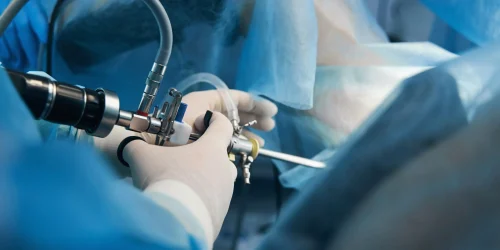
The Deuk Laser Disc Repair is the only patented procedure that directly treats annular tears. We use laser energy to debride inflamed annular tissue, seal the tear, and remove the herniation stuck in the posterior fibers – targeting the specific pain generator rather than just removing the visible herniation.
Pain Generator 2: Facet Joint Inflammation
Facet joints are small weight-bearing joints located behind each disc. When these joints develop arthritis or inflammation, they cause localized back pain that radiates into the buttock or upper thigh. Facet pain has specific patterns: worse with extension, relieved with flexion, often one-sided, and creates morning stiffness that improves with movement.
The Deuk Plasma Rhizotomy uses plasma energy to permanently ablate the medial branch nerves carrying pain signals from facet joints. It’s a 30-minute outpatient procedure providing permanent relief by eliminating the pain signal at its source.
Pain Generator 3: Sacroiliac Joint Dysfunction
The sacroiliac joints connect the sacrum to the pelvis. When these joints develop inflammation or instability, they cause lower back and buttock pain that mimics disc herniation or sciatica. Most doctors miss SI joint pain because symptoms overlap with disc herniation – patients report lower back pain radiating into the buttock, MRI shows a disc bulge, and physicians assume the disc is causing symptoms.
Pain Generator 4: Piriformis Muscle Syndrome
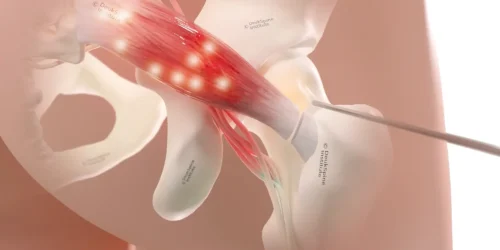
The piriformis muscle runs from sacrum to hip, passing over the sciatic nerve. When this muscle develops scar tissue from chronic inflammation, it causes buttock and leg pain mimicking sciatica from disc herniation. The Deuk Piriformis Release treats this through a 4mm incision, releasing scar tissue that’s compressing the sciatic nerve.
Pain Generator 5: Nerve Compression vs. Nerve Irritation
This distinction is critical. Nerve compression – when a disc herniation physically squeezes a nerve root – causes leg pain, numbness, and weakness requiring surgical decompression. Nerve irritation – when inflammation from an annular tear causes chemical irritation of nearby nerve tissue – causes leg pain without compression. The nerve isn’t physically squeezed, it’s inflamed. Inflammation responds to anti-inflammatory treatment, not surgical decompression.
Most surgeons see leg pain, assume nerve compression, and recommend surgery. They miss cases where leg pain comes from nerve irritation secondary to disc inflammation. When we treat the annular tear with Deuk Laser Disc Repair, we eliminate inflammation-causing nerve irritation, and leg pain resolves without nerve decompression.
How Procedure Volume Builds Expertise
Surgical skill isn’t just about training – it’s about volume. The number of times a surgeon performs a specific procedure directly correlates with outcomes, complication rates, and diagnostic accuracy.
I’ve performed over 2,000 cervical spine procedures and over 1,000 lumbar procedures using the Deuk Laser Disc Repair and related minimally invasive techniques. That volume enabled pattern recognition that cannot be taught in fellowship, drove innovation in spine-sparing techniques, and produced zero major complications.
Over 2,000 procedures, we have achieved zero major complications. Not one spinal fluid leak. Not one infection requiring antibiotics. Not one nerve injury causing permanent weakness. Not one patient requiring emergency reoperation.
Compare that to industry-wide complication rates for traditional spine surgery: infection rates of 1% to 3% for fusion procedures, dural tears in 2% to 8%, nerve injury in 1% to 2%, and reoperation rates of 10% to 15% within five years.
Zero complications in 2,000 procedures represents a fundamentally different standard resulting from minimally invasive technique, no bone drilling, endoscopic visualization, same-day discharge, and procedure volume building expertise in avoiding every potential complication.
Published Research and Evidence-Based Outcomes
I’ve published peer-reviewed research on treating annular tears as the source of chronic back pain. That research appears in PubMed and PMC – the National Institutes of Health database of medical literature. It’s been reviewed by other spine surgeons, scrutinized for methodology, and accepted as valid evidence that annular tear treatment changes outcomes.
The research documented outcomes for patients treated with the Deuk Disc Repair, demonstrating that directly treating annular tears achieved superior outcomes with fewer complications than traditional discectomy or fusion approaches.
The Deuk Laser Disc Repair achieves a 95% success rate in pain elimination – not pain reduction, but complete resolution of chronic back pain. That outcome is possible because we’re treating the specific pain generator rather than performing generalized decompression or fusion that may or may not address the actual source of pain.
How to Find a Truly Specialized Spine Surgeon
When evaluating a spine surgeon, these questions reveal true specialization level:
- What percentage of your practice is spine surgery? The answer should be 100%. Surgeons who split time between spine and other specialties don’t have procedure volume required to maintain expertise in minimally invasive, spine-sparing techniques.
- Did you complete fellowship training in spine surgery? Residency training alone doesn’t provide specialized expertise required for complex pain generator identification and motion-preserving surgical approaches.
- How many procedures have you performed using your primary surgical technique? Look for thousands, not dozens. High procedure volume correlates with diagnostic accuracy, surgical skill, and complication avoidance.
- What is your major complication rate? Specific numbers matter. Any complication rate over 1% suggests techniques or expertise falling short of specialized standards.
- Have you published research on your techniques? Published peer-reviewed research proves approaches are evidence-based rather than anecdotal.
Your Next Step: Free MRI Review
If you’ve seen multiple doctors without accurate diagnosis, if previous treatments failed to provide lasting relief, if you’ve been told fusion is your only option – you need a second opinion from a truly specialized spine surgeon who can identify pain generators other doctors missed.
Deuk Spine Institute offers free MRI review with no obligation. That review will tell you whether you have annular tears causing chronic inflammation, which disc levels are symptomatic versus incidental findings, whether leg pain comes from nerve compression or irritation, if you have facet joint inflammation or SI joint dysfunction, and whether you’re a candidate for minimally invasive, spine-sparing treatment.
Board certification is important, but it’s not enough. What matters is systematic examination identifying all pain generators, specialized techniques treating specific structures without destabilizing the spine, documented outcomes showing zero complications and 95% success in pain elimination, and published research validating approaches with peer-reviewed evidence.
Your chronic back pain has a specific cause – most likely multiple causes requiring comprehensive diagnosis and targeted treatment. The right board-certified spine surgeon can identify those pain generators with 99% accuracy and treat them with minimally invasive techniques, achieving 95% success in pain elimination.