Patients ask me about stem cell therapy for spine and herniated discs more than almost any other alternative to surgery. The question usually comes with a version of the same hope: that injecting the right biological material into a damaged disc might repair it without an operation. After over 30 years performing spine surgery and completing more than 2,700 Deuk Laser Disc Repair® procedures, I understand that instinct. The problem is that what patients are being told in clinic waiting rooms and marketing materials does not match what the peer-reviewed literature actually shows.
The short answer: regenerative medicine for herniated disc repair is experimental. No regenerative approach has demonstrated reliable structural repair of annular tears in large, controlled clinical trials with long-term follow-up. That does not mean the research is worthless or that these approaches will never mature. It means they have not matured yet, and patients making treatment decisions now deserve to know that distinction.
Medical Disclaimer: This content is for educational purposes only and does not constitute medical advice, diagnosis, or treatment. Individual results may vary. Always consult with a qualified healthcare provider regarding your specific condition and treatment options.
Why Herniated Discs Do Not Heal Without Intervention
To evaluate stem cell therapy for spine conditions accurately, you need to understand what a disc injury actually involves. Each spinal disc has two layers: the annulus fibrosus, which is the tough outer ring, and the nucleus pulposus, the gel-like interior. When a disc is injured, nucleus pulposus material herniates into a tear in the posterior annulus fibrosus. That tear triggers chronic inflammation at the site, and that inflammation does not resolve on its own.

The structural reason discs fail to self-repair is well-documented. The posterior annulus has limited blood supply and limited regenerative capacity. The tear does not close. Over time, small pain nerve fibers grow into the inflamed tissue, a process called neoinnervation, which amplifies pain signals and deepens the chronic pain cycle. Physical therapy, injections, and pain medication can reduce symptoms temporarily. None of them repair the annular tear, remove herniated nucleus pulposus material from the tear, or stop neoinnervation. This is the gap regenerative medicine is attempting to close.
The hypothesis behind stem cell therapy for spine conditions is biologically coherent: if you introduce the right cells or growth factors into the disc environment, you might stimulate the annulus to regenerate and the nucleus to reconstitute. The challenge is that biological plausibility is not the same as clinical evidence. And the clinical evidence is not there yet.
What the Current Trial Data Actually Shows
Stem cell therapy for spine applications has been studied primarily in Phase I and Phase II clinical trials. These are early-phase trials designed to assess safety and generate preliminary efficacy signals. They are not designed to establish that a treatment works reliably across a broad patient population, and they should not be marketed as if they do.
Several specific limitations define where the evidence stands:
- No confirmed structural repair on imaging. Published trials have reported modest pain score improvements in some patients, but MRI follow-up has not consistently shown actual annular healing or nucleus pulposus reconstitution following stem cell injection.
- Follow-up periods are too short. Most published studies track patients for 12 to 24 months. The natural history of chronic disc degeneration plays out over years, and short follow-up cannot establish durable structural benefit.
- No standardized protocols. Cell type, injection technique, cell preparation, and patient selection criteria vary substantially across studies, which makes meaningful comparison difficult and reproducibility uncertain.
- The mechanical pain generator is not removed. Stem cell injections do not extract the nucleus pulposus material already trapped in the posterior annular tear. The primary source of pain remains in place after treatment.
- Not FDA-approved for disc repair. Stem cell preparations are not FDA-approved for the specific indication of intervertebral disc repair. Many commercial offerings operate outside the regulatory framework that governs approved medical procedures.
PRP (platelet-rich plasma) injections for disc pain follow a similar evidence profile. PRP may reduce intradiscal inflammation temporarily by introducing growth factors into the disc environment. For some patients, that temporary reduction can provide meaningful short-term relief. But it does not repair the annular tear, does not remove herniated nucleus pulposus material, and has not demonstrated durable structural outcomes in clinical trials.
The Regulatory Gap Most Patients Are Not Told About
One distinction that rarely comes up in consultations about stem cell therapy for spine conditions is the regulatory one. Deuk Laser Disc Repair® is fully FDA-compliant, using only FDA-approved equipment, supplies, and medication in every procedure. That means the instruments, the pharmacologic agents, and the procedure itself have all gone through the regulatory process designed to establish safety and appropriate clinical application.
Many commercial stem cell therapy offerings do not operate under the same framework. The FDA has issued guidance and enforcement actions against clinics offering stem cell injections using preparations that have not received approval for specific indications. Before any regenerative treatment, patients should ask: which specific FDA-approved designation covers the cells or preparations being injected, and for what indication? If the answer is vague or the provider deflects, that is clinically relevant information.
I want to be fair here. Not every clinic offering regenerative therapies is operating outside appropriate boundaries, and some are conducting legitimate research under proper IRB oversight. But the marketing environment has significantly outpaced the evidence, and patients who are told that stem cells will regrow their disc, repair their annular tear, or eliminate chronic back pain are receiving claims the current literature does not support.
What Endoscopic Disc Repair Does That Regenerative Approaches Cannot
The fundamental clinical limitation shared by all regenerative medicine approaches for herniated disc pain is that they are additive. They introduce something into the disc environment and rely on the disc to respond. They do not remove anything. The herniated nucleus pulposus material trapped in the posterior annular tear, the primary mechanical pain generator, remains in place after a stem cell injection or PRP treatment. The inflammation it sustains continues.
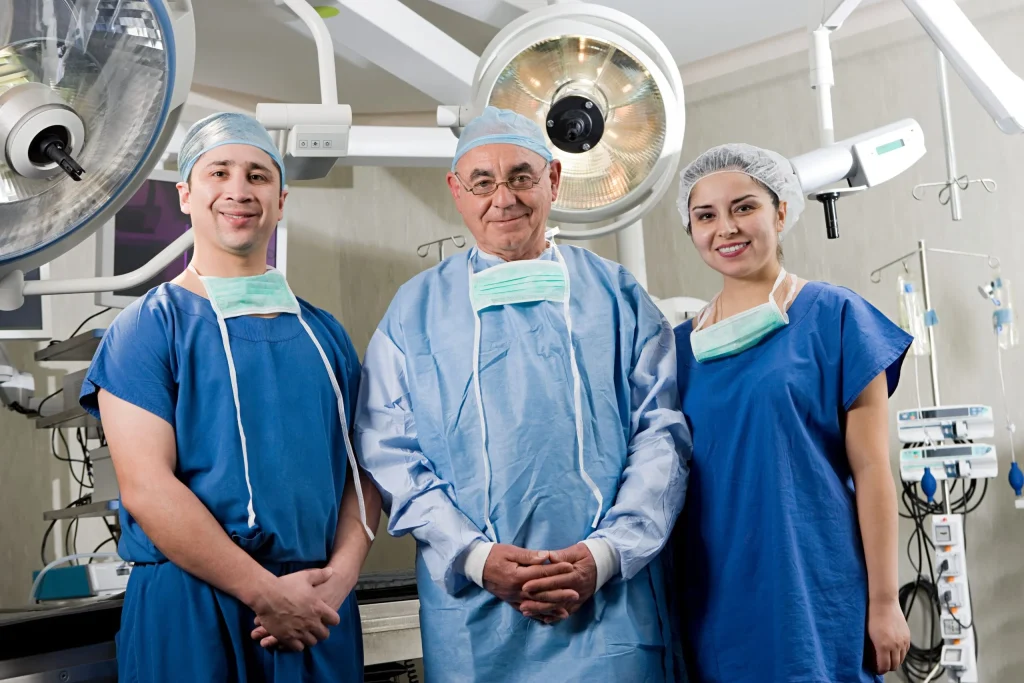
Deuk Laser Disc Repair® works through a different mechanism. Through a 4mm or 7mm incision, an endoscopic instrument accesses the affected disc directly. The herniated nucleus pulposus material trapped in the posterior annular tear is physically removed. The inflammatory tissue within the tear is debrided. Once the mechanical pain generator is extracted and the tear is cleaned, the annulus heals naturally over 9 to 12 months, without cadaver bone, metal, plastic, or hardware placed in the spine.
This distinction matters because injecting biologic material into a disc that still contains herniated nucleus pulposus material trapped in an annular tear is attempting to repair a structure around an obstruction that has not been cleared. I think that framing is worth sitting with. The tear cannot heal while the material causing the inflammation is still present, regardless of what regenerative agents are introduced around it.
Deuk Laser Disc Repair® has been peer-reviewed and published more than 10 times in medical literature. The published data shows patients report 99% elimination of pain at 13 months post-treatment. That follow-up timepoint matters specifically because 13 months reflects outcomes after the natural annular healing process has completed, not just immediate post-procedure relief. The procedure has a 0.01% complication rate and a 0% infection rate.
Why Treating Only the Disc Leaves Most Patients Partially Treated
One reason chronic back pain resists any single treatment, regenerative or otherwise, is that most patients have more than one active pain generator. Based on clinical experience with over 250,000 patients treated at Deuk Spine Institute since 2004, the average chronic back pain patient has five concurrent pain generators. Treating one while the others remain active produces partial improvement at best. I see this regularly in patients who have had some benefit from a procedure but report that some pain persists, and on examination we identify two or three additional untreated sources.
Through clinical practice and diagnostic refinement using the Deuk Spine Exam®, the sources of chronic back pain have been categorized by frequency:
- Disc injuries account for approximately 85% of chronic back pain at levels L4-L5, L5-S1, L3-L4, and L2-L3
- Facet joint arthritis is the second most common cause, occurring at the same vertebral levels
- Sacroiliac joint pain and piriformis syndrome together account for roughly 10% of chronic back pain cases
- Vertebral fractures represent less than 0.5% of chronic back pain
When all pain generators are accurately identified and treated with the appropriate procedure, over 95% of chronic back pain cases are curable. Deuk Plasma Rhizotomy® addresses facet joint arthritis, sacroiliac joint pain, and arthritic joint pain through a 30-minute outpatient procedure that permanently treats the pain-mediating nerves inside the affected joint. Combined with Deuk Laser Disc Repair® for the disc component, these two procedures address the full spectrum of common chronic back pain sources.
Stem cell therapy for spine conditions and regenerative medicine for herniated disc pain cannot treat facet joint arthritis, sacroiliac joint pain, or piriformis syndrome. They target the disc only, and at the current level of evidence, have not demonstrated reliable structural repair even of the disc pathology they are aimed at.
A Fair Assessment for Patients Weighing Their Options
Regenerative medicine is a legitimate field of active research. Some of what is being studied today will likely have a clinical role in the future, and I would not dismiss that possibility. What I would push back on is the gap between where the evidence currently stands and how these treatments are being marketed to patients who are in pain and looking for answers.
Three questions help separate evidence-based claims from marketing: What phase of clinical trial supports this treatment? What does post-treatment MRI show regarding structural disc repair? Is this preparation FDA-approved for the specific indication being treated? For patients who have been told that regenerative approaches are their best option before surgery, a free MRI review can clarify whether an endoscopic procedure with an established clinical record applies to their specific pathology.
The goal is not to steer anyone away from all alternatives to surgery. The goal is to make sure patients have accurate information when they make a decision that affects their spine, their quality of life, and in some cases their ability to work and move without pain.
Medical Disclaimer: This content is for educational purposes only and does not constitute medical advice, diagnosis, or treatment. Individual results may vary. Always consult with a qualified healthcare provider regarding your specific condition and treatment options.