By Dr. Ara Deukmedjian, MD
Board-Certified Neurosurgeon, Deuk Spine Institute
Medically reviewed on February 17, 2026
Medical disclaimer: This content is for educational purposes only and does not constitute medical advice. Individual results may vary. Always consult with your healthcare provider about your specific condition and treatment options.
Key Points
Before diving into the details, here's what you need to know about spinal fusion and its alternatives:
✓ Spinal fusion is not always necessary – Many conditions can be treated with motion-preserving alternatives.
✓ Adjacent segment disease affects 11–36% of fusion patients – A fused spine transfers stress to nearby levels, causing new problems.
✓ Motion preservation is possible – Advanced procedures like Deuk Laser Disc Repair® treat the problem without fusing vertebrae.
✓ Patient satisfaction varies significantly – While 81% report satisfaction, outcomes depend more on pain relief than on meeting statistical benchmarks.
✓ Long recovery times are common with fusion – Traditional fusion requires months of rehabilitation compared to just days with minimally invasive options.
✓ Hardware complications can occur – Screws, rods, and cages may fail, shift, or cause reactions that require additional surgery.
✓ Not all surgeons are trained in alternatives – Many spine surgeons only perform traditional fusion because it’s what they are trained to do.
✓ Financial incentives favor fusion – Hospitals and practices may prioritize fusion due to higher reimbursement rates.
✓ Second opinions matter – Getting an expert evaluation from surgeons trained in motion-preserving techniques is essential.
✓ Success rates with alternatives are excellent – Deuk Laser Disc Repair® has a 99.6% success rate with zero complications in over 2,000 procedures.
Every year, thousands of people suffering from chronic back and neck pain are told the same thing: “You need spinal fusion surgery.” For many, this diagnosis feels final, as though spinal fusion is the only path to relief. But what if it’s not? What if a safer, more advanced, minimally invasive alternative exists—and your surgeon simply hasn’t told you about it?
At Deuk Spine Institute, we’ve helped countless patients avoid spinal fusion and reclaim their lives through a revolutionary procedure called Deuk Laser Disc Repair®. If you’re exploring treatment options, this may be the second opinion that changes everything.
Understanding Spinal Fusion: What It Is and How It Works
Spinal fusion surgery is a traditional approach to treating conditions such as herniated discs, sciatica, degenerative disc disease, and spinal stenosis. During this procedure, two or more vertebrae are permanently joined using metal hardware (screws, rods, and cages) along with bone grafts. The goal is to eliminate motion at a painful segment of the spine.
The procedure has been performed for decades and can be effective for specific conditions, particularly when spinal instability is present. However, fusion fundamentally changes how your spine functions, and these changes can create both immediate and long-term consequences that many patients do not fully understand before undergoing surgery.
The Mechanics of Fusion
During a spinal fusion procedure, surgeons access the spine through various approaches. They remove the damaged disc material, prepare the vertebral surfaces, place bone graft material between the vertebrae, and secure everything with metal hardware to hold the vertebrae in position while the bone graft heals and forms a solid bony bridge.
The fusion process takes approximately 3–6 months, during which the vertebrae gradually grow together. Once complete, these vertebrae function as a single, solid bone segment, permanently eliminating motion at that level.
The Problem with Spinal Fusion: Long-Term Consequences
While fusion can provide relief for appropriate candidates, patients are often not informed about the long-term consequences and risks that come with permanently altering spinal mechanics.
Loss of Natural Mobility
Once fused, the vertebrae no longer move independently. This loss of natural motion can limit flexibility and affect posture and overall biomechanics. The spine is designed to move, and eliminating motion at one segment places additional stress on the remaining mobile segments.
For patients who undergo multi-level fusions, the loss of flexibility can be significant, affecting their ability to bend, twist, and perform everyday movements that were once taken for granted.
Hardware Complications
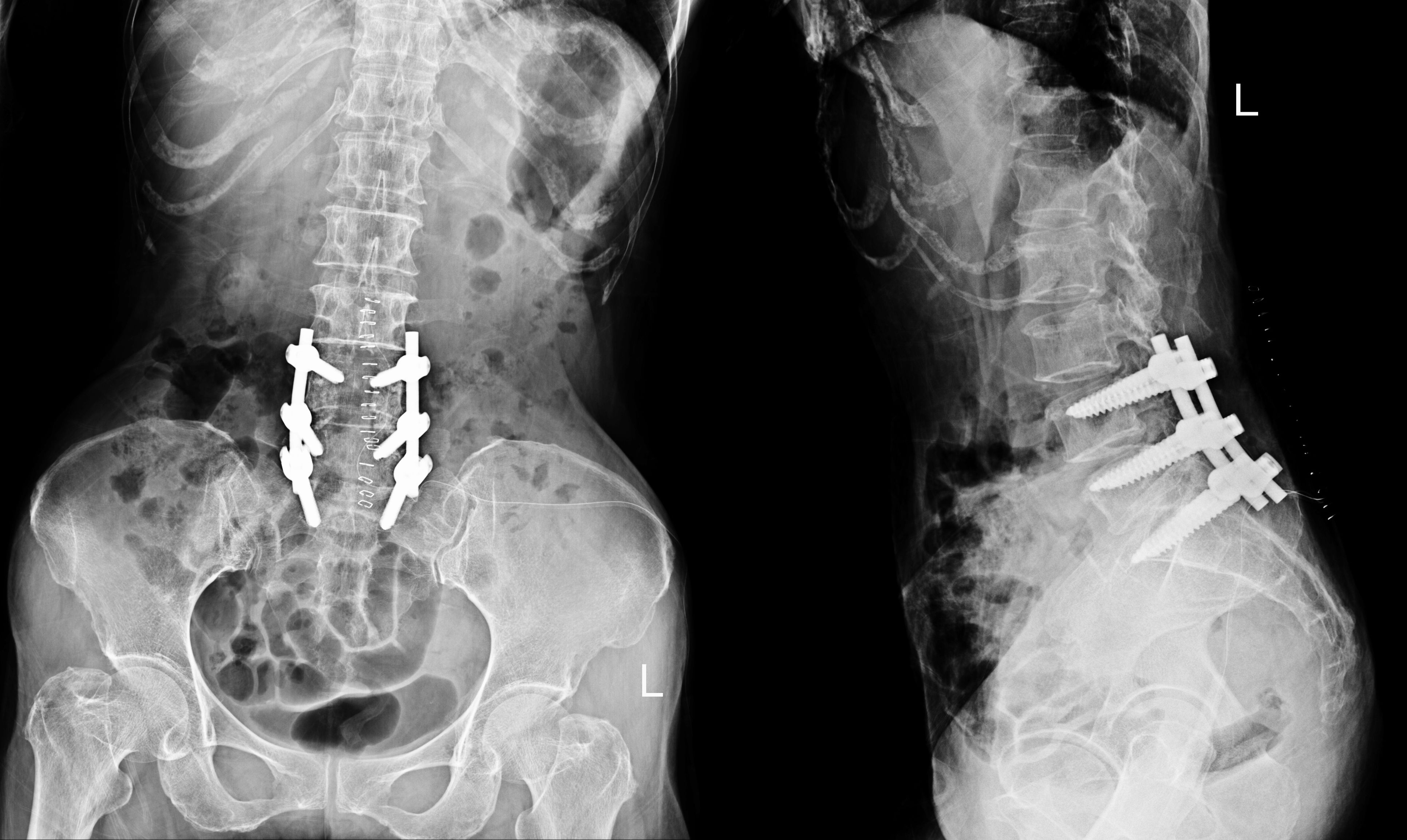
Screws, rods, and cages can fail, shift, loosen, or even cause allergic reactions in some patients. Hardware complications include:
Screw loosening or pullout: The screws anchoring the construct can loosen from the bone, causing pain and instability
Rod fracture: The metal rods connecting the screws can break under stress, particularly in long fusions
Cage subsidence: The interbody cages placed between vertebrae can sink into the vertebral body, losing height and potentially compressing nerves
Hardware prominence: Screws or rods can become prominent under the skin, causing discomfort and sometimes requiring removal
Allergic reactions: Though rare, some patients develop metal sensitivity or allergic reactions to titanium or other hardware materials
A 2023 study examining the influence of screw positioning found that proper hardware placement is critical for preventing cage subsidence and maintaining fusion integrity.
Additional surgeries may be needed to correct hardware issues, revise failed fusions, or address adjacent segment problems.
Extended Recovery Time
Fusion is an invasive surgery with a lengthy recovery period that can take several months. The typical recovery timeline includes:
Hospital stay: 2-4 days for single-level fusion, longer for multi-level procedures
Restricted activities: 6-12 weeks of limited bending, lifting, and twisting
Fusion healing time: 3-6 months for the bone graft to solidify
Full recovery: 6-12 months before returning to all normal activities
Physical therapy is usually required throughout this period, and returning to work or daily activities can be significantly delayed. For patients with physically demanding jobs, the recovery period may extend even longer.
Persistent Pain: When Fusion Doesn't Deliver Relief
Perhaps most concerning of all, many patients report no significant improvement in their pain even after a “successful” fusion. The surgery treats the structure—by eliminating motion—but does not always address the root cause of discomfort.
What the Research Shows
A 2025 study on patient satisfaction following lumbar fusion found that 81% of patients were satisfied with their overall outcomes. However, the study revealed something critical: current pain and function were independent predictors of satisfaction, while reaching the minimal clinically important difference was not. 5
This means patients care far more about genuinely feeling better than about meeting statistical benchmarks. Yet traditional outcome studies often focus on whether patients meet these thresholds rather than on real-world pain relief and function.
A 2025 ten-year study examining long-term outcomes after lumbar fusion found that 80% of patients perceived improvement at one year. This increased to 85% at two years but then declined, dropping to 68% at the ten-year mark. 6 The study also documented significant fluctuation in outcomes over time, with many patients experiencing a recurrence of symptoms years after initially successful results.
Another 2025 comparative study reported that spinal fusion had a higher “total effective rate” than non-surgical treatment (97.87% vs. lower conservative rates). However, this metric does not account for the substantial subset of patients who continue to experience persistent or recurrent pain. 7
Why Aren't You Told About Alternatives?
If safer, motion-preserving alternatives exist, why don't more patients hear about them? There are several reasons:
Lack of Training in Advanced Techniques
Traditional spine surgery requires a specific skill set focused on open surgical approaches and fusion techniques. Some surgeons may not be familiar with newer, less invasive techniques because these methods weren't part of their training.
Endoscopic spine surgery, laser disc repair, and other motion-preserving procedures require specialized training beyond a standard spine surgery fellowship. Mastering these techniques takes years of dedicated practice and investment in specialized equipment.
Financial Incentives Favor Fusion
Spinal fusion is a high-revenue procedure, and it may be prioritized by hospitals and surgical practices because of its reimbursement rates. A fusion procedure typically generates significantly more revenue than a minimally invasive disc repair.
Hospital systems often pressure surgeons to perform procedures that maximize revenue. Fusion requires longer operating room time, hospital stays, extensive follow-up care, and the use of hardware from manufacturers with whom hospitals often maintain profitable relationships.
Institutional Conservatism
Large academic medical centers and established spine practices have been slow to adopt newer motion-preserving techniques. Many institutions continue teaching and performing traditional fusion simply because it is what they know, despite growing evidence supporting less invasive alternatives.
Lack of Awareness
Many spine care providers simply have not kept pace with evolving technologies and treatments like Deuk Laser Disc Repair®. If a surgeon only knows how to perform fusion, then fusion is what they will recommend. Regardless of whether it is the best option for your specific condition.
Whatever the reason, the result is the same: patients are often steered toward an outdated treatment that may not be in their best interest.
Looking for a Second Opinion?
Introducing Deuk Laser Disc Repair: The Fusion Alternative
At Deuk Spine Institute, we offer a game-changing solution: Deuk Laser Disc Repair® (DLDR), a minimally invasive procedure that treats the source of your pain without the trauma of fusion.
How Deuk Laser Disc Repair Works
Using live imaging, the surgeon guides a small tube into the damaged disc through a tiny 4–7 mm incision (about the size of a pencil eraser). Through this tube, a high-definition endoscopic camera and laser are inserted.
The Holmium:YAG laser precisely removes only the damaged portion of the disc—the part causing herniation and inflammation—while leaving healthy tissue completely intact. The laser also debrides the annular tear, which is the source of discogenic pain that fusion does not address.
The disc is repaired without affecting nearby muscles, bones, or nerves. Because the approach is entirely endoscopic, there is no muscle stripping, no bone removal, and no hardware placement.
Why Patients Choose Deuk Laser Disc Repair
Preserves Natural Mobility:
Unlike spinal fusion, Deuk Laser Disc Repair® allows your spine to move naturally. Nothing is fused, so you’re free to bend, twist, and move as before. Your spine maintains its full range of motion permanently.
Truly Minimally Invasive:
The procedure is performed through a 4–7 mm incision, which is smaller than most “minimally invasive” fusion procedures that use 1-inch or larger incisions. There is no cutting of bone or muscle, leading to dramatically faster healing.
No Hardware:
There are no screws, rods, plates, or cages used, eliminating hardware-related complications entirely. You won’t set off metal detectors, won’t need hardware removal surgery, and won’t face risks of screw loosening or rod fracture.
Rapid Recovery:
Most patients walk out of the surgery center within an hour and return to daily activities in just a few days. Many return to desk work within 3–5 days and resume full activities within 2–3 weeks.
Exceptional Success Rate:
This procedure has a 99.6% success rate in eliminating back and neck pain caused by damaged discs, with zero complications across more than 2,000 procedures performed over 15 years.
Performed by a Specialized Expert:
Doctor Ara Deukmedjian, a board-certified neurosurgeon who pioneered this technique and has published peer-reviewed research documenting its safety and effectiveness.
The Science Behind Deuk Laser Disc Repair
This procedure is unique because it has been peer-reviewed, published in medical literature, and proven effective in clinical settings. It is FDA-approved (using FDA-cleared technology) and performed in a world-class, fully accredited surgical facility.

Deuk Laser Disc Repair is also revolutionary because it:
Treats the disc without removing it entirely: Unlike discectomy procedures that remove large portions of the disc, DLDR removes only the damaged 5-10% that's causing symptoms
Targets inflammation with pinpoint precision: The laser debrides the annular tear that generates inflammatory chemicals, addressing the source of discogenic pain
Avoids damage to nearby tissues: The endoscopic approach protects surrounding muscles, nerves, and bone structures
Addresses both herniation and discogenic pain: Traditional surgery addresses nerve compression from herniation but often doesn't resolve the deep, achy pain from the damaged disc itself
This comprehensive approach ensures better long-term outcomes and a dramatically reduced risk of recurrence or adjacent segment problems. 8
What Conditions Can It Treat?
Deuk Laser Disc Repair is effective for a range of painful spinal conditions, including:
- Herniated or bulging discs
- Degenerative disc disease
- Sciatica and radiculopathy (pinched nerves)
- Annular tears (the source of discogenic pain)
- Disc-related chronic back or neck pain
- Failed previous fusion (in select cases)
If you're experiencing chronic back or neck pain, numbness, tingling, or weakness in your arms or legs, this could be the solution you've been looking for.
Patient Story: Defeating Fusion With a Real Cure
Jerry's story perfectly illustrates why fusion isn't always the answer. For years, Jerry suffered from debilitating back pain that dramatically limited his quality of life. Like many patients, he was told fusion surgery was his only option.
However, Jerry sought a second opinion at Deuk Spine Institute. After a comprehensive evaluation and MRI review, Dr. Deukmedjian determined that Jerry's pain was caused by disc herniations and annular tears, not spinal instability. This meant he was an excellent candidate for Deuk Laser Disc Repair instead of fusion.
Jerry underwent DLDR to treat his damaged discs. The procedure took approximately one hour, performed on an outpatient basis under twilight sedation. Within an hour of completing the procedure, Jerry was walking. He went home the same day.
"I cannot tell you how grateful I am," Jerry says in his testimonial. "The pain I was experiencing is gone. I'm able to do the things I love again without limitation."
Jerry's recovery was remarkably fast. Within days, he was back to light activities. Within weeks, he was fully active with no restrictions. Most importantly, because his spine wasn't fused, Jerry maintained full range of motion and avoided the risk of adjacent segment disease that plagues fusion patients.
His story demonstrates what's possible when patients have access to advanced motion-preserving alternatives. Jerry didn't just get pain relief; he got his life back without sacrificing his spine's natural function. 9
When Is Fusion Actually Necessary?
It’s important to understand that spinal fusion isn’t always the wrong choice. There are legitimate medical indications where fusion may be the most appropriate treatment:
• Spinal instability: When vertebrae are slipping significantly or when the spine is structurally unstable.
• Severe deformity: Significant scoliosis or kyphosis that requires corrective stabilization.
• Fractures: Traumatic vertebral fractures that compromise spinal stability.
• Tumor or infection: Cases in which bone integrity is weakened by tumor involvement or infection.
• Failed conservative treatment with confirmed instability: When non-surgical care has failed and imaging clearly demonstrates structural instability.
The key is ensuring that fusion is truly necessary for your specific condition. Rather than defaulting to it simply because it is the only procedure your surgeon is trained to perform.
Making an Informed Decision: Questions to Ask Your Surgeon
Before committing to spinal fusion, arm yourself with these critical questions:
About Your Specific Diagnosis
“Do I have actual spinal instability, or is my pain from disc damage?”
Fusion is designed to treat instability. If your pain is caused by a damaged disc, motion-preserving options may be more appropriate.
“Have you confirmed that my disc is the source of my pain, or could it be my facet joints or another structure?”
Accurate diagnosis is essential. Fusing the wrong level, or addressing the wrong pain generator; often leads to failed surgery.
“Would I be a candidate for Deuk Laser Disc Repair® or other motion-preserving procedures?”
If your surgeon says no, ask why. Get specific, medically grounded reasons—not vague dismissals.
About the Proposed Fusion
"How many levels are you proposing to fuse, and why?"
More levels fused means more motion lost and higher risk of adjacent segment disease.
"What is your complication rate for this specific procedure?"
Surgeons should be able to provide their personal complication rates, not just general statistics.
"What is your reoperation rate for adjacent segment disease?"
This reveals the long-term track record of their fusion technique.
"What percentage of your fusion patients require additional surgery within 5-10 years?"
This question uncovers the reality of adjacent segment problems.
About Alternatives
"Have you personally trained in endoscopic spine surgery or laser disc repair?"
If not, they may not be qualified to evaluate whether you're a candidate for these alternatives.
"Why isn't a motion-preserving procedure appropriate for my case?"
The answer should be specific to your anatomy and condition, not "that's experimental" or "insurance won't cover it."
"Can I get a second opinion from a surgeon who specializes in motion-preserving techniques?"
Any surgeon who discourages second opinions should raise red flags.
If your surgeon becomes defensive, provides vague answers, or dismisses alternatives without specific reasons, that's a significant red flag warranting a second opinion.
The Value of Expert Second Opinions
Given the permanent, life-altering nature of spinal fusion and the existence of effective alternatives that many surgeons do not offer. Getting a second opinion from a specialist in motion-preserving techniques is one of the most important steps you can take.
What a Second Opinion Provides
- Confirmation your diagnosis is correct: Second opinions often reveal misdiagnoses or incomplete evaluations.
- Understanding all available treatment options: Including alternatives your first surgeon may not have mentioned.
- Honest assessment of whether fusion is truly necessary: Especially from a surgeon trained in both fusion and motion-preserving techniques.
- Perspective from a different training background: Different surgical training often leads to different approaches and solutions.
At Deuk Spine Institute, we offer a free virtual consultation and MRI review. During this consultation:
Dr. Ara Deukmedjian will personally review your MRI images.
You perform movement tests via video to assist in diagnosis.
He provides an honest assessment of whether you’re a candidate for laser disc repair.
He will recommend his technique, other surgical approaches, or even conservative pain management if surgery is not necessary.
This consultation provides valuable insight from a surgeon who has published peer-reviewed research on his laser technique and has performed more than 2,000 of these procedures with documented outcomes.
Frequently Asked Questions
Q: How common is adjacent segment disease after spinal fusion?
A: Adjacent segment disease is remarkably common. Recent 2025 research shows that radiographic adjacent segment degeneration occurs in 36% of patients, while symptomatic adjacent segment disease requiring treatment develops in 11% of patients within two to seven years after fusion. Risk is higher in patients who undergo multilevel fusions and in younger individuals.
The condition occurs because fusion eliminates motion at one level, forcing the adjacent levels to compensate by moving more than they were designed to—accelerating wear and tear over time.
Q: What is the success rate of spinal fusion for back pain?
A: Success rates vary significantly depending on how “success” is defined. A 2025 study found that 81% of patients reported satisfaction with their fusion outcomes, but satisfaction correlated more with actual pain relief and functional improvement than with meeting statistical benchmarks.
Long-term outcomes are less encouraging. A 10-year study found that while 80 –85% of patients felt improved within the first two years, only 68% still felt improved at the 10-year mark.
Overall success depends heavily on proper patient selection, surgical technique, and most importantly whether the fused level was truly the source of pain.
Q: How long does it take to recover from spinal fusion?
A: Traditional spinal fusion recovery is measured in months, not weeks. The typical timeline includes: a 2–4 day hospital stay, 6–12 weeks of restricted activities (no bending, lifting, or twisting), 3–6 months for the bone graft to solidify and create a stable fusion, and 6–12 months before returning to all normal activities. Physical therapy is required throughout recovery.
In contrast, motion-preserving procedures like Deuk Laser Disc Repair allow patients to walk within an hour, go home the same day, and return to most activities within 2–3 weeks.
Q: Can I avoid spinal fusion?
A: In many cases, yes. Fusion is necessary for specific conditions involving structural instability, severe deformity, or fractures. However, if your pain is caused by disc herniations, annular tears, or degenerative disc disease without significant instability, motion-preserving alternatives such as Deuk Laser Disc Repair may be appropriate. The key is getting an evaluation from a surgeon trained in both fusion and motion-preserving techniques who can objectively assess which approach is best for your specific condition.
Q: What makes Deuk Laser Disc Repair different from other minimally invasive procedures?
A: Deuk Laser Disc Repair is fundamentally different from both traditional fusion and most “minimally invasive” procedures. Unlike fusion, it preserves natural motion and avoids hardware entirely. Unlike many procedures marketed as “minimally invasive,” it uses a truly small incision (4–7 mm versus 1 inch or larger), employs a surgical laser as the primary tool, and treats both the herniation and the annular tear the true source of discogenic pain.
The procedure has been published in peer-reviewed medical journals with a documented 99.6% success rate and zero complications across more than 2,000 cases.
Sources
- https://pmc.ncbi.nlm.nih.gov/articles/PMC12039085/
- https://pubmed.ncbi.nlm.nih.gov/38103684/
- https://www.mdpi.com/2077-0383/14/10/3400
- https://www.nassopenaccess.org/article/S2666-5484(23)00107-5/fulltext
- https://pmc.ncbi.nlm.nih.gov/articles/PMC12230298/
- https://pmc.ncbi.nlm.nih.gov/articles/PMC11627302/
- https://pmc.ncbi.nlm.nih.gov/articles/PMC11918860/
- https://pmc.ncbi.nlm.nih.gov/articles/PMC11605282/
- https://deukspine.com/patient-testimonials/defeating-fusion-with-real-cure