For too long, patients suffering from chronic back orneck pain due to damaged discs have been guided toward a procedure that often sacrifices the natural movement of the spine:spinal fusion surgery. The sheer weight of the industry promoting this invasive, hardware-dependent approach can make finding an effective, preservation-focused treatment feel like an uphill battle. Yet, the dedicated neuro-spine surgeons at Deuk Spine Institute have not only challenged this standard but have established a definitive, curative alternative.
It is critical for patients facing the daunting prospect of spine surgery to understand the profound difference between a destructive procedure that aims for stabilization and a restorative technique designed for a cure. Where fusion seeks to eliminate motion, the revolutionary Deuk Laser Disc Repair® (DLDR) preserves it, targeting the source of pain with unparalleled precision. This minimally invasive approach has changed the trajectory for thousands of patients, proving that it is possible to achieve pain relief and a return to full function without compromising the spine’s long-term health.
Understanding the Risks: Why You Need a Spinal Fusion Alternative
When exploring solutions for chronic pain, patients often hear the term spinal fusion used as a standard, reliable fix. The reality, however, is far more complex. Spinal fusion is a major operation that permanently locks two or more vertebrae together using bone grafts and metal hardware like screws, plates, and rods. While this is a time-honored technique for certain instances of instability or deformity, its use for simple degenerative disc conditions is increasingly questioned due to its high complication profile and tendency to fail in alleviating chronic back pain.
One of the most significant concerns is the long-term impact on spinal biomechanics. By fusing one segment, movement is unnaturally transferred to the adjacent discs above and below. This accelerated wear and tear is known as adjacent segment disease (ASD), a condition that can manifest years after the initial surgery and often necessitates further, costly operations. Research indicates that a high percentage of fusion patients may eventually require follow-up surgery due to adjacent segment issues.
Furthermore, spinal fusion is associated with numerous immediate and long-term risks, including:
- Infection at the surgical site or around the hardware.
- Hardware failure, such as broken screws or plates, which necessitates revision surgery.
- Failure of the fusion itself (pseudoarthrosis), meaning the bones do not successfully grow together.
- Blood clots, nerve damage, and dural tears.
But perhaps the most profound failure of traditional fusion is its limited ability to cure the underlying, chronic axial (back or neck) pain. The procedure is primarily designed to stabilize the spine and alleviate radicular symptoms (arm or leg pain) by decompressing the nerve. It is generally not intended to cure the underlying chronic back or neck pain itself.
Patients are often disappointed when, after a painful year-long recovery, their secondary pain is gone, but the core back pain remains—or even worsens. This is often why a considerable percentage of patients who undergo spinal fusion continue to experience chronic pain, often requiring long-term pain management treatments for the rest of their lives. For these reasons, many surgical leaders agree that spinal fusion represents a generalized, “shotgun” approach that may not address the specific, localized discogenic source of pain, which is precisely why targeted, minimally invasive options are preferred.
Explainer Video
Find out exactly where your pain is coming from. Dr. Deukmedjian explains the 30 causes of chronic back pain.

Introducing the Pinnacle of Minimally Invasive Spine Surgery
The spine community’s recognition of fusion’s shortcomings has led to the development ofminimally invasive spine surgery (MISS) and ultra-minimally invasive spine surgery. This field represents a major leap forward, focusing on relieving pain while minimizing trauma to muscles, bones, and soft tissues. By utilizing smaller incisions, specialized surgical tools, and advanced imaging, MISS procedures are designed to reduce blood loss, shorten hospital stays, and accelerate recovery compared to traditional open surgeries.
However, the term “minimally invasive” is applied to a broad spectrum of procedures, and not all are created equal. Even some modern decompression surgeries still require the removal of bone (laminectomy) or rely on techniques that fail to fully address the origin of pain. For patients who have been told their chronic pain is incurable, the search must narrow to a procedure that is curative, not just less destructive.
The team at Deuk Spine Institute realized that to eliminate chronic disc pain, the treatment must be focused on removing the painful, inflammatory tissue within the disc itself—the material pressing on the nerve roots and the tissue that causes the disc wall to tear and generate pain. Other surgeries often fail because they treat the symptoms (chronic pain and nerve compression) without fixing the underlying disc damage.
DLDR® stands apart in the world of minimally invasive spine surgery because it is a precision-focused, motion-preserving, and tissue-sparing technique. It is the result of years of refinement, developed to treat patients who were otherwise destined for permanent disability or spinal fusion. This procedure represents the ultimate evolution in spine care, offering a reliable path back to full health.
The Superior Solution: What is Deuk Laser Disc Repair®?
Deuk Laser Disc Repair® (DLDR) is the world’s most advanced form of endoscopic laser spine surgery and a proven spinal fusion alternative. It directly addresses the root cause of discogenic pain—the painful annular tear and the herniated or bulging nuclear material that is pressing against the spinal nerve.
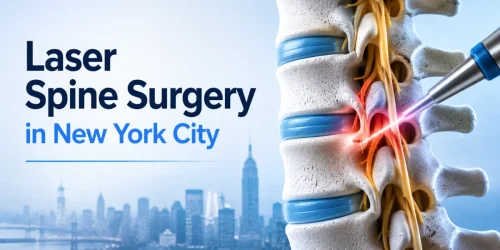
The procedure is performed through a tiny, quarter-inch incision, using an endoscope—a surgical camera—to visualize the spine and disc from the inside. The Deuk Spine Institute uses a Holmium: YAG laser to vaporize only the painful, damaged tissue with millimeter-precision, leaving the healthy spinal structure and bone completely intact. Unlike fusion, which forces a state of immobility to stabilize the spine, DLDR® achieves pain relief while fully preserving the natural range of motion.
Key advantages of the DLDR® include:
- Precision: The laser allows the removal of the exact inflammatory tissue causing the pain without collateral damage to surrounding muscles, joints, or ligaments.
- Preservation: No metal hardware is used, and no healthy bone is removed, meaning the spine’s natural integrity and movement are maintained. This eliminates the risk of adjacent segment disease (ASD), a major complication of fusion.
- Safety: The procedure is performed in an outpatient setting, typically in about one hour. Patients are generally up and walking within hours, leading to significantly lower infection rates and a dramatically faster recovery compared to traditional spine surgery.
The results speak for themselves. The DLDR® procedure has demonstrated a high success rate in permanently eliminating discogenic pain, a feat that traditional fusion cannot reliably claim. This makes it a superior option not just for back and neck pain, but also for specific conditions like a painfulherniated cervical disc.
Looking for Real Answers to Your Chronic Back Pain?
Upload your MRI and schedule a free consultation with Dr. Deukmedjian today!
Spinal Fusion Complications vs. The Deuk Spine Difference
The stark reality of traditional spine surgery is often measured in patient dissatisfaction and repeat procedures. When spinal fusion fails to address the underlying issue, the patient may enter a cycle of chronic pain management—relying on repeated epidural steroid injections, radiofrequency ablations, pain medications, and possibly even spinal cord stimulators. This cycle, which can be immensely profitable for certain segments of the healthcare industry, is why organizations like the Deuk Spine Institute have championed full transparency regarding these practices.
The neurospine surgeons at Deuk Spine Institute maintain that spine surgery should be curative, not just palliative. The comprehensive approach employed there includes Deuk Laser Disc Repair® and other advanced treatments, such as Deuk Plasma Rhizotomy® for facet joint pain and Deuk Piriformis Muscle Release® for sciatic symptoms caused by muscle compression. By using these targeted procedures, surgeons can identify and eliminate virtually all common causes of chronic back and neck pain.
The difference in patient outcome is often “night and day.” Consider the perspective of a patient who was told they needed fusion, or one who had already suffered through a failed fusion attempt. The testimonial below powerfully illustrates the contrast:
“I feel amazing. 24 hours after and I had a five-level pain still and I woke up today and I’m I feel 90% better. It’s amazing. It’s like I can almost say instant relief at this point. Compared to my prior surgery with the fusion, which you had done elsewhere, this was ‘Night and day.’ The recovery from fusion took me almost a year. Forget the Fusion. Come see the man.”
Watch the full interview!
This testimony—from a patient who was struggling with the complications of an initial fusion—confirms the critical value of a motion-preserving technique. The DLDR® procedure resolves disc damage, eliminating the need for continued reliance on high-risk, invasive procedures. The results show that for patients suffering from disc-related pain, DLDR® is not just a better option than fusion; it is the curative gold standard.
It is anticipated that, as targeted, minimally invasive spine surgery options like the DLDR® become more widespread and recognized by the surgical community, the reliance on spinal fusion for degenerative conditions will diminish. The medical literature continues to support the benefits of targeted approaches over broad, stabilizing surgeries. When choosing a surgical path, patients must prioritize procedures designed for a cure and long-term quality of life.
The Better Way: Deuk Laser Disc Repair® (DLDR)
For patients suffering from debilitating pain or severe instability, the benefits of spinal surgery might seem to outweigh the risks significantly. However, as you can see, they are not procedures without consequences. There is one procedure that has none of these consequences. My revolutionary procedure, Deuk Laser Disc Repair®, offers a safer way to alleviate neck or back pain without risk of collateral damage, as it avoids the muscles, nerves, ligaments, tendons, and joints.
Frequently Asked Questions
-
What is the primary difference between spinal fusion and Deuk Laser Disc Repair®?
The fundamental difference lies in their approach to spinal structure. Spinal fusion is a destructive procedure that permanently immobilizes two or more vertebrae using hardware, which can accelerate degeneration in adjacent discs. Deuk Laser Disc Repair® is a restorative and minimally invasive spine surgery that removes only the painful, damaged tissue from within the disc to relieve nerve compression, preserving the natural anatomy, motion, and stability of the spine.
-
Is Deuk Laser Disc Repair® (DLDR) considered an effective spinal fusion alternative for all patients?
DLDR® is the best solution worldwide for many patients suffering from discogenic pain caused by bulging or herniated discs, annular tears, or degenerative disc disease. It is a highly effective spinal fusion alternative that has demonstrated superior results compared to traditional surgeries. While it is not suitable for complex spinal deformities or fractures, an MRI review can accurately determine if a patient is a candidate for this minimally invasive spine surgery.
-
What is the recovery time like for Deuk Laser Disc Repair® compared to spinal fusion?
Recovery from traditional spinal fusion typically requires a hospital stay of 2–4 days, followed by several months of highly restricted activity and physical therapy. In contrast, the Deuk Laser Disc Repair® is performed in an outpatient setting, and most patients are walking, driving, and shopping within 24 hours of the procedure. Full recovery and return to normal activities are significantly faster due to the minimally invasive nature and lack of spinal compromise.
-
Does minimally invasive spine surgery still carry the risk of adjacent segment disease (ASD)?
Traditional spinal fusion surgery significantly increases the risk of adjacent segment disease (ASD) because it locks down motion at the fused levels, forcing the adjacent segments to absorb excessive stress. Because Deuk Laser Disc Repair® (a type of minimally invasive spine surgery) preserves the full, natural motion of the spine, it avoids the biomechanical stress that causes ASD, unlike fusion procedures.
Frequently Asked Questions
-
What is the primary difference between spinal fusion and Deuk Laser Disc Repair?
The fundamental difference lies in their approach to spinal structure. Spinal fusion is a destructive procedure that permanently immobilizes two or more vertebrae using hardware, which can accelerate degeneration in adjacent discs. Deuk Laser Disc Repair is a restorative and minimally invasive spine surgery that removes only the painful, damaged tissue from within the disc to relieve nerve compression, preserving the natural anatomy, motion, and stability of the spine.
-
Is Deuk Laser Disc Repair an effective spinal fusion alternative for all patients?
Deuk Laser Disc Repair is the best solution worldwide for many patients suffering from discogenic pain caused by bulging or herniated discs, annular tears, or degenerative disc disease. It is a highly effective spinal fusion alternative that has demonstrated superior results compared to traditional surgeries. While it is not suitable for complex spinal deformities or fractures, an MRI review can accurately determine if a patient is a candidate for this minimally invasive spine surgery.
-
What is the recovery time for Deuk Laser Disc Repair compared to spinal fusion?
Recovery from traditional spinal fusion typically requires a hospital stay of 2 to 4 days, followed by several months of highly restricted activity and physical therapy. In contrast, Deuk Laser Disc Repair is performed in an outpatient setting, and most patients are walking, driving, and shopping within 24 hours of the procedure. Full recovery and return to normal activities are significantly faster due to the minimally invasive nature and lack of spinal compromise.
-
Does minimally invasive spine surgery still carry the risk of adjacent segment disease?
Traditional spinal fusion surgery significantly increases the risk of adjacent segment disease because it locks down motion at the fused levels, forcing adjacent segments to absorb excessive stress. Because Deuk Laser Disc Repair preserves the full, natural motion of the spine, it avoids the biomechanical stress that causes adjacent segment disease, unlike fusion procedures.