

You have pain in your neck and shooting pain down your arm. Your fingers tingle and feel numb. Your doctor told you it’s a pinched nerve and recommended physical therapy, but after weeks of treatment, the neck pain persists, even though the arm symptoms come and go. You’re confused about what’s actually causing your problems and whether you’re getting the right pinched nerve in your neck.
After over 30 years of performing spine surgery and treating more than 250,000 patients with neck and arm symptoms, I’ve learned that this confusion stems from a critical medical fact that most patients never learn. Pinched nerves can cause arm symptoms such as pain, weakness, numbness, tingling, and fatigue. But pinched nerves never cause neck pain. Your neck pain comes from different sources, typically disc injuries or facet joint problems, which require different treatment approaches.
Understanding this distinction changes everything about how you should approach neck pain treatment. Here’s what you need to know about the difference between temporary symptom relief and definitive solutions that address the actual structural problems causing your symptoms.
The Critical Distinction: Neck Pain vs Arm Symptoms
When discussing pinched nerve in neck treatment, we need to start with medical accuracy. A pinched nerve in your cervical spine produces cervical radiculopathy, creating specific symptoms that many patients misunderstand.
What Pinched Nerves Actually Cause
Arm symptoms result from nerve root irritation, often related to disc herniation or bone spurs pressing against the nerve. These symptoms follow specific patterns that help identify the involved nerve root.
- Arm Pain: Sudden, shooting, or electric-like pain that radiates from your neck through your shoulder and into your arm, sometimes reaching your fingers
- Weakness: Difficulty lifting your arm, gripping objects, or performing previously manageable tasks
- Numbness and Tingling: Loss of sensation or pins-and-needles feeling in specific fingers, following nerve pathways called dermatomes
- Arm Fatigue: Unusual tiredness in your arm when performing simple tasks
What Pinched Nerves Do NOT Cause
Pinched nerves never cause neck pain. That pain you feel in your neck itself comes from different structures.
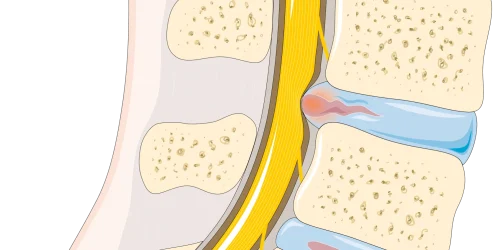
- Disc Injuries: Tears in the posterior annulus fibrosus with herniated nucleus pulposus, causing inflammation
- Facet Joint Problems: Facet joint capsule tears and arthritis in the small weight-bearing joints behind your discs
Why You Often Have Both Problems
Many patients have both a disc injury causing neck pain and nerve compression causing arm symptoms from the same herniated disc. The disc injury creates inflammation in the posterior annular tear, causing localized neck pain. If that same disc herniates far enough to contact a nerve root, it also creates the radicular arm symptoms. These are two separate problems requiring different evaluation and treatment, even though they originate from the same damaged disc.
Understanding Cervical Radiculopathy
The pain from a pinched nerve is driven primarily by chemical inflammation of the nerve root, not just mechanical compression. When a herniated disc or bone spur contacts a nerve, inflammatory chemicals irritate the nerve, creating that characteristic radiating pain pattern. This inflammatory process is a key contributing factor to the sudden, shooting quality of radicular arm pain.
Specific Nerve Root Symptoms
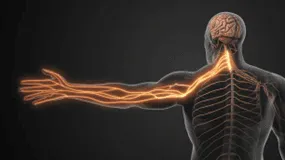
Symptom patterns help localize the involved nerve root and guide treatment decisions.
- C5-C6 Disc Herniation (C6 nerve): Biceps and wrist extensor weakness, numbness in the thumb and index finger
- C6-C7 Disc Herniation (C7 nerve): Triceps weakness, numbness in the middle finger
These patterns of affected fingers and specific muscle weakness help identify which disc is causing the nerve compression and direct the treatment approach.
The Real Sources of Neck Pain
Based on my clinical experience with over 100,000 procedures since 2004, approximately 85% of chronic neck pain cases originate from disc injuries, specifically inflammation in the posterior annular tear. Facet joint arthritis accounts for the second most common source of chronic neck pain.
Why Disc Injuries Cause Neck Pain
The discs in your cervical spine consist of two key components.
- Annulus Fibrosus: Tough outer layer that can develop tears, most commonly in the posterior (back) portion
- Nucleus Pulposus: Gel-like center that can herniate through tears in the annulus
When nucleus pulposus material herniates through these tears, it triggers chronic inflammation. The outer annulus fibrosus and posterior longitudinal ligament contain pain-sensitive nerve fibers. When these structures experience ongoing inflammation from herniated material stuck in the tear, they generate the neck pain you feel.
Why These Injuries Don't Heal Naturally
This is a structural problem with permanent consequences.
- Physical defect persists: The tear exists as a structural defect in the disc that does not close on its own
- Ongoing inflammation: Herniated material trapped in the tear continues causing inflammation indefinitely
- Medication limitations: Anti-inflammatory medications reduce inflammation temporarily, but cannot remove the herniated material
- Therapy limitations: Physical therapy cannot repair annular tears or extract the herniation
- Neoinnervation: Small pain nerve fibers grow into the inflamed tissue over time, increasing pain signals
- Self-perpetuating cycle: Once an annular tear becomes chronic, the inflammatory process prevents natural healing
Facet joint arthritis and facet capsule tears represent similar permanent structural damage. Once cartilage degenerates or the joint capsule tears, conservative treatments cannot reverse the damage.
Home Measures: What They Can and Cannot Do
What Home Care CAN Accomplish
- Ice: Reduces inflammation temporarily, providing short-term pain relief
- Heat: Relaxes muscles that tighten in response to pain
- OTC Medications: Anti-inflammatory drugs like ibuprofen or naproxen reduce inflammation systemically
- Proper Positioning: Avoiding positions that aggravate symptoms minimizes flare-ups
- Gentle Exercise: Range of motion exercises maintain mobility and prevent stiffness
- Sleep Support: Proper pillow positioning can reduce nighttime symptoms
What Home Care CANNOT Do
- Confirm Your Diagnosis: Without imaging, you don’t know which disc is herniated, how severe the herniation is, or whether significant facet arthritis exists
- Repair Annular Tears: No home treatment can repair tears in the annulus fibrosus
- Remove Herniated Material: The nucleus pulposus, causing inflammation, remains trapped in the tear
- Reverse Arthritis: Facet joint degeneration persists regardless of home care
- Provide Lasting Relief: When you stop treatments, inflammation returns because the structural problem persists
This distinction between symptom relief and problem resolution is critical. Many patients spend months or years cycling through home remedies, experiencing temporary improvements followed by symptom return, never addressing the underlying structural issues that require definitive treatment.
Why Physical Therapy and Chiropractic Care Have Limitations

What These Treatments Cannot Fix
Cannot Repair Annular Tears: No amount of stretching, strengthening, or manual therapy can repair a tear in the annulus fibrosus or remove herniated nucleus pulposus material
Cannot Reverse Arthritis: Once cartilage in facet joints has degenerated, exercises and adjustments cannot restore it
Cannot Address Structural Damage: The physical defect in the disc persists regardless of how much therapy you complete
May Worsen Herniation: Chiropractic manipulation of a neck with significant disc herniation can potentially worsen the problem or create new injuries
The Problem with Conservative Care for Structural Issues
Physical therapy can help maintain mobility, strengthen supporting muscles, and improve posture in cases where minimal structural damage exists. For patients with minor disc bulges without significant annular tears, PT might provide adequate symptom management. Conservative care is appropriate for short-term or mild symptoms in select cases where structural damage is limited.
The problem is that most patients pursuing PT or chiropractic care for chronic neck pain have significant structural problems that these treatments cannot address. They experience temporary relief when muscles relax or when anti-inflammatory effects from movement reduce symptoms, but the underlying disc injury or facet arthritis remains untreated.
The posterior annular tear with herniated material causing chronic inflammation is a mechanical problem that requires a mechanical solution. The herniated material must be removed, and the inflammatory tissue in the tear must be debrided to allow natural healing. Conservative treatments work on the principle that the body can heal itself given the right conditions, but with chronic disc injuries where inflammation has persisted for months or years, natural healing will not occur without directly addressing the structural problem.
When to Progress to Advanced Evaluation
Red Flag Symptoms Requiring Immediate Imaging
- Progressive Weakness: Increasing difficulty lifting your arm, gripping objects, or performing previously manageable tasks (may indicate nerve compression causing permanent damage)
- Symptoms Lasting 2+ Weeks: Ongoing symptoms indicate a structural problem requiring definitive diagnosis and treatment planning
- Severe Pain: Pain that prevents you from performing daily activities, working, or sleeping indicates structural damage that conservative care cannot adequately address
- Inability to Find Relief: Constant pain despite medication suggests a significant disc herniation or facet injury requiring intervention
Why MRI Alone Isn't Enough
MRI imaging is necessary for identifying structural problems, but it is insufficient on its own for accurate diagnosis. Research published in the New England Journal of Medicine by Jensen et al. found that 64% of people without any symptoms have disc abnormalities visible on MRI. This high prevalence of asymptomatic findings means many of the abnormalities on your MRI might not be causing your symptoms at all.
Proper diagnosis requires correlation between imaging findings, your specific symptoms, and physical examination results. Without this correlation, treatment decisions may target the wrong structures entirely.
The Diagnostic Process for Accurate Treatment
The Deuk Spine Exam® is a diagnostic framework built on the principle that accurate diagnosis requires correlation between imaging, physical examination, and symptom patterns. In my clinical experience, this approach achieves 99% diagnostic accuracy by combining three critical elements.
- MRI Analysis: Identifies disc herniations, annular tears, facet arthritis, nerve compression, and other structural problems
- Physical Examination: Tests specific movements that reproduce symptoms, assesses muscle strength in patterns corresponding to nerve roots, and evaluates sensation in dermatomal distributions
- Symptom Correlation: Connects imaging findings with your specific pain patterns and physical exam results to determine which structural abnormalities are actually generating your pain
This correlation is essential because not every herniated disc visible on MRI causes symptoms. Some discs show herniation but have stable tears without active inflammation, causing no pain. Others show minor bulging but have severely inflamed annular tears, causing significant pain. The Deuk Spine Exam® identifies which findings actually matter for your specific situation.
Definitive Treatment: Addressing Structural Problems
Oncean accurate diagnosis identifies the specific structural problems causing your symptoms, definitive pinched nerve in neck treatment requires procedures that directly address these sources.
Deuk Laser Disc Repair® for Cervical Disc Injuries
For the approximately 85% of chronic neck pain cases that originate from disc injuries, based on my clinical experience, the Deuk Laser Disc Repair® provides targeted treatment.
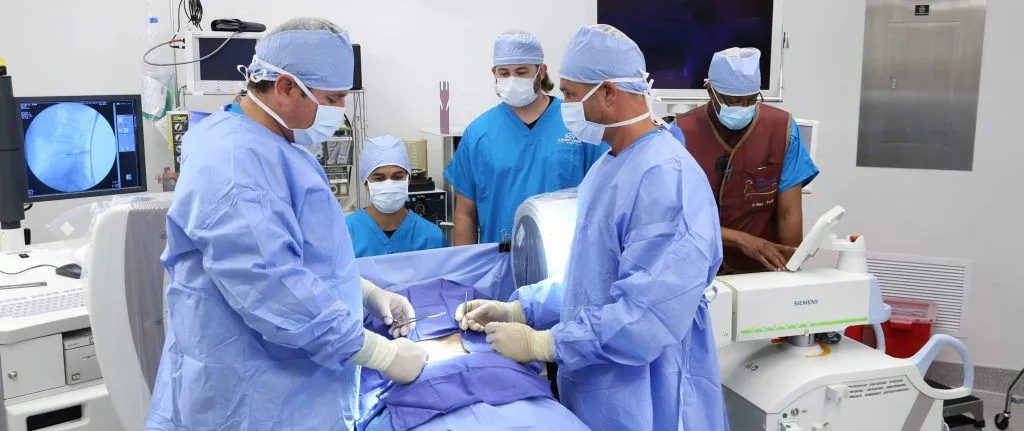
- Minimal Access: 4mm incision to access the injured disc through specialized endoscopic instruments
- Direct Treatment: Laser energy and specialized surgical tools remove inflammatory tissue from the posterior annular tear
- Natural Healing: Careful debridement creates conditions for the tear to heal naturally over 9-12 months
- Dual Benefit: Addresses both neck pain from disc injury AND arm symptoms from nerve compression in a single procedure
- Quick Recovery: Approximately 20 minutes per disc, patients walk within an hour
Clinical Outcomes
In my clinical experience with over 2,744 Deuk Laser Disc Repair® procedures:
- 99% pain relief for treated pain sources
- 0.01% complication rate with zero major complications
- Immediate symptom reduction as inflammatory tissue is removed
- No hardware or implants required for lasting results
Deuk Plasma Rhizotomy® for Facet Joint Arthritis
When facet joint arthritis contributes to neck pain:
- 30-minute outpatient procedure using plasma energy
- Permanently ablates pain nerves inside the affected joints
- Lasting relief without ongoing medication, based on my clinical experience with over 1,000 procedures
- Minimal side effects: Temporary numbness in the skin over the treated area, resolving within months
Your Treatment Progression Pathway
When Conservative Care Is Appropriate
For acute symptoms lasting less than two weeks, conservative care with rest, anti-inflammatory medications, and activity modification is reasonable. Some minor disc injuries may improve during this timeframe as acute inflammation subsides. Conservative measures, including medication, physical therapy, and home care, can provide meaningful temporary symptom relief during this window.
When to Escalate to Imaging and Specialist Evaluation
MRI evaluation should occur within two weeks of symptom onset for patients with:
- Significant pain interfering with daily activities
- Arm weakness or progressive symptoms
- Symptoms persisting beyond two weeks despite conservative care
Earlier imaging prevents prolonged trial-and-error, cycling through various conservative treatments without knowing the actual structural problems present.
Free MRI Review for Pathway Clarity
At Deuk Spine Institute, I personally review every MRI submitted through our free review program. This review provides:
- Clear information about specific structural problems visible on your imaging
- Assessment of whether those problems are likely causing your symptoms
- Explanation of what treatment approach would most effectively address them
- Detailed analysis of disc injuries, facet arthritis, nerve compression, and other cervical spine pathology
- Guidance on which findings correlate with your specific symptoms
- No obligation consultation to help you make informed decisions
Understanding the Path to Lasting Relief
The key to effective pinched nerve in neck treatment is understanding the fundamental difference between symptom relief and definitive solutions.
Temporary Symptom Relief
- Home measures ease discomfort
- Physical therapy and medications reduce symptoms temporarily
- Symptoms return when treatments stop
- Underlying structural problems persist
Definitive Structural Solutions
- Deuk Laser Disc Repair® removes inflammatory tissue from the posterior annular tear
- Creates conditions for natural tear healing over 9-12 months
- Addresses both neck pain and arm symptoms simultaneously
- Provides lasting relief by fixing the structural problem
Critical Medical Facts to Remember
- Pinched nerves cause arm symptoms but NEVER cause neck pain
- Neck pain comes from disc injuries and facet joint problems
- Disc injuries do NOT heal on their own
- PT and chiropractic cannot repair structural damage
- Structural problems require structural solutions
- MRI imaging alone is insufficient for accurate diagnosis due to the prevalence of asymptomatic findings
- Accurate diagnosis requires correlation between imaging, physical examination, and symptom patterns
Based on my clinical experience with over 100,000 procedures since 2004, approximately 85% of chronic neck pain originates from disc injuries requiring targeted structural repair. Conservative treatments cannot reverse this damage once chronic inflammation has established itself.
If you’re experiencing neck pain with or without arm symptoms, and conservative treatments have failed to provide lasting relief, contact us today. You’ll receive clear information about the structural problems present and what treatment approach would most effectively address them. Understanding your specific condition is the first step toward lasting relief rather than temporary symptom management.