
Medical Disclaimer: This content is for educational purposes only and does not constitute medical advice, diagnosis, or treatment. Individual results may vary. Always consult with a qualified healthcare provider regarding your specific condition and treatment options.
Most patients assume spine surgery means a hospital. A gown, a pre-op room, an overnight stay, a week in bed, and months of recovery before anything resembling normal life returns. That picture describes traditional spine surgery accurately. It does not describe outpatient spine surgery when patient selection is done correctly and the procedure actually targets the source of the pain.
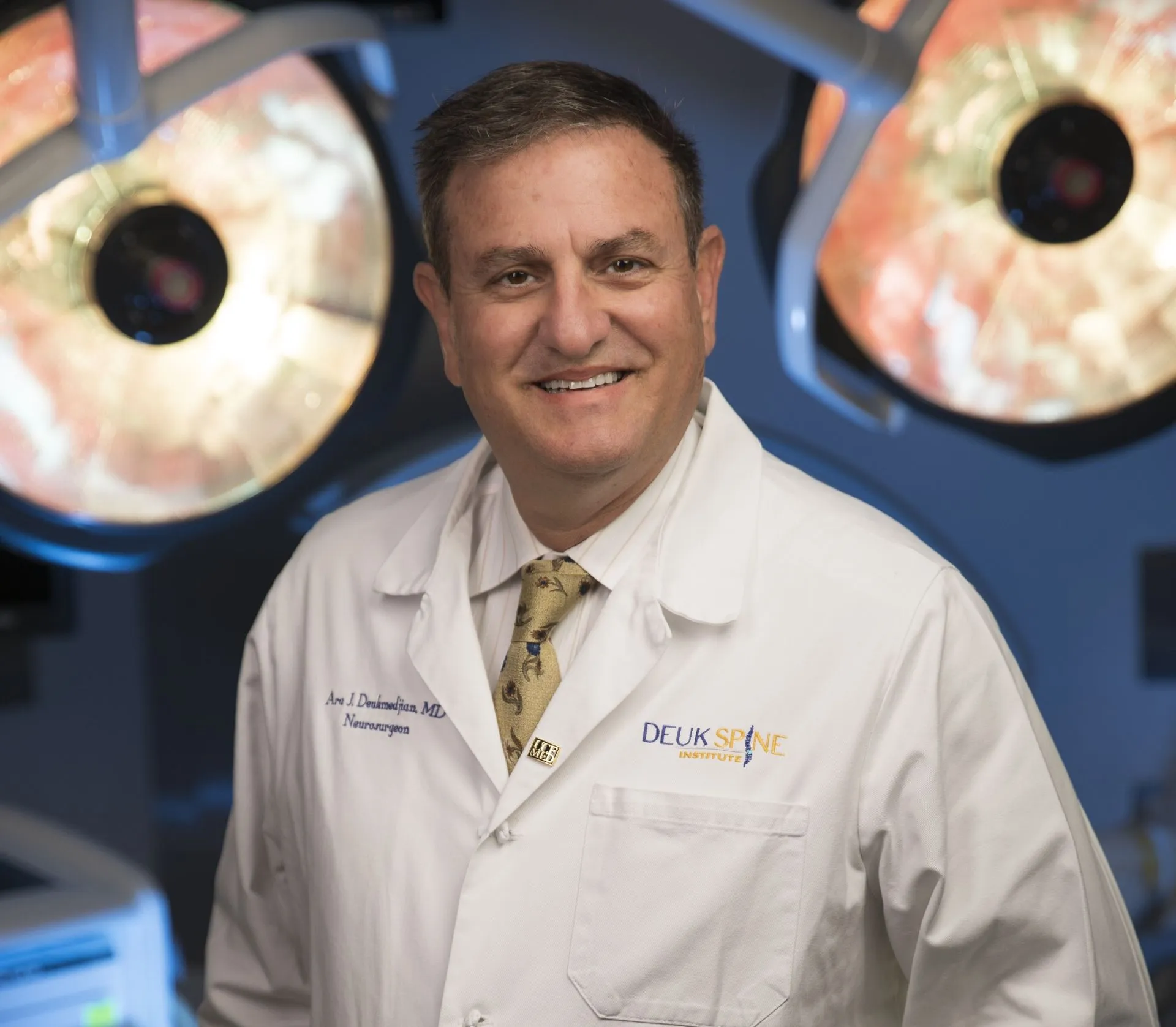
After over 30 years performing spine surgery and more than 2,700 Deuk Laser Disc Repair® procedures, I can tell you that every curative procedure we perform at Deuk Spine Institute is outpatient with same-day discharge. Patients walk in, have surgery, and go home within hours. That is not marketing language. It is a direct result of using the right procedure for the right patient and getting the diagnosis right before anyone enters an operating room.
100%
of Deuk Spine curative procedures are outpatient, same-day discharge
0.01%
complication rate across 2,700+ Deuk Laser Disc Repair® procedures
90%
of patients travel from other states and countries to receive care
What Makes Outpatient Spine Surgery Safe
The safety of outpatient spine surgery depends entirely on two things: whether the procedure itself requires a hospital environment, and whether the patient is an appropriate candidate for outpatient spine surgery. For endoscopic procedures that do not involve bone removal, hardware implantation, or general anesthesia, a certified outpatient surgery center provides everything required and removes most of the risk that makes hospital-based surgery dangerous.
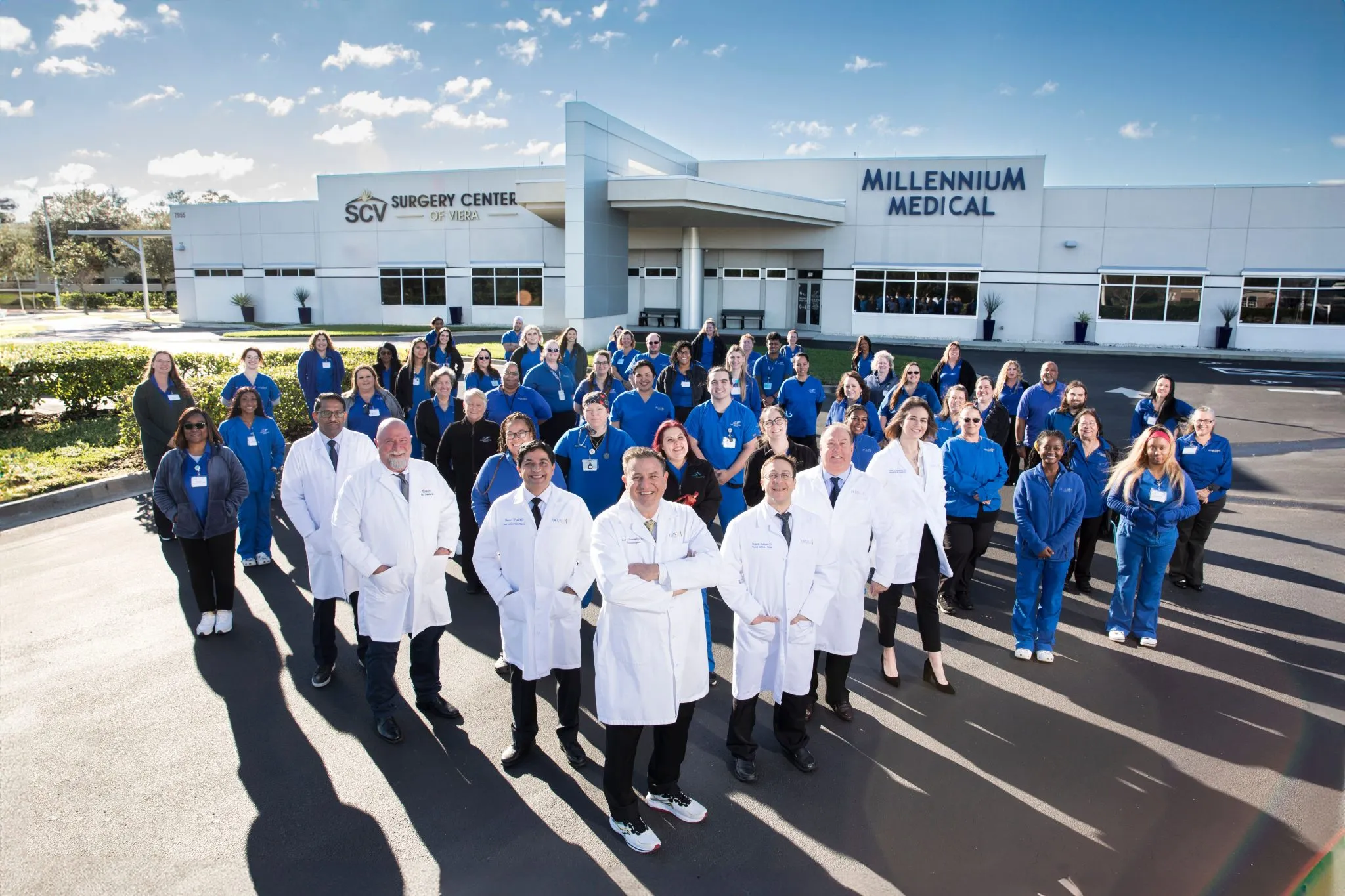
Deuk Spine Institute performs all procedures at the Surgery Center of Viera, an AAAHC-accredited, Medicare-certified outpatient facility. Accreditation means the facility meets the same quality and safety standards applied to hospital operating rooms. Medicare certification means the facility has passed federal inspection for patient care standards. That is the environment where our patients receive care.
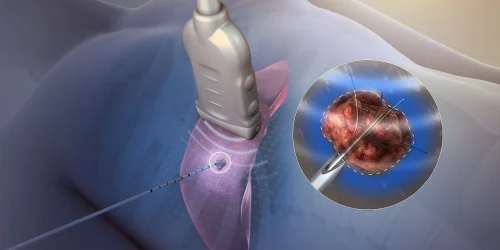
The safety criteria for outpatient endoscopic spine surgery center on what the procedure does not do. Deuk Laser Disc Repair® involves no bone drilling, no removal of muscle or ligament, no hardware implantation, and no cadaver bone, metal, or plastic placed in the spine. The incision is 7mm in the lumbar spine and 4mm in the cervical spine, smaller than a bandage. That level of tissue preservation is what eliminates the need for hospitalization and the complications that accompany it.
Patient Selection: Who Qualifies for Outpatient Endoscopic Surgery
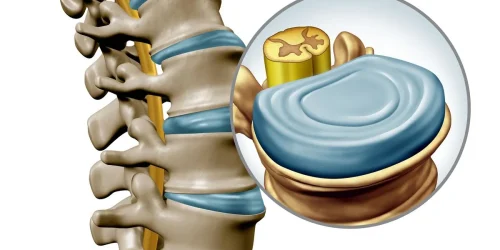
Correct patient selection is where outpatient spine surgery succeeds or fails. The most common source of chronic back pain, disc injury, drives approximately 85% of cases based on my clinical experience. Accurate diagnosis of that disc injury, and confirmation that it is the actual pain generator, is what determines whether a patient is a safe outpatient candidate.
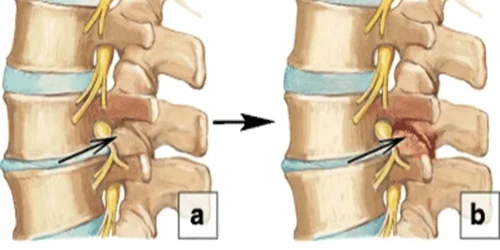
The Deuk Spine Exam® combines MRI review, physical examination, and symptom history to achieve 99% diagnostic accuracy. This matters because an MRI is a picture of anatomy, not a diagnosis of pain. Radiologists miss disc bulges from annular tears more than 50% of the time on standard MRI, and standard imaging rarely identifies inflammation in the posterior annular fibers where disc pain originates. Getting this wrong means operating on the wrong structure, which is a primary driver of failed spine surgery outcomes.
Most patients with chronic back pain have an average of five concurrent pain generators, not one. Disc injuries account for approximately 85%, facet joint arthritis approximately 5%, sacroiliac joint pain approximately 5%, piriformis syndrome approximately 5%, and vertebral fractures less than 0.5%. All identified pain generators must be treated for complete relief. Treating only one while others go unaddressed explains why many patients experience partial improvement after surgery.
Outpatient endoscopic procedures are appropriate when the following criteria are met:
- MRI findings correlate with physical exam and symptoms – imaging alone is insufficient; the Deuk Spine Exam® confirms which structure is generating pain
- Conservative care has been appropriately trialed – the standard threshold is 6 to 12 weeks of physical therapy, medications, or injections without lasting structural improvement
- The pain source is treatable endoscopically – disc injuries, facet joint arthritis, sacroiliac joint pain, and piriformis syndrome all have outpatient curative procedures
- No contraindications exist – spinal tumors, active infections, or unhealed vertebral fractures requiring open access are not candidates for endoscopic approaches
You can review the full candidacy criteria and learn whether your MRI findings meet the diagnostic threshold on our laser spine surgery candidates page.
Anesthesia in Outpatient Spine Surgery
One of the defining differences between outpatient endoscopic surgery and traditional hospital-based spine surgery is anesthesia. Traditional spine surgeries, including microdiscectomy, laminectomy, and spinal fusion, require general anesthesia. The patient is fully unconscious, intubated, and on a ventilator. Recovery from general anesthesia adds hours to the hospital stay and carries its own set of risks including nausea, cognitive effects, and airway complications.
Deuk Laser Disc Repair® is performed under local anesthesia with light sedation, also called twilight sedation. The patient is relaxed and comfortable but not fully unconscious. This eliminates the recovery time associated with general anesthesia, allows the patient to remain responsive throughout the procedure, and significantly reduces the physiological stress of the surgery itself. Deuk Plasma Rhizotomy® and Deuk Piriformis Release® are similarly performed under twilight sedation as outpatient procedures.
The absence of general anesthesia is also why patients can leave the facility within hours of surgery. There is no waiting for full anesthesia reversal, no monitoring for post-intubation complications, and no need for overnight observation. Patients are typically walking within hours and discharged the same day. Learn more about what to expect on our Deuk Laser Disc Repair® treatment page.
The Real Cost Difference Between Outpatient and Hospital Spine Surgery
Hospital-based spine surgery is expensive in ways that extend far beyond the surgical fee. A single-level spinal fusion at a hospital typically runs between $55,000 and $165,000 before complications. When complications occur, and traditional spine surgery carries complication rates ranging from 5% to over 50% depending on procedure type, the charges escalate dramatically. Hospital complications from fusion surgery can result in total charges between $50,000 and $2 million, including infection treatment, revision surgery, extended ICU stays, and rehabilitation.
Those charges do not include the indirect costs of a 6 to 12 month recovery: lost wages, home care assistance, opioid dependency treatment, and the downstream expense of adjacent segment disease that frequently requires a second surgery within five to ten years of the original fusion.
Outpatient endoscopic surgery at a certified ambulatory surgery center costs significantly less. Surgery centers operate at 60 to 75% lower overhead than hospital operating rooms. There are no hospital stay fees, no ICU charges, and no implant hardware costs. Deuk Laser Disc Repair® uses no metal or plastic components. The 0.01% complication rate and 0% infection rate across our procedures eliminate the revision surgery costs that drive the upper end of traditional surgery’s cost range.
| Cost Factor | Hospital Fusion Surgery | Deuk Outpatient Surgery |
|---|---|---|
| Facility fees | Hospital OR + hospital stay | Outpatient surgery center only |
| Implant hardware | $15,000 – $65,000 | $0 – no hardware used |
| Anesthesia type | General (intubation required) | Twilight sedation (local) |
| Complication costs | $50,000 – $2 million when they occur | 0% infection rate; 0.01% complication rate |
| Opioid narcotics | Always prescribed; high addiction risk and abuse | Not required post-operatively |
| Recovery time | 6 to 12 months; lost wages | Return to work in days |
| Future surgeries | Adjacent segment disease often requires additional fusion | Motion-preserving; no adjacent segment disease; 1% re-herniation rate |
Not all procedures are covered by insurance. Deuk Spine Institute accepts Medicare, PPO insurance, workers’ compensation, and also treats uninsured patients. Over 5,000 free MRI reviews have been completed to help patients understand their diagnosis before committing to any treatment. See our treatment options and insurance information for details on coverage.
Why Deuk Spine Is an International Destination for Outpatient Spine Surgery
Approximately 90% of patients who receive care at Deuk Spine Institute travel from other states and countries. That is not an accident of geography. It reflects the fact that the procedures we perform, Deuk Laser Disc Repair®, Deuk Plasma Rhizotomy®, and Deuk Piriformis Release®, are proprietary, patented procedures not available anywhere else in the world.
Patients arrive from across the United States, Canada, Europe, South America, and elsewhere because they have exhausted every local option and are facing fusion surgery as their only remaining recommendation. Many have been told their pain is untreatable or that they must manage it indefinitely. Research published in peer-reviewed spine literature, including a study available through PubMed Central, found annular tears present in approximately 73% of discs examined in patients with chronic lower back pain, confirming that the structure responsible for most chronic back pain is also the one most consistently missed by standard diagnostic and surgical approaches.
The outpatient model makes travel practical. Patients fly in, have a virtual Deuk Spine Exam® prior to arrival, undergo surgery, and fly home within days. There is no extended hospital recovery requiring local accommodation. Return to normal activity begins within 24 hours with minor restrictions. Review what past patients have experienced on our patient testimonials page.
When Outpatient Spine Surgery Is the Right Decision
The decision comes down to what the surgery actually does. Traditional spine surgery, including laminectomy, microdiscectomy, and fusion, involves removing bone, cutting through muscle tendons, implanting hardware, and eliminating spinal motion at the fused level permanently. Nothing removed is put back. The spinal instability that results frequently leads to additional surgeries. Every traditional spine surgery requires opioid narcotics with high potential for addiction, abuse, and overdose in patients who are already in chronic pain. Failed Back Surgery Syndrome, ongoing or worsening pain following traditional surgery, affects a significant percentage of patients who go through this path.
Outpatient endoscopic spine surgery is the right decision when the pain source is correctly identified, the procedure directly addresses that source, and no contraindications to the endoscopic approach exist. When those conditions are met, the outpatient setting is not a compromise. It is the safer option, with a lower complication rate, no general anesthesia, no implant hardware, no opioid requirement, and a recovery measured in days rather than months.
If you have been living with chronic back or neck pain and have not yet explored whether outpatient spine surgery is an option for your specific condition, submit your MRI for a free review. Dr. Deukmedjian personally evaluates every MRI submitted and will tell you directly whether your pain source is treatable with an outpatient procedure. Learn more about the Deuk Spine Exam® and what the diagnostic process involves.
Medical Disclaimer: This content is for educational purposes only and does not constitute medical advice, diagnosis, or treatment. Individual results may vary. Always consult with a qualified healthcare provider regarding your specific condition and treatment options.